Color DiariesColors I've lived withGet the Letter
← All colors  ·  white ·  Benjamin Moore
Color Diary · No. 40

Benjamin Moore Simply White: Where the Warmth Works and Where It Bites Back

The 2016 Color of the Year, reviewed honestly: it is bright and friendly in most rooms, and it really does turn yellow in the two situations people keep posting about.

Simply White · Benjamin Moore 2143-70
Hex#F6F6EDLRV90Undertonesclean white → soft yellow warmth → cream in late sun
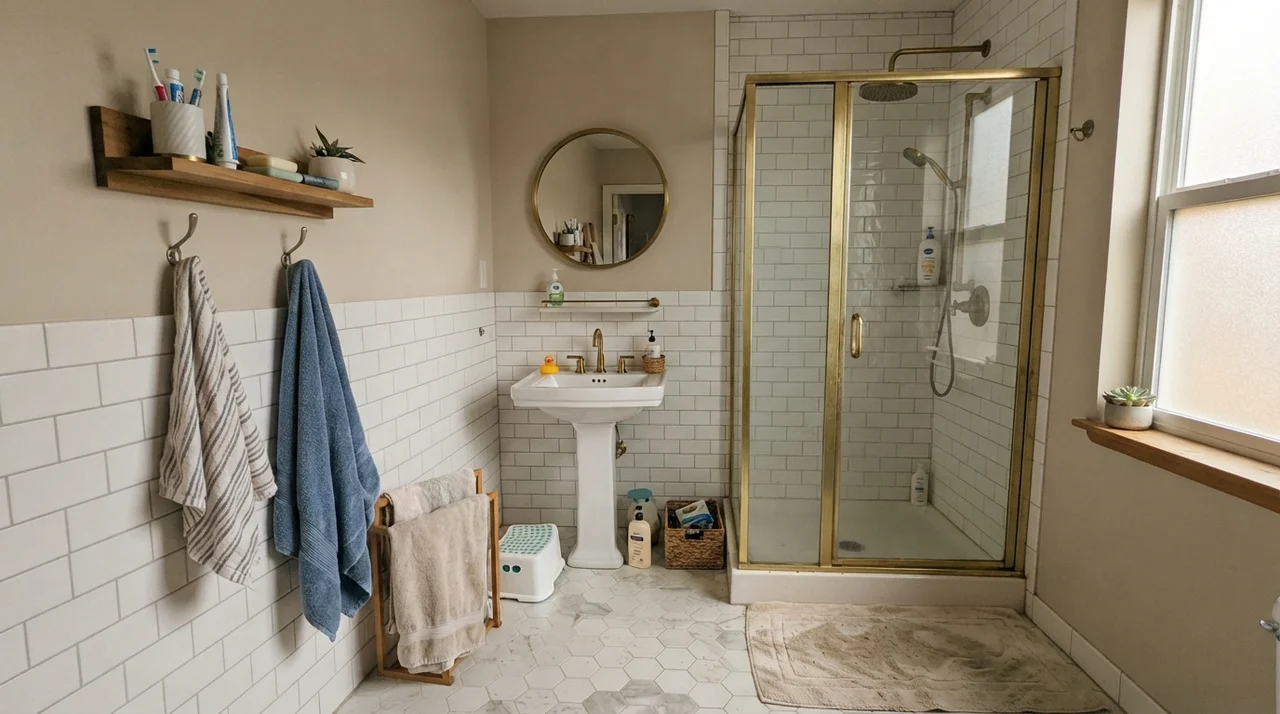
Family bathroom with white subway tile wainscot, brass shower fixtures, and upper walls painted Benjamin Moore Simply White.
Bright without the chill. Upper walls painted Simply White above white subway tile wainscot, with brass shower fixtures, a glass shower door, towels hung on hooks, and a well-used bath mat.

In our last house—a 1990s colonial with high ceilings and endless drywall—I fell hard for the promise of a warm white. It was right around the time Benjamin Moore named Simply White their 2016 Color of the Year, and every home magazine on the rack promised it was the single magic bullet for modern living. We bought five gallons, hired a crew for the main level, and coated the entire open-plan kitchen and living room from baseboards to crown moulding.

For the first six months, I felt like a genius. The color has a Light Reflectance Value of 90, which means it bounces an enormous amount of daylight into corners that used to feel dead. It didn't have the harsh, primer-like glare of stark white, and it made our honey-oak floors look intentional rather than tired. But then July arrived. Right around four in the afternoon, when the western sun began slamming into the kitchen windows, our crisp off-white walls turned a heavy, undeniable custard yellow. My husband walked in from the garage, squinted at the wall by the refrigerator, and asked when we’d painted the room buttercup.

We lived with it for seven years before we sold that house, and over those seven years I learned every trick, every mood, and every failure point this color has to offer. That is the thing about white paint: nobody tells you that you don't choose a white for the swatch you tape up at noon on a Saturday. You choose it for how it behaves at seven on a rainy Tuesday morning, how it looks under your kitchen pot lights, and whether it holds up when you have to scrub spaghetti sauce off the wall behind the stove.

The Anatomy of LRV 90 and Yellow Undertones

Simply White (SKU 2143-70) sits in a very particular pocket of the color world. At LRV 90, it is genuinely one of the brightest whites Benjamin Moore manufactures. That high reflectance is why so many people choose it for dark hallways, north-facing bedrooms, and sprawling open layouts where natural light is uneven. It does the heavy lifting of brightening a room without demanding five different lighting fixtures.

The catch is what gives Simply White its warmth. That warmth isn't grey, greige, or taupe; it is yellow. In balanced, indirect, or northern daylight, that touch of yellow simply prevents the paint from going cold or sterile—it reads like a clean, sunny, welcoming white. But when you flood it with direct warm light, or put it next to a cleaner, cooler surface, that yellow wakes up completely and takes over the room.
Undertones & Neighboring Shades

Simply White lives on a sunny, high-LRV foundation. While it reads clean and luminous in diffuse daylight, warm direct sun pushes the yellow forward, while cool rainy days pull it toward a quiet, neutral off-white.

warm sun
overcast, north light
dusk, rain, cool bulbs
yellow undertone · shifts cream under south/west sun · neutralizes under cool north light
Snowfall WhiteBenjamin Moore · see diary
Polar BearBehr · see diary
Simply White2143-70
Mountain Peak WhiteBenjamin Moore · see diary
Cotton BallsBenjamin Moore · see diary

How Daylight Dictates the Shift

Before you commit to multiple gallons of Simply White, you have to look at your compass. In a north-facing room, cool grey daylight comes through the glass all day long. Cooler whites like Decorator's White or even Chantilly Lace can turn flat, dingy, and slightly blue-grey in northern exposures. Simply White, however, is exceptional here. The cool blue-tinted daylight naturally cancels out the yellow undertone, leaving you with a wall that looks like a calm, perfect, mellow white without a trace of cream.

South-facing and west-facing exposures are where the color tests your patience. Southern light is naturally warm from mid-morning through mid-afternoon; under that steady glow, Simply White slowly softens into a gentle cream. For a cozy cottage or traditional living room, that creaminess is lovely. But in a west-facing room, the late afternoon sun hits like a spotlight, turning the volume on that yellow all the way up. If you are expecting a crisp gallery wall, a west-facing window will leave you deeply frustrated by late afternoon.

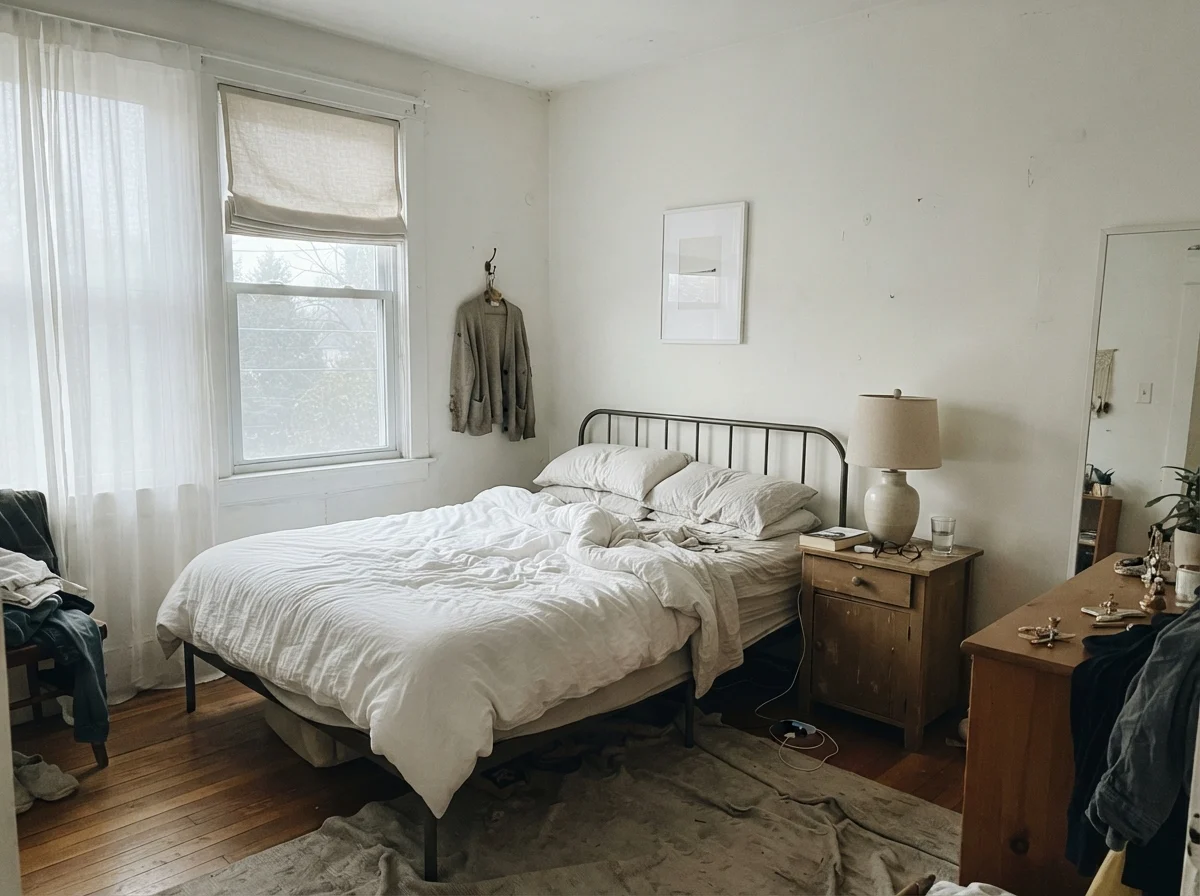
Simple bedroom with unmade white bedding, wood nightstand, and Simply White walls in cool morning daylight.
Early morning coolness. Painted bedroom walls looking pale and washed out in cool early-morning light, with unmade white bedding and an unlit lamp on the wood nightstand.
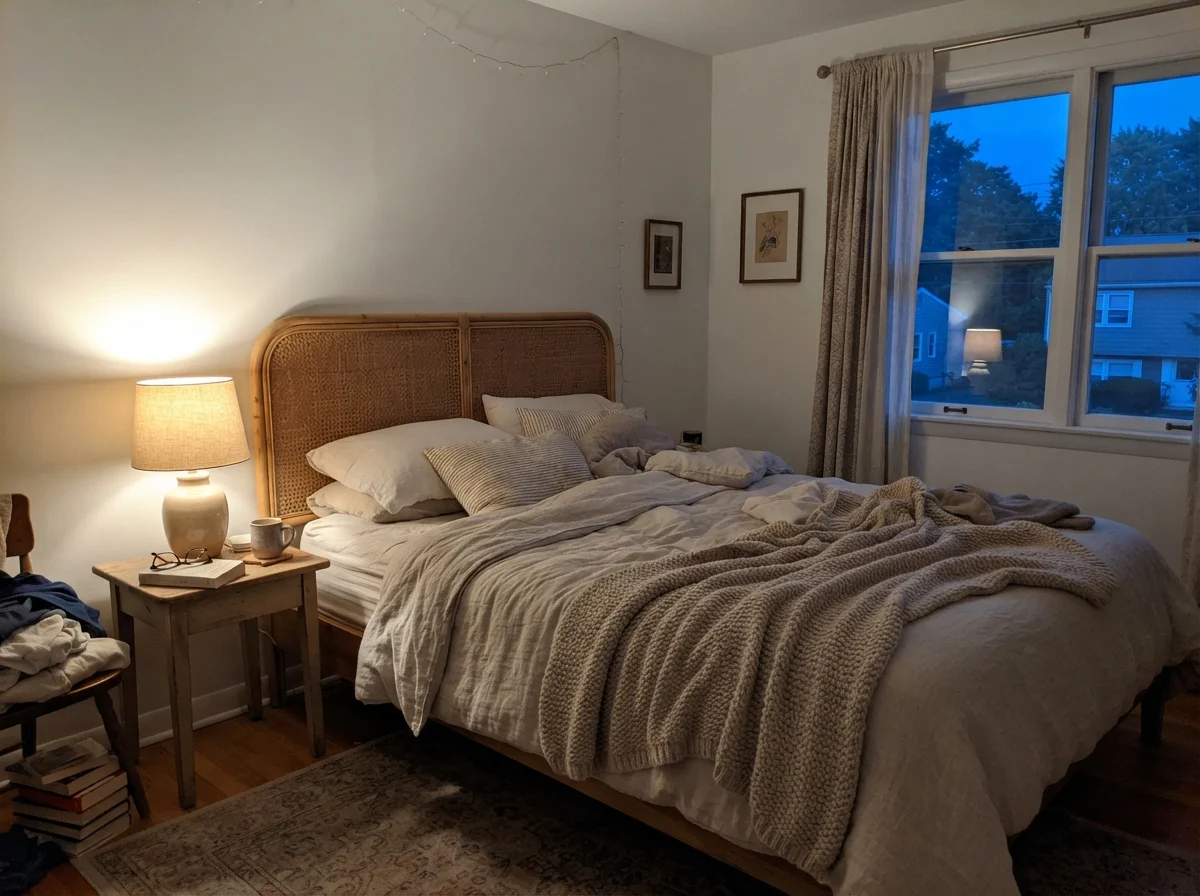
Bedroom with rattan headboard, warm table lamp glow on Simply White walls, and evening light.
Dusk with lamps on. The same bedroom in the evening, showing warm lamp glow against the painted wall, a rattan or cane headboard, and a cozy blanket under blue evening window light.

Bedrooms, Nurseries, and the Light Bulb Factor

In bedrooms, Simply White creates a restful, gentle envelope that never feels like a hospital corridor. It pairs naturally with soft linen sheets, pale oak dressers, and natural fibers. Because bedrooms are rarely lit by blazing overhead floodlights, you have significant control over how the paint behaves by paying close attention to your light bulbs.

This is where many homeowners make an avoidable mistake: they buy warm 2700K incandescent-style LED bulbs and then wonder why their walls look like lemon pudding at 8:00 PM. A 2700K bulb adds heavy amber light to an already warm paint, doubling down on the cream. If you want the walls to look crisp, clean, and truly white in the evening, swap those bulbs for 3500K to 4000K daylight-balanced options. It is an inexpensive fix that saves you from repainting a perfectly good room.

For children's rooms and nurseries, the high light bounce keeps smaller spaces feeling open and cheerful. It flatters light-wood cribs, painted iron frames, and woven baskets, acting as a clean canvas that lets toys and bedding bring in the color without fighting the background.

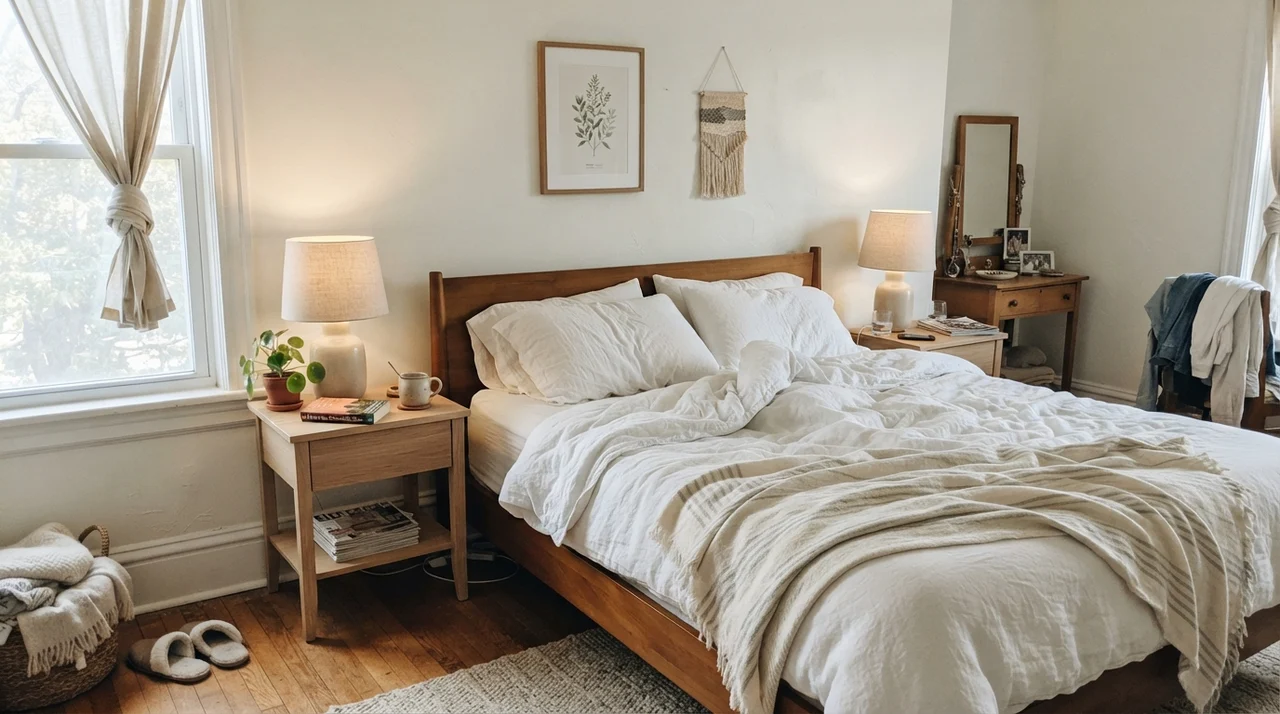
Main bedroom with pale oak nightstands, white linen bedding, and Benjamin Moore Simply White walls.
Quiet and bright. Main bedroom with painted walls in soft daylight, featuring white linen bedding, pale oak nightstands, ceramic lamps, and a small plant.
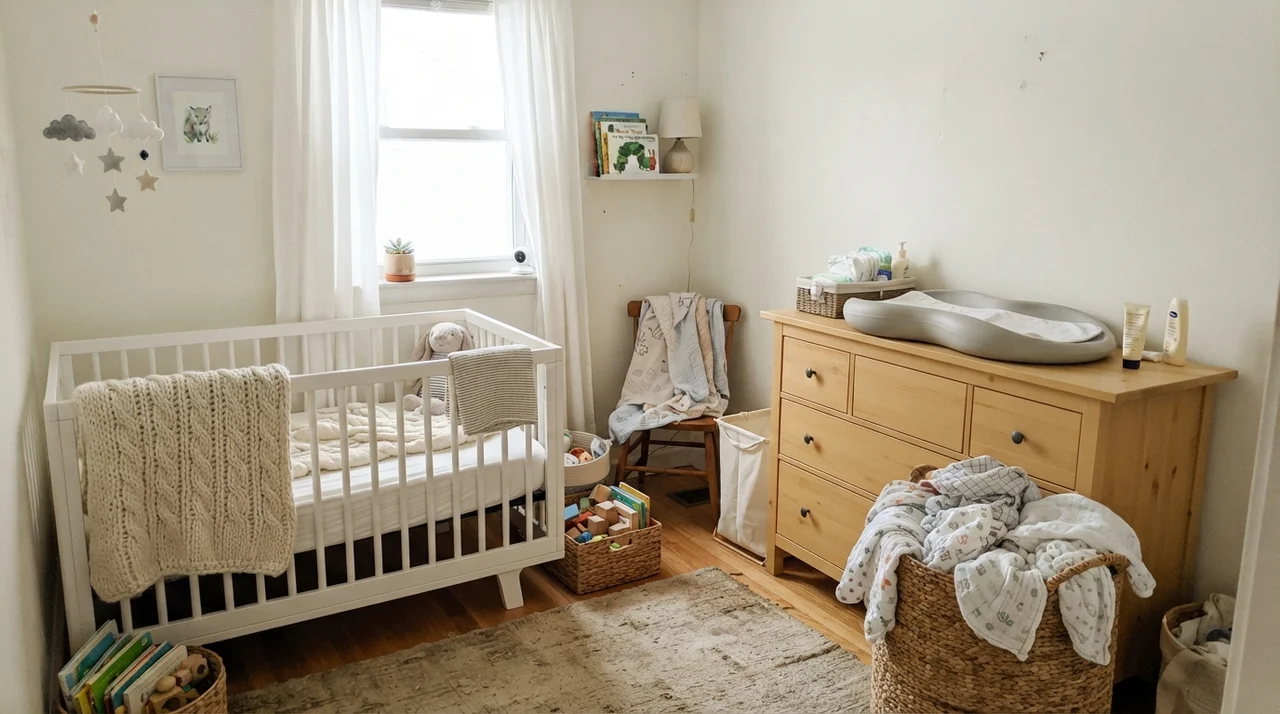
Nursery with white crib, light wood dresser, and gentle daylight on Simply White walls.
Soft nursery envelope. Nursery walls painted Simply White in diffuse window light, with a white crib, knit blanket, light-wood changing dresser, and a woven basket of muslin cloths.
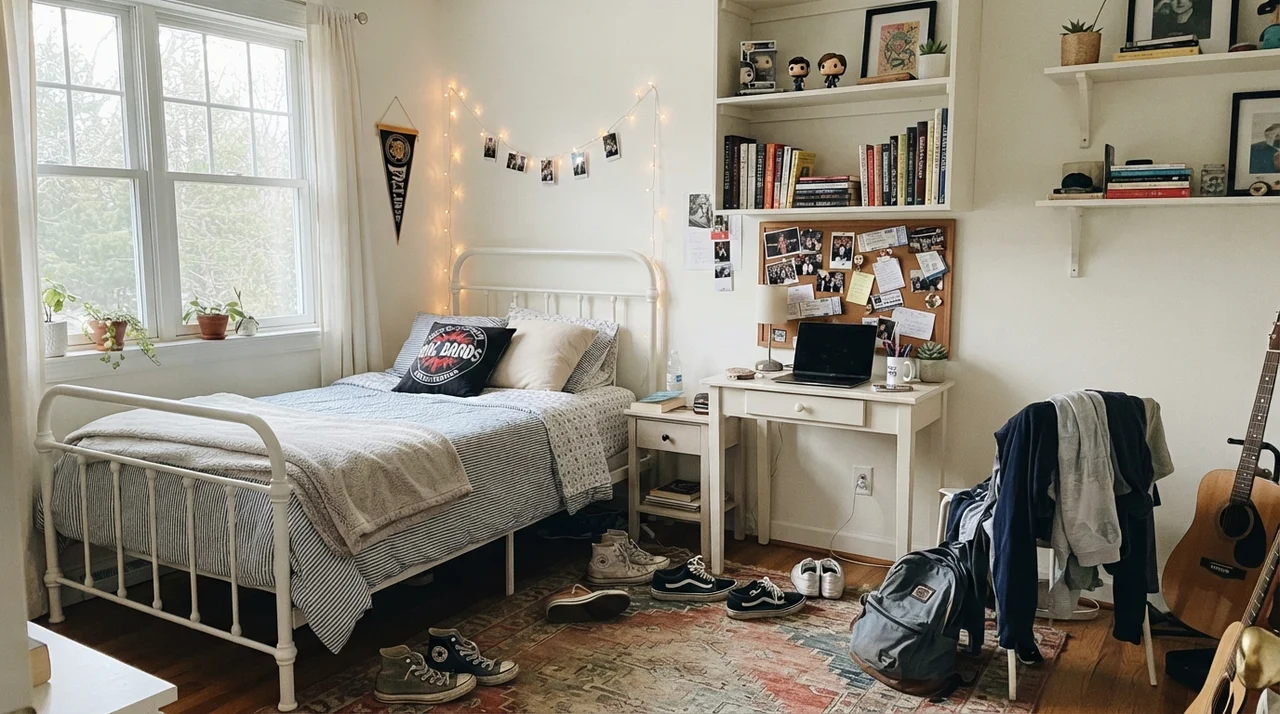
Teenager bedroom with white metal bed frame, desk, shelves, and Simply White painted walls.
Clean backdrop for daily life. Teenager's bedroom with painted walls, a white metal bed frame, small white desk with corkboard, open book shelves, and sneakers on the rug.

The Kitchen Test: Cabinets, Islands, and Countertops

The kitchen is where Simply White built its reputation over the last decade. On shaker cabinet fronts, painted in a durable satin sheen, it looks classic, welcoming, and bright. It completely avoids the clinical, commercial-kitchen feel of pure stark white, and it looks stunning against warm oak flooring, butcher block counters, and unlacquered brass hardware.

However, you must check your countertop stone before ordering cabinet paint. Simply White sits on the warm side of the fence. If your counters are cool grey quartz, faux-Carrara with icy blue-grey veining, or you have a solid wall of stainless steel appliances, the juxtaposition will work against you. Cool stone makes Simply White cabinets read visibly yellow and dingy by comparison. But if your kitchen features warm granite, soapstone, warm white quartz, or butcher block, Simply White feels like it was custom mixed for the space.

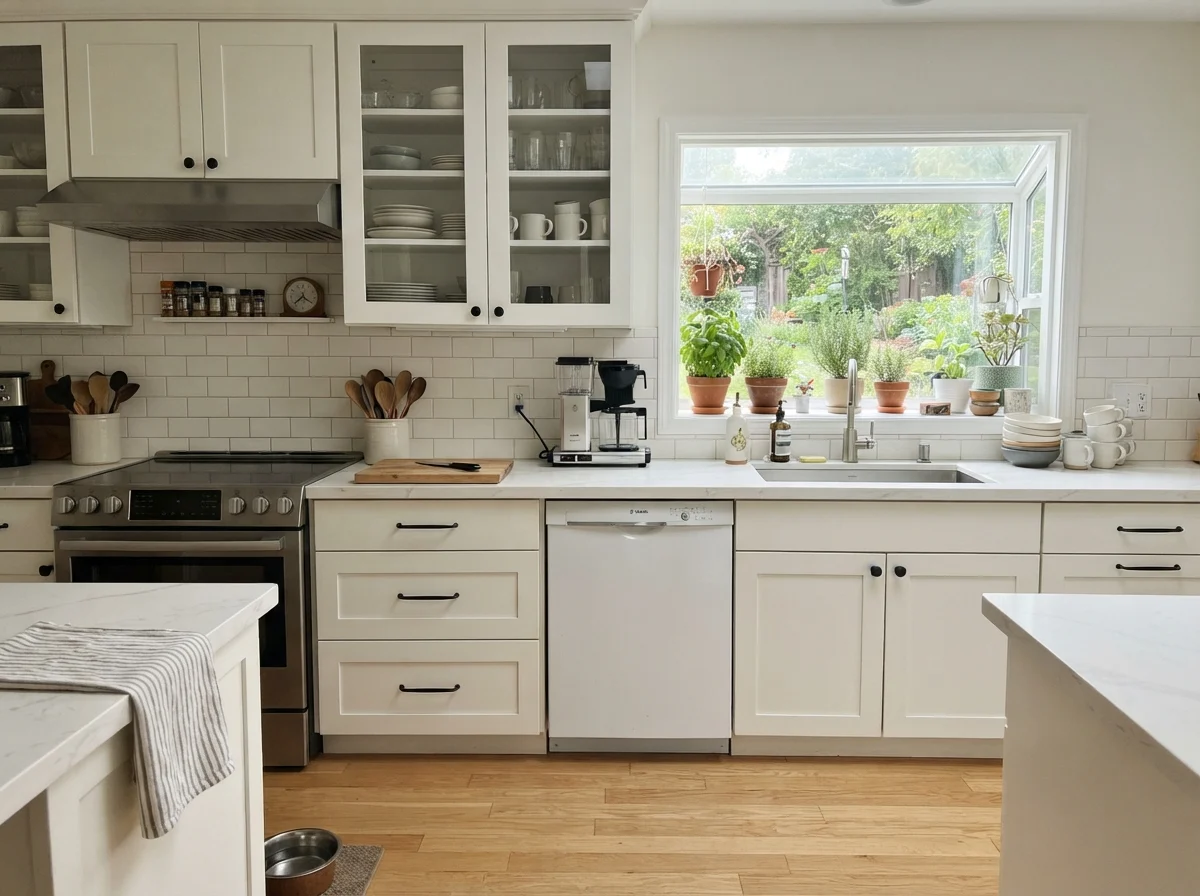
Kitchen shaker cabinets painted Benjamin Moore Simply White with subway tile backsplash and light oak floor.
The full cabinet run. Shaker uppers and lowers painted Simply White with white subway backsplash, white counters, light oak floors, and plain white walls.
Close up of Simply White shaker cabinet fronts with matte black hardware and quartz counter.
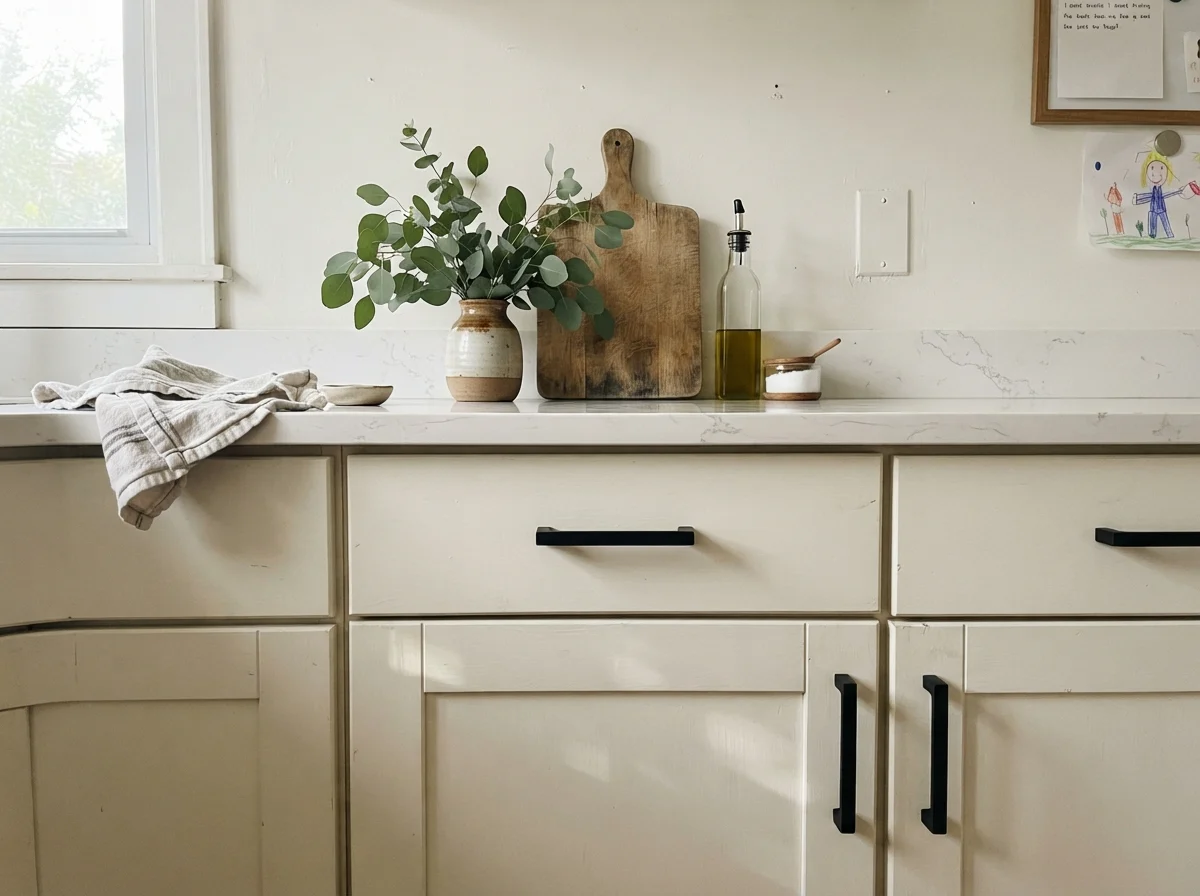
Hardware and stone pairing. Close-up of painted shaker cabinet doors with matte black handles, white quartz counter, and a vase of eucalyptus against an off-white wall.
Kitchen island painted Simply White with white surrounding cabinetry and warm evening light.
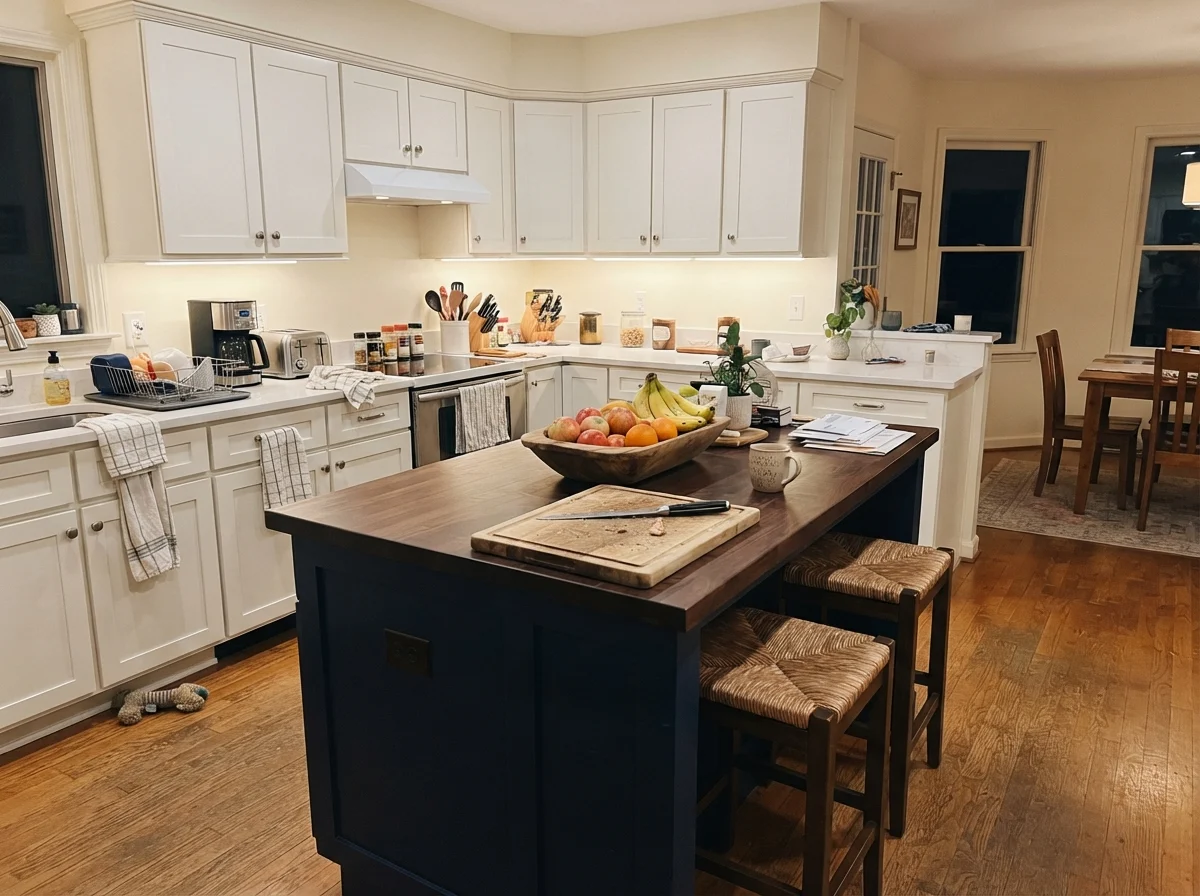
An accent island. Family kitchen in evening light where only the island is painted Simply White, surrounded by white cabinets, cream walls, and cutting boards with fruit.
That's the thing nobody tells you about white paint: you don't choose it for the weekend you paint it. You choose it for year four, when the afternoon light hits it and you've scrubbed the door frame a hundred times.

Living Areas, Sunrooms, and Trim Continuity

In open living spaces, Simply White performs best when you don't ask it to fight other whites. In our colonial, we carried the color right across the living room, into the hallway, and onto the sunroom walls. At LRV 90, it handles changes in window placement smoothly, flattering linen upholstery, jute rugs, and warm wood coffee tables.

Where people get into trouble is trying to pair Simply White walls with standard 'builder white' or crisp Chantilly Lace on the trim and baseboards. The moment a brighter, cooler white sits directly against Simply White, the human eye compares them. The crisper trim wins, and Simply White looks like a dirty wall that needs to be scrubbed clean. If you use Simply White, the smartest strategy is monochrome: paint the walls in eggshell, the trim and doors in semi-gloss, and the ceiling in flat, all in the exact same color. The change in sheen gives you all the architectural separation you need without creating an undertone battle.

Living room painted Benjamin Moore Simply White with linen sofa, jute rug, and midday sunlight.
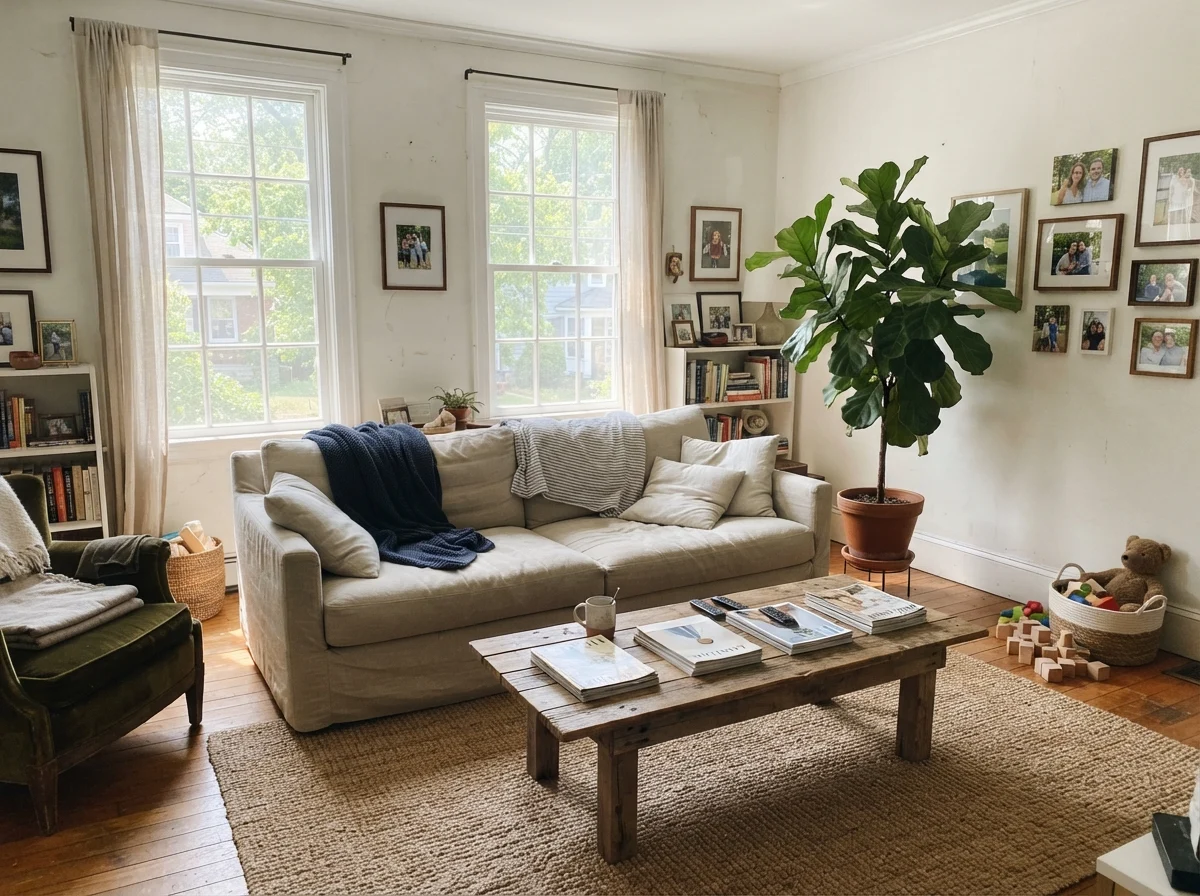
Midday openness. Living room with painted walls in bright midday sun, linen sofa with rumpled throw, wood coffee table with magazines, jute rug, and a large plant.
Sunroom with Simply White wall sections between multiple windows, rattan chairs, and terracotta planters.
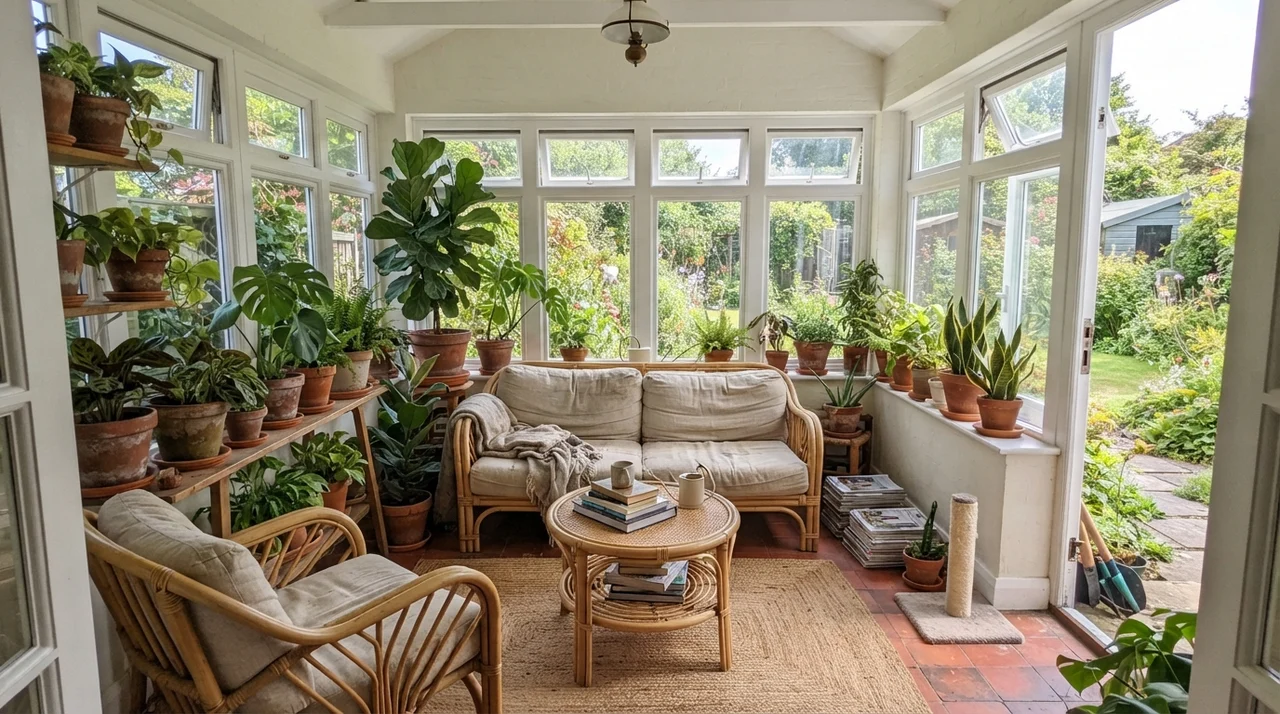
Surrounded by garden light. Sunroom walls painted between white-framed windows, filled with rattan furniture, potted plants, and terracotta pots in bright daylight.
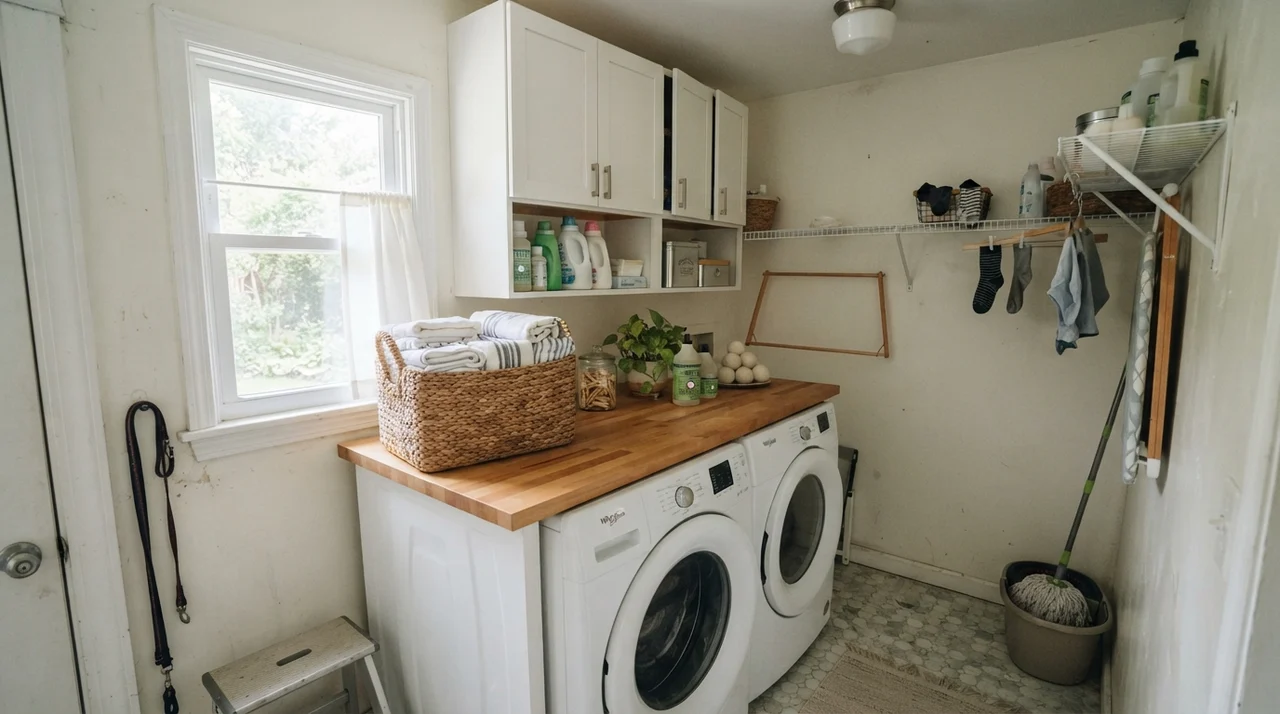
Small bright laundry room with butcher block countertop and Simply White walls.
Functional and bright. Bright laundry room with painted walls, white cabinets, butcher-block counter over washer and dryer, and a basket of folded towels.
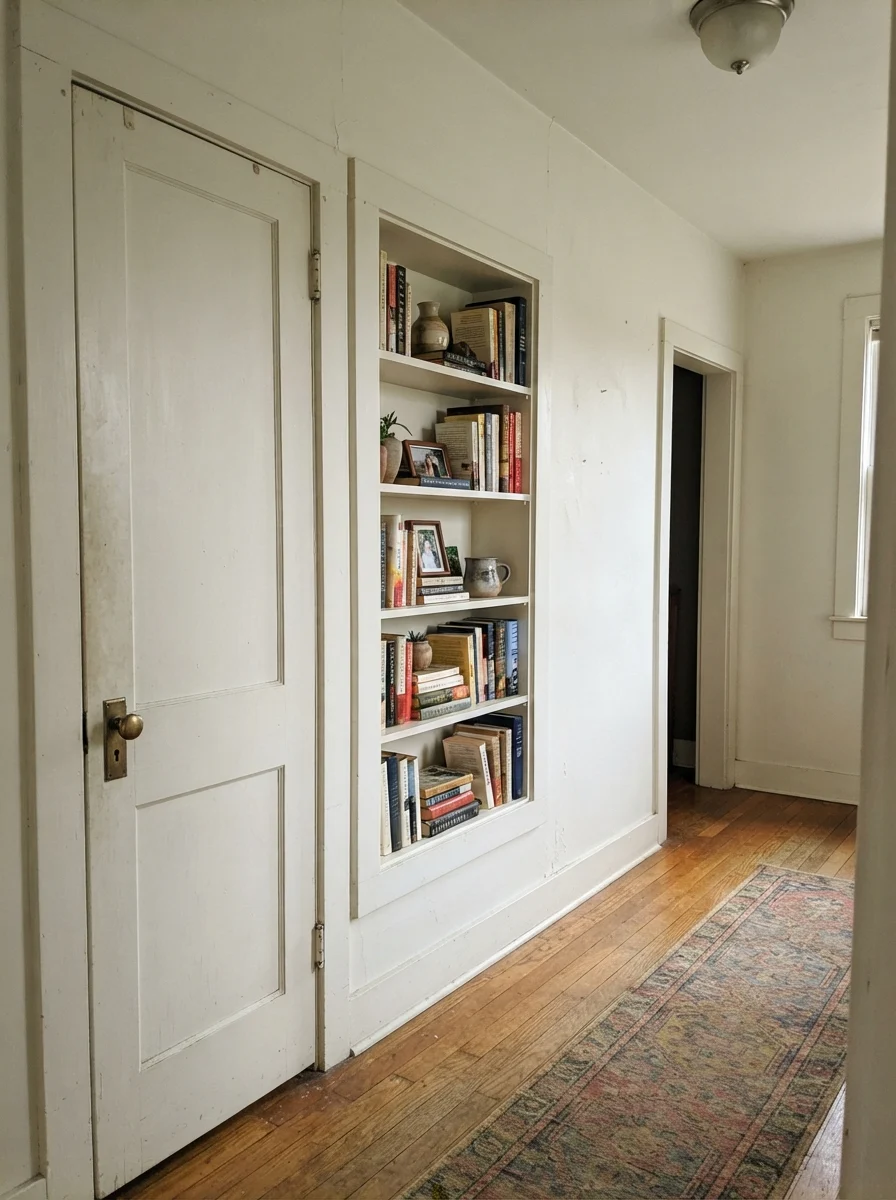
Hallway door and built-in bookshelf painted Simply White with brass hardware and wood floors.
Trim and architectural details. Hallway featuring a two-panel interior door and built-in bookshelf painted Simply White against cream walls, with brass knob and wood flooring.
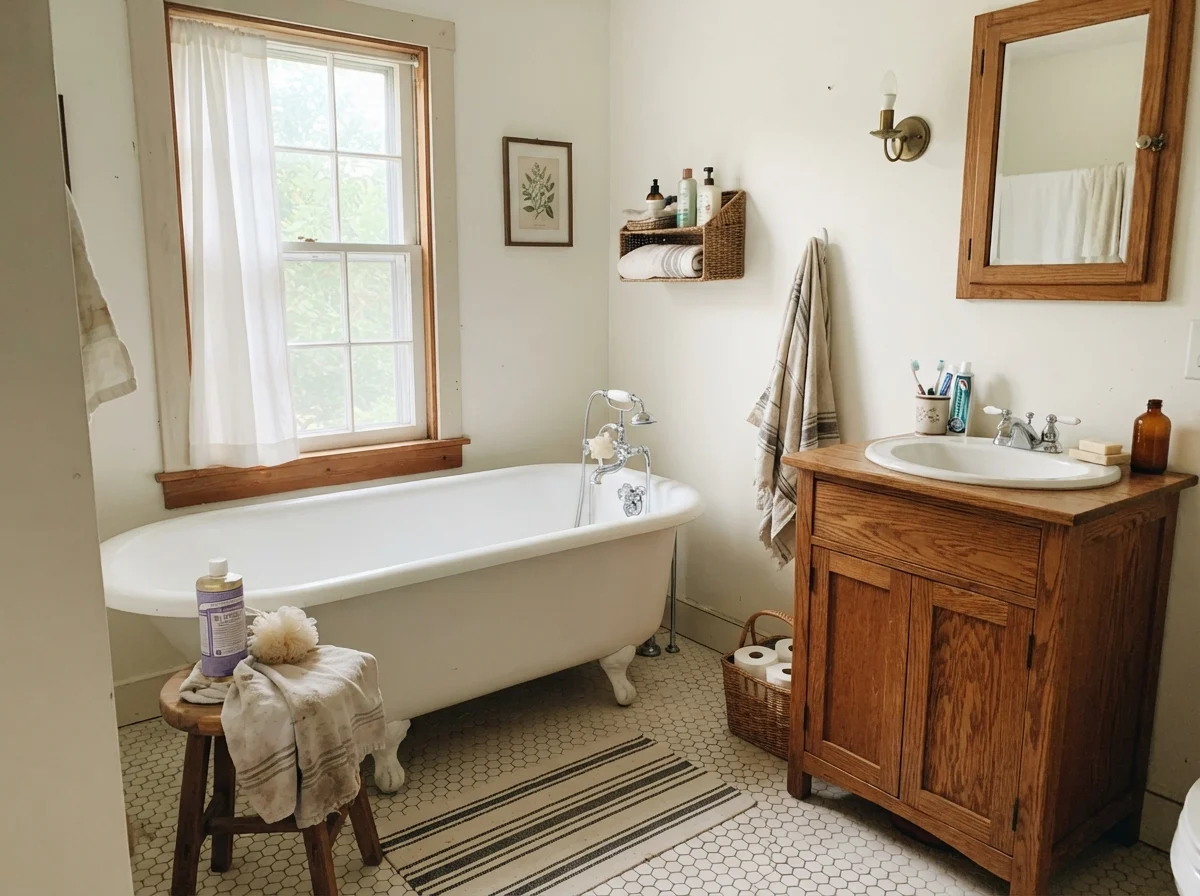
Cottage bathroom with white clawfoot tub, oak vanity, hex tile, and Simply White painted walls.
Cottage bath warmth. Cottage bathroom with painted walls in morning light, a white clawfoot tub, white hex tile floor, and a warm oak vanity with framed mirror.

Bathrooms and the Reality of Flat Light

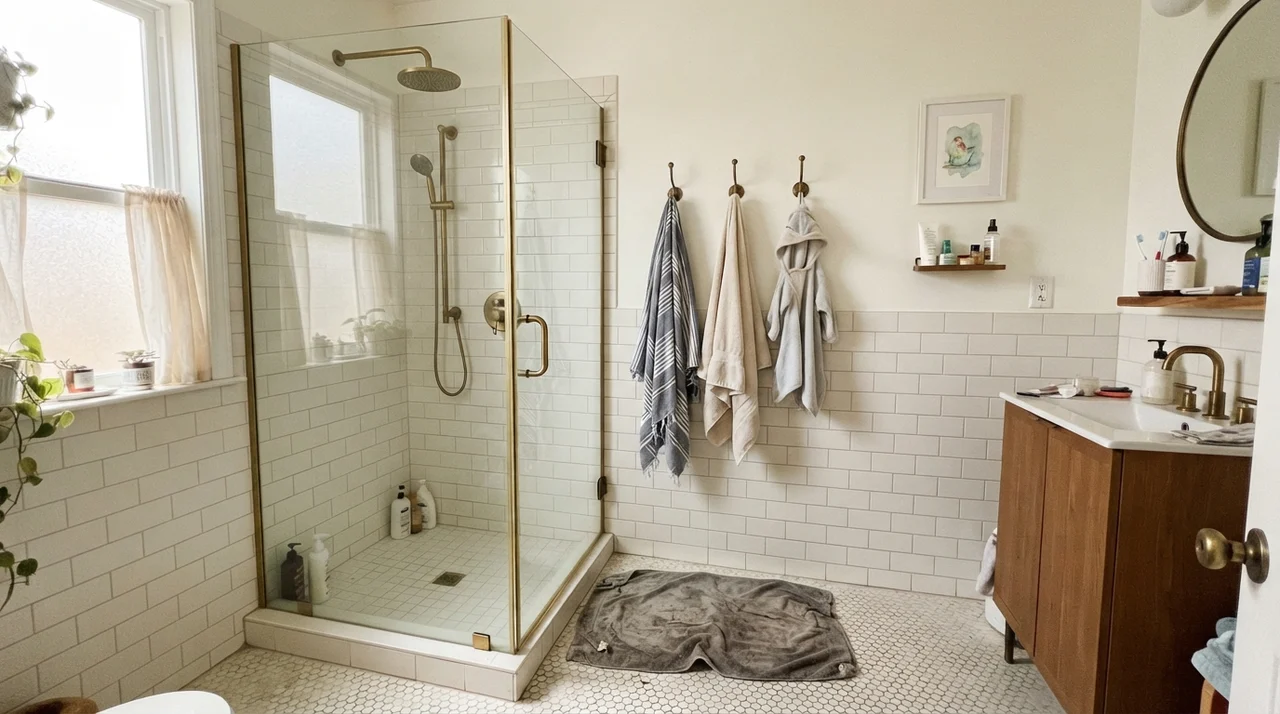
Bathrooms are a mixed bag for warm whites. If your bathroom has warm wood vanities, brass plumbing fixtures, and marble with beige or gold veining, Simply White is fantastic. Its LRV of 90 prevents a windowless powder room from feeling like a cave, and in eggshell or satin finish, moisture wipes down easily.

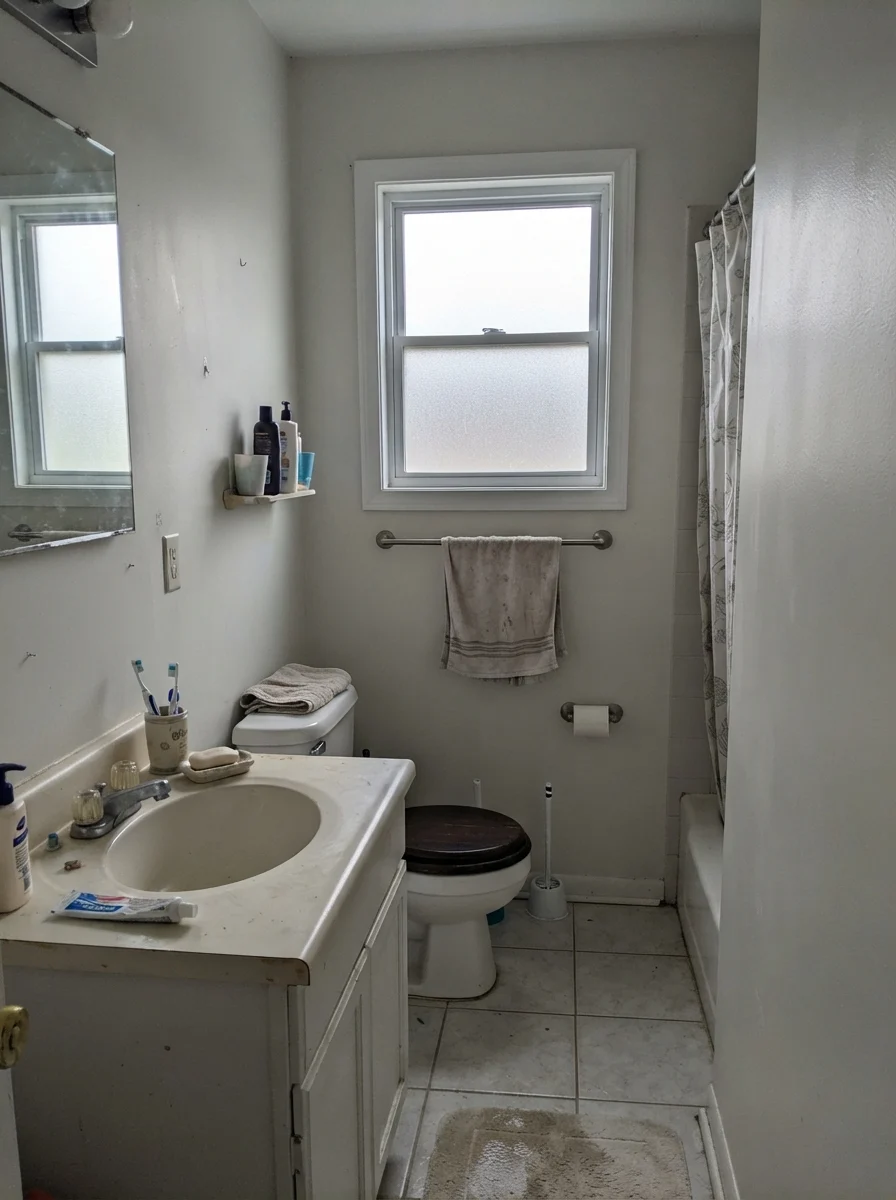
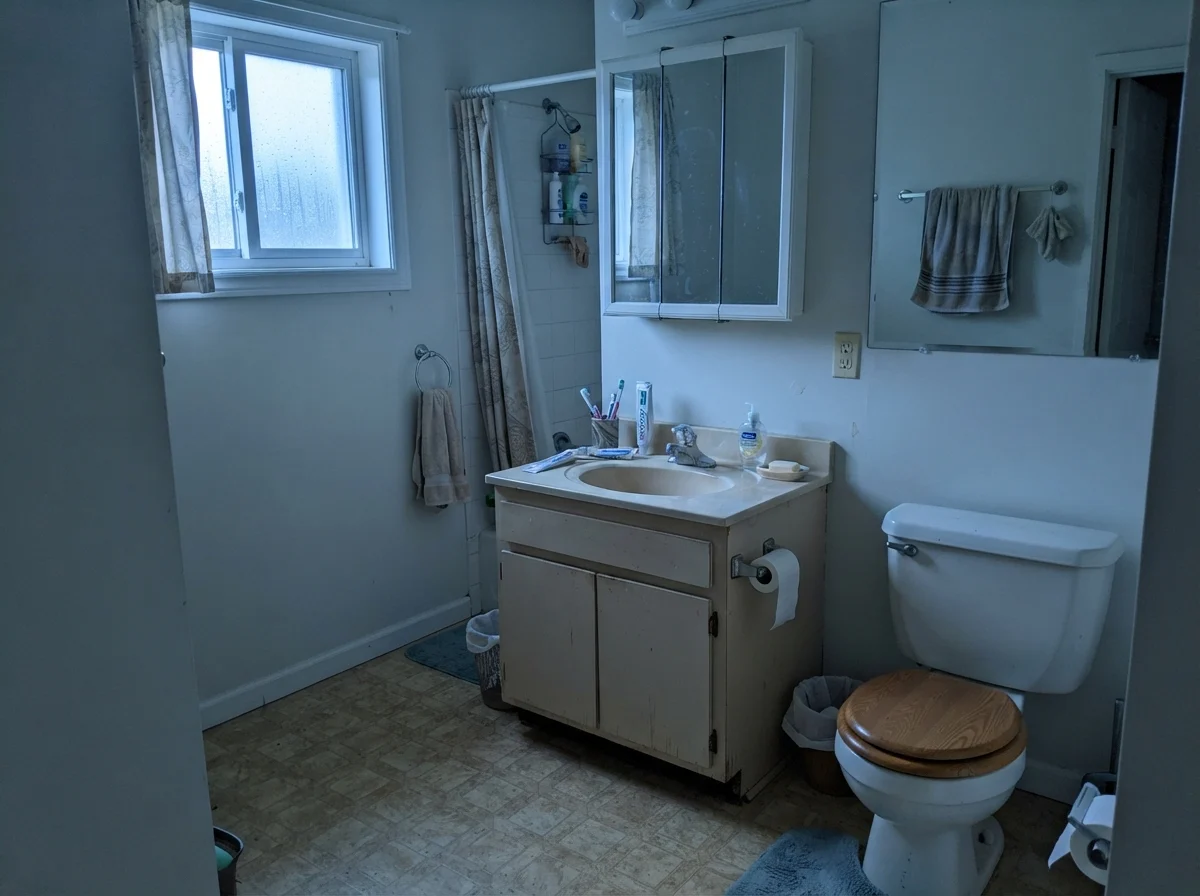
However, when paired with dated beige fixtures or flat, overcast daylight through frosted privacy glass, Simply White can lose its sparkle. In flat or cool northern light, the yellow undertone mutes out, making the wall read slightly putty-like or dull if there isn't enough contrast in the room. In our 1970s split-level, our guest bath had an older beige countertop and a tiny north-facing window; Simply White looked fine, but it certainly didn't look like a magazine spread. It was serviceable, clean, and held up to daily hand-washing, but it didn't work magic on dated porcelain.

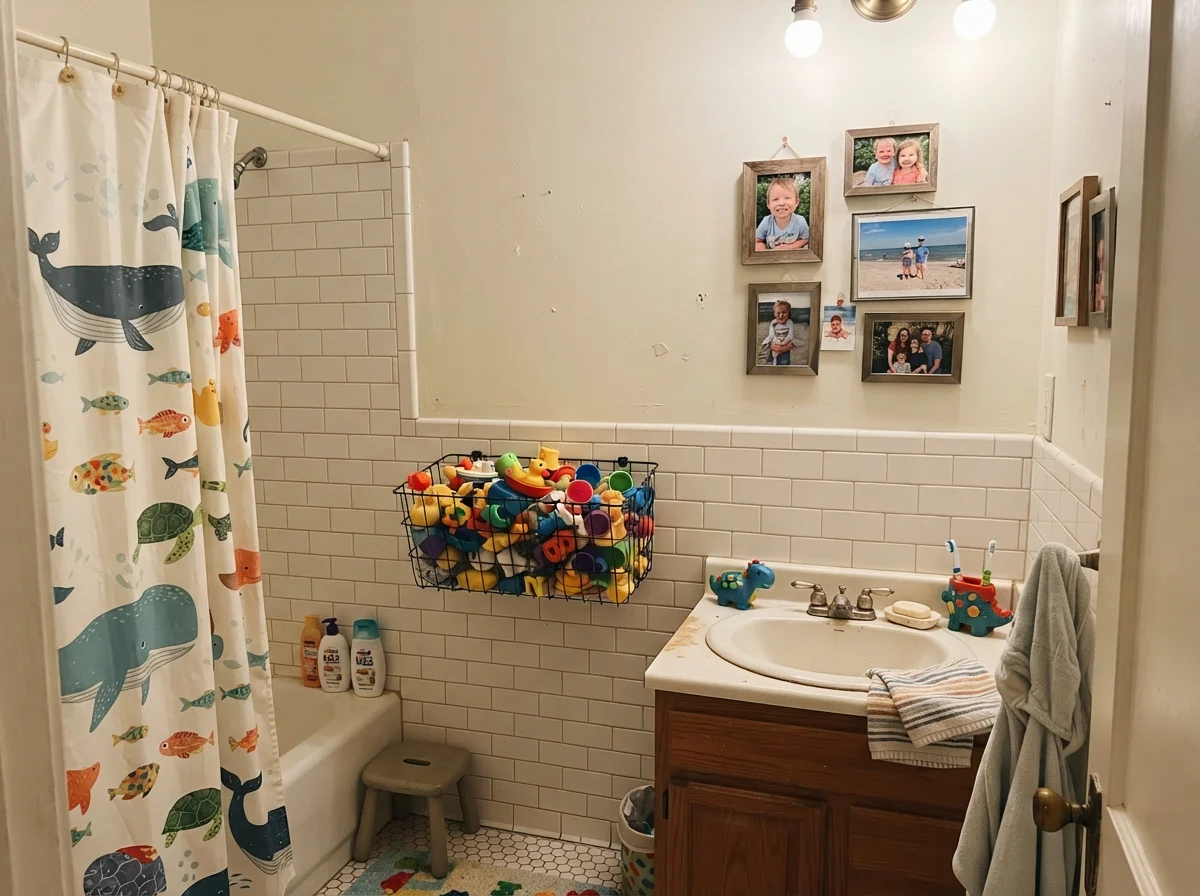
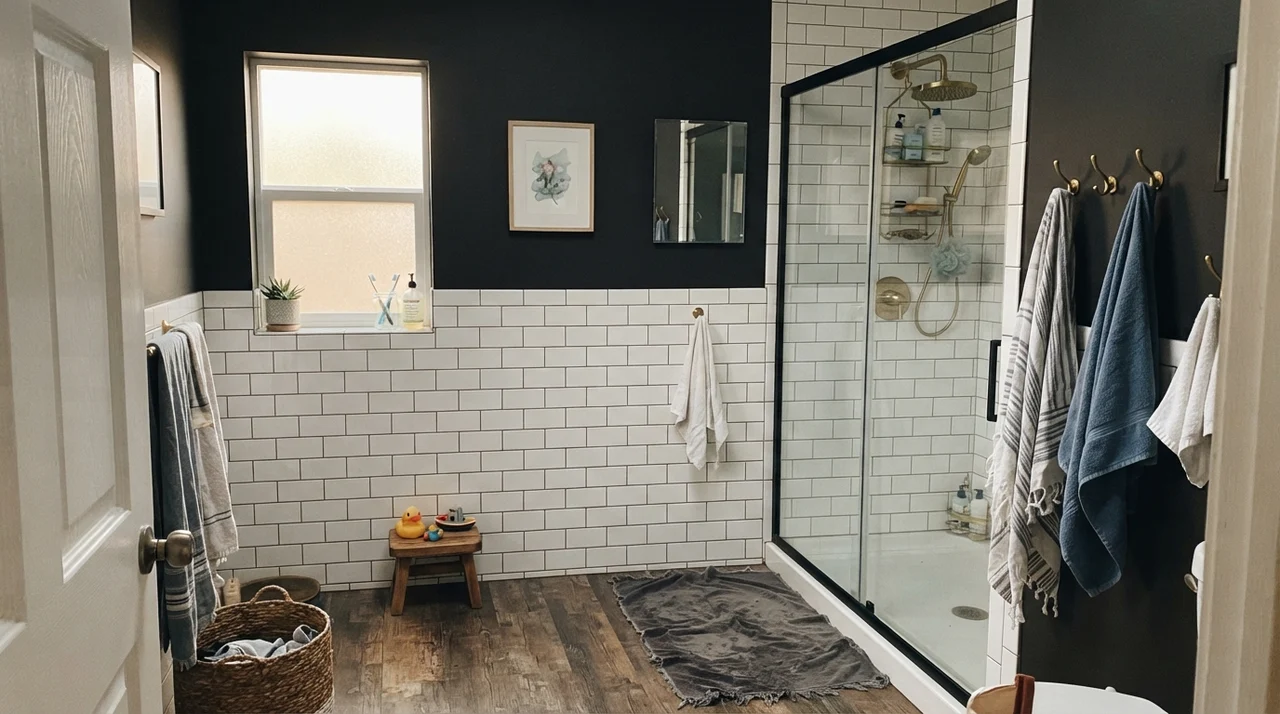
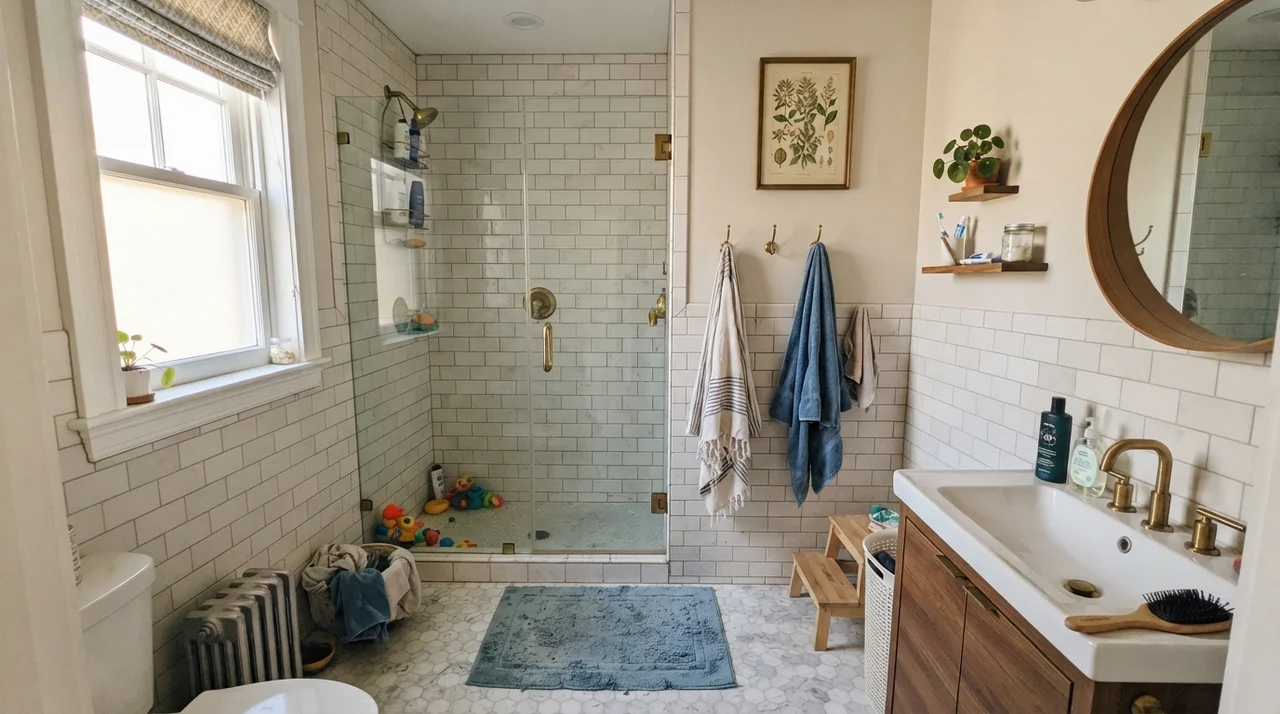
Kids bathroom with subway tile wainscot, bath toys, and Simply White upper walls.
A busy family bathroom. Painted walls over white subway tile in a kids' bathroom with a shower curtain, wire basket of bath toys, and framed family photos.
Small bathroom with Simply White walls in flat overcast light, showing white fixtures.
Flat overcast light. Small bathroom walls reading muted and grey through frosted window daylight, with white plumbing fixtures and a plain towel bar.
Modest bathroom with older beige vanity and Simply White walls under cool northern daylight.
Cool cast in a modest bath. Modest older bathroom on a rainy day with painted walls picking up a cool cast, beige vanity, toilet, and small window.
Windowless hallway corner showing Simply White looking flat and dull under a single incandescent fixture.
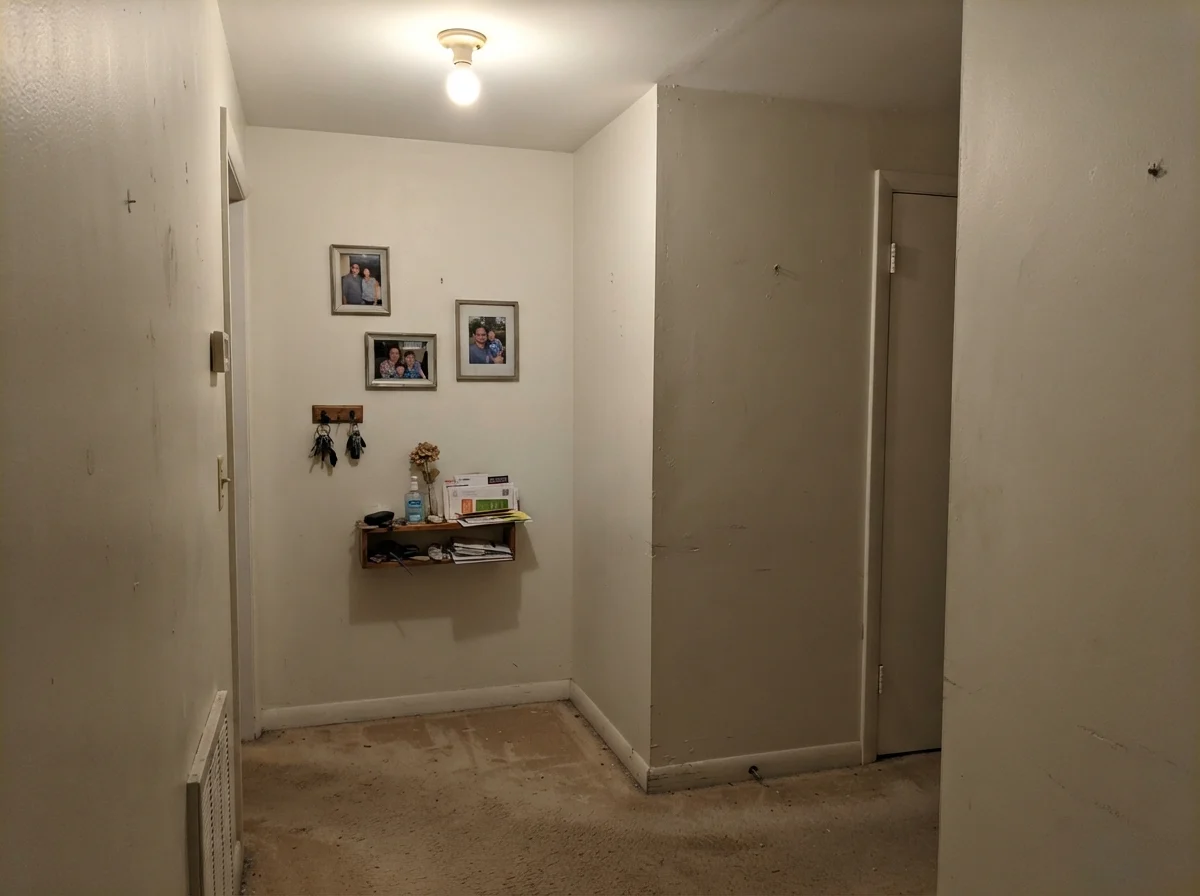
The windowless hallway trap. Windowless hallway corner under a single ceiling bulb, where the painted wall reads flat, muddy, and putty-like over beige carpet with framed photos.

The Three Real Failure Points

Simply White has very few bad reviews that are actually about paint quality. Almost every complaint I have ever heard from neighbors or read online traces back to three specific setups that you can easily spot before you spend a dime on paint:

  1. Hard western afternoon sun: This is the classic Houzz dilemma. Kitchens and bedrooms painted Simply White look crisp and clean all morning, but by four o'clock in the afternoon, the low western sun hits the yellow undertone and turns the wall into warm cream or butter. If your main windows face west, sample Chantilly Lace (OC-65) instead, or drop to a true greige like Classic Gray (OC-23) on the walls and save Simply White for trim.
  2. Placing a brighter white right next to it: You never see how yellow Simply White actually is until you put a sheet of pure white printer paper or a can of Chantilly Lace next to it. If your vinyl replacement windows or existing ceiling paint is an ultra-bright cool white, Simply White will read dirty. Either paint the trim and ceiling the same color, or pick a cooler white for the entire room.
  3. Cool grey quartz and stainless steel kitchens: If your counters feature cool grey veining, Carrara lookalikes, or cool slate tiles, Simply White on the cabinets will fight the stone. The blue-grey in the counters forces the eye to see the yellow in the cabinets. For cool stones, choose Decorator's White (OC-149) or Chantilly Lace.
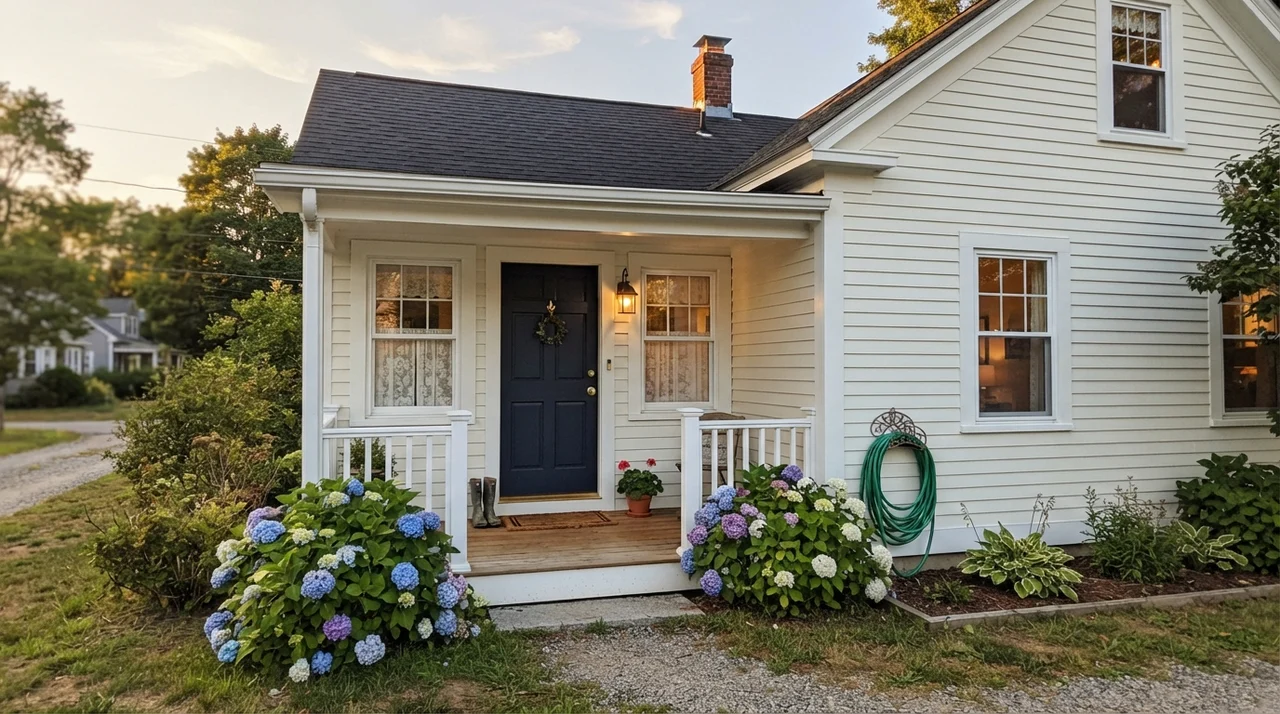
Exterior of house with Simply White horizontal siding, navy front door, white trim, and porch.
Crisp siding in full daylight. House exterior with horizontal siding painted Simply White, white trim, a dark navy front door, small porch, and hydrangea bushes with a garden hose.
Susan Hartley trimming fresh rosemary over a butcher block counter in a kitchen painted Benjamin Moore Simply White.
My kitchen, my rules. Trimming the woody ends off fresh rosemary over my butcher block counter, with my reading glasses slightly crooked and a stray leaf on my finger, against our kitchen walls in Benjamin Moore Simply White.
Simply White (Monochrome)

Susan's pickThe safest and cleanest trim match. Paint walls in eggshell, trim and doors in semi-gloss, and ceilings flat. Sheen contrast provides depth without undertone clashing.

Chantilly Lace OC-65

Avoid this combination. Chantilly Lace is significantly cooler and crisper, which immediately pushes Simply White walls yellow and makes them look dirty by comparison.

Black Beauty 2128-10

Susan's pickA rich, deep black that provides sharp, graphic contrast for interior doors, kitchen islands, or exterior shutters against Simply White siding.

Revere Pewter HC-172

Susan's pickAn excellent pairing for an adjoining accent wall or headboard wall, anchoring Simply White with soft, mid-tone depth.

Furniture and Finishes

  • Oak and Walnut Hardwoods — Warm wood grains naturally complement the sunny undertone without making the room feel orange.
  • Unlacquered Brass & Matte Black — Brass warms it further in a pleasing way; black hardware gives the high LRV a necessary grounding point.
  • Cool Grey Quartz & Carrara — Cool blue-grey veining clashes directly with the yellow base, making the paint look dingy.
  • Warm Quartz & Butcher Block — Creamy stones, butcher block, and soapstone sit comfortably alongside the warm envelope.

Home Styles

  • 1990s Colonial & Open Plans — Carries seamlessly across large connected spaces where natural lighting varies from room to room.
  • Modern Farmhouse & Cottage — Delivers a cozy, welcoming white that looks authentic alongside shiplap, oak floors, and linen.
  • Sleek Ultra-Modern Gallery — Too warm and yellow for high-contrast minimalism; a true gallery requires a neutral, un-tinted white.
  • Traditional Exterior Siding — In direct outdoor sunlight, the yellow washes out into a brilliant, sparkling white with dark shutters.

Durability, Scrubbing, and the Five-Year Reality

When you live with a paint for years rather than days, color is only half the battle. How it holds up to real life is what actually determines if it was worth the money. In our 1990s colonial, Simply White was on our kitchen walls for seven straight years. Between cooking splatters, muddy dogs brushing past doorways, and grandchildren leaning against the hallway corners, it took its fair share of abuse.

In Benjamin Moore's Regal Select eggshell finish, Simply White scrubbed clean remarkably well. Grease marks by the range and scuffs near the back door came off with warm water, mild soap, and a microfiber rag without burnishing the finish. However, because it sits at LRV 90, it does not hide dirt. A dark scuff mark from a boot shows up immediately on this wall, whereas a mid-tone greige would mask it for months.

Touch-ups are another area where you have to be careful. Painters frequently report that because Simply White is so high in LRV and has a translucent yellow-tint base, it can require three coats over grey primer to achieve completely solid coverage. When you go back to touch up a nail hole four years in, feathered brush marks can flash if you don't use the exact same roller nap. If you have to patch a high-traffic spot, plan on rolling the whole corner-to-corner section rather than dabbing a single spot.

vs Chantilly Lace (OC-65)

Simply White (LRV 90) is noticeably warmer with yellow undertones, making dim rooms feel cozy. Chantilly Lace (LRV 92) is crisper and cooler, holding up better in harsh western sun and next to grey quartz.

vs White Dove (OC-17)

White Dove is slightly darker at LRV 85, leaning on a subtle grey-greige undertone that keeps it quiet and calm. Simply White is brighter, throws more light back into the room, and runs warmer.

vs Cloud White (OC-130)

Cloud White sits at LRV 85 and leans into a richer, creamier off-white. Simply White is cleaner and lighter, making it the better choice if you want brightness rather than a true antique cream.

vs Sherwin-Williams Alabaster (SW 7008)

Both were crowned in 2016, but Alabaster (LRV 82) is deeper, softer, and creamier with a beige undertone. Simply White is noticeably brighter and acts more like an energetic white than a soft neutral.

Why does Simply White look yellow in my kitchen?

Simply White contains yellow tint in its base. If your kitchen receives strong direct afternoon sun from western windows, or if your lighting relies on warm 2700K bulbs, that yellow is amplified. It also looks yellow if placed next to cool grey countertops or bright white trim.

What is the best trim color for Simply White walls?

The best trim color is Simply White itself in a semi-gloss sheen. Using a stark, cool white trim next to Simply White walls will make the walls look dirty and emphasize the yellow undertones.

Does Simply White work well on kitchen cabinets?

Yes, especially in satin finish paired with warm oak, brass hardware, and warm stone or butcher block counters. Skip it if you have cool grey-veined marble or heavy stainless steel installations.

How many coats of Simply White are needed over primer?

Because of its high LRV and warm base, Simply White can be somewhat translucent. Over dark walls or fresh drywall primer, painters often recommend two solid coats minimum, and occasionally three for total uniformity.

Susan's Verdict · The Bright White That Needs Guardrails

Simply White is not the zero-thought universal paint the magazines claimed it was back in 2016, but it is still a fantastic tool when used in the right rooms. If you have an open floor plan, warm hardwood floors, north-facing windows, or dim rooms that desperately need light bounce, it delivers a friendly, bright warmth that few colors can match. Just keep it away from hard western sun, don't trim it with Chantilly Lace, and keep it clear of icy grey marble. Used with intention, it is worth every penny.

Susan Hartley
Susan Hartley · Home Editor & 30-Year Homeowner

Three houses, thirty years, every room repainted at least twice. Susan writes about what colors are like to live with — five years in, not five days. More about Susan →