Color Diary · No. 61
Behr Hidden Gem: The Dark Jade Gamble in Everyday Rooms
Behr's 2026 Color of the Year, reviewed honestly: what it actually looks like on a wall, the three rooms where it falls apart, and what to pick instead.

Susan HartleyOctober 3, 2026 · 13 min read
Hidden Gem · Behr N430-6A
Hex#596D69LRV14Undertonesgreen → gray → blue
In our last house—a center-hall colonial we bought in the late nineties—I spent three weeks convincing myself that dark, moody colors belonged in every room with a door. I rolled a murky forest tone onto the study walls, looked at it under the wet roller shine, and thought I had pulled off a designer showroom. By year two, I realized the room was only tolerable at four in the afternoon when the sun hit the south window just right. The rest of the day, it sat like cold slate. When we sold that house, repainting that study in a gentle neutral took three coats of heavy primer and an entire Saturday I will never get back.
That lesson has stayed with me through thirty years and three houses. Dark paint is never just a pigment choice; it is an architectural commitment. When Behr announced Hidden Gem (N430-6A) as their 2026 Color of the Year, I looked closely at the numbers before looking at the marketing chips. At a Light Reflectance Value (LRV) of 14, this is a deep, smoky jade. It offers the visual anchor and weight of a near-black without the harsh, sterile chill of pure carbon. But LRV 14 also means it reflects only fourteen percent of the light that strikes it. If you feed it good daylight, it rewards you with a rich, historic depth. If you starve it, you are left staring at a muddy charcoal you paid extra to tint.
I have lived with dark greens, slates, and teals long enough to know which rooms earn them and which ones end up feeling like windowless basements. Hidden Gem is a magnificent paint when used with strict discipline, but it is not a cure-all, and it certainly is not a whole-house neutral.
Light: Where the Jade Wakes Up and Where It Dies
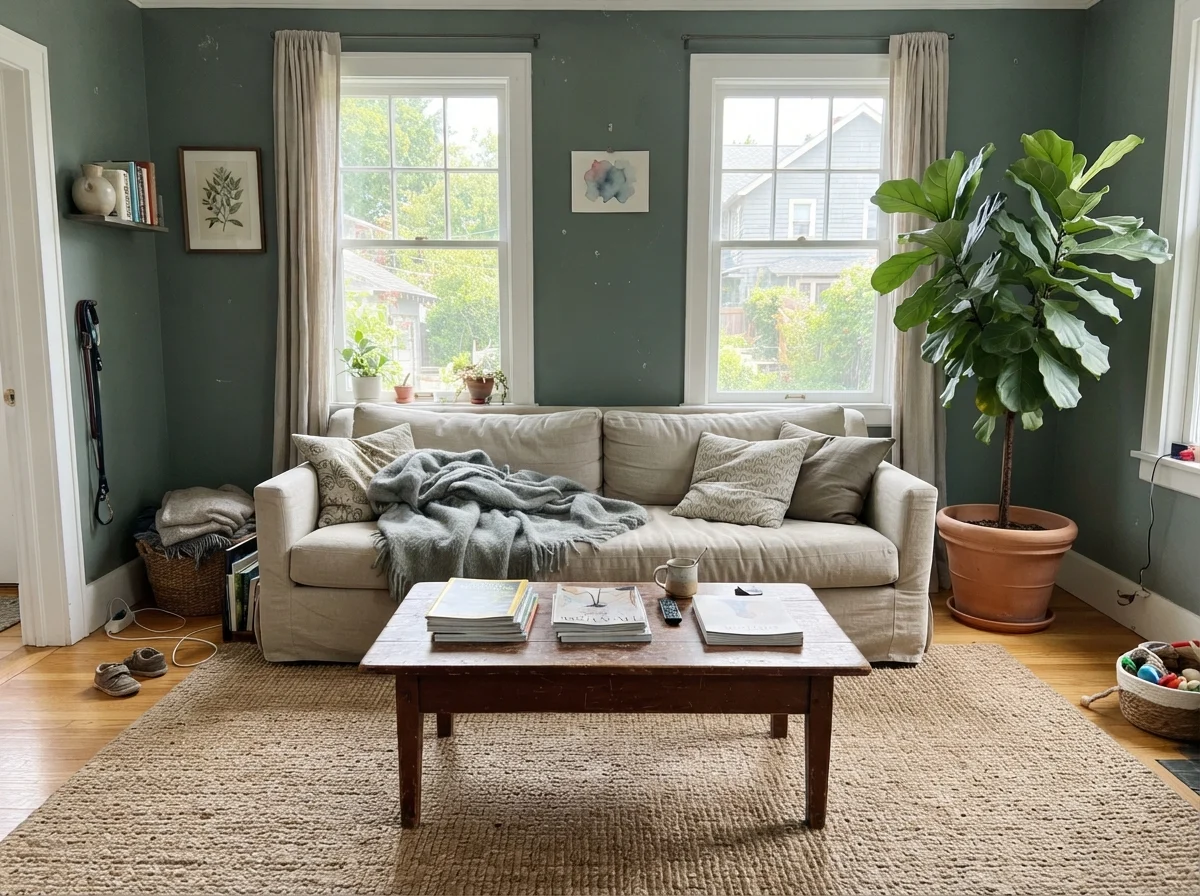
Here is what the swatch in the aisle will not tell you: Hidden Gem has roughly ten percent saturation. That low saturation is precisely why it looks sophisticated rather than loud, but it also means the green pigment is delicate. In direct southern sun, the warmth brings the jade and spruce notes forward, giving you a deep, velvety ocean-forest hue that feels grounded and expensive.
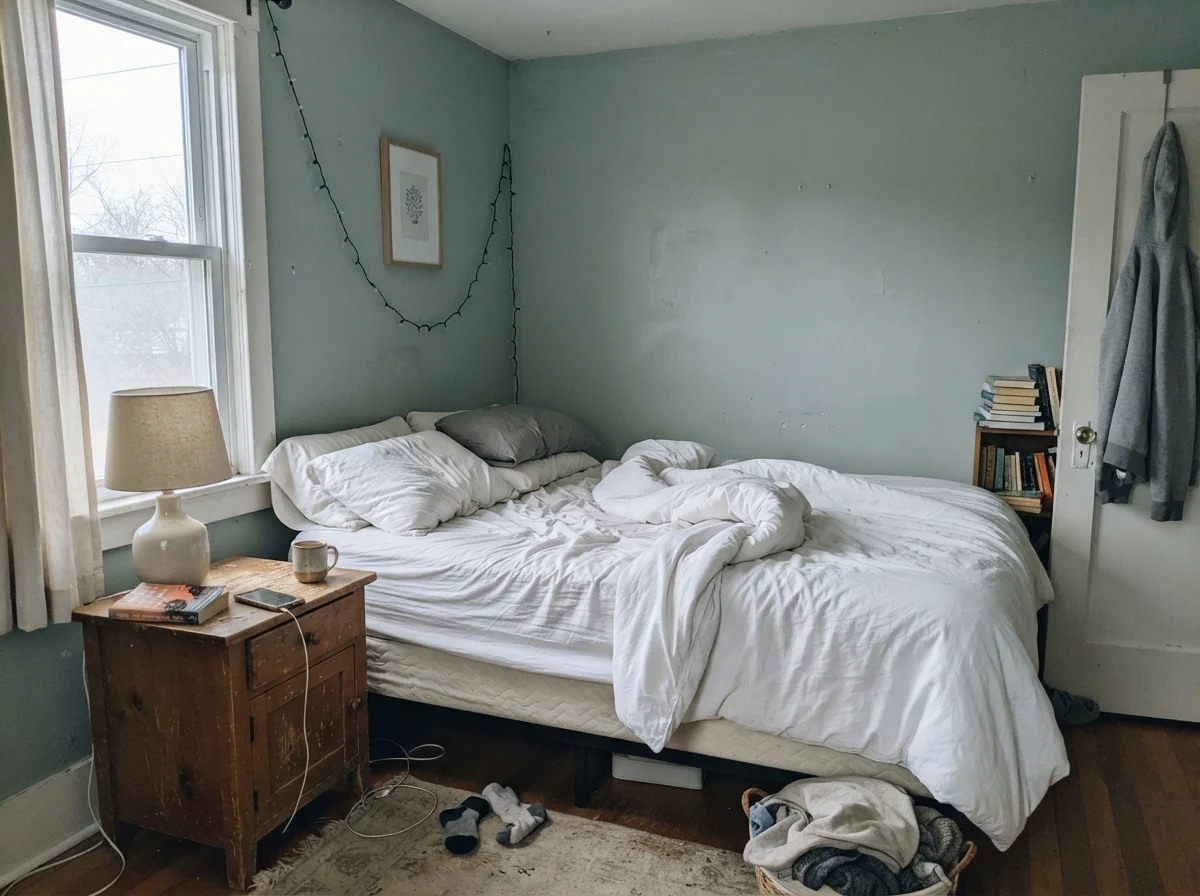
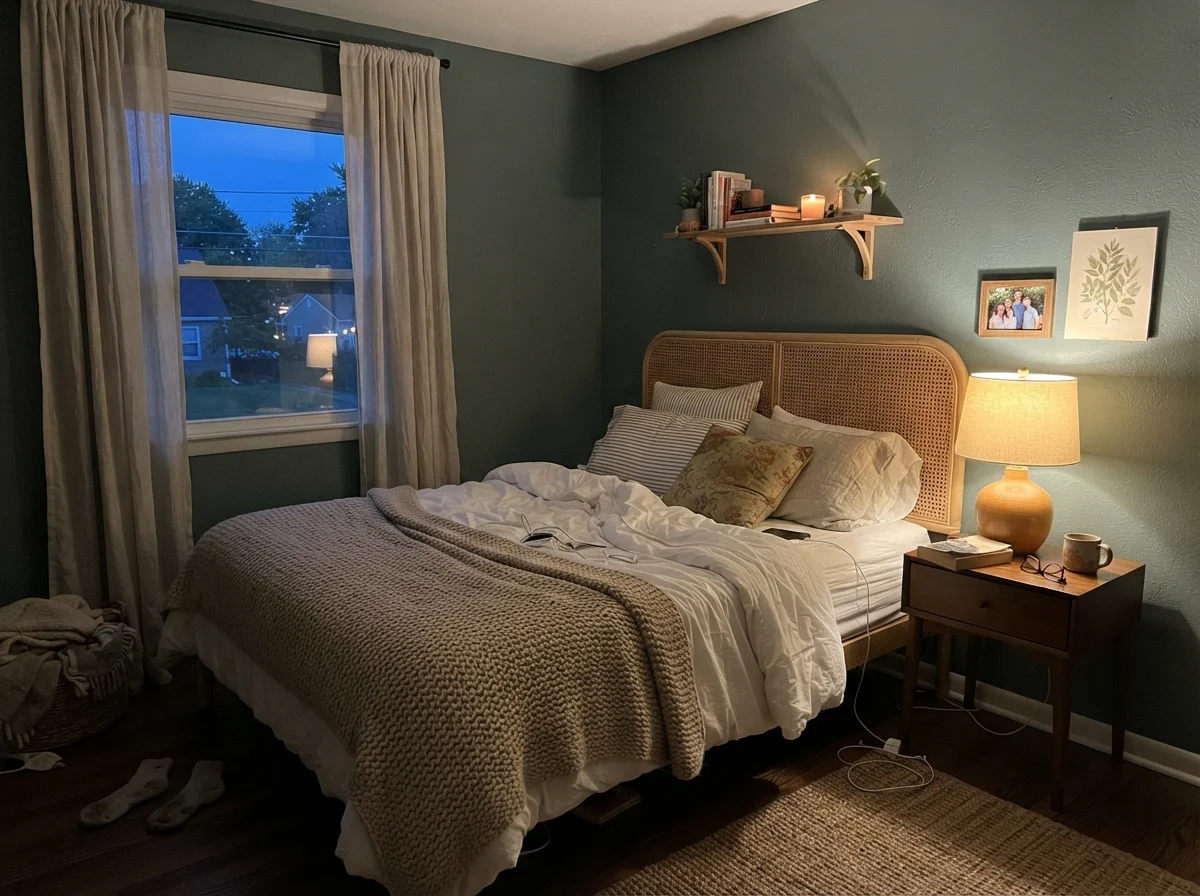
Turn that same wall toward a north-facing window or an overcast sky, however, and the green drains away entirely. Cool daylight flattens low-saturation teals into dark blue-charcoal. If you buy this can expecting an emerald or a forest green in a low-light room, you will be sorely disappointed. In the evening, the color depends entirely on your artificial lighting. Under warm 2700K bulbs, the spruce richness comes back to life. Under harsh 4000K daylight LEDs, it looks like wet asphalt. If a room painted in Hidden Gem feels off at night, change your lightbulbs before you bother repainting the wall.
Bedrooms, Quiet Corners, and Growing Families
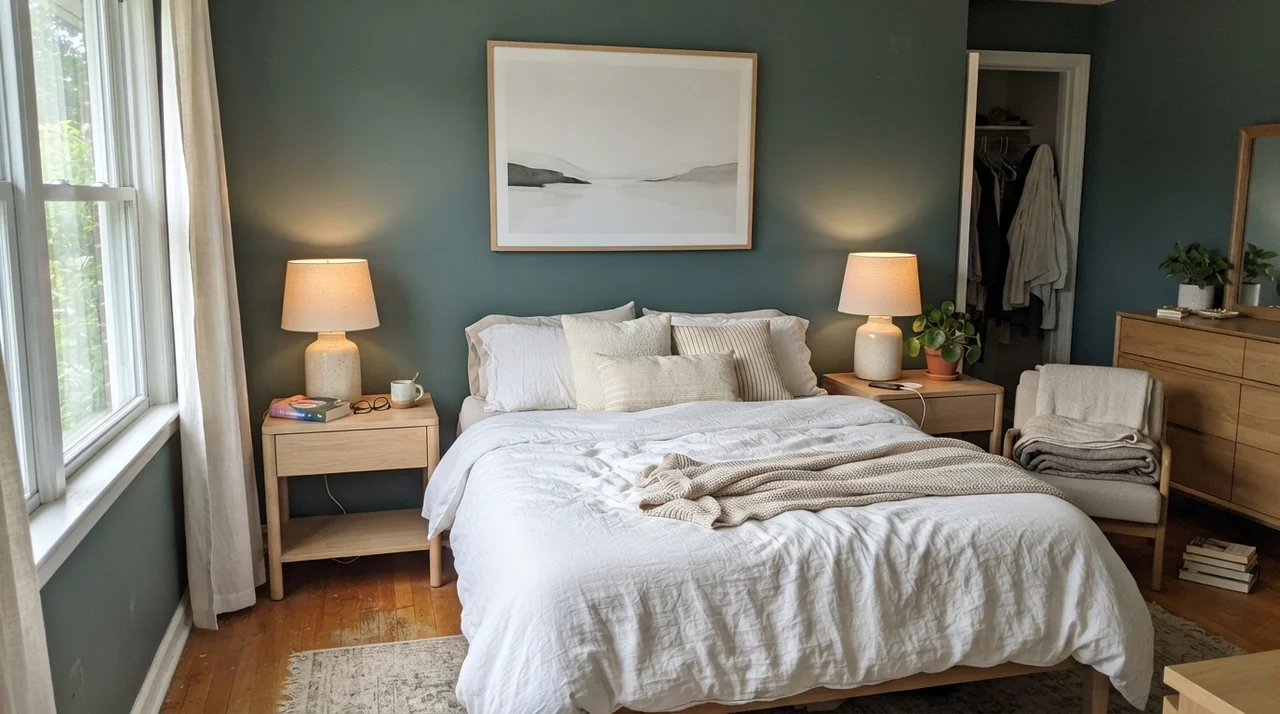
When using a shade this heavy in sleeping spaces, window placement dictates success. In a primary bedroom with substantial natural daylight, Hidden Gem creates a cocooning, restful environment that makes crisp white linens and pale oak furniture pop. It feels mature and intentional. But if your bedroom relies on a small north-facing window, the walls will close in by mid-afternoon, creating a dim box long before sunset.
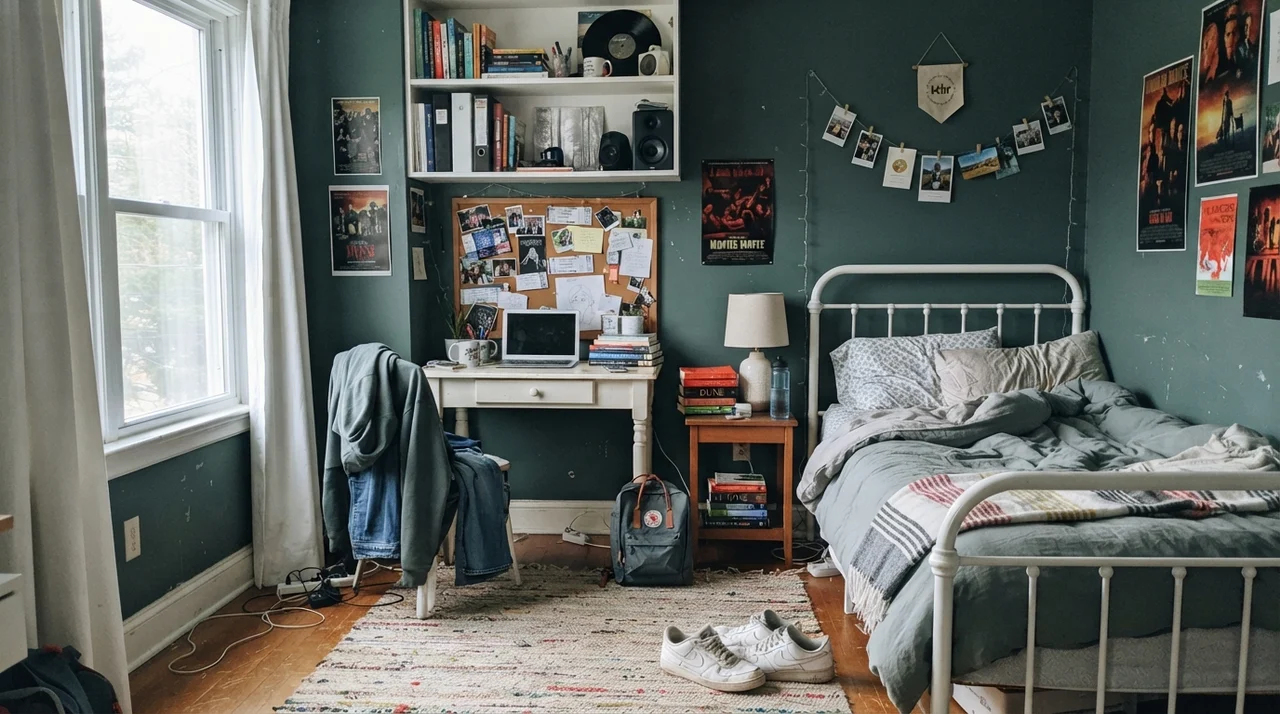
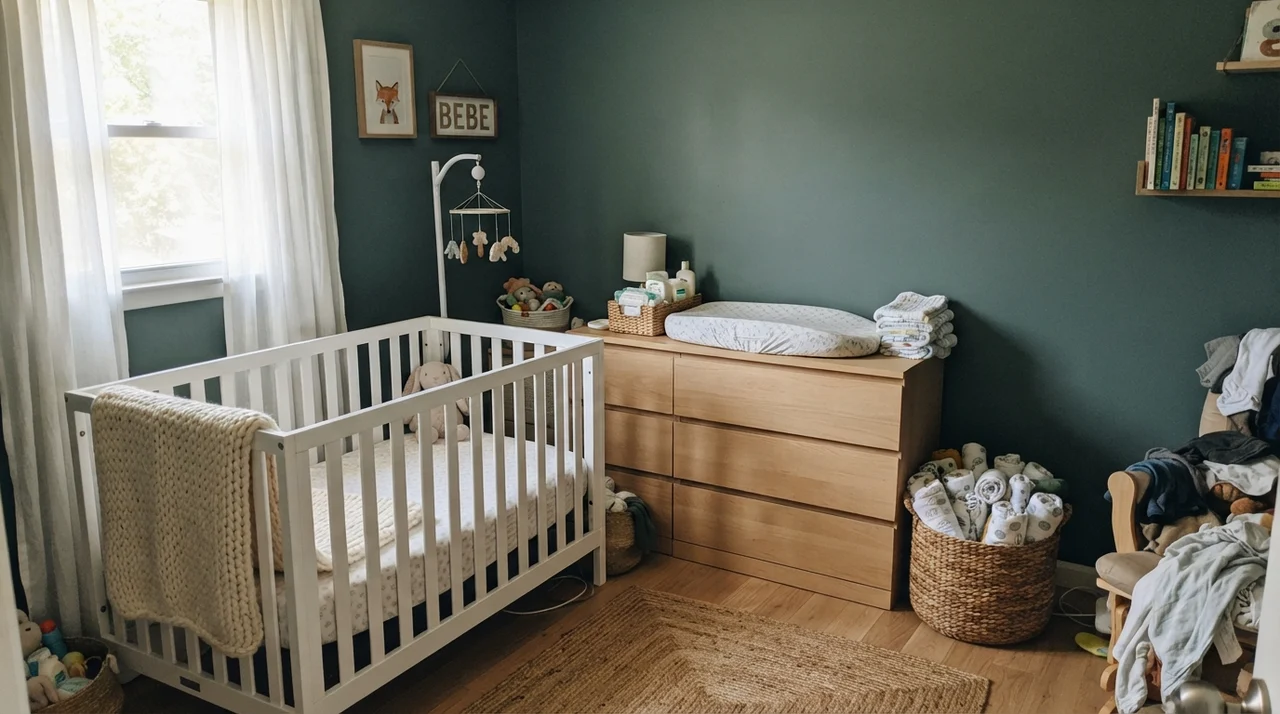
We tried a deep moody teal in a teenager's room years ago, and while it looked striking on move-in day, it required a balance of bright white furniture, open shelving, and solid task lighting to keep the space functional for homework and daily clutter. In a nursery, paired with light natural wood dressers, woven storage, and clean white crib details, the color acts as a modern backdrop that does not feel babyish—meaning it will not need repainting five years in when the child starts school.
The Woodwork Ally: Kitchens and Cabinetry
If you own a home built between 1985 and 2005, chances are you are staring at honey oak or builder-grade golden maple cabinets. Most homeowners think the only way out is a six-thousand-dollar cabinet refacing job or painting everything stark white. But Hidden Gem is one of the rare deep colors that genuinely flatters golden wood. The cool green-blue sits directly opposite the orange tones on the color wheel, neutralizing the brassiness of the oak rather than fighting it.
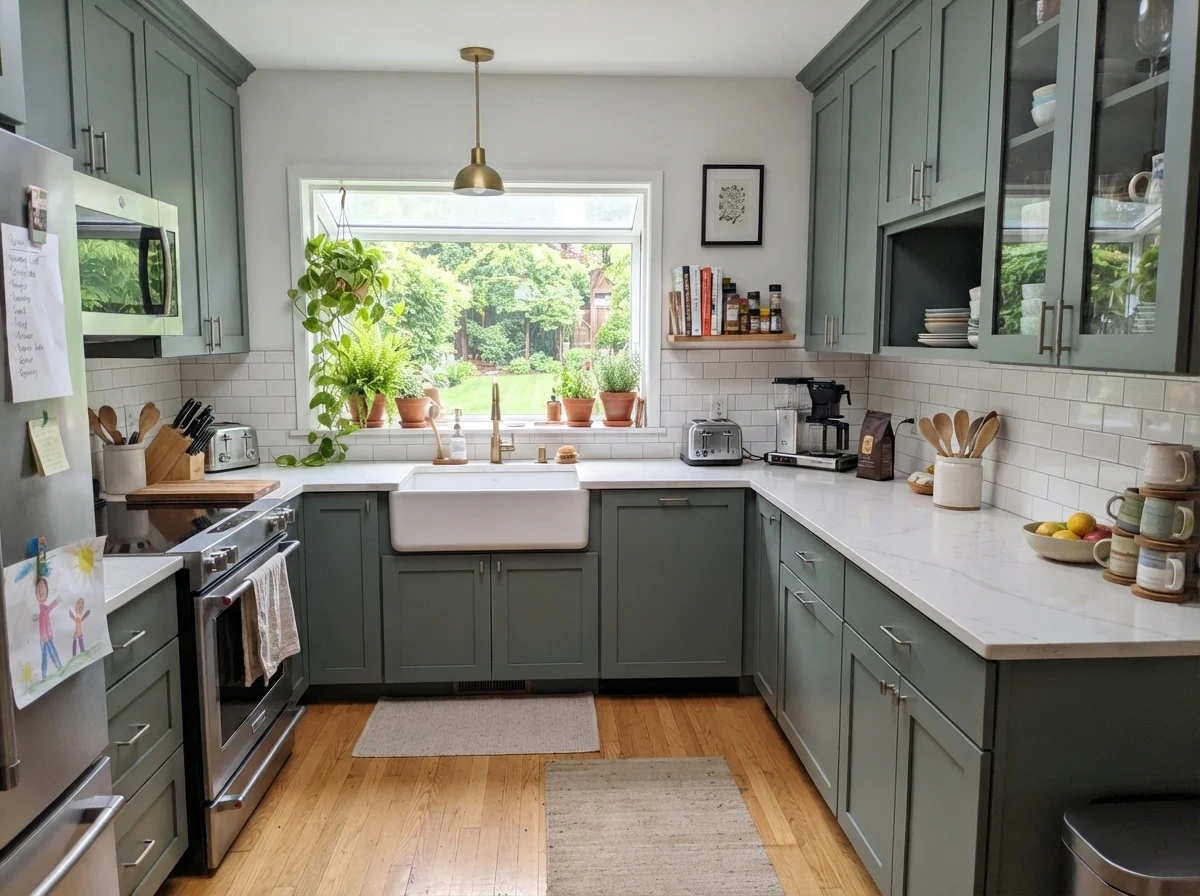
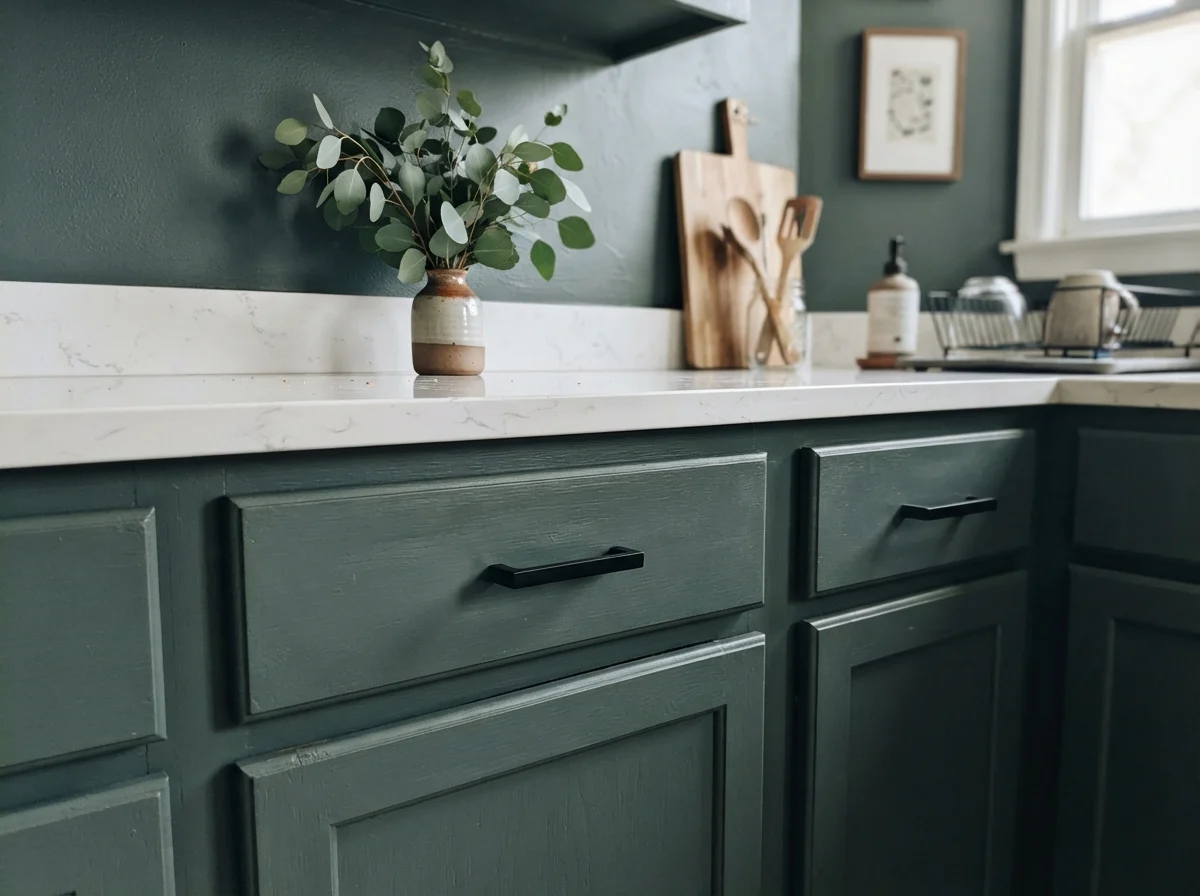
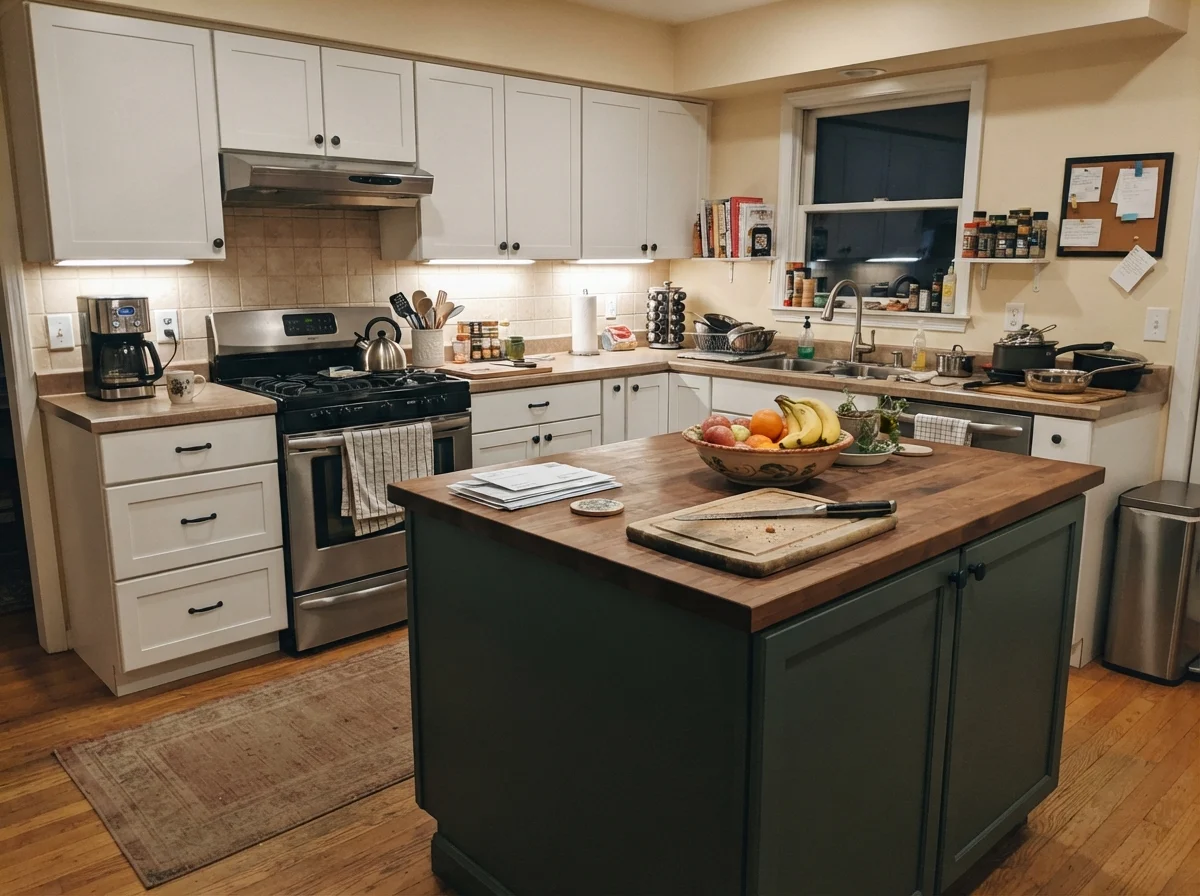
On kitchen cabinetry or a standalone island, Hidden Gem delivers the anchoring drama of charcoal without looking stark. When applied in a durable satin enamel, it hides scuffs around barstools far better than white ever could, and it scrubs clean without leaving burnished shiny spots. Just be sure to keep perimeter upper cabinets or backsplash tile light and bright—like clean white subway tile and pale quartz—so the kitchen retains its working light.
Baths, Laundries, and Sun-Drenched Rooms
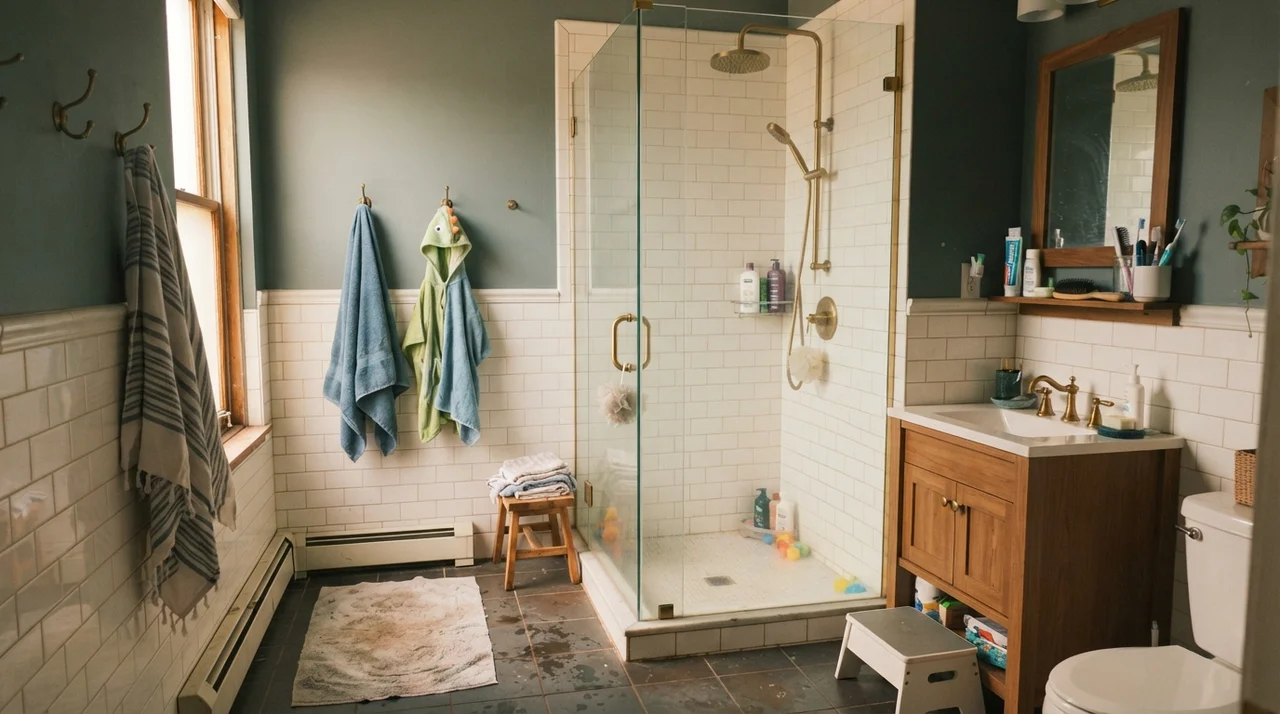
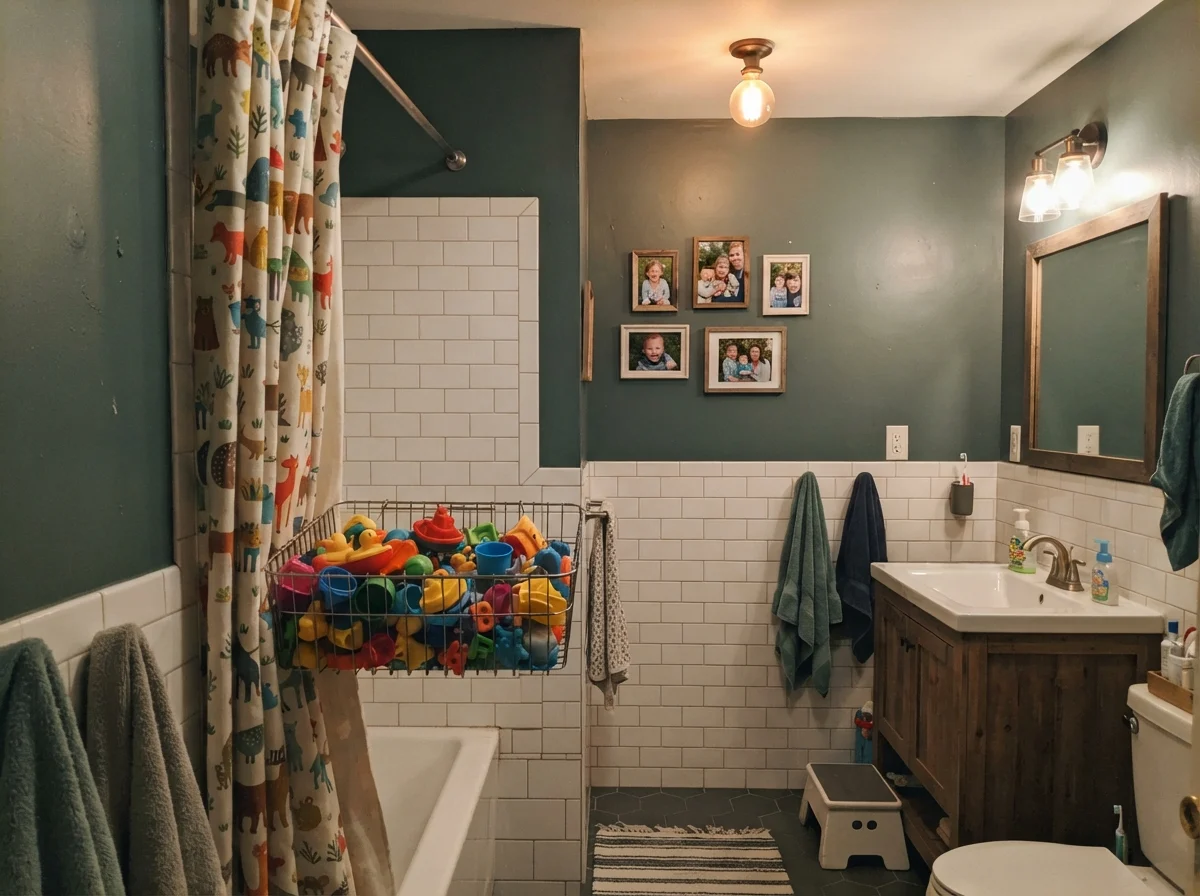
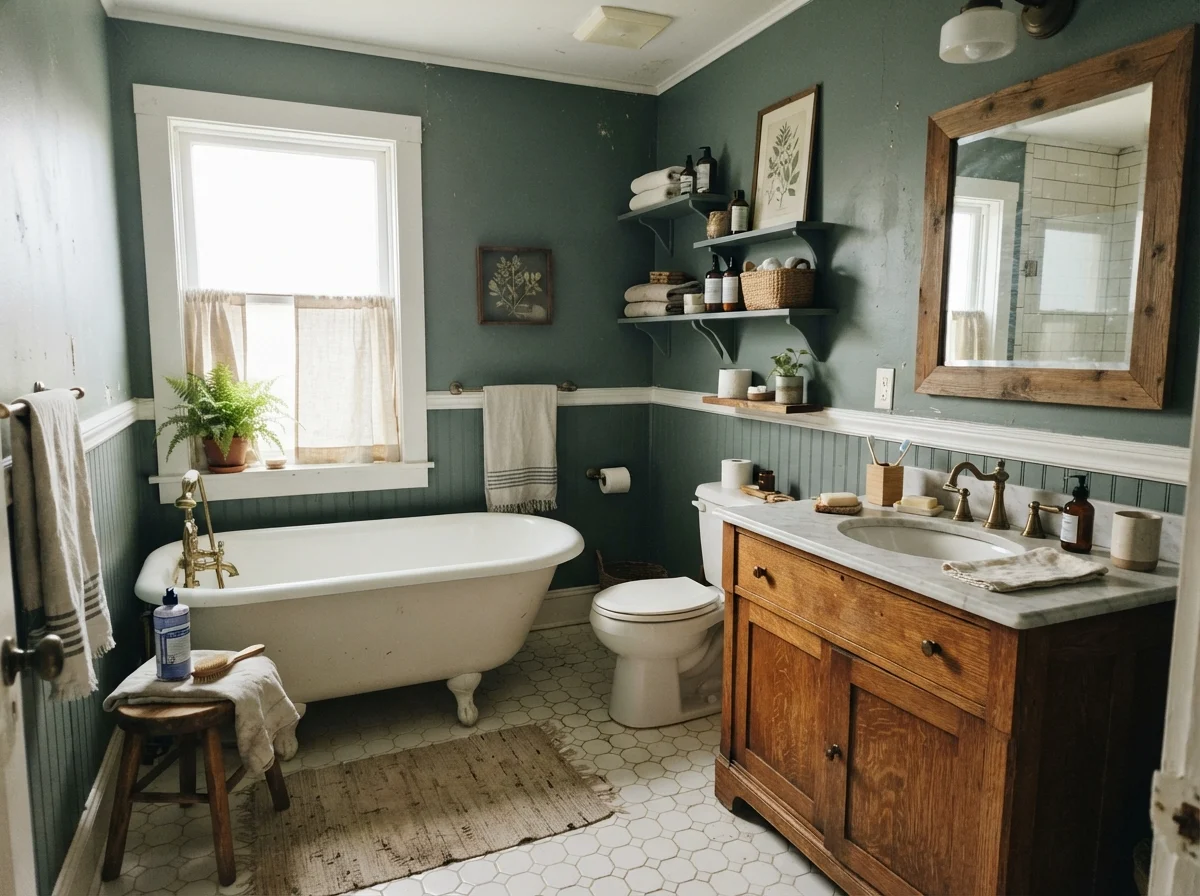
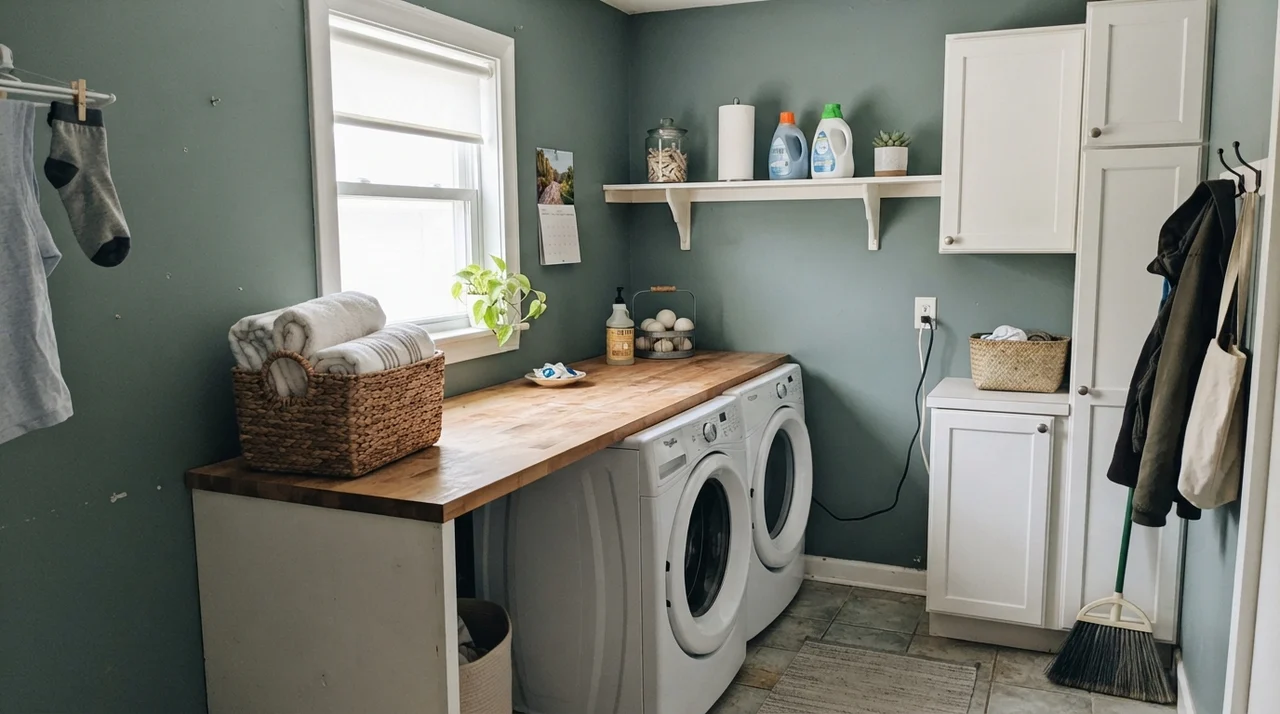
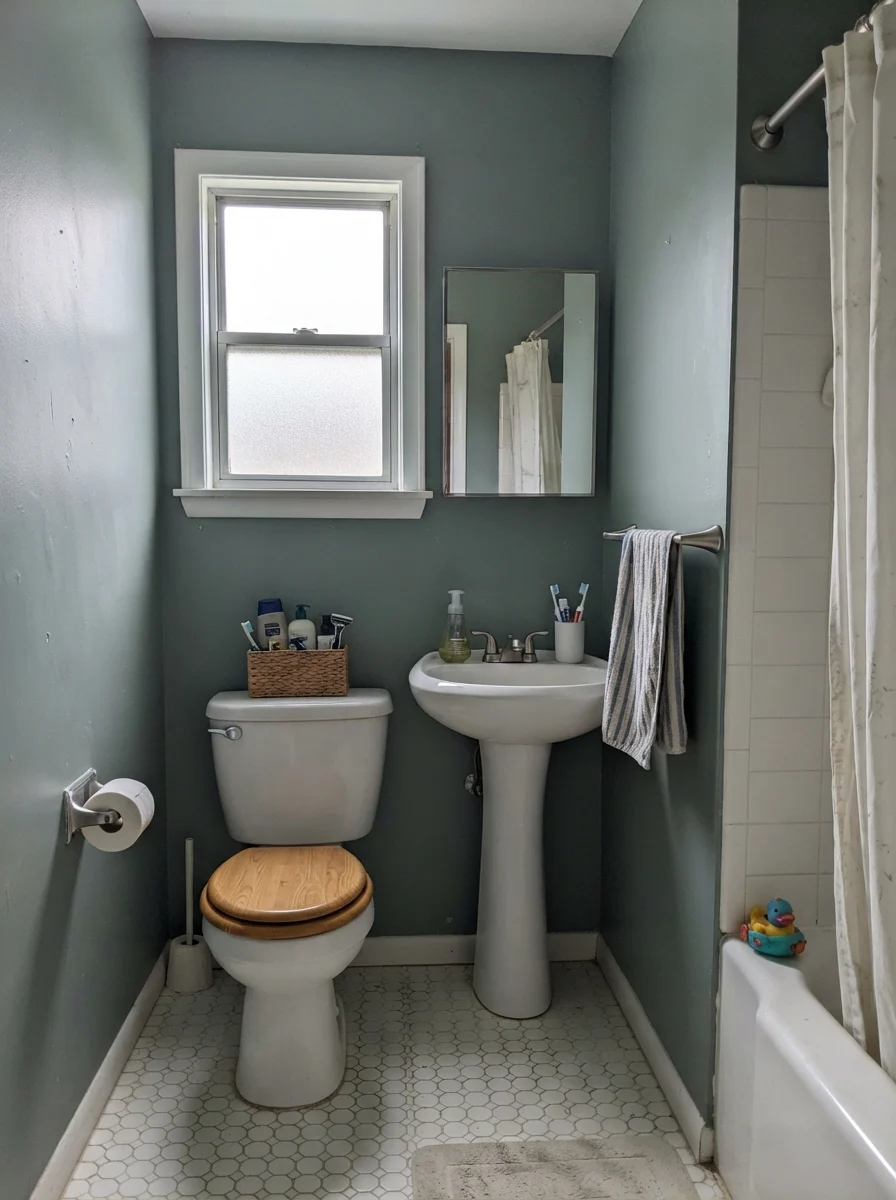
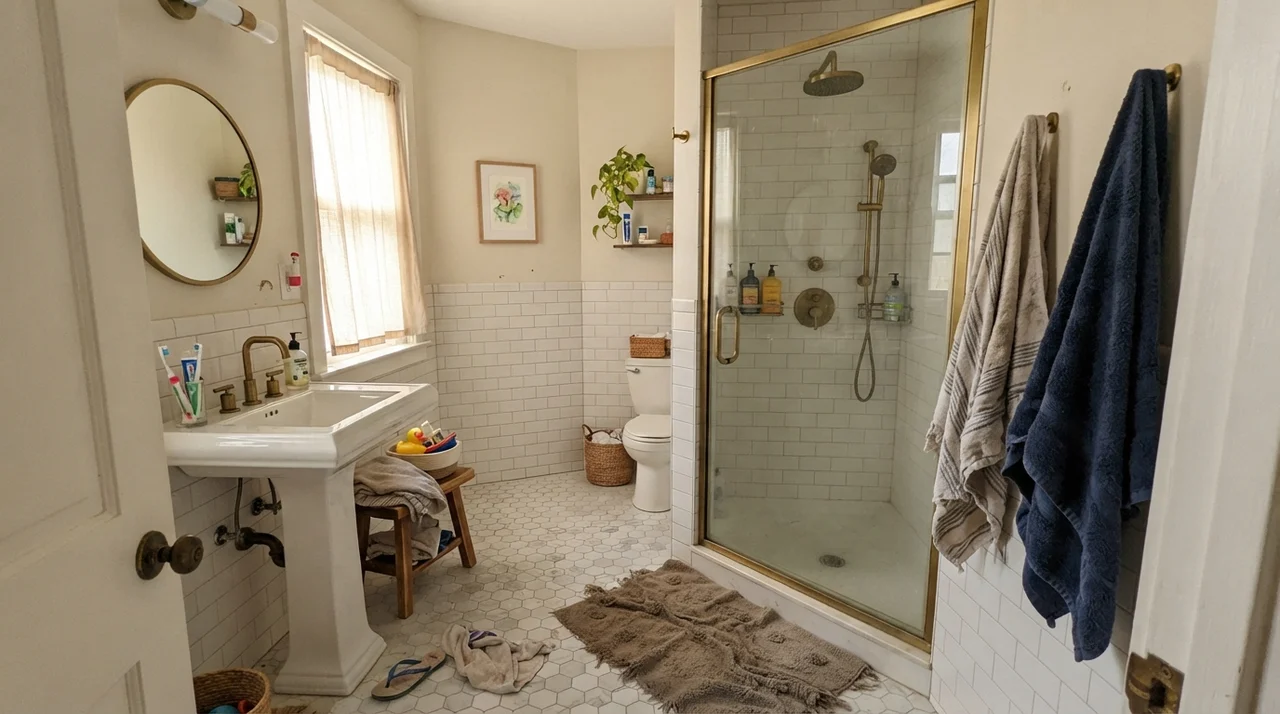
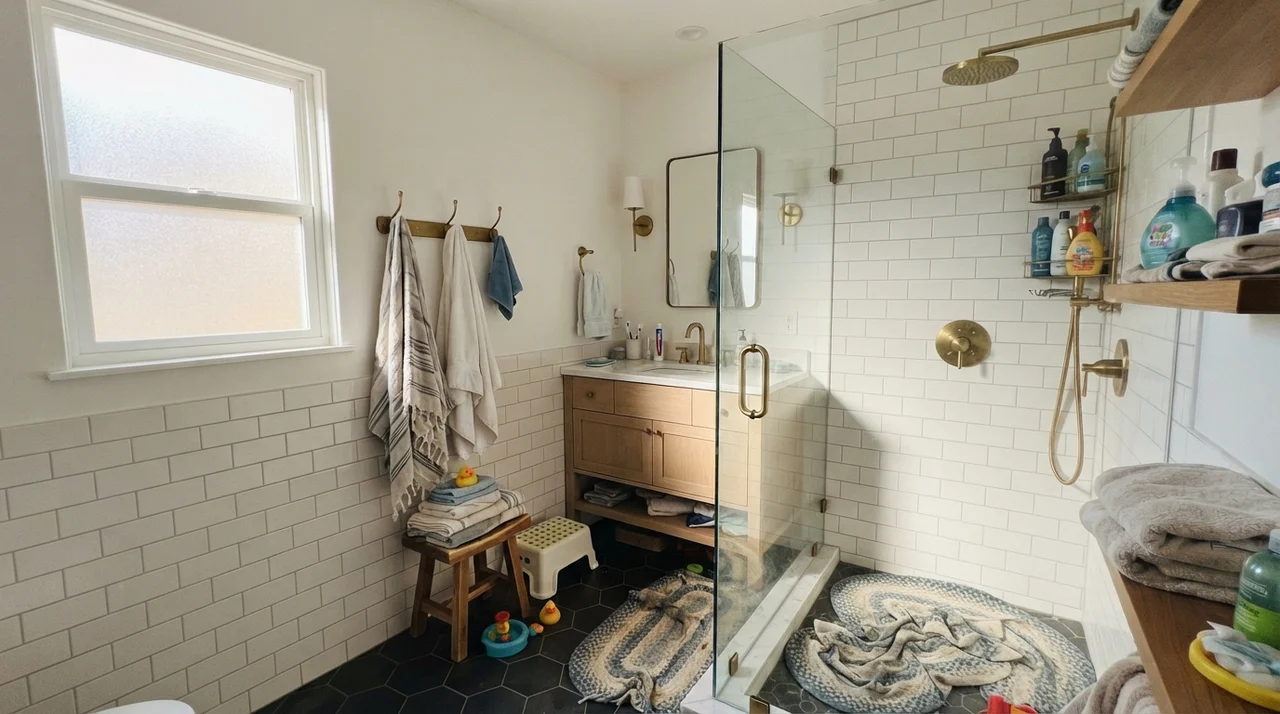
Small utilitarian spaces often benefit most from decisive color choices. In a bright laundry room, painting the walls behind white utility appliances and butcher-block counters makes a mundane chore space feel like a designed room. In family and cottage bathrooms, wrapping Hidden Gem around white wainscoting or clawfoot tubs creates crisp contrast that holds up against moisture and daily use.
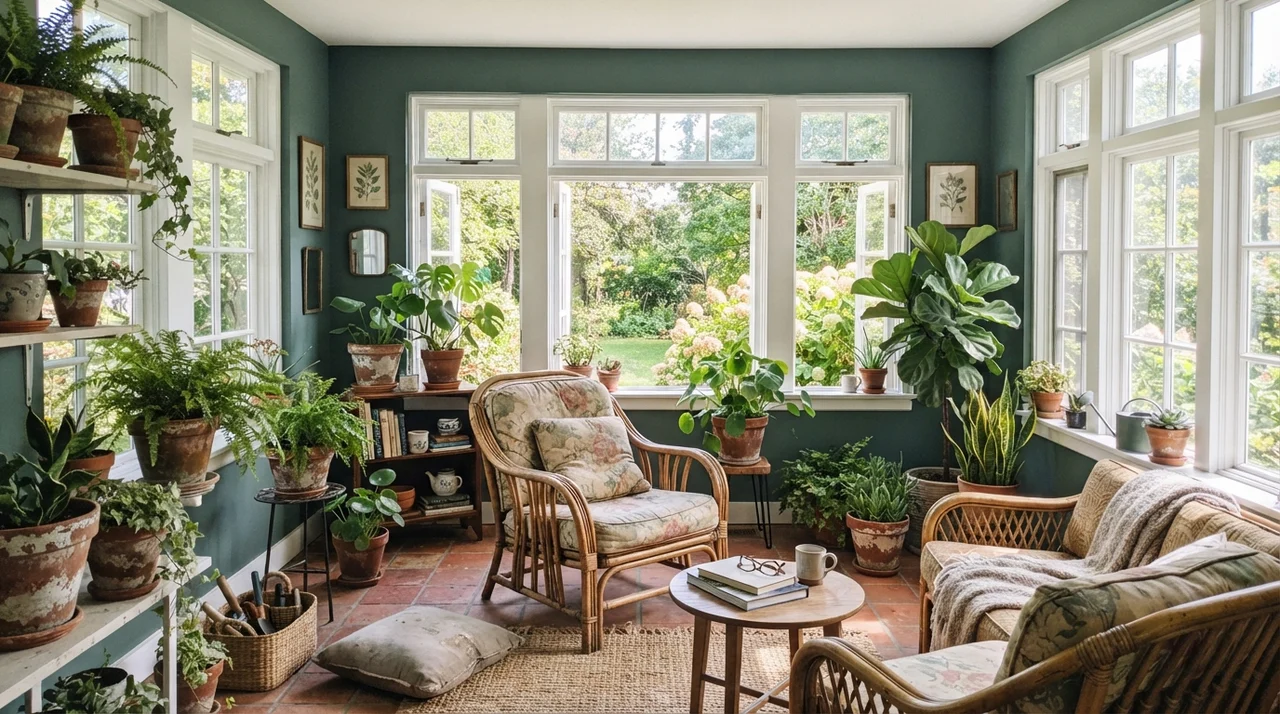
In high-exposure living spaces and sunrooms surrounded by large windows, the intense daylight prevents Hidden Gem from feeling heavy. Instead, the abundant light washes through the gray undertones, letting the green notes shine against natural wicker, jute rugs, and leafy indoor plants. It stays crisp without veering into bright emerald or synthetic teal territory.
The Risk of Cool Exposures
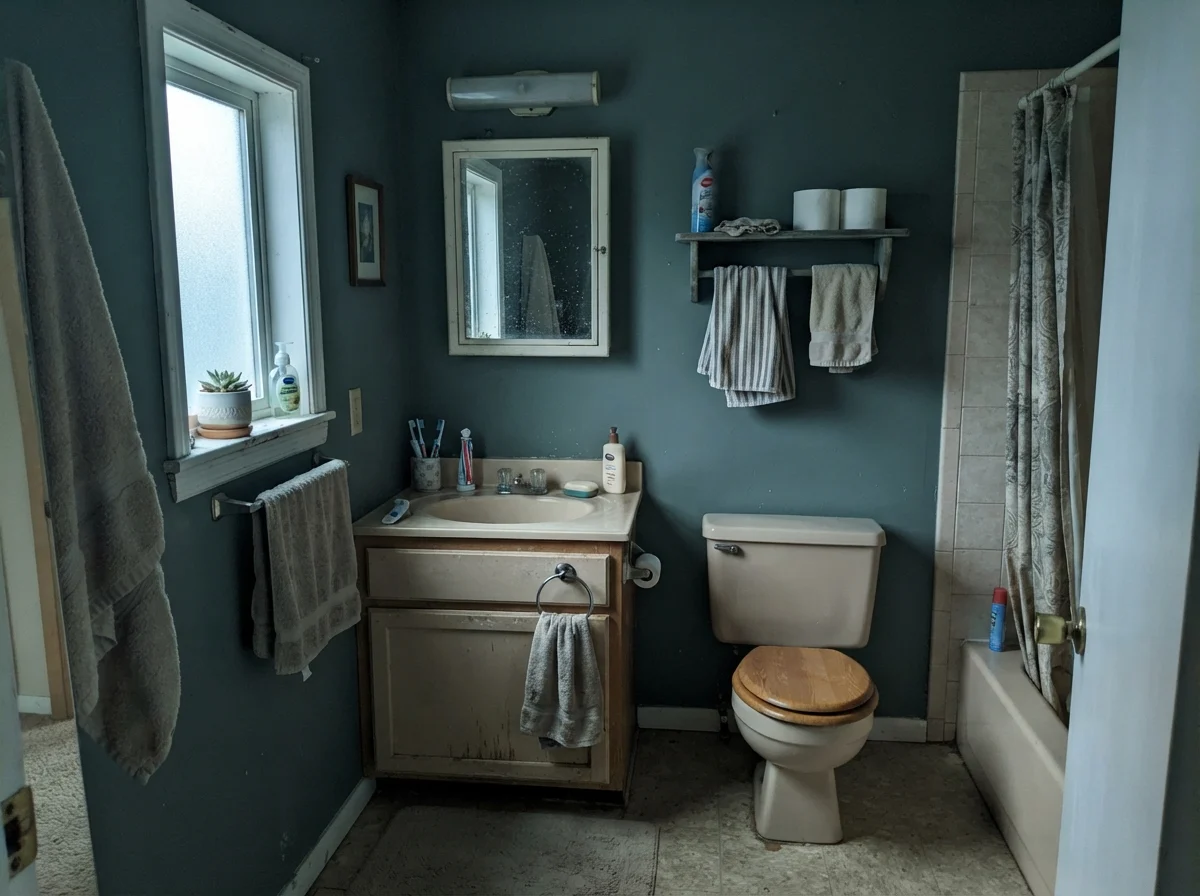
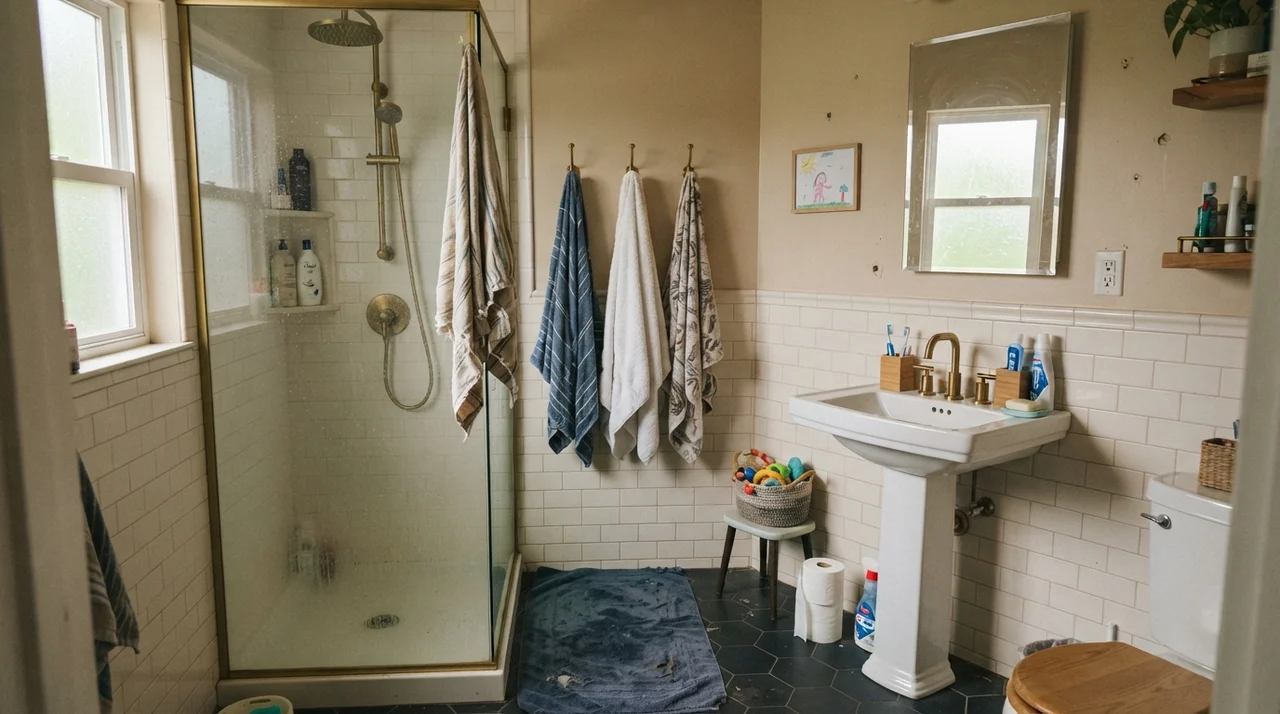
Every dark paint has a vulnerability, and for Hidden Gem, it is flat, overcast daylight and cool northern exposures. When daylight lacks warm yellow sun rays, the eye picks up the slate base of this formula. In modest bathrooms with small frosted glass or older beige fixtures, the paint can read cold and clinical on rainy mornings.
This is why testing swatches across different weather conditions matters. A color that looks rich and organic on a sunny Tuesday afternoon might feel gloomy and institutional on a drizzly Sunday morning. If your room already feels cold due to exposure or older beige surfaces, this color will emphasize that chill unless you counteract it with warm 2700K lighting and warm brass accents.
Where Hidden Gem Fails (And Why)
Almost every disappointed story about a color this dark comes from one of three situations, and all three are predictable before you open the can. None are the paint's fault. But if your room matches one, buy a different color.
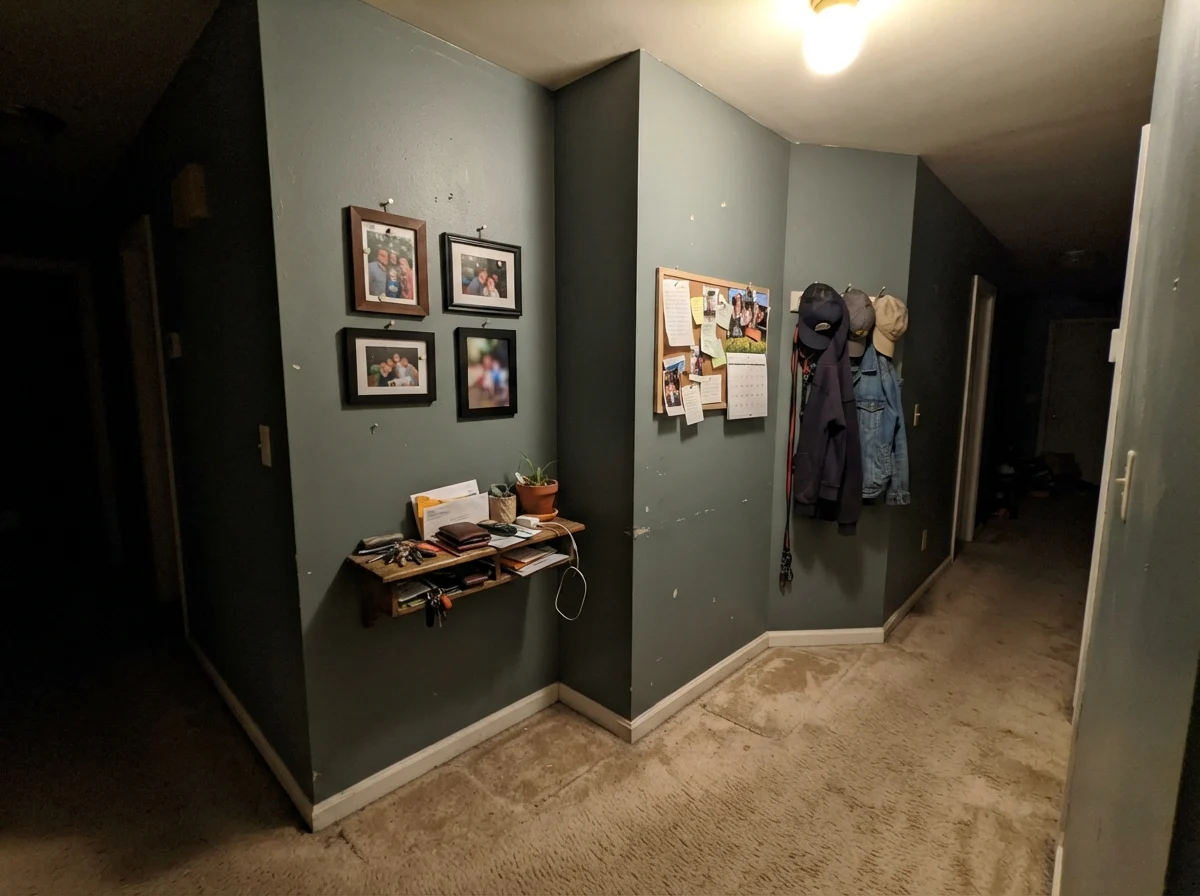
First, a dim, windowless hallway or north-facing interior corridor. North light and weak overhead bulbs lack the energy to push the green out of a 10 percent saturation mix. The green drains away, leaving a muddy, dark putty-gray that looks like a gloomy mistake. If you want green to survive in low light, step up to a lighter, higher-saturation option like Behr Aspen Valley (N430-5, LRV 22).
Second, open-concept floor plans. A color with an LRV of 14 should never be used as a whole-house default. Wrapping a cathedral-ceiling great room or continuous hallways in Hidden Gem stops feeling cozy and starts feeling oppressive. Use a warm, flexible neutral like Behr Greige (PPU24-11, LRV 46) for your main corridors, and reserve Hidden Gem for enclosed rooms with doors you can close.
Third, pairing it with creamy, yellow-undertone trim. The cool blue-slate base inside Hidden Gem has a habit of pulling ugly yellow tones forward in off-white woodwork. Warm creams end up looking dingy and unwashed next to it.
Doors, Architectural Trim, and Exterior Siding
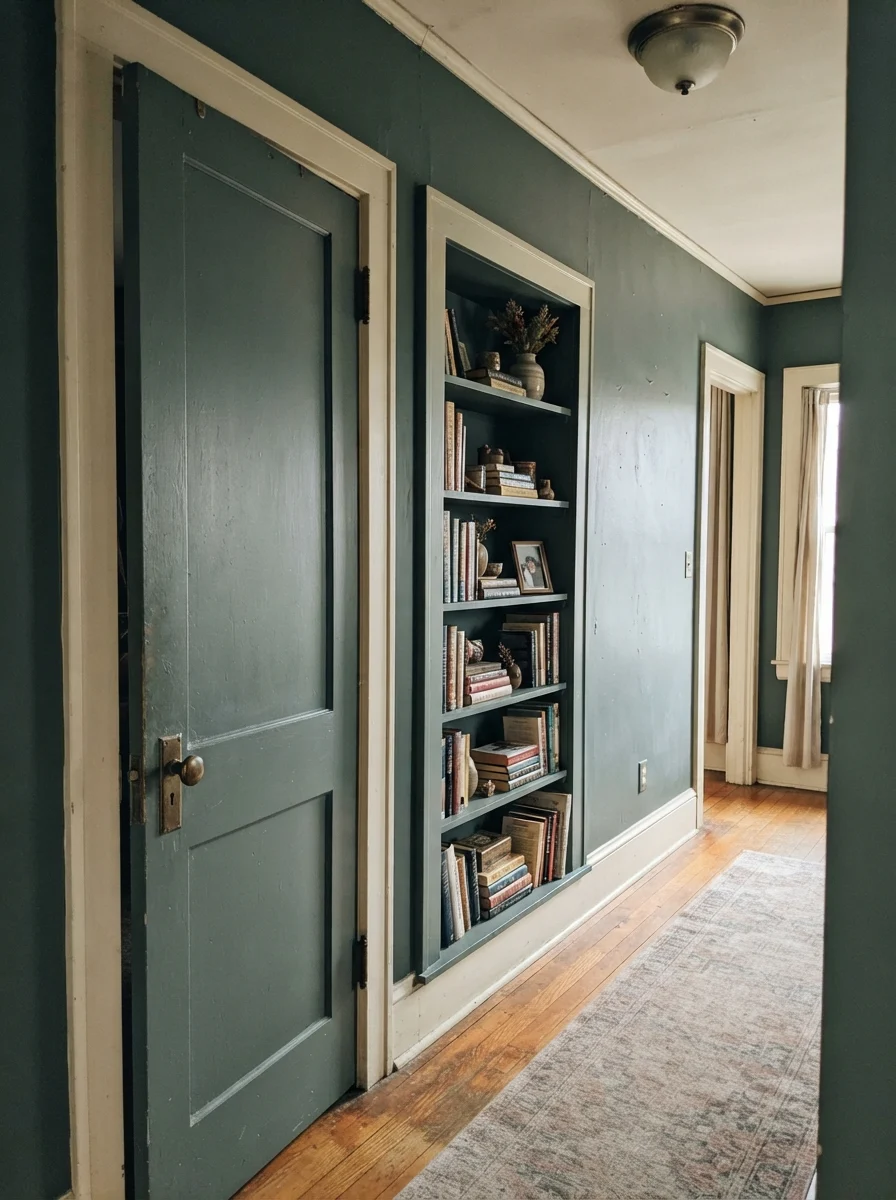
If painting four walls feels too daunting, using Hidden Gem as an accent on interior doors and built-ins is one of the smartest ways to add structure to a builder-grade home. In our 1960s ranch, painting interior doors in a durable semi-gloss gave flat drywall hallways immediate architectural interest without darkening the walkway.
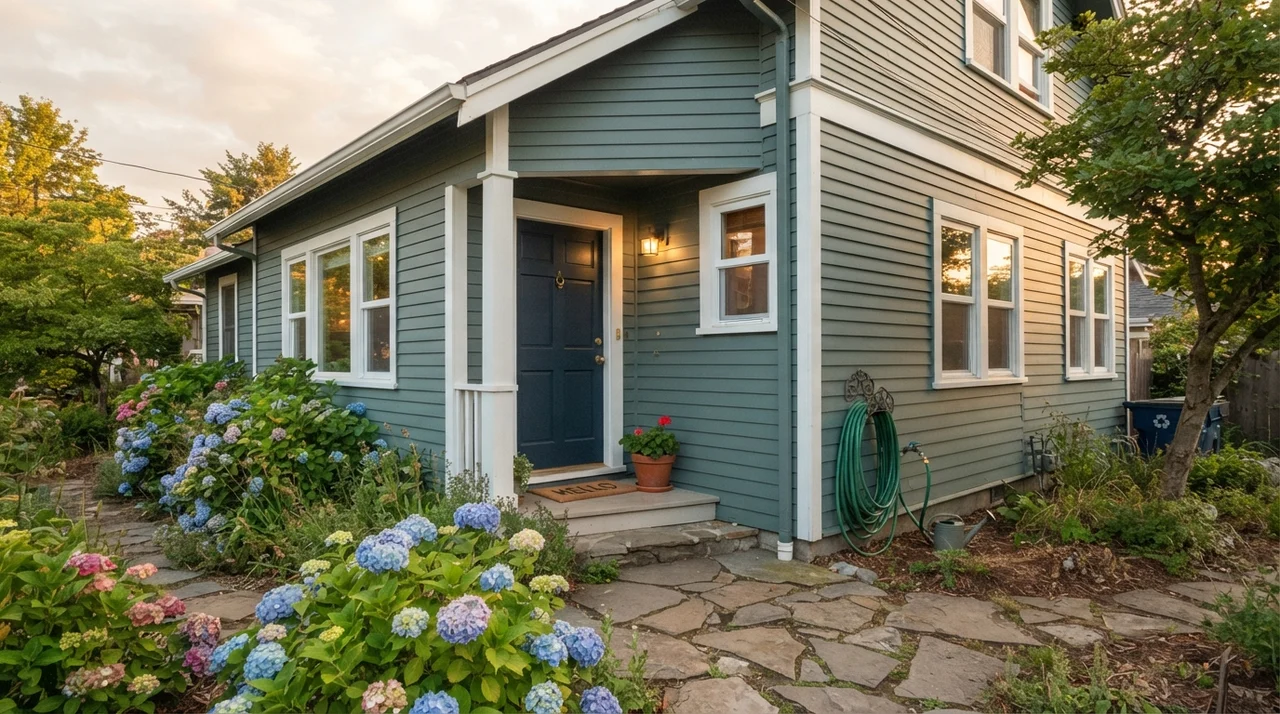
Outside, Hidden Gem is arguably at its best. Exterior sun has a way of washing out dark colors, but because Hidden Gem is heavily muted, it never turns neon or cartoonish under intense UV exposure. On horizontal lap siding, it makes natural red brick and stone foundations look richer. On front doors and shutters, it delivers a tailored, classic curb appeal that will not look dated within three years.
Longevity, Paint Formulations, and the Practical View
Let's talk about the physical paint can. Hidden Gem is available across Behr's entire line at Home Depot—from Marquee and Dynasty to their dedicated Cabinet Enamel. When you paint a room this dark, finish choice is everything.
On standard drywall, you must use matte or flat. At LRV 14, any sheen higher than matte will reflect glancing light across the surface, magnifying every drywall seam, patch, and roller lap mark. In our first house, I tried using an eggshell in a dark hallway, and every single uneven joint looked like a speed bump. Matte absorbs light and hides imperfections. In high-traffic zones like bathrooms or mudrooms, Behr Dynasty in matte is worth the money because it can actually be scrubbed clean without leaving shiny burnish marks behind.
For cabinets, built-ins, and doors, stick to a satin enamel. Satin gives enough surface slip to reject finger oils and dust while keeping a soft, furniture-grade appearance. Semi-gloss is best reserved strictly for traditional exterior trim and window sills where water runoff is a priority.
Dark paint is not an aesthetic statement you post once; it is a wall you have to scrub five years in after the hallway light has faded.
Can Behr Hidden Gem be used on a kitchen island with white cabinets?
Yes, this is one of its safest applications. Painting the island in satin Hidden Gem anchors the kitchen, hides scuffs from feet and barstools, and pairs seamlessly with white perimeter cabinets and quartz countertops.
Why does Hidden Gem look dark gray on my wall instead of teal?
Because your room lacks warm daylight. With only ten percent saturation, cool north light or overcast skies wash out the green pigment, leaving only the dark slate-charcoal base behind.
What lightbulbs should I use with Hidden Gem?
Stick to warm 2700K LED bulbs. The warm yellow wavelength brings the jade and spruce undertones to life in the evening, whereas 4000K daylight bulbs will make the room feel cold and gray.
Does Hidden Gem work with honey oak trim?
Exceptionally well. The cool green-blue undertones sit opposite orange wood tones on the color wheel, softening the brassiness of 1990s oak without requiring you to paint the wood.
Susan's Verdict · Worth It in the Right Room
Hidden Gem earns its title as Behr's 2026 Color of the Year, but only if you respect its limits. It is a smoky, sophisticated jade that gives a study, dining room, kitchen island, or home exterior immense character. Do not use it to rescue a dark north-facing room, and do not paint your whole house with it. Put it in a room with generous daylight or warm lamps, pair it with clean white trim, and it will look just as good five years in as it did on day one.