Color Diary · No. 89
Baby Fawn: The Neutral That Hides Your Life Until Four O'Clock
Benjamin Moore's quiet off-white greige, reviewed honestly: the rooms where it warms everything up, the afternoon wall where it flashes pink, and what to buy instead.

Susan HartleyOctober 20, 2026 · 19 min read
Baby Fawn · Benjamin Moore OC-15
Hex#D9D3C4LRV63Undertoneswarm greige → soft gray → late-afternoon pink
When we bought our 1990s colonial twenty years ago, every single square foot of drywall was rolled in a builder's flat beige that looked like wet sand on a cloudy Tuesday. It wasn't offensive enough to justify hiring painters before the moving trucks unloaded, but it was suffocating. I spent three months staring at sample swatches taped next to the oak trim in the front hallway. I wanted a color that felt clean without making my woodwork look orange, something that didn't scream for attention, and—most importantly—something that wouldn't make me want to haul out the ladders and drop cloths again in twenty-four months.
That was my introduction to Benjamin Moore Baby Fawn (OC-15). It sits at a Light Reflectance Value of 63, which puts it right in that functional sweet spot between an off-white and a mid-tone greige. An LRV of 63 means it bounces back sixty-three percent of the daylight that hits it. That is high enough to keep an enclosed hallway or a family bath from feeling like a broom closet, but it carries just enough pigment to keep the walls from looking stark, institutional, or naked.
I have lived with it across multiple renovations and two houses now. In our last house, I rolled it through the upstairs hall, the primary bath, and a guest bedroom that doubled as my sewing space. When friends ask me for a paint that will run through three adjoining spaces without starting an argument between their flooring and their upholstery, this is usually the chip I hand them. But after thirty years and three houses, I can tell you that no paint is magic. Baby Fawn has real strengths, and it has one very specific, very predictable quirk that catches people completely off guard around four o'clock on a sunny afternoon.
The Undertone and the Identical Twin
Before you spend thirty dollars on sample pots, let me save you a trip to the paint counter: Benjamin Moore Baby Fawn (OC-15) and Edgecomb Gray (HC-173) share the exact same color formula values and hex code (#D9D3C4). They are the same paint under two different collection labels. If your local hardware store has Edgecomb Gray sitting right there on the shelf in the Historical Collection display, buy it. You do not need to hunt down the Off-White Collection deck to find the OC-15 swatch. I have watched neighbors drive across town to a second store because they thought Baby Fawn was a whisper lighter than Edgecomb Gray. It isn't. Save your gas money.
What Baby Fawn actually does on the wall is balance gray and beige with an earthy, grounded warmth. It does not carry that heavy, mustardy yellow undertone that made so many 1990s beiges look dated within three years of application. That yellow cast is what homeowners are usually running away from when they ask for a greige. Baby Fawn gives you that relief: it sits quiet, calm, and neutral under ordinary daylight.
However, Benjamin Moore notes that there is a touch of pink tucked into the formula. In balanced morning light or filtered southern sun, you will never see it; you will only perceive the wall as soft, approachable, and lived-in. But paint is chemistry reacting to the sky outside your window. The moment you paint a wide, uninterrupted wall that catches late-afternoon western sunlight, that red-orange wave pulls the hidden pigment straight to the surface. It doesn't look terrible, but if you expected an industrial, crisp stone gray, you will suddenly find yourself wondering why your living room looks faintly blushing or dusty rose before dinnertime.
Morning Cold to Evening Hearth: The Light Shift
Here is what happens when you live with Baby Fawn around the clock. In an east-facing bedroom at seven in the morning, the daylight is cool and thin. The paint drops its warmth, steps backward, and reads as a quiet, pale, slightly washed-out neutral. It isn't dreary, but it doesn't give you any cozy feeling either. It merely sits there, unassuming and light.
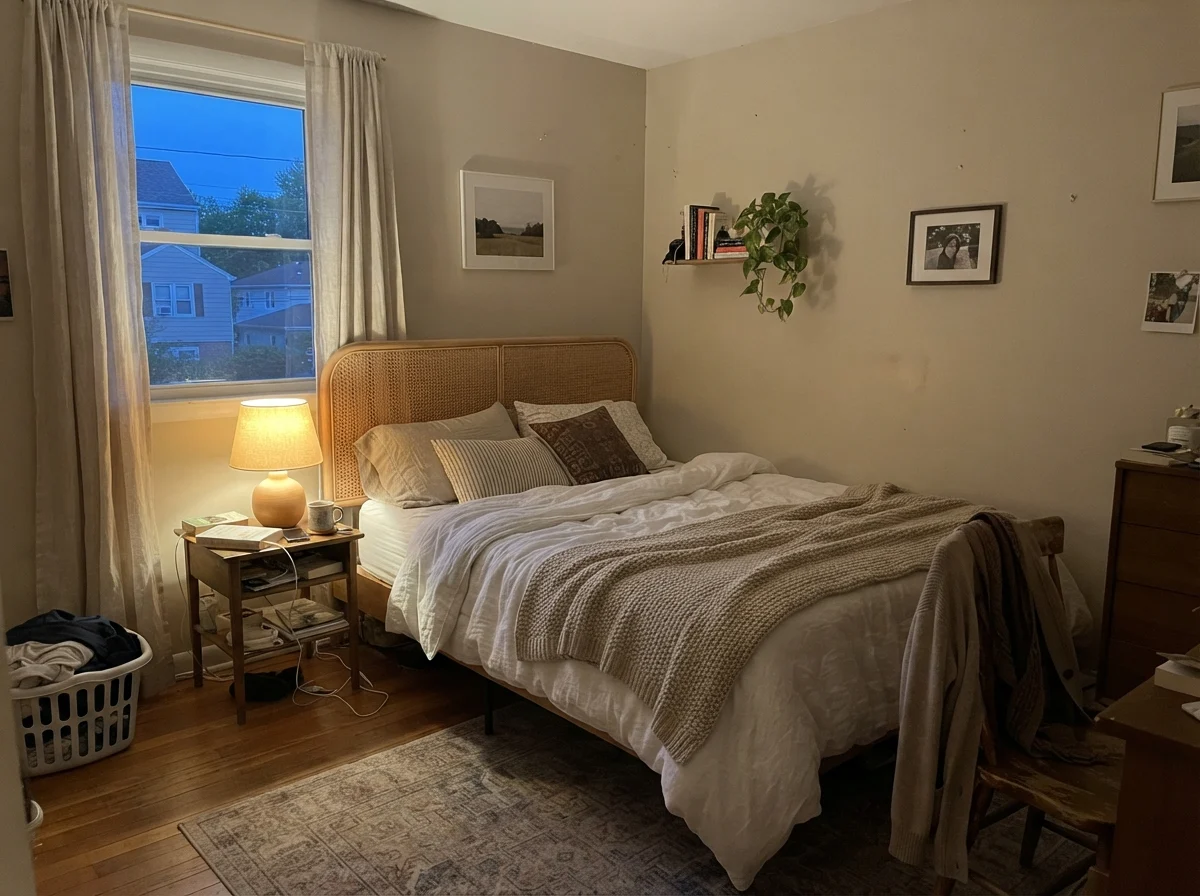
Fast-forward twelve hours. You close the blinds, flip on bedside lamps fitted with soft 2700K warm incandescent or LED bulbs, and the entire room transforms. The artificial warmth strikes that LRV 63 pigment and turns the room into a restful, wrapped cocoon. This duality is why Baby Fawn is such a perennial favorite for bedrooms: it wakes up crisp and non-intrusive, then goes to sleep velvety and warm.
The trouble comes if you introduce 4000K or 5000K "daylight" bulbs. I see this mistake constantly in newer updates. Cool bulbs strip the delicate beige warmth out of Baby Fawn, leaving behind a flat, cement-like gray that makes the room feel like an office park stairwell. If your walls look drab at night, do not repaint the room until you have checked the Kelvin rating printed on your lightbulbs. Change the bulbs first; it is ten dollars well spent.
In the Main Living Spaces: Handling Wood, Sunlight, and Open Plans
If your house has an open floor plan where the kitchen bleeds into an informal dining nook and then straight into the living room, you cannot paint each zone a different color unless you want your home to look like a patchwork quilt. You need one workhorse shade that can survive three different window exposures simultaneously. That is Baby Fawn's greatest strength.
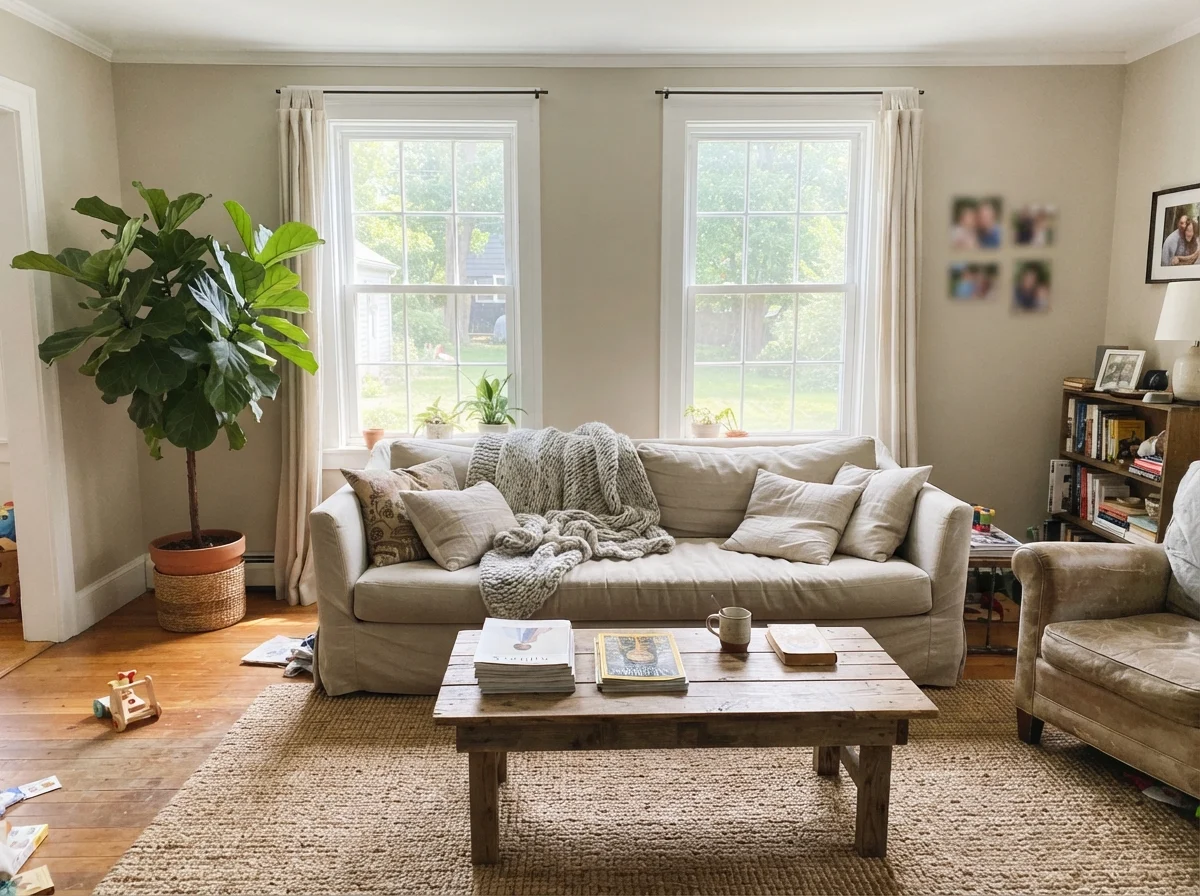
In a south-facing living room, the steady wash of sunlight keeps the color perfectly balanced. It flatters golden oak floors, walnut side tables, worn brown leather armchairs, and unlacquered brass. That warmth makes honey oak look intentional rather than dated. In our 1970s split-level, we had an entire room of mixed wood grains that clashed terribly with the cool gray the previous owners had rolled everywhere. Switching to a warm greige tied the whole puzzle together without a single piece of furniture being replaced.
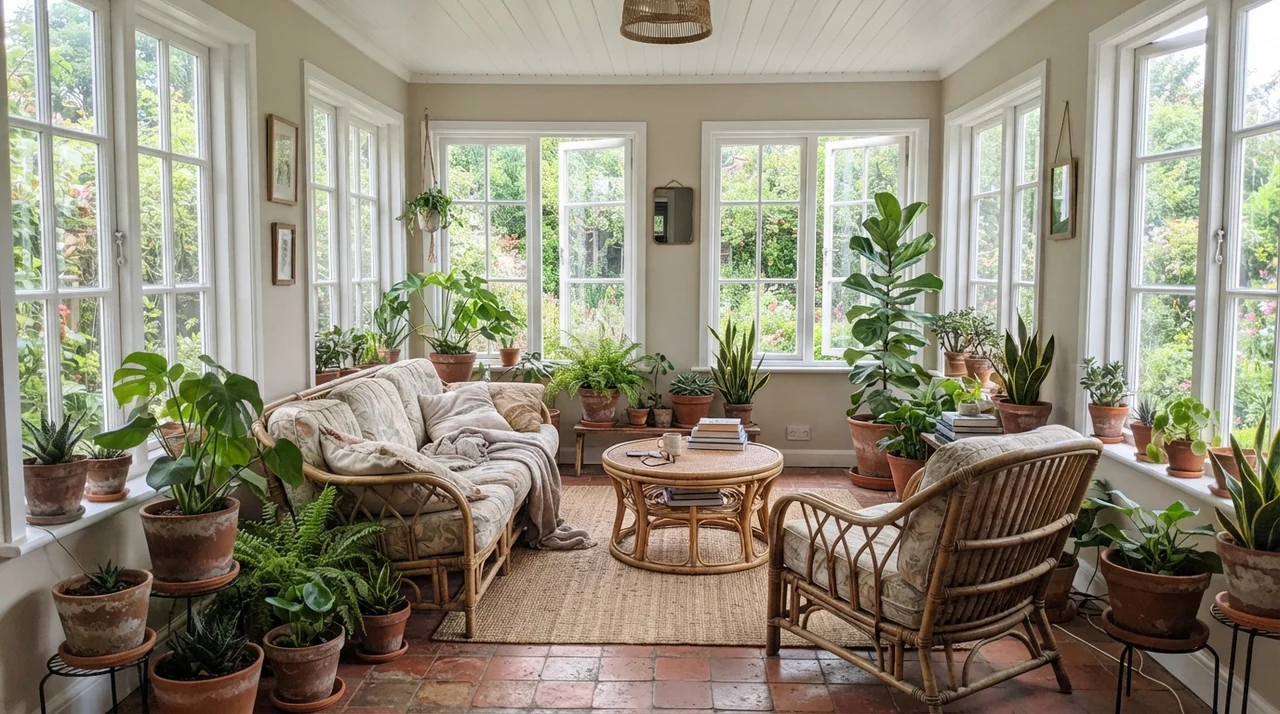
When you take Baby Fawn into bright transitional spaces—like a sunroom wrapped in windows or a central hallway punctuated with classic interior doors—it holds its composure. In a sunroom, the sheer volume of exterior light washes through the pigment, nudging it toward a sandy, breezy off-white that lets greenery and terracotta pots stand out. It provides enough visual weight that the white window casings stand proud without screaming.
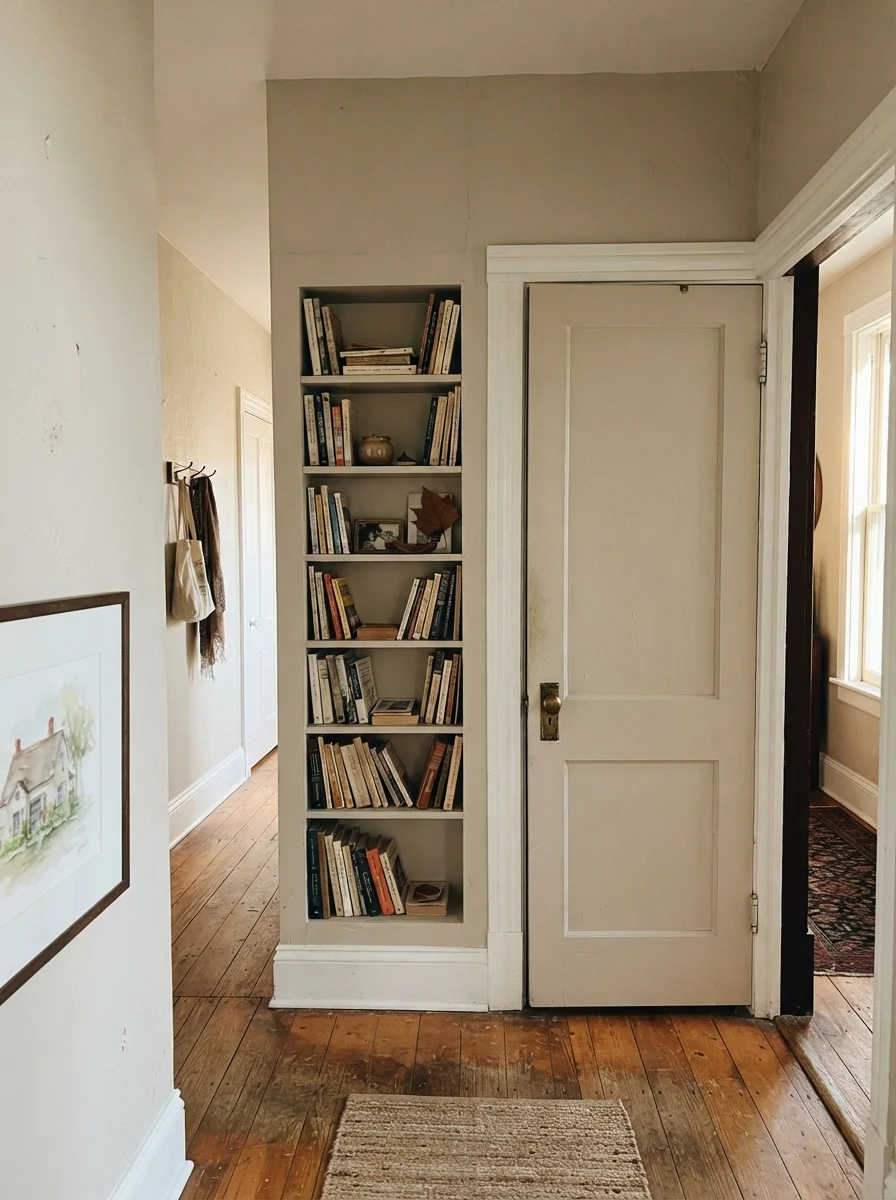
Similarly, using it as an accent on interior doors or built-in bookshelves in an older hall creates subtle depth. Against cream-colored walls, a Baby Fawn door finished in semi-gloss with an antique brass knob looks tailored and collected, not trendy.
Cabinets, Trim, and Kitchen Realities
Let's talk about kitchens. For ten years, every magazine pushed stark, clinical white cabinetry. If you have ever actually cooked in an all-white kitchen with two teenagers and a golden retriever, you know the truth: you spend your life wiping smudge marks off the cabinet pulls. It is exhausting.
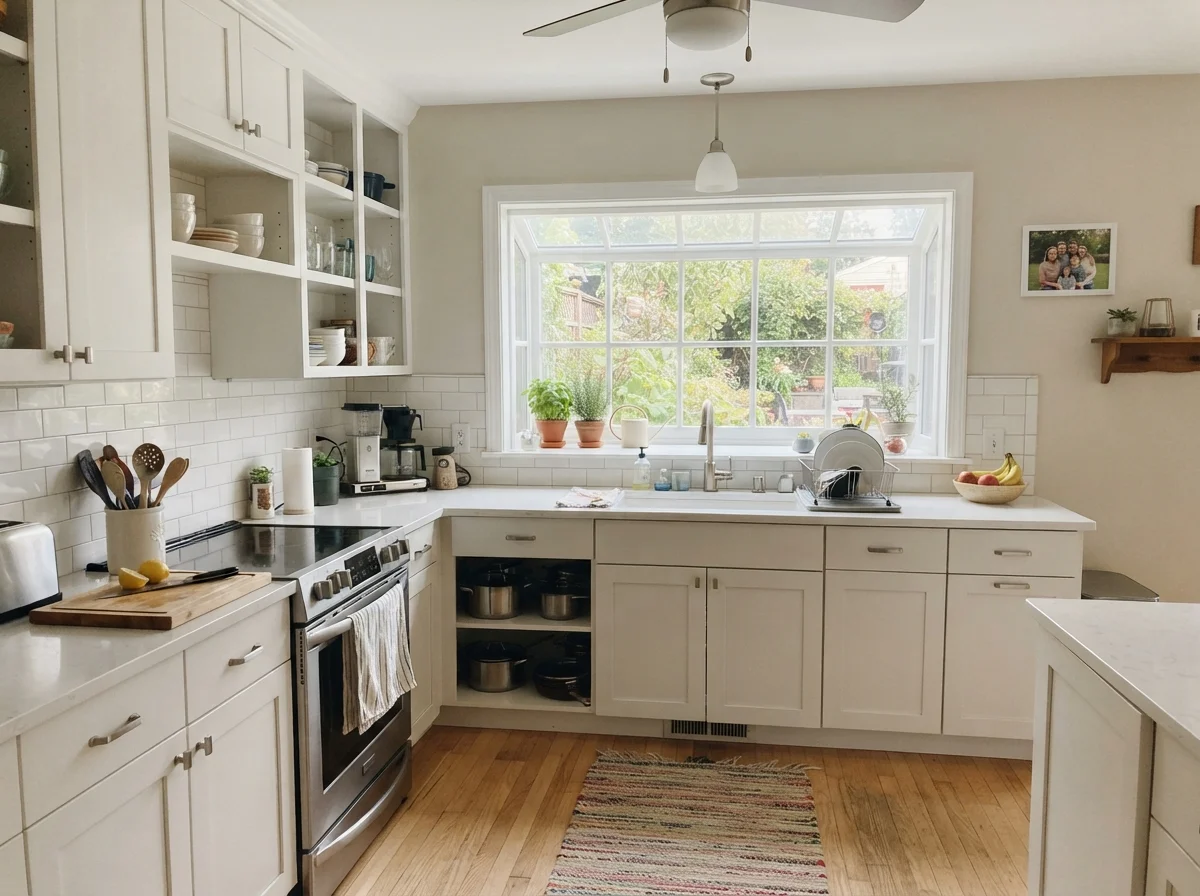
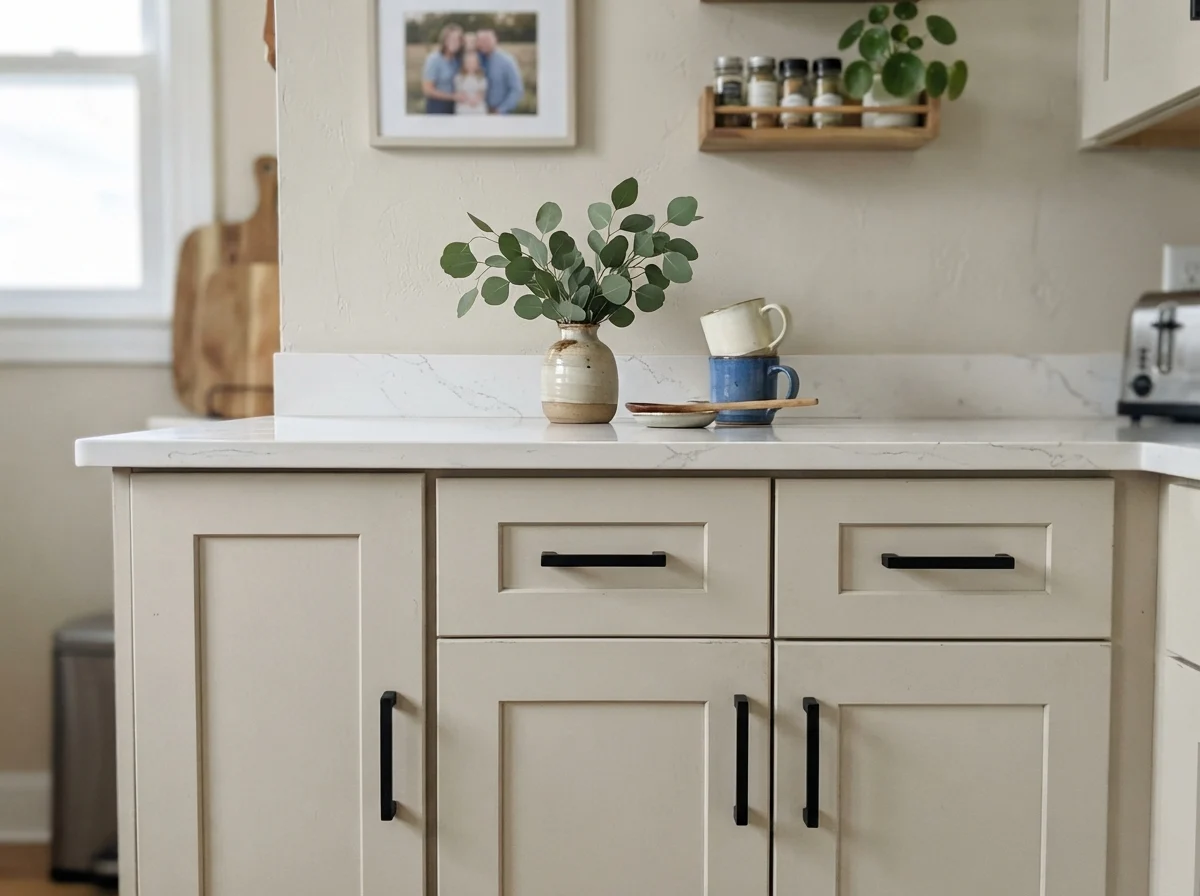
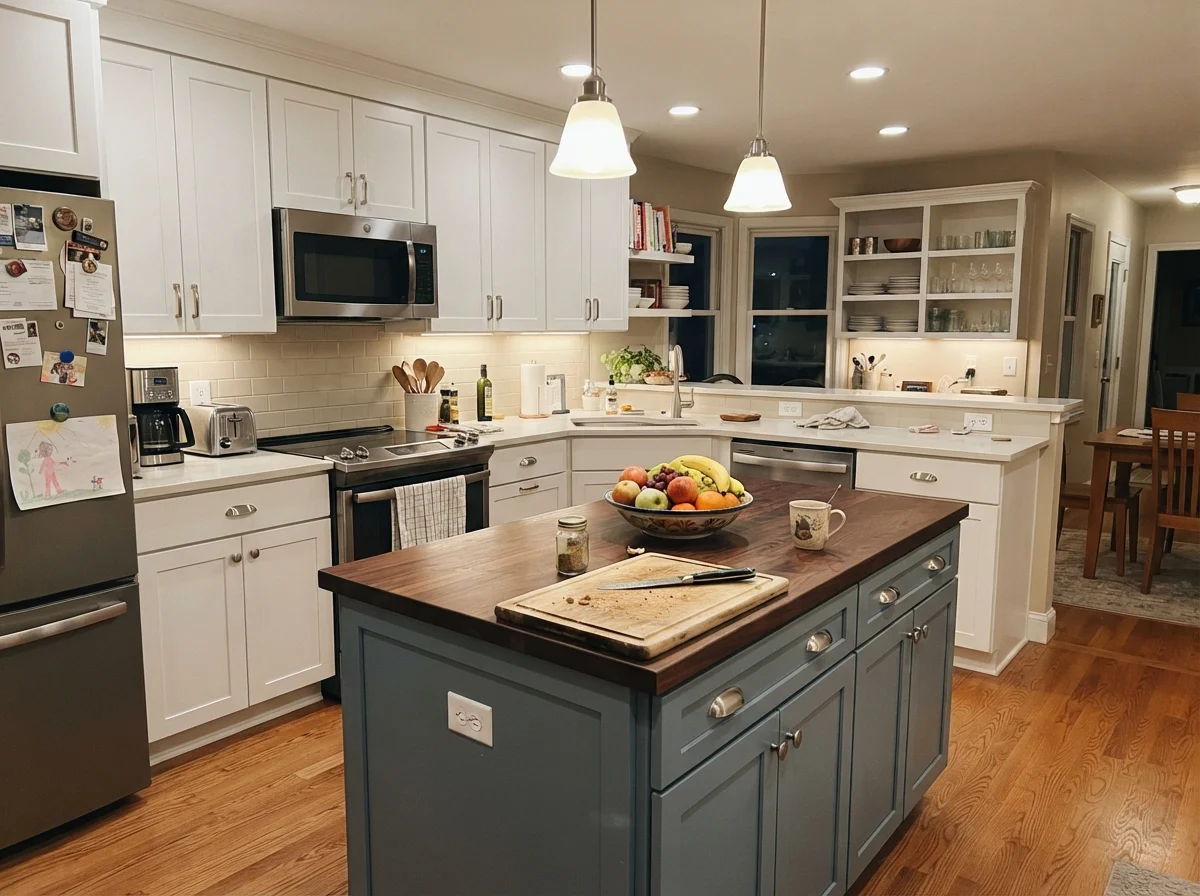
Painting shaker cabinets in Baby Fawn in a durable satin sheen is an excellent antidote. It gives you a light, inviting kitchen that hides grease spatters, dog nose prints, and knuckle marks around the handles ten times better than crisp white paint ever could. It partners beautifully with white subway tile backsplashes, butcher block counters, soapstone, and honed black granite. Against warm oak flooring, it feels organic and calm.
There is, however, an important catch: your countertop choice. If you have cool white engineered quartz with icy blue-gray marble veining, Baby Fawn cabinets will clash. The counter will make the cabinets read yellow-tan, and the cabinets will make the counter read cold and synthetic. But if you have warm off-white counters, butcher block, or brass hardware, it creates a cozy, lived-in kitchen that feels like it has been there forever. Even using it on just a kitchen island while keeping perimeter cabinets a soft cream works wonders to ground a busy room.
The Tile Rule in Bathrooms
In bathrooms, Baby Fawn is either a complete triumph or a muddy disappointment. The outcome has almost nothing to do with the paint and everything to do with your hard surfaces. Paint can be recoated in an afternoon; replacing thirty square feet of tile takes a sledgehammer and a second mortgage. You must let the tile dictate the wall color, not your Pinterest board.
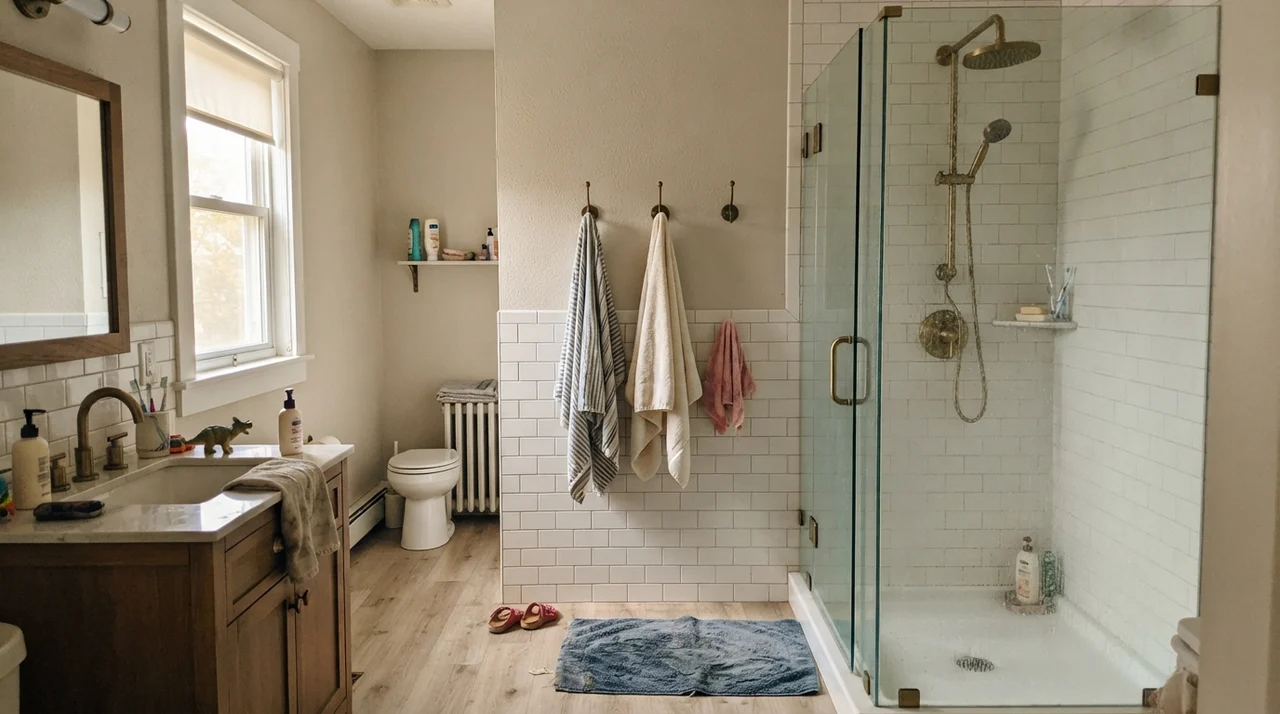
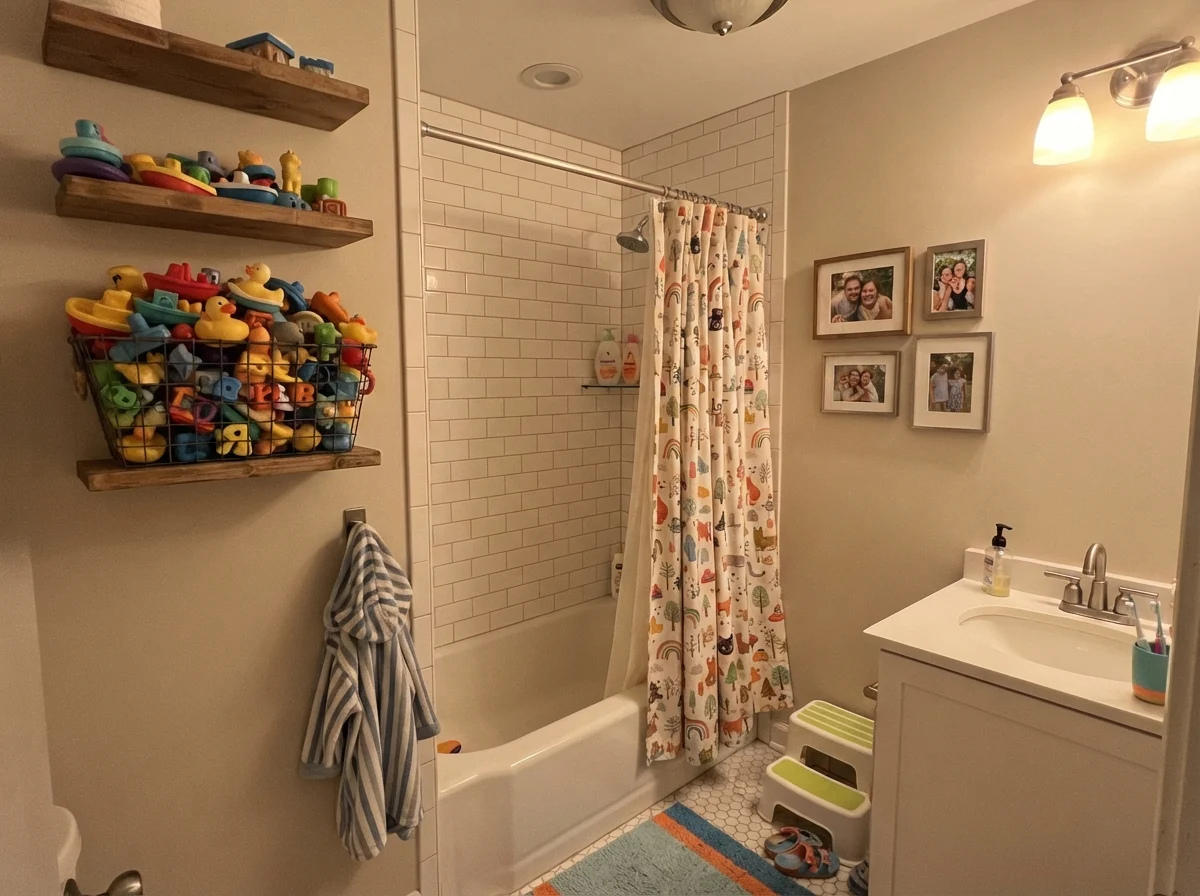
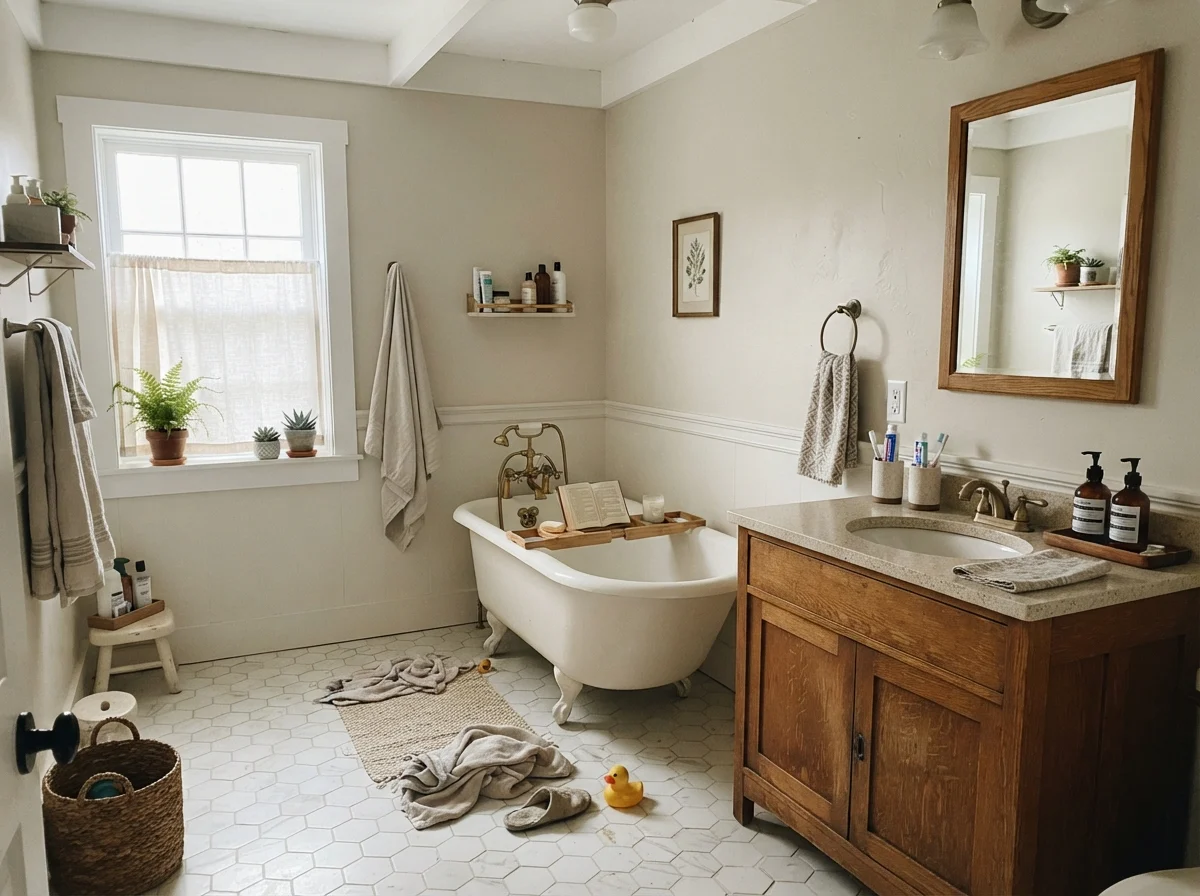
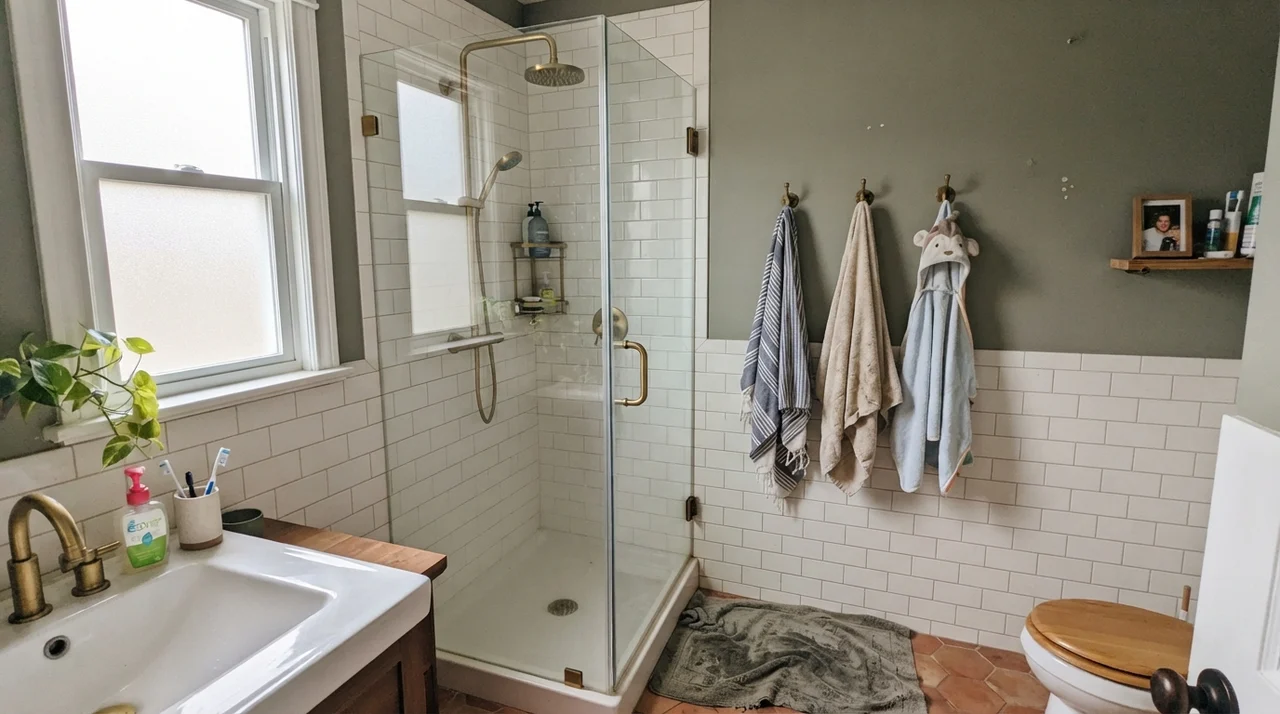
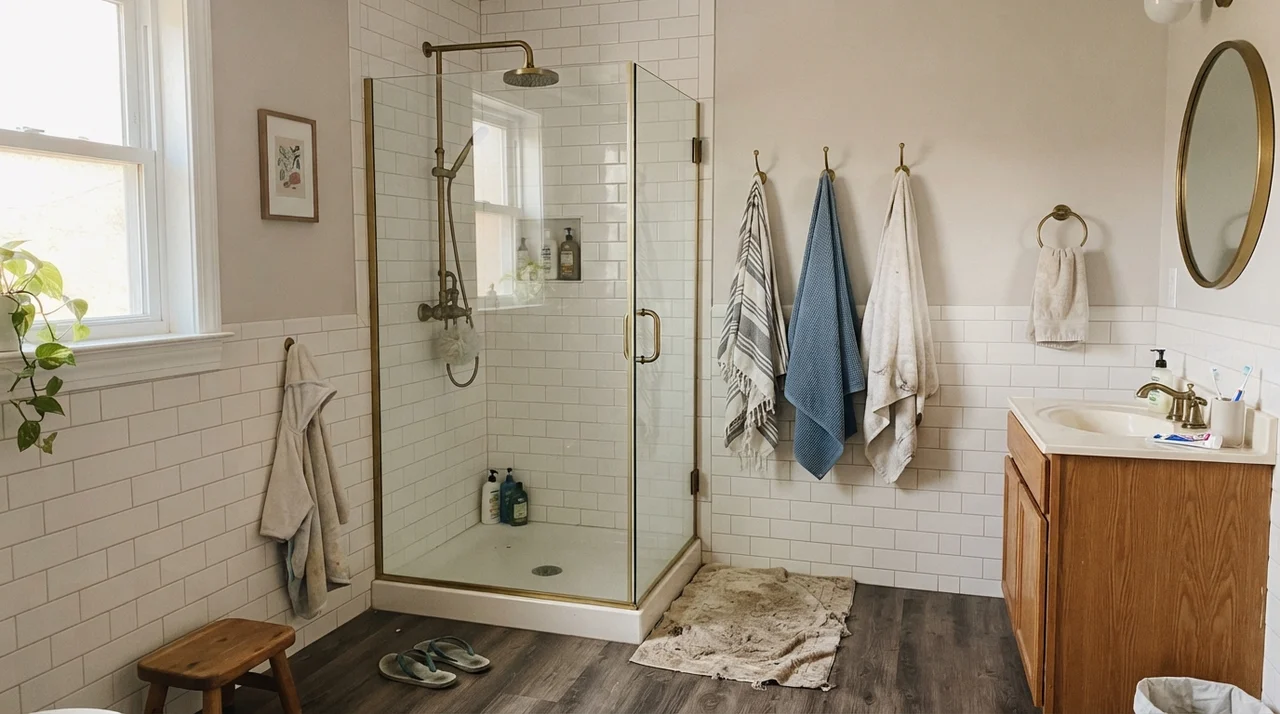
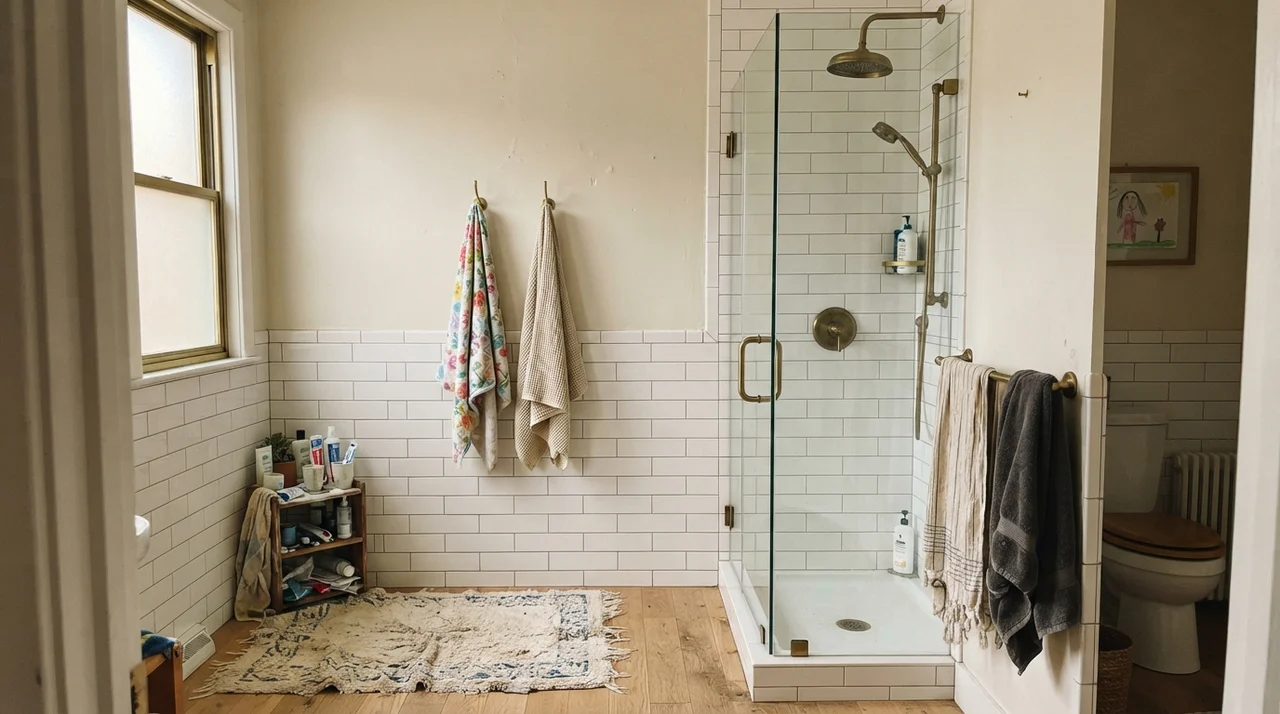
In a cottage or family bathroom with classic white subway tile wainscot, white hex floors, or a warm wood vanity, Baby Fawn is stunning. It provides just enough contrast above the wainscot to define the architectural lines of the room while keeping the moisture-heavy space feeling warm and spa-like. It holds up under steam, flatters skin tones in the mirror, and tolerates the clutter of everyday family living—rubber ducks and damp bath mats included.
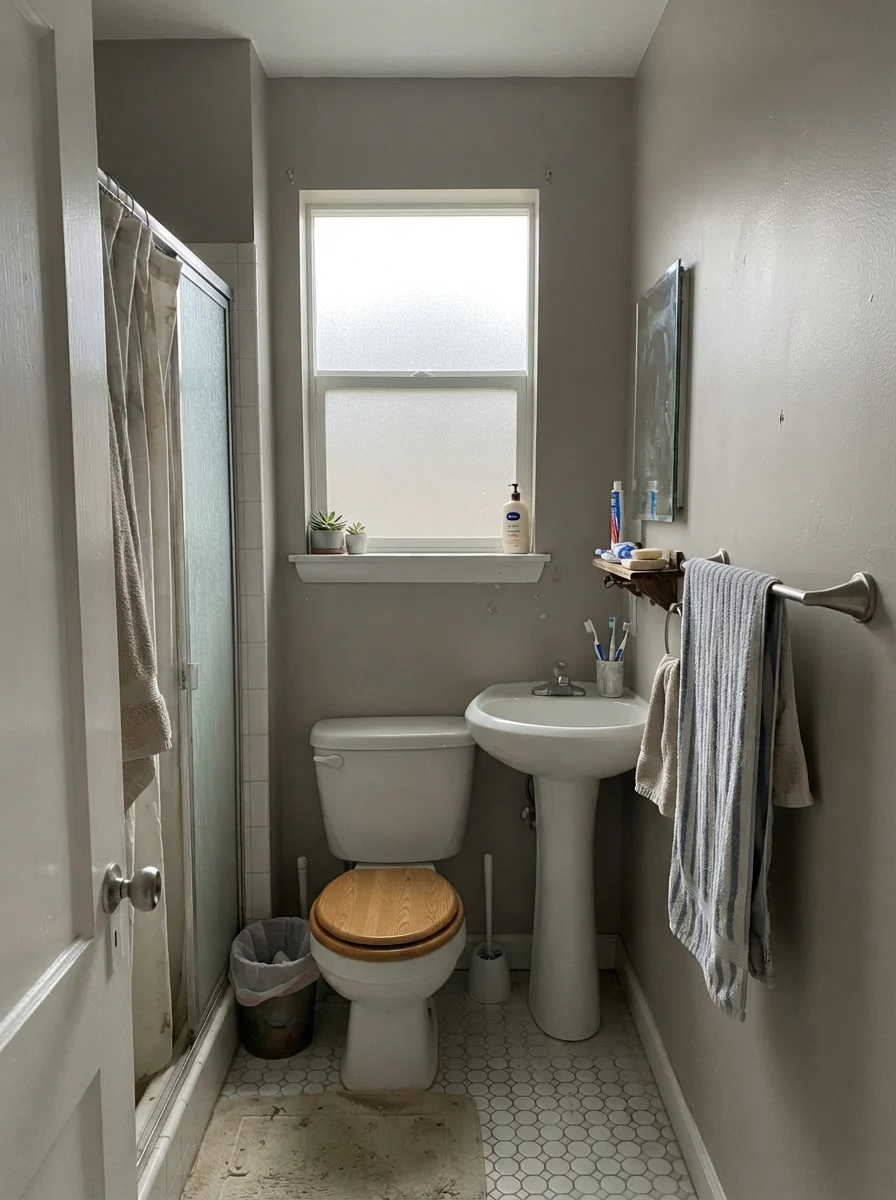
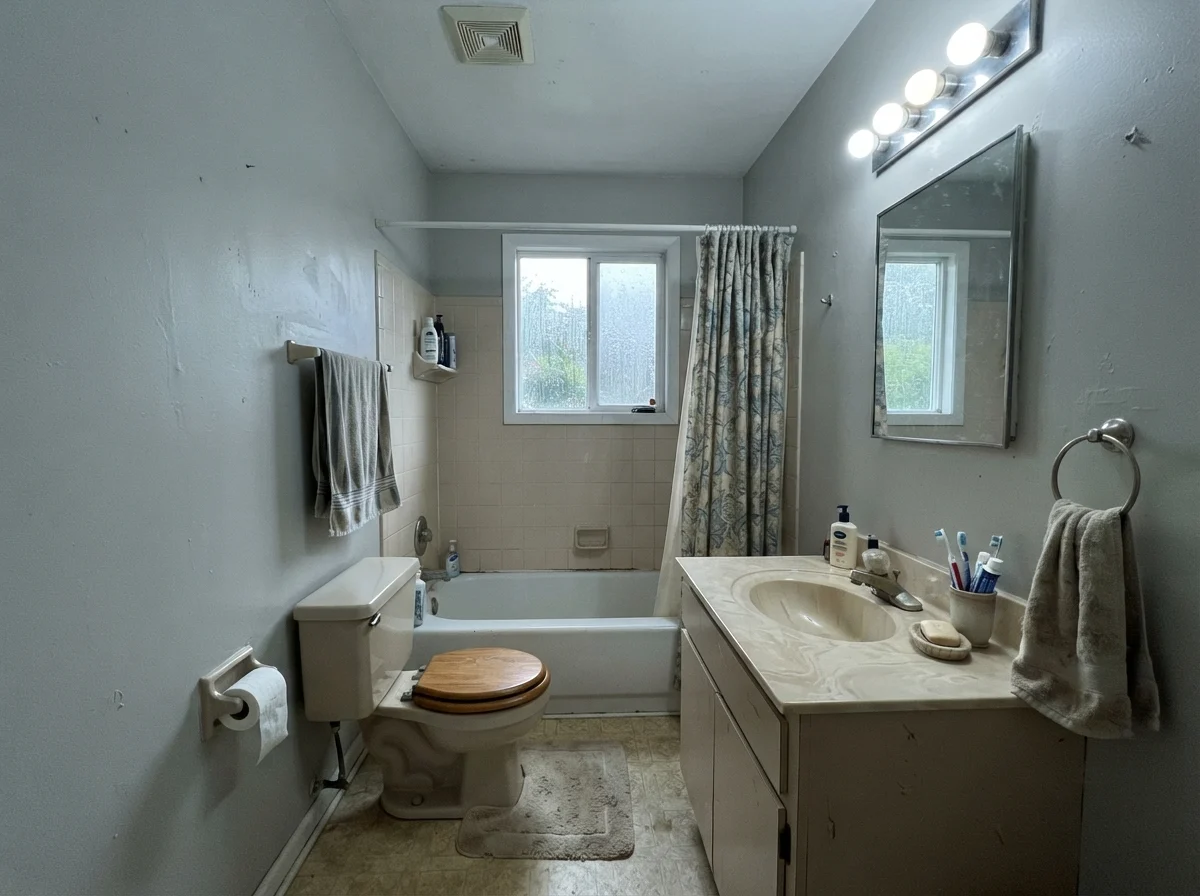
Where it fails is alongside modern cool-gray porcelain or slate with strong blue undertones. In an overcast room or a bathroom with a frosted window receiving flat northern daylight, those cool tile undertones pull all the life out of Baby Fawn. Instead of reading as warm greige, the wall reads like dirty dishwater. If your bathroom tile has icy or blue-gray tones, skip Baby Fawn and look at Classic Gray (OC-23) instead.
Bedrooms, Workhorses, and the Exterior Test
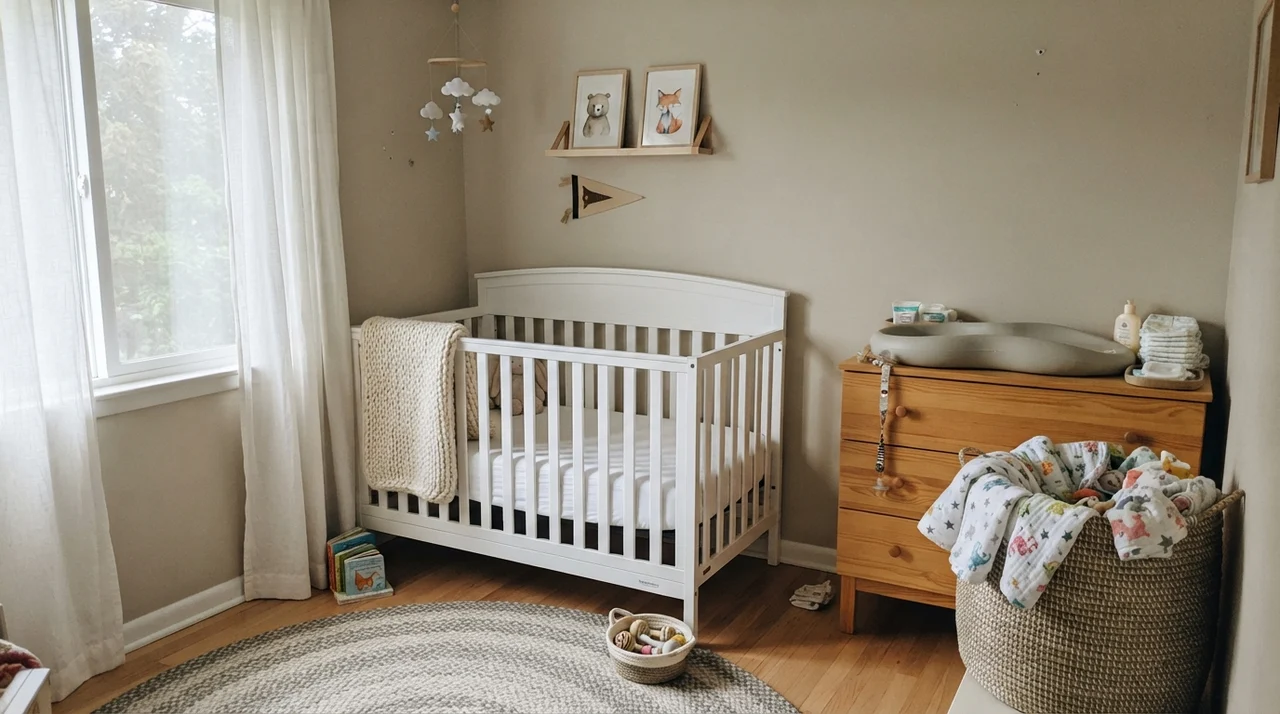
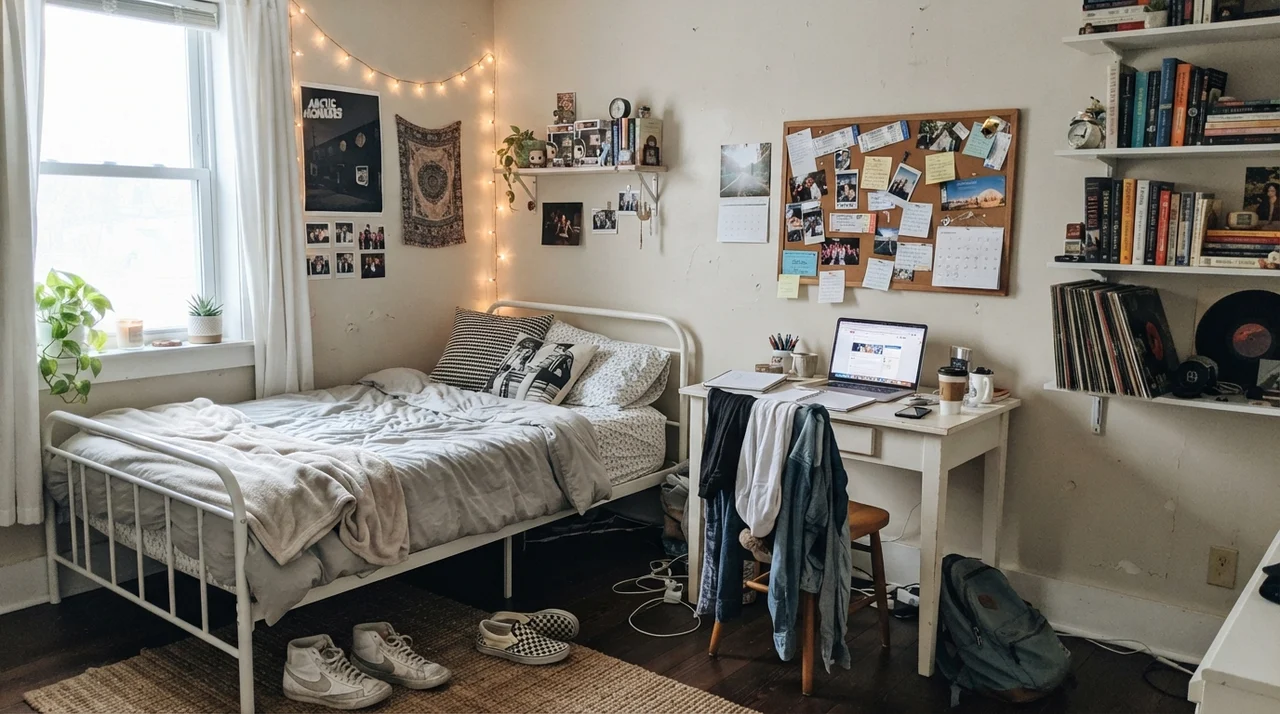
In bedrooms and nurseries, Baby Fawn gives you a calm canvas that grows up gracefully. In a nursery with a light wood dresser, woven hampers, and soft muslin textiles, it feels nurturing without trapping you in pastel nursery cliches that you will have to repaint before kindergarten. Five years in, when that room transitions to a child's bedroom or a teenager's study space with desks, open bookshelves, and sports gear, the wall color remains perfectly appropriate.
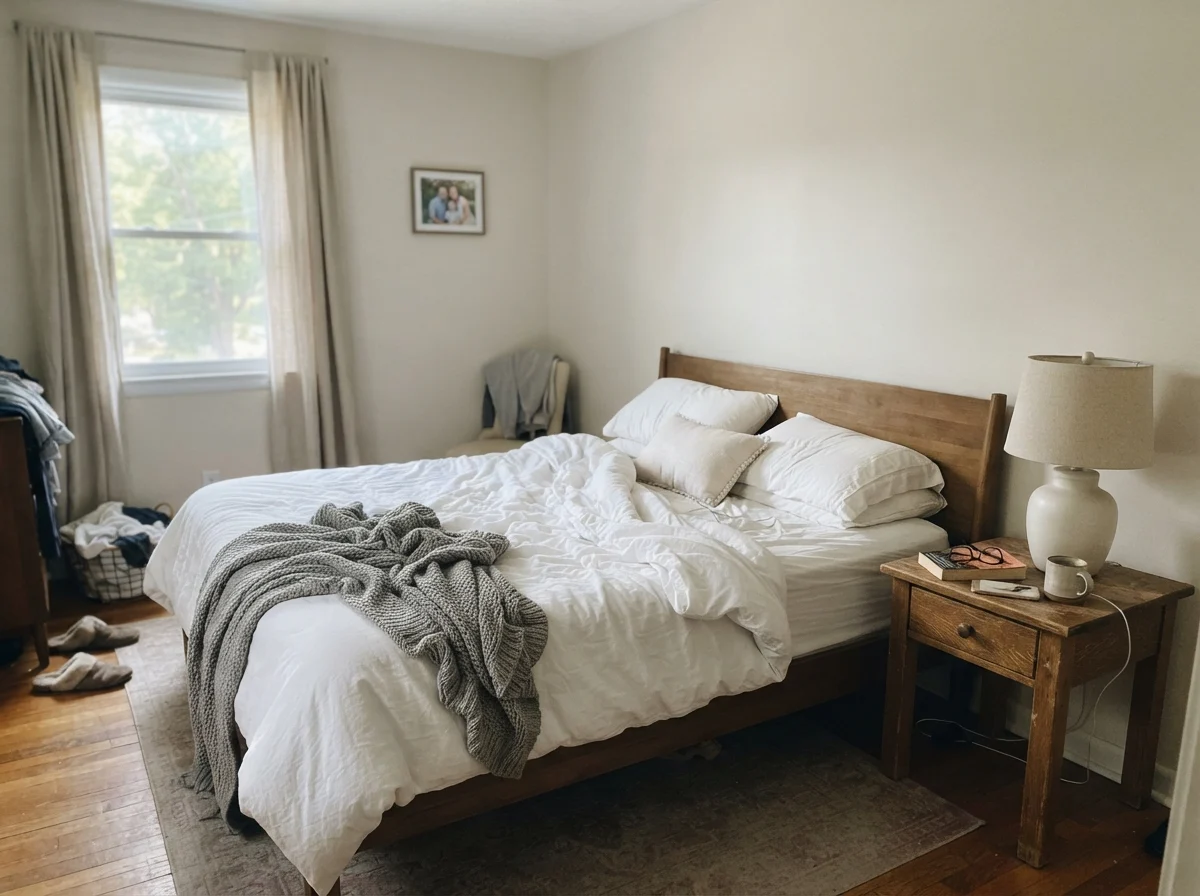
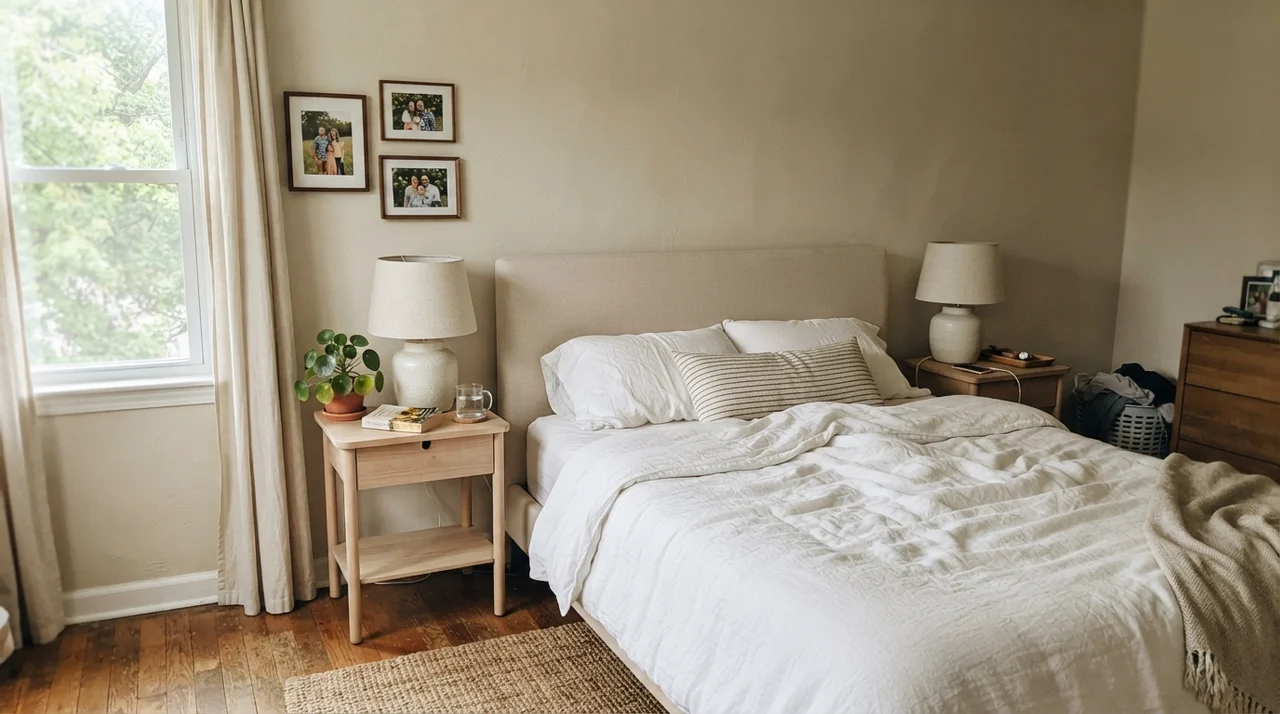
In the main bedroom, paired with crisp linen bedding and pale oak bedside tables, it creates an effortless sanctuary. If you want a soft secondary color behind the headboard, an earthy sage green like October Mist (1495) pairs naturally with Baby Fawn's warm greige base.
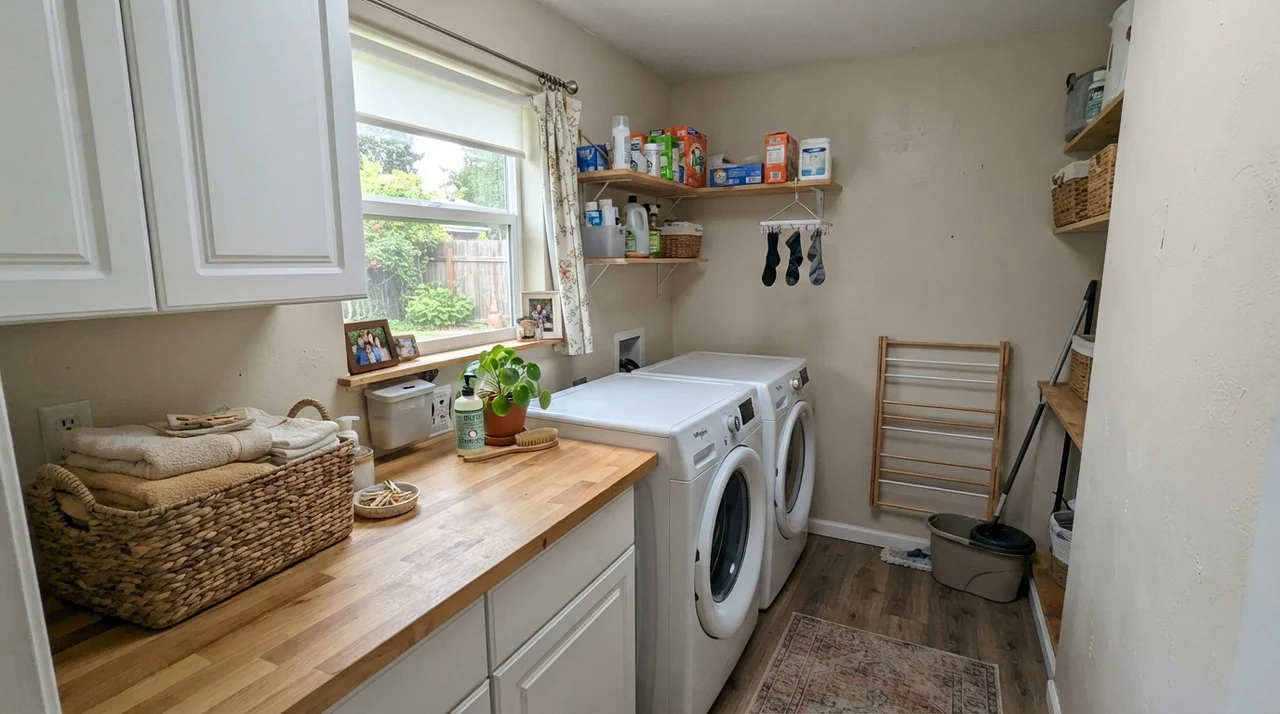
Utility rooms and laundry spaces benefit from this color just as much. A small laundry room equipped with a butcher-block counter over the machines and white cabinets feels finished and clean rather than utilitarian. It turns a chore space into a room that feels connected to the rest of the home.
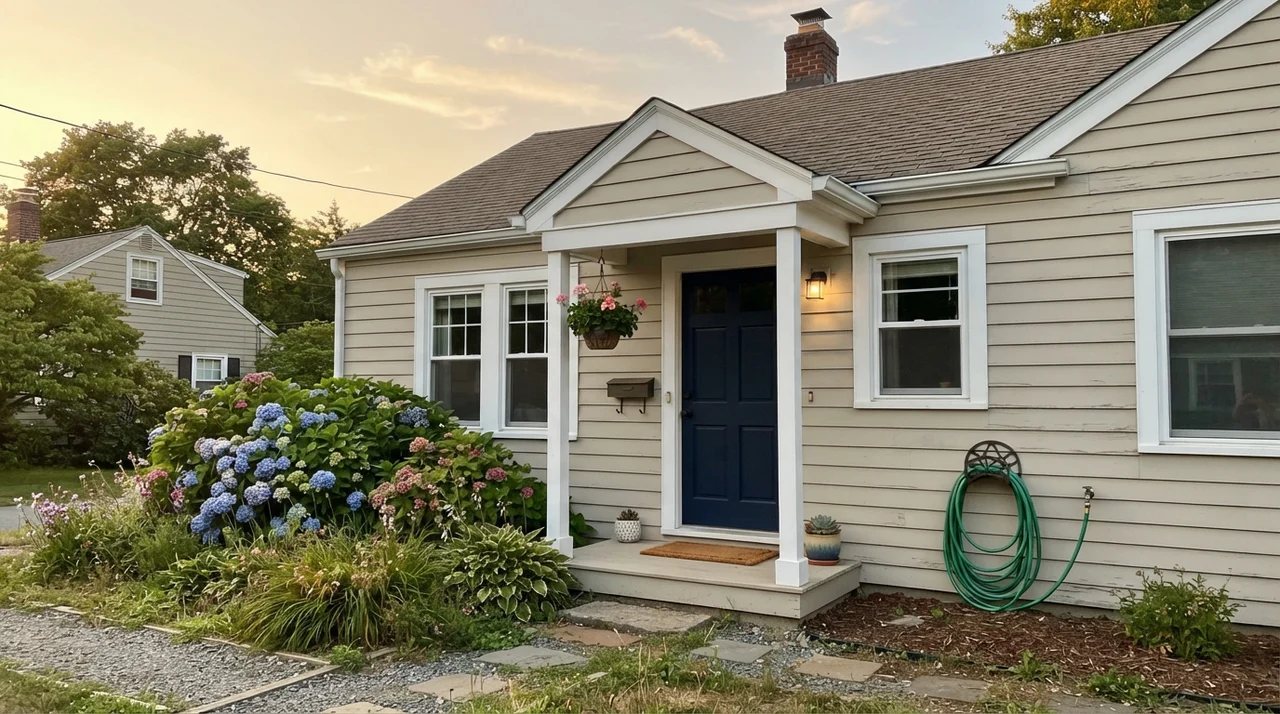
And outside? People forget that interior neutrals can make magnificent exterior siding colors. In outdoor daylight, colors always look several shades lighter and sandier than they do on an indoor sample card. Baby Fawn on horizontal siding looks like an elegant, weathered limestone. It rests naturally against red brick, cedar shingles, and fieldstone. The trick to using it outside is high contrast: you cannot use a pale, washed-out trim color, or the whole house dissolves into a bland blur. Frame it with strong, dark architectural trim like Kendall Charcoal (HC-166) or Wrought Iron (2124-10) around the windows and a dark navy front door to give the structure backbone.
Where Baby Fawn Goes Terribly Wrong
Every paint has an Achilles' heel, and Baby Fawn has three of them. These aren't defects in the paint can; they are fundamental rules of physics and light reflectance that no amount of wishful thinking will change.
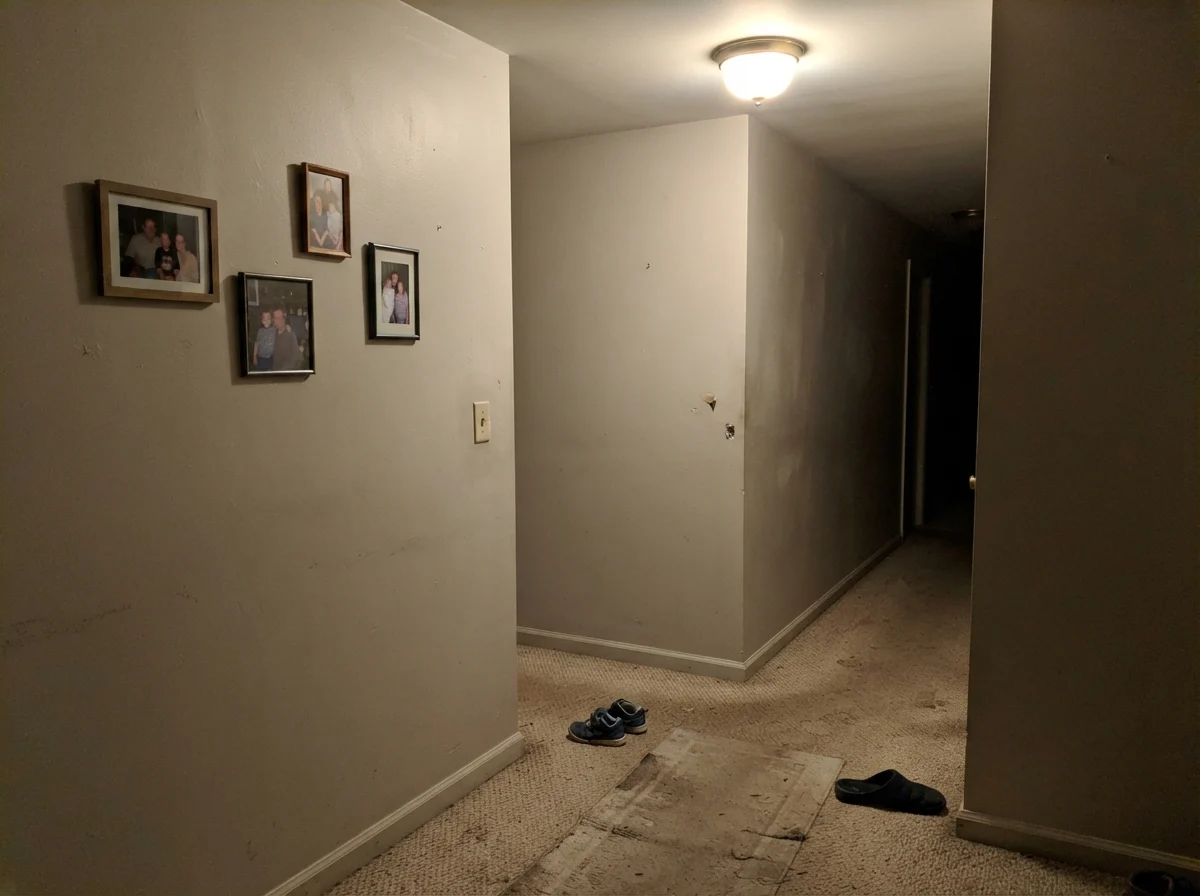
The first failure happens in windowless interior spaces—hallway corners, enclosed basements, or interior stairwells lit by a single overhead flush-mount fixture. Without natural daylight to give greige its dimensional bounce, an LRV 63 paint simply collapses. It turns into a flat, drab putty that makes your hallway feel like a cardboard shipping box. If you have beige wall-to-wall carpeting in that same hallway, the combination looks muddy, tired, and twenty years overdue for a renovation.
The second trap is the dim north-facing room. North light is naturally cool, flat, and blue-tinted. Cool light cancels out the delicate beige pigments in Baby Fawn, leaving only the gray behind. By noon on a rainy day, your walls will look dreary and cold. If your room faces due north and receives limited natural light, you need a paint with stronger yellow-tan backbone to maintain warmth, such as Manchester Tan (HC-81). Manchester Tan sits at LRV 53 with plenty of cream and golden pigment that continues to glow softly in cool light where Baby Fawn falls completely flat.
The third trap is pairing Baby Fawn with stark, bright builder-grade trim. High-LRV builder whites sit up around 88 to 90. When you put a bright, ultra-crisp white casing right up against an LRV 63 warm greige, your eye compares them instantly. The trim looks sharp, and the wall doesn't look like a rich neutral—it looks like a white wall that hasn't been washed in six years. To make Baby Fawn work, you must choose trim colors that share its soft, warm DNA, or go dramatically darker.
Furnishings and Architectural Styles
Because Baby Fawn has been around for decades, it has outlived several design cycles. That longevity is proof of its versatility. When we sold our colonial, the buyer told our agent that the house felt restful and move-in ready. That was purely the paint doing its job: it allowed her to visualize her own furniture in every room without fighting the walls.
It is particularly forgiving in houses built between 1960 and 2000 that have plenty of natural wood trim, brick fireplaces, and mixed flooring. It flatters unlacquered brass hardware, woven jute floor coverings, linen draperies, and leather upholstery. On the other hand, if your home is filled with sleek chrome, mirrored glass, and cool gray luxury vinyl plank flooring, Baby Fawn will look completely out of place. It requires warmth in its surroundings to make sense.
Living with It Long-Term: Scrubbing, Scuffs, and Sheens
Here is the reality of whole-house paint decisions: you do not pick a wall color for the afternoon the painter packs up his ladders. You pick it for year four, when the family dog has brushed against the baseboard corner five thousand times and your grandkid has dragged a greasy thumb along the hallway drywall on the way to the pantry.
Baby Fawn in an eggshell sheen on living room walls has held up remarkably well in our homes. The touch of pigment at LRV 63 hides everyday scuffs, minor fingerprints, and hallway rubs infinitely better than any pure white. In our back hall, muddy paw prints and shoe marks were scrubbed clean with a damp microfiber cloth and mild soap without lifting the paint or leaving a burnished, shiny halo on the wall. For high-moisture rooms and cabinetry, step up to a satin sheen. On baseboards and interior doors, semi-gloss gives you the scrub resistance you need against vacuum cleaner dings.
How Baby Fawn Compares to Neighboring Neutrals
When you stand at the paint counter holding paint chips, the slight differences between greiges seem almost imperceptible under fluorescent strip lighting. But once those colors are magnified across two hundred square feet of drywall, those minor formulation shifts become glaringly obvious.
Here is how Baby Fawn measures up against the other warm neutrals you are likely considering:
- Edgecomb Gray (HC-173): As noted, it is identical in formula and LRV. Choose whichever one your local paint desk has mixed and ready.
- Pale Oak (OC-20): Sitting at an LRV of 67, Pale Oak is four points lighter and airier. It has less body on the wall than Baby Fawn and leans slightly more toward a pink-taupe off-white. If your room has limited windows and Baby Fawn feels just a touch too heavy, Pale Oak will give you that extra breath of light.
- Manchester Tan (HC-81): At LRV 53, Manchester Tan is distinctly deeper and yellower. It does not pretend to be a greige; it is a true, traditional warm beige. It is the color to choose for cold, dim north-facing rooms where Baby Fawn loses its warmth and turns gray.
- Natural Tan (SW 7567): Sherwin-Williams' Natural Tan sits at LRV 65. It is slightly warmer and creamier, without the late-afternoon pink flash that catches people off guard with Baby Fawn.
Common Questions Before You Roll
Here are the practical questions that come across my desk most often from readers who are standing in the paint aisle wondering whether to commit to Baby Fawn.
Is Baby Fawn actually the exact same color as Edgecomb Gray?
Yes. Benjamin Moore Baby Fawn (OC-15) and Edgecomb Gray (HC-173) share the same hex value (#D9D3C4) and LRV of 63. They are identical paint formulations packaged under two different collection fan decks. Do not waste time or money sampling both.
Why does Baby Fawn look pink in my living room at sunset?
Benjamin Moore includes a hint of red-orange pigment in the color's base formula. When late-afternoon western sunlight hits a wide, flat wall, it magnifies that warm pigment, causing the paint to flash dusty rose or faint pink for an hour before dusk.
Can I use Baby Fawn in a room with north-facing windows?
You can, but it is risky. Cool north daylight neutralizes the delicate beige tones, leaving the gray half of the formula dominant. In many north rooms, it ends up looking flat, cold, and dingy during the day unless backed by warm 2700K lamplight.
What sheens should I use for walls, trim, and cabinetry?
Use flat on ceilings to hide drywall imperfections, eggshell on living and bedroom walls for scrubbable durability without shine, satin on kitchen cabinets for smooth washability, and semi-gloss on baseboards and doors to resist scuffs.
Will Baby Fawn work with my honey oak cabinets and trim?
Yes, exceptionally well. Because it is a warm greige rather than a cool slate gray, it softens the orange-yellow tone of oak woodwork and makes it feel natural rather than dated.
Susan's Verdict · A Workhorse Greige with One Watch-Out
Baby Fawn OC-15 is the color you reach for when white feels bare and builder beige feels suffocating. At LRV 63, it has enough body to carry an entire open-plan floor plan across multiple exposures without falling apart, and it flatters oak floors, brass fixtures, and woven textures effortlessly. It hides scuffs, cleans up reliably, and protects your home's resale value. Just do your homework on your west-facing walls: sample it on a large poster board and watch it at four in the afternoon. If you can live with that fleeting hint of late-day blush, it will serve your home beautifully for years.