Color Diary · No. 71
Benjamin Moore Dark Olive: The Deep Green That Behaves Like a Neutral
The grayed olive people paint their study, their island, and their front door — reviewed honestly, including the light that kills it.

Susan HartleyOctober 8, 2026 · 12 min read
Dark Olive · Benjamin Moore 2140-30
Hex#616253LRV14Undertonesyellow-olive → gray-brown → deep shadow
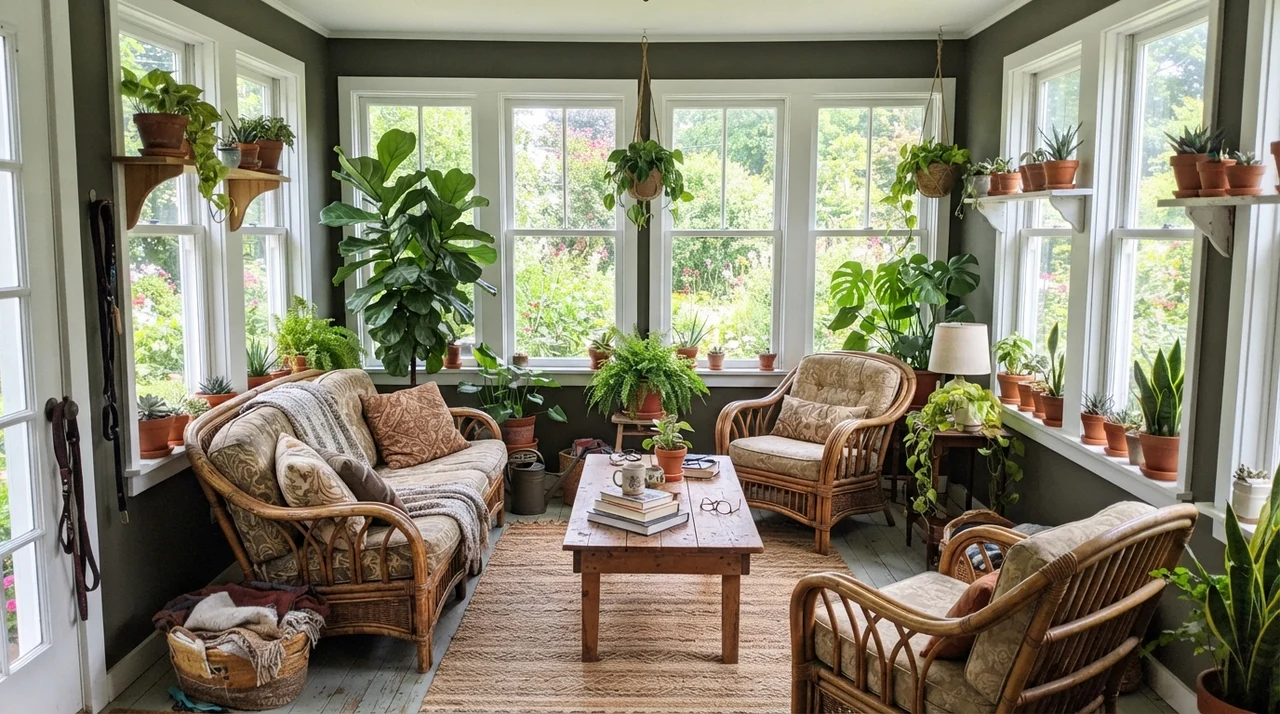
In our last house, I spent nearly four months trying to make our small study feel like something out of an old library. It had low ceilings, eight-foot oak bookcases we bought second-hand, and a single south-facing window that threw long slashes of warm afternoon sun across the floor. I thought I wanted a dark hunter green. I bought three sample pots of deep, punchy greens, brushed them on drywall boards, and watched every single one turn into an aggressive school chalkboard by nightfall. That was the year I learned the difference between a pretty color on a paper chip and a paint you can actually live with in three dimensions.
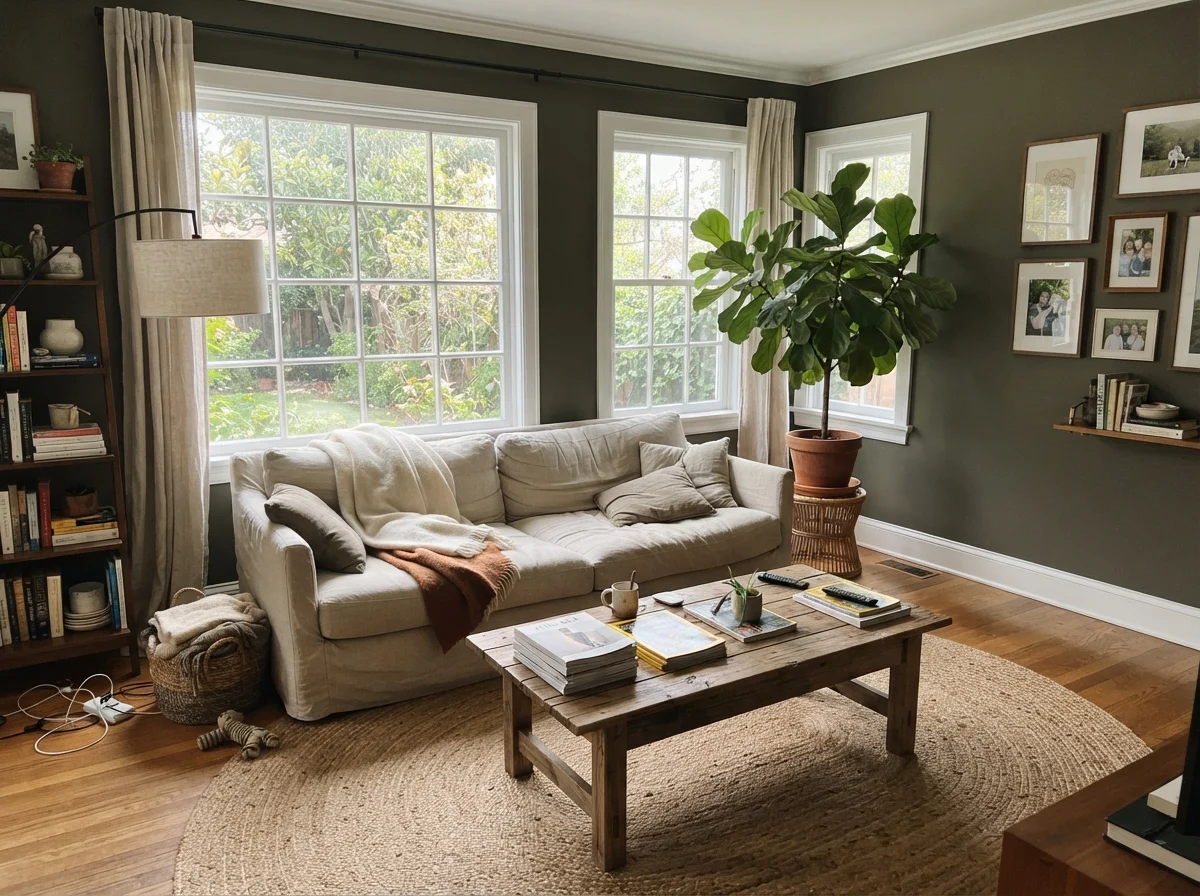
A neighbor down the street—who had renovated three Victorians and never seemed to panic about paint—suggested Benjamin Moore Dark Olive 2140-30. When I looked at the swatch under store fluorescent lights, I thought it was dreary. It didn't look green; it looked like muddy wool. But the moment I rolled two coats onto those study walls, the entire room settled down. It didn’t scream green. It behaved like a deep, warm neutral that just happened to have an earthy olive backbone.
We lived with that room for seven years before we sold that house, and it taught me everything about how dark, grayed-out greens operate in real life. When you pick a color with a light reflectance value (LRV) of 14, you are not buying brightness. You are making an active trade: you are giving up reflected daylight in exchange for warmth, enclosure, and weight. Five years in, Dark Olive held up beautifully to daily reading, desk scuffs, and shifting seasons. But it is not a paint you can slap into any random room and expect magic.
The Undertone Breakdown
Benjamin Moore places Dark Olive in its yellow deck family, and that yellow base is the secret to its warmth. It is a deep olive with most of the bright emerald green grayed right out. Depending on your windows and bulbs, it shifts between an earthy moss, a quiet charcoal-brown, and a deep shadow neutral.
warm sun
overcast, north light
dusk, rain, cool bulbs
yellow-olive → gray-brown → deep shadow
Mountain OliveBehr · see diary
Cast IronSherwin-Williams · see diary
Dark Olive2140-30
RosemarySherwin-Williams · see diary
Black BambooBehr · see diary
Light Dictates Whether It Sings or Dies
Here is the non-negotiable truth about Dark Olive: at LRV 14, this color takes light away and gives none back. In a south-facing room flooded with midday sun, the warm rays hit that yellow undertone and the wall reads unmistakably as a rich, organic olive. It makes leather armchairs, unlacquered brass hardware, and worn oak furniture look like an editorial spread.
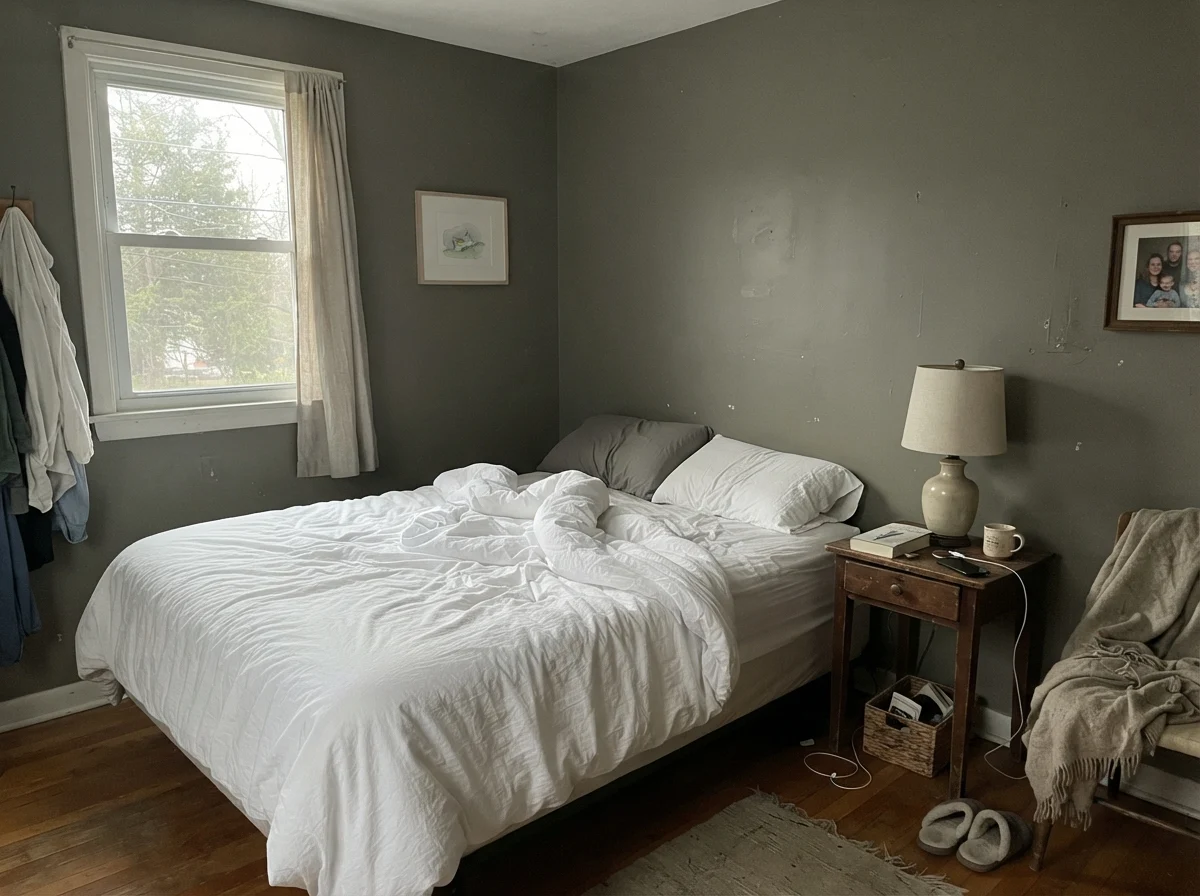
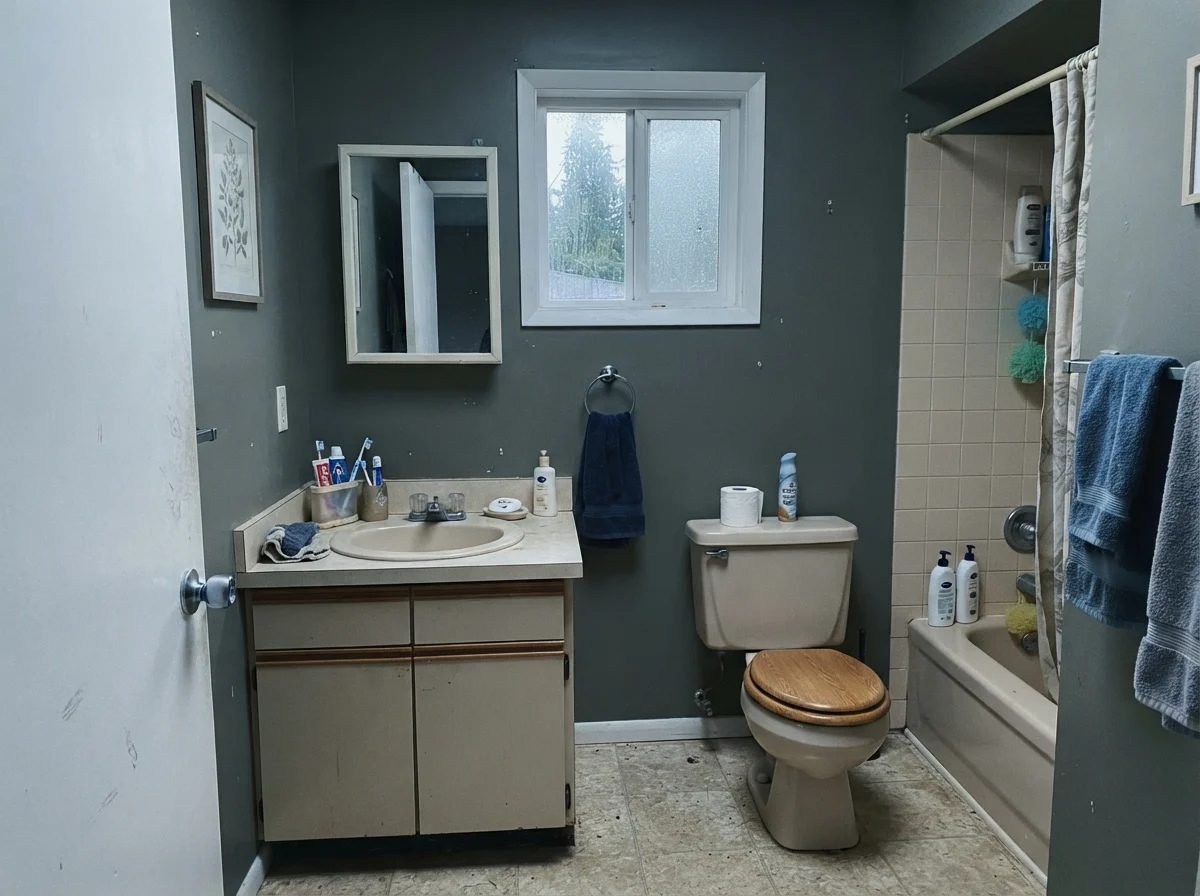
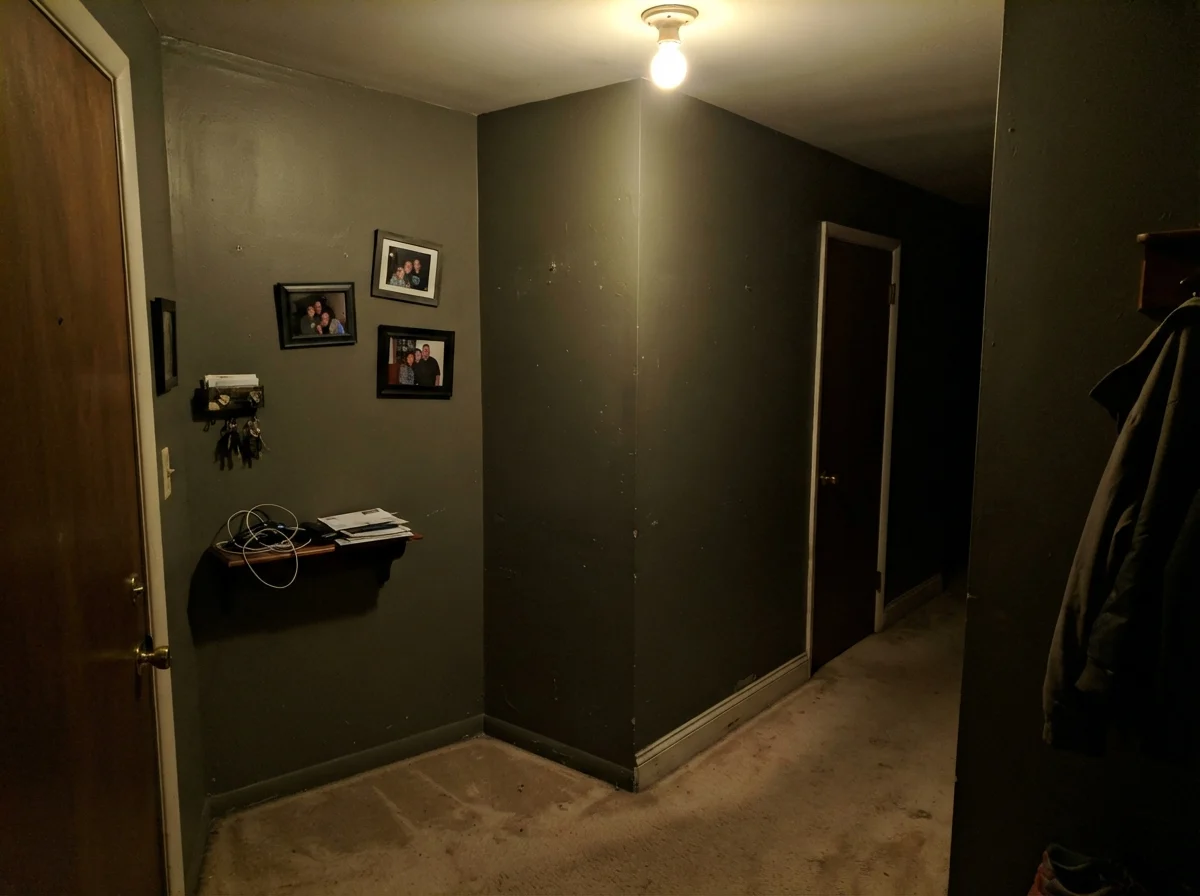
However, if you put this paint in a dim, north-facing room with only a tiny window, the cool indirect daylight completely strips the chroma out. The green disappears entirely, leaving you with what looks like an old, damp army blanket—a flat, uninspired gray-brown. If you're painting a dark north bedroom, you will be disappointed unless you compensate entirely with your interior lighting.
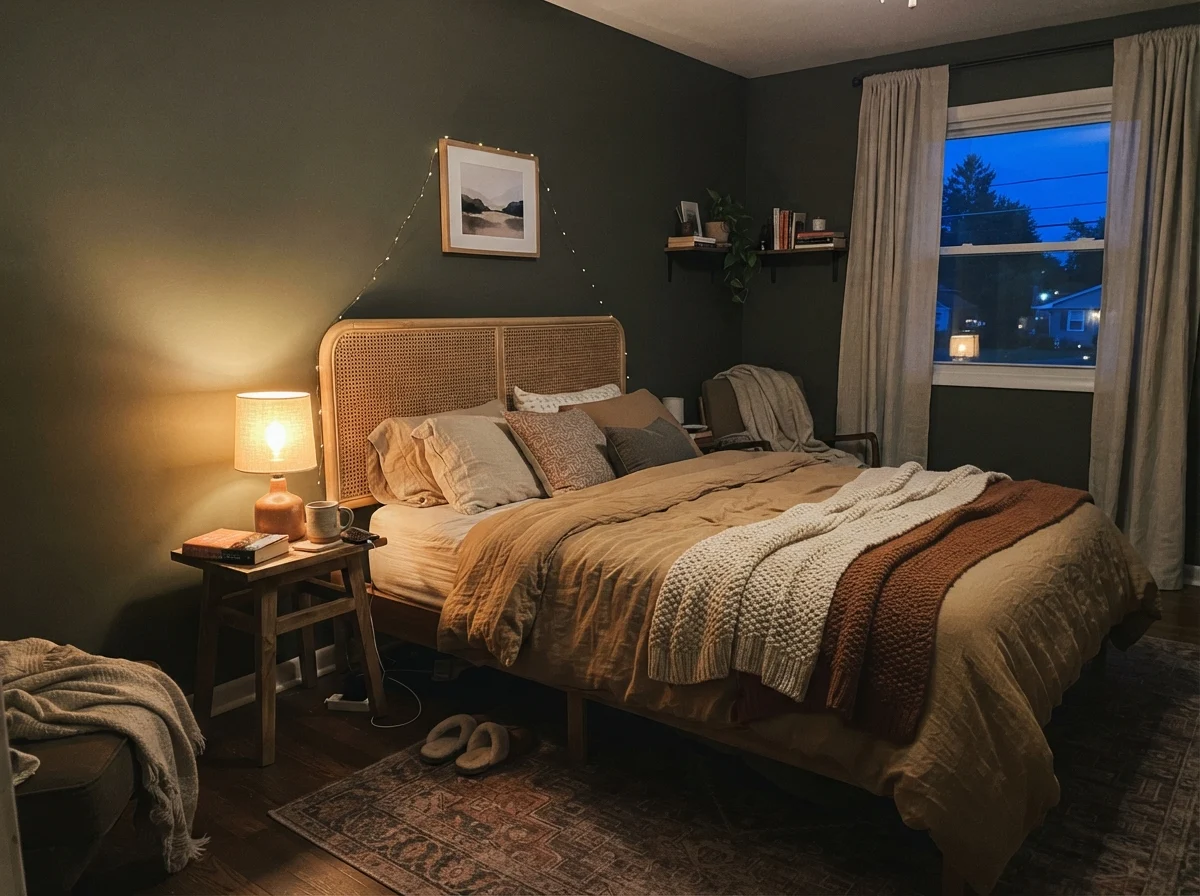
Speaking of lighting, your artificial bulbs make or break Dark Olive. Under 2700K warm incandescent or warm LED lamps, the room turns into a cozy moss-and-leather cocoon. Switch to 4000K daylight LEDs, and the color instantly turns drab, cold, and heavy. If you paint a room this shade and suddenly hate it at night, don't buy new paint—go change your lightbulbs first.
How Real Daylight Alters the Wall
Over thirty years of repainting our houses, I have watched dark paints do peculiar things across different exposures. Because Dark Olive has such a low LRV, the type of natural light hitting the surface dictates its perceived personality entirely. In direct sunlight, the olive undertone wakes up and looks grounding. On flat overcast days, it retreats into a quiet slate-olive. And in cold north light, it leans heavily into a chilly, muted gray.
Kitchens, Islands, and Built-In Cabinetry
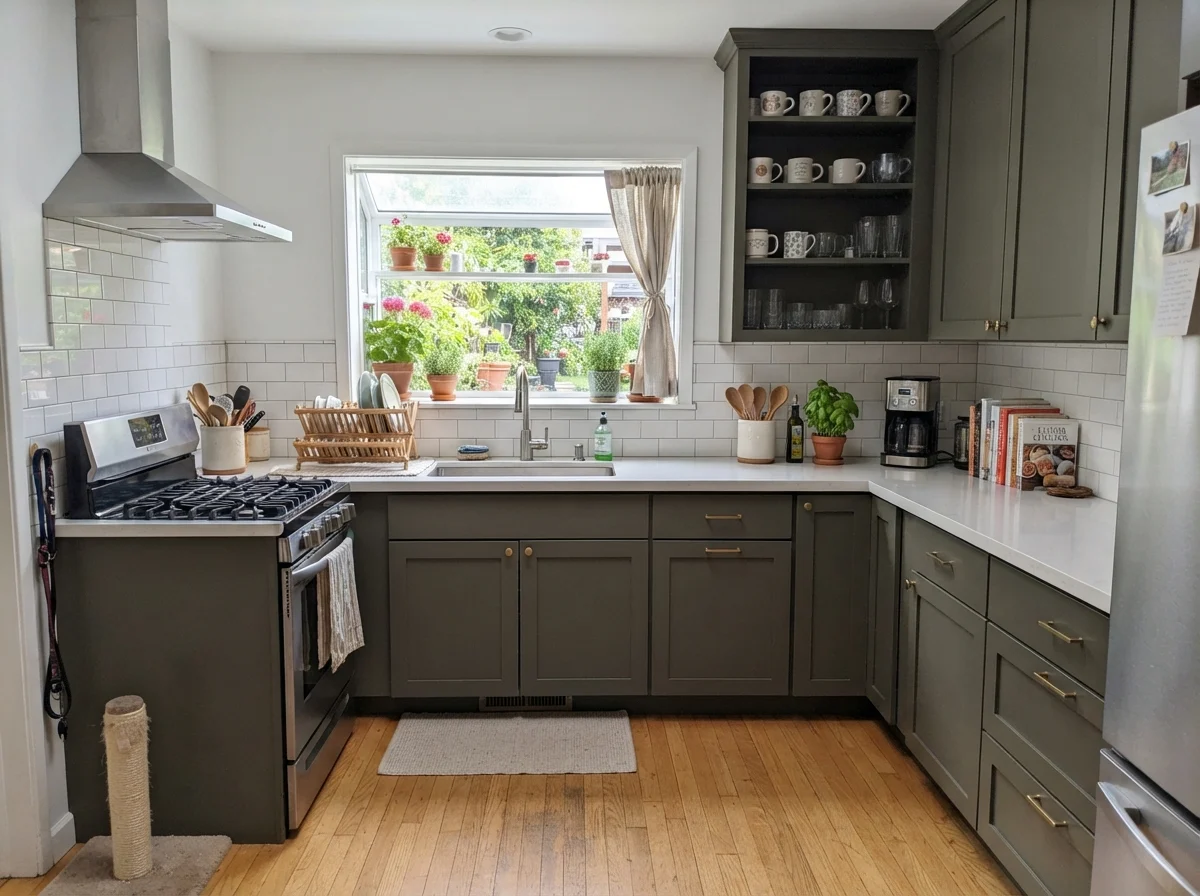
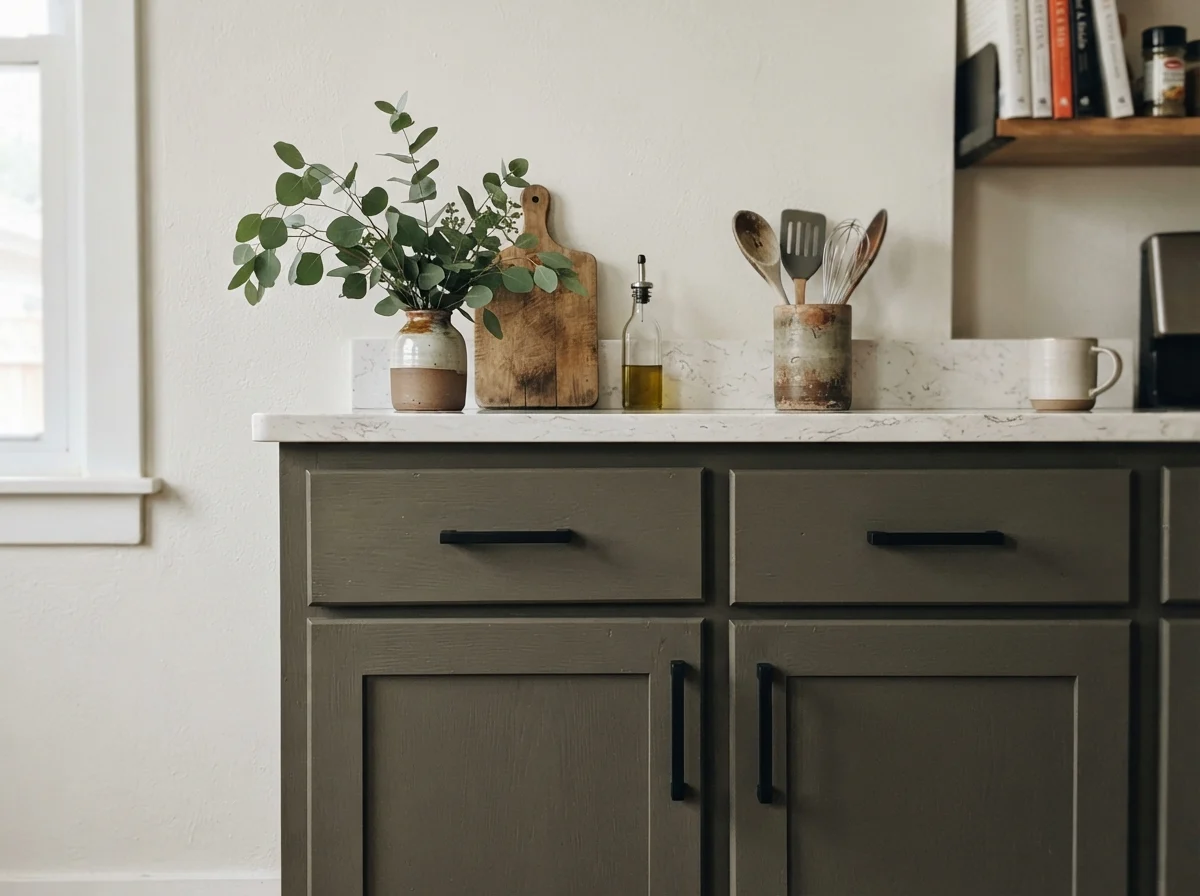
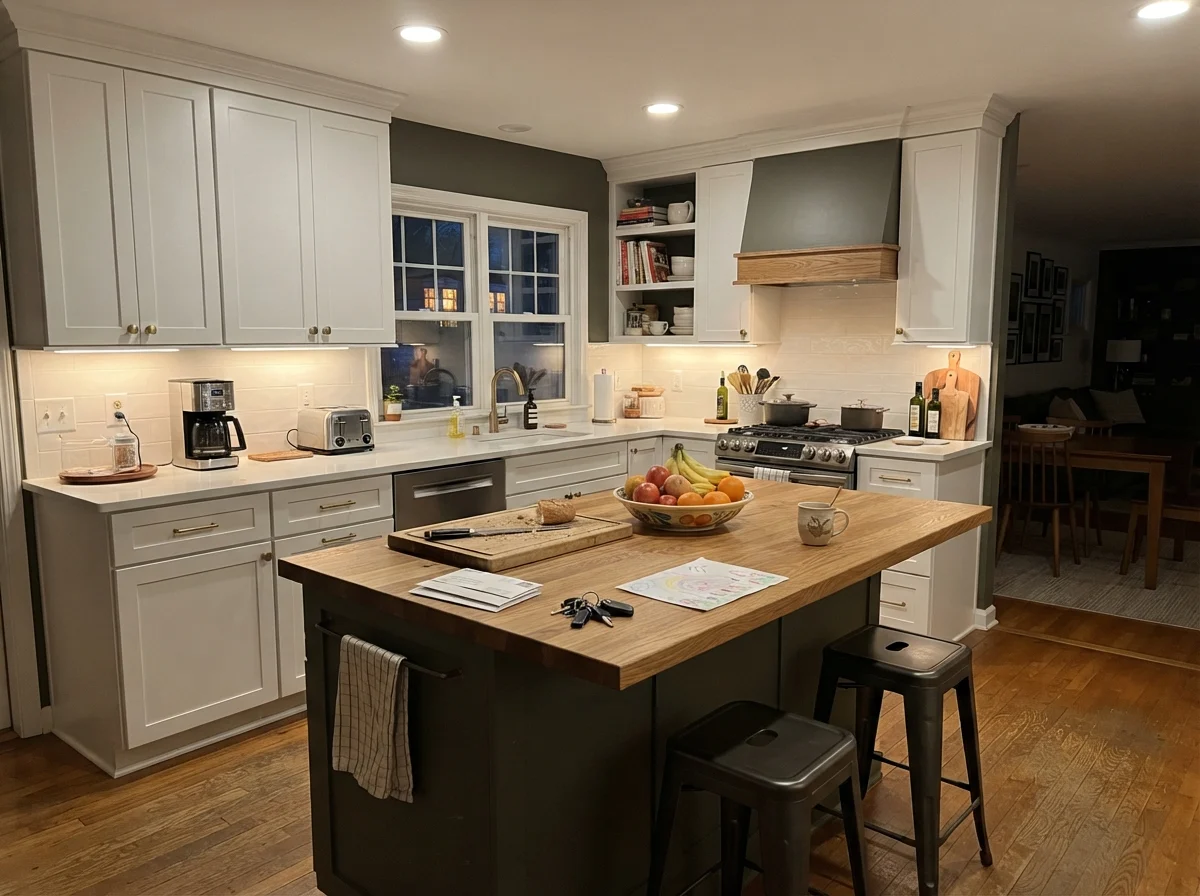
If you're tired of navy islands and standard charcoal cabinets, Dark Olive is worth the money on woodwork. When we refreshed the kitchen cabinetry in our 1990s colonial before listing, we used a dark olive tone on the lower island run. Unlike pure black or dark navy—which seem to highlight every single butter smudge and dusty fingerprint—Dark Olive's muted earthy undertone conceals everyday kitchen grime remarkably well.
For cabinetry, always use a satin finish in a cabinet-grade enamel. Pair it with perimeter cabinets painted in a soft warm white like White Dove OC-17, walls in Edgecomb Gray HC-173, and unlacquered or aged brass pulls. The brass hardware cuts through the deep olive tone and makes standard shaker doors look custom-built.
Living Spaces and Bedrooms: Embracing the Cocoon
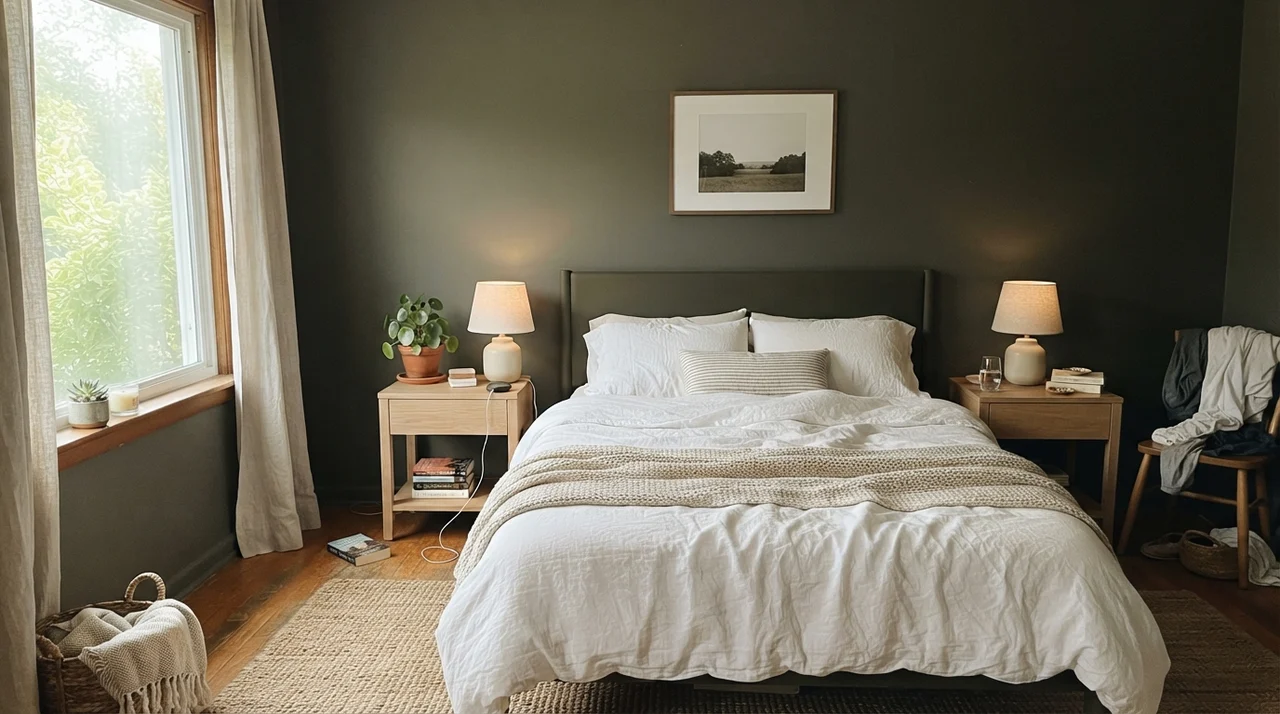
Using an LRV 14 paint across an entire bedroom or main living room requires commitment. If your goal is to make a cramped 10x10 guest room feel bright and airy, Dark Olive is the wrong choice. It will visually bring the walls in. But if you want a restful, cave-like retreat where you can unwind under warm lamps, it performs brilliantly.
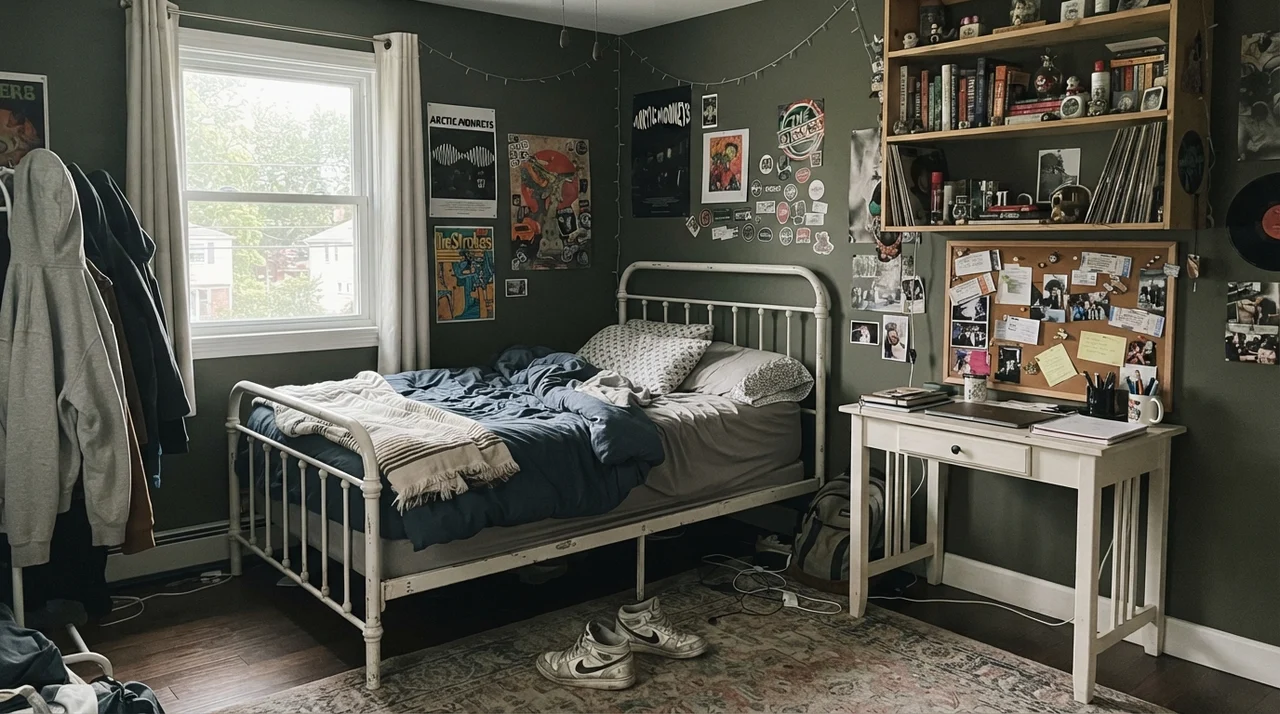
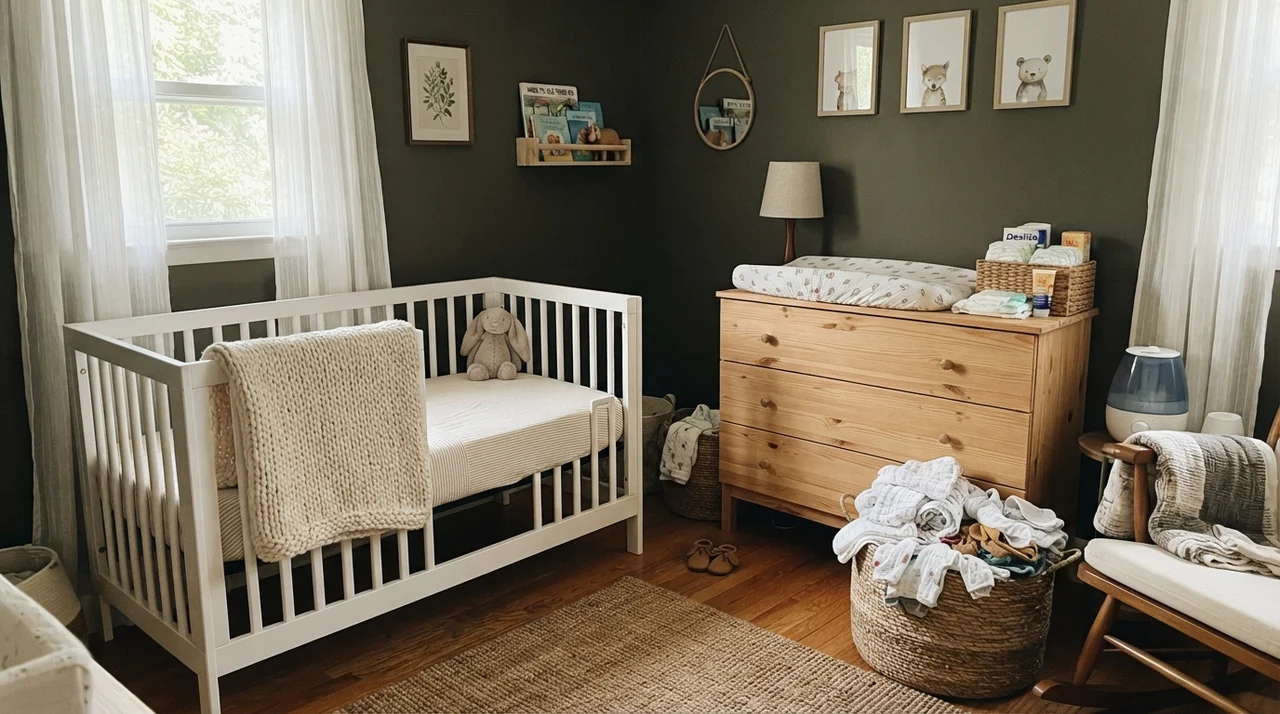
In a teenager's room or nursery, pairing Dark Olive walls with light wood furniture, cream bedding, and woven baskets keeps the space from feeling oppressive. The deep green backdrop makes pale oak and white cribs stand out with crisp definition.
Bathrooms, Hallways, and Exterior Siding
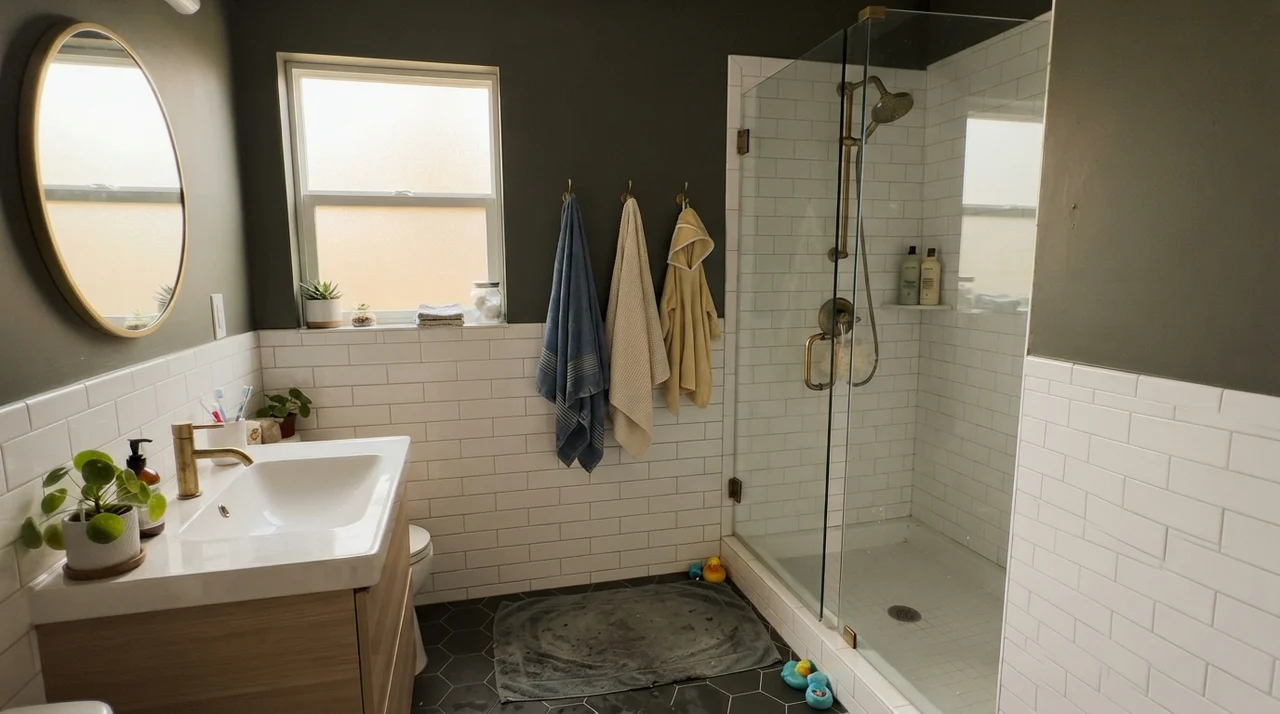
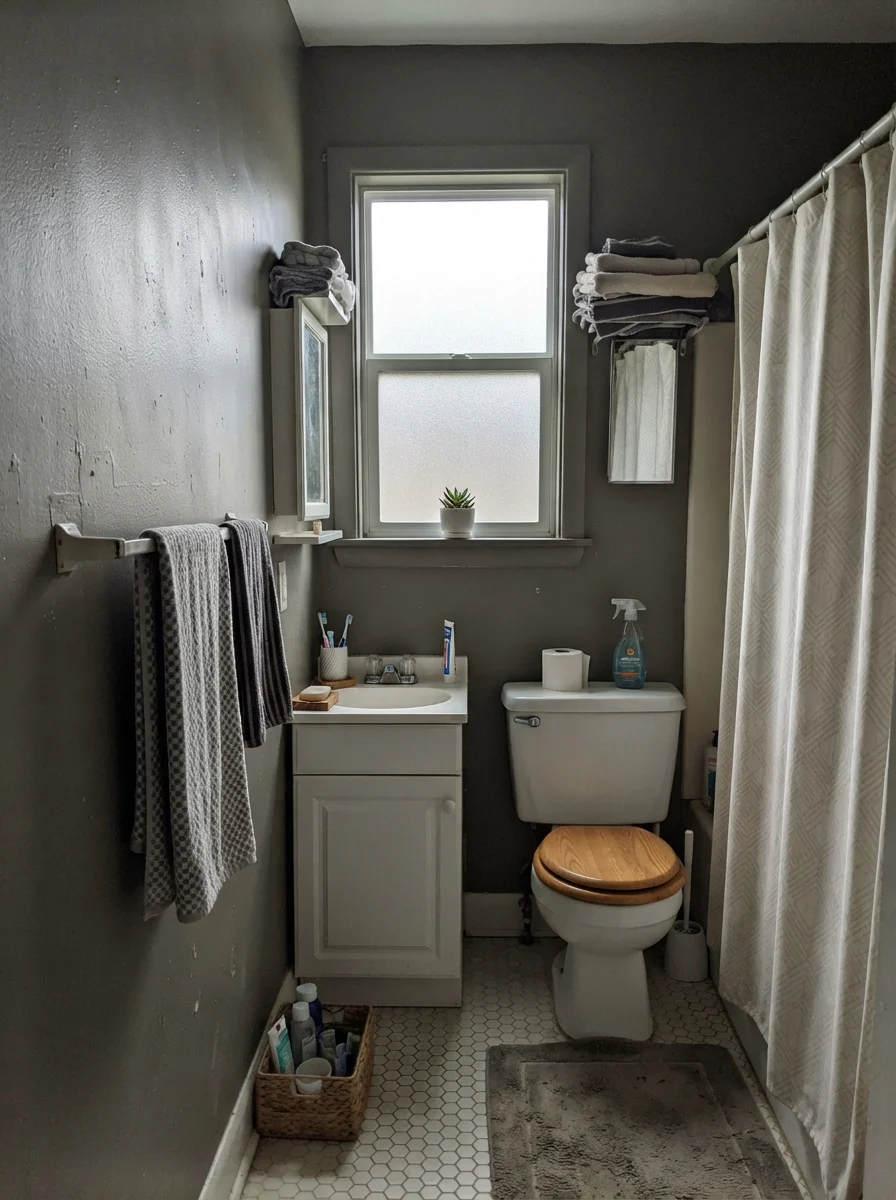
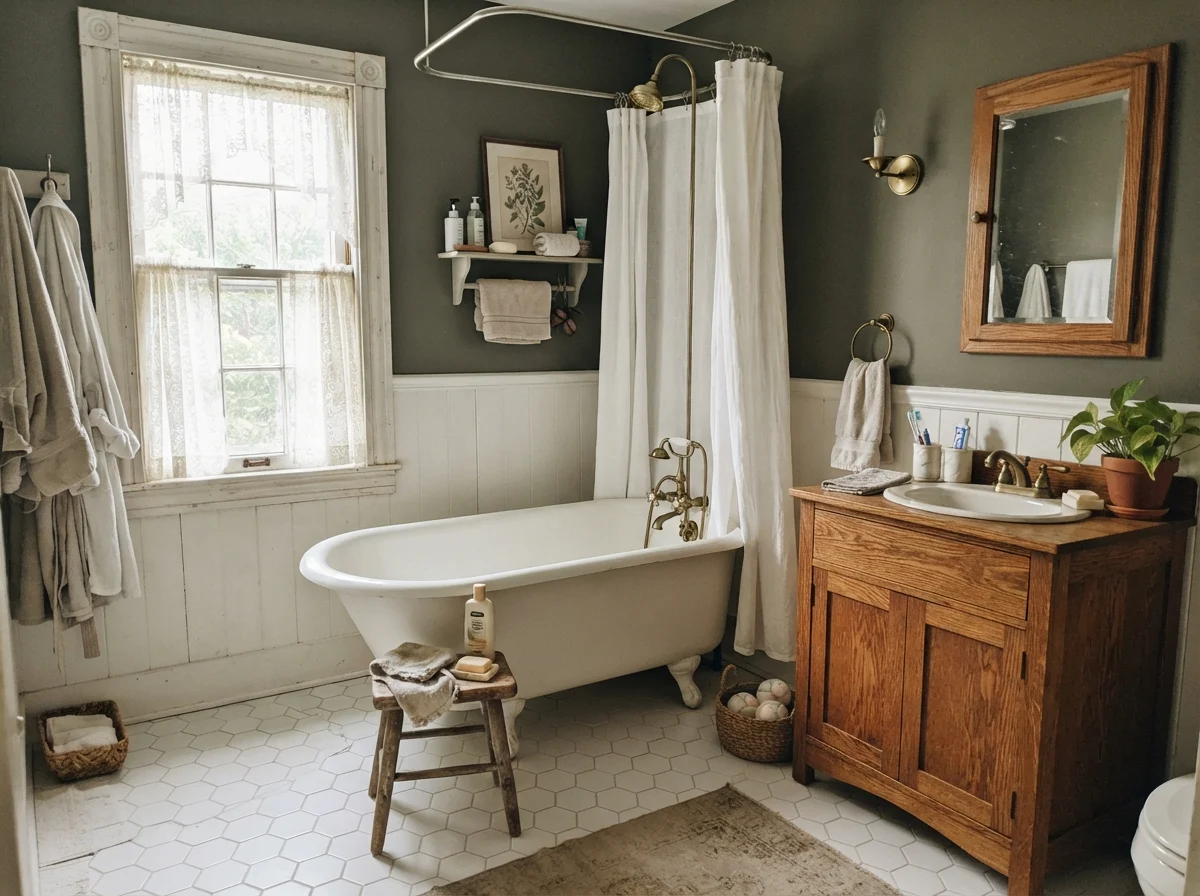
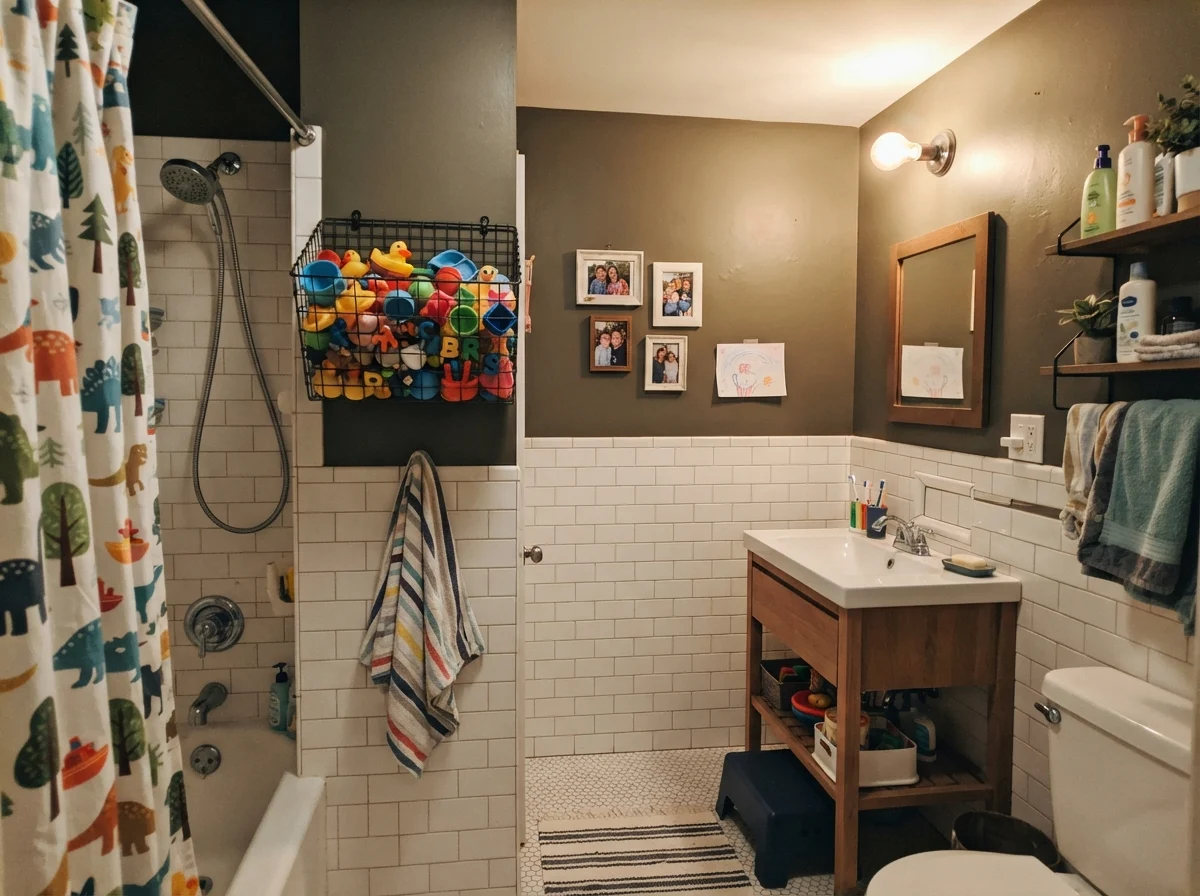
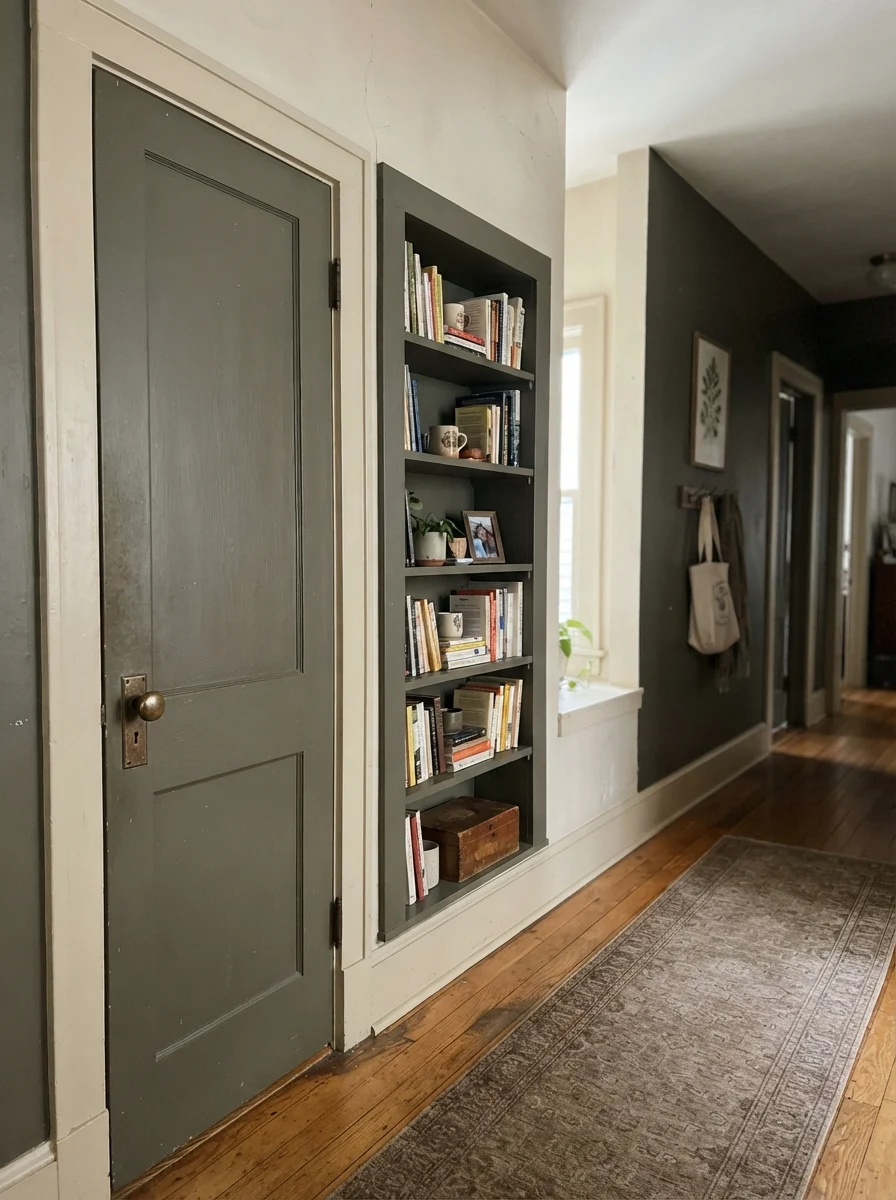
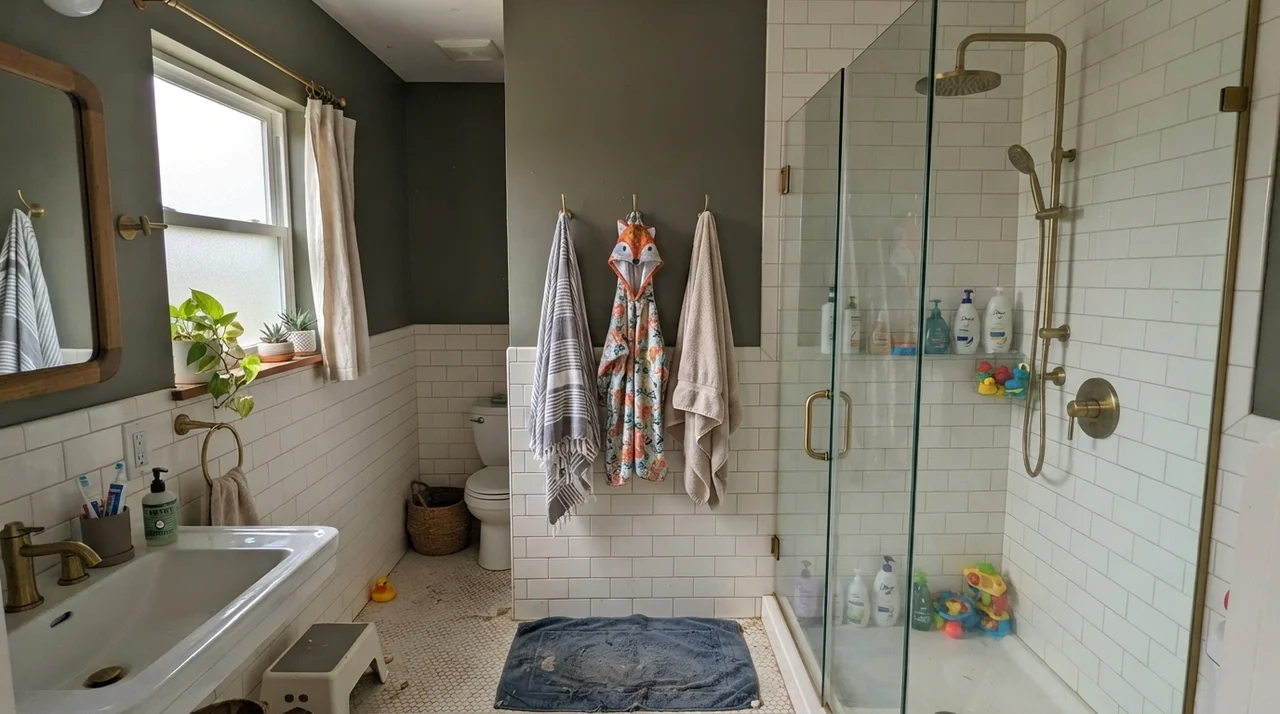
Here is a decorator secret that rarely gets mentioned: windowless rooms are the safest places in the entire house to paint dark colors. In an interior powder room or an enclosed hallway, you don’t have daylight anyway. You are entirely in control of the light source. Putting Dark Olive on the walls and ceiling of a windowless powder room with a couple of 2700K brass sconces creates an instant jewel box.
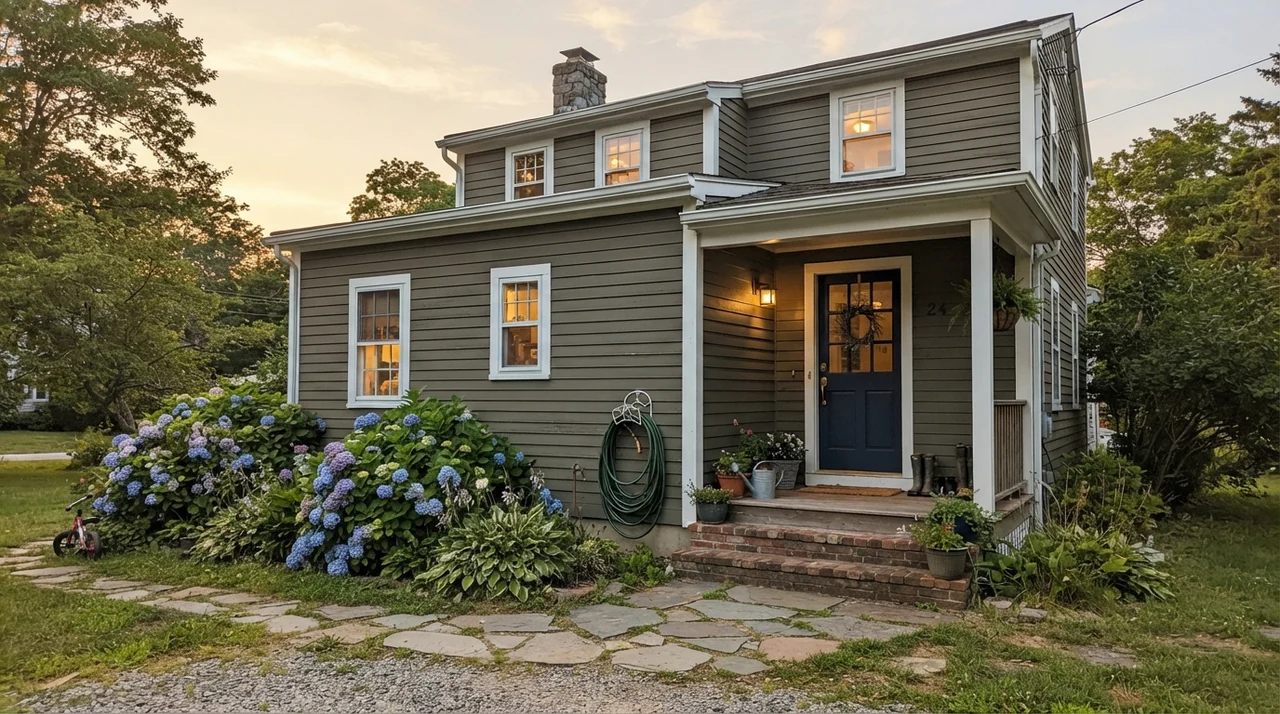
Outdoors, Dark Olive is a natural fit for houses surrounded by established trees. On our 1960s ranch, exterior earth tones sit naturally against the landscape. South-facing exterior siding will fade slightly faster than pale paints over seven to ten years under harsh sun, but in golden afternoon light, the horizontal siding looks timeless.
Where Dark Olive Goes Completely Wrong
The one-star stories about Dark Olive are almost always the result of three specific layout mistakes. The paint itself isn't defective; the room conditions simply worked against it from coat one.
First, putting this color into a dim, north-facing hallway with beige carpet and no direct sun turns it into muddy sludge. Without adequate lumens to activate the olive pigment, you get a depressing grey-brown shadow. Second, pairing it with stark, ice-cold trim (like Chantilly Lace) creates a jarring border that makes the olive look dirty and harsh. Third, painting it on base cabinets beneath cool blue-gray marble or speckled Carrara quartz causes a thermal clash; the cool gray stone drags the olive toward mud rather than green.
Durability, Scrubbing, and Living with Dark Walls
Here is what five years of living with a dark wall actually looks like: every imperfection in your drywall will show up if you choose the wrong sheen. High-pigment, low-LRV paints catch raking light across uneven taping seams and patched nail holes. If your drywall is wavy or heavily patched, stick strictly to flat on ceilings and eggshell on the walls. Do not put satin on wavy living room drywall, or you will spend every late afternoon staring at roller overlap marks.
When it comes to cleaning, Benjamin Moore's premium formulas in eggshell held up well to dirty dog paws and kitchen scuffs. Fingerprints and knuckle marks near light switches scrubbed clean with a damp microfiber cloth without burnishing the finish. On trim, doors, and kitchen cabinets, satin or semi-gloss is non-negotiable. It wipes down easily and provides that durable enamel shell needed for high-traffic zones.
You don't pick an LRV 14 paint for the weekend you roll it. You pick it for year four, when the afternoon light hits the brass pulls and the room feels like it has been there fifty years.
What sheen should I use for Dark Olive?
Use eggshell for main walls to minimize drywall flaws, semi-gloss for trim and doors, satin for kitchen cabinets, and flat for ceilings.
Will Dark Olive make my small room look smaller?
Yes. At LRV 14, it absorbs daylight and visually pulls walls inward. If you want a small room to feel spacious, skip it. If you want it to feel like a cozy, enclosed den or moody powder room, it works wonderfully.
What trim color goes best with Dark Olive?
Warm off-whites like Benjamin Moore Swiss Coffee OC-45 or White Dove OC-17. Avoid stark, cold whites like Chantilly Lace, which make the olive look dirty by comparison.
How does Dark Olive look at night under artificial light?
Under 2700K warm bulbs, it turns rich, earthy, and warm like moss and aged leather. Under cool 4000K LED lighting, it flattens out into an unattractive, cold gray-brown.
Susan's Verdict · Grounded, Moody, but Demands Warm Light
Dark Olive 2140-30 is one of the most livable dark greens Benjamin Moore makes, provided you respect its lighting requirements. It gives you the drama of a dark room without the harsh, unforgiving edge of true black or navy. Put it in a south-facing study, across kitchen cabinets with brass hardware, or inside a windowless powder room, and it will look settled and timeless for years. Keep it far away from dim, north-facing hallways and cool gray marble counters.