Color Diary · No. 133
Sherwin-Williams Maison Blanche Never Promised to Be a Pure White
The warm honey-beige HGTV kitchens keep choosing, reviewed honestly: the light that turns it flat gray-lavender, the light that flashes it pink, and what to pick instead.

Susan HartleyNovember 20, 2026 · 20 min read
Maison Blanche · Sherwin-Williams SW 7526
Hex#DFD2BFLRV66Undertoneskhaki yellow → soft warm beige → muted gray-lavender
When we moved into our 1990s colonial in late autumn of 2004, the previous owners had attempted to modernize the main floor by slathering a stark, hospital-grade cool white across every inch of drywall, baseboard, and casing. They thought it looked fresh. In reality, paired with the honey oak flooring and golden oak kitchen cabinets of that era, the rooms felt like an argument between two decades that refused to speak to each other. The walls made the wood look orange and tired, while the wood made the walls look chalky and unfinished. I spent three months feeling like a visitor in my own home before I realized what was missing: color bridge work.
That was my practical introduction to colors that sit right on the fence between white and beige. Sherwin-Williams Maison Blanche (SW 7526) is one of those colors that people discover only after a true off-white has let them down. At an Light Reflectance Value of 66, it does not pretend to bounce every scrap of illumination like a bright ceiling paint. It has genuine mass. Sherwin-Williams describes it as a "lighthearted, warm khaki yellow," which sounds like marketing copy until you watch it sit quietly next to natural oak and realize the description is actually accurate. It belongs to the orange deck family, but there is enough gray resting under the surface to prevent it from turning into a butter dish.
We have lived through thirty years of color fads across three houses—our first 1970s split-level, the colonial, and now our 1960s ranch. If there is one constant lesson I have learned, it is that colors chosen from a tiny two-inch paper card under fluorescent hardware store lights will almost always misbehave when you spread them across ten gallons of drywall. You have to understand what makes a shade tick before you commit your weekend and your back to rolling it out.
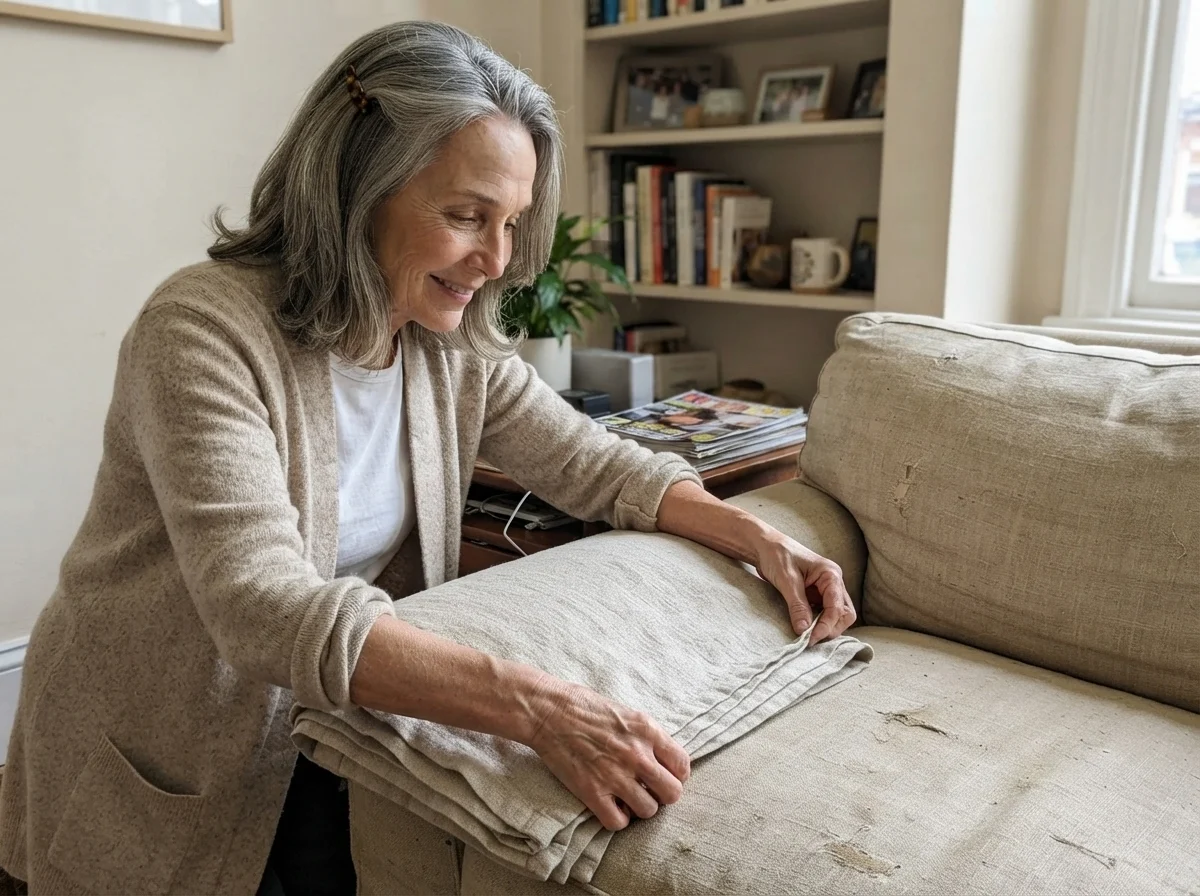
I keep an oatmeal linen throw draped on our sitting room settee, and when guests drop by, they often remark on how peaceful that corner feels. That peace isn't an accident of upholstery; it comes from how the wall behind it behaves. Maison Blanche is the kind of quiet worker HGTV leaned into for their Timeless Beauty collection. It is not an internet-viral shade with dramatic before-and-after reels, and thank goodness for that. When a paint color goes viral, it usually means it photographs brilliantly under three studio ring lights and looks like dishwater in an ordinary family hallway. Maison Blanche earned its reputation quietly through thousands of kitchen cabinet repaints and lived-in main rooms.
The secret lies in its balance. Because it sits at LRV 66, it reflects enough light to keep an active family room from feeling enclosed, yet it carries enough tint to establish a clear boundary against white baseboards. But that midpoint is also where homeowners run into trouble. If you treat it like an off-white, it will surprise you with its depth. If you treat it like a beige, its underlying gray base will reveal itself the moment the sun dips behind the treeline.
How the Daylight Changes the Mood
In our last house, our main bedroom faced east toward a row of mature maples, while the back guest room pointed straight north. That house taught me more about light orientation than any interior design manual ever could. When paint chips tell you a color is warm, they mean it has warm pigments waiting for photons to activate them. If those photons are cold and blue, those warm pigments can do nothing to help you.
In bright south-facing daylight or clean eastern morning sun, Maison Blanche is at its best. The yellow and khaki pigments sing out clearly, offering an enveloping, creamy depth that softens crisp architectural moldings and complements hardwood floorboards. But you must watch the clock. In late afternoon, especially if you have large west-facing windows that receive intense, unfiltered sun, that warm neutral can flash a faint pinkish-violet cast for an hour right before dusk. Most busy families moving between dinner prep and laundry will barely register it, but if you have a keen eye that detests pink undertones, it is worth testing on the exact wall where the late sun hits.
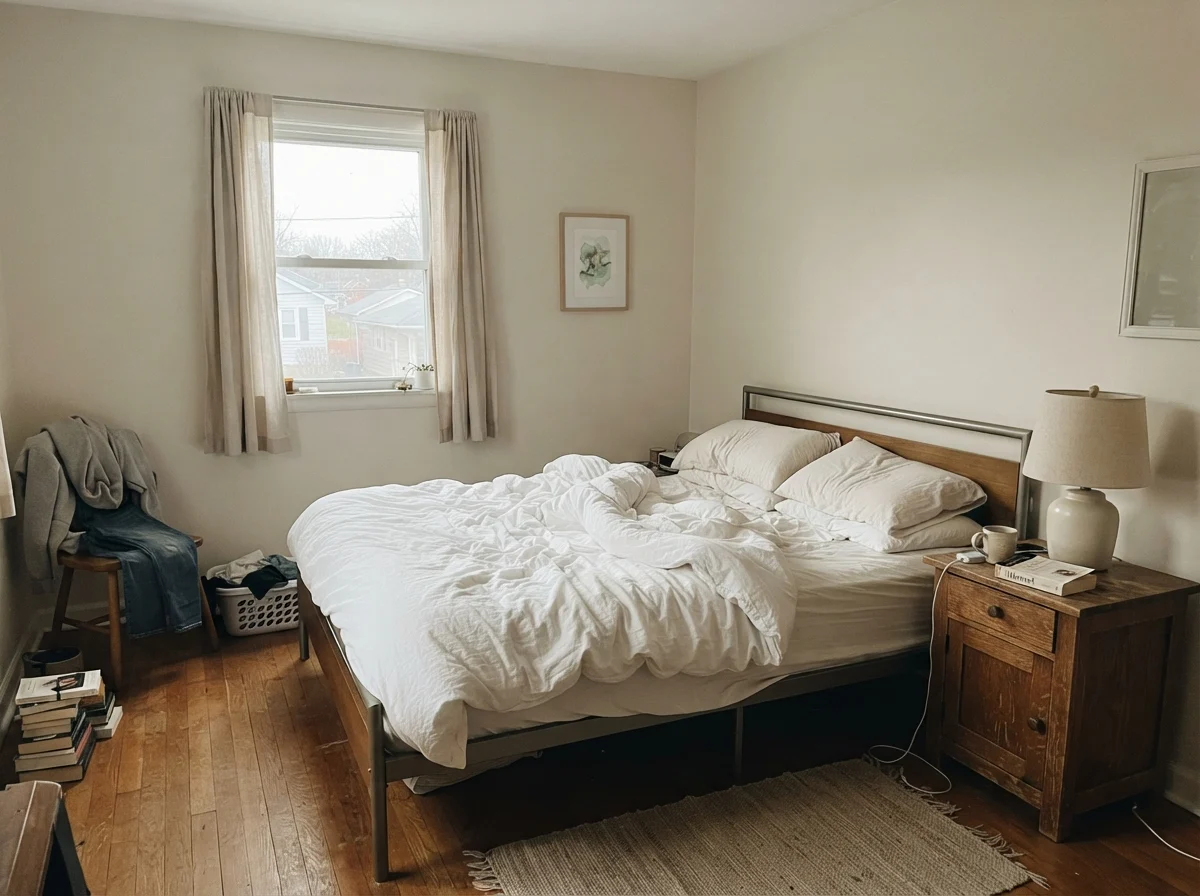
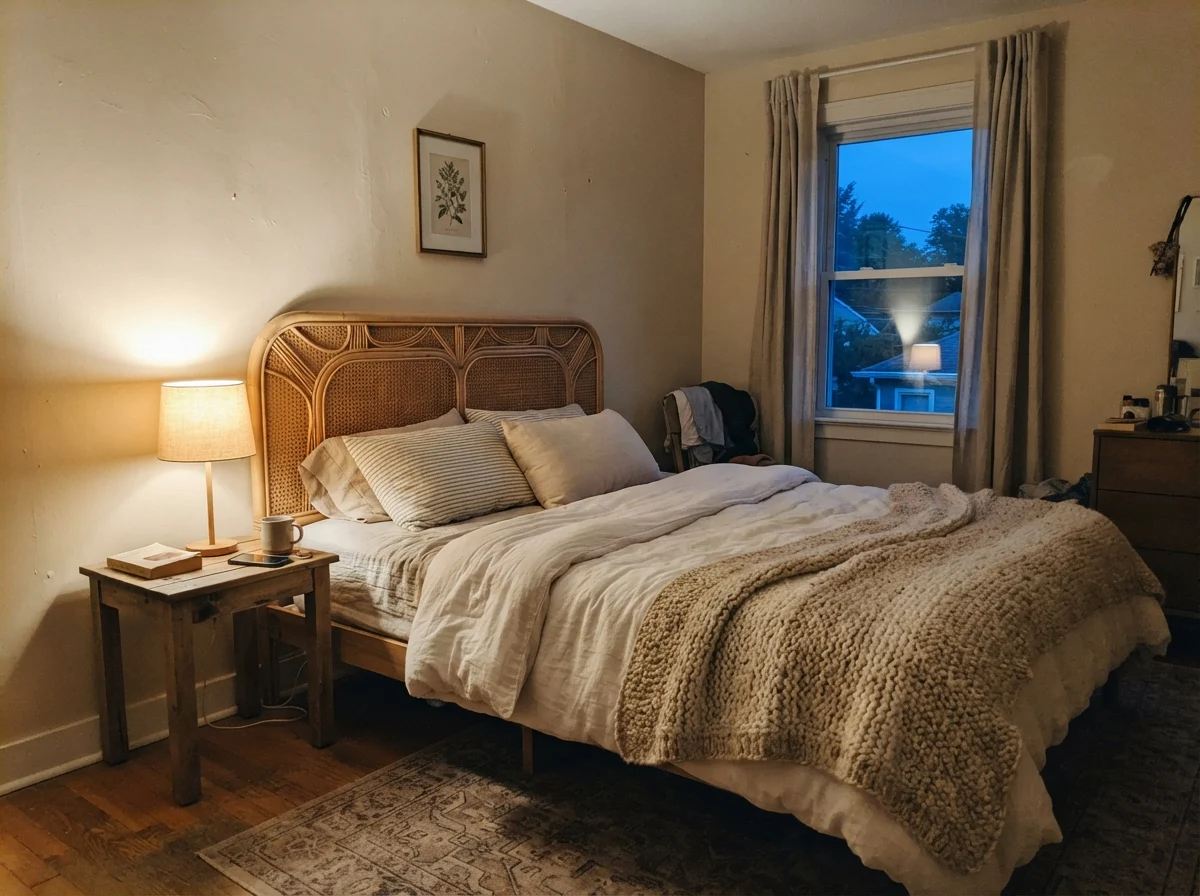
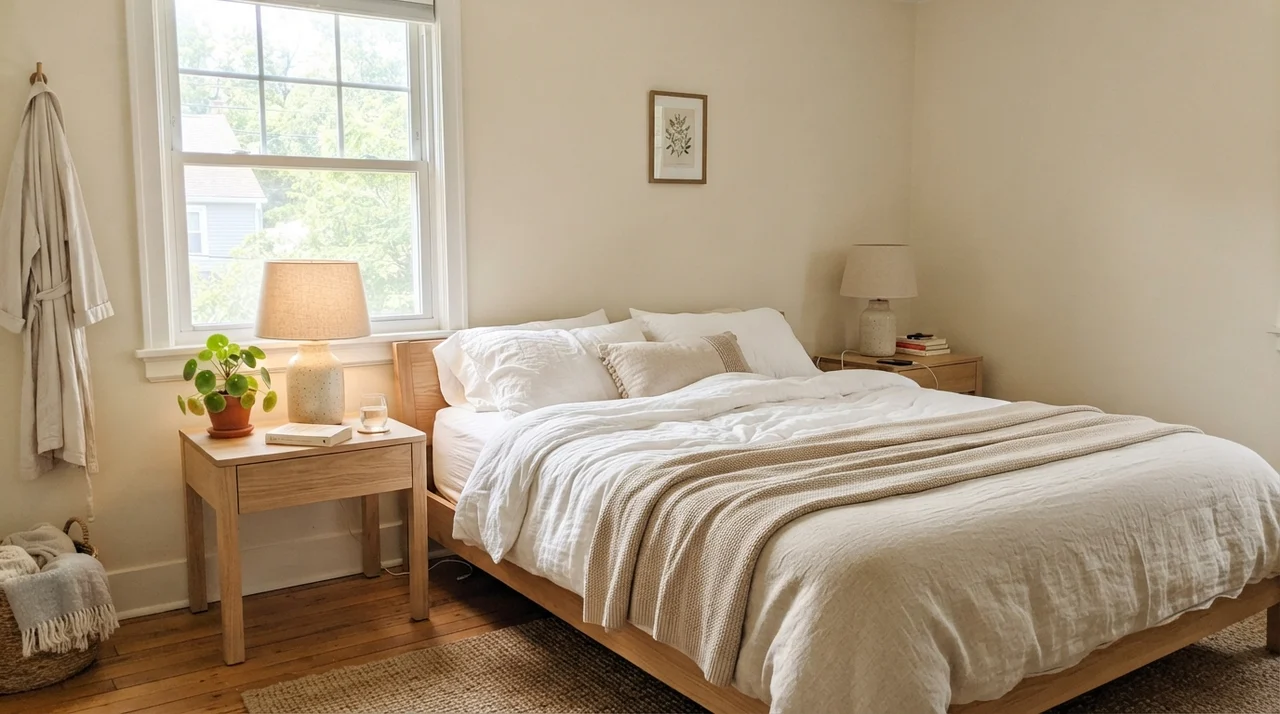
Conversely, early morning light stripped of direct sun can leave the paint looking slightly subdued, waiting for either the lamps or the day to warm it up. To see what happens when the lighting changes completely without touching a paintbrush, consider how morning light differs from evening lamp glow on the exact same plaster.
Looking at those two bedroom scenes side by side tells the entire story of this shade. In the morning without the lamp, the paint sits pale and almost detached, leaning into its quiet gray underpinning. Come evening, under a soft 2700K incandescent or warm LED lamp, the khaki character wakes up, wrapping around the cane headboard and white linens like an old woolen sweater. If you install 4000K daylight LED bulbs in your fixtures, you will effectively kill that evening magic; swap your lightbulbs before you blame your paint can.
The Realities of Bathrooms and Wainscoting
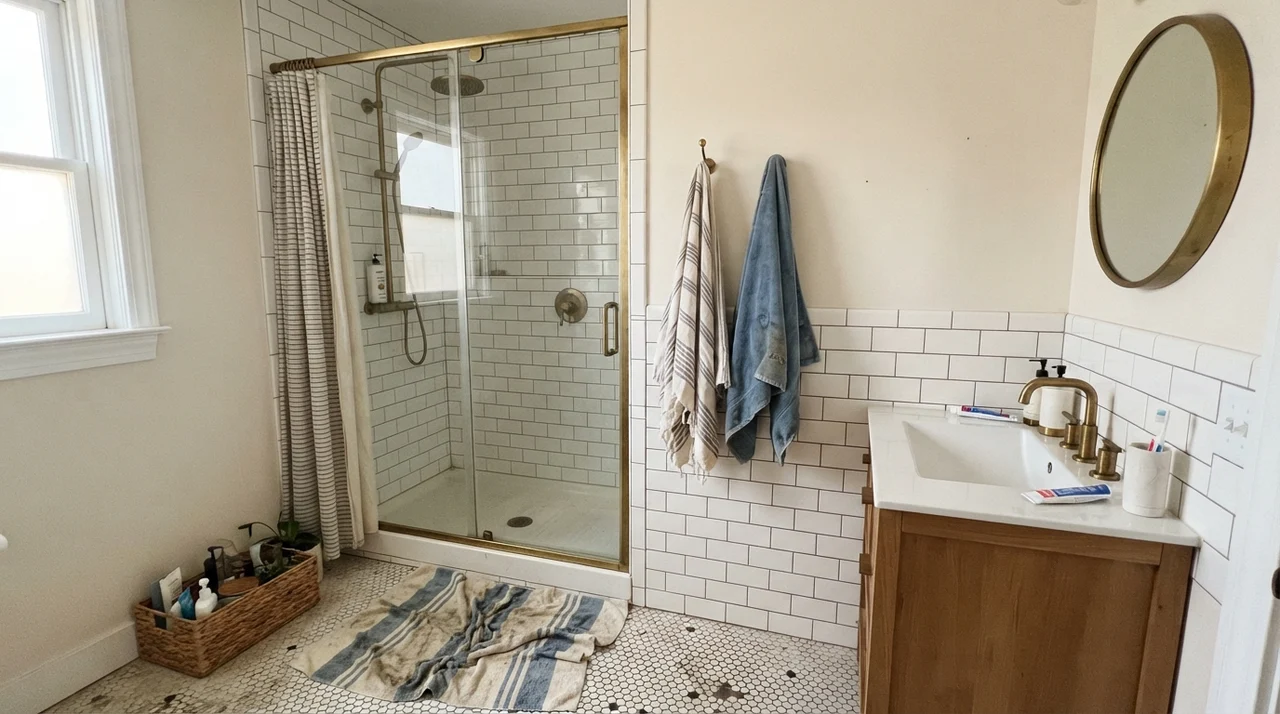
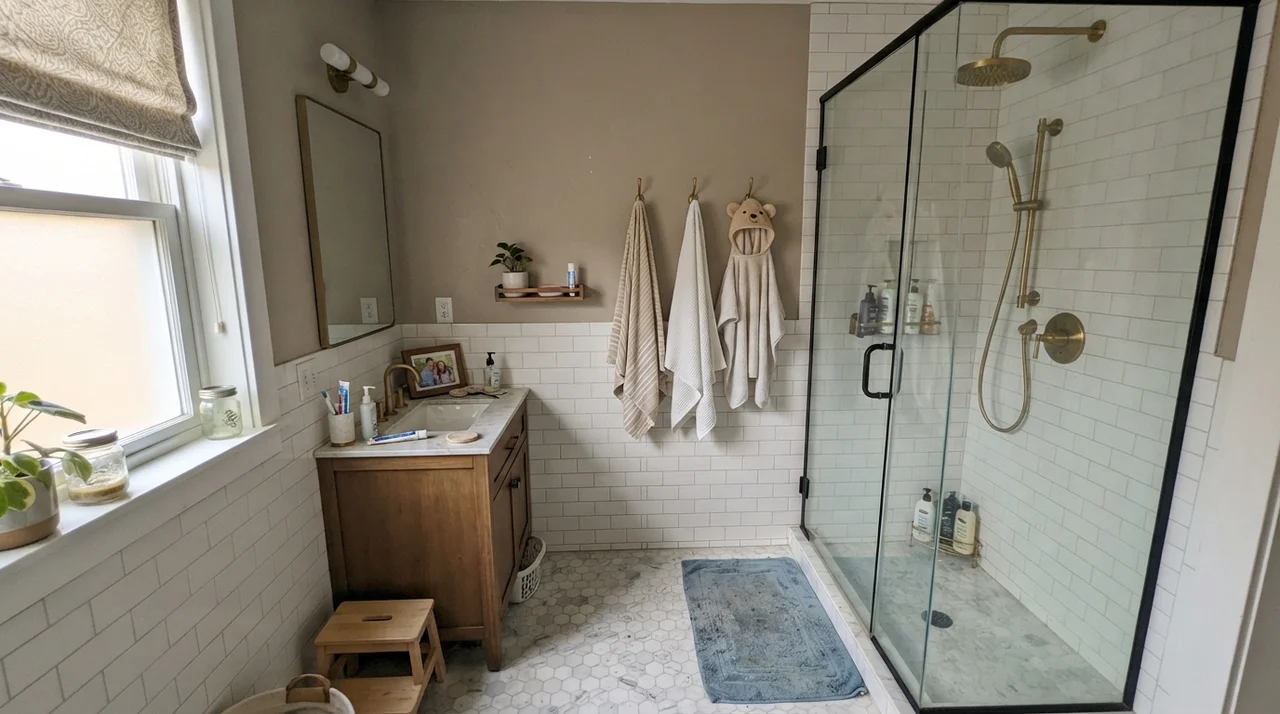
Bathrooms are tough testing grounds for paints in the LRV 60s. Between moisture, harsh task lighting, and competing ceramic tile surfaces, a mid-tone off-white can easily trip up. When we renovated the family bathroom in our ranch, I knew subway tile and brass hardware needed something substantial above the chair rail to keep the room from reading like an institutional shower stall.
When paired with pure white subway tile and warm brass fixtures, Maison Blanche does what few modern grays can do: it creates contrast without turning the space into a graphic black-and-white grid. The white tile provides a baseline that tells your eye the wall above is intentionally tinted. The brass accents catch the yellow-khaki deck family warmth, making the bathroom feel deliberate and settled rather than sterile.
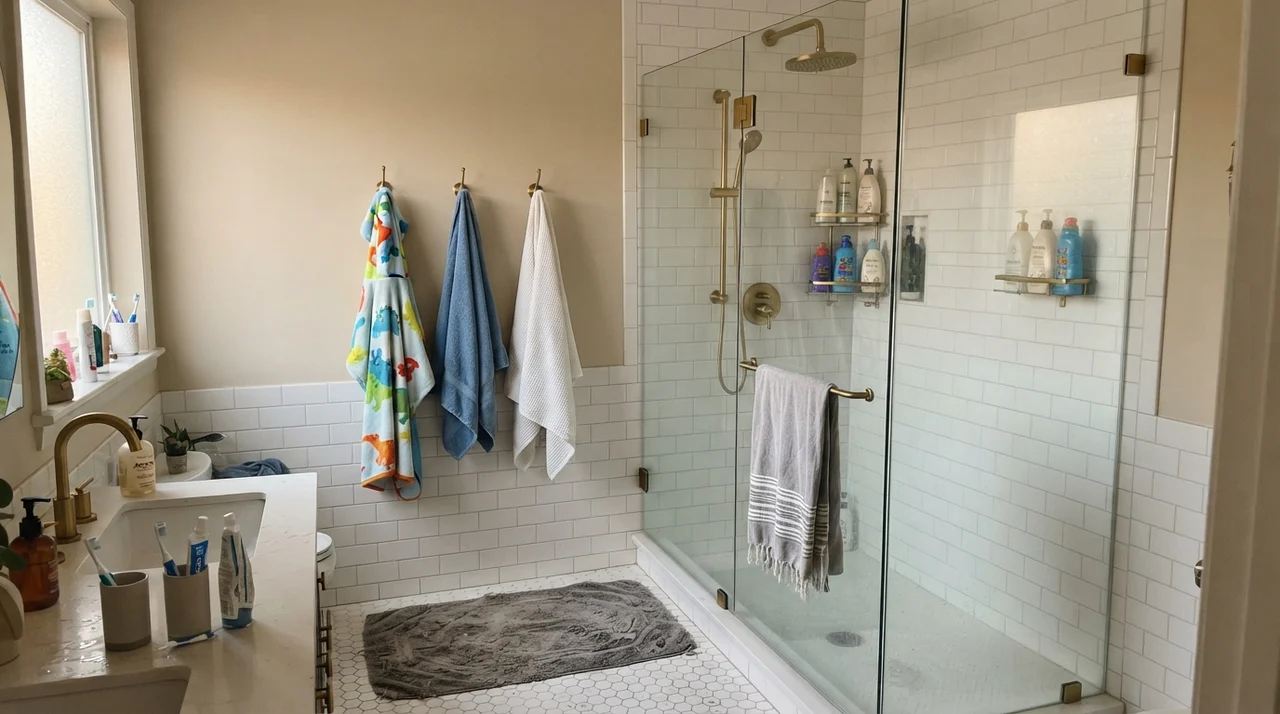
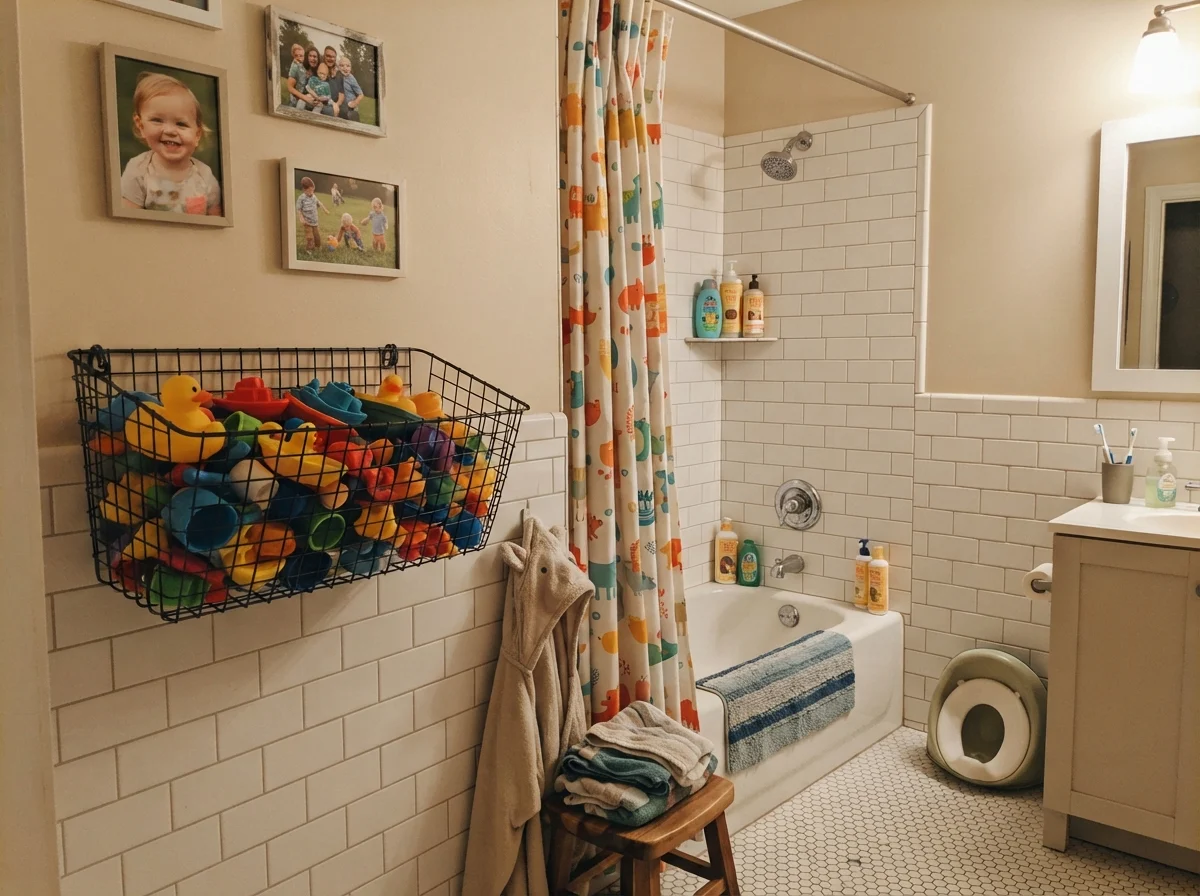
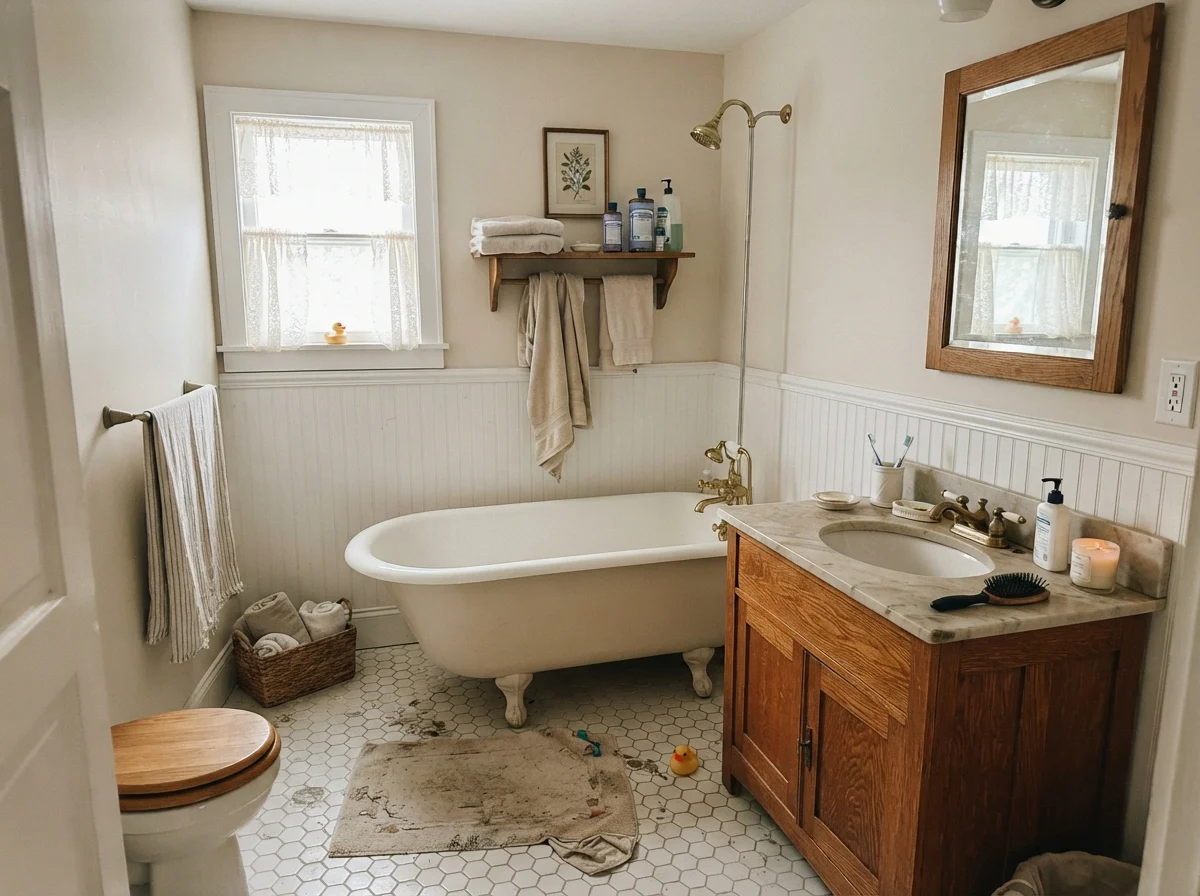
However, the way it behaves in secondary baths depends entirely on what else is fighting for attention in the room. A space with charming cottage fixtures and warm timber will respond entirely differently than a shared kids' bathroom stacked with bright plastic gear.
Notice how comfortably the paint sits behind the white clawfoot tub and beside the oak vanity. Because it contains that subtle khaki note, it greets oak grain like a familiar friend. In our last house, our master bath had honey-stained oak trim that I refused to tear out because the carpentry was solid. Pairing that oak with a cool builder gray would have looked disastrous, but Maison Blanche smoothed the transition completely.
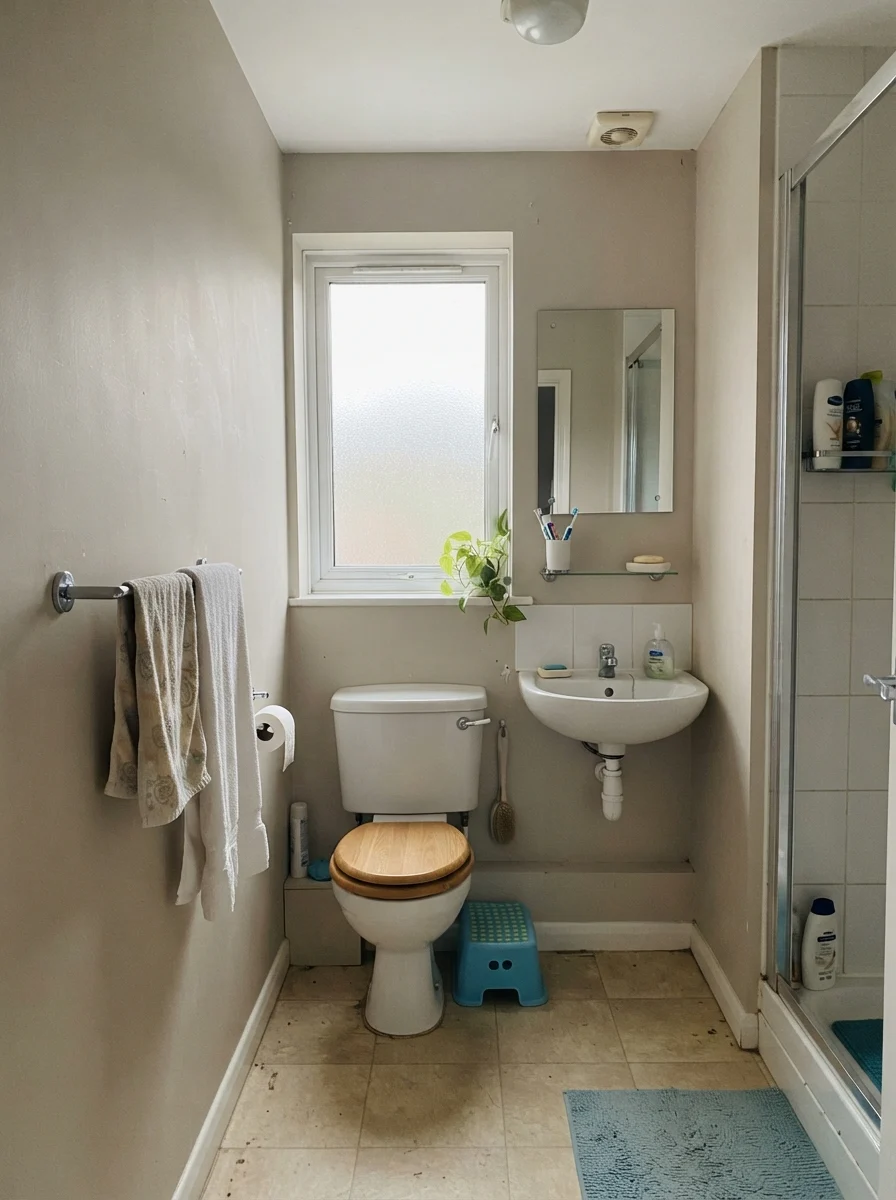
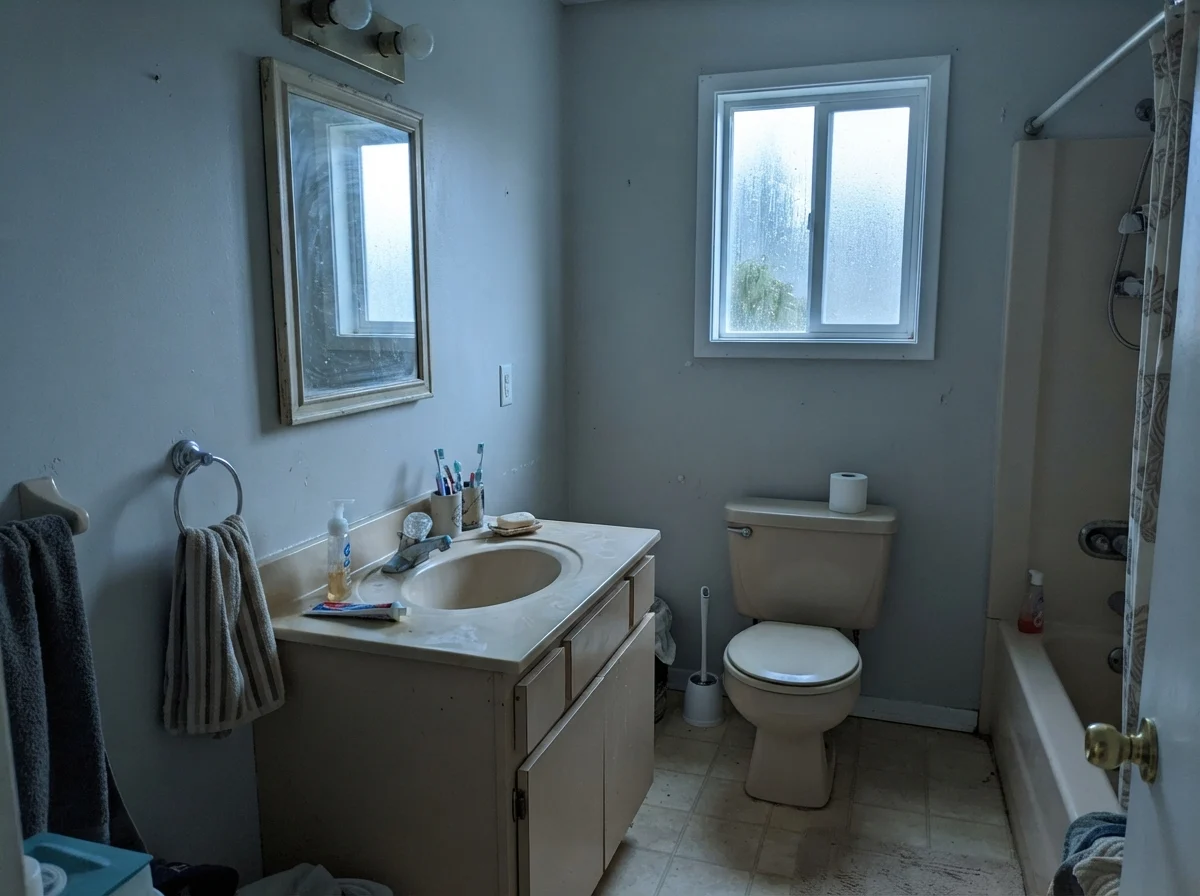
That said, you have to be honest about bathrooms with poor natural lighting or outdated fixtures. If the room has only a small frosted window or sits on the cold north face of the house, the warmth can evaporate fast, leaving behind a muted, cool cast that surprises people who expected a honey glow.
When you see it next to an older beige vanity under rainy skies, you can immediately detect that gray foundation. It doesn't turn ugly, but it drops into a quiet putty that will not fight to brighten a dark room. If your bathroom lacks warm bulbs or direct daylight, do not buy this paint expecting it to mimic sunshine; it simply doesn't have the chemical makeup to do that work alone.
The Cabinet Favorite: Kitchens and Working Wood
Where Maison Blanche genuinely earns its keep—and where I have recommended it to at least half a dozen neighbors over the years—is on kitchen cabinetry. In the early 2010s, everyone was stripping out oak to install stark, blinding white shaker cabinets. Many homeowners discovered that those snow-white kitchens felt cold, required endless wipe-downs, and showed every single stray crumb or watermark.
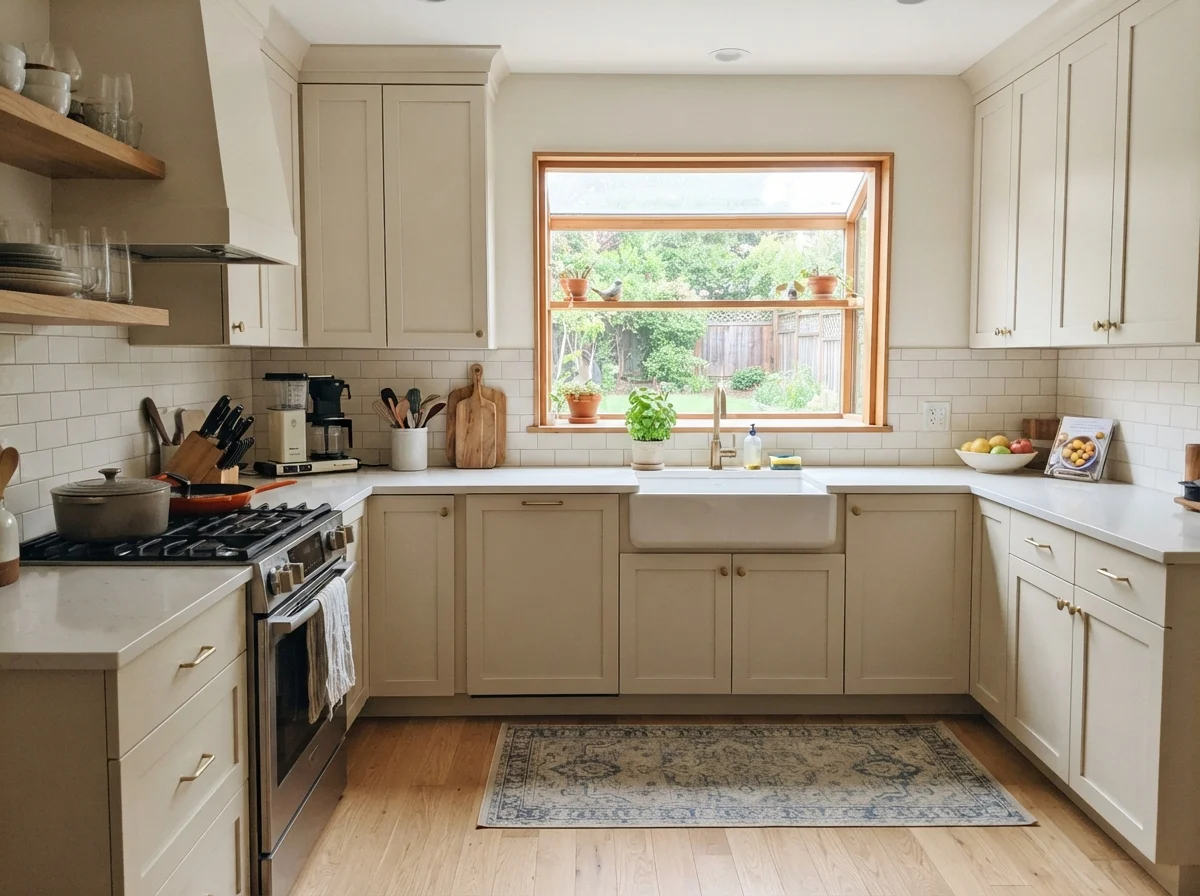
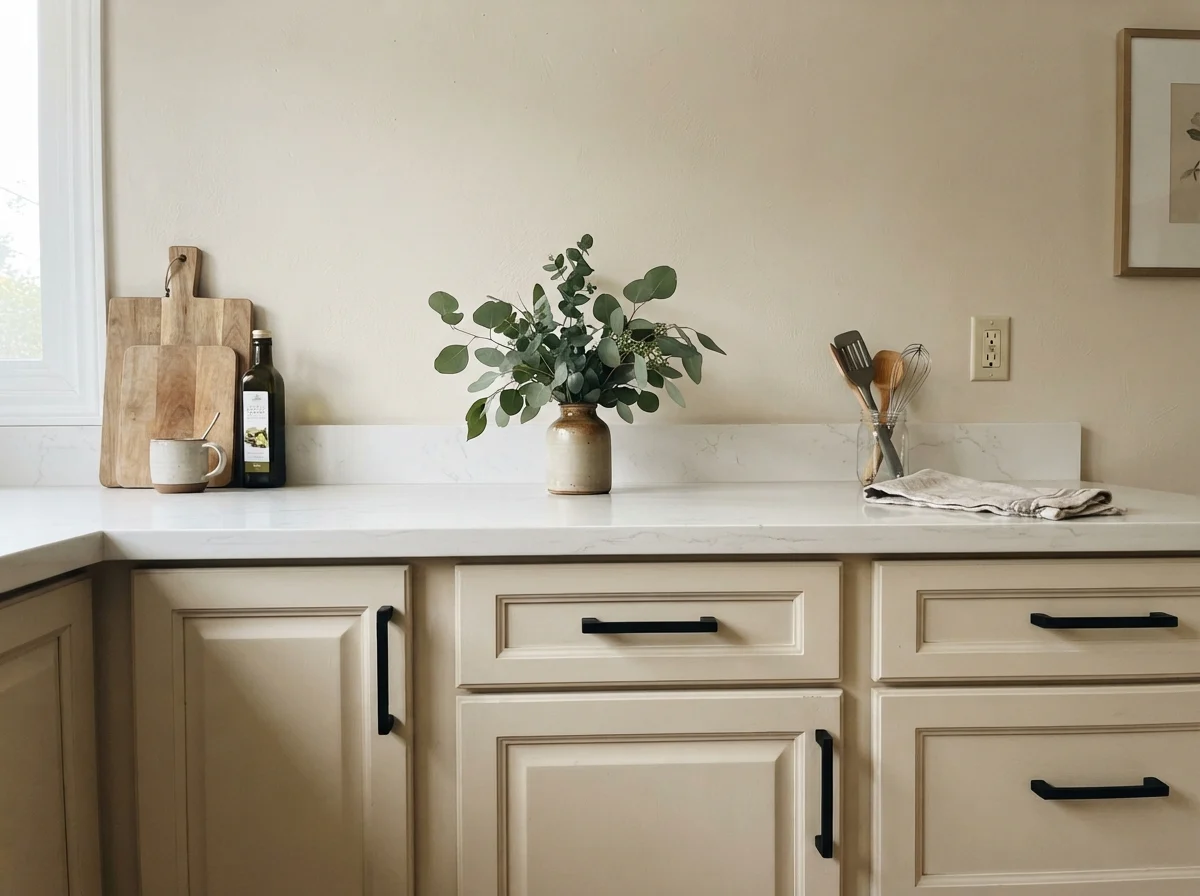
When brushed or sprayed in a durable satin finish on cabinet doors, Maison Blanche delivers that timeless country cupboard feel without looking like yellowed nicotine. It lets white subway tile and pale quartz counters stand out crisply without fighting them. Matte black or antique brass hardware anchors the khaki undertone, making the entire kitchen feel grounded and tailored. It was worth the money to use high-grade cabinet paint here; a quality satin finish cleans up smoothly when butter splatters or coffee rings hit the doors.
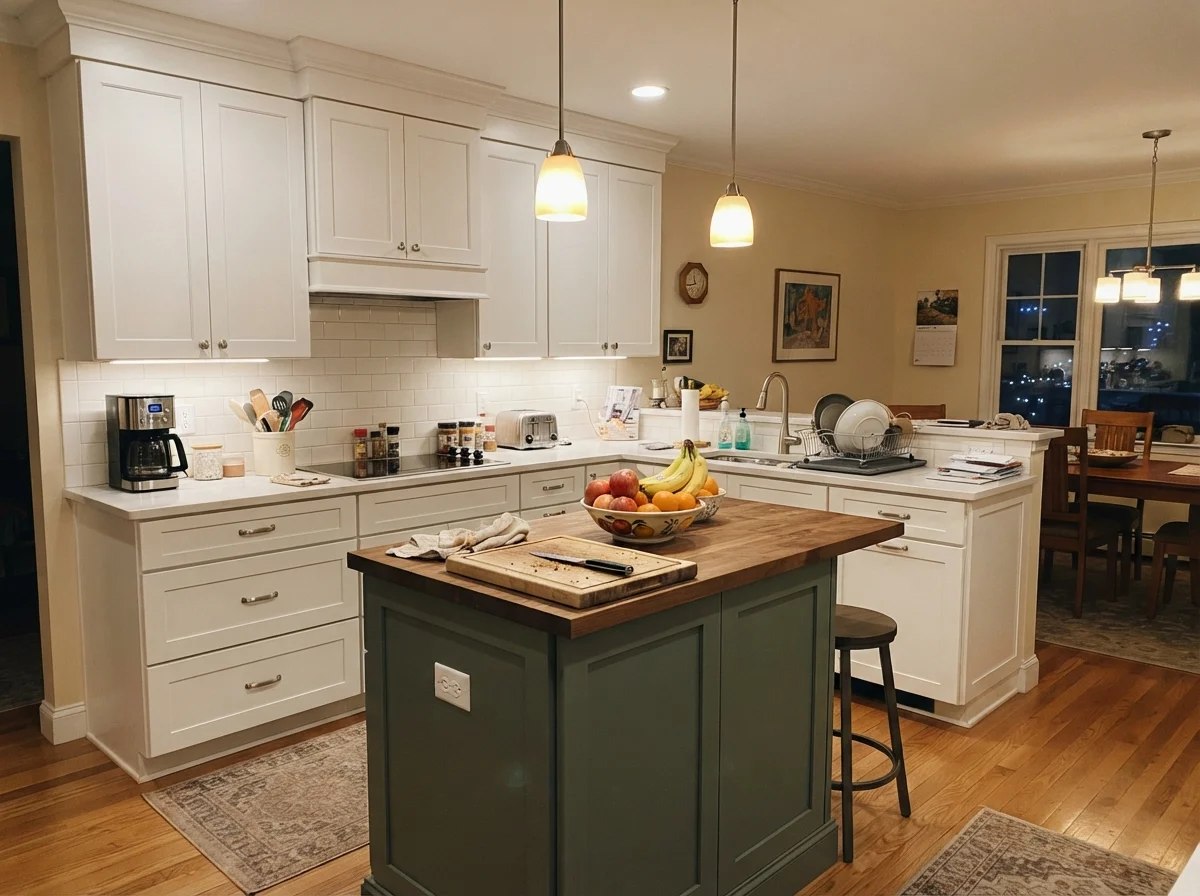
If you aren't ready to commit to painting every upper and lower box, treating an island with this shade while keeping perimeter cabinetry white is another tried-and-true approach. It anchors the center of the room and handles the scuffs of shoe soles on the back panel remarkably well.
That kitchen island sees daily life: backpacks tossed on the counter, cutting boards working overtime, and grocery bags dragged across the wood. A color with this degree of depth hides the minor rubs of daily existence far better than a delicate LRV 85 white ever could. In our colonial, we lived with it through two teenagers, a golden retriever, and countless neighborhood potlucks, and it held up with very little fuss.
Living Rooms and Main Gathering Spaces
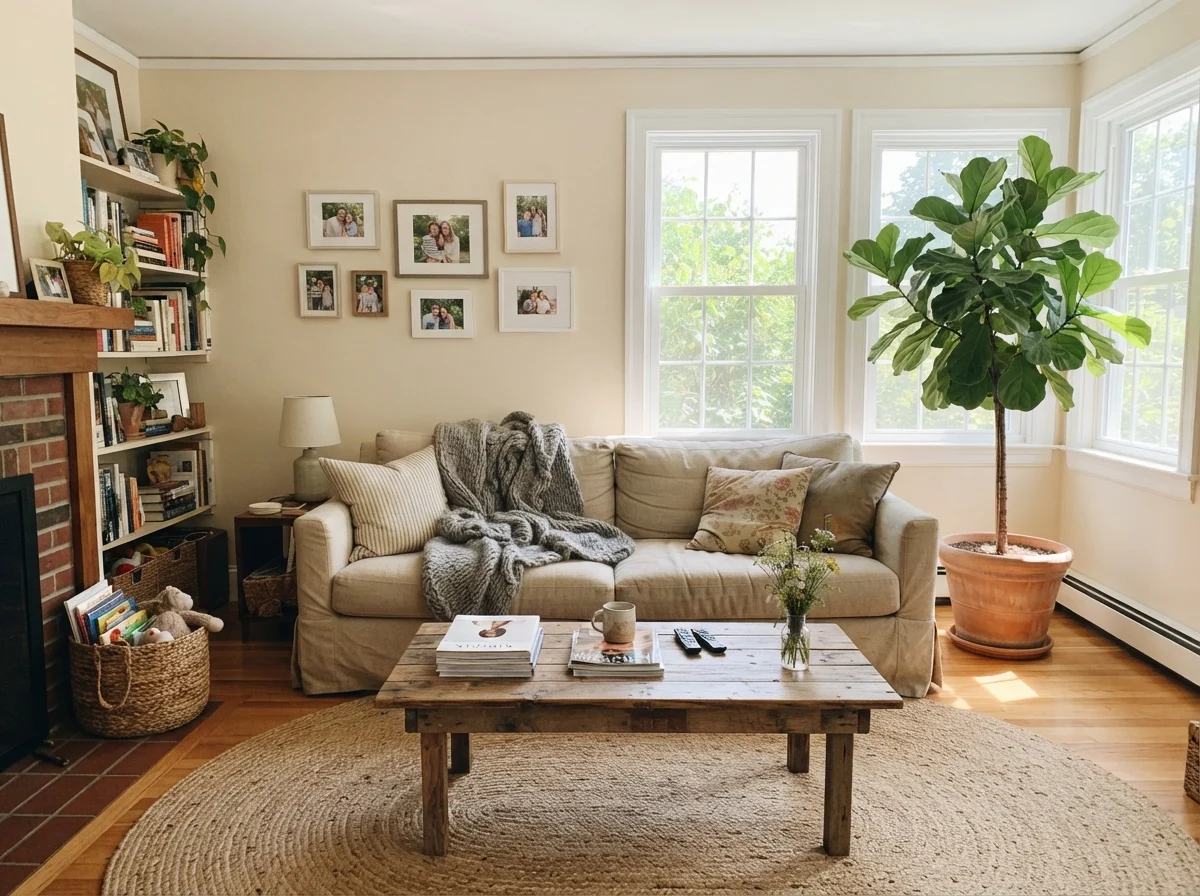
In wide-open living areas, Maison Blanche acts like a soft backdrop that lets furniture, books, and artwork step forward. Because it is neither a heavy 1990s tan nor an icy contemporary greige, it bridges different furniture eras seamlessly. In our current ranch, we have a mix of vintage walnut side tables, a textured jute rug, and an older linen sofa. A color like this weaves those pieces into a cohesive picture without demanding to be the center of attention.
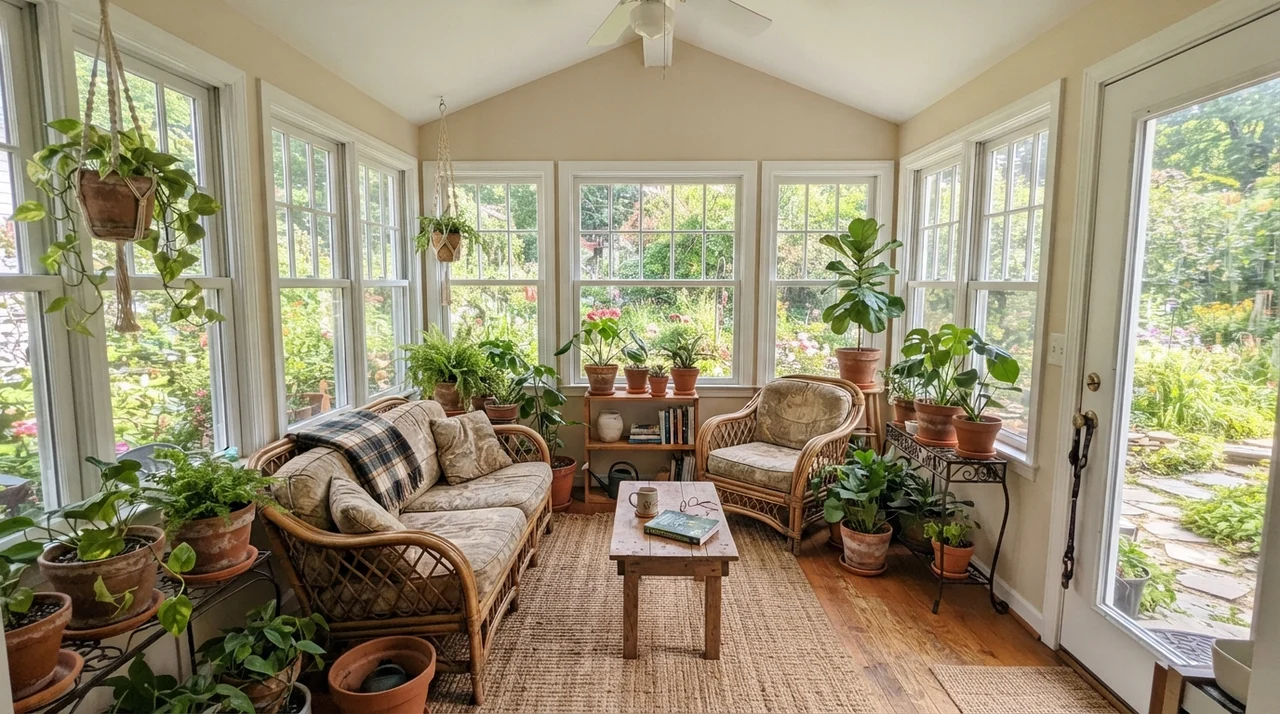
Look at how the sunroom handles the exposure. When flooded with light from multiple angles, the paint sheds any potential dinginess and leans into its warmest khaki persona. It makes terracotta pots and lush green foliage look vivid. It doesn't compete with the greenery outside the windowpanes; it gently frames it. That is the hallmark of a dependable neutral: it does its work quietly so your living belongings can take the stage.
Bedrooms, Nurseries, and Secondary Spaces
In sleeping spaces, you want walls that promote rest without turning gloomy on gray November afternoons. Maison Blanche adapts surprisingly well across different stages of family life, whether you are setting up a nursery for a first grandchild, outfitting a teenager's homework den, or giving yourself a quiet master retreat.
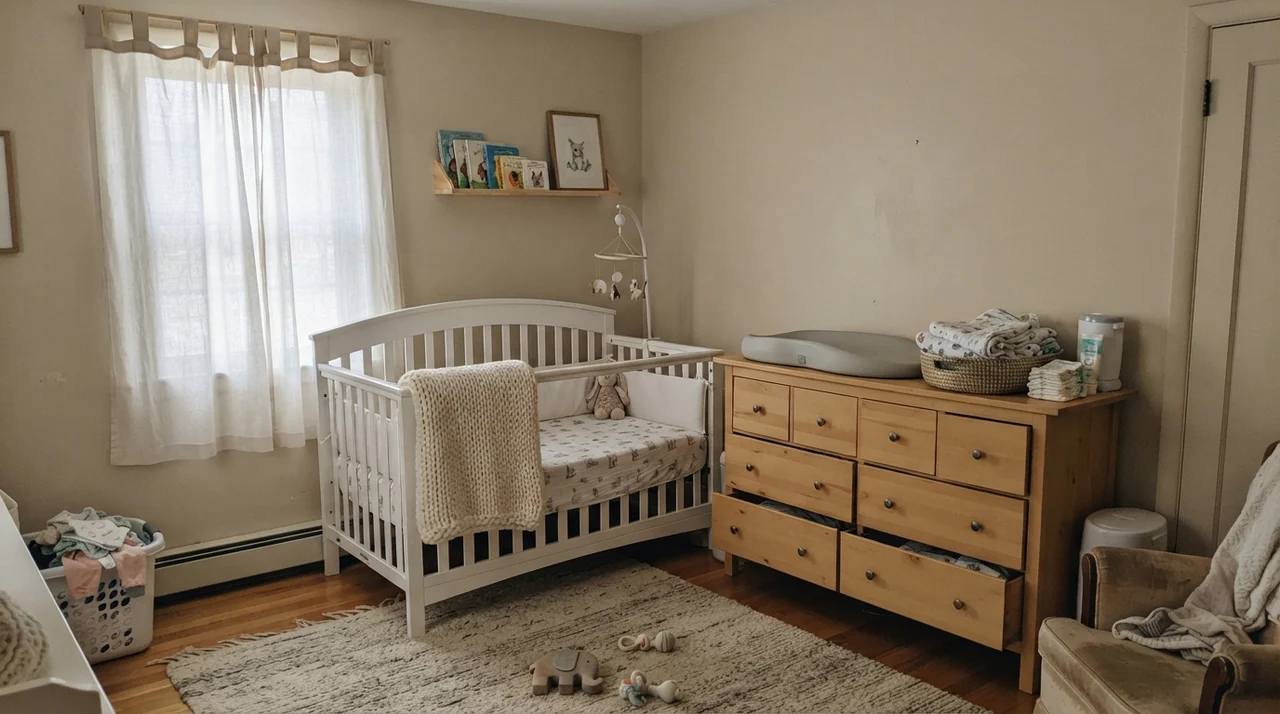
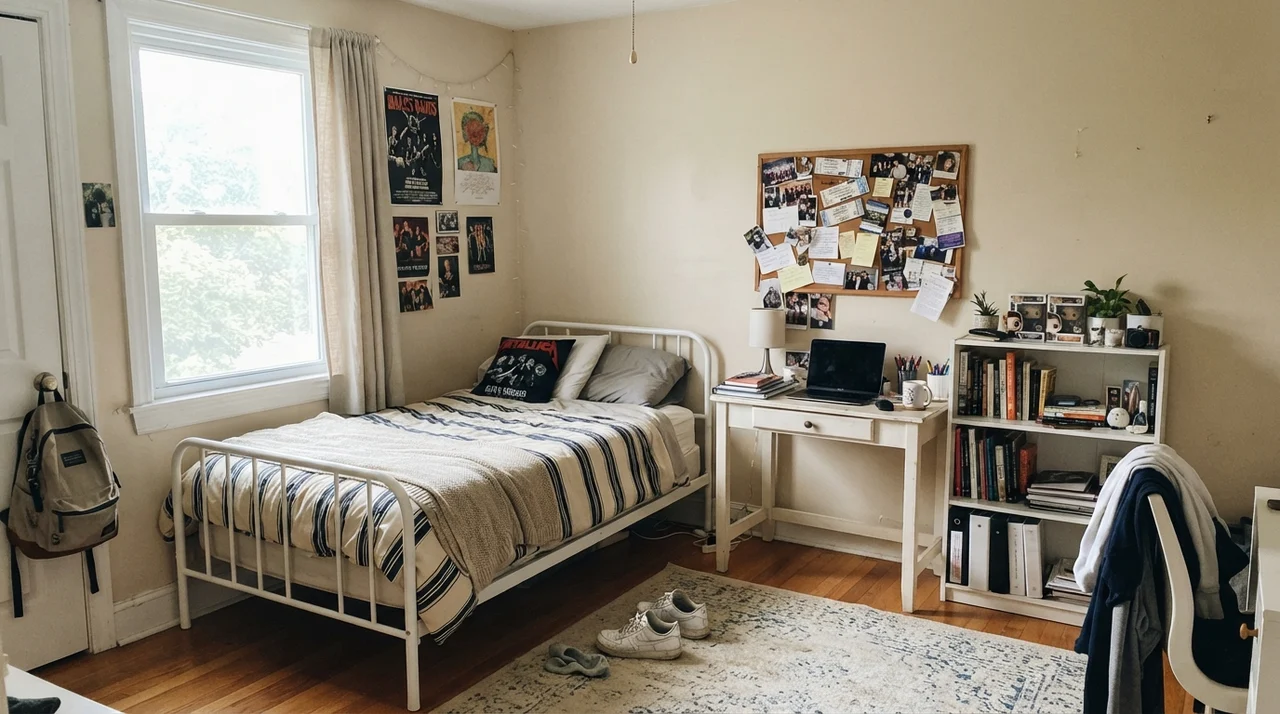
In the nursery, surrounded by pale natural woods and white crib spindles, the wall reads clean, comforting, and organic. In the teenager's room, even under slightly cooler direct daylight with sneakers kicked off on the rug and corkboards pinned full of notes, the paint keeps the space looking orderly and put-together. It is an unfussy color that forgives the everyday clutter of real living.
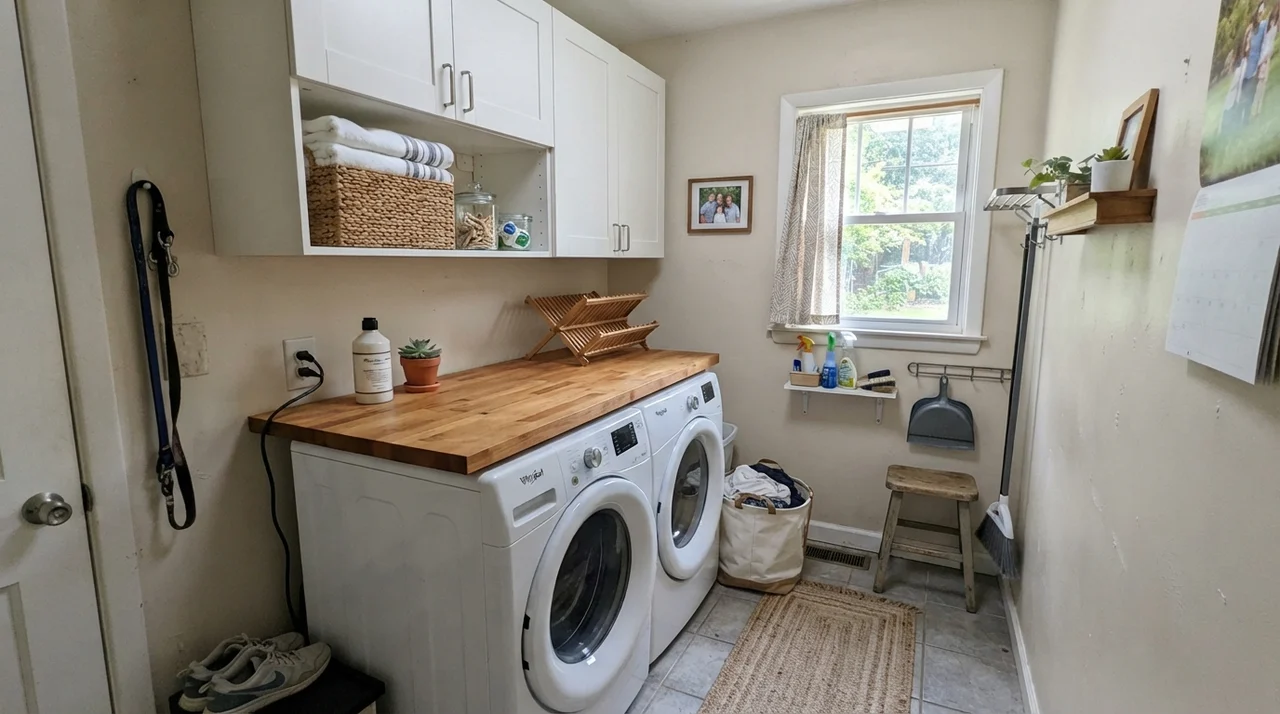
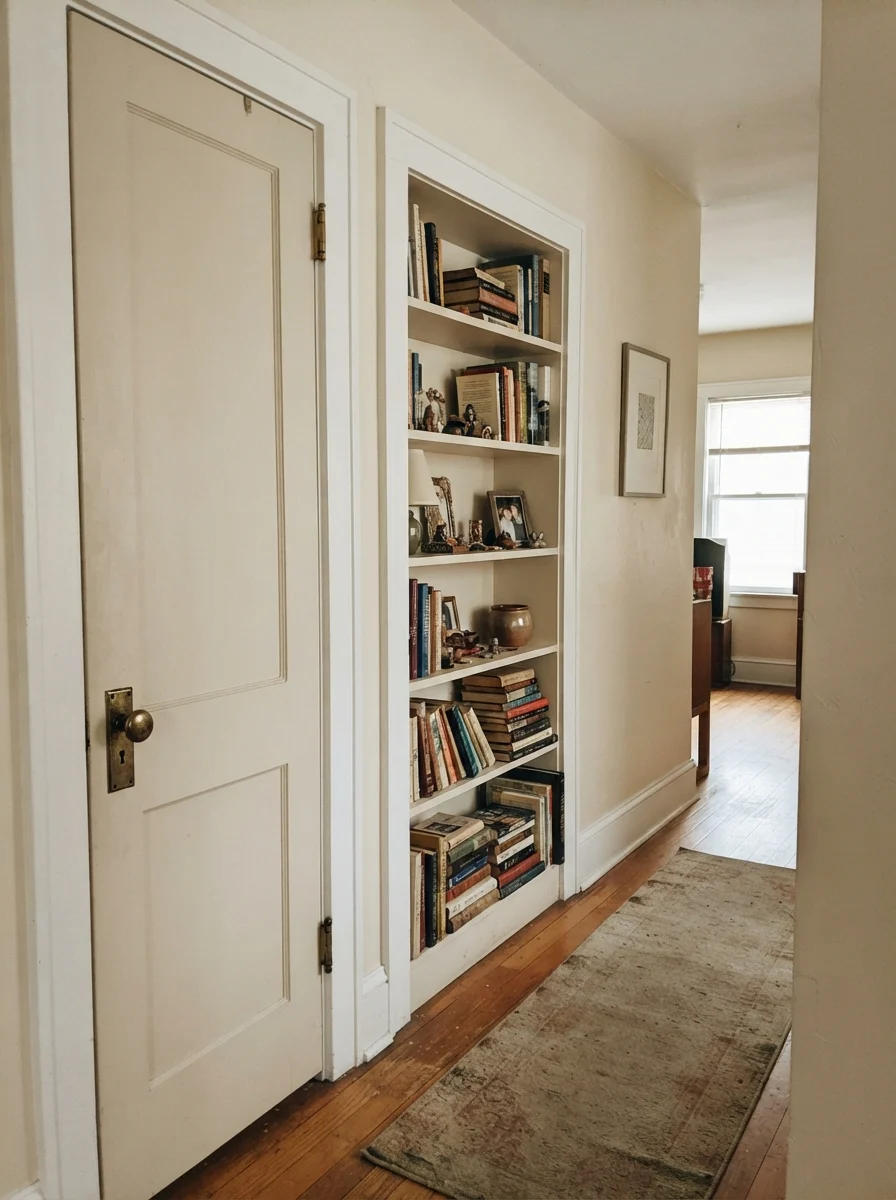
We also put it to work in high-traffic utility zones. A bright laundry room with butcher block countertops over the washer and dryer gains an instant sense of warmth from this color. And in an older hallway, painting an interior two-panel door and built-in bookcase in semi-gloss Maison Blanche while keeping the surrounding drywall cream creates a subtle tone-on-tone richness that feels like it has been there for fifty years.
Where Maison Blanche Will Disappoint You
I would not be an honest neighbor if I only shared the flattering corners. Every paint has its breaking point, and Maison Blanche has two very distinct lighting conditions where it will fall flat on its face. The first is strong, unfiltered west afternoon sun between 4:00 PM and 6:00 PM, where the intense golden rays can cause it to flash an unexpected pink-violet undertone for an hour. If you cannot stand pink in your neutrals, you will hate those sixty minutes.
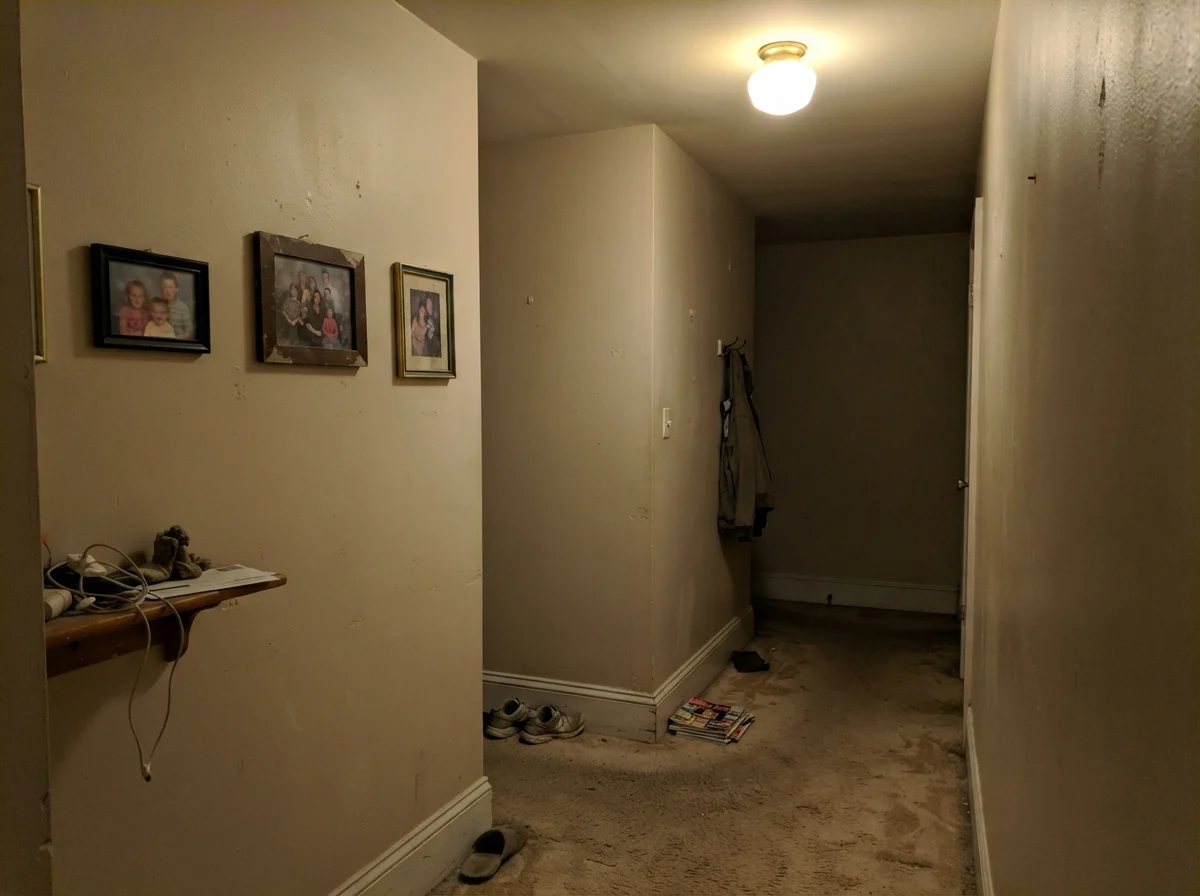
The second condition is far more common: a dim, windowless interior hallway or north-facing room with only a single overhead ceiling bulb. When deprived of natural daylight, the yellow pigment completely vanishes, leaving behind a dull, muddy putty tone that looks like wet cardboard.
I took that photo because people need to see what happens when you treat an LRV 66 color like an LRV 82 white. That dark corner has beige carpet and no exterior window. Instead of feeling cozy, the paint feels heavy, tired, and dated. If your hall looks like this, do not buy Maison Blanche expecting miracles; look for a genuine, reflective warm white like Alabaster instead, or install significant, warm artificial lighting before you open the can.
The Question of Exterior Siding
Sherwin-Williams rates Maison Blanche for exterior applications, and many people consider it when refreshing older homes. Outside under open sky, natural ultraviolet light washes out roughly ten to fifteen percent of a paint's perceived depth, meaning Maison Blanche will read outside as a very soft, pale warm beige rather than a deep tan.
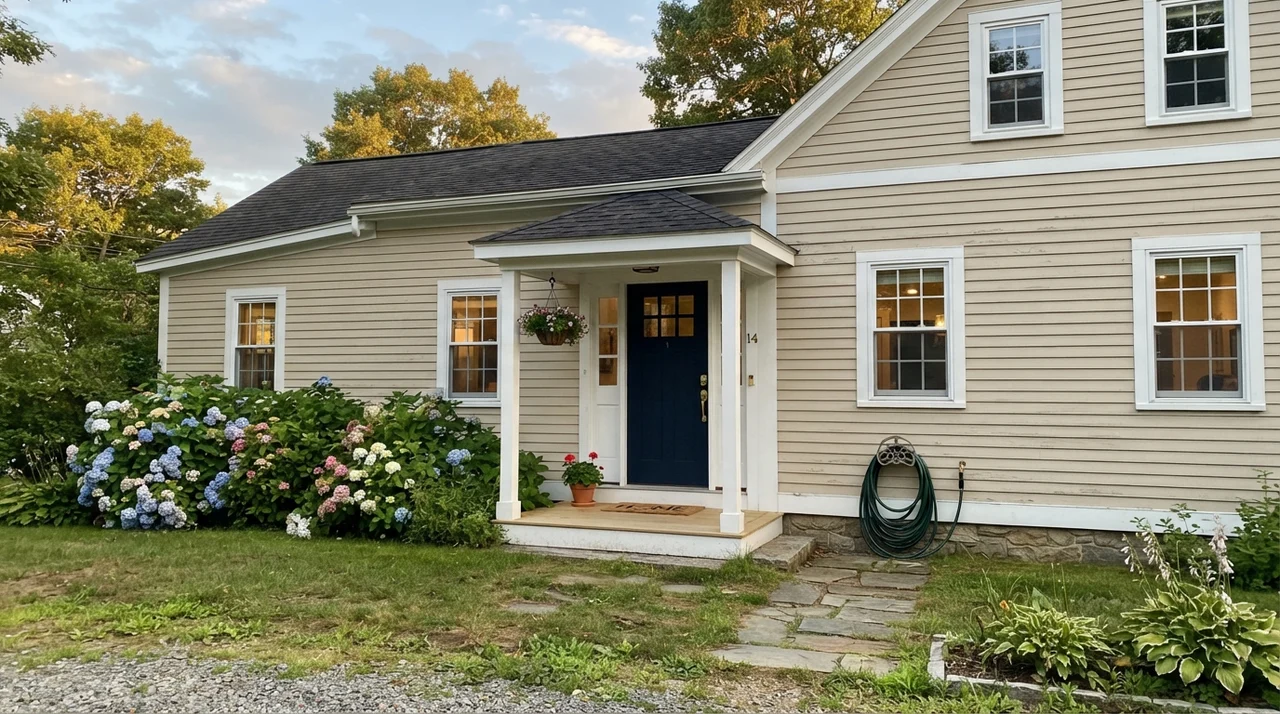
It looks handsome on horizontal siding framed by clean white trim and anchored by a dark navy front door. However, there is no massive documented track record of exterior before-and-afters for this shade the way there is for dedicated exterior workhorses. If you plan to roll this onto your siding, paint a large test board and move it around all four sides of your foundation across morning, noon, and late dusk. The late-afternoon pink flash that happens indoors can also happen outdoors across thirty feet of clapboard, and repainting two stories of siding is a mistake you only want to pay for once.
At LRV 66, this paint has real weight. Pair it with an icy builder trim white and your wall will look dingy by noon; frame it with a creamy, warm trim and it looks like custom millwork.
Wood Tones, Metals, and Home Eras
One of the main reasons this color has survived multiple design shifts without disappearing from fan decks is its friendliness toward natural materials. In our 1970s split-level, we had dark walnut paneling that we ended up keeping on one accent wall. In the 1990s colonial, it was honey oak floors and balusters. In our current 1960s ranch, we have a mix of butcher block and white marble. Maison Blanche handled all of them without pitching a fit.
The Five-Year Ledger: Cleaning, Touch-Ups, and Resale
Anyone can fall in love with a paint color forty-eight hours after the painter packs up his ladders and the smell of fresh acrylic lingers in the room. But how does it look five years in, after three birthdays, two muddy dogs, and repeated scrubbings behind the trash can? That is where the practical budget decisions reveal themselves.
We lived with Maison Blanche in our colonial's mudroom and kitchen sitting area for six full years before we put the house on the market. In an eggshell sheen on drywall, it was worth the money to use a top-shelf scrubbable formula. Over those years, high-contact corners near the back entry were scrubbed clean with warm water and mild dish soap dozens of times. Because the color has genuine tint depth, mild scuffs and water splashes disappear into the surface rather than flashing like glaring badges of honor the way they do on stark white walls.
When we sold the house in the spring of 2018, the kitchen cabinets—which we had coated in satin five years prior—showed almost no wear along the knob lines. The real estate agent walked through during the listing consultation, ran her hand along the pantry frames, and noted that the warm neutral made the kitchen look custom-built rather than like a fast builder flip. We didn't have to repaint a single cabinet door before putting the sign in the front yard. That saved us roughly three thousand dollars in pre-listing painter fees. That is what I call a smart long-term investment.
How It Compares to Similar Neutrals
Before you carry your cans home from the paint desk, you should compare Maison Blanche against the other warm neutrals you are likely holding in your hand. Subtle differences in reflectance value and undertone make a massive difference across an entire room.
Practical Sheen Recommendations
Do not compromise on finish sheens when dealing with a warm neutral in the LRV 60s. For standard dry living rooms, bedrooms, and dining spaces, stick to a dependable eggshell. Flat paint in this color can look chalky and absorbs dirt too quickly, while satin on broad drywall reflects too much irregular roller texture across wide expanses.
For baseboards, doors, and window trim, semi-gloss is essential. It provides enough surface sheen to differentiate the trim work from the walls, making the architecture look deliberate. On kitchen cabinets, vanities, or built-in bookshelves, satin is the ideal middle ground: it provides superior cleanability against oils and fingerprints without looking plastic or excessively shiny under recessed can lights.
Why does Maison Blanche look slightly purple or pink in my west-facing room?
Late-afternoon unfiltered sun delivers intense warm light that interacts with the specific gray-orange pigments in the formula. For about sixty minutes before sunset, this can cause the wall to flash a faint pink-violet tone. Test a large board on that specific west wall between 4:00 PM and 6:00 PM before committing.
Can I use Maison Blanche as my ceiling paint?
Only if you are deliberately doing a cozy, wrapped color drench in a den or bedroom. As a standard ceiling color against lighter walls, an LRV 66 paint will feel heavy and bring the ceiling down visually. Stick to a dedicated ceiling white or Alabaster.
What is the best trim white to pair with Maison Blanche walls?
Sherwin-Williams Alabaster (SW 7008) is the most reliable partner. At LRV 82, it provides clean contrast without the harsh, cool blue cast of untinted whites that would make Maison Blanche appear dingy by comparison.
Is Maison Blanche too dark to use on whole-house main walls?
Not if your home has reasonable daylight and you want genuine warmth. However, in dim, windowless hallways or deeply shaded north-facing rooms, it will drop into a flat putty gray. Sample room by room rather than blindly buying a five-gallon bucket for the whole house.
Susan's Verdict · Dependable Cabinet & Living Room Workhorse
If you have warm hardwood floors, brass hardware, or oak cabinetry that you refuse to tear out, Sherwin-Williams Maison Blanche is worth the money. It bridges the gap between dated builder tan and cold modern white better than almost anything on the shelf. Just keep it out of windowless north hallways, swap your bulbs to 2700K warm LEDs, and frame it with Alabaster trim rather than stark cool white.