Color Diary · No. 35
Benjamin Moore Essex Green: The Shutter Color We Dragged Indoors
The near-black green that made its name on shutters, reviewed honestly: where the green actually shows, where it turns into plain black, and what to pick instead.

Susan HartleySeptember 17, 2026 · 12 min read
Essex Green · Benjamin Moore HC-188
Hex#27362ELRV6Undertonesforest green → deep charcoal → soot black
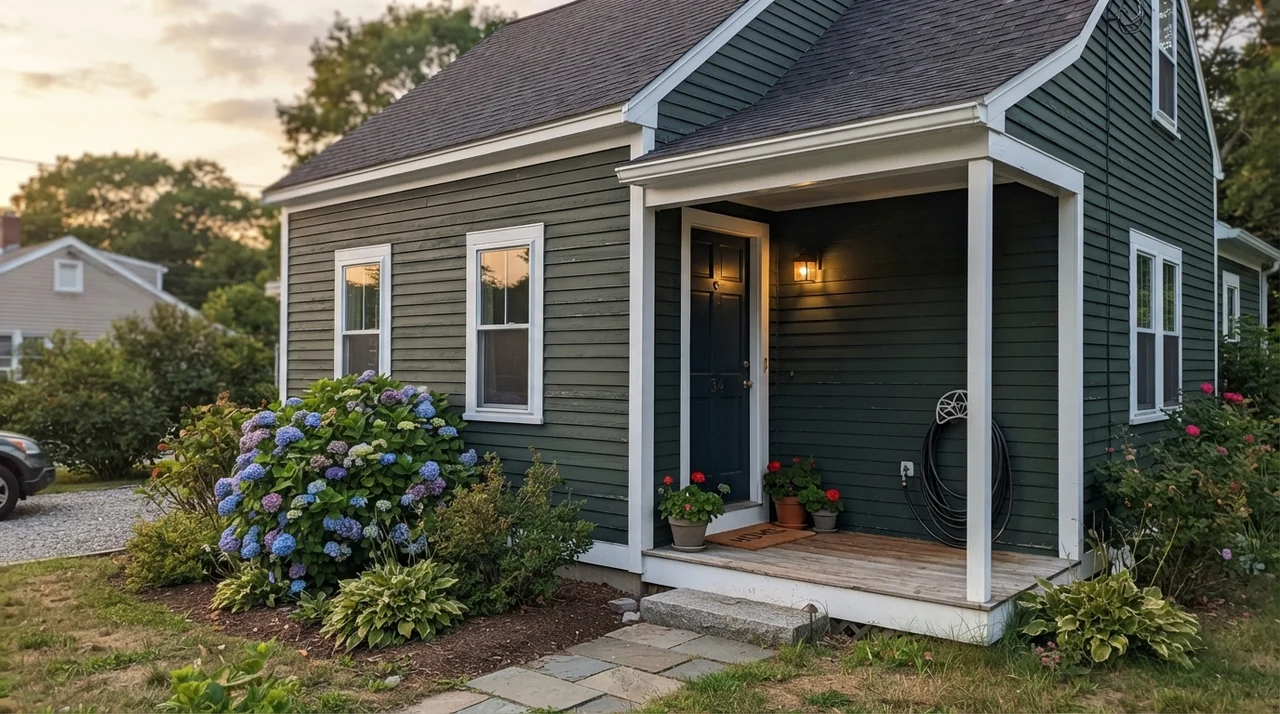
In our last house—the 1990s colonial with the drafty foyer and the towering center hall—I spent two full weekends putting three coats of dark paint on the front door and every single louvered shutter across the facade. The paint was Benjamin Moore Essex Green HC-188. Out on the porch, in the direct wash of full afternoon sun, it was hands down one of the most handsome, crisp colors I have ever applied. It set off the creamy siding, framed the windows like a tailored dark suit, and made every brass fixture look solid and historic.
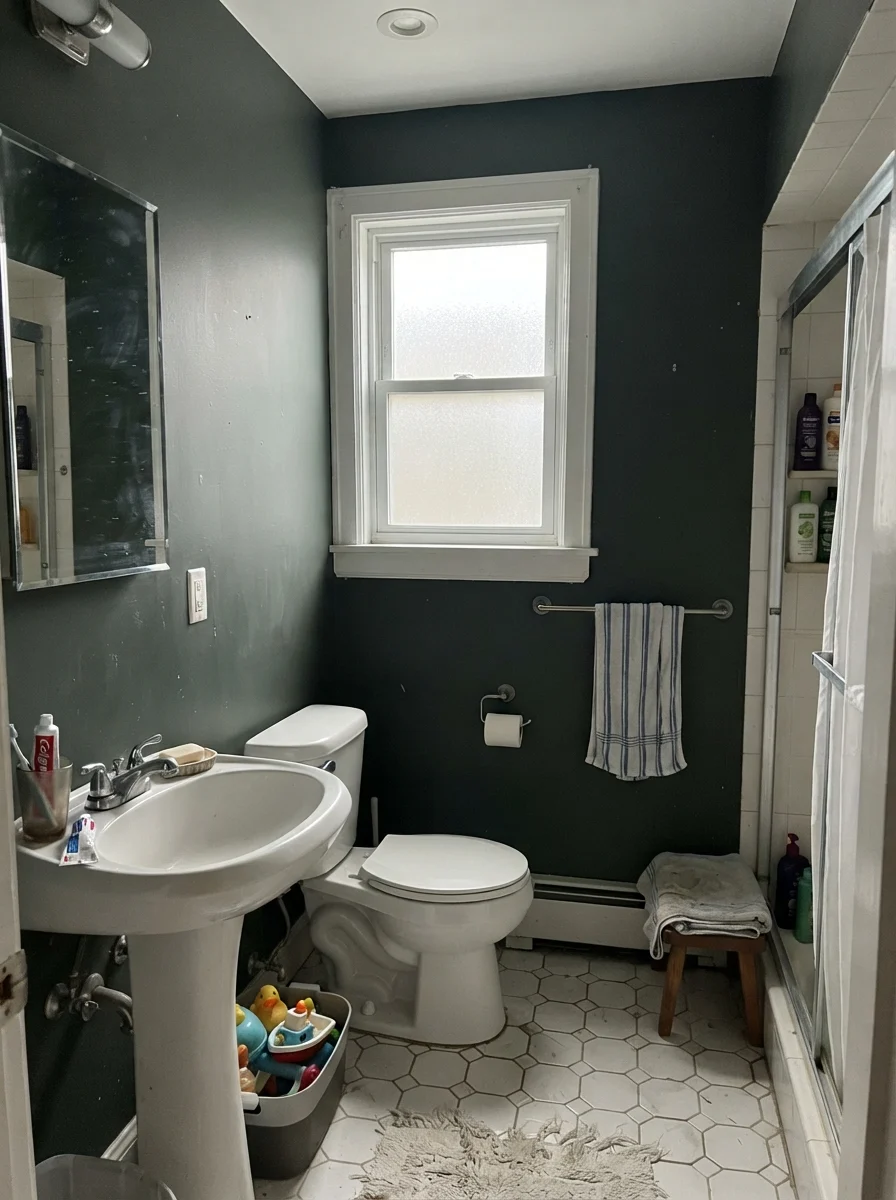
Naturally, emboldened by how good the exterior looked, I decided two years later to bring a leftover gallon inside to coat our small back hallway and half-bath. That was my mistake. Indoors, without exterior sun pouring directly onto the drywall, the rich forest undertone vanished into thin air. At an LRV of 6, it gave back virtually zero ambient light. Visitors didn’t ask what lovely shade of heritage green it was; they asked why I had painted the powder room pitch black.
That is the fundamental reality of Essex Green: it is an ink-black paint with a quiet, stubborn green secret that only reveals itself when hit with direct daylight or a focused, warm lamp. If you give it strong southern light or put it in a semi-gloss finish on an exterior door, it behaves like the classic American green it was formulated to be. If you slap it on four walls of a dim, north-facing room in a flat finish, you will find yourself living inside a charcoal box before the primer is even dry.
How Essex Green Behaves Across Different Light
Essex Green sits right on the borderline between the deepest pine needle and pure stovepipe soot. At an LRV of 6, it absorbs almost all incoming illumination, shifting dramatically depending on whether your light source is warm sunlight or a cool, cloudy sky.
warm sun
overcast, north light
dusk, rain, cool bulbs
direct sun reveals forest green · indirect daylight turns it charcoal · dim rooms turn it flat black
JasperSherwin-Williams · see diary
Black Forest GreenBenjamin Moore · see diary
Essex GreenHC-188
SalamanderBenjamin Moore · see diary
CascadesSherwin-Williams · see diary
The 7:00 AM vs. 7:00 PM Test
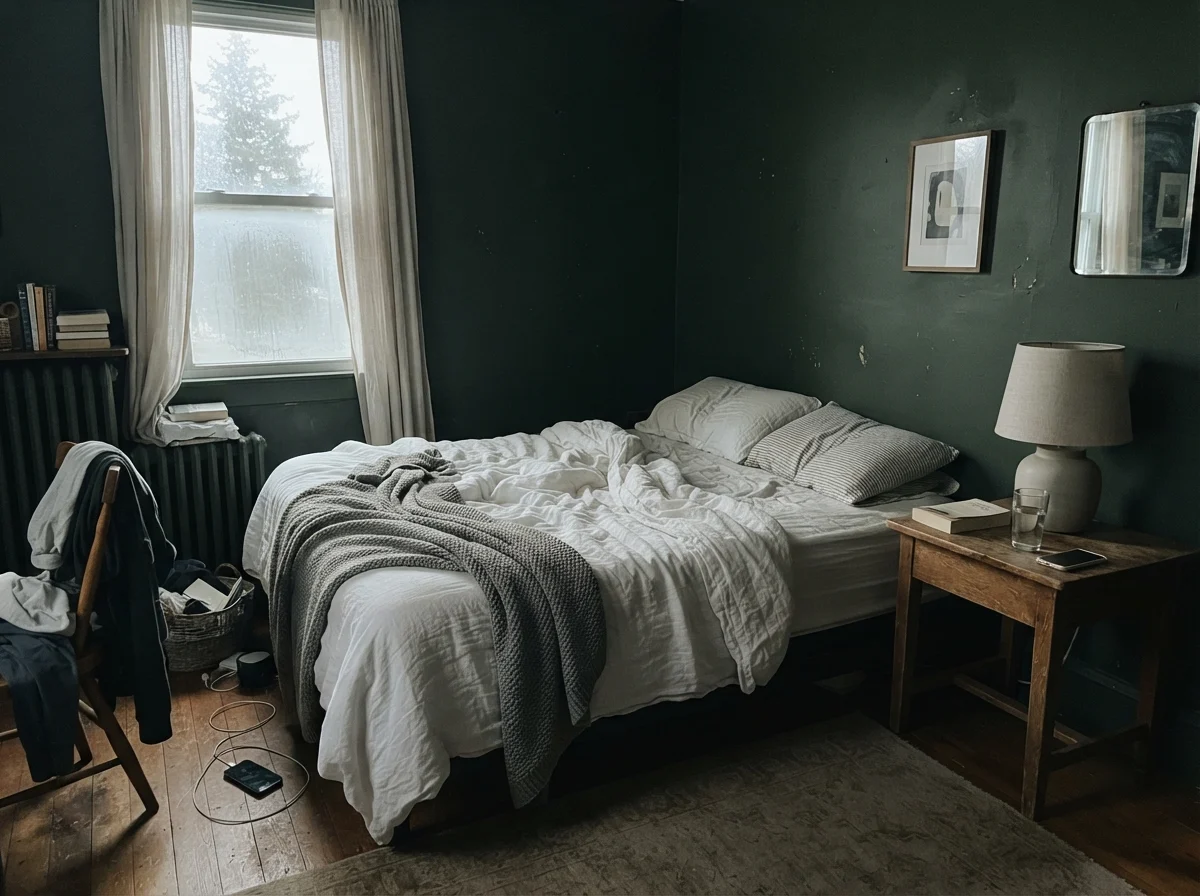
When you are dealing with a near-black green, time of day dictates whether the color feels cozy or completely oppressive. In our current 1960s ranch, I’ve tested Essex Green under every lighting condition imaginable. In the cool morning hours, before any lamps are switched on, the paint appears muted, quiet, and somewhat chalky on drywall. It absorbs early blue daylight without offering much color in return.
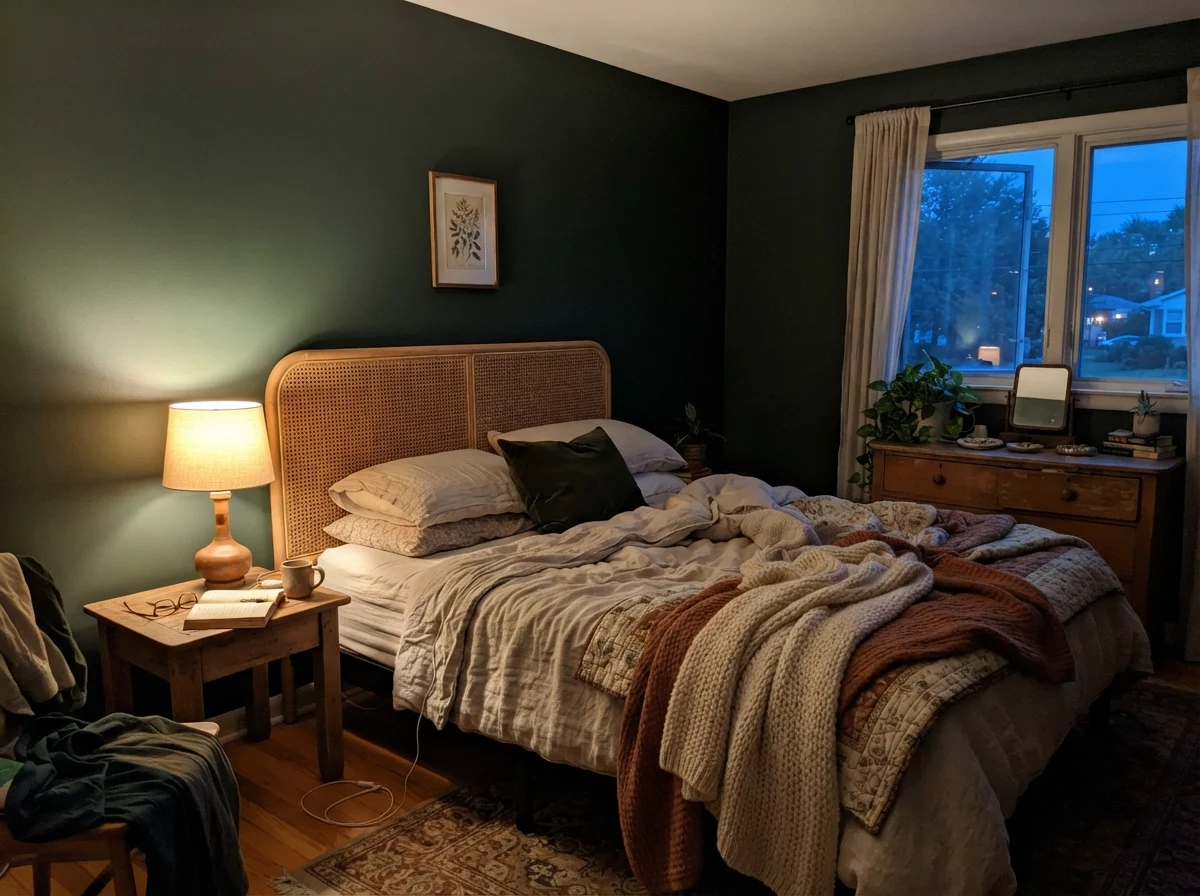
Turn on a soft 2700K table lamp at dusk, however, and the paint transforms. The warm tungsten glow catches the pigments, softening the charcoal edge into a velvety, sooty spruce. That warmth is essential: if you run 4000K or 5000K bright white bulbs overhead, the paint turns clinical and hard, exaggerating the grey base. With deep colors like this, you aren't just choosing a paint can; you are choosing your lightbulbs.
Where Essex Green Truly Shines
There are specific architectural situations where Essex Green is worth every penny of its premium price tag. The most obvious, of course, is anywhere outside the house. On exterior shutters, garage doors, and front entry doors, natural full-spectrum daylight hits the surface directly. In that setting, it never looks like dead black; it looks like a rich, historic deep forest green that anchors the entire house structure.
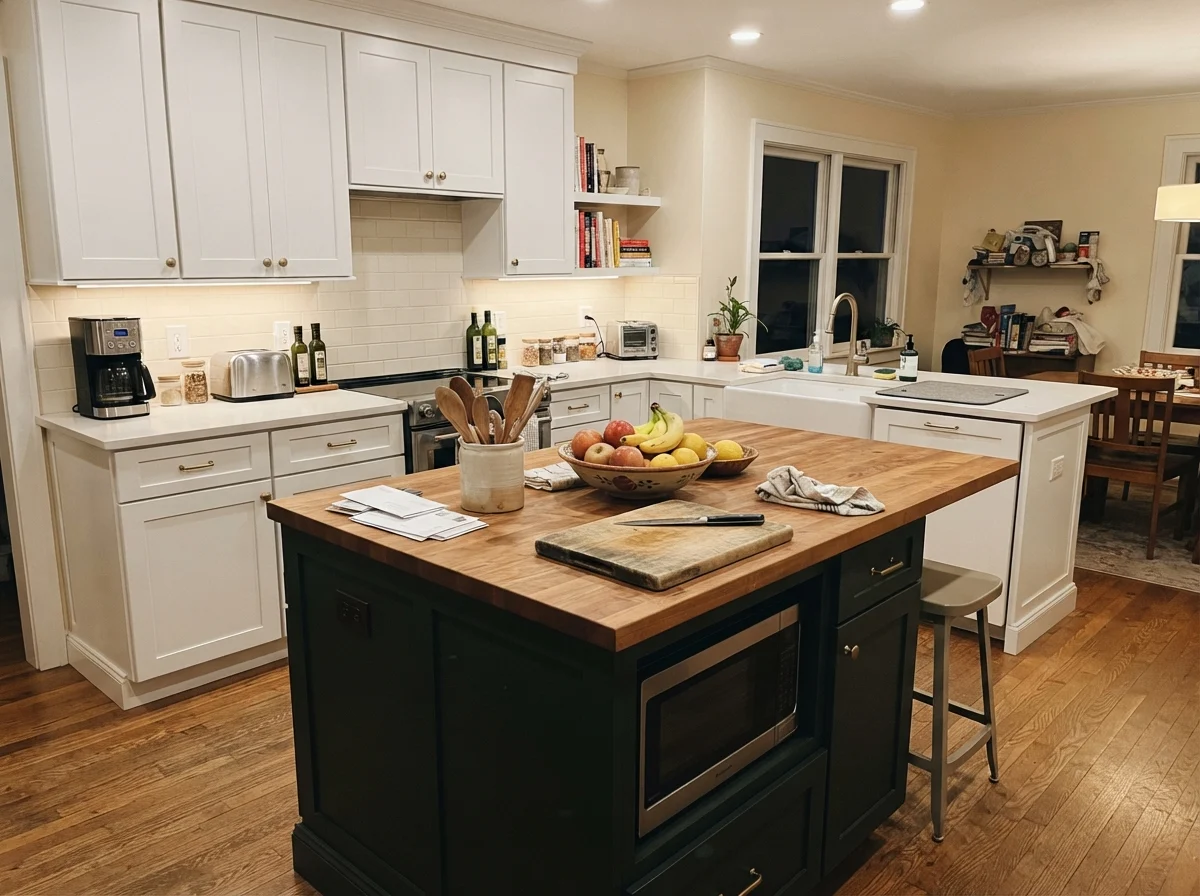
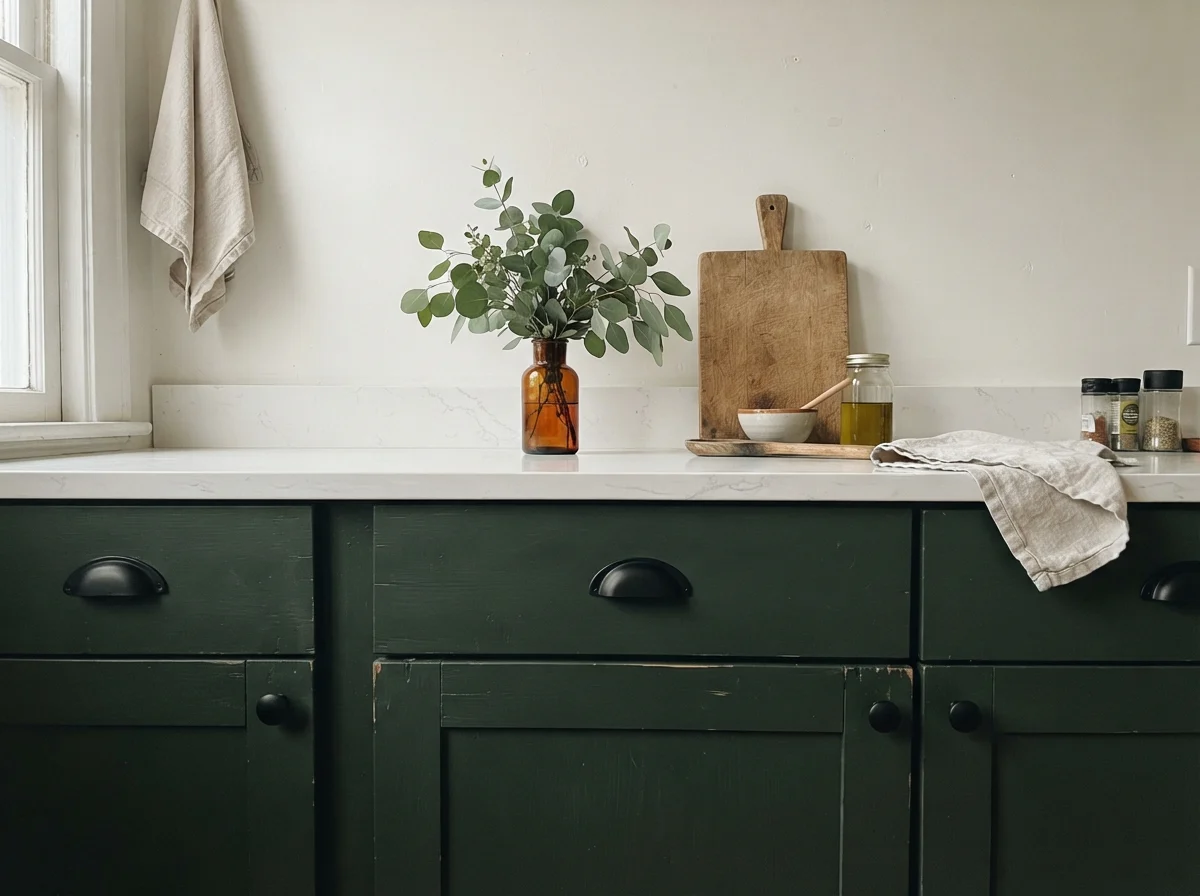
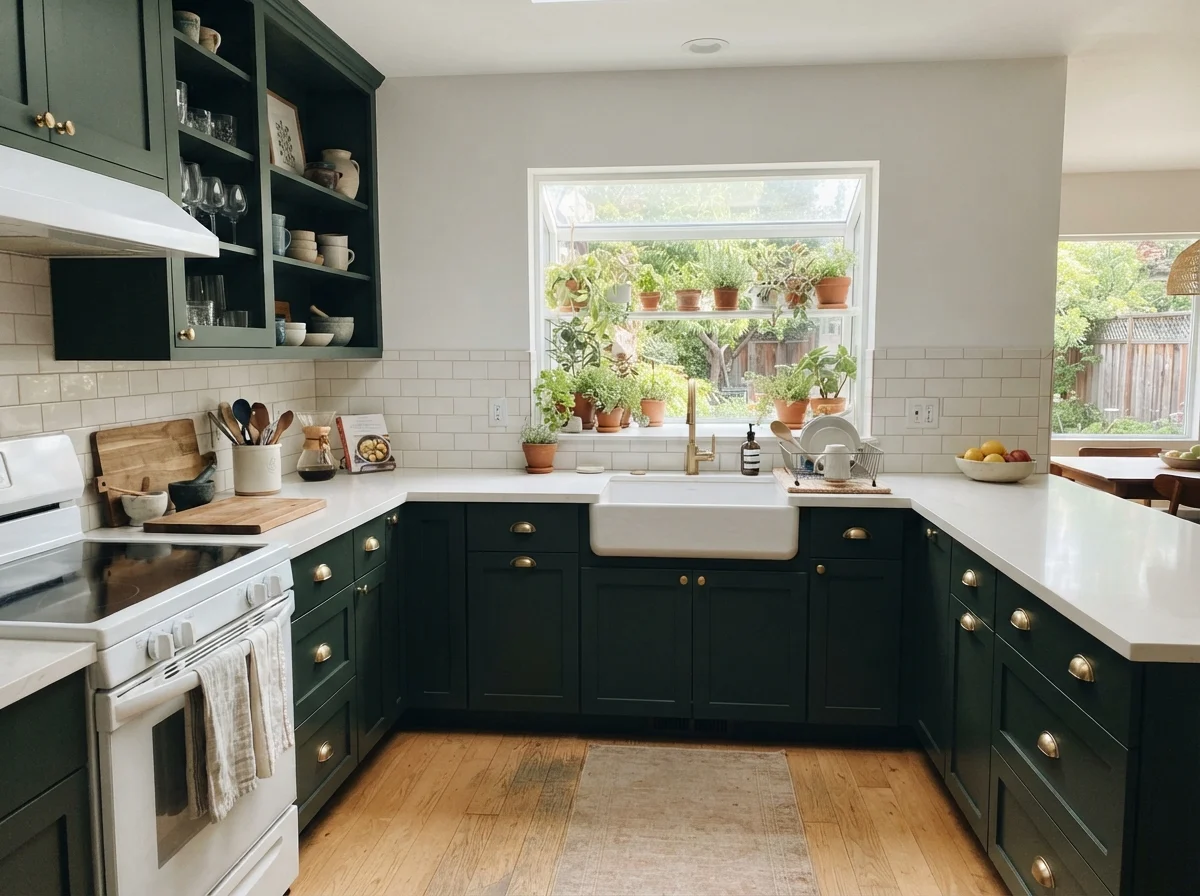
Inside, Essex Green works wonders when treated as a heavy anchor color rather than a four-wall backdrop. On kitchen islands, mudroom benches, and built-in bookshelves, it brings a tailored gravitas. Because it is so deep, it effortlessly hides boot scuffs, dog paw smudges, and sticky cabinet handles that would drive you mad on an off-white surface. We lived with it on our kitchen island in the colonial for nearly seven years, and a quick pass with a damp microfiber cloth was all it took to keep it looking sharp.
The Living Spaces: When to Color Drench
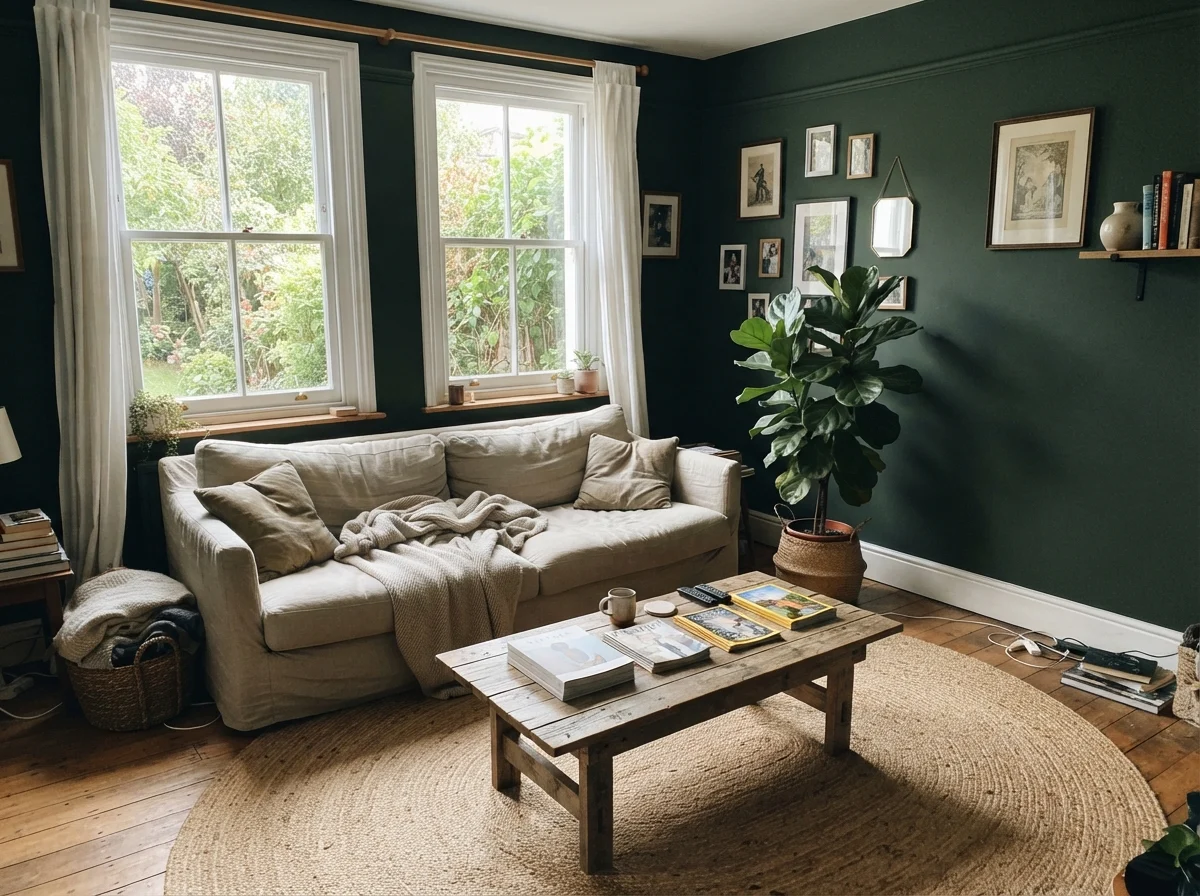
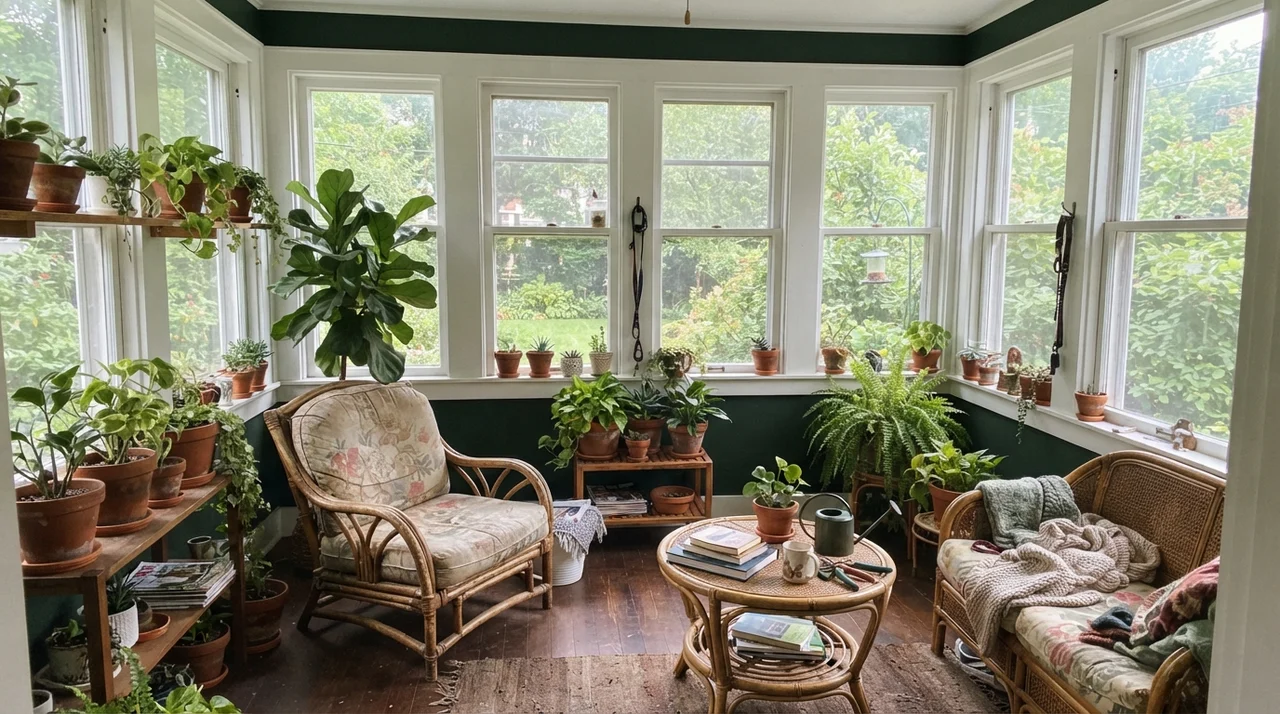
If you do decide to paint an entire room in Essex Green, you have to go all in. Dabbling by painting a single "accent wall" behind a sofa almost never works with an LRV 6 color—it simply looks like an accidental patch of shadow or an unpainted alcove. But when you color drench a study, den, or sun-drenched living room—taking the color across baseboards, window trim, and built-in shelving—the room recedes and envelops you.
The critical rule is contrast and natural light. In a living room with generous south-facing windows, Essex Green reads dignified and cozy when balanced against light linen upholstery, unlacquered brass hardware, and warm wood furniture. The deep cool base cuts the brassy yellow out of antique hardware, making everything feel intentional and grounded.
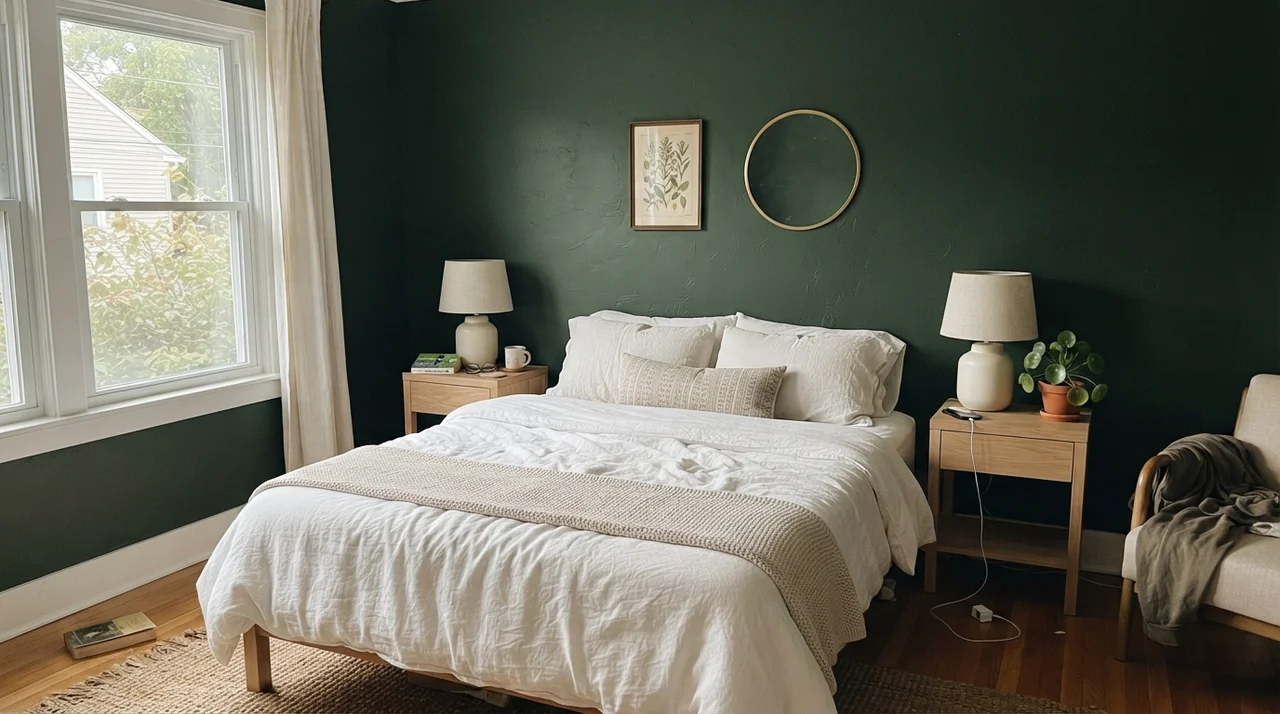
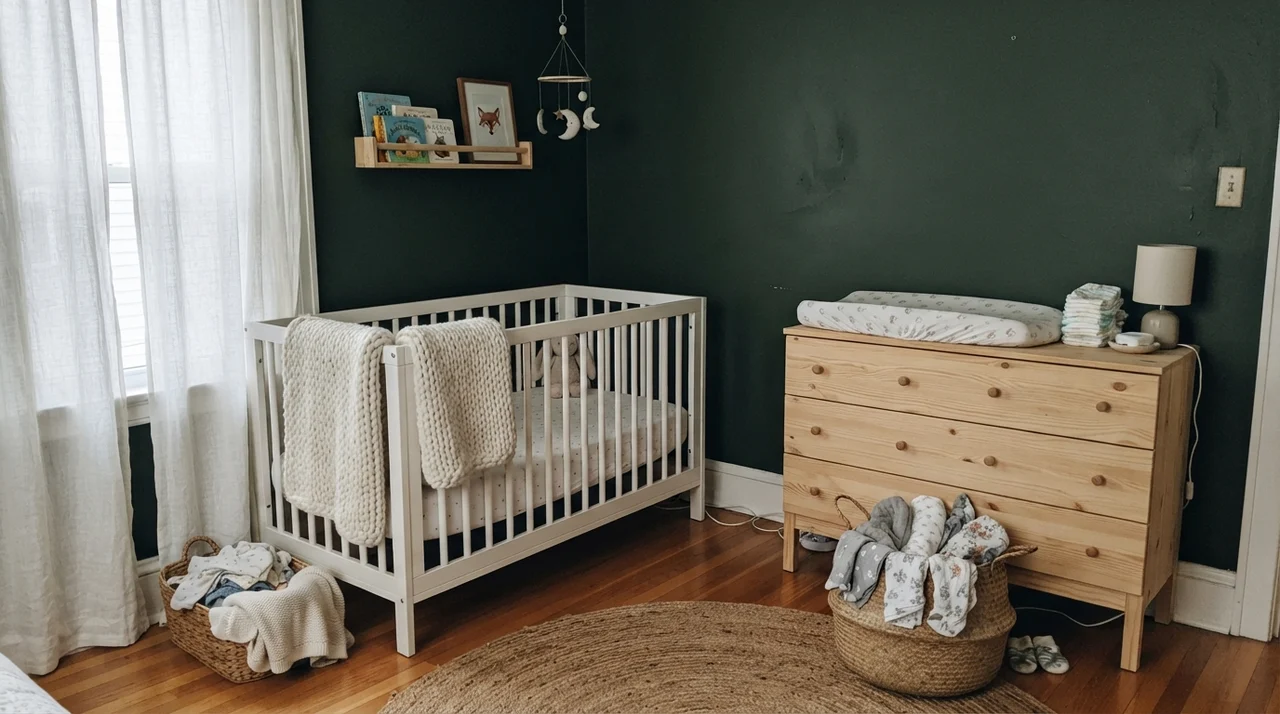
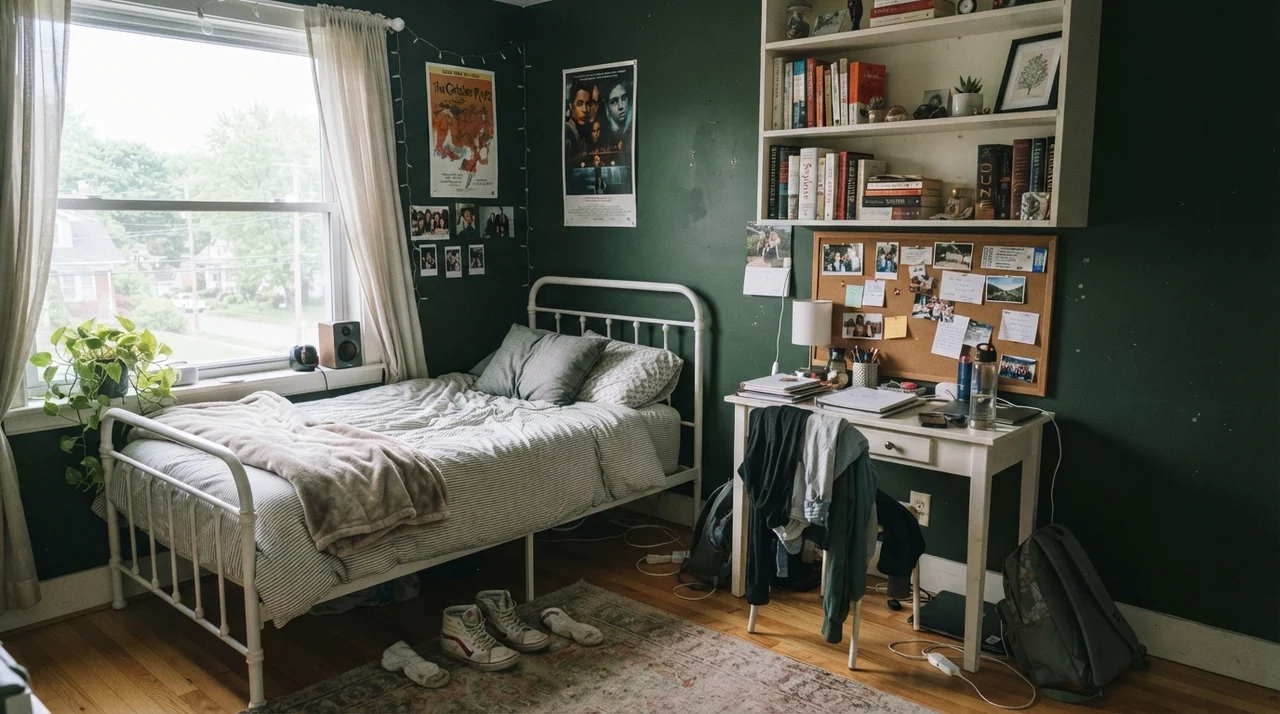
In bedrooms, Essex Green offers an immediate sense of cocooning calm, provided you don't skimp on layered lighting. In a main bedroom or guest suite, keep the bedding pale and textural—white linen, pale oak nightstands, and ceramic lamps prevent the room from feeling heavy. Even in a nursery or teen bedroom, this shade provides a timeless backdrop that won't look dated within three years as the child grows. It outlasts passing pastel phases with ease.
Bathrooms, Mudrooms, and Millwork
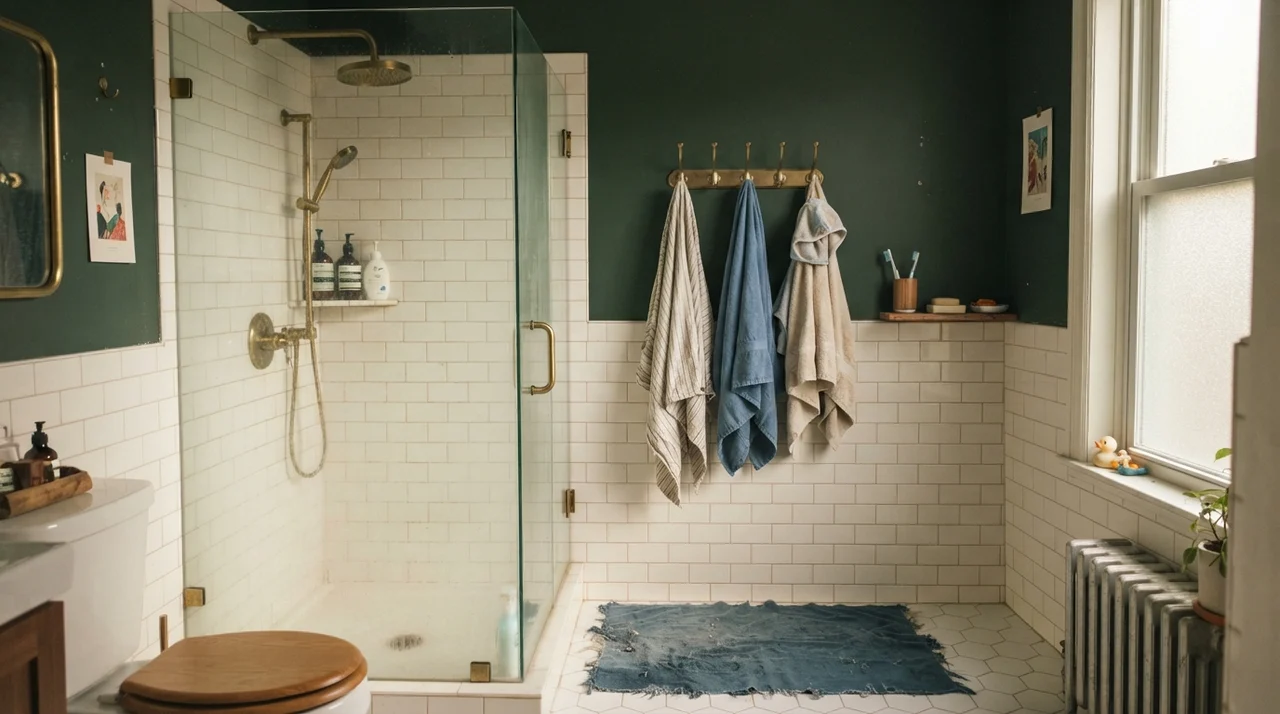
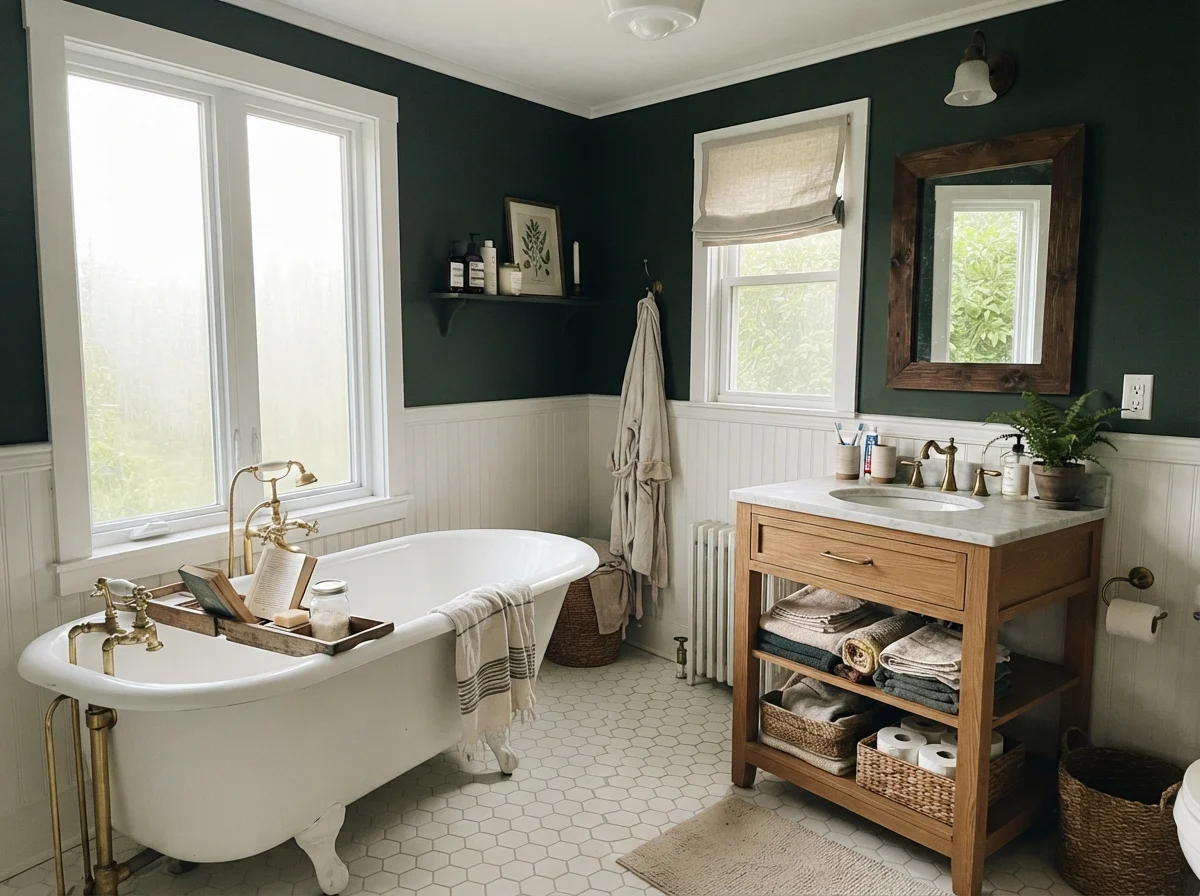
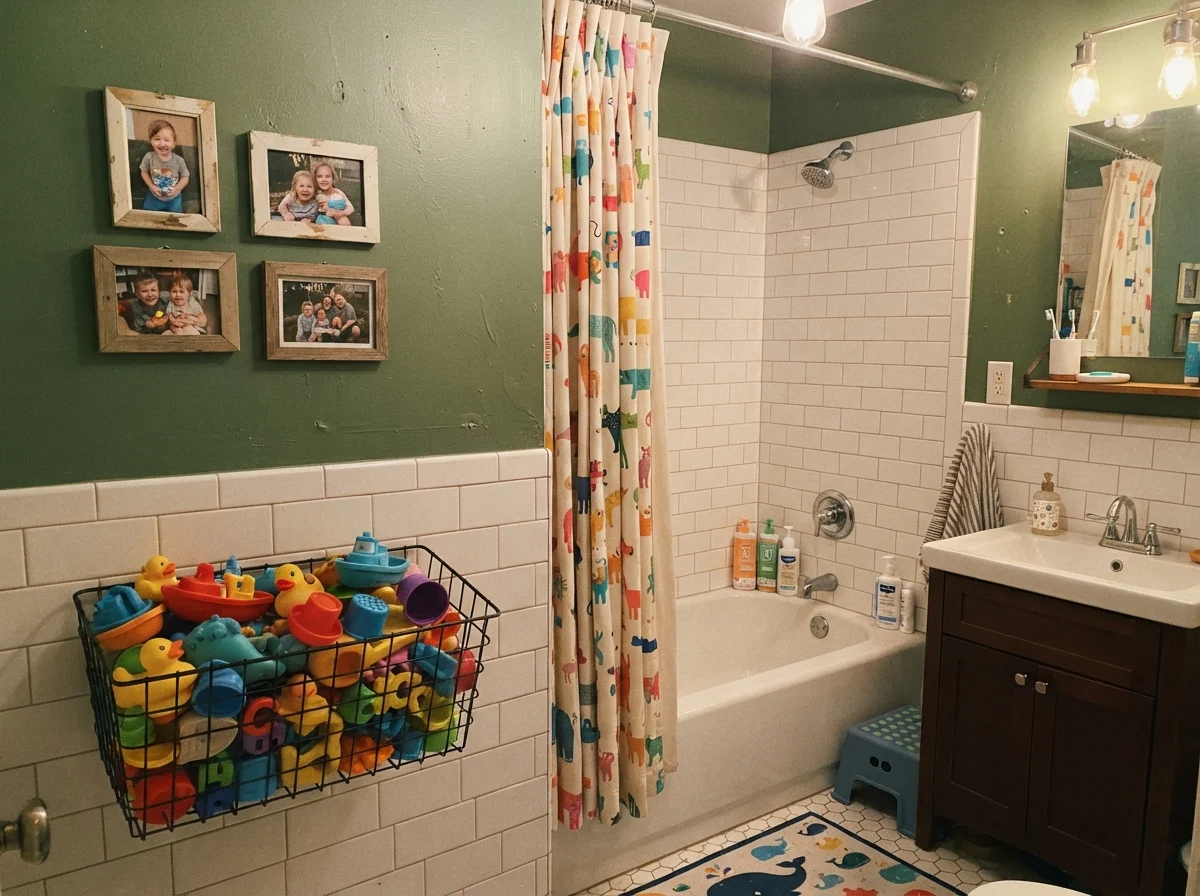
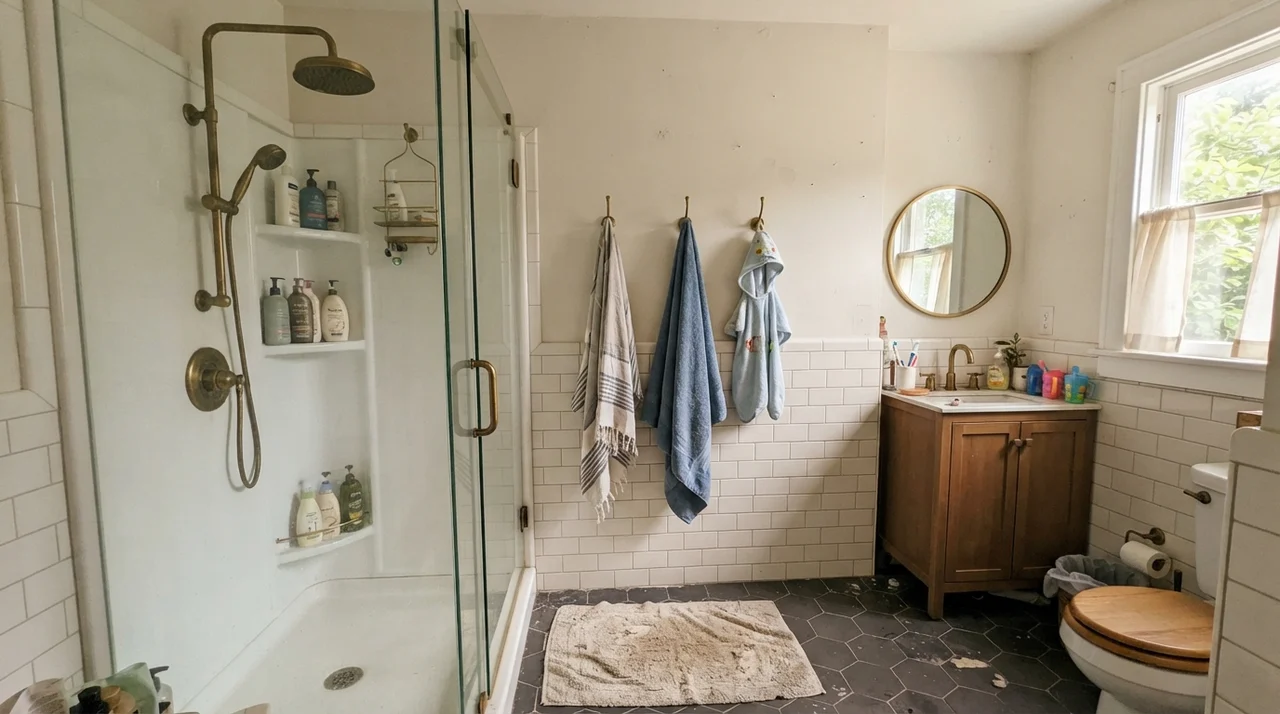
Bathrooms are a classic target for dark greens, but they require careful handling. If you have white subway tile, beadboard wainscoting, or a white clawfoot tub taking up the bottom half of the wall, Essex Green on the upper section creates an exquisite, tailored contrast. The reflective white porcelain bounces whatever ambient light exists, keeping the green alive.
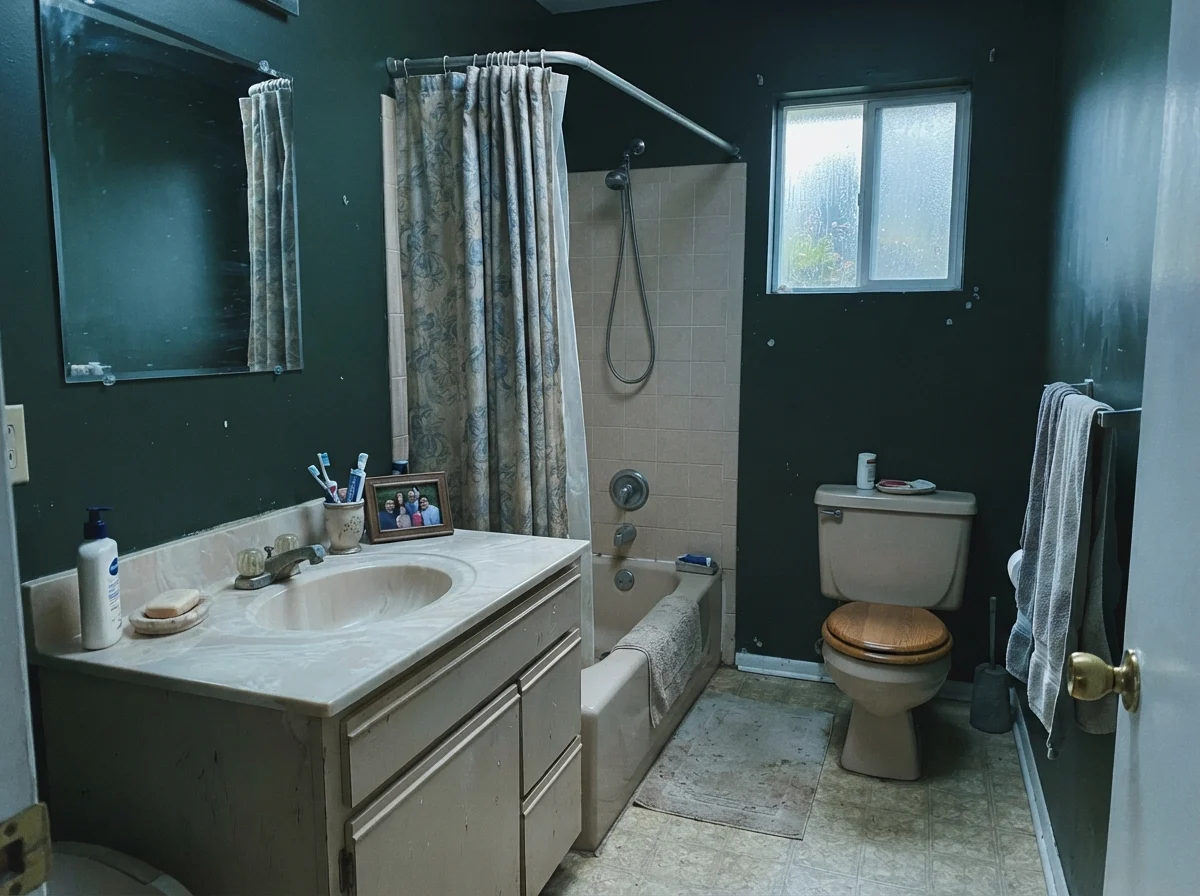
However, if the room lacks a window or relies solely on a flat overhead fixture, Essex Green will look flat and cold. Notice how differently it behaves under bright diffuse morning light versus a flat overcast day or a dim north window. On gloomy days, the spruce undertones recede into a shadowy slate gray.
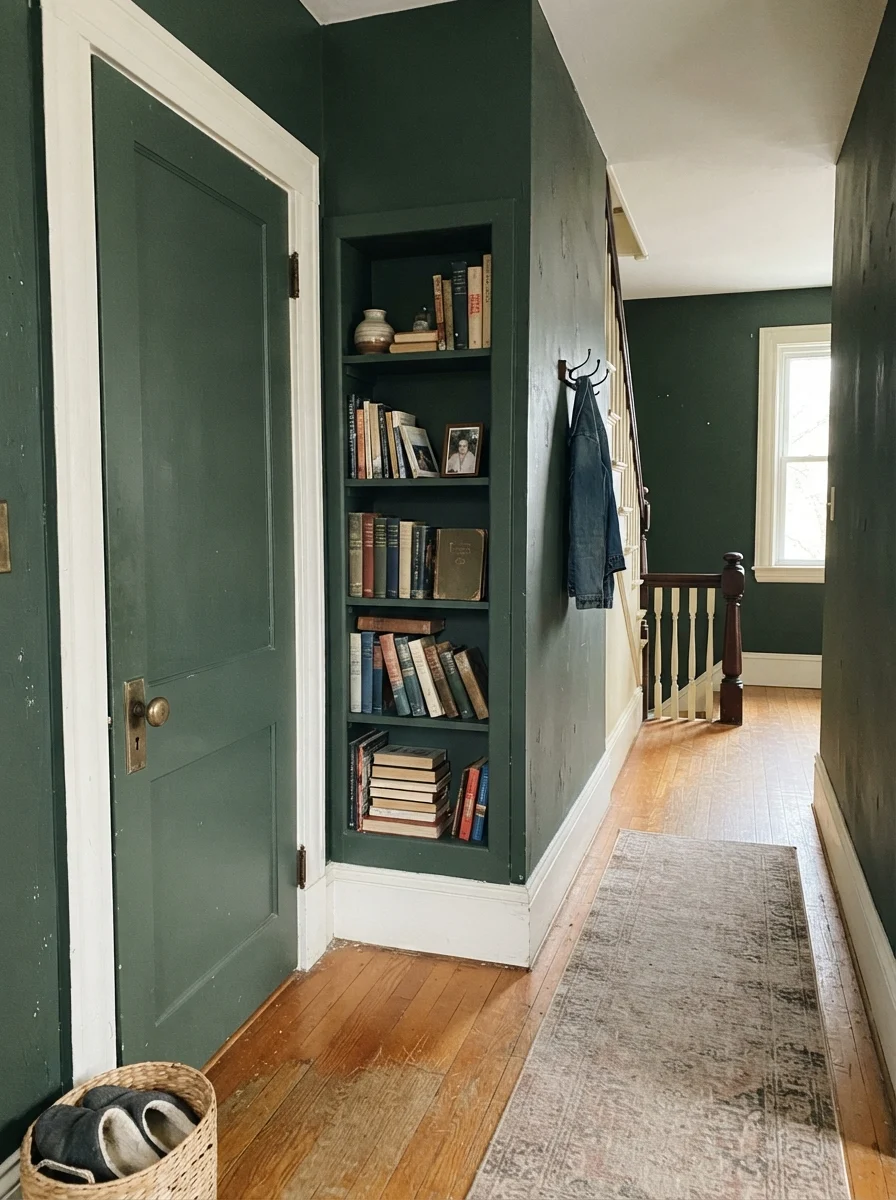
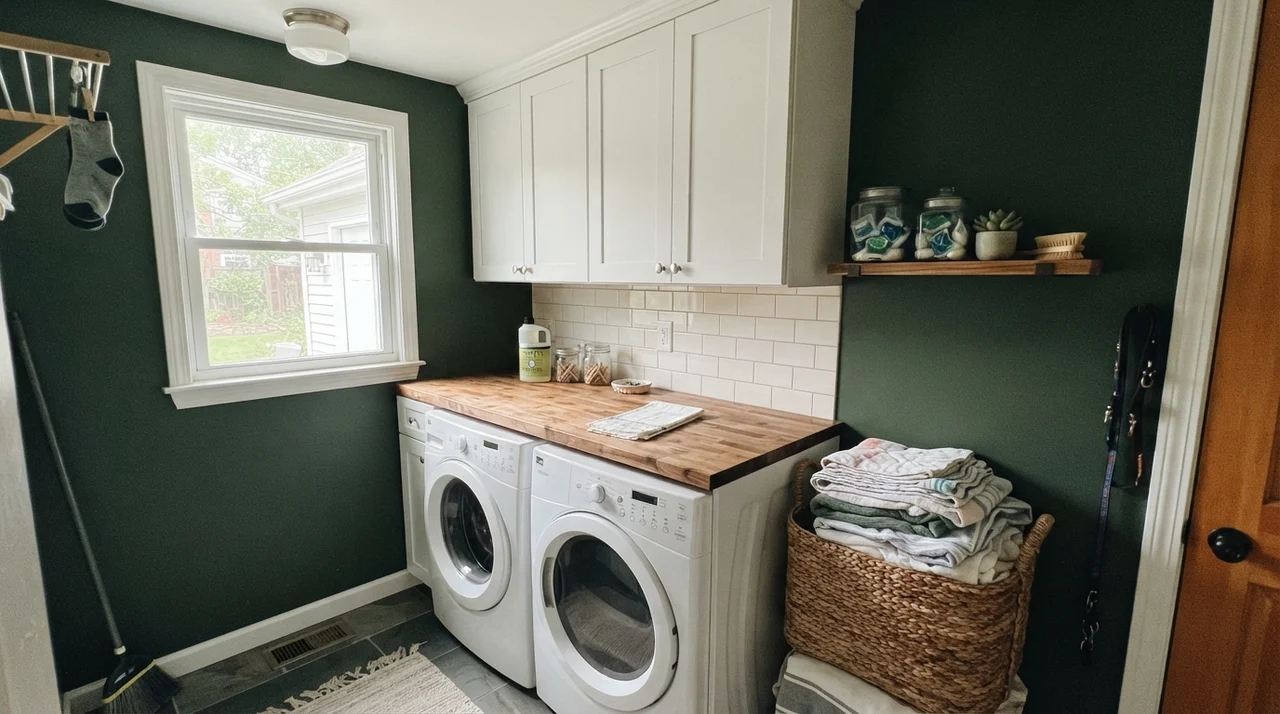
When using it in high-traffic practical spaces—like a laundry room, back hallway, or on interior passage doors—the finish you select is everything. In our ranch house, we painted a two-panel interior door and an adjacent built-in bookcase in Essex Green satin. Against cream walls and honey oak flooring, it gives the entire hallway an architectural permanence that standard white doors simply cannot provide.
Essex Green is a black with a secret. If you don't give it direct sun or a lamp to bounce off, that secret stays buried forever.
The Honest Fail: The Dim Hallway Trap
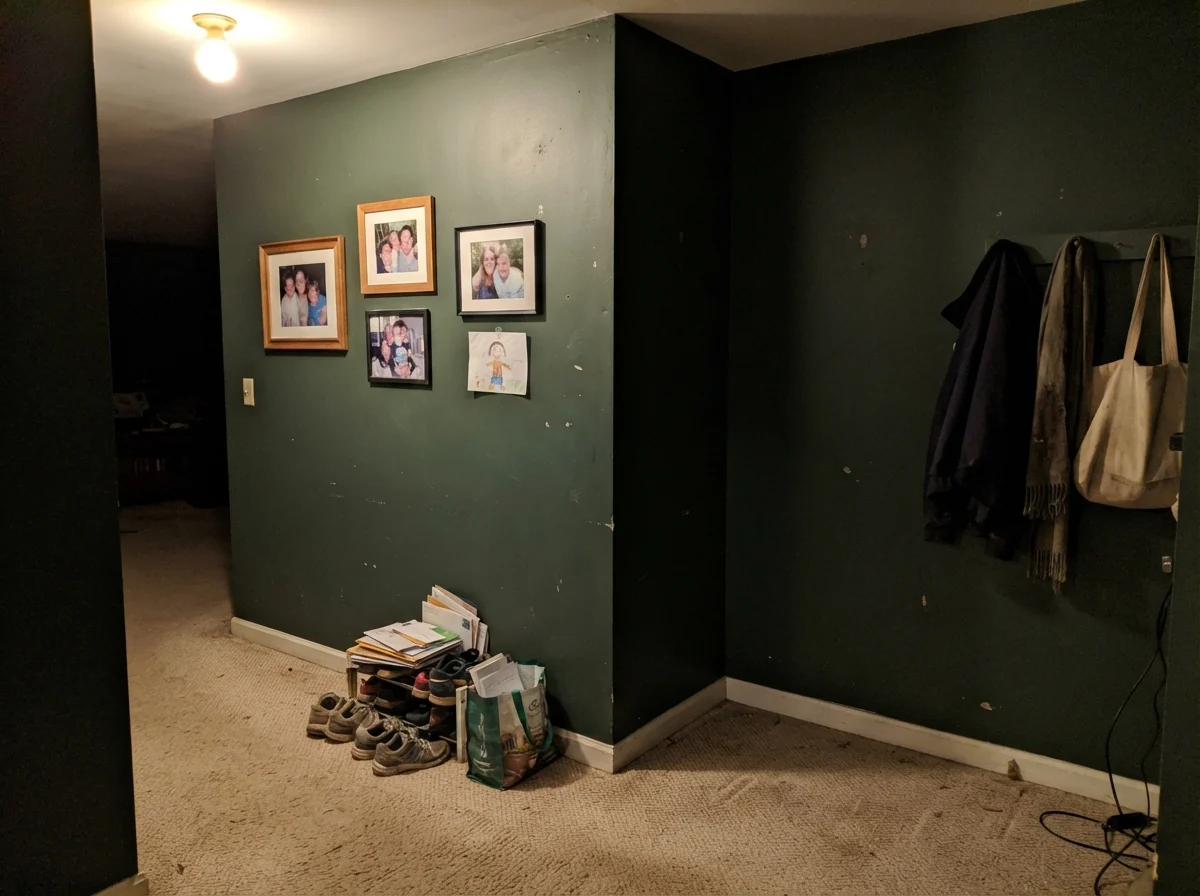
Here is the scenario that produces the angry online reviews: painting four walls of a windowless interior hallway or dim powder room in flat or matte Essex Green. Below is exactly what happens. With no natural sunlight and only a single standard ceiling bulb overhead, the deep green pigment cannot activate. It collapses into a muddy, flat charcoal putty that feels claustrophobic and dreary.
When this happens, people blame the paint formula, but the formula did exactly what an LRV 6 deep-base paint is supposed to do. If you have an enclosed, windowless hallway or a bathroom with no natural exposure, do not use Essex Green unless you plan to install bright, warm wall sconces and use at least a satin finish. Otherwise, step up to a mid-tone green like Cushing Green HC-125 (LRV 18) or Saybrook Sage HC-114, which retain their green identity even on gray days.
Durability, Primer, and the Touch-Up Penalty
Let's talk about the practical realities of putting this color on your walls. Because Essex Green uses an ultra-deep base packed with dark colorant, rolling it directly over white drywall without preparation is a recipe for tears. You will find yourself four coats deep before the streaking disappears. Spending ten dollars on a gray-tinted primer first is worth every penny—it cuts your labor down to two uniform coats.
Second, dark deep-base paints punish spot touch-ups severely. Five years in, when you nick a corner while carrying a laundry basket, you cannot simply dab a brush in the leftover can and touch up that one-inch scratch. The touched-up spot will flash visibly under any side light. With Essex Green, a scuff repair means rolling out the entire drywall panel from corner to corner. Keep this in mind for stairwells and narrow entryways that see heavy bike and backpack traffic.
What sheen should I choose for Essex Green?
For exterior shutters and front doors, semi-gloss or gloss is essential to bounce daylight and show off the green. For kitchen cabinets, millwork, and doors, choose satin for wipeability without excessive glare. For interior walls, use eggshell or matte only in well-lit rooms with dedicated table lamps.
Why does Essex Green look completely black on my wall?
With an LRV of 6, Essex Green reflects minimal ambient light. If your room faces north, has small windows, or relies on cool overhead bulbs, the green pigments cannot activate, leaving the charcoal base to dominate.
Do I really need a gray primer under Essex Green?
Yes. Painting deep-base colors over bare white drywall without a gray-tinted primer leads to streaking and often requires three to four coats for full opacity. A tinted primer ensures full coverage in two coats.
Does Essex Green show dust and scuffs easily?
In a flat or matte finish on interior drywall, dark paints will highlight white chalky scuffs and dust lint. In a satin finish on millwork or cabinets, it excels at hiding dirt, boot marks, and daily kitchen grime.
Susan's Verdict · Worth the Money for Shutters, Cabinets, and Lamps
Essex Green HC-188 is an American classic for a reason, but it demands respect for lighting. On shutters, front doors, kitchen islands, and lamp-lit studies, it offers an unmatched, tailored depth that outlasts passing trends. Just keep it out of windowless, dim hallways unless you want a plain black box.