Color Diary · No. 70
Manchester Tan HC-81: What Thirty Years and Three Houses Taught Me About Warm Neutral Walls
The classic warm tan every traditional house has worn, reviewed honestly: where it glows, the rooms where it turns olive or drab, and what to pick instead.

Susan HartleyOctober 8, 2026 · 14 min read
Manchester Tan · Benjamin Moore HC-81
Hex#DBD2BCLRV63Undertonesyellow-orange → olive-green → warm sand
When we moved into our 1990s colonial twenty years ago, the house was drowning in golden oak. We had honey oak trim running along every baseboard, cathedral-arch oak cabinets in the kitchen, and a staircase that looked like it had been dipped in liquid amber. My first impulse—like so many homeowners who have lived through the cool gray boom—was to fight the wood. I tried painting a cool, fashionable greige in the front hallway. Within forty-eight hours, the walls looked like dirty dishwater and the oak trim looked twice as orange. That was the weekend I learned my lesson: you cannot bully warm woodwork into looking modern with cold paint. You have to meet it where it lives.
That is how Benjamin Moore Manchester Tan (HC-81) came into my life. It was the color our local paint counter clerk slid across the counter when I told him I needed something that would make our woodwork look intentional rather than neglected. We lived with it on our main floor for nine years, through muddy boots, two golden retrievers, and a revolving door of neighborhood kids. When we sold that house, the listing photos looked every bit as warm and welcoming as the day the paint dried. But Manchester Tan is not a magic wand for every room, and it has a specific temperament you need to understand before you commit twenty gallons to your drywall.
The Undertone Trap: Why It Flashes Green
On the color chip, Manchester Tan sits squarely in the warm orange-yellow family. It reads as a grounded, sandy khaki with an LRV of 63—deep enough to contrast sharply with white woodwork, yet pale enough to reflect comfortable light. But the pigment formula carries an earthy yellow-green component that lies dormant until the wrong lighting brings it out.
warm sun
overcast, north light
dusk, rain, cool bulbs
yellow-orange tan → muted khaki → mossy olive
Natural AlmondBehr · see diary
Toasted AlmondPPG / Glidden · see diary
Manchester TanHC-81
Natural LinenBenjamin Moore · see diary
MuslinBenjamin Moore · see diary
When you place Manchester Tan in a south-facing room or wash it in warm lamplight, the orange and yellow pigments step forward to create an unmistakably rich, sandy backdrop. It makes warm hardwood floors, aged brass hardware, and caramel leather sing. But in a north-facing exposure—or worse, a room overlooking a lush green lawn or dense summer trees—that cool, shadow-heavy daylight cancels out the orange. What remains is the yellow base bouncing against green reflected light from outside. The result is a distinct olive-khaki undertone that catches many homeowners off guard.
The Light Shift: From Morning Fog to Evening Lamplight
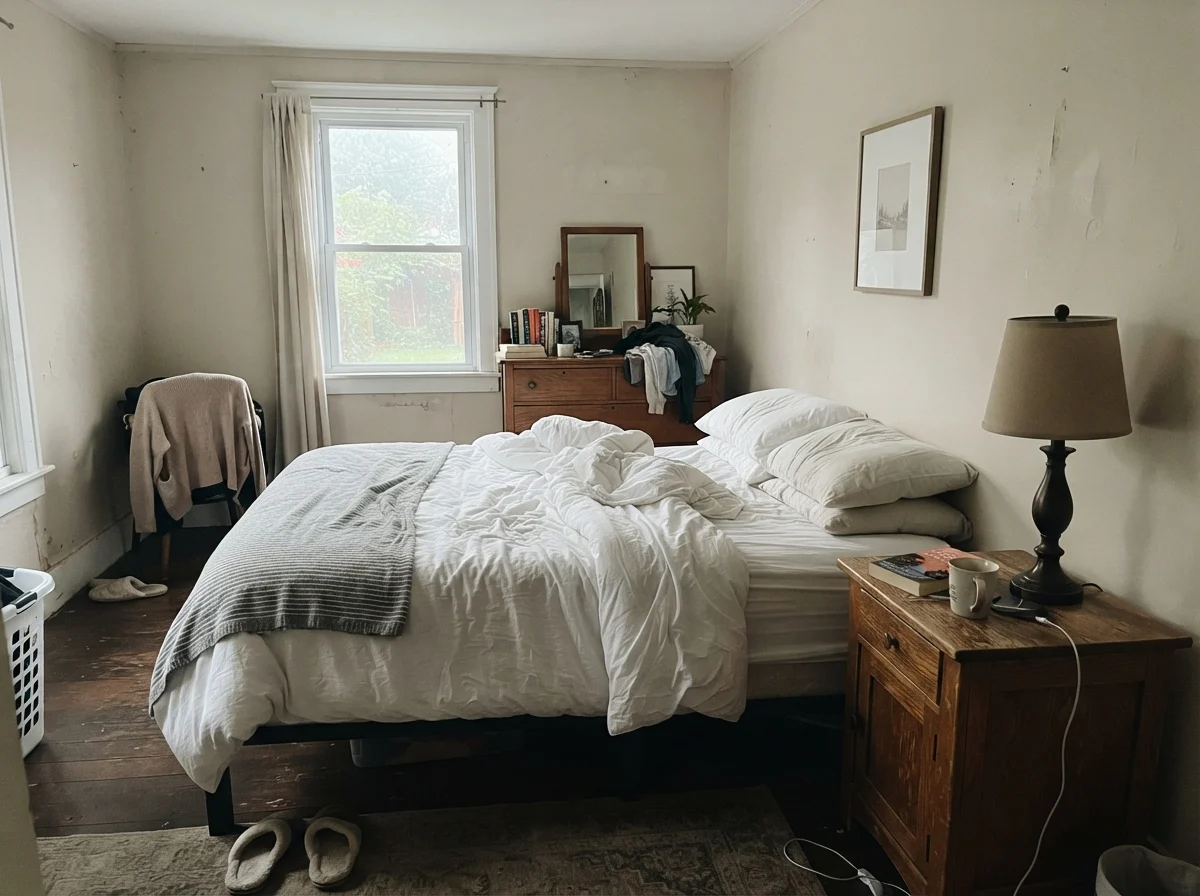
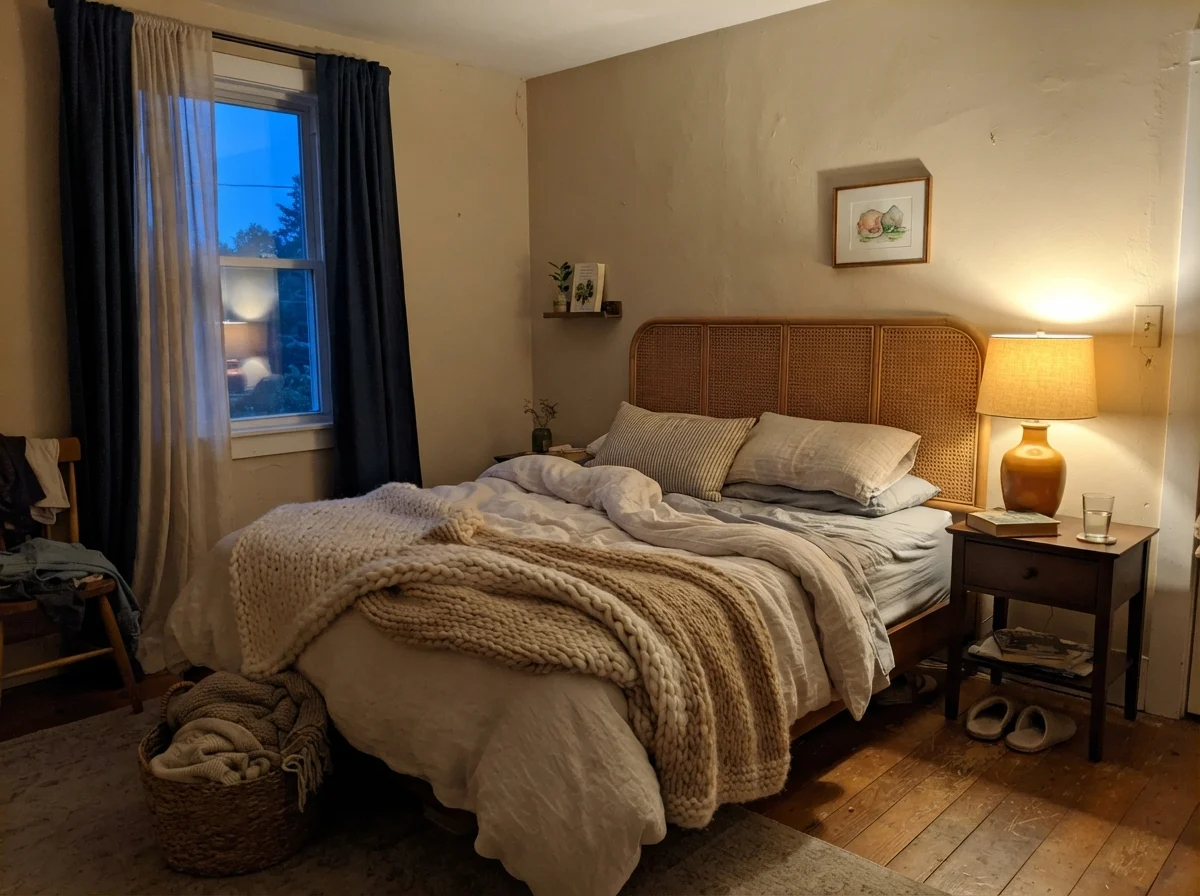
You cannot judge this paint on a single Saturday morning swatch. How Manchester Tan behaves at seven in the morning compared to eight in the evening under reading lamps is a study in contrasts. In our current 1960s ranch, I tested large sample boards in both morning and evening exposures before making a single stroke on the guest bedroom walls.
In cool early-morning light without lamps, the walls look quiet, muted, and slightly washed out. Some people mistake this for being cold, but as the sun arcs across the house and evening settles in, 2700K to 3000K household lighting transforms the room into a cozy, golden-khaki cocoon. If you run harsh 4000K daylight LED bulbs, turn back now: cool modern LEDs will turn Manchester Tan into a flat, institutional putty. Stick with warm white bulbs to keep the sandy glow alive.
Bathrooms, Tile, and Moisture
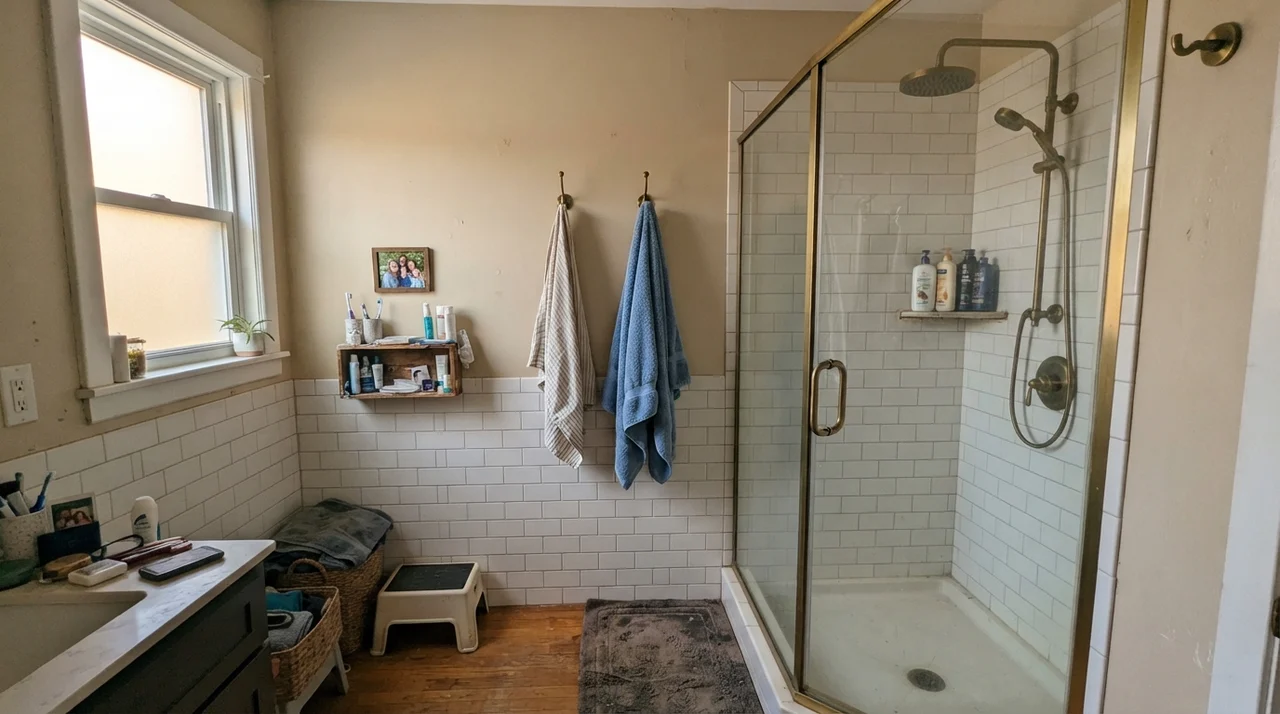
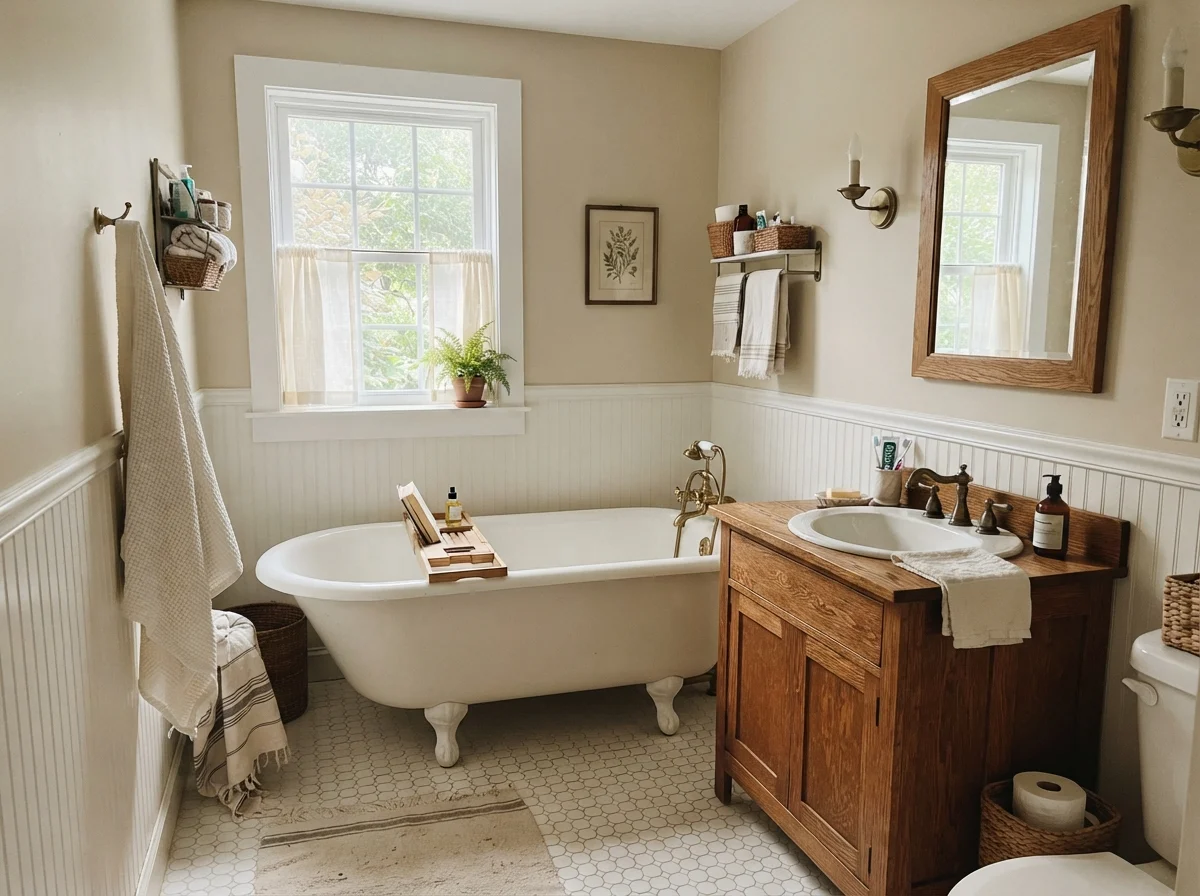
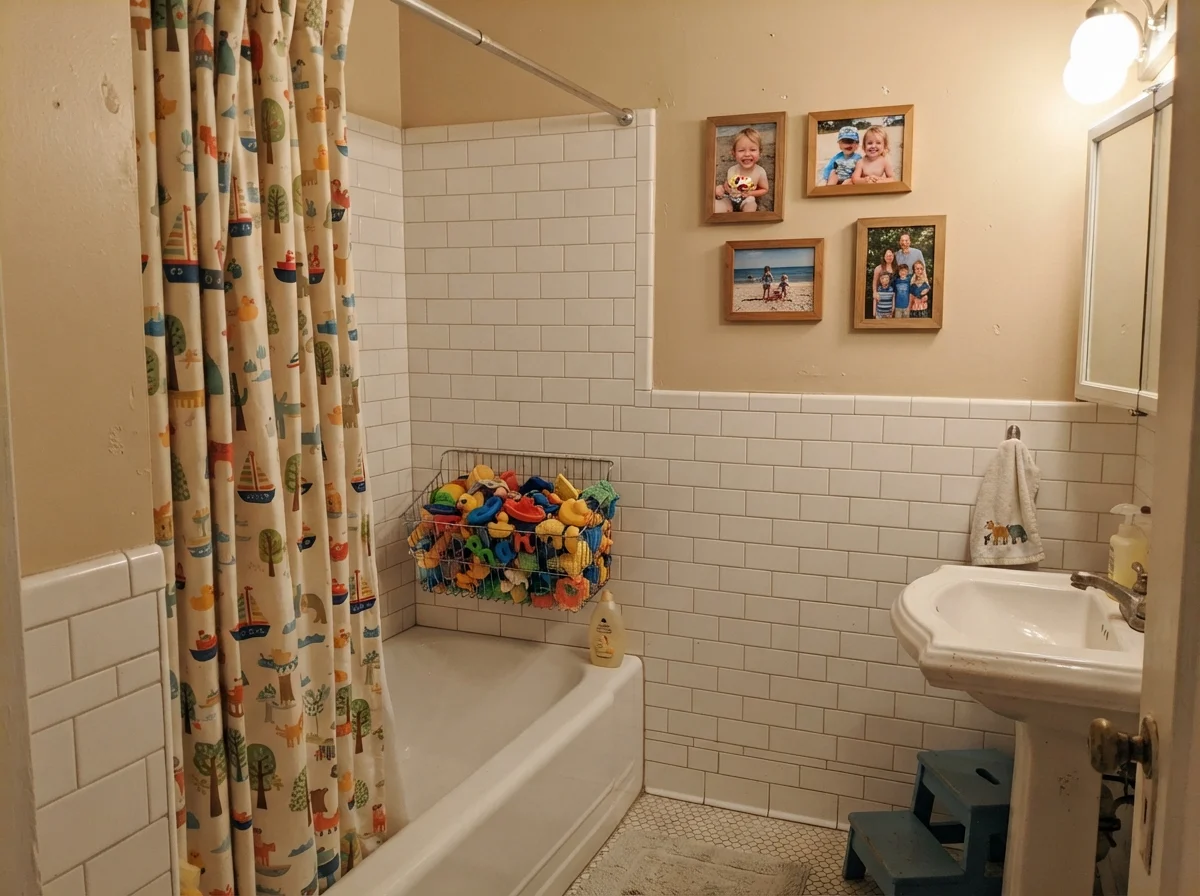
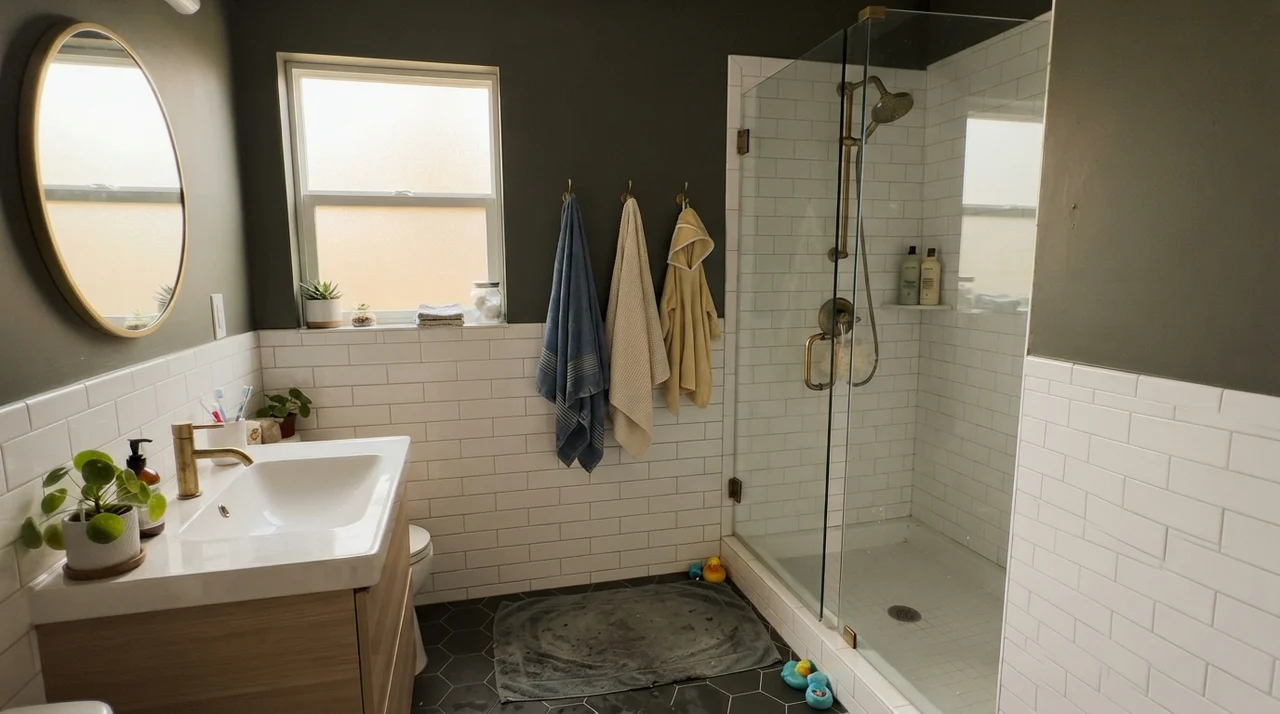
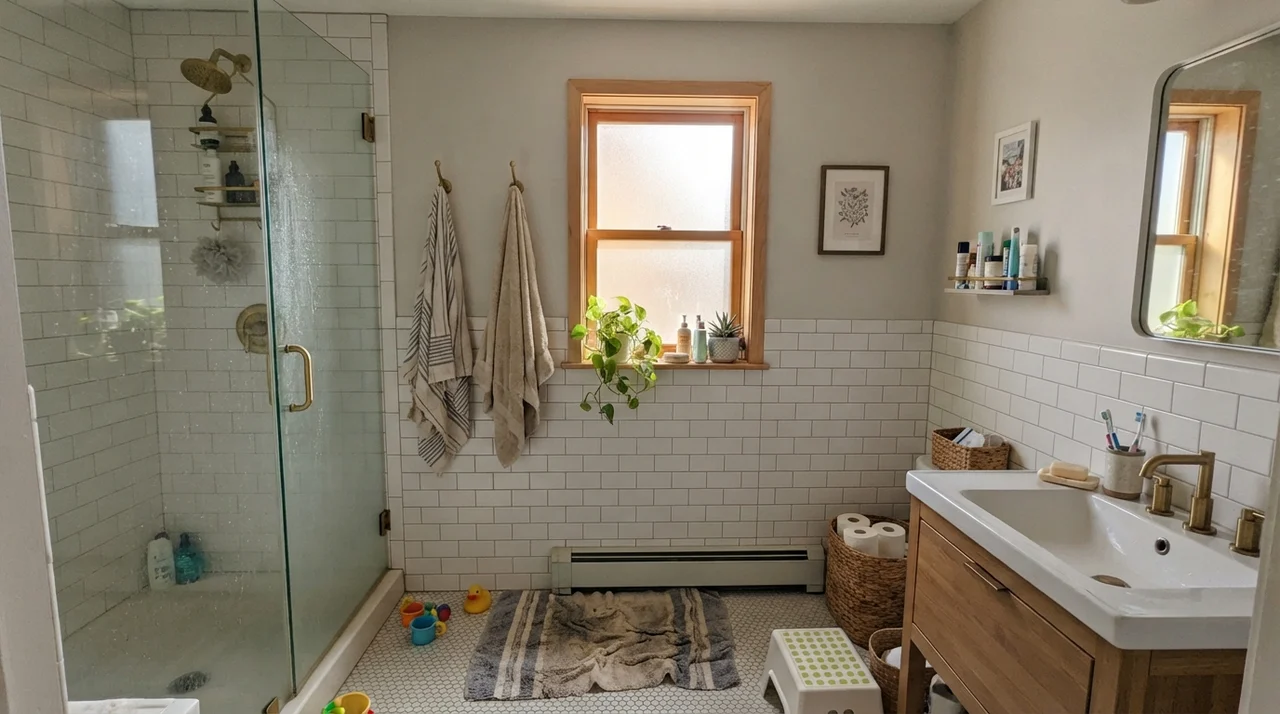
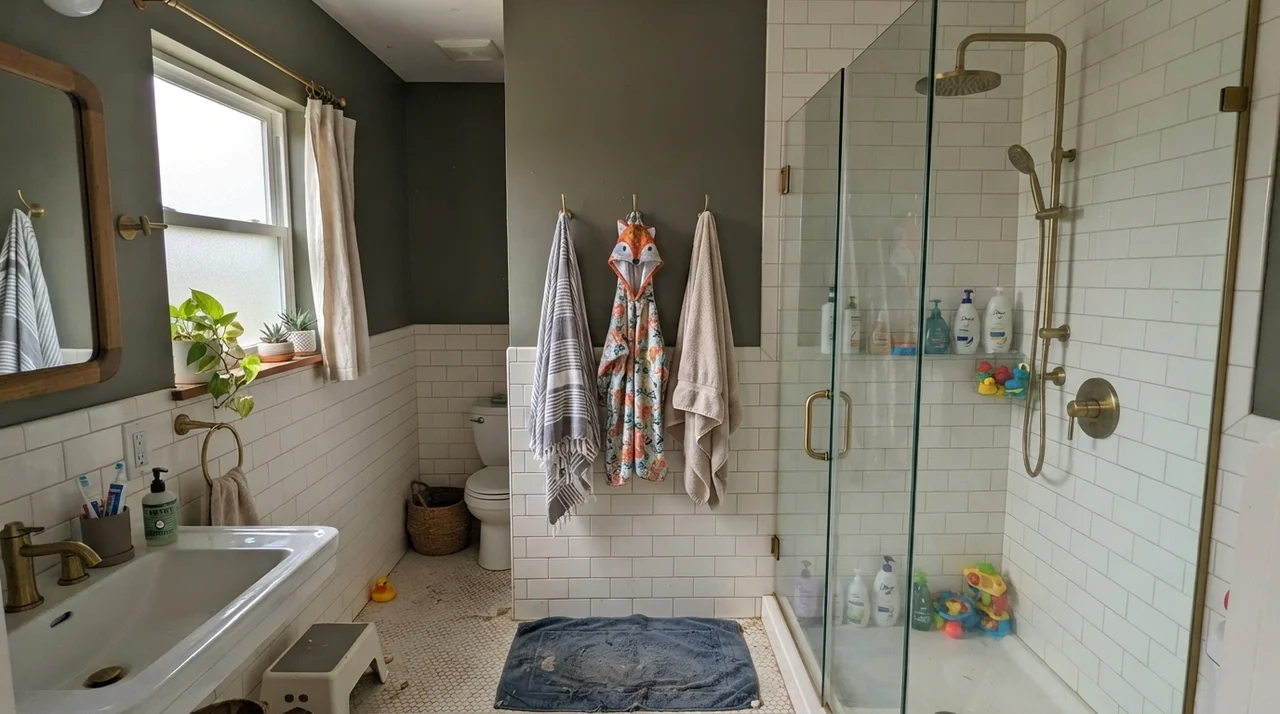
Bathrooms are tricky territory for any mid-tone neutral. Because bathrooms often feature hard white porcelain, chrome fixtures, and frosted privacy glass, colors can shift quickly. In our second house, we used Manchester Tan in the family bath above a four-foot wainscot of classic white subway tile.
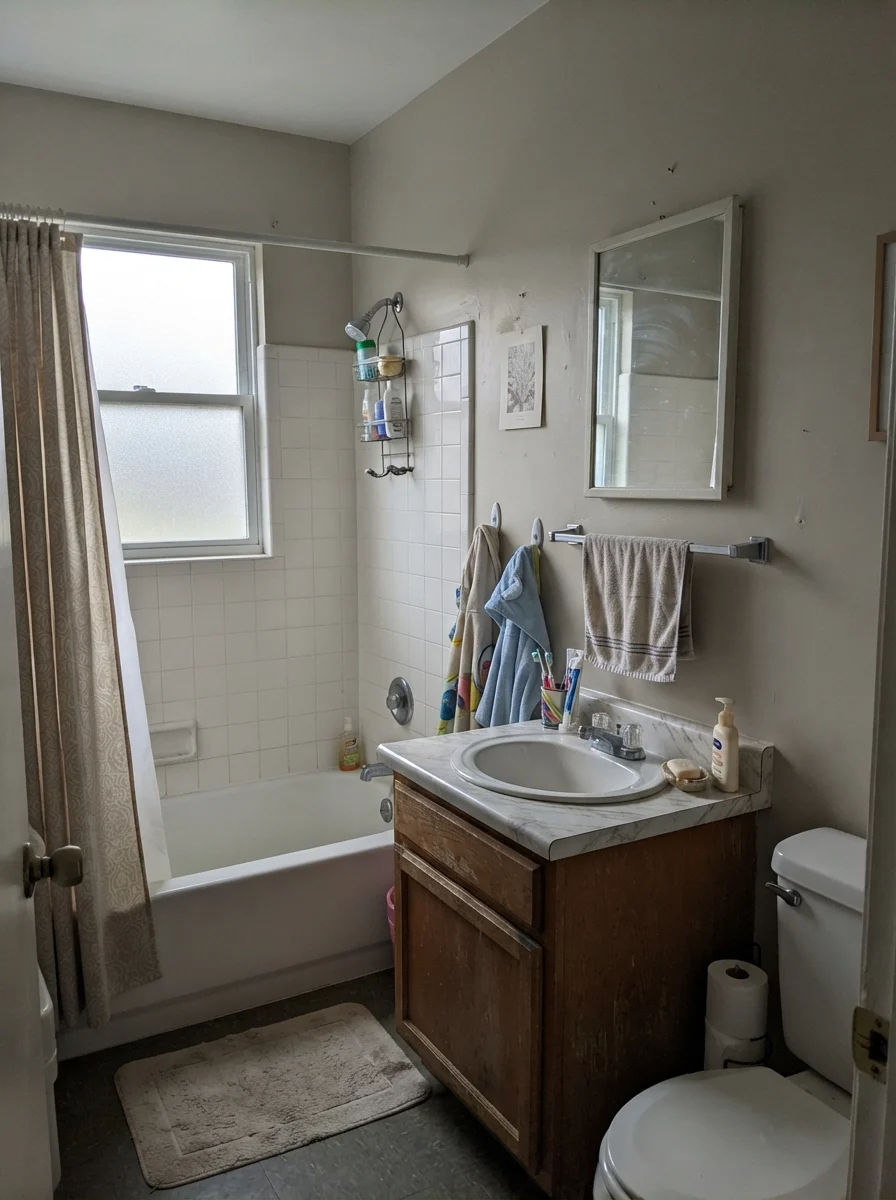
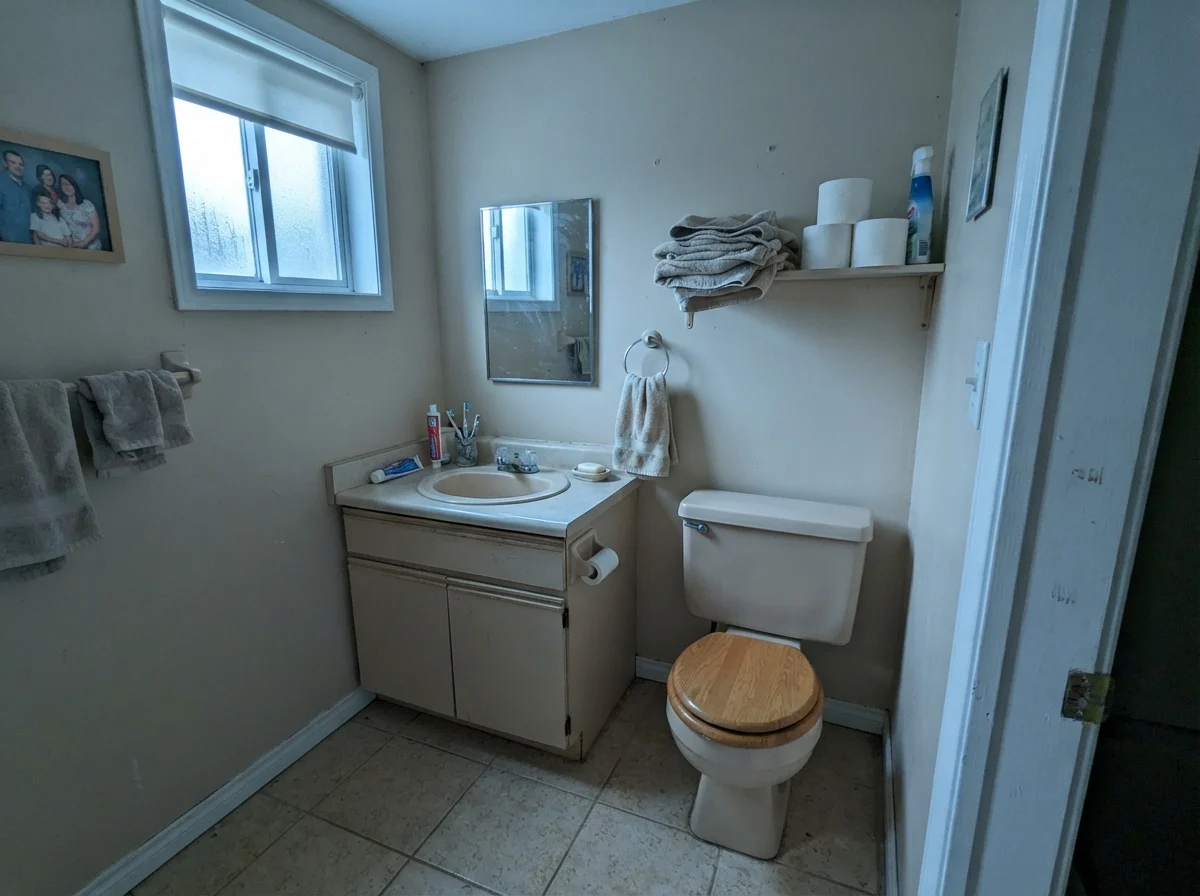
Notice what happens when light drops: in the cottage bath with morning sun and an oak vanity, the color radiates authentic, timeless warmth. But in a windowless powder room or under flat overcast skies through frosted glass, the color drops into a muted, stone-gray beige. If your bathroom tile has pink, peach, or cool blue-gray undertones, Manchester Tan will fight it tooth and nail. It wants clean white porcelain, warm marble, or honey-toned wood vanities to anchor its sandy personality.
Where Manchester Tan Shines: The Main Living Spaces
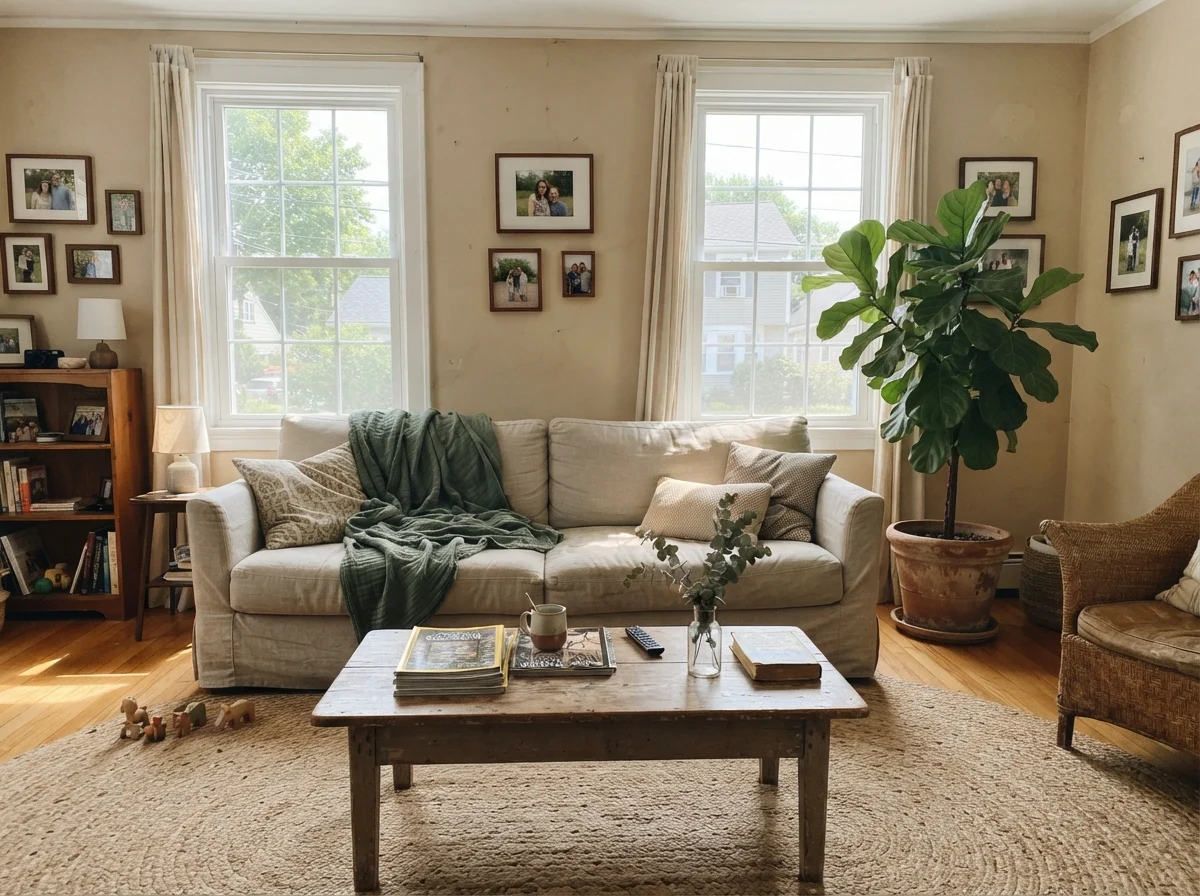
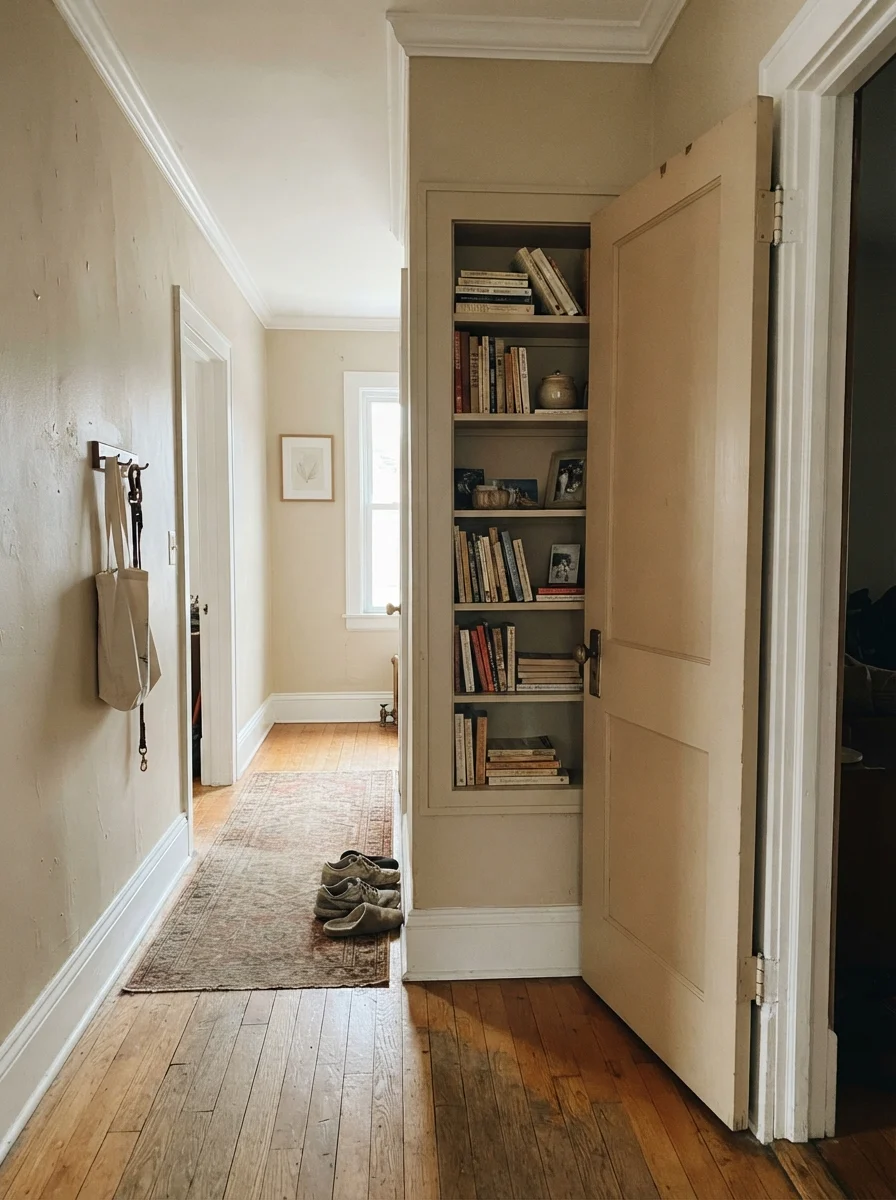
The real home turf for Manchester Tan is a traditional main living floor with substantial daylight. An open foyer, a dining room with wainscoting, or a sunlit living room with natural rugs and leather furniture is where this paint looks like a million dollars. In our last house, our living room had two big south-facing double-hung windows. In that generous light, Manchester Tan was the calmest, most forgiving backdrop I have ever lived with.
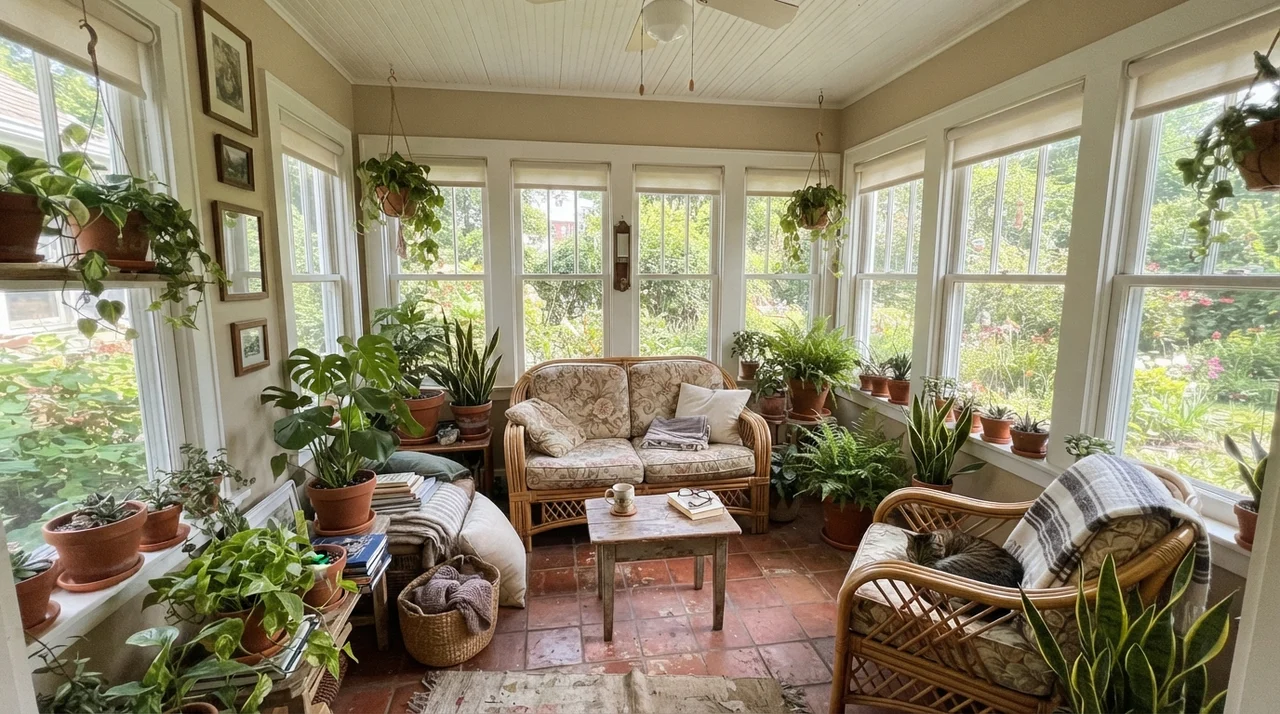
Because its LRV is 63, it has enough pigment density to define white trim without sucking the brightness out of a room. It flatters natural jute rugs, warm walnut coffee tables, and rumpled cream linen sofas without demanding that every piece of decor match perfectly. In a sunroom lined with white windows, it acts like a gentle buffer against outdoor glare, framing garden foliage comfortably.
The Kitchen Question: Cabinets, Islands, and Counters
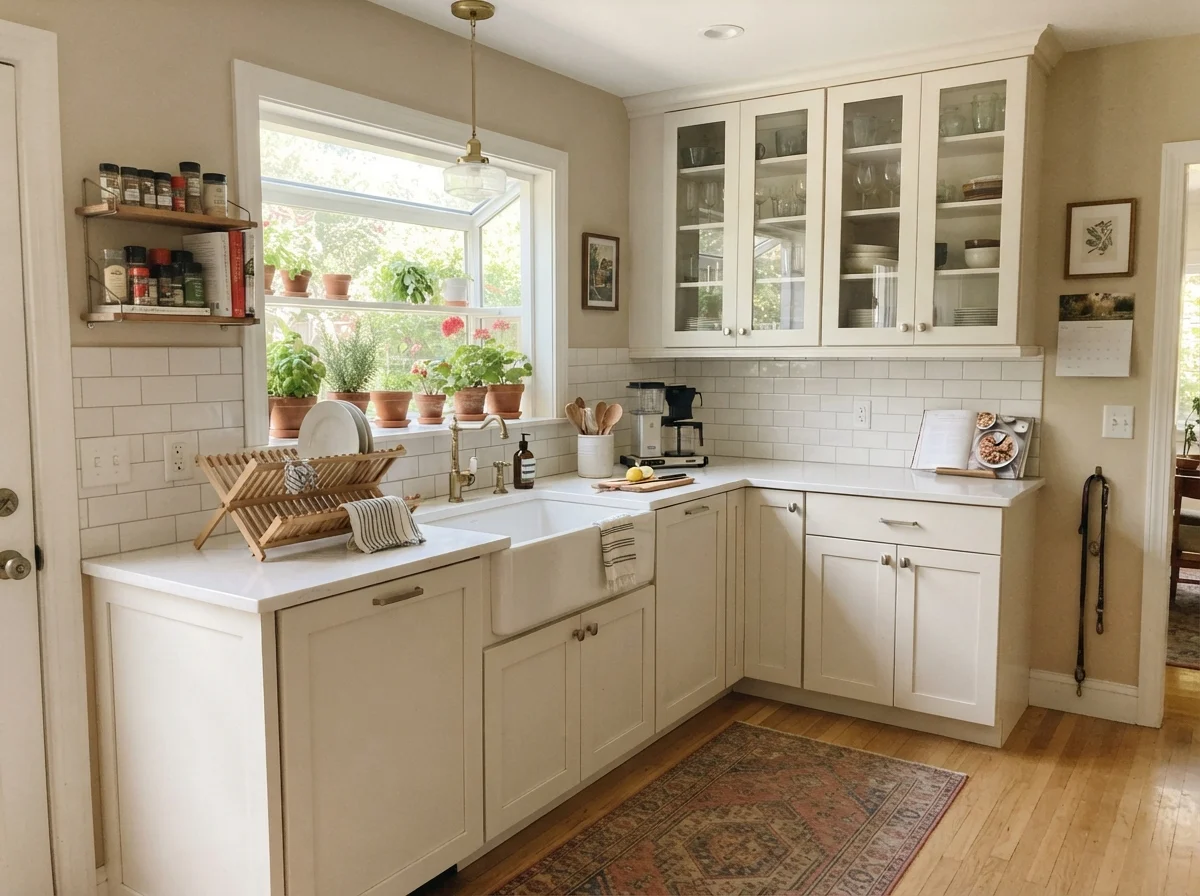
Every week someone emails me asking if Manchester Tan works on kitchen cabinets. The answer depends entirely on your countertops and flooring. If you have cool gray quartz, Carrara marble, or blue-gray slate tile, painting your cabinets Manchester Tan is a mistake you will regret within a week; the contrast will push the cabinets toward an unappealing dingy yellow. But if you have warm speckled granite, butcher block, or natural wood floors, it can look spectacular.
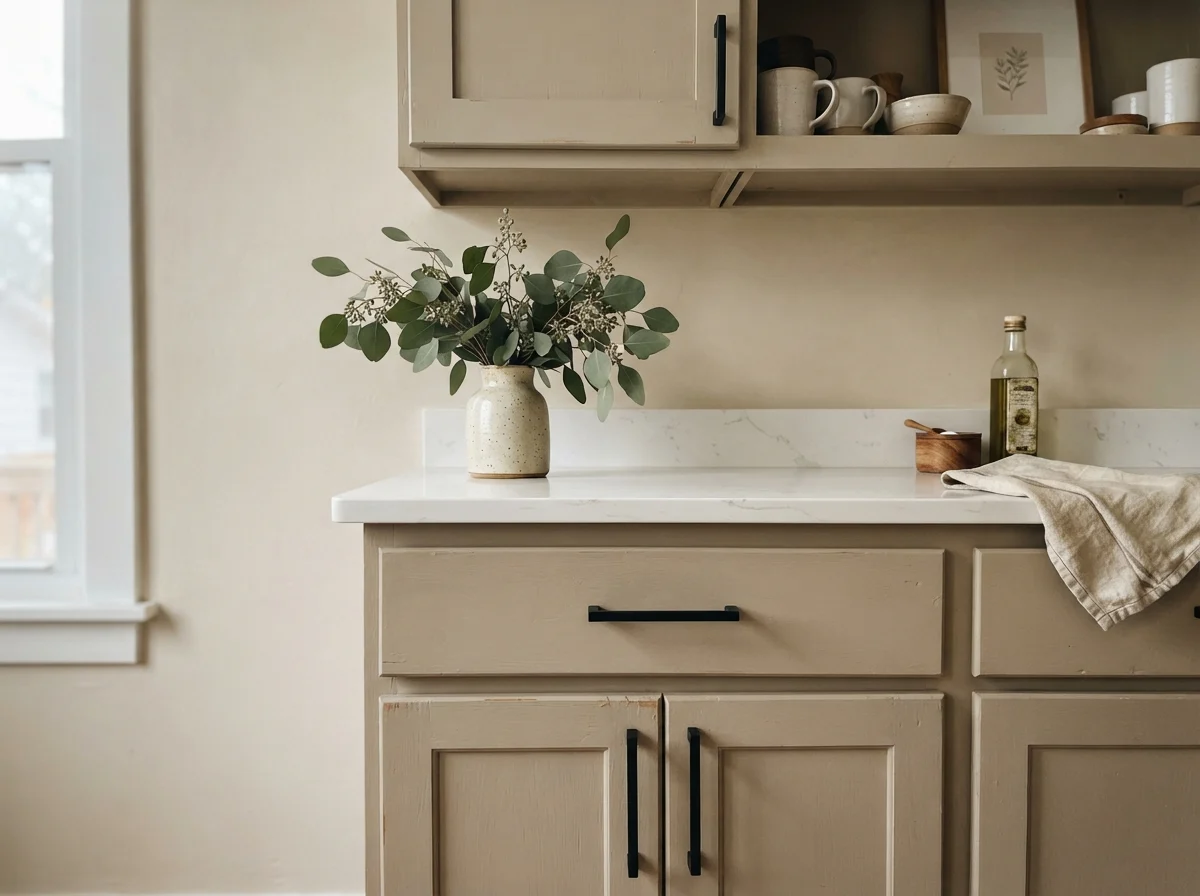
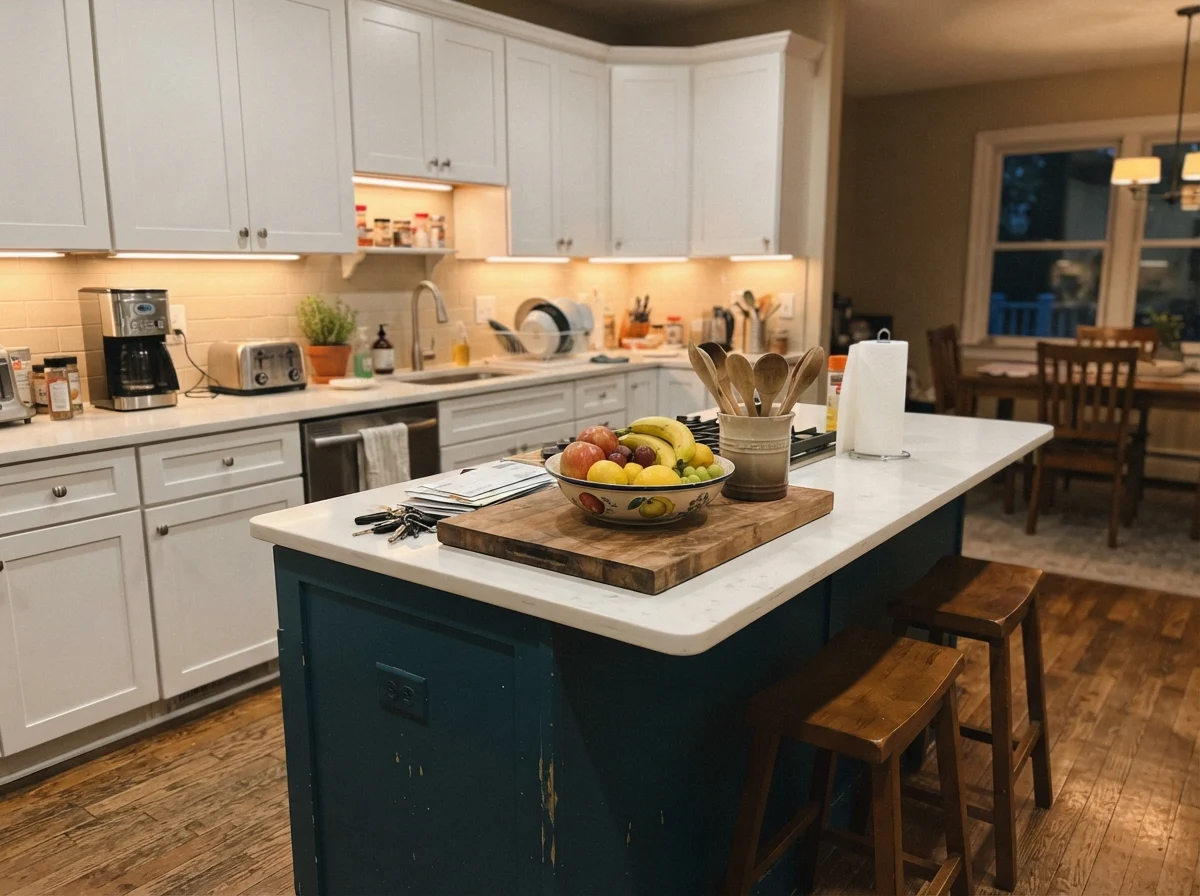
Using it on an island while keeping perimeter cabinets a soft white is one of the easiest ways to inject warmth into a kitchen that feels sterile. On cabinetry, always choose a satin finish—it resists greasy fingerprints and wipes down without leaving shiny buff marks where you scrubbed clean around the drawer pulls.
Bedrooms, Nurseries, and Everyday Family Life
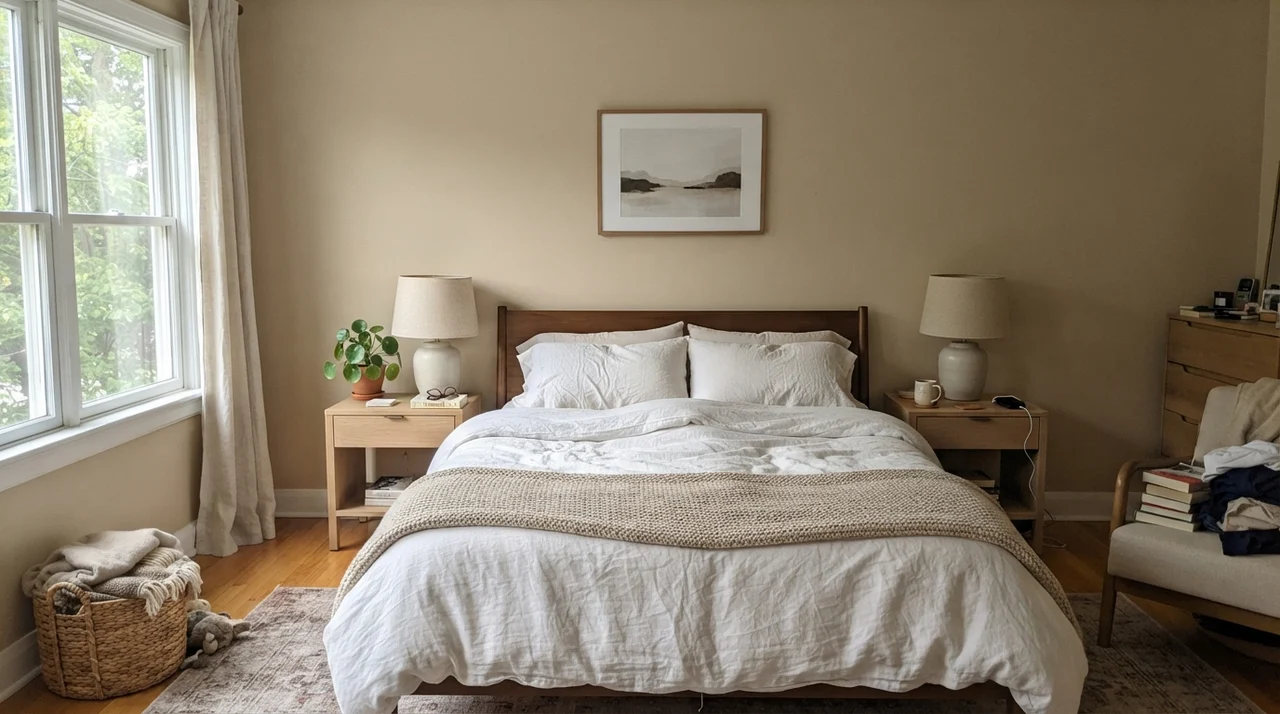
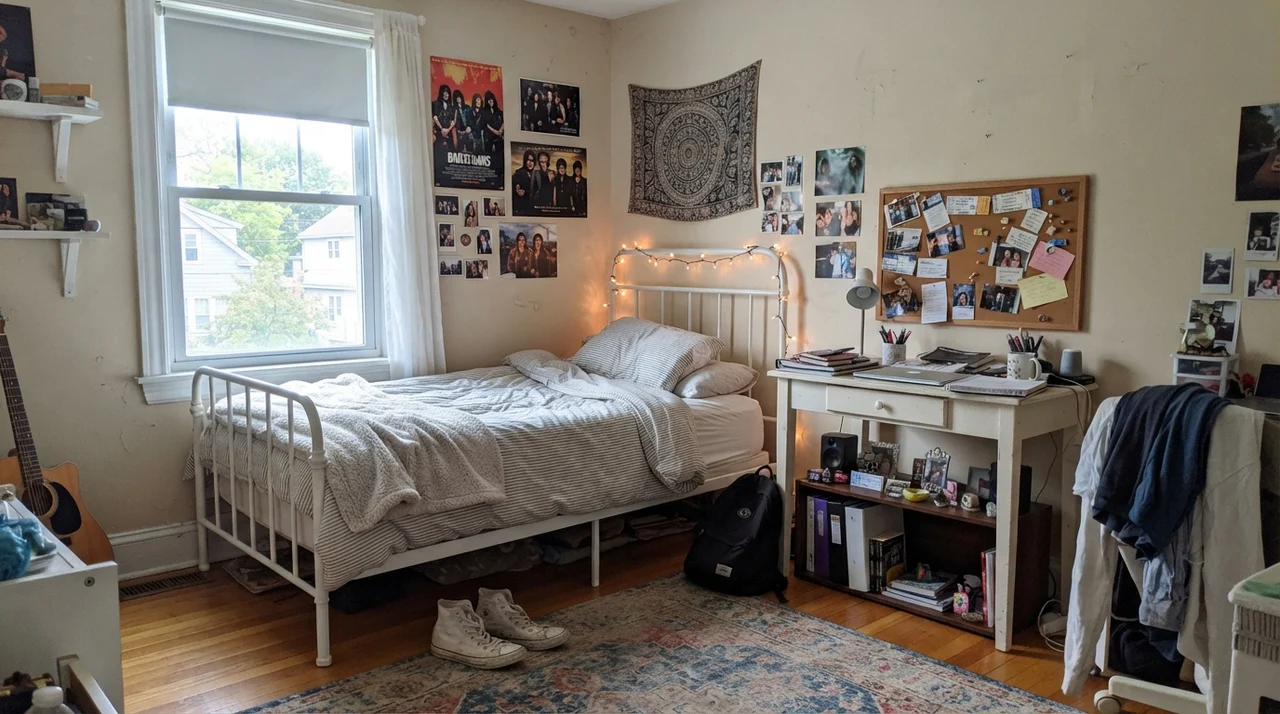
In bedrooms, Manchester Tan creates a gentle, restful environment that feels grounded rather than fussy. In our colonial, we used it in my daughter's room through her middle school and high school years. As posters changed, white metal beds replaced bunk beds, and corkboards filled with photos, the wall color remained steady. It didn't fight her changing tastes because it acted like fine linen—quiet, understated, and timeless.
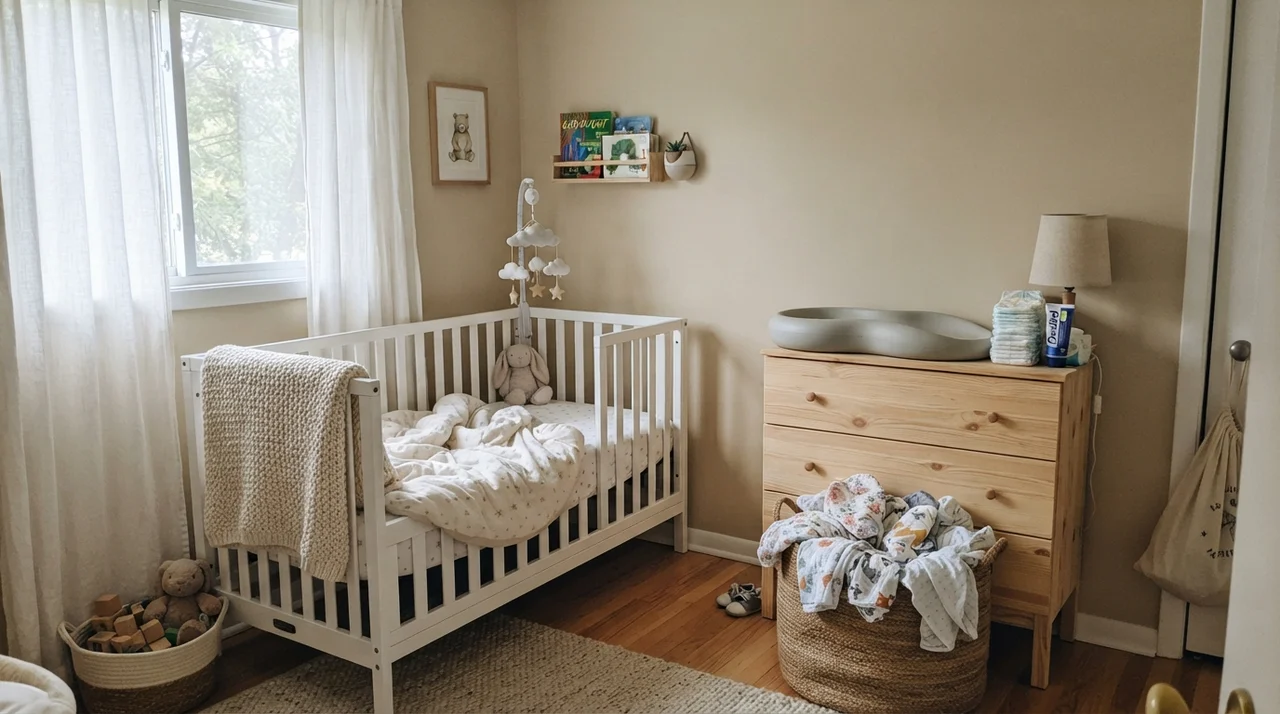
In a nursery or child's room, pair it with light natural woods, woven baskets, and crisp white crib bedding. It feels infinitely warmer than modern stark whites without locking you into babyish pastels that looked dated within three years.
Hallways, Laundry Rooms, and Woodwork Accents
Where Manchester Tan often surprises people is when it is applied to interior doors, trim, or utility spaces. In an older home with classic five-panel or two-panel doors, painting the door slab in Manchester Tan while keeping the casing a soft cream creates an architectural depth that elevates standard builder-grade details.
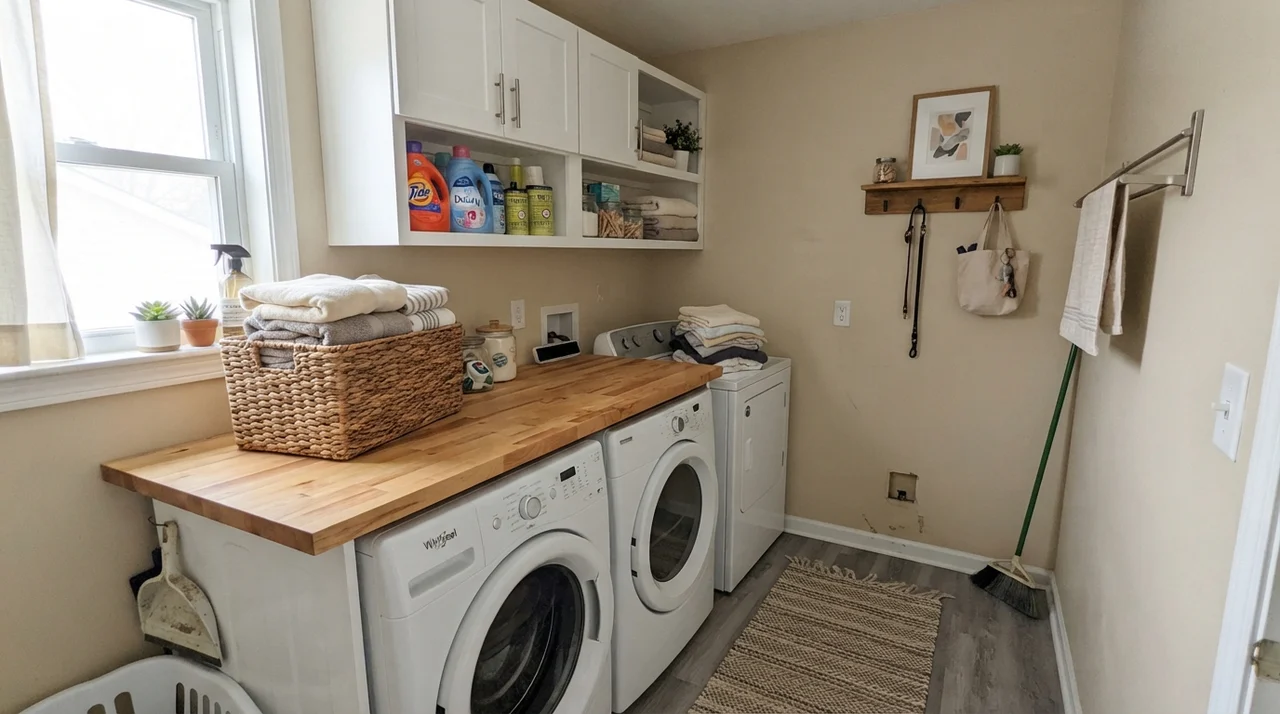
In laundry rooms, pairing it with butcher-block countertops over white appliances gives a utilitarian room an immediate sense of homeyness. Because laundry rooms deal with scuffs, detergent splatters, and laundry baskets scraping the drywall, this is a prime spot for eggshell finish—it wipes down cleanly where flat paints burnish and leave dark marks.
The Honest Fail: Where Manchester Tan Falls Flat
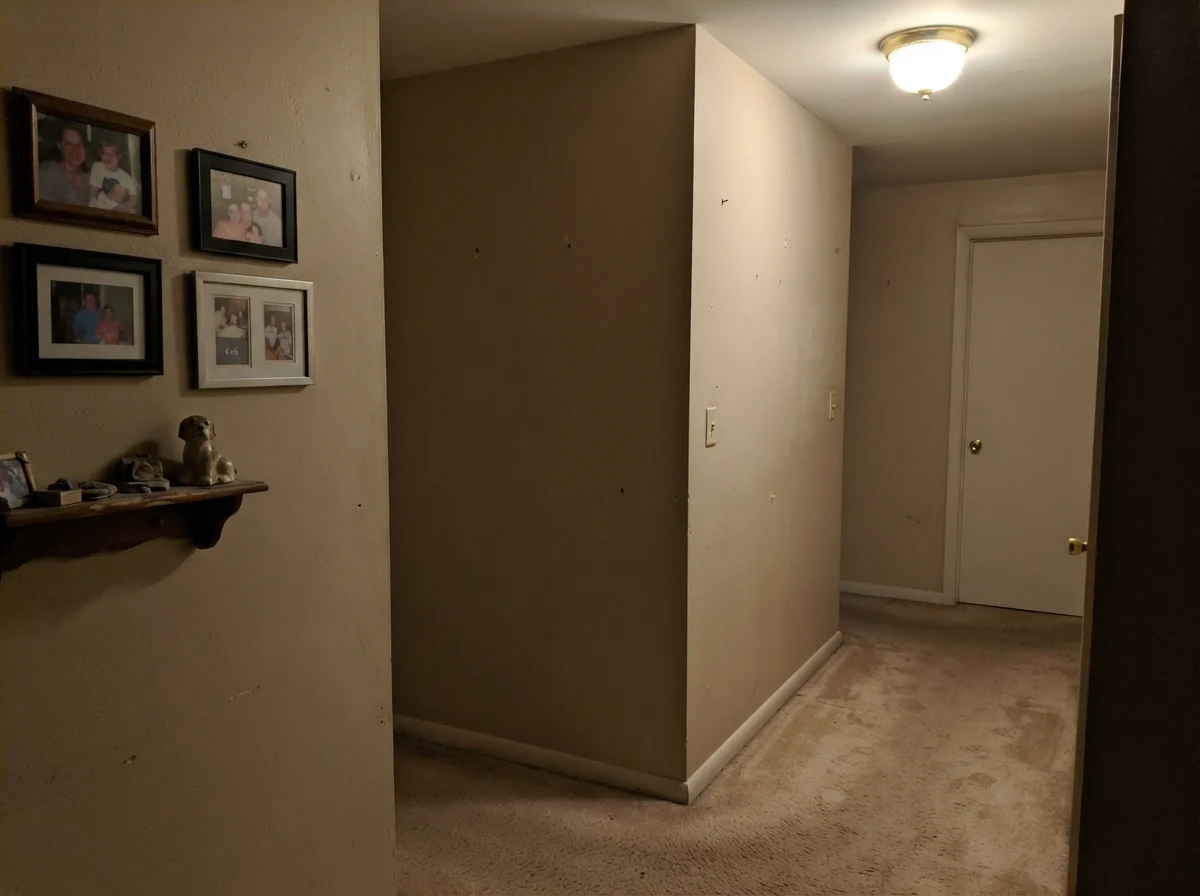
I promised you no sugarcoating, so let us talk about where this color fails completely. The bad Manchester Tan stories are remarkably consistent: windowless interior hallways, dark basement family rooms, and entries with zero natural light.
At LRV 63, there is genuine pigment weight here. When you trap it in a windowless hallway under a single, weak ceiling fixture next to beige carpet, Manchester Tan collapses into an uninspired, muddy builder beige. It has no daylight to bounce, so the yellow-orange warmth dies, leaving a heavy putty wall that makes the hallway feel narrow and dingy. If your space has no windows, do not fight it: step up to a lighter, higher-LRV off-white like Pale Oak (OC-20) or Ballet White (OC-9) that can bounce whatever artificial light you provide.
Exterior Siding: Sunlight Softens the Tone
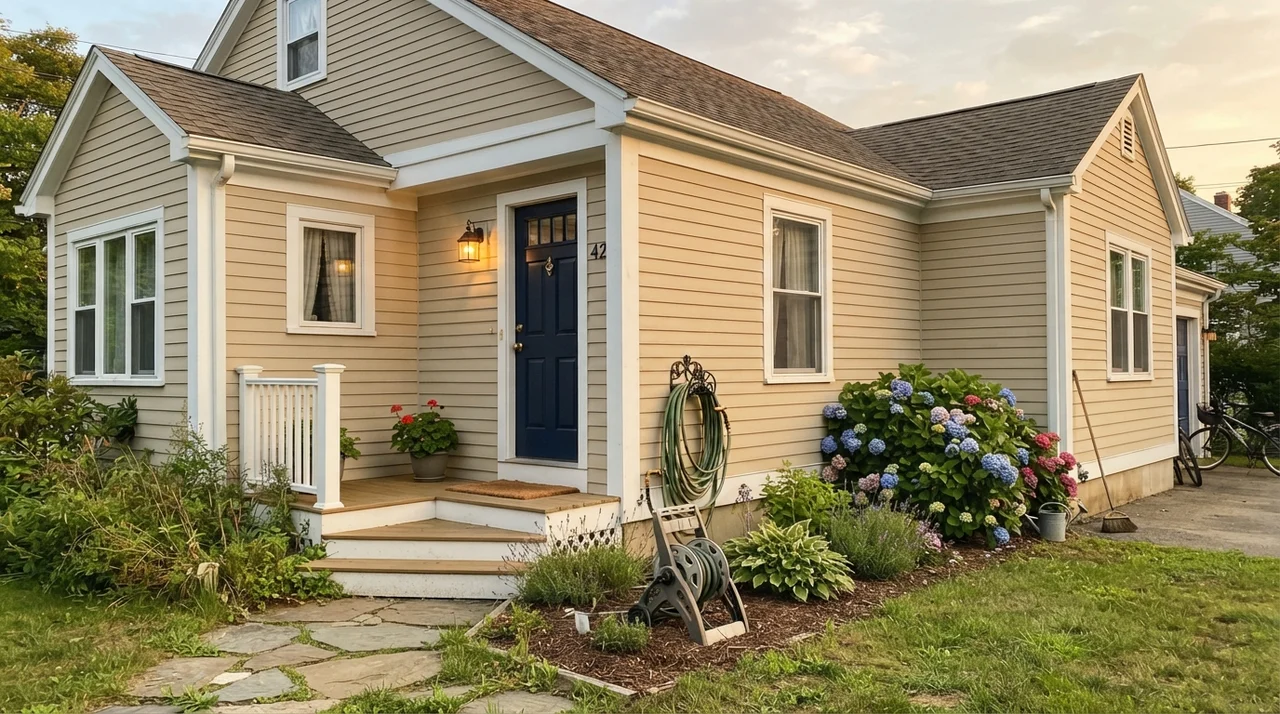
Outside, direct sun washes out paint by roughly twenty percent. On horizontal siding, Manchester Tan reads far lighter and brighter than inside, turning into an elegant, sun-bleached sand that looks right at home in traditional suburban neighborhoods.
On an exterior, Manchester Tan needs high-contrast partners. Frame it with crisp white trim and anchor the entrance with a deep focal point—like a Hale Navy (HC-154) front door or Kendall Charcoal (HC-166) shutters. What you must avoid outside is pairing it with cool, blue-gray roof shingles or cool gray river rock foundation veneer. Warm siding demands warm stone and neutral architectural shingles.
Durability, Scrubbing, and Living with It Long-Term
I have lived with Manchester Tan through every phase of family life, and here is what five years in will teach you: it hides everyday household dust, pet hair, and minor scuffs significantly better than light off-whites. In our colonial foyer, backpacks dragged across the walls every afternoon at 3:30. In high-traffic halls, buy the scuff-resistant matte or eggshell. Flat paint in this color will show shiny burnish spots the second you take a damp cloth to scrub clean a muddy dog smudge.
When it comes to touch-ups, Benjamin Moore's formula holds its color depth well over time, but because of that slight yellow-green undertone, an open can that has sat in a freezing garage for four years will separate. Always buy fresh paint or stir an old can thoroughly before attempting a mid-wall touch-up. If you need a whole-house repaint before selling, this is one of the few colors that buyer's agents still genuinely celebrate: it feels like a finished, cared-for home without forcing a specific trend on the next family.
Does Manchester Tan look yellow on the wall?
In standard south or west daylight, no—it reads as a rich, sandy beige. However, under very warm 2700K bulbs or when surrounded by dated yellowed varnish, the golden undertones can push toward yellow. Keep your bulbs at 3000K for a balanced look.
Why is my Manchester Tan sample looking green or olive?
Manchester Tan contains a subtle yellow-green base in its formula. In north-facing rooms or rooms with large windows facing green lawns and trees, the cool daylight filters in and pulls that olive cast forward. If this happens, try Edgecomb Gray (HC-173) instead.
What is the best finish for Manchester Tan in high-traffic hallways?
Use a scuff-resistant matte or an eggshell finish. Because Manchester Tan has substantial pigment depth (LRV 63), flat sheens will burnish and show shiny marks if scrubbed clean after kids or pets bump into the wall.
Does Manchester Tan work with honey oak trim and cabinets?
It is arguably the best neutral in the entire Benjamin Moore fan deck for honey oak. Rather than clashing with the orange wood tones like cool grays do, Manchester Tan harmonizes with the wood while keeping white trim looking crisp.
Susan's Verdict · Worth the Money for Honey Oak and Traditional Homes
If you are trying to make a windowless north basement look light and airy, walk away—Manchester Tan will turn into a flat, olive-gray disappointment. But if you have a traditional home, honey oak floors or trim that you cannot afford to replace, and plenty of warm daylight, this color is worth every single dollar. It delivers a grounded, comfortable warmth that has held up across three of our houses and thirty years of changing trends.