Color Diary · No. 75
October Mist 1495: The Quiet Sage That Relies on Daylight
The sage that made green rooms mainstream, reviewed honestly: the rooms where it glows, the light that drains it gray, and what to paint instead.

Susan HartleyOctober 11, 2026 · 14 min read
October Mist · Benjamin Moore 1495
Hex#B6B8A5LRV47Undertoneswarm sage → silvery greige → flat slate-gray
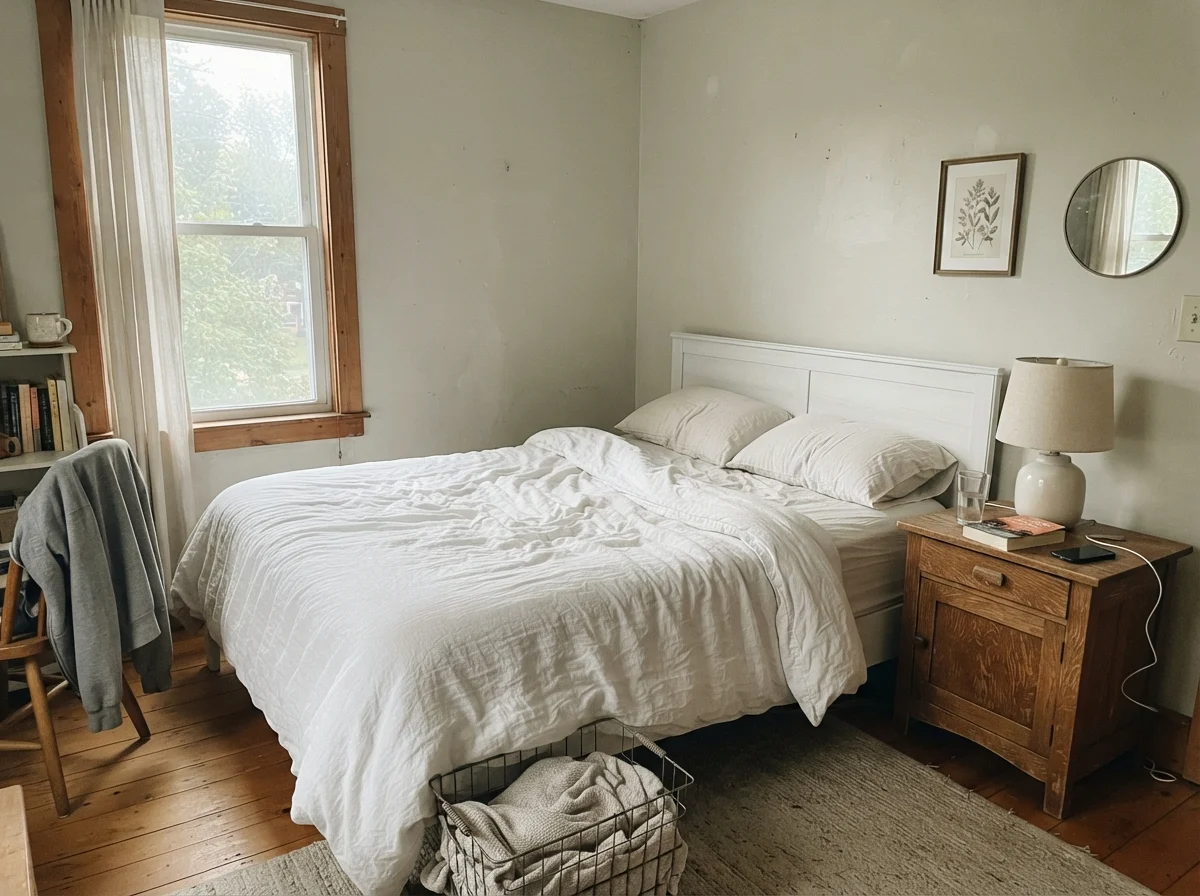
In our last house, our middle daughter announced in seventh grade that she was completely finished with pale yellow and wanted a green bedroom. Not an olive, and definitely not the dark hunter green her father and I had rolled onto our first kitchen back in 1998, but something she called 'calm.' We spent three Saturdays with little paper chips taped to her trim before we landed on Benjamin Moore October Mist 1495. When we rolled it on, it was lovely. Soft, quiet, smelling of clean linen. But come November, when the sun dipped behind the neighbor’s tall hemlocks by three in the afternoon, her north-facing corner turned the shade of damp sidewalk chalk. I learned right then that this paint has two personalities: the sunny one that sells the can, and the shadow one you actually have to sleep beside.
We lived with it in that bedroom for five years until we sold the house, and I have since painted it on kitchen lowers and a client’s sunroom. That is the thing nobody tells you about color: you don’t choose it for the sunny Saturday morning when the painter pulls off the blue tape. You choose it for year four, when the novelty has worn off, the afternoon light has flattened, and you’re looking at it across a pile of laundry. October Mist sits right at global rank 43 for a reason—it is the gentle bridge between neutral greige and honest green—but if your room doesn't have the light to feed it, the color simply packs up and leaves.
The Three Shifts of October Mist
With an LRV of 47 and a deck family listed firmly under greige, October Mist is not a loud leafy green. It is green with the volume turned down by gray and softened with a yellow base. That means it doesn't stay anchored; it takes its cues entirely from what the sky is doing through your glass.
warm sun
overcast, north light
dusk, rain, cool bulbs
Under true warm southern light, the yellow base wakes up and shows you a soft garden sage. In north-facing rooms or under heavy cloud cover, that warmth vanishes and leaves behind a cool greige. At dusk or under cold LED bulbs, the green drains away completely into a flat, shadowy gray.
Softened GreenSherwin-Williams · see diary
Saybrook SageBenjamin Moore · see diary
October Mist1495
JojobaBehr · see diary
Seaside FogValspar · see diary
How the Light Changes the Story
Before you commit five gallons to a living space, you need to understand the bargain you are striking with the sun. October Mist has an LRV of 47, which puts it right around the middle mark. It reflects just enough light to hold its ground without darkening a space, but it possesses no internal luminosity of its own. It needs incoming light to bounce off of it.
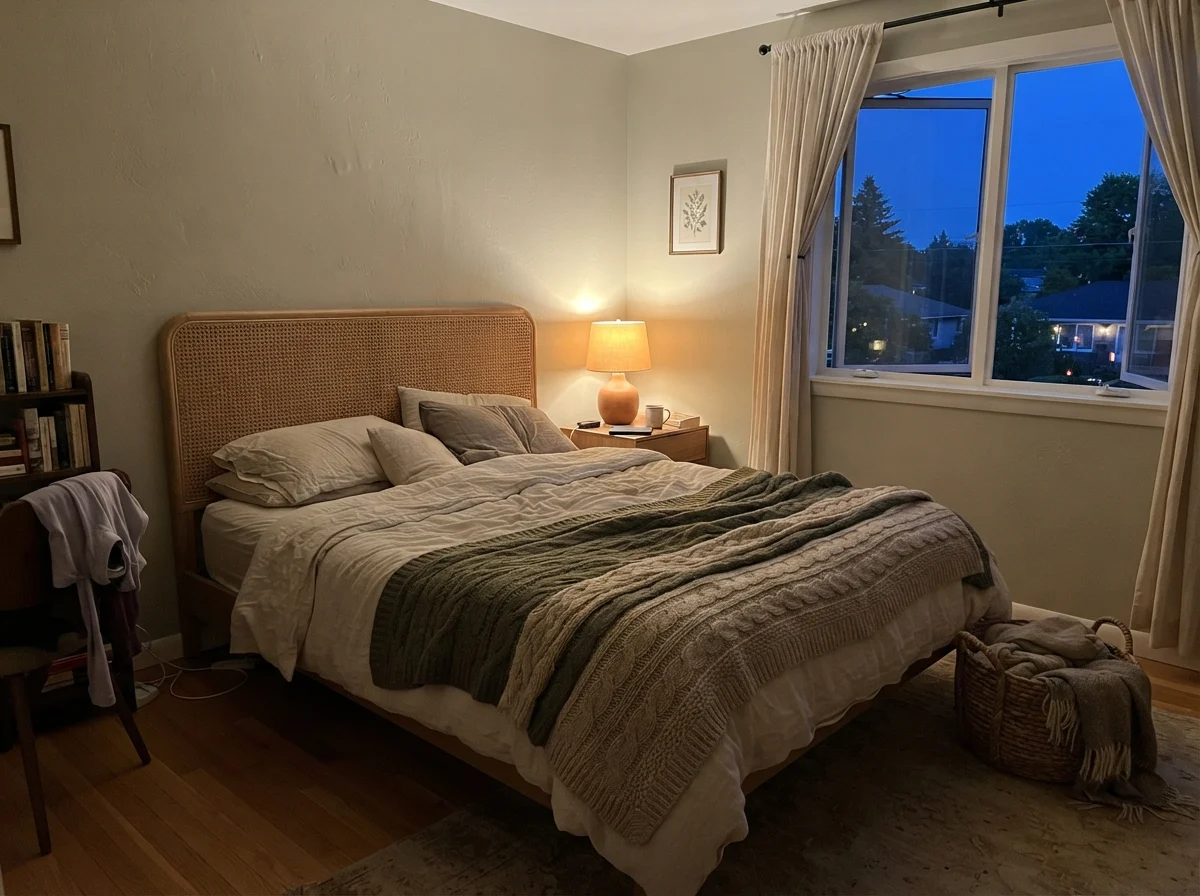
In strong southern exposures, the daylight brings out its mellow, earthy roots. It feels organic, quiet, and timeless. But in early morning or eastern light before the sun has climbed, or in a room with just one modest window, it can look shockingly pale and drained. Take a look at how drastically the same bedroom shifts its mood from dawn to evening lamp light:
That shift between eight in the morning and eight at night is why so many people get surprised by this swatch. If you turn on cool 4000K daylight LED bulbs at night, you sharpen the green into something institutional and chilly. If you screw in standard 2700K warm bulbs, it relaxes into a soft, cozy olive-gray. Before you decide you hate the wall, check your lightbulbs.
The Main Bedroom and the Nursery: Where It Thrives
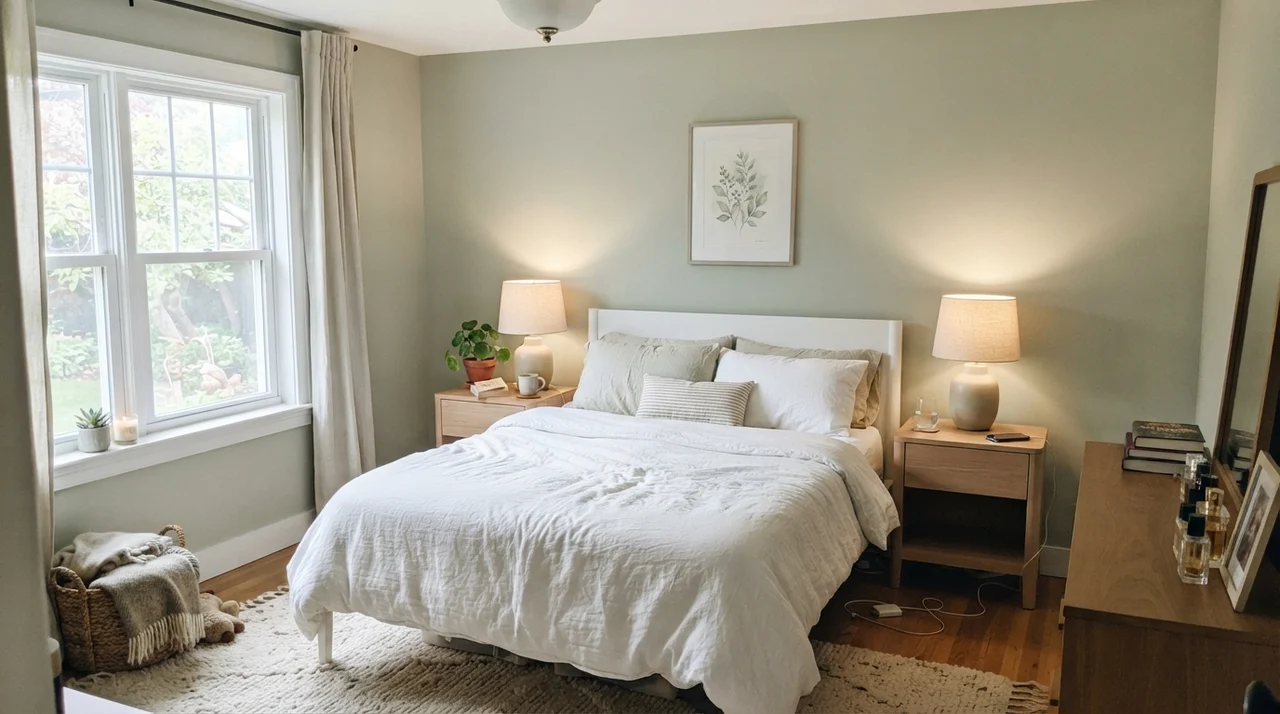
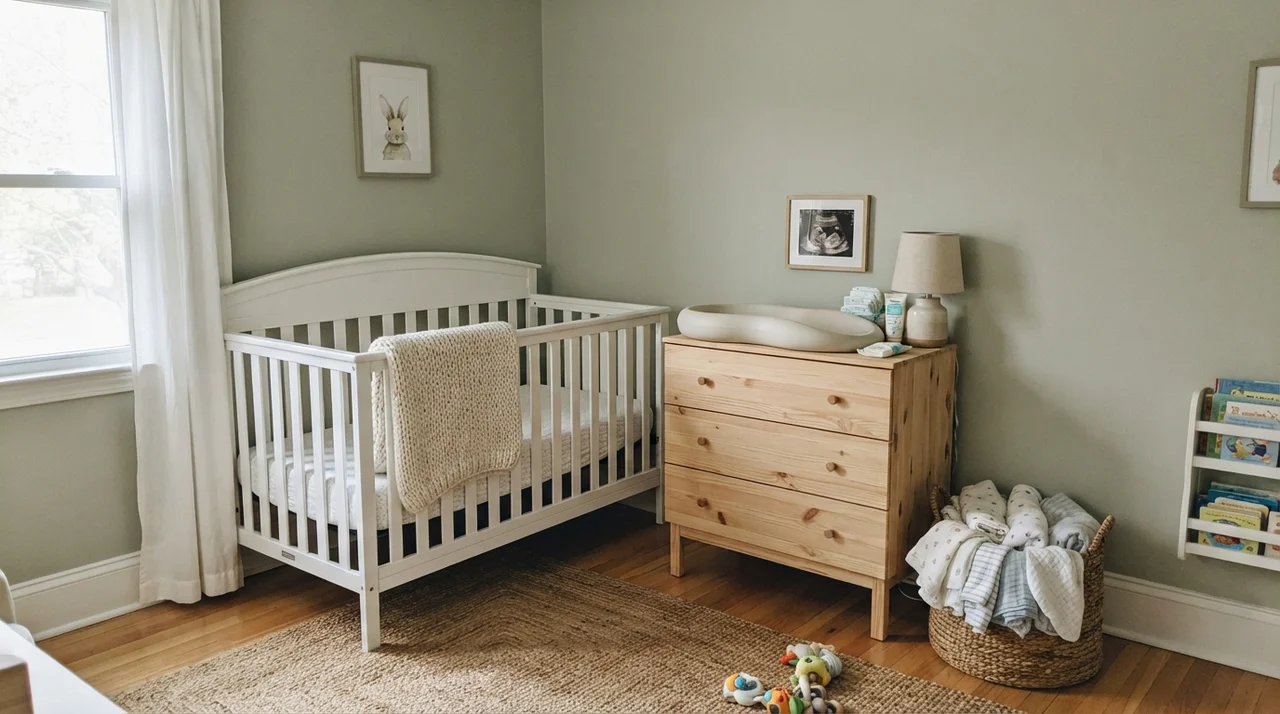
Bedrooms are where October Mist earns every penny. In a master suite or a restful nursery, you generally don't want a wall that demands attention. You want something that flatters pale oak furniture, clean white linens, and simple brass hardware without fighting them.
In our 1960s ranch today, our primary bedroom gets decent side-window light, and a color like this settles the nerves instantly. It doesn't scream 'sage theme.' It just recedes quietly into the background. That also makes it remarkably forgiving for kids as they grow. When we put it in our teenager's room years ago, it handled band posters and homework clutter without feeling babyish or overly formal.
Kitchens: Islands, Cabinets, and Millwork
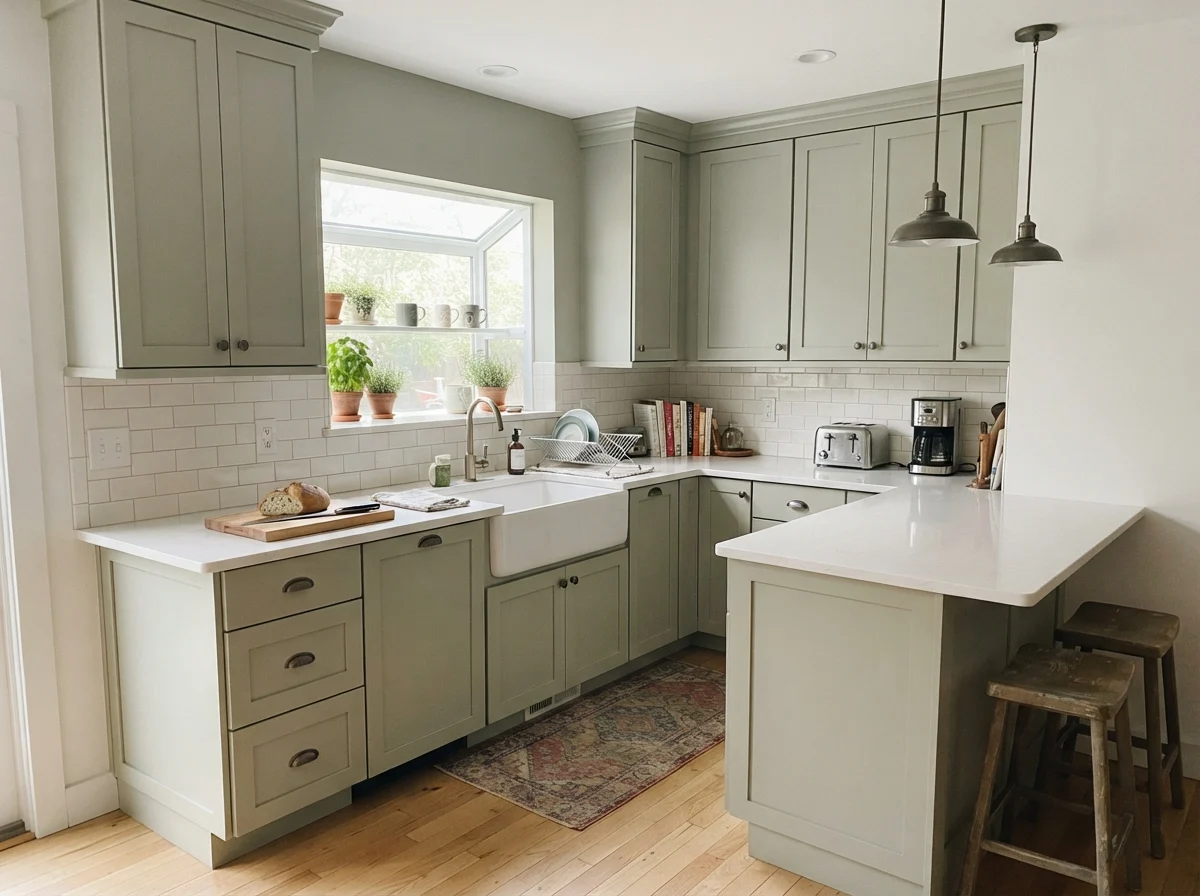
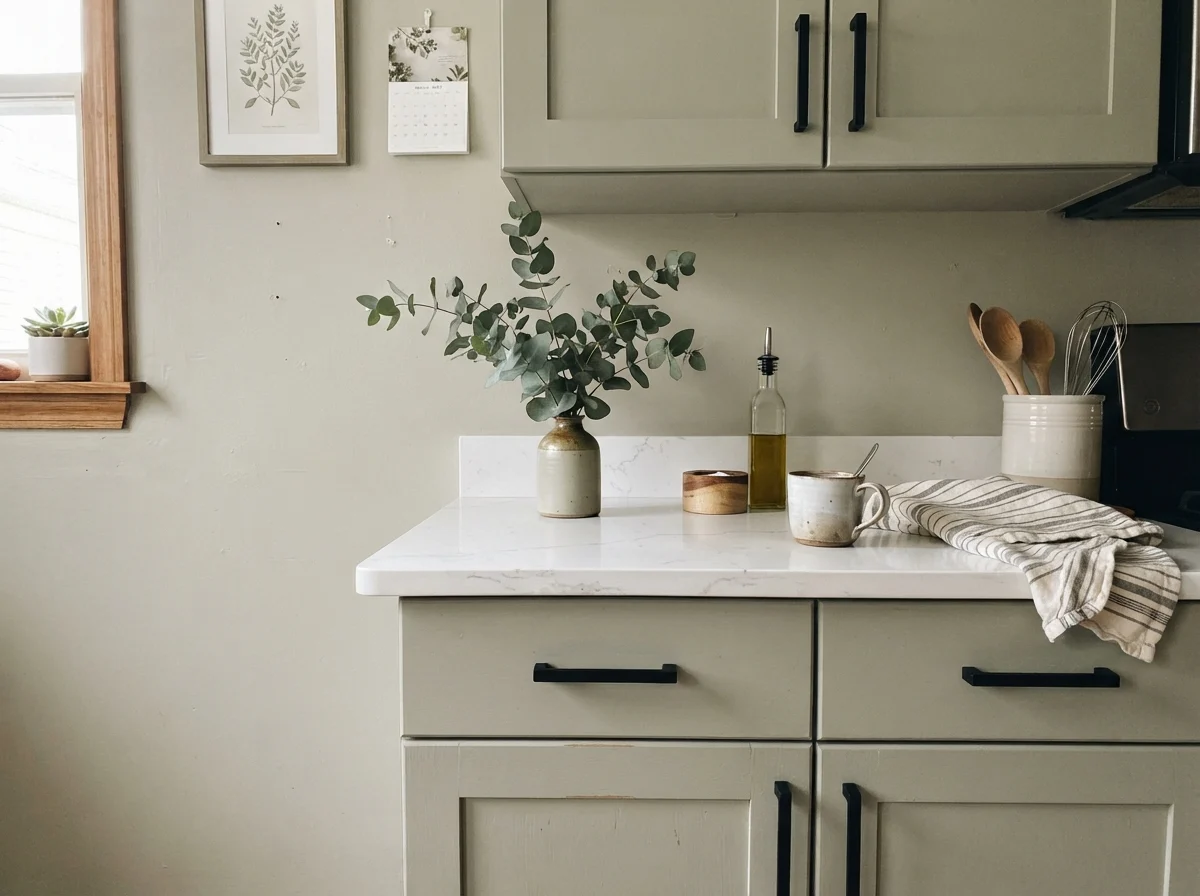
If bedrooms are its primary home, kitchen cabinetry is its second. October Mist on millwork provides that classic painted-wood look without forcing you into dark forest green or stark white. It pairs naturally with unlacquered brass, unlacquered bronze, and matte black handles.
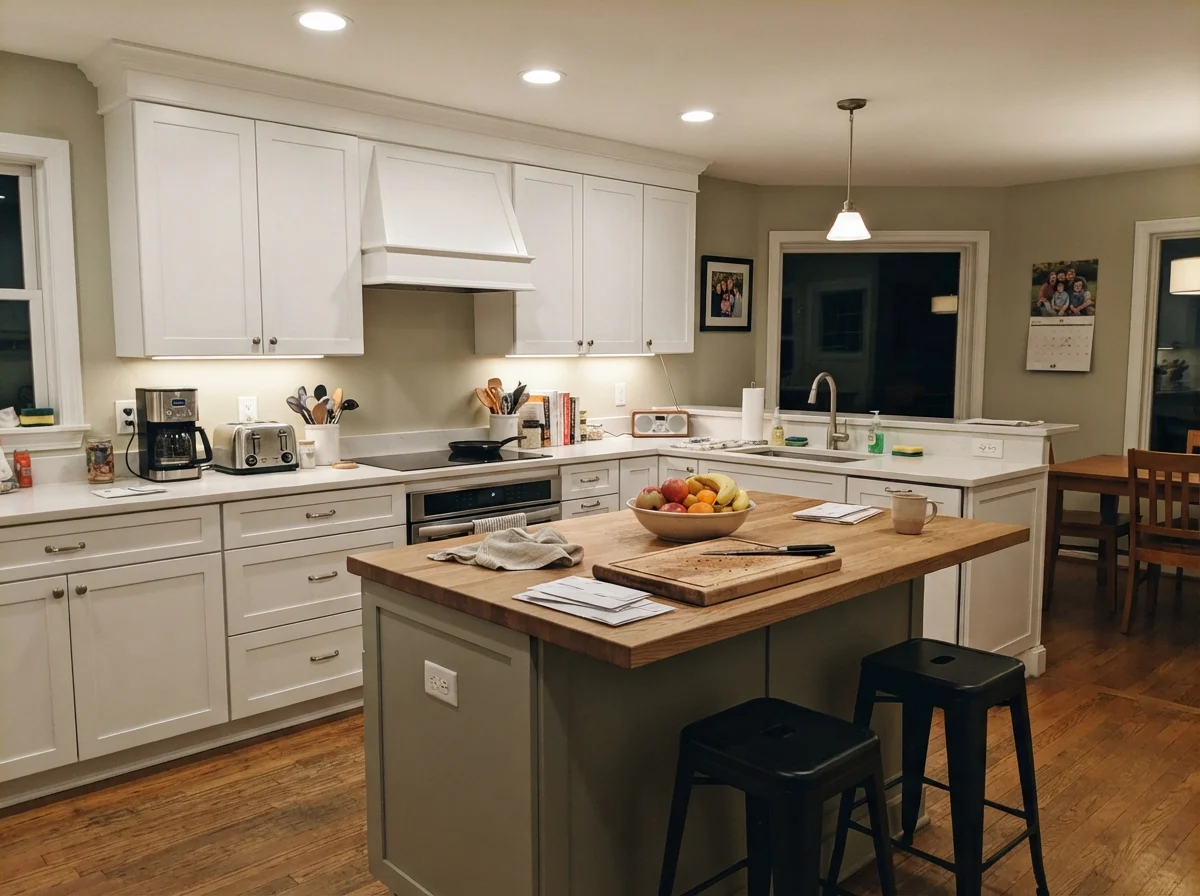
We used it in eggshell on our walls and later tested satin on a kitchen island. If you're going to put it on cabinetry, make sure your finish is satin—it cleans better and has just enough sheen to catch the light. Keep the uppers or the perimeter cabinets a warm off-white like White Dove OC-17 so the space stays open.
Here is my single warning on kitchen stone: check your counters before you buy your paint. If you have older green-flecked granite or green veining in your marble, October Mist will fight it. The two greens rarely agree. The cool, clear green in stone will make this muted, earthy sage look dirty and yellowed. When the countertops carry strong green flecks, do not try to match them with sage; stick to a true warm neutral like Revere Pewter HC-172 or Pale Oak OC-20 and let the stone carry the color alone.
Bathrooms: The Good, the Bad, and the Windowless
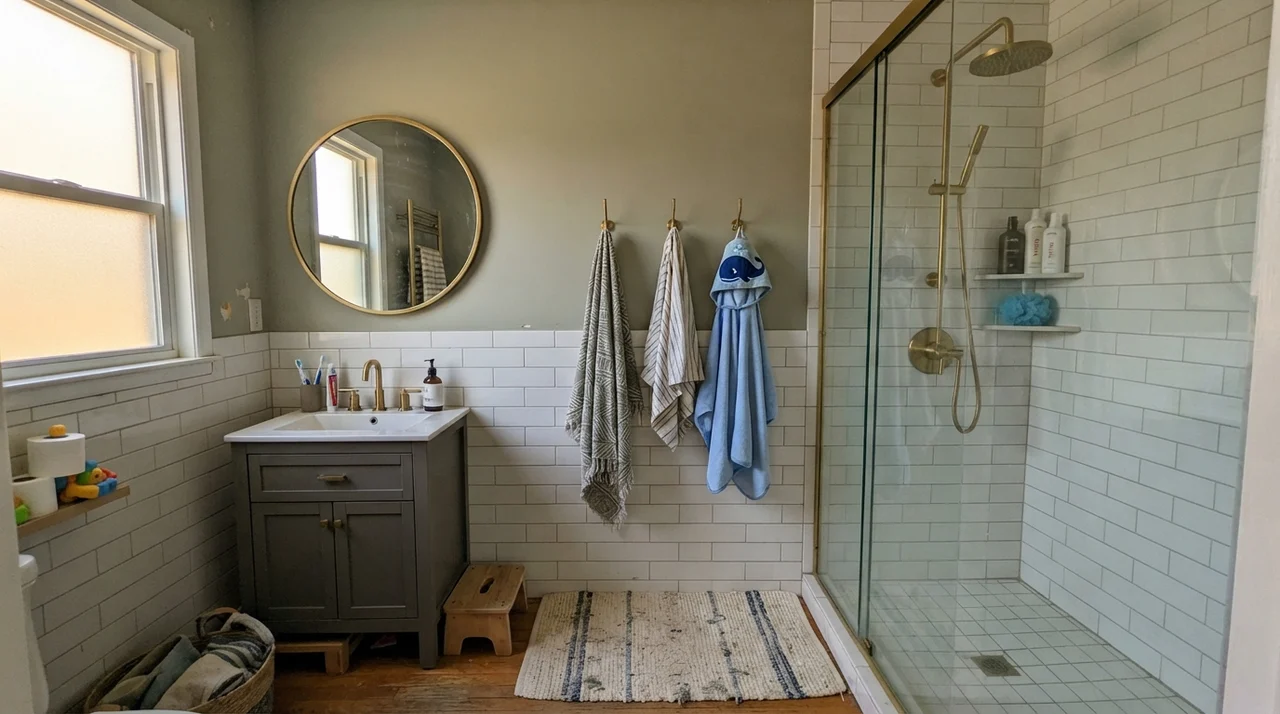
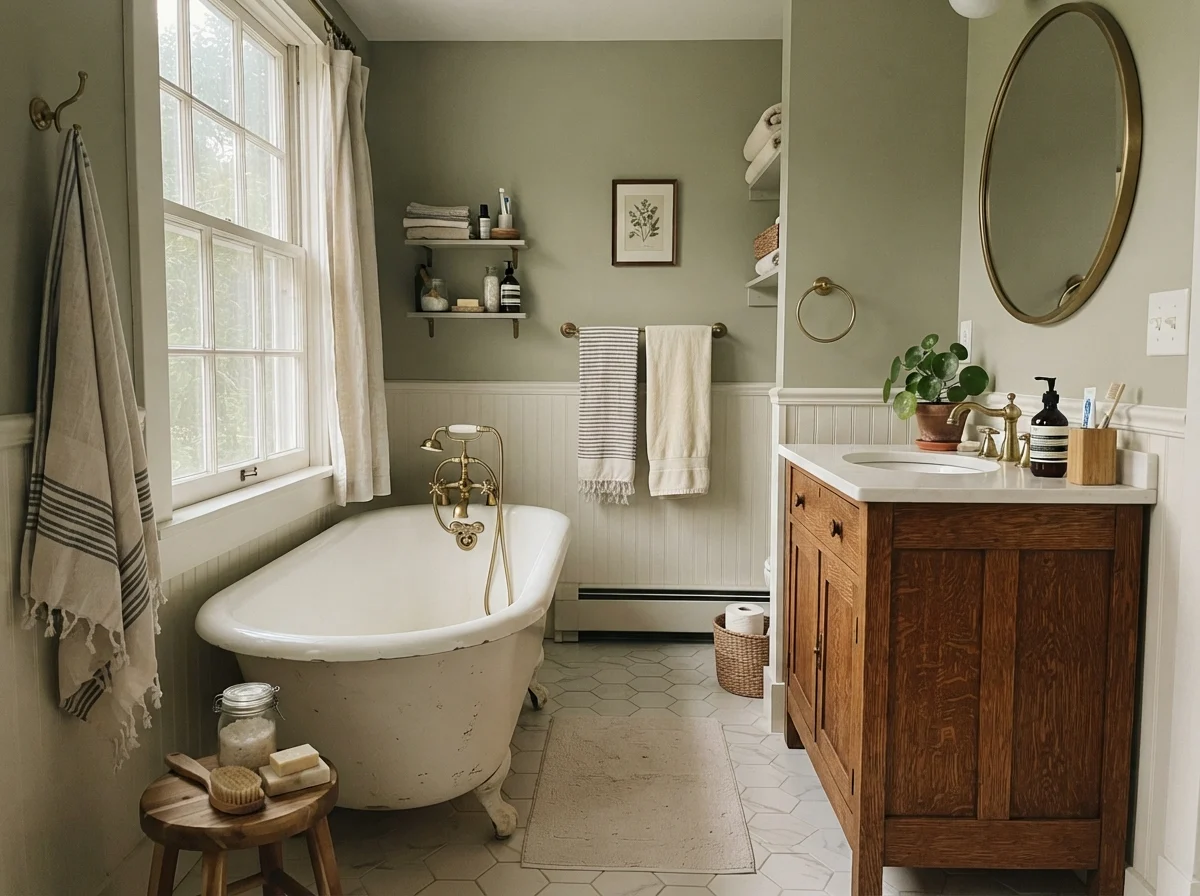
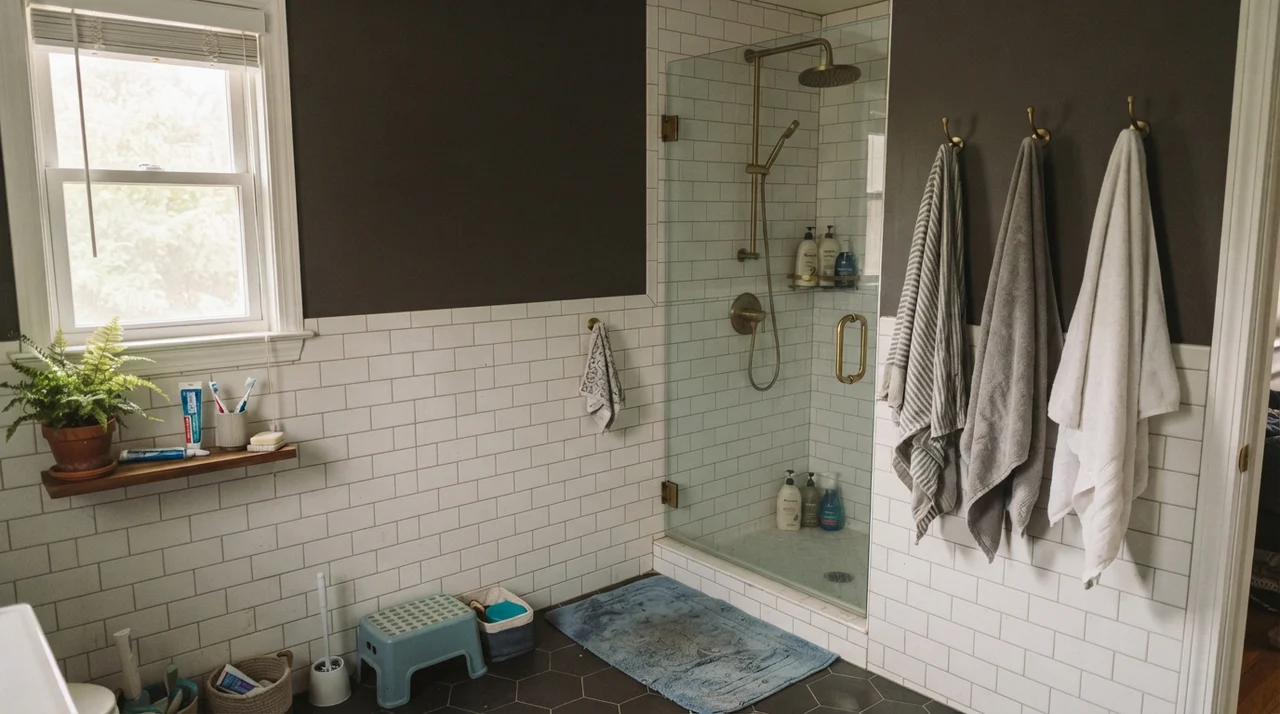
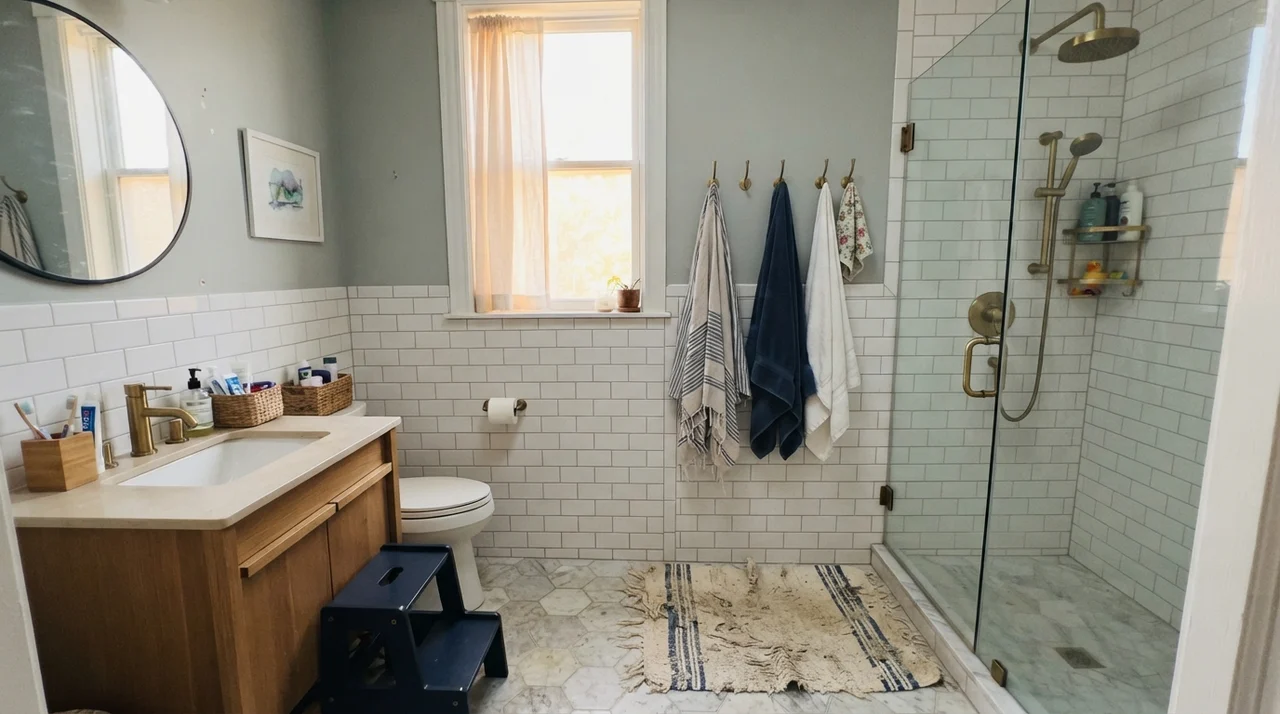
Bathrooms are tricky ground for any mid-tone paint. A bathroom with subway tile wainscoting and natural light is heaven for October Mist. The crisp white of the porcelain and tile acts as a clean border, preventing the sage from feeling muddy.
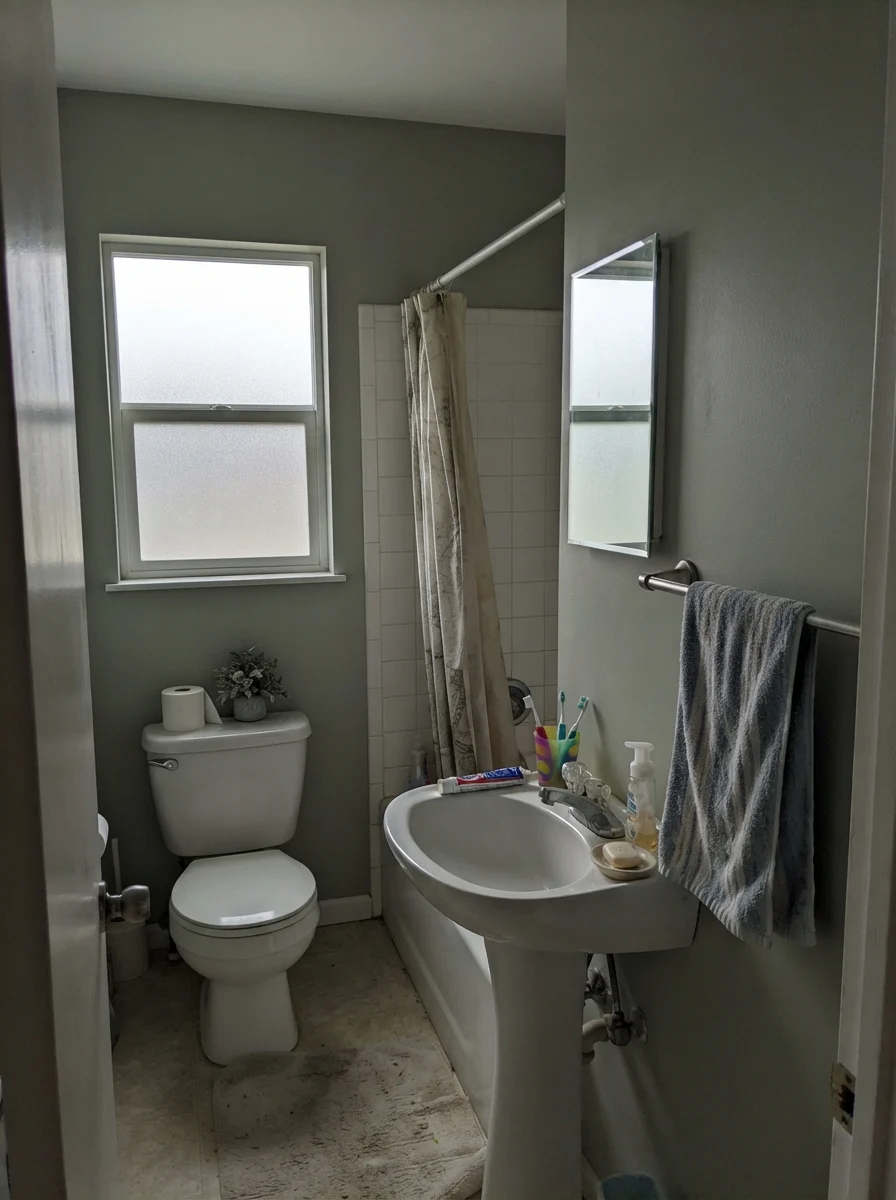
Now let's talk about the other side of the coin. What happens when the bathroom doesn't have a big window, or sits on the north face of the house during a gray November drizzle? This is where people get unpleasantly surprised. Look at how quickly that pretty sage recedes when the light turns flat or cool:
When people tell me they painted October Mist and ended up with 'hospital waiting room walls,' this is almost always what happened. They saw a photo of a sun-drenched master bath, loved it, and rolled it onto a windowless powder room under old fluorescent or cool LED tubes. Without sunlight, the yellow pigments fall asleep, and all you have left is a tired, chalky gray.
October Mist is green with the volume turned down by gray. If you starve it of daylight, the green leaves entirely, leaving behind a color people describe as sad rather than calm.
Sunrooms, Living Spaces, and Hallways
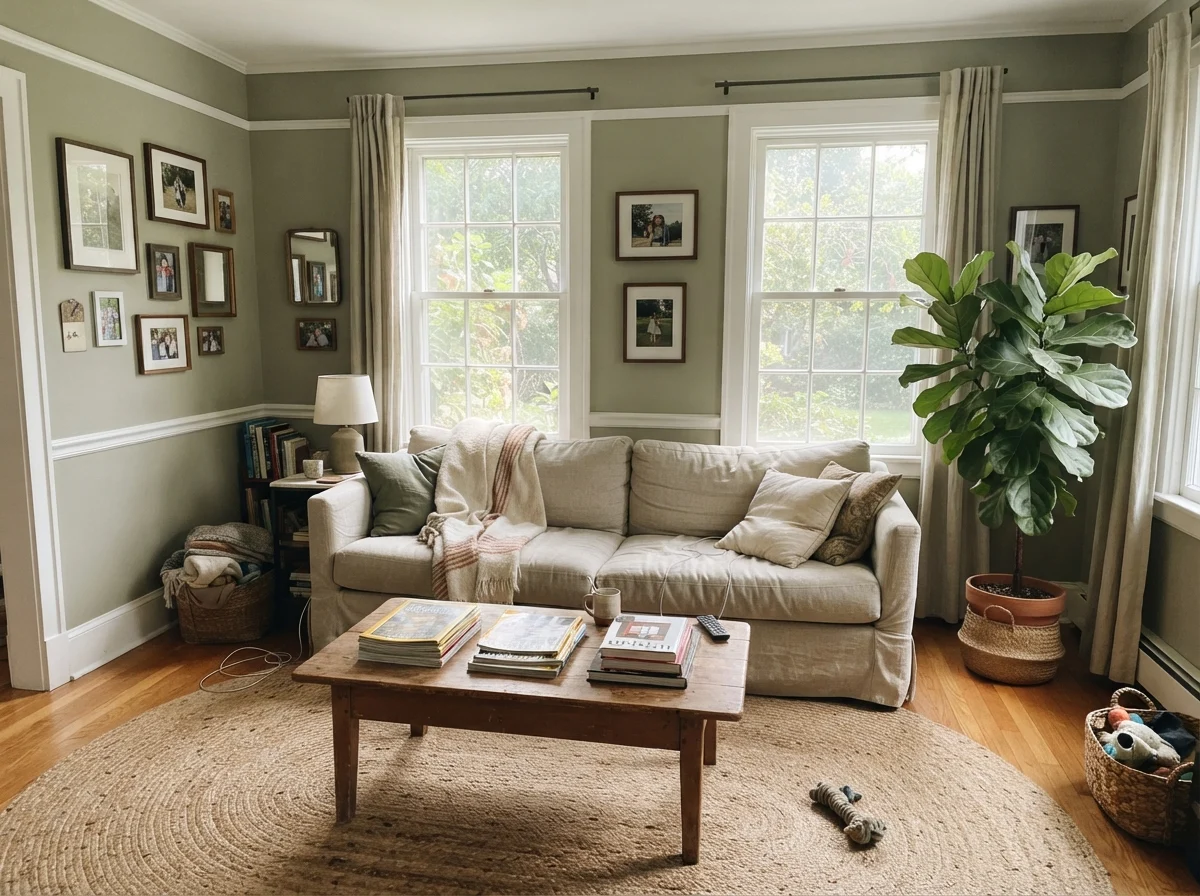
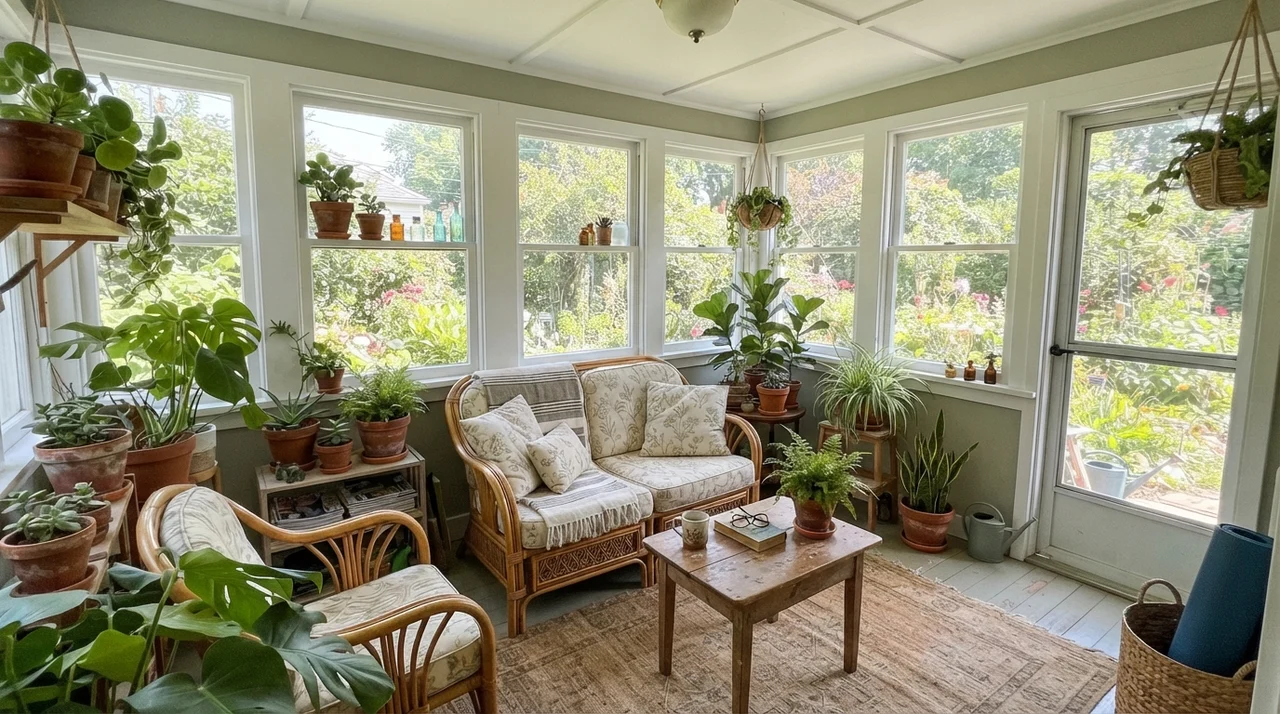
Where October Mist truly sings without hesitation is anywhere daylight floods the walls from multiple angles. In a sunroom wrapped in glass, or a generous living room with south-facing windows, the color sits at its absolute best. It brings the outdoors inside without looking like a staged garden center.
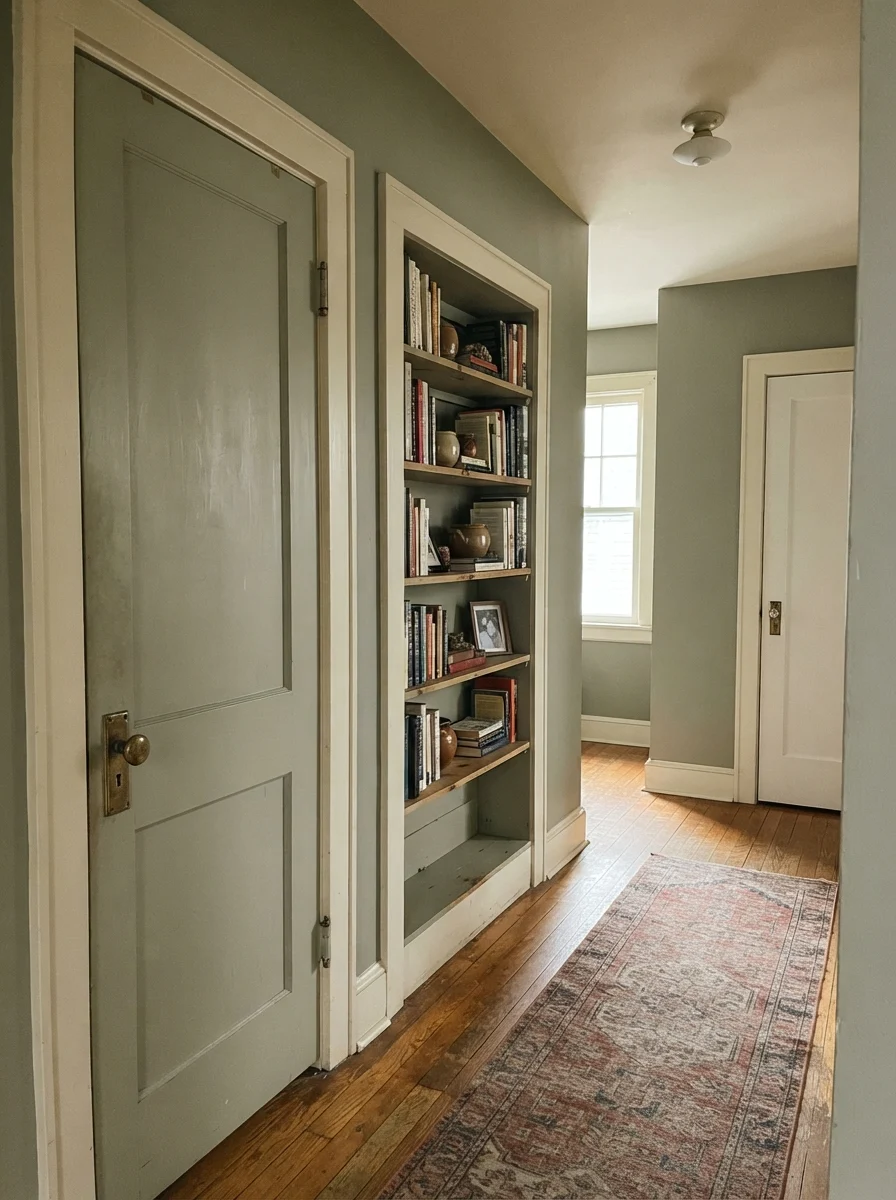
It also functions wonderfully on architectural details. In older houses where you don't necessarily want all four walls covered in color, using it on an interior door, a pantry door, or a run of hallway built-ins brings character to otherwise neutral spaces.
The Honest Fail: Where October Mist Does Not Belong
Every paint has a place where it should never be applied, and on my blog I believe in showing the mistakes before you spend two hundred dollars on paint and tape. The complaints about October Mist are remarkably consistent, and they almost always come down to three specific situations:
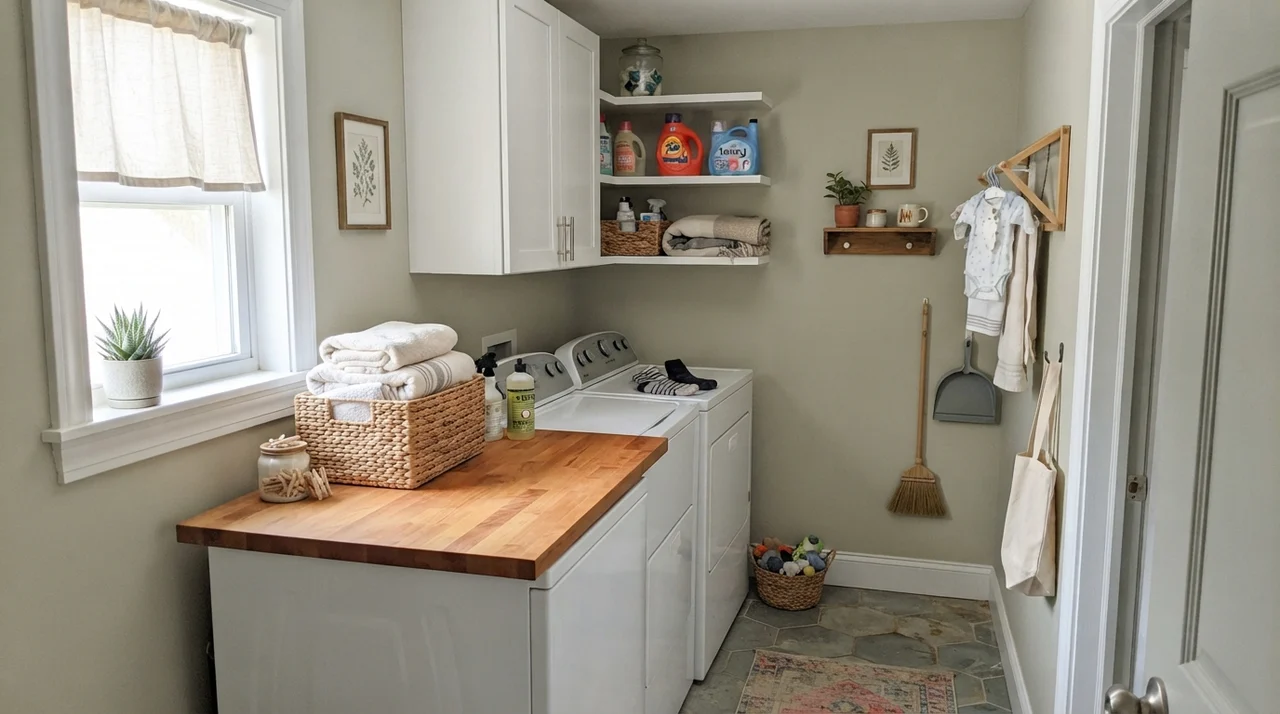
- A dim, windowless space: In an interior hallway or a windowless laundry room, low light strips out the green. You end up with a flat, drab putty that looks unpainted and sad.
- Orange-toned honey oak or red cherry: Because October Mist has a yellow base, pairing it with honey oak cabinets or orange-toned 1990s floors creates an unpleasant muddy yellow-olive cast. The floor and wall melt together in the worst way.
- Green-flecked granite or vintage tile: Cooler greens in stone expose the gray-yellow undertones of October Mist, making the walls look grimy.
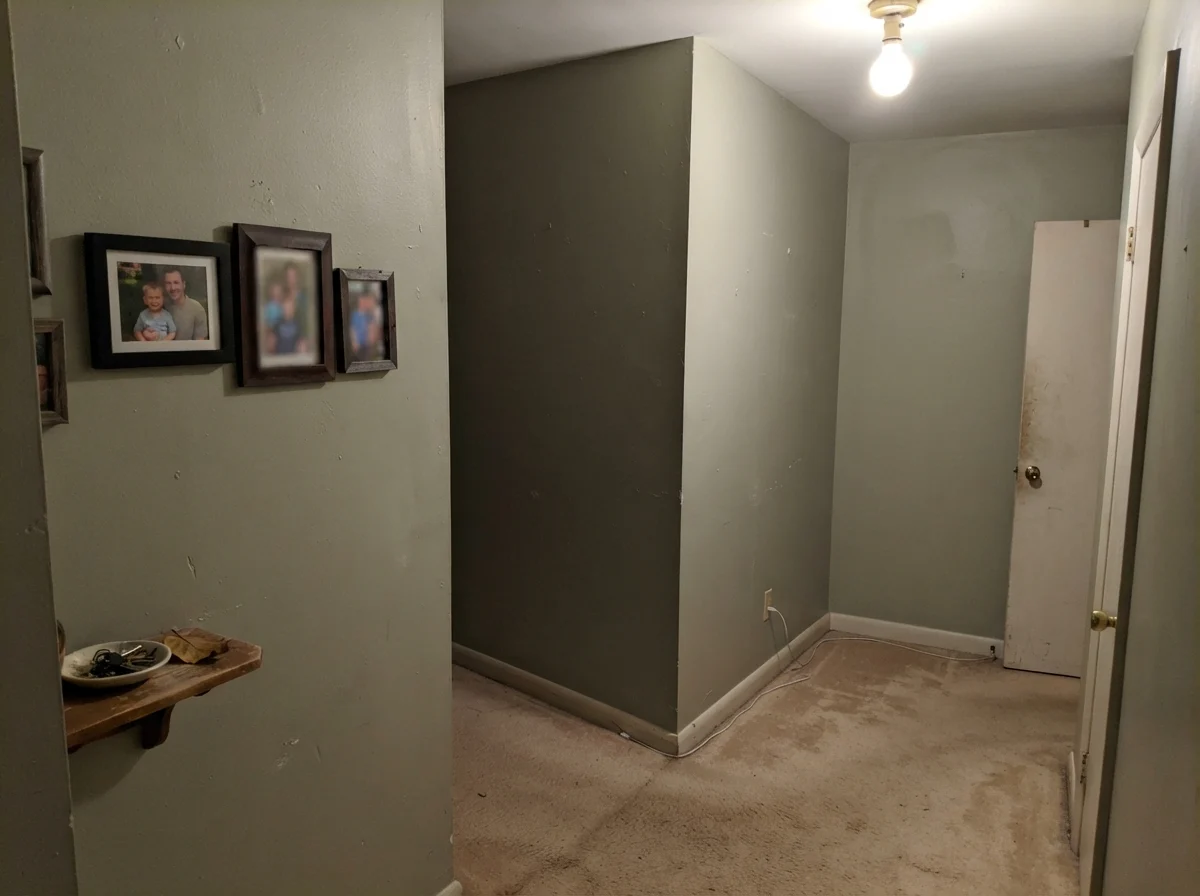
Here is what happens when you roll October Mist into a windowless hallway corner under a single ceiling fixture:
It's not pretty, is it? That is why you never paint a windowless entryway or hallway with this shade unless you plan on keeping high-CRI 2700K lighting on all day long. If your hall is dim, step lighter to Vale Mist 1494 or choose a clear neutral.
Taking It Outside: Exterior Low-Lustre
Can you use October Mist outside? Absolutely. On horizontal siding, shutters, or an entryway door, the direct sunlight keeps the yellow-green pigment bright and clear. It gives a home a grounded, organic presence that looks established rather than brand new.
Just be careful if your property is nestled deep under heavy, mature oak trees or dense evergreens. In deep shade, exterior siding can recede into the foliage and look surprisingly dark. But out in open golden-hour light, it is genuinely handsome.
Living With It Long-Term: Scrubbing, Touching Up, and Sheen
Here is what thirty years of paint rollers will teach you about sheens: never put flat paint in a room where anyone lives, eats, or walks. For living rooms, bedrooms, and home offices, paint October Mist in eggshell. It retains the color's quiet depth without developing shiny rub marks when you brush against it. On trim and millwork, stick to semi-gloss. On bathroom vanities or kitchen lowers, pay the extra money for a good satin cabinet enamel.
In our daughter's bedroom, that eggshell held up through five years of high school backpacks, stray laundry baskets, and dirty hands. When something scuffed the wall near the closet, it scrubbed clean with a damp microfiber cloth and a drop of dish soap without burnishing the finish. Five years in, it hadn't yellowed, faded, or separated. If you apply two coats over a good primer, Benjamin Moore's color holds its ground gracefully.
How October Mist Compares to Other Muted Sages
If you aren't completely sold on October Mist, or if your lighting conditions make you nervous, here is how it stacks up against the other popular muted sages on the market:
Is October Mist too trendy to hold up over time?
It carried the 2022 Color of the Year title, but because it is heavily muted with gray, it behaves like an earthy neutral rather than a fleeting trend. In daylight, it looks classic and calm. It won't look dated within five years the way high-saturation greens do.
What is the best trim color for October Mist?
Benjamin Moore White Dove OC-17 is the gold standard. Its soft creaminess prevents the sage from looking sharp or sterile. If you want a crisp contrast note on a door or handrail, pair it with Wrought Iron 2124-10.
Why does October Mist look gray in my hallway?
October Mist has an LRV of 47 and relies heavily on natural light to activate its yellow-green undertones. In an interior hallway or room lacking windows, the green fades away, leaving behind a flat, shadowy gray-green.
Can I use October Mist with honey oak cabinets?
I would avoid it. The warm yellow base in October Mist tends to clash with the orange tones of honey oak and red cherry, pulling the wall into a muddy, dingy olive. A cooler gray-sage like Evergreen Fog handles orange wood much better.
Susan's Verdict · Buy with Daylight
October Mist 1495 is worth the money if you have a bright bedroom, a sunlit home office, or a kitchen island that gets real daylight from a garden window. It gives you the quiet calm of green without shouting for attention, and it holds up to everyday life over five years without tiring your eyes. But if you have a windowless hallway, a dim north-facing den, or orange oak floors you aren't replacing, leave this can on the shelf. The room always decides the color, and October Mist demands natural light to keep its promise.