Color Diary · No. 39
Sherwin-Williams Black Magic: What Happens When a Wall Gives Nothing Back
Sherwin-Williams' inkiest near-black, reviewed honestly: the rooms it makes, the rooms it swallows, and the sheen mistake that ruins it.

Susan HartleySeptember 21, 2026 · 13 min read
Black Magic · Sherwin-Williams SW 6991
Hex#323132LRV3Undertonesneutral ink → faint blue undertone → velvety charcoal
In our last house, a 1990s center-hall colonial with eight-foot ceilings and more drywall than character, I decided to paint the interior doors black. It was the mid-2000s, and every magazine was showing black accents against warm cream trim. I went down to the local Sherwin-Williams store, picked up a gallon of something dark on a whim, and rolled three coats onto the powder room door on a Saturday morning.
By Sunday evening, I realized two things very quickly. First, a true dark color makes cheap brass doorknobs look like museum pieces and crisps up white trim like nothing else in the paint deck. Second, if you pick a black with zero light reflectance and put the wrong sheen on it, you will spend the next five years wiping off ghost smudges from family members who didn't know their fingers had oil on them.
That was my introduction to colors like Sherwin-Williams Black Magic (SW 6991). At an LRV of 3, Black Magic is Sherwin-Williams' inkiest near-black. It does not bounce light around a room; it absorbs it entirely. When used deliberately, it provides incredible structure and richness. When used without thinking through the lighting and sheen, it creates a dark, unforgiving cave. After thirty years of repainting rooms across three houses, here is what Black Magic is actually like to live with long-term.
The Undertone Behavior of SW 6991
Black Magic sits in the black deck family with an LRV of 3. Unlike straight carbon blacks that can look flat or dead in direct light, Black Magic carries a very faint cool, inky undertone. This keeps the color from looking like soot or chalkboard slate when natural daylight washes over it, though it shifts subtly depending on the light source.
warm sun
overcast, north light
dusk, rain, cool bulbs
Black Magic stays remarkably true across varying light because an LRV of 3 leaves very little pigment room for aggressive undertone shifts. However, direct south sunlight reveals its deep inky character, while 2700K incandescent lamps will pull it toward a warm espresso-black.
CaviarSherwin-Williams · see diary
BlackBenjamin Moore · see diary
Black MagicSW 6991
Tricorn BlackSherwin-Williams · see diary
OnyxBenjamin Moore · see diary
How Light Dictates Black Magic's Personality
When you put a paint with an LRV of 3 on a wall, you have to throw out everything you know about standard wall colors. Lighter paints reflect daylight and help illuminate shadowy corners. Black Magic does the opposite: it swallows light. That means the quality and direction of the light entering the room doesn't just change the tone—it determines whether the room feels sophisticated or suffocating.
In strong southern light, Black Magic reveals its depth. The slight inky undertone keeps the surface looking luxurious and grounded rather than chalky. But in low light or north-facing exposures, the walls stop functioning as a reflective surface and become an absolute boundary. The corners disappear, and unless you have strong, warm lamplight to define the living space, the room will visually contract.
Living Rooms, Sunrooms, and Main Bedrooms
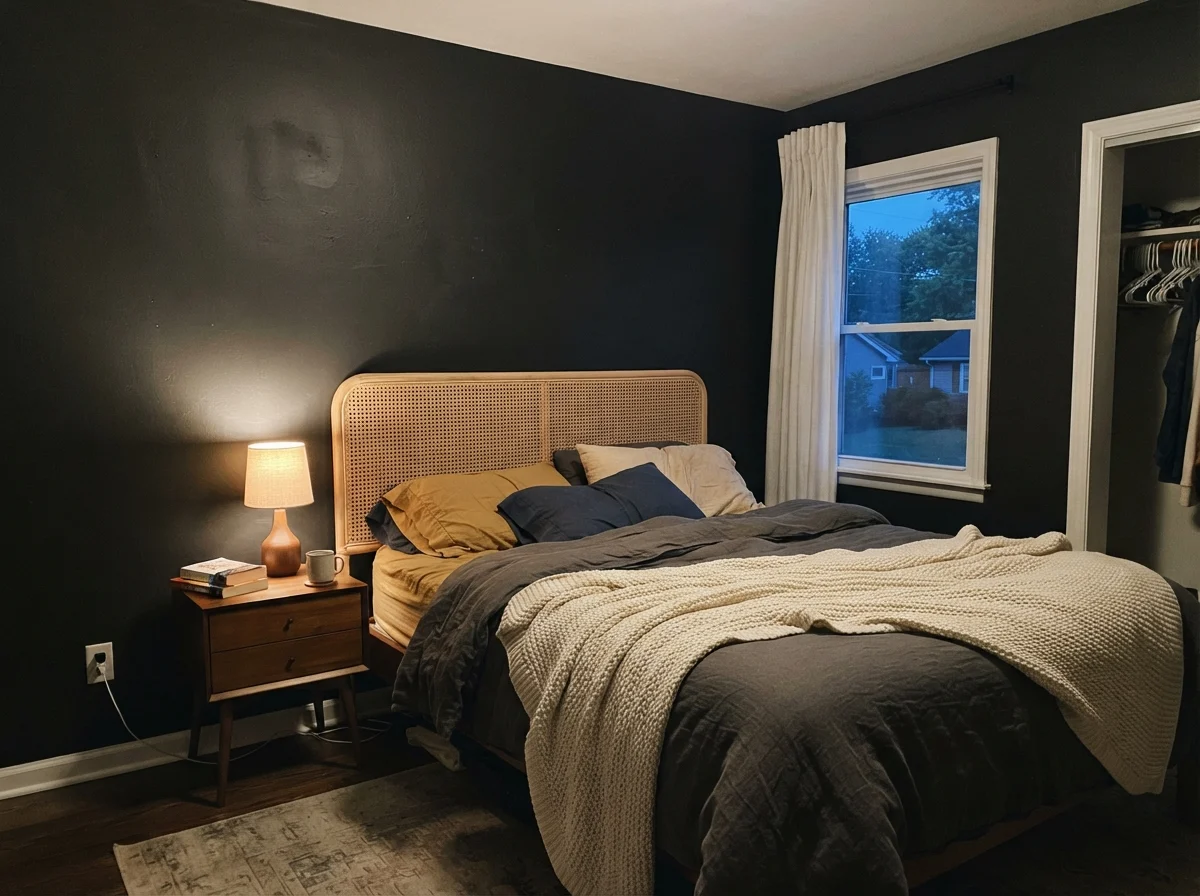
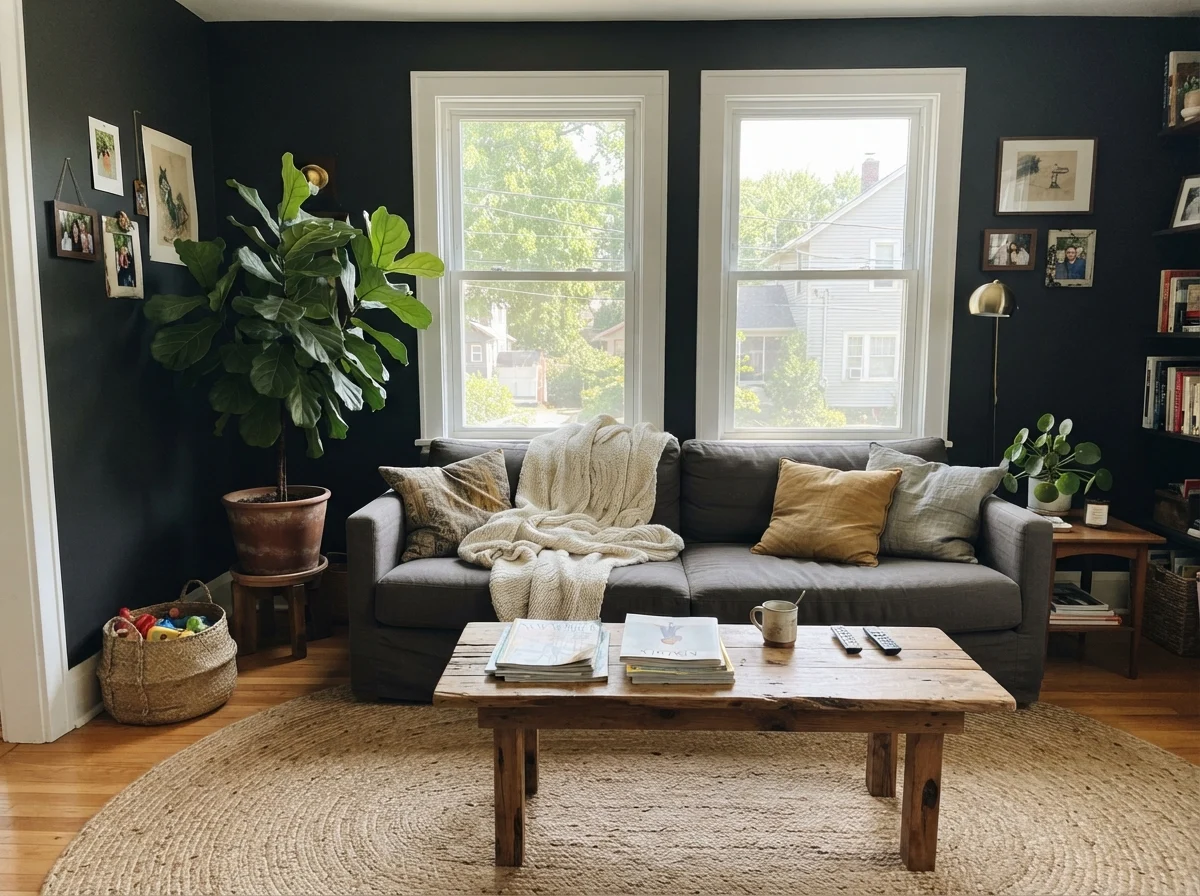
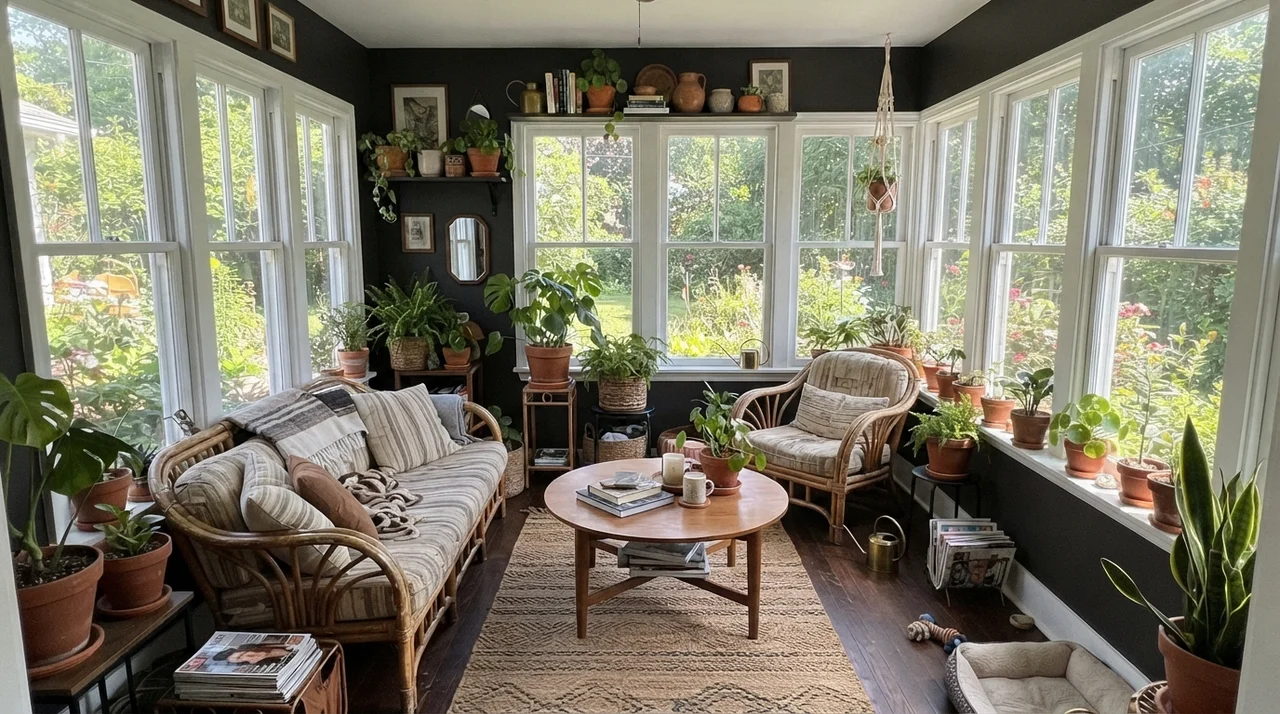
People often ask me if painting a whole living space black is just a passing internet fad that looked dated within six months. My answer is always: it depends entirely on the architecture and your windows. In our 1960s ranch, I wouldn't paint our main living area black because the ceilings are barely eight feet and we don't have floor-to-ceiling glass. But in a room with generous daylight, warm hardwood floors, and natural textures like jute and linen, Black Magic acts like an anchor.
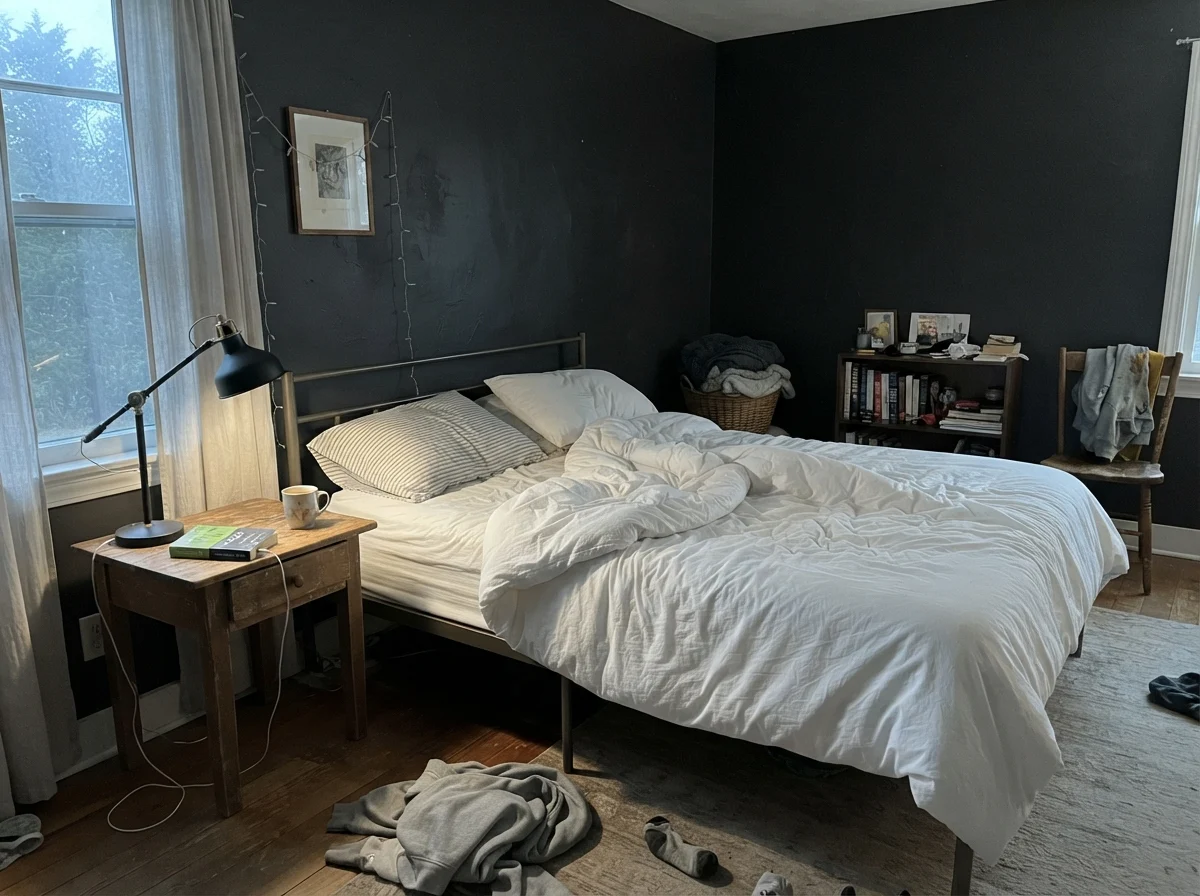
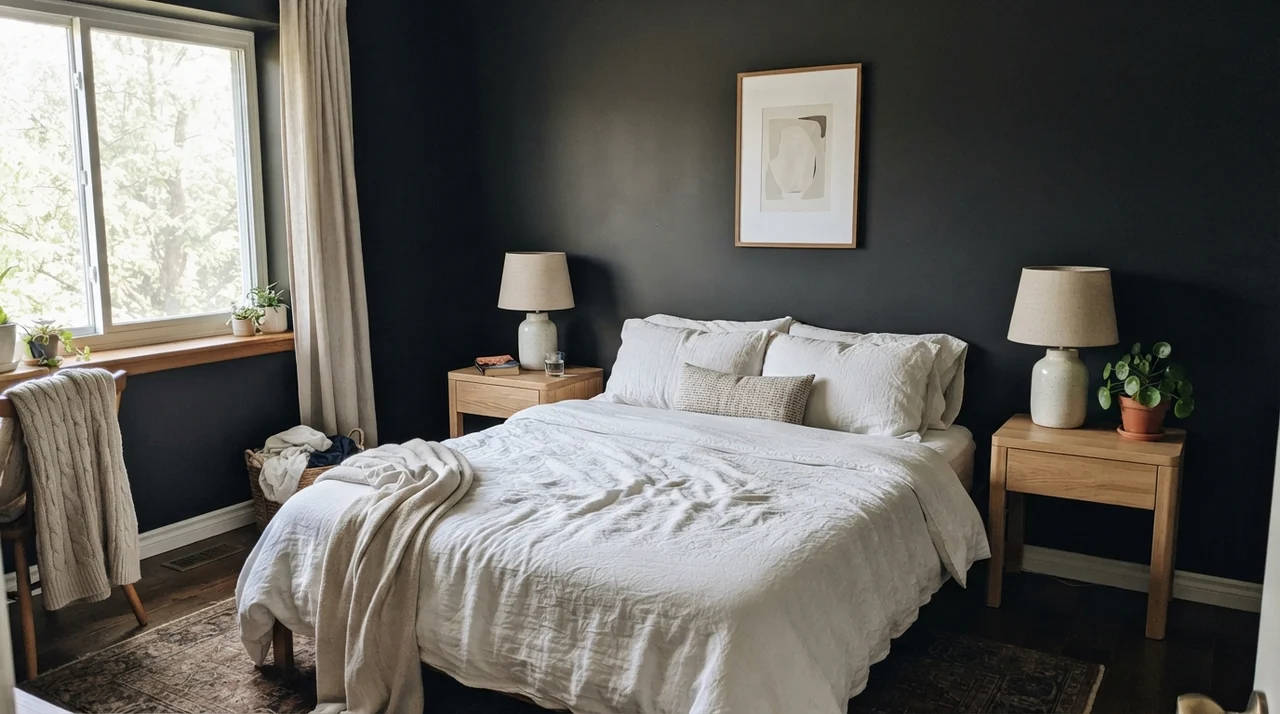
In a sunroom or a bright living room, the black recedes behind the greenery and window frames. The eye naturally travels past the dark walls toward the outdoors, creating a dramatic frame. In bedrooms, Black Magic creates an intimate, cocoon-like atmosphere, provided you break up the mass with crisp white linen bedding and warm oak furniture.
Nurseries and Teen Bedrooms: Practical Warnings
I have raised three kids across three houses, and if there is one place where high-contrast dark walls need careful thought, it's children's spaces. A dark wall in a nursery can look stunning when paired with light wood and soft white textiles, giving the baby's sleep space a restful calm. However, as that child grows into a toddler, dark walls will show every scuff, thrown toy mark, and lotion-covered handprint unless you use the right sheen.
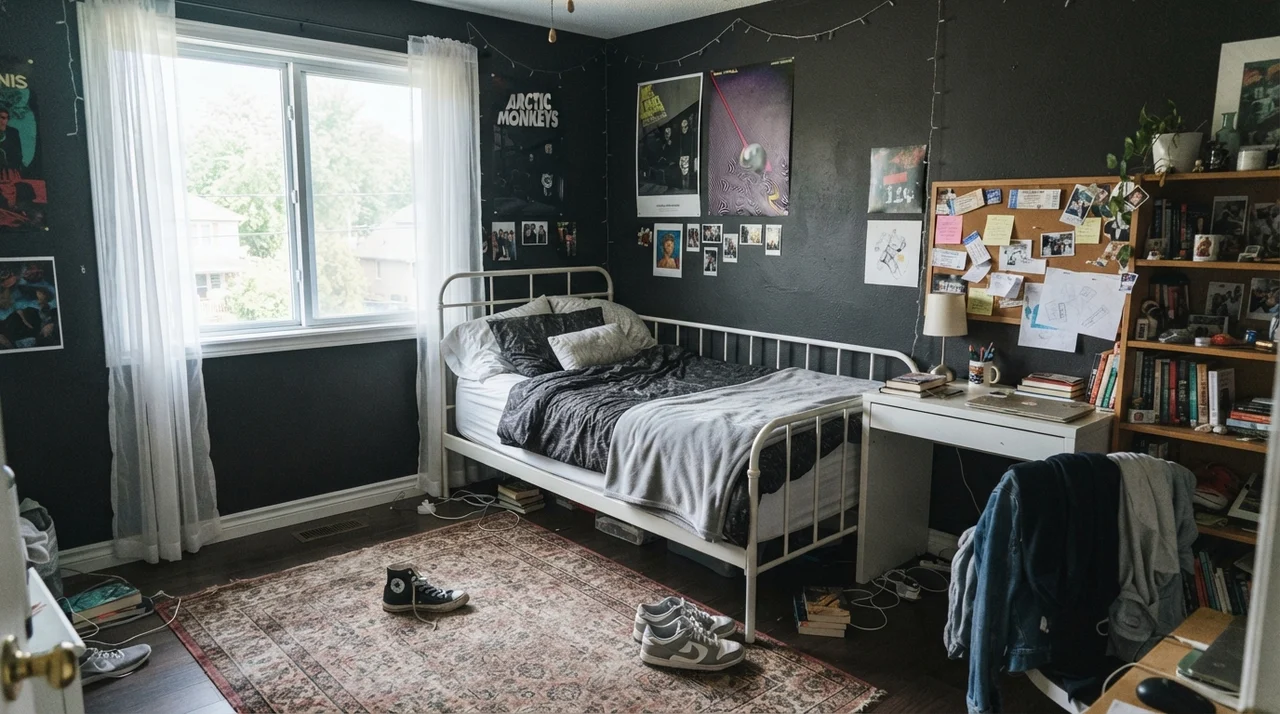
For a teenager's room, Black Magic gives an immediate feeling of maturity and independence. It pairs effortlessly with simple metal bed frames, corkboards, and shelf storage. But be prepared: touch-ups on near-black walls almost always flash. If your teenager knocks a desk corner into the wall, a quick dab with leftover paint will leave a noticeable sheen difference unless you roll the entire section from corner to corner.
Kitchens: Islands, Uppers, and Cabinet Reality
If you're thinking about painting kitchen cabinets Black Magic, let me give you the unvarnished five-years-in truth. Painting an entire kitchen of upper and lower cabinets in pure black requires serious commitment to dusting. Black surfaces show flour, water spots, and bread crumbs faster than white cabinets ever will. One dry aside: I never knew how much dust drifted through my kitchen until I painted a dark baseboard near the pantry.
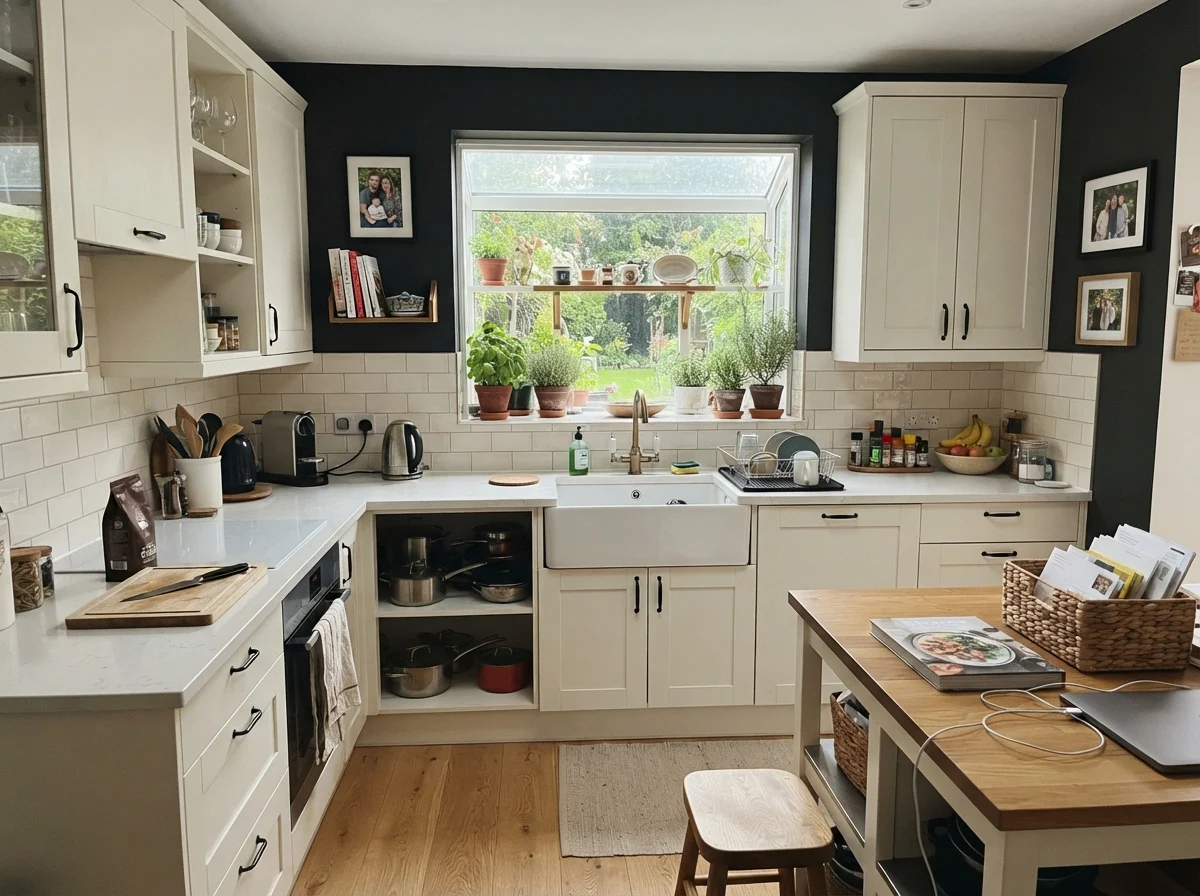
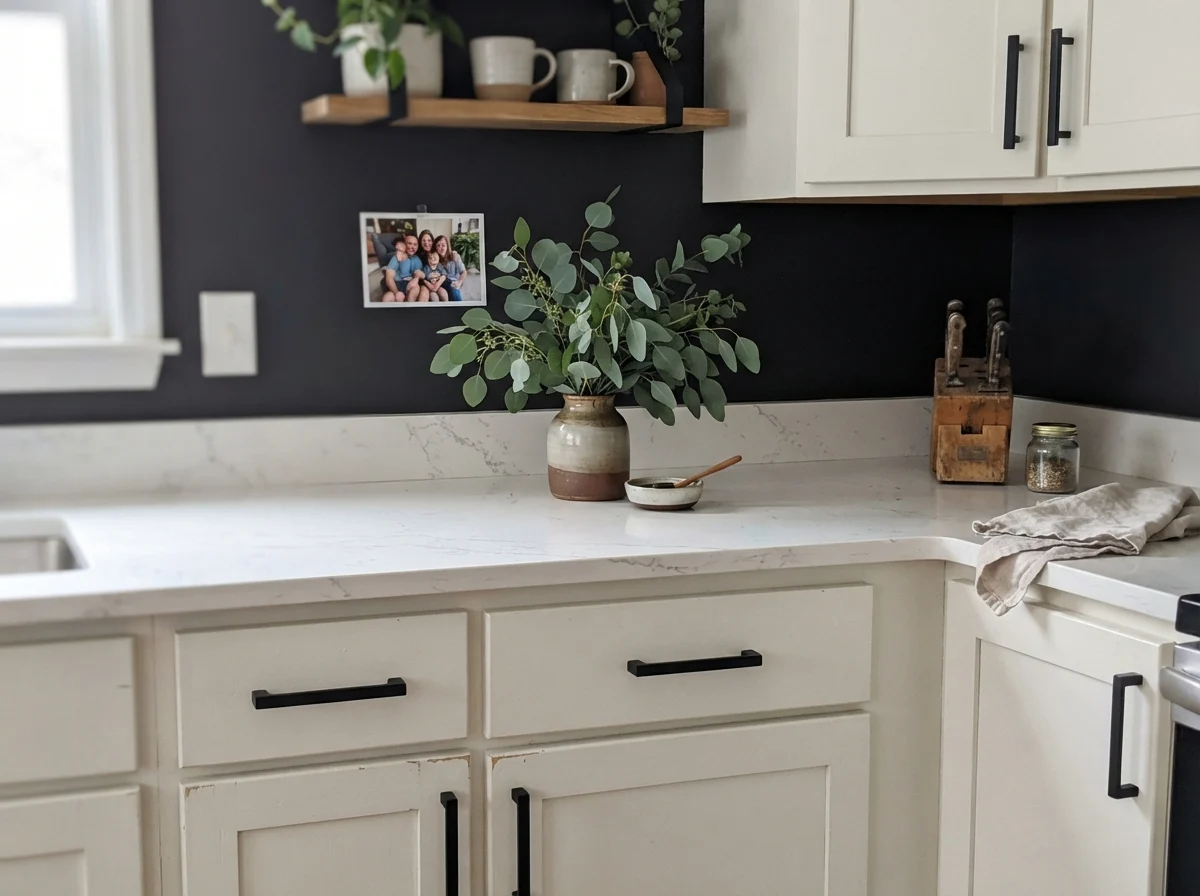
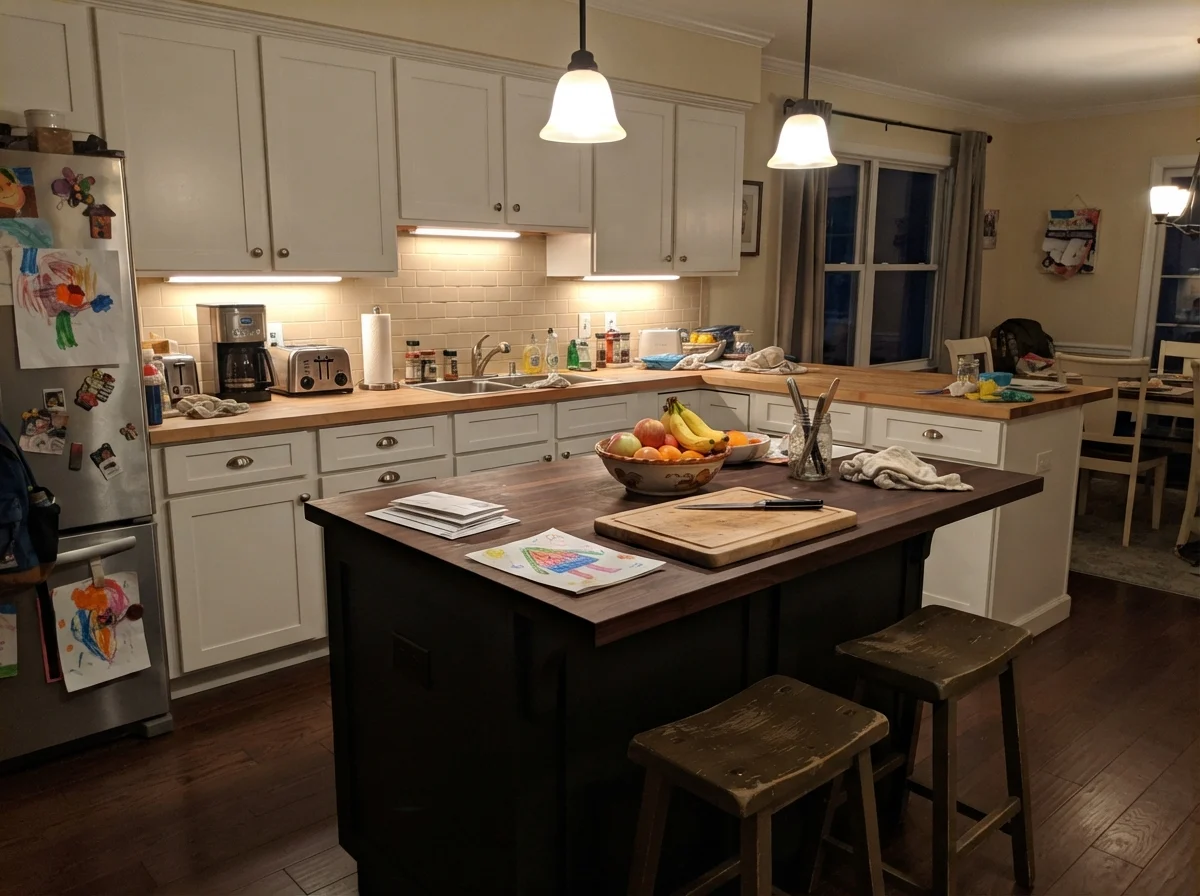
Where Black Magic shines brilliantly is on kitchen islands and lower cabinets when paired with white or off-white uppers. Keeping the black below eye level grounds the space without shrinking the room. The contrast against white quartz counters, light oak floors, and brass hardware is striking. When we sold our second house, the real estate agent noted that our dark kitchen island made the builder-grade layout look custom.
Bathrooms and Secondary Rooms
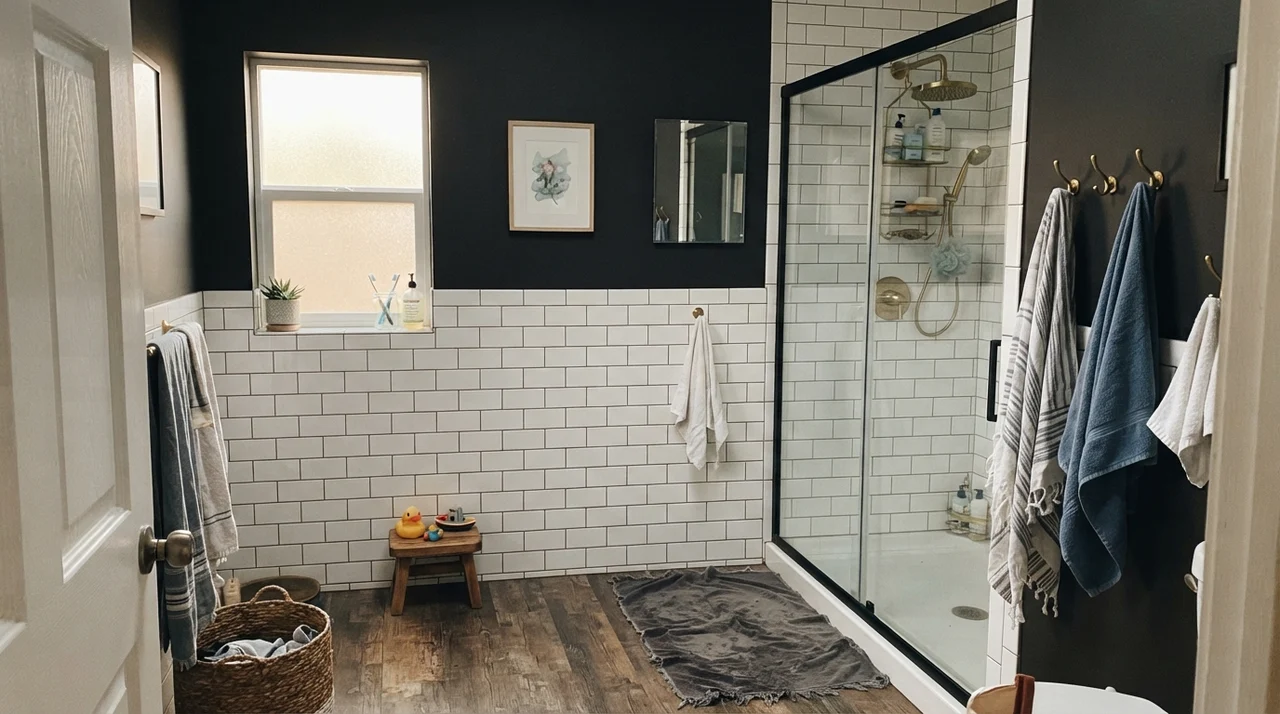
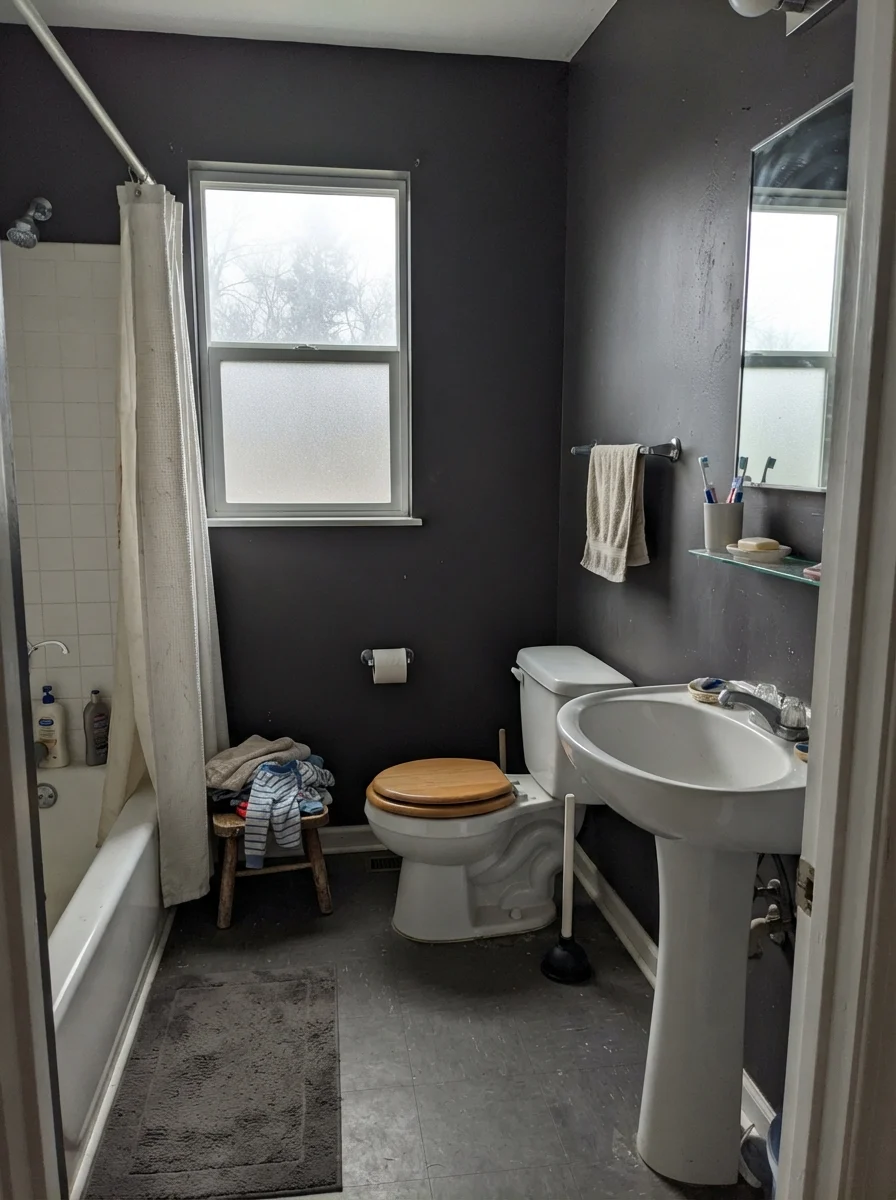
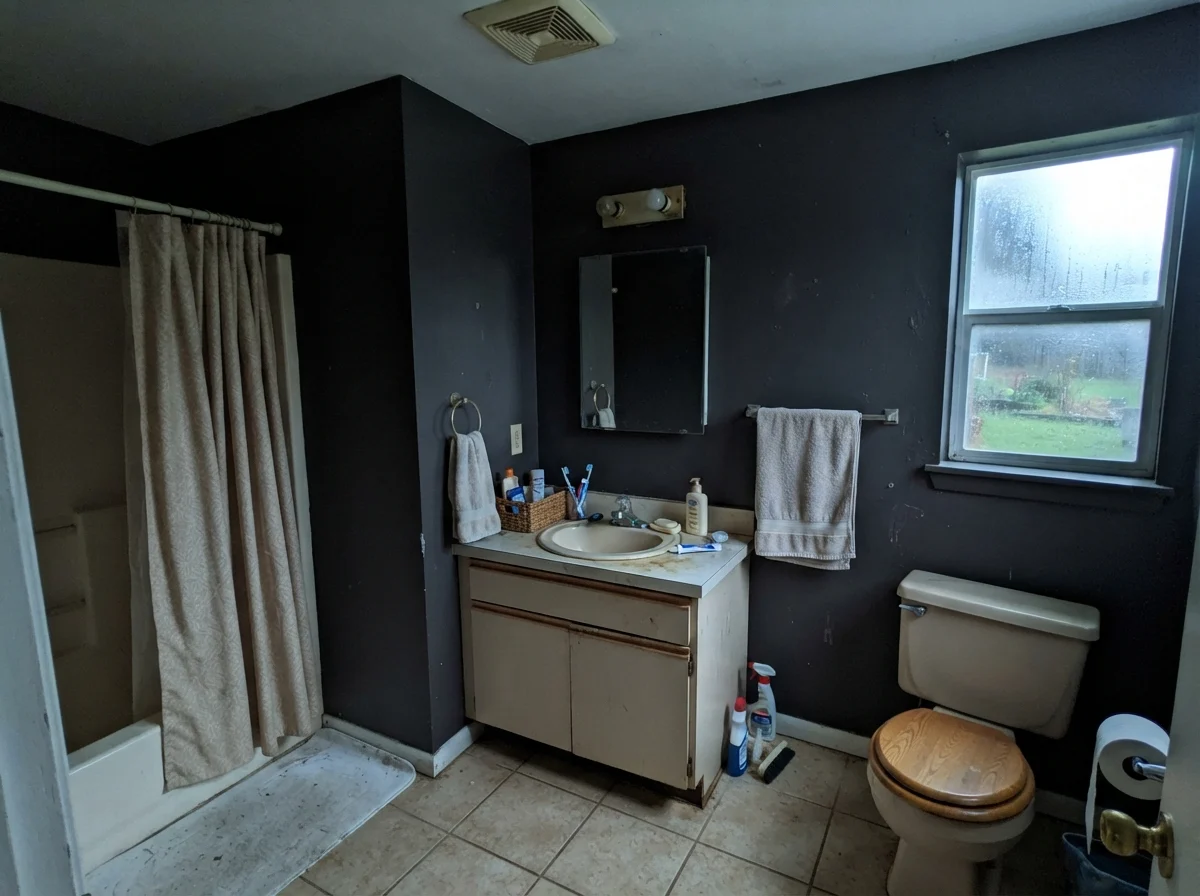
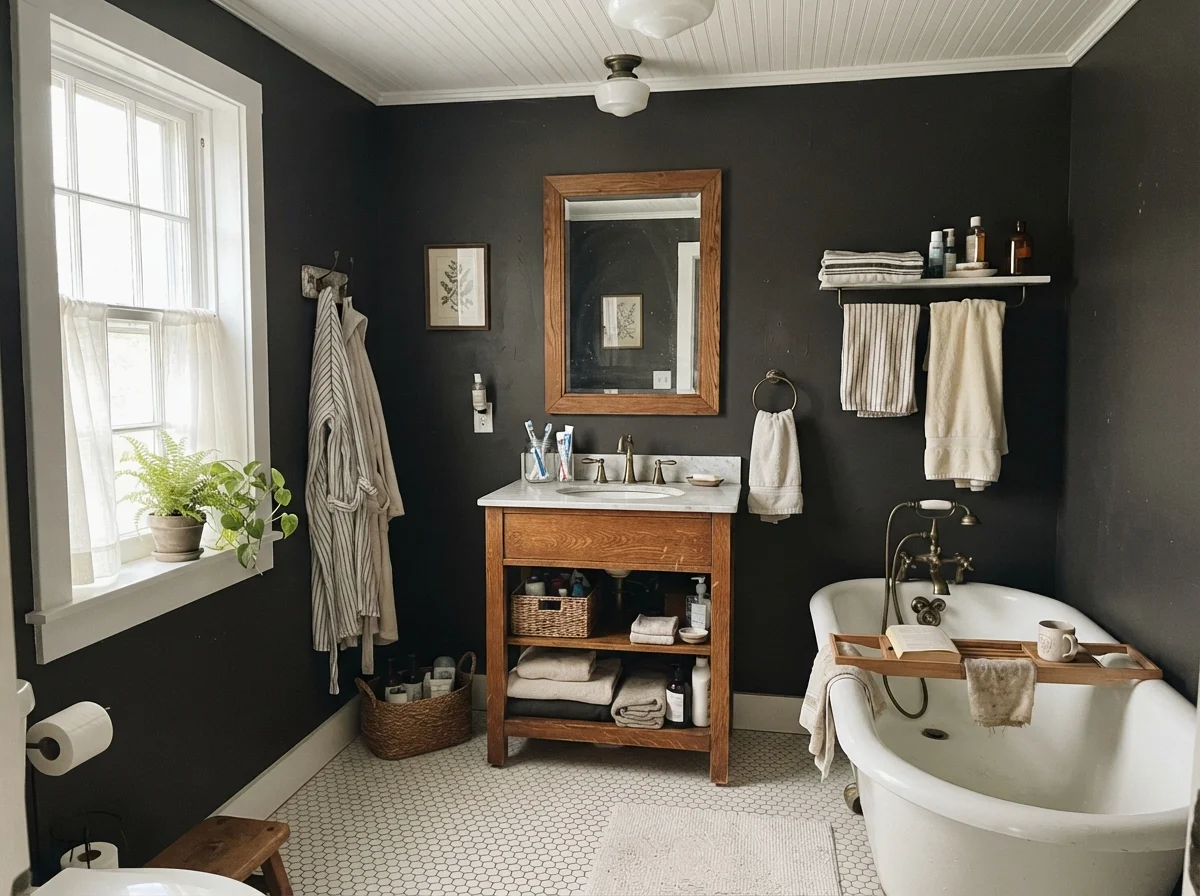
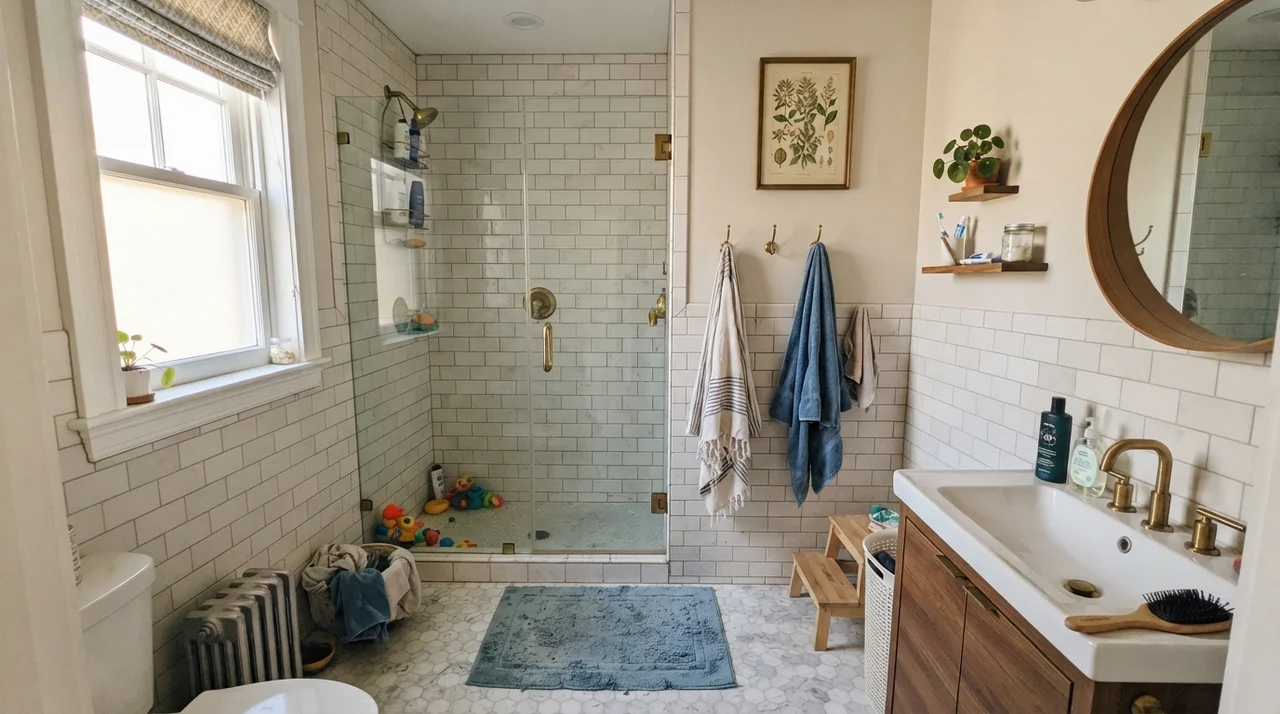
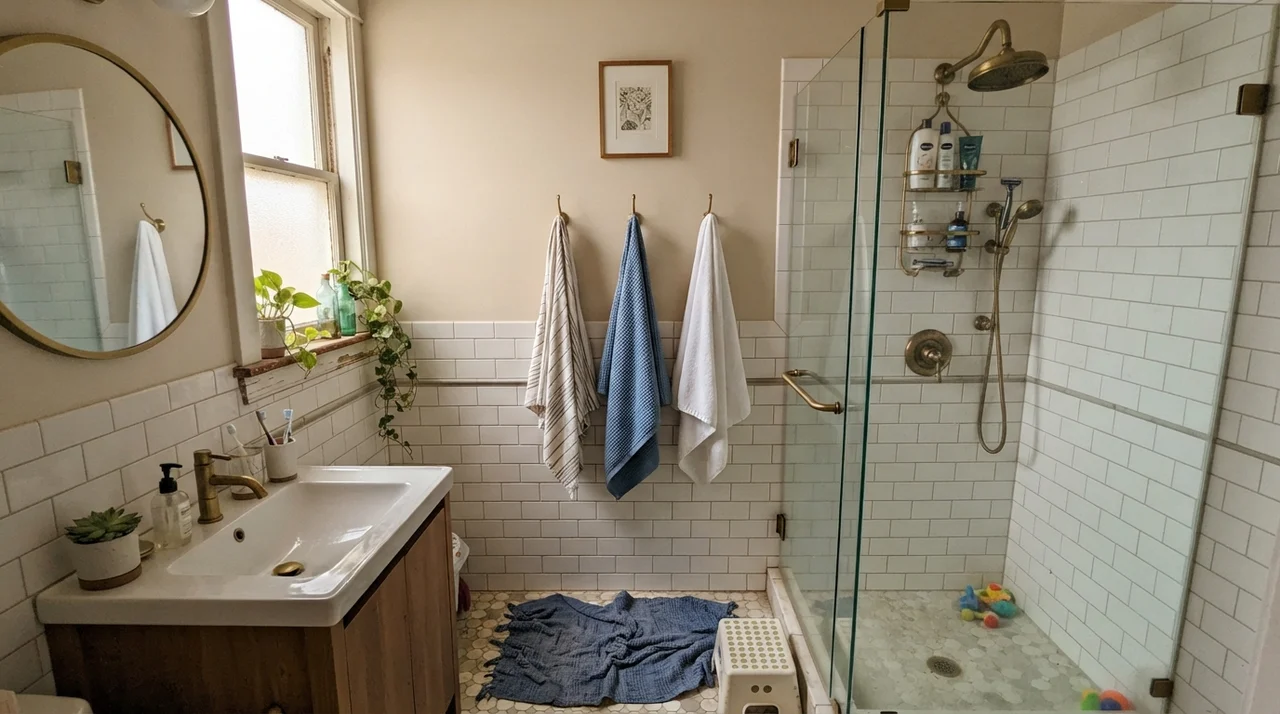
Powder rooms and bathrooms are often the best testing ground for Black Magic. In a small bathroom with classic white subway tile or a vintage clawfoot tub, painting the upper walls in Black Magic is pure design leverage. The black makes the white porcelain look cleaner, the chrome or brass look richer, and the warm wood vanity pop.
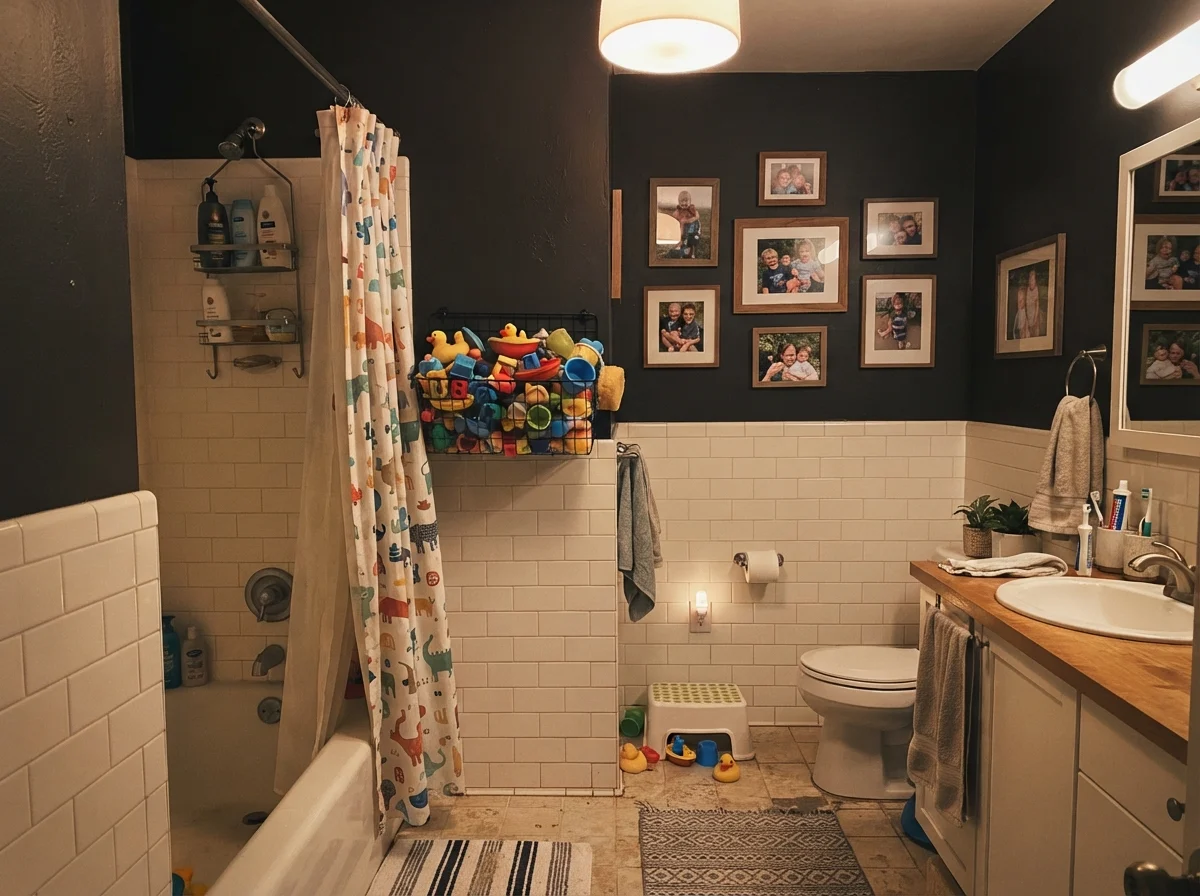
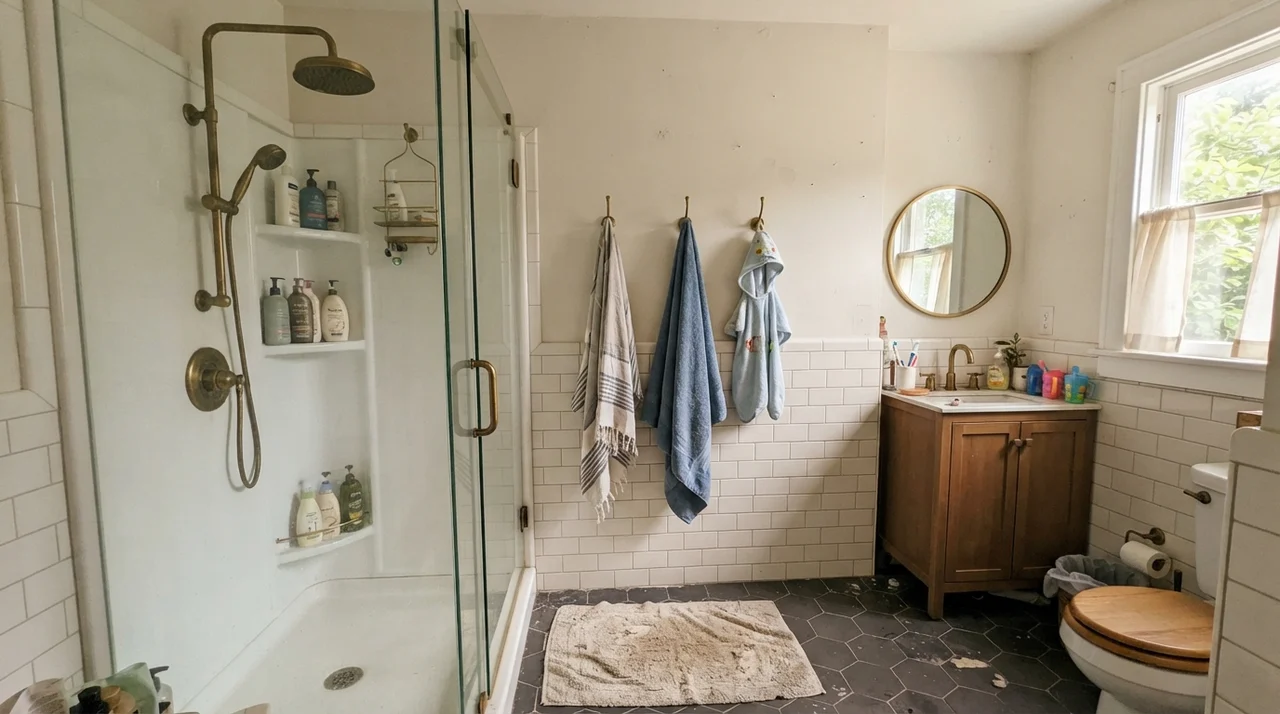
Even in a busy kids' bathroom, Black Magic works above a tile wainscot because the tile takes the brunt of the water splashes and soap splatters while the dark upper wall adds style. Just make sure you use an eggshell or satin finish on bathroom walls so moisture can be wiped down without leaving water trails.
Doors, Millwork, and Built-ins
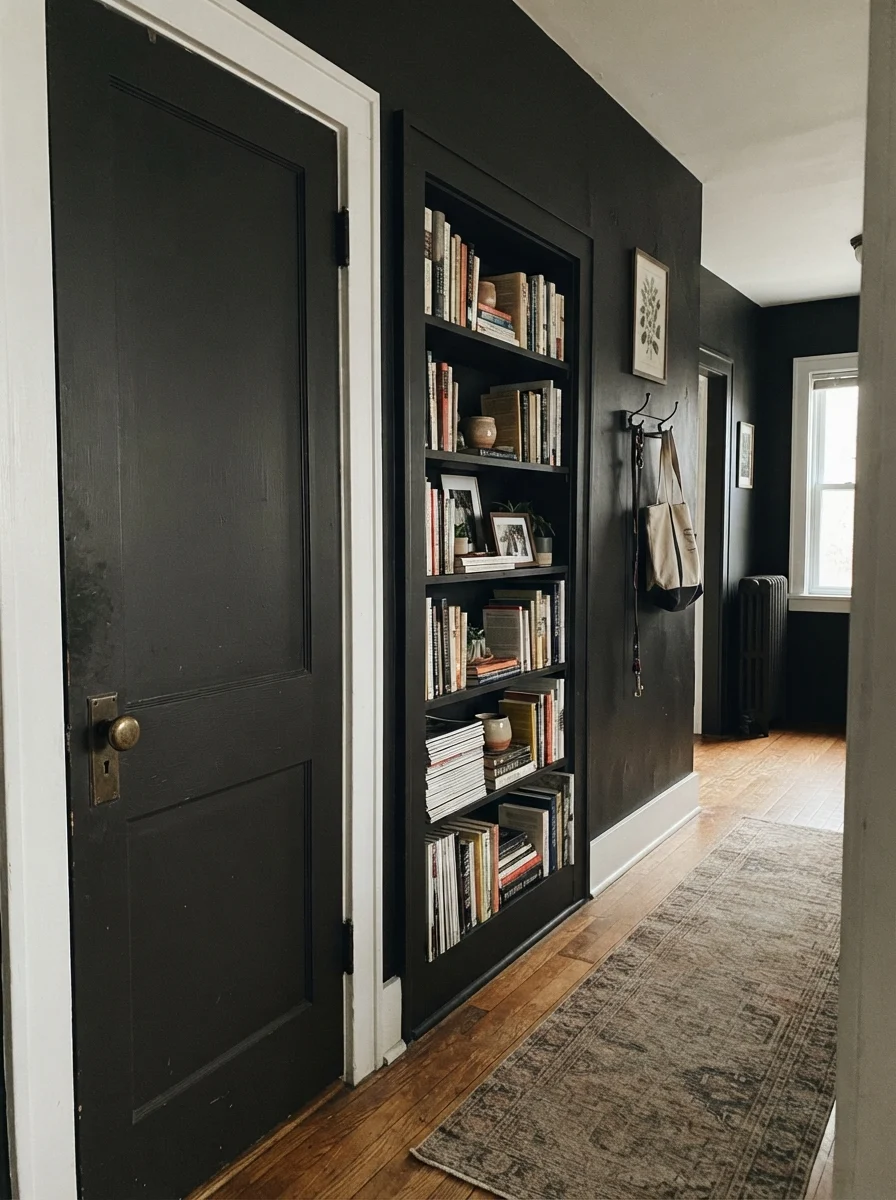
One of the easiest, most cost-effective upgrades you can make in any house—whether it's a dated 1970s split-level or a newer tract home—is painting interior doors Black Magic in a semi-gloss sheen. A dark two-panel door against a warm off-white hallway instantly elevates the perceived quality of standard builder trim.
Built-in bookshelves are another winning application. When you paint the backing and shelves of a bookcase in Black Magic, the architecture fades back, turning your books, brass accents, and family treasures into the focal point. It creates a rich, collected library feel without overwhelming the rest of the living space.
Exterior Siding: The Prep Rule
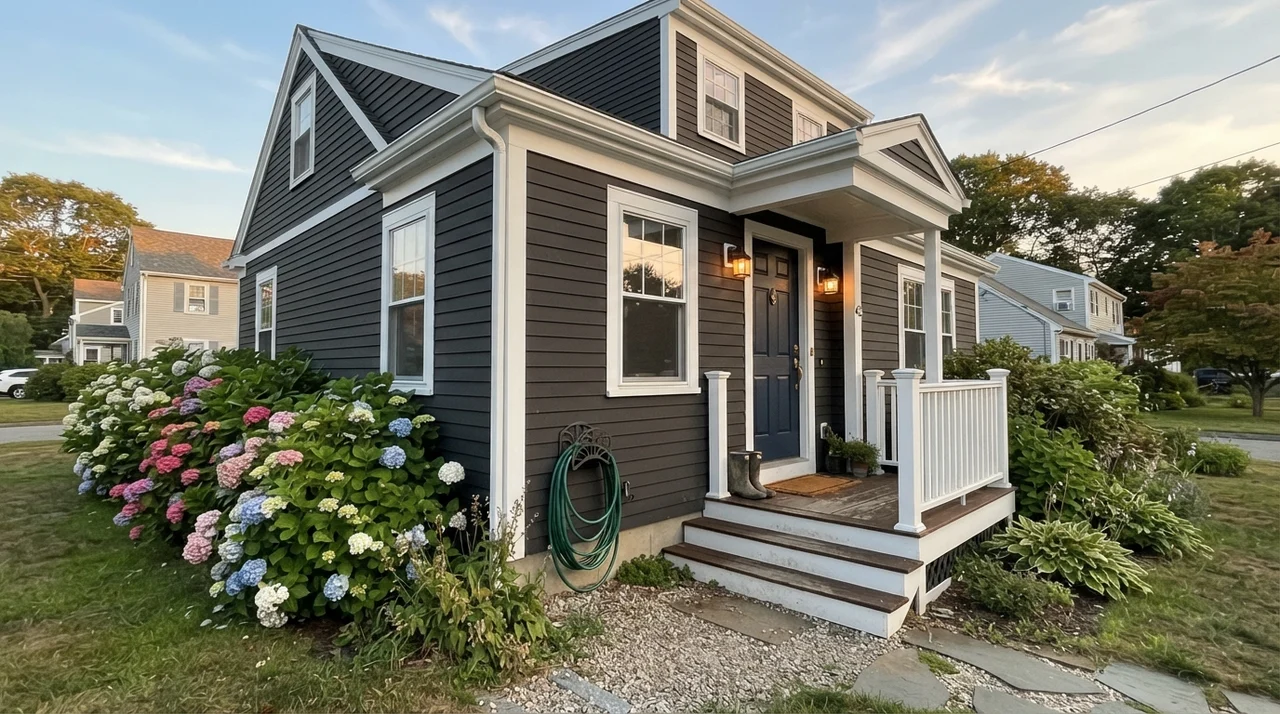
Taking Black Magic outdoors onto horizontal siding or trim makes an immediate statement. A dark house with crisp white trim looks intentional, classic, and grounded. Because Black Magic has that subtle inky undertone, it doesn't look washed out or charcoal-gray under direct midday sun like lighter darks often do.
However, exterior painting with LRV 3 paint comes with a stern warning: dark colors absorb maximum heat and highlight every substrate flaw. If your wood siding is old, cupped, or heavily patched, the low sun in late afternoon will cast hard shadows across every seam and nail head. Proper scraping, sanding, and priming are non-negotiable here if you want it to hold up over time.
The Honest Fail: Where Black Magic Disappoints
The bad stories about Black Magic are remarkably consistent, and none of them are about the paint formula itself. They are about light, sheen, and what was under the paint. If your project matches these common pitfalls, Black Magic will disappoint you no matter how many coats you roll.
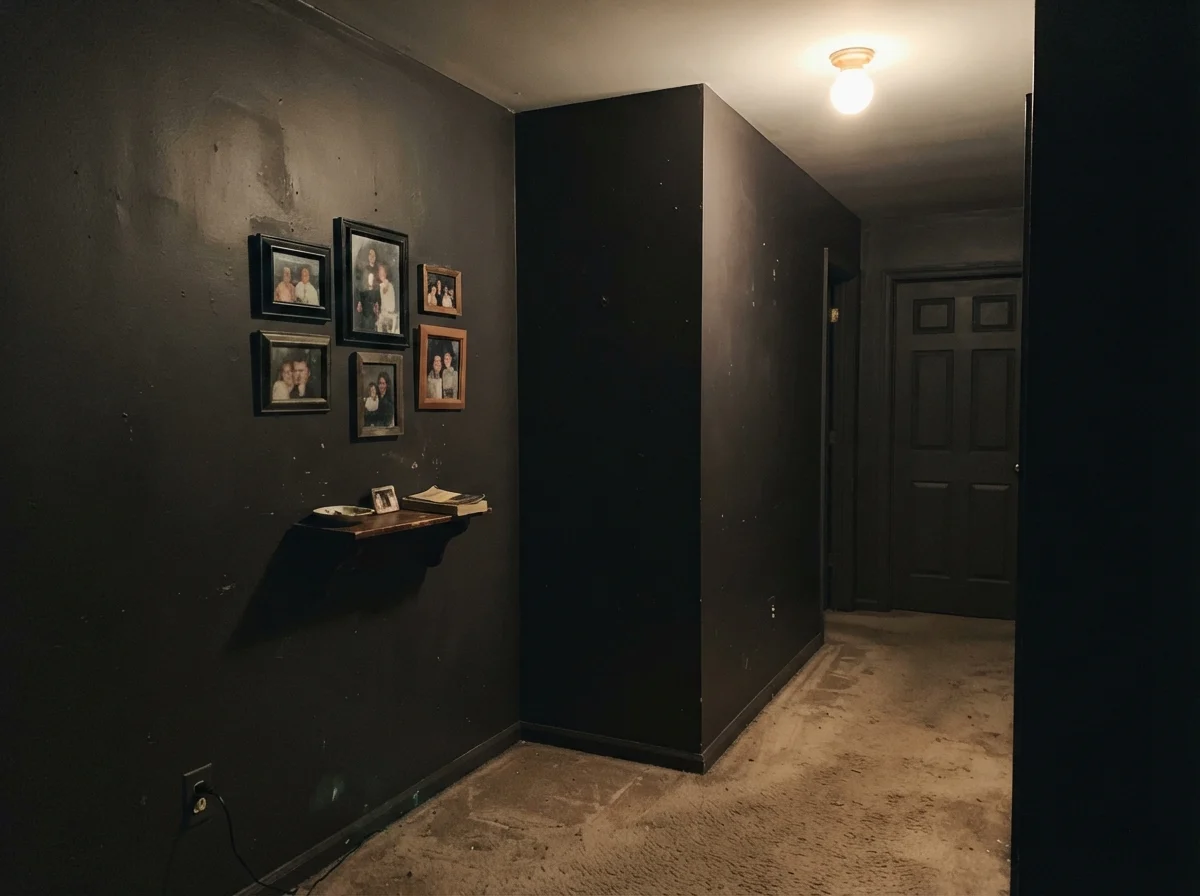
In a small, windowless hallway or a windowless laundry room with only a single overhead ceiling bulb, Black Magic turns muddy, flat, and claustrophobic. At LRV 3, there is simply no light bouncing back into the corners. Instead of feeling dramatic and cozy, the hallway feels like an unfinished utility closet. If you don't have natural daylight or layered warm lamps, avoid using it as a solid wall color.
Durability, Scrubbing, and the Sheen Rule
Here is my Golden Rule for near-black paint: never put flat or matte sheen where human hands will touch. Matte black looks velvety and gorgeous on Instagram, but in real daily life, every fingertip leaves an oily smudge that looks like a grease stain. When you try to scrub it off with a damp rag, you end up burnishing the paint, leaving a shiny spot that you can't undo.
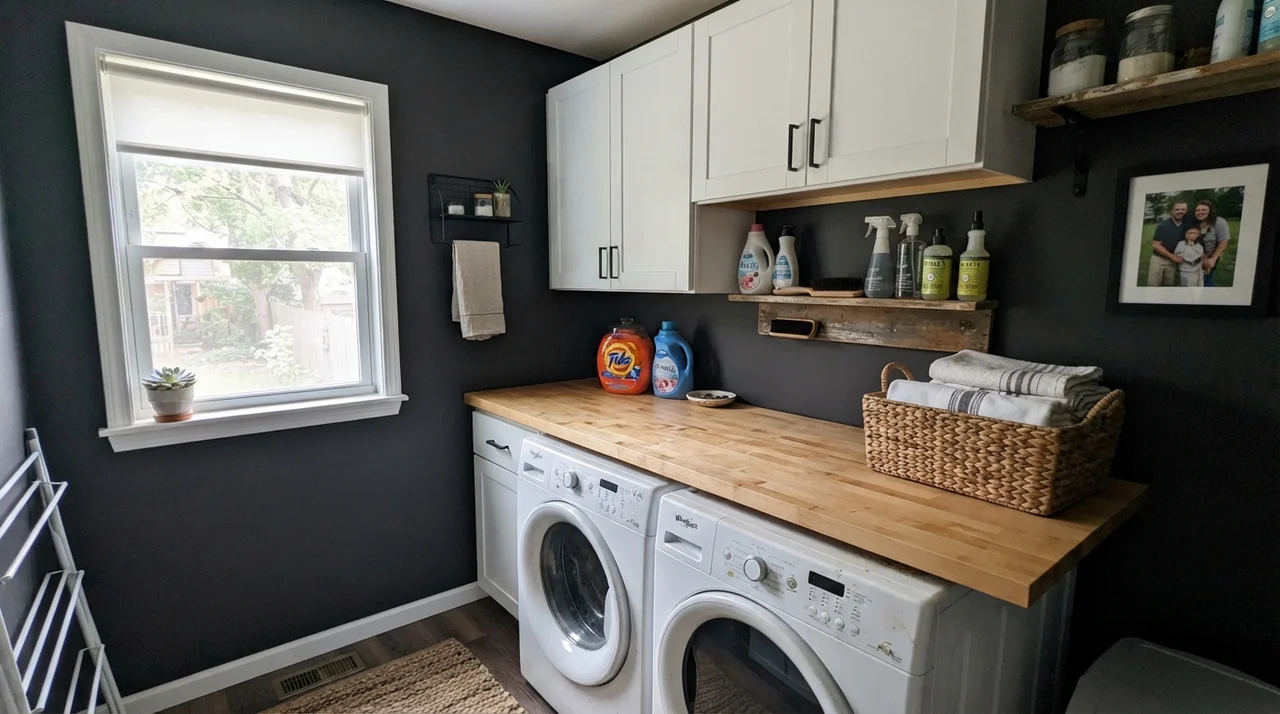
For walls, use eggshell. It gives you the soft, rich look of dark paint while allowing you to wipe away scuffs. For interior doors, trim, and kitchen cabinets, use satin or semi-gloss. In our laundry room, where folding baskets and laundry bottles frequently bump the wall, having a proper finish made all the difference between paint that held up and walls that looked dated within a year.
What is the LRV of Sherwin-Williams Black Magic?
Black Magic has a Light Reflectance Value (LRV) of 3. On a scale of 0 (absolute black) to 100 (pure white), an LRV of 3 means the paint reflects almost no light, absorbing daylight and creating extreme contrast.
What undertones does Black Magic have?
Black Magic is a deep near-black with a very subtle cool, inky undertone. This faint lean keeps it from looking dusty, sooty, or brown under natural sunlight.
What sheen should I choose for Black Magic on interior walls?
Use an eggshell finish on interior walls. Avoid flat or matte black on high-touch surfaces, as matte black shows fingerprints and smudges immediately and cannot be easily scrubbed without flashing.
Is Black Magic better than Tricorn Black for interior doors?
Both are exceptional on interior doors. Black Magic has a touch more inky depth, while Tricorn Black is completely neutral. In a semi-gloss sheen, both look timeless against off-white walls.
Susan's Verdict · Use as a Frame, Not a Blanket
Black Magic is one of the best blacks Sherwin-Williams produces, but only when you respect what an LRV 3 paint does. Do not use it to cover every wall of a small, dim room hoping for instant drama—you will end up with a cave that shows every piece of dust. Instead, use Black Magic as a framing tool: on front doors, kitchen islands, interior doors, and rooms with generous natural light or rich evening lamps. Keep your sheen to eggshell on walls and satin on cabinets, prep your surfaces thoroughly, and it will deliver sophisticated, lasting style for years.