Color Diary · No. 109
Sherwin-Williams Dovetail Needs Real Sun or It Will Break Your Heart
The warm gray Sherwin-Williams sells more than it markets, reviewed honestly: where it reads rich, the light that turns it muddy, and what to pick instead.

Susan HartleyNovember 3, 2026 · 19 min read
Dovetail · Sherwin-Williams SW 7018
Hex#908A83LRV26Undertoneswarm stone gray → muddy putty → deep earth
In our last house—the 1990s colonial with the drafty family room—I spent three weeks convinced that what our kitchen needed was a coat of Sherwin-Williams Dovetail on the base cabinets. It was 2011, gray was sweeping across every home magazine like a tidal wave, and I had fallen head-over-heels for a two-inch paint chip under the flattering fluorescent lighting of the paint counter. On that little paper swatch, Dovetail looked like the tailored wool coat my mother used to wear: crisp, architectural, and completely timeless. I came home with three gallons of satin enamel, tore the drawer fronts off, and spent an entire weekend rolling paint.
By Tuesday morning, when the winter clouds rolled in off the lake, my tailored wool coat had turned into wet concrete. Not the soft, warm, nuanced stone gray I had promised my husband, but a heavy, light-absorbing mass that made our breakfast nook feel like a basement locker room. We lived with it for seven months before I finally swallowed my pride, dragged out the sanding blocks, and admitted the truth: I hadn't picked a bad paint color, but I had completely misunderstood what an LRV of 26 actually does when you put it in a room that doesn't get eight hours of direct afternoon sun.
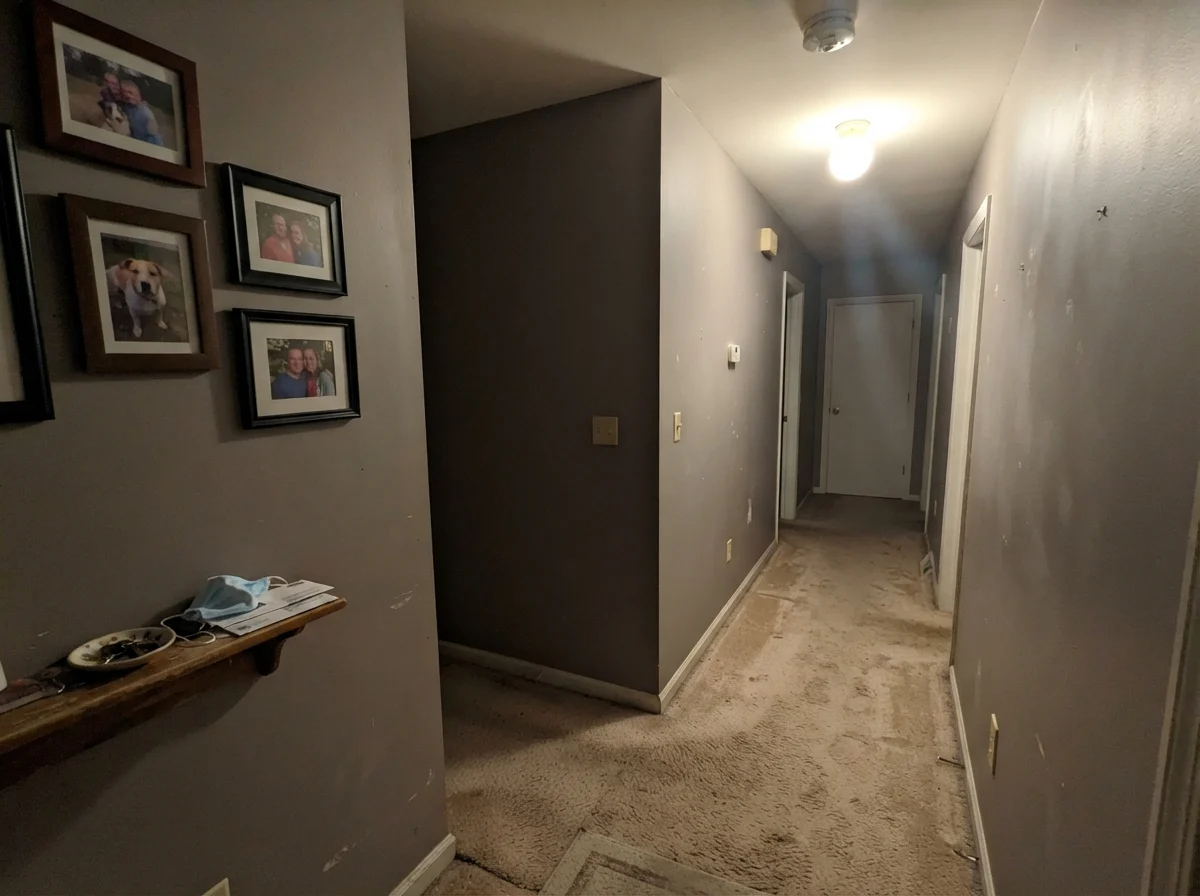
That was my first real lesson with Dovetail (SW 7018), but it certainly wasn't my last. Over the course of three houses and thirty years of repainting drywall, trim, and siding, I have watched this exact color do magnificent things on kitchen islands, front doors, and sun-drenched cedar shingles. I have also watched it make windowless powder rooms and dim north-facing hallways look like damp cellars. It is quietly one of the most reliable workhorses in the entire Sherwin-Williams fan deck, ranked up at 136 globally despite never having a flashy marketing campaign or a Color of the Year plaque pinned to its chest. But make no mistake: Dovetail is not a pale, forgiving whole-house greige that you can roll onto four walls blindly and hope for the best. It is a genuine mid-deep shade that demands respect, proper lighting, and an honest assessment of your home's architecture.
The Anatomy of an LRV 26 Paint
To understand why Dovetail behaves the way it does, you have to look at the numbers. Dovetail has a Light Reflectance Value of 26 on a scale from 0 to 100. That means it only bounces back about a quarter of the light that strikes it; the remaining seventy-four percent gets absorbed right into the film. When people ask me why their living room suddenly feels five degrees colder and significantly smaller after painting, this is why. A pale neutral like Agreeable Gray sits way up at an LRV of 60, acting almost like a gentle mirror. Dovetail does the exact opposite: it demands that the room supply its own light.
Because its underlying formula springs from the orange deck family, Dovetail carries a distinct brown-to-taupe backbone. That warmth is its greatest asset when paired with warm wood and natural brass, saving it from the clinical, institutional deadness of a true sterile gray. But depth multiplies undertones. On a tiny two-by-three-inch chip, you see only the gray surface. Stretch that paint across twelve feet of drywall, and all that concentrated brown pigment comes rushing to the surface. If you don't have south or west daylight pouring through the glass, that brown-gray blend can turn flat and sluggish faster than you can clean your brushes.
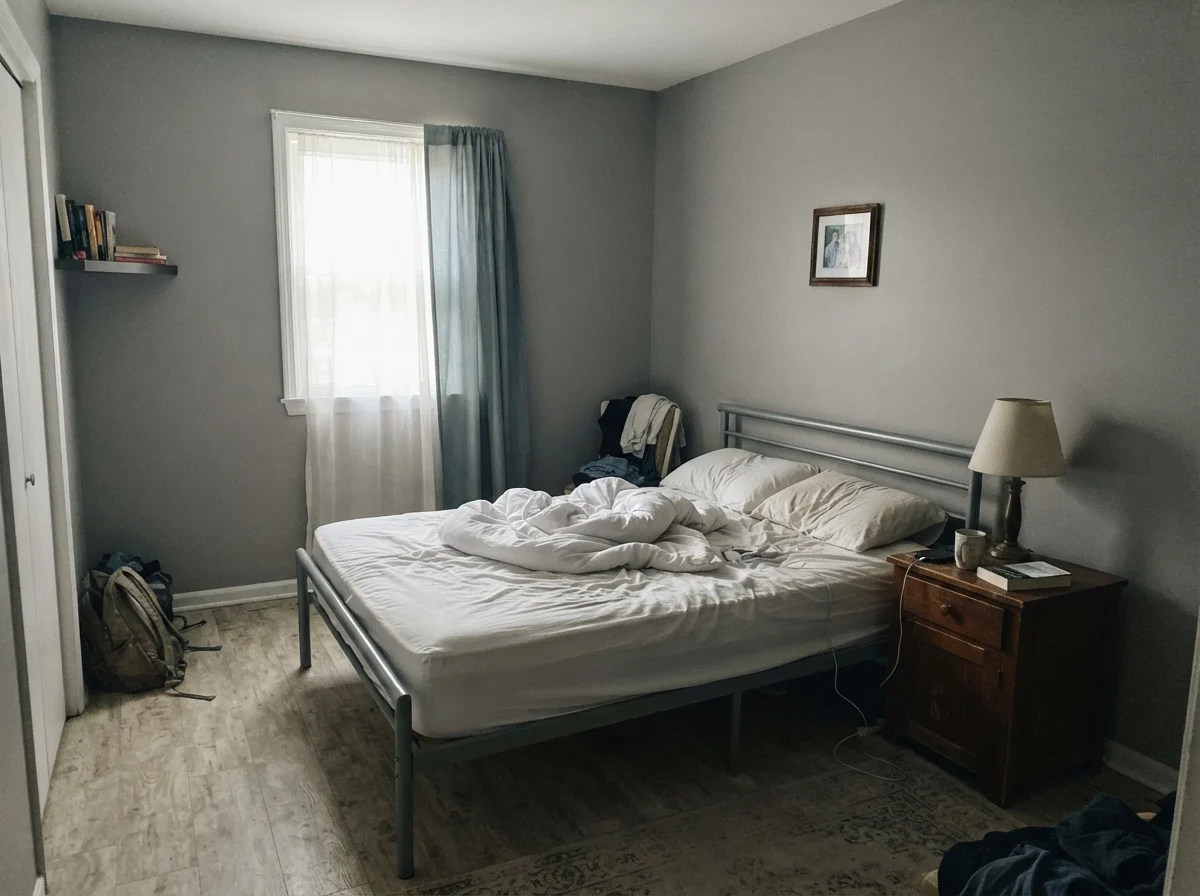
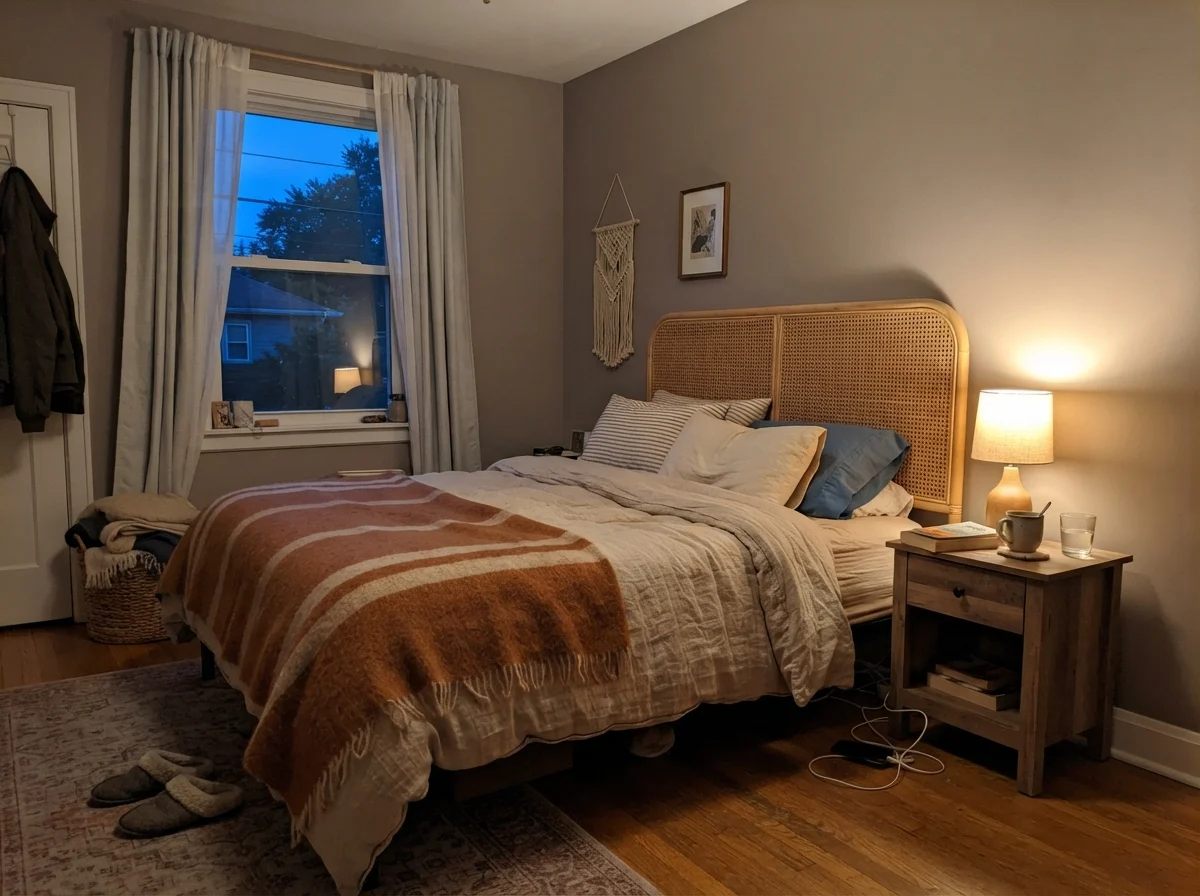
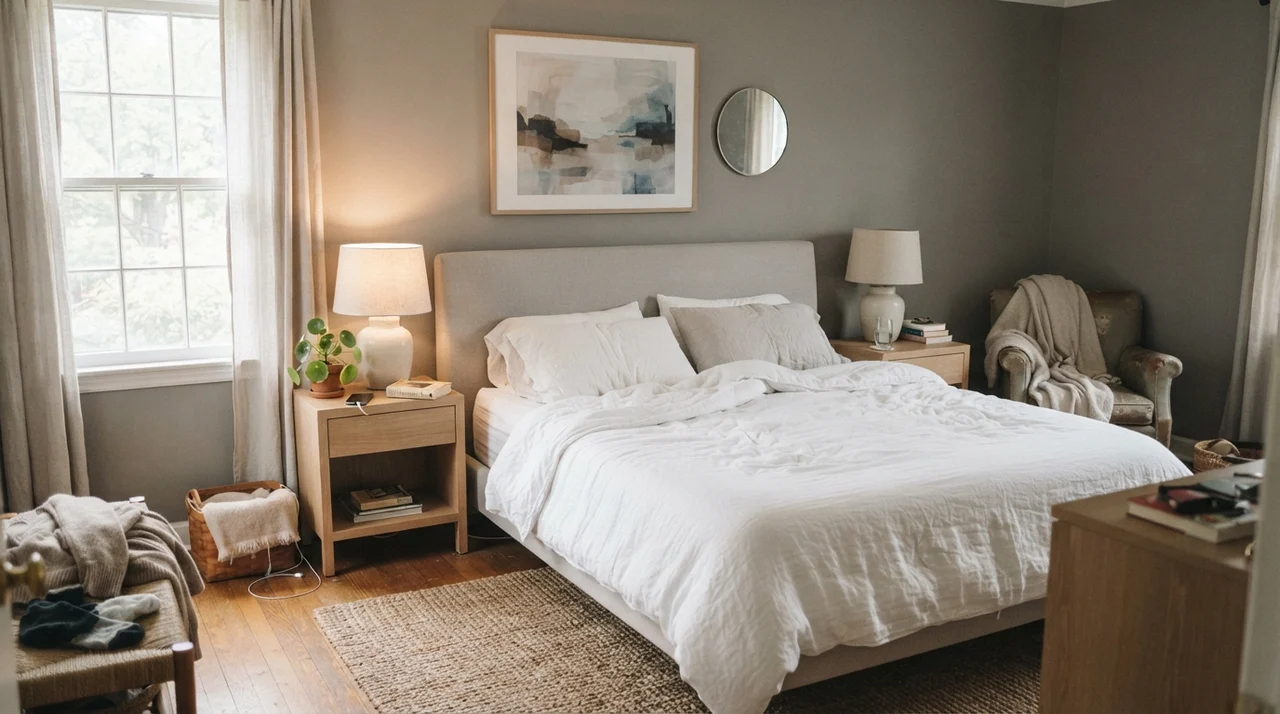
Look closely at how those two bedroom scenes tell the real story of this paint. In the cool morning daylight, the walls look slightly pale and drained of vitality. But flick on a 2700K lamp at dusk, and suddenly Dovetail looks like an expensive boutique hotel suite. That dramatic swing is why you simply cannot judge this color by how it appears at eleven o'clock on a Saturday morning. You have to live with it through breakfast, late-afternoon tea, and after dinner when the house settles down.
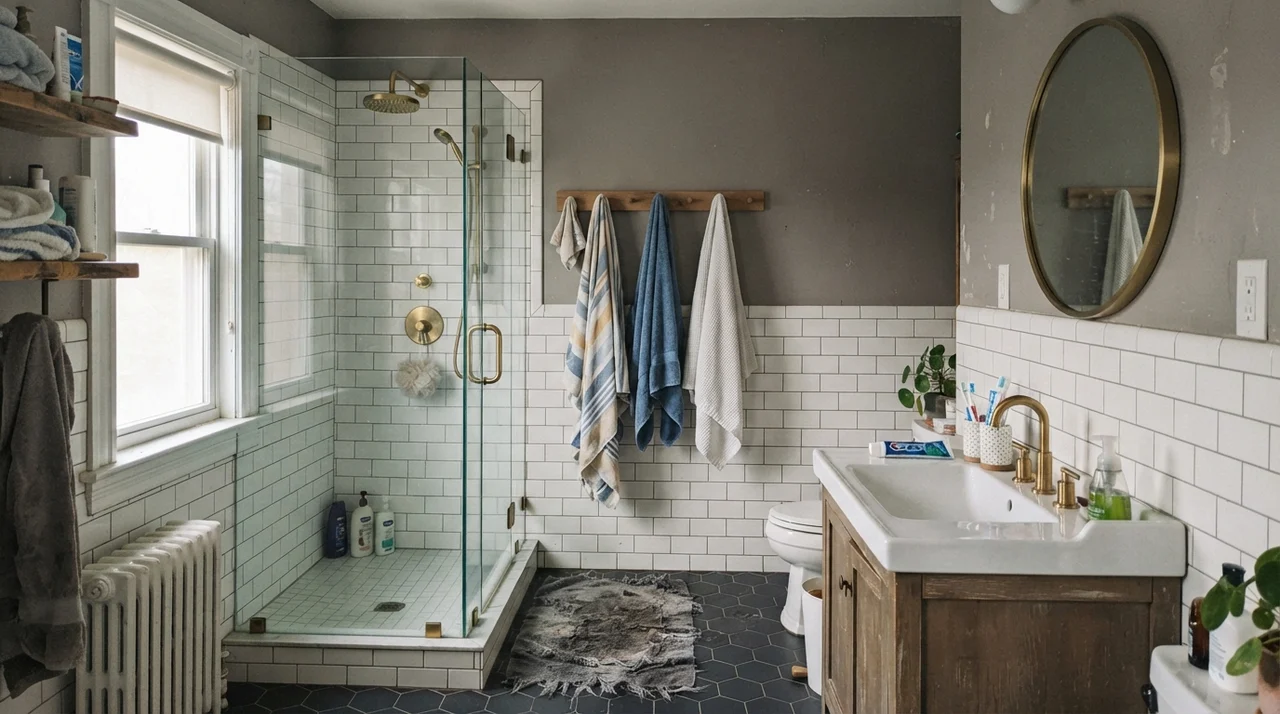
If you're using modern 5000K daylight LED bulbs—the kind that make your kitchen feel like an operating theater—Dovetail will punish you. It curdles under blue-cast artificial lighting, turning into a joyless, chalky slate. Before you curse the paint manufacturer, look up at the ceiling. Swap your bulbs out for soft, warm 2700K lamps. The transformation is almost immediate: the harsh, cold cast dissolves, and the rich, velvety earth tones step forward to do the job they were designed to do.
Where Dovetail Fails: The Three Big Traps
Almost every disappointed Dovetail story I hear from readers traces back to one of three predictable situations. None of them mean the paint is defective; they simply mean the paint was dropped into the wrong room without a safety net.
The first trap is the expectation gap. When people see Dovetail on an architectural brochure or an interior designer's curated feed, they assume it will read like a feather-light gray on their walls. Then they paint an entire room and realize they have effectively darkened their living space by three shades. Because it has an LRV of 26, it eats ambient light. If you wanted something that feels like an airy morning cloud, you bought the wrong can. You should have looked at Mindful Gray or Agreeable Gray instead.
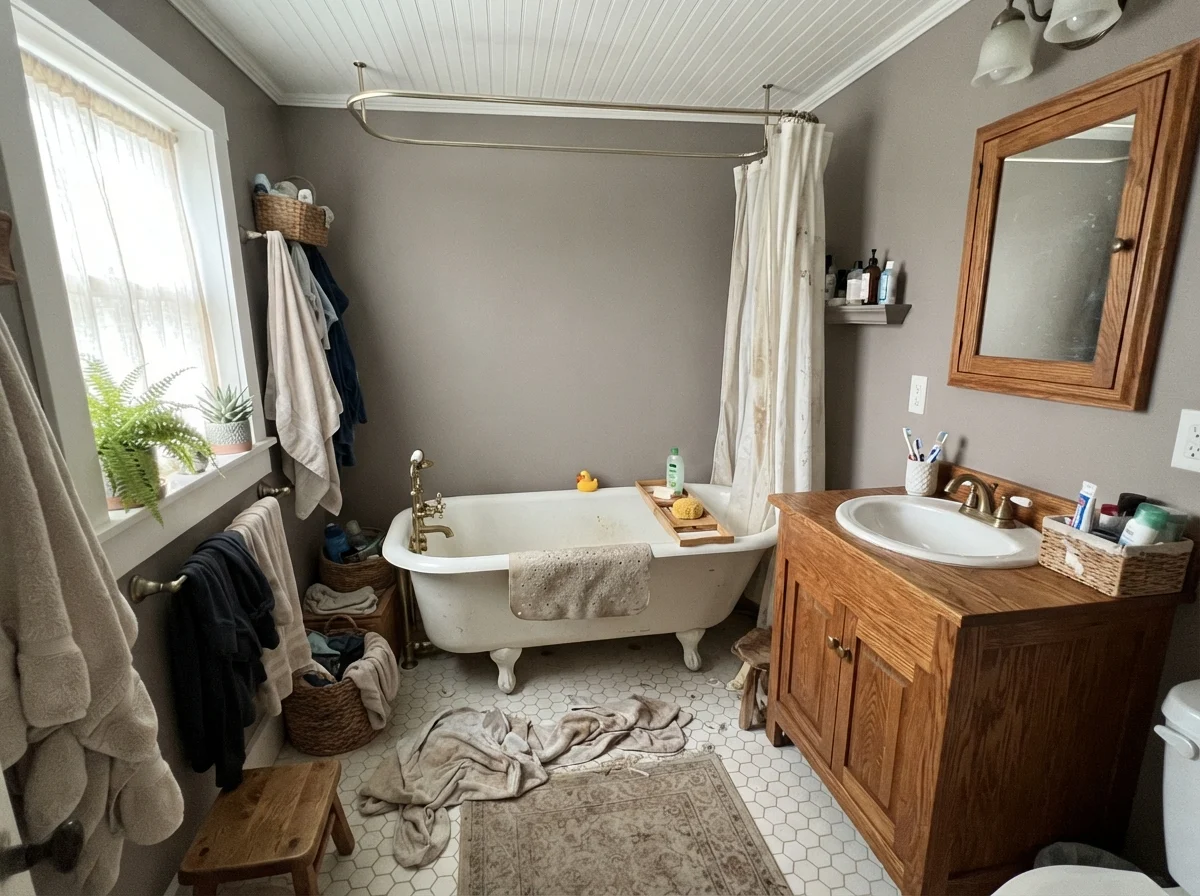
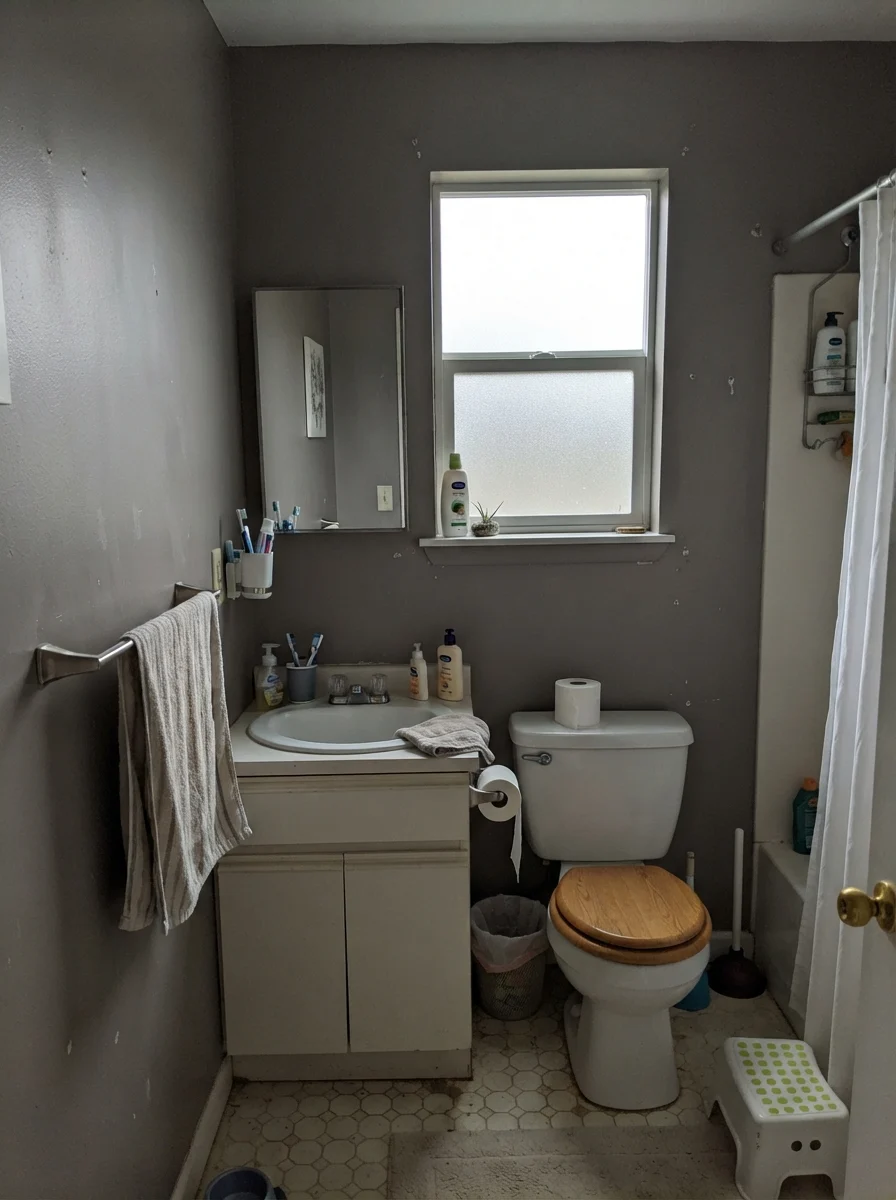
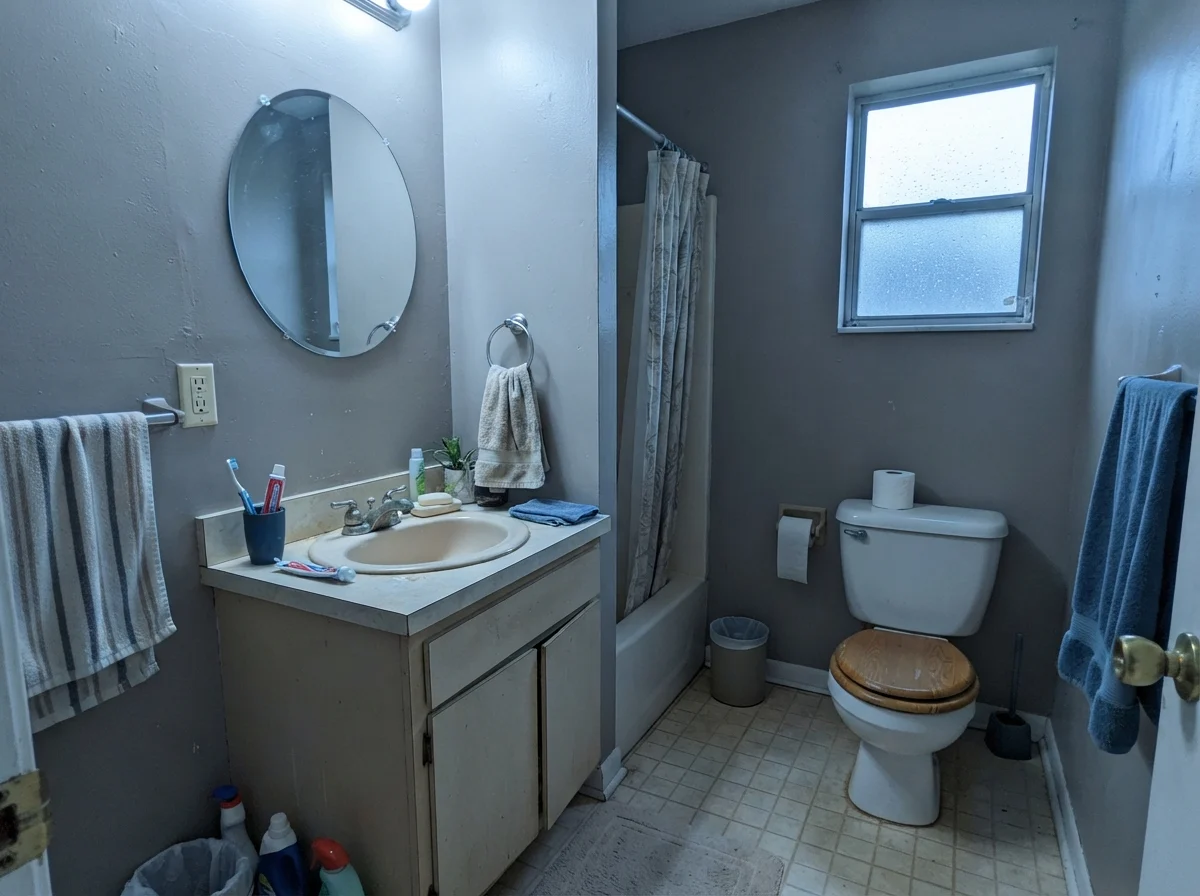
The second trap is the dim, north-facing room. In north-facing exposures, the natural daylight contains heavy amounts of blue and gray spectrum. When that cold daylight hits a paint rooted in warm orange and brown pigments, they neutralize each other in the worst way possible. The warmth is completely snuffed out, leaving behind a dull, muddy green-gray that one reader described to me as 'the color of wet cardboard.' Unless you plan on keeping table lamps glowing morning to night, a dim northern room is Dovetail's graveyard.
The third trap is pairing it with cool gray finishes. In our 1970s split-level, the previous owners had installed trendy blue-gray laminate flooring in the hallway. I once held a board painted in Dovetail up against those floors, and they instantly began fighting like tired children. Dovetail's warm, earthy base makes blue-gray floors look icy and cheap, while the cool floors make Dovetail look like dirty putty. The same goes for bright, cold, blue-white trim paint and polished chrome hardware. Dovetail needs warm companions: unlacquered brass, matte black iron, honey oak, and soft warm white trim.
Dovetail is not a pale whole-house greige you can paint blind; it is a genuine mid-deep shade that rewards real daylight and punishes the lack of it.
Where Dovetail Earns Its Keep: Kitchens and Cabinets
Now, let's talk about why this paint stays in the top tier of Sherwin-Williams sales decade after decade. When you give Dovetail the right application, it is practically unbeatable. Nowhere is this more obvious than in the kitchen.
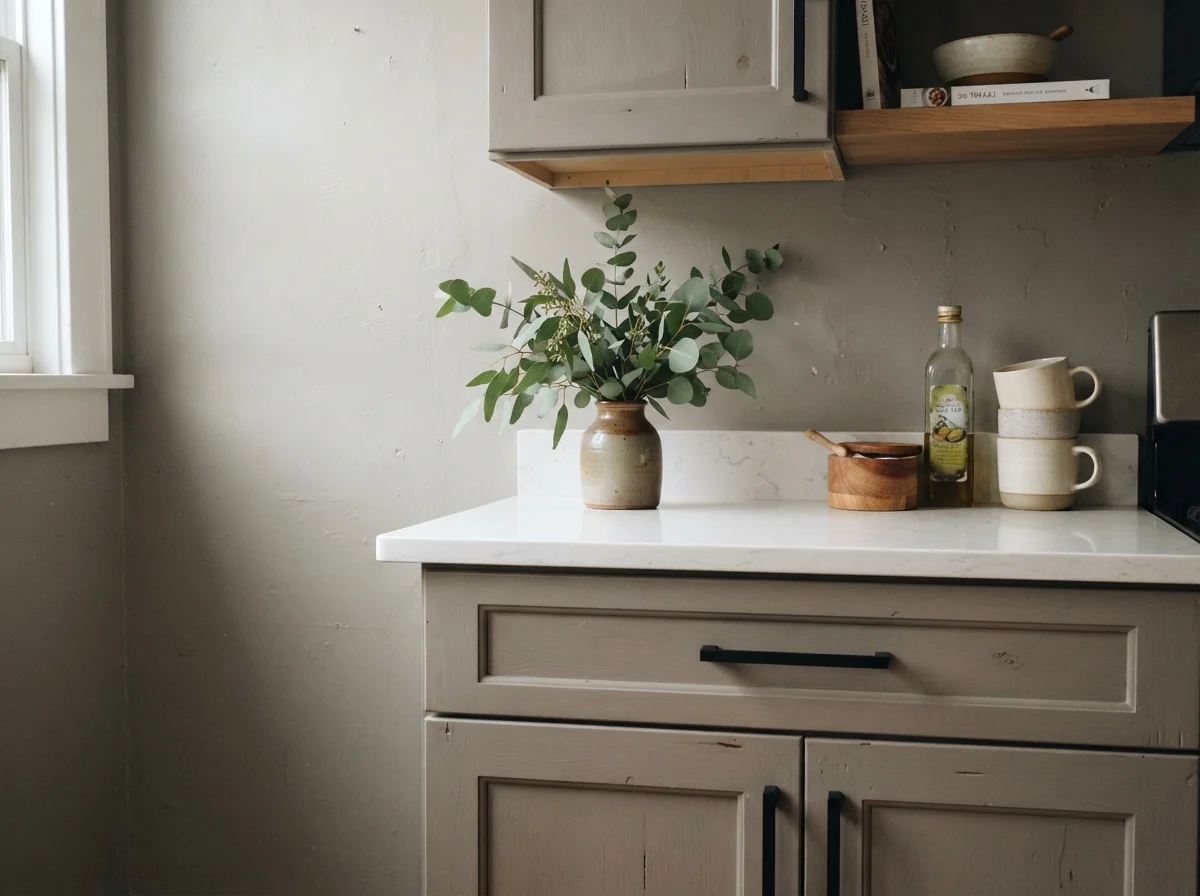
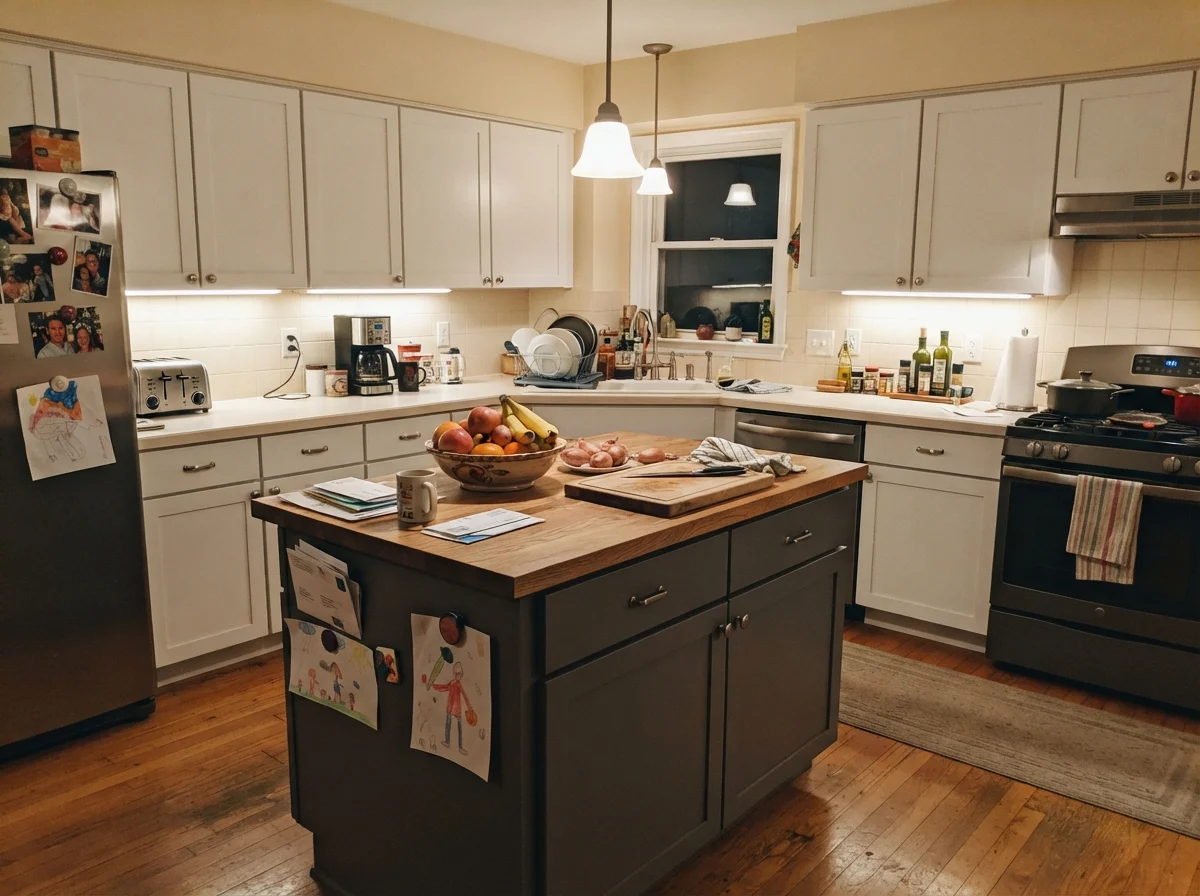
Overwhelmingly, the single best way to use Dovetail indoors is as an anchor: specifically on a kitchen island, surrounded by warm white perimeter cabinetry. It solves the eternal problem of the all-white kitchen feeling sterile without committing you to a dark navy or charcoal that will look dated within a few seasons. Because it carries that earthy warmth, an island painted in Dovetail grounds the whole room. It looks tailored against oak hardwood floors, flatters butcher block countertops, and makes brass cabinet pulls look like jewelry.
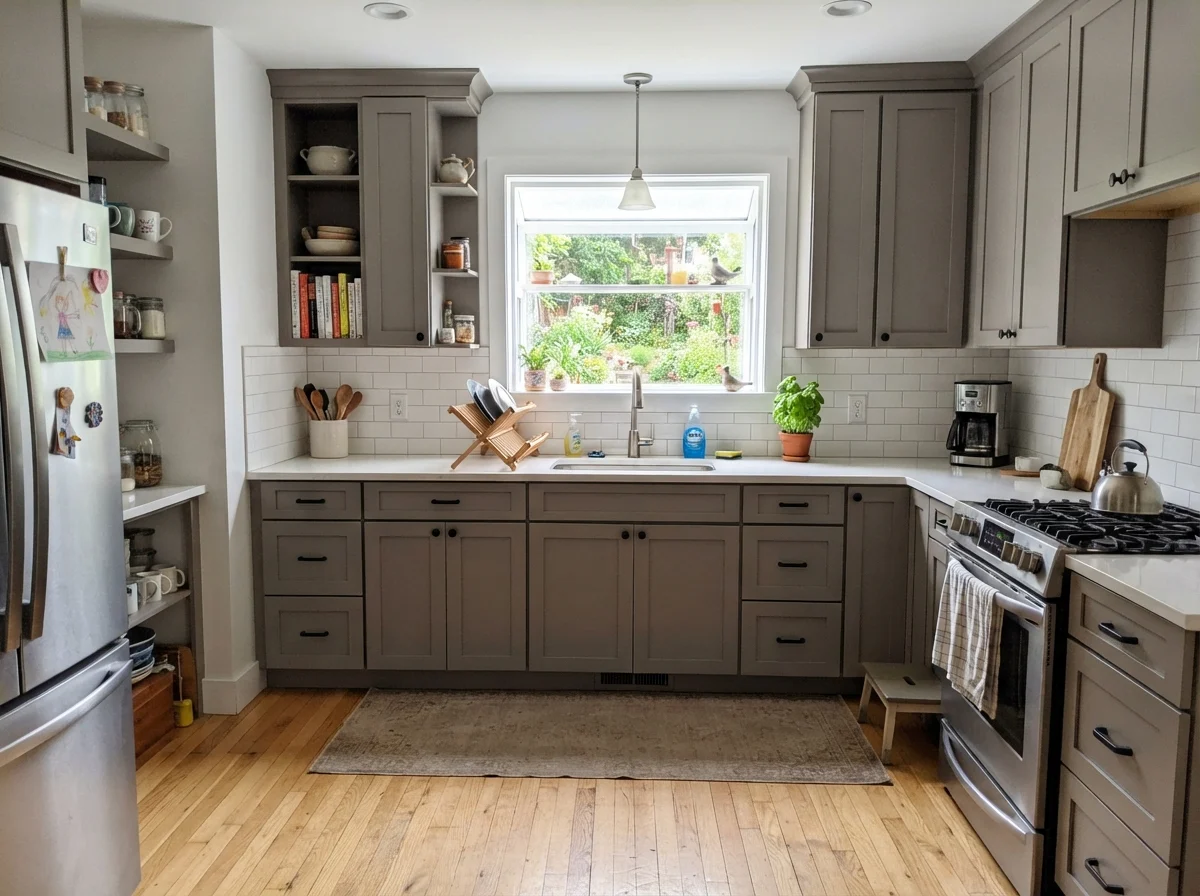
If you have an airy, bright kitchen with windows looking out into the garden, you can take it a step further and coat all the shaker cabinets in it. When we refreshed the kitchen cabinets in our current 1960s ranch, I wrestled with whether to spend the money on professional spray equipment or roll them myself. I rolled them with a fine-nap foam roller in satin cabinet enamel, and that finish was worth every penny. Five years in, that satin finish has been scrubbed clean around the trash pullout and dishwasher door hundreds of times, and the paint film hasn't softened, burnished, or chipped.
Living Rooms, Sunrooms, and Natural Exposure
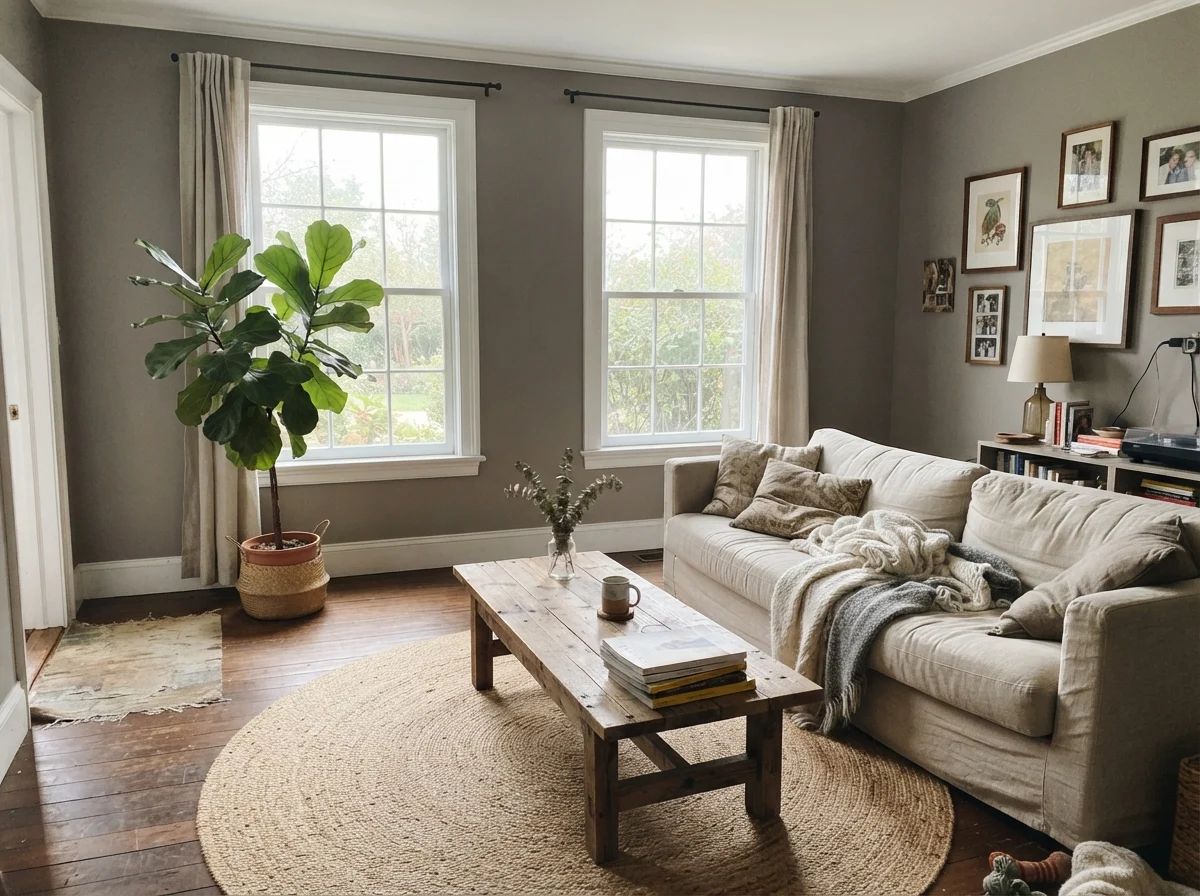
Can you use Dovetail on four walls in a main living space? Yes, but only if the room earns it. In our current home, our south-facing living room has two tall picture windows that flood the room with natural light from eleven in the morning until four in the afternoon. In that kind of space, Dovetail doesn't feel heavy at all—it feels like a warm, tailored envelope. The sheer volume of incoming natural daylight prevents the LRV 26 depth from closing in the perimeter, allowing the walls to read as a handsome, deliberate backdrop for linen upholstery, jute rugs, and leafy indoor plants.
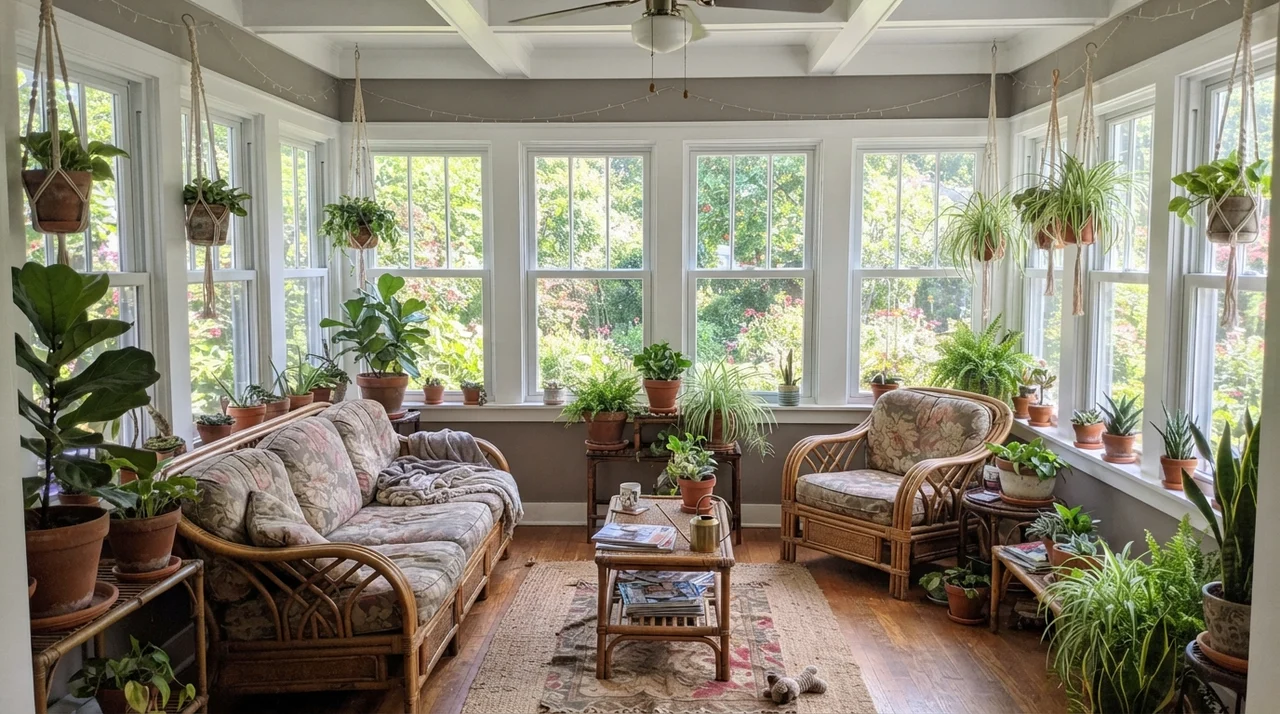
The same principle holds true in sunrooms. A sunroom surrounded by white-mullioned windows has so much natural light pouring in from multiple directions that the walls between the glass are constantly illuminated. Against terracotta floor tiles and weathered rattan furniture, Dovetail acts as a natural bridge between the stone patio outside and the comfortable interior inside.
Bedrooms, Dens, and Family Spaces
In private quarters, Dovetail takes on a different personality depending entirely on who is living there. In a primary bedroom, it creates an immediate sense of sanctuary. Paired with white linen bedding, pale oak furniture, and simple ceramic lamps, it eliminates that sterile 'rental white' glare and allows the room to feel restful the moment you cross the threshold.
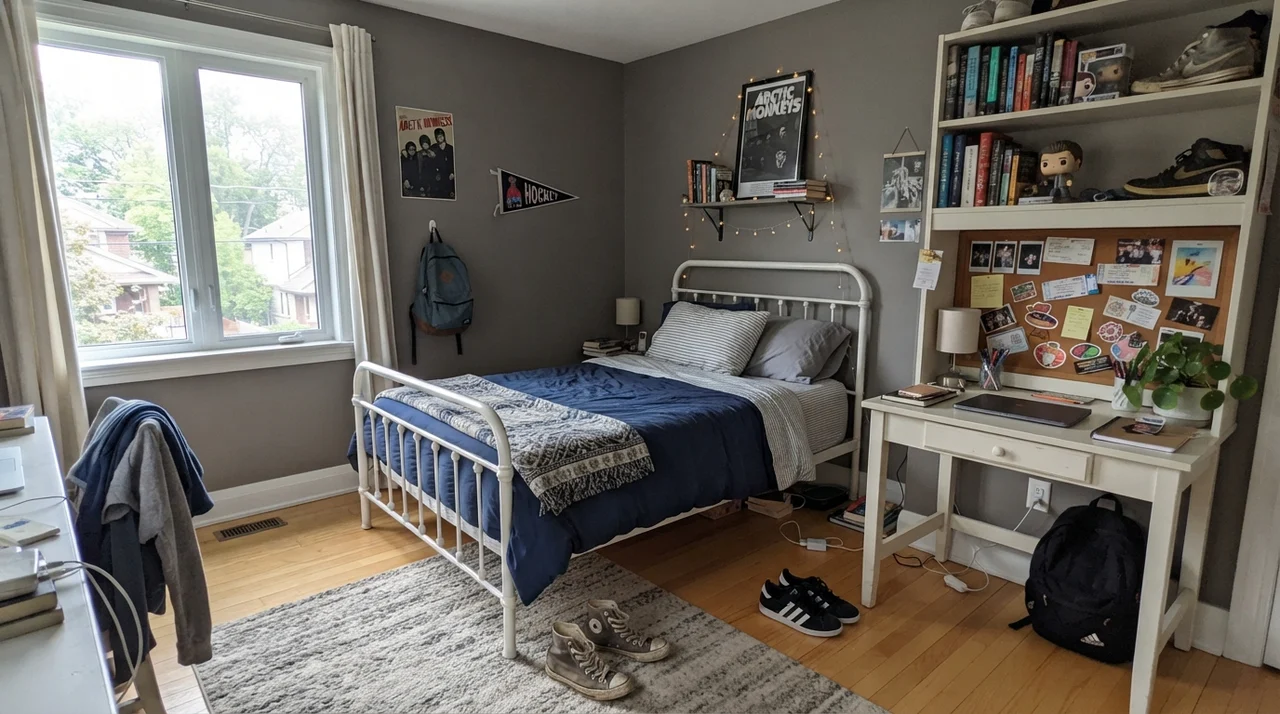
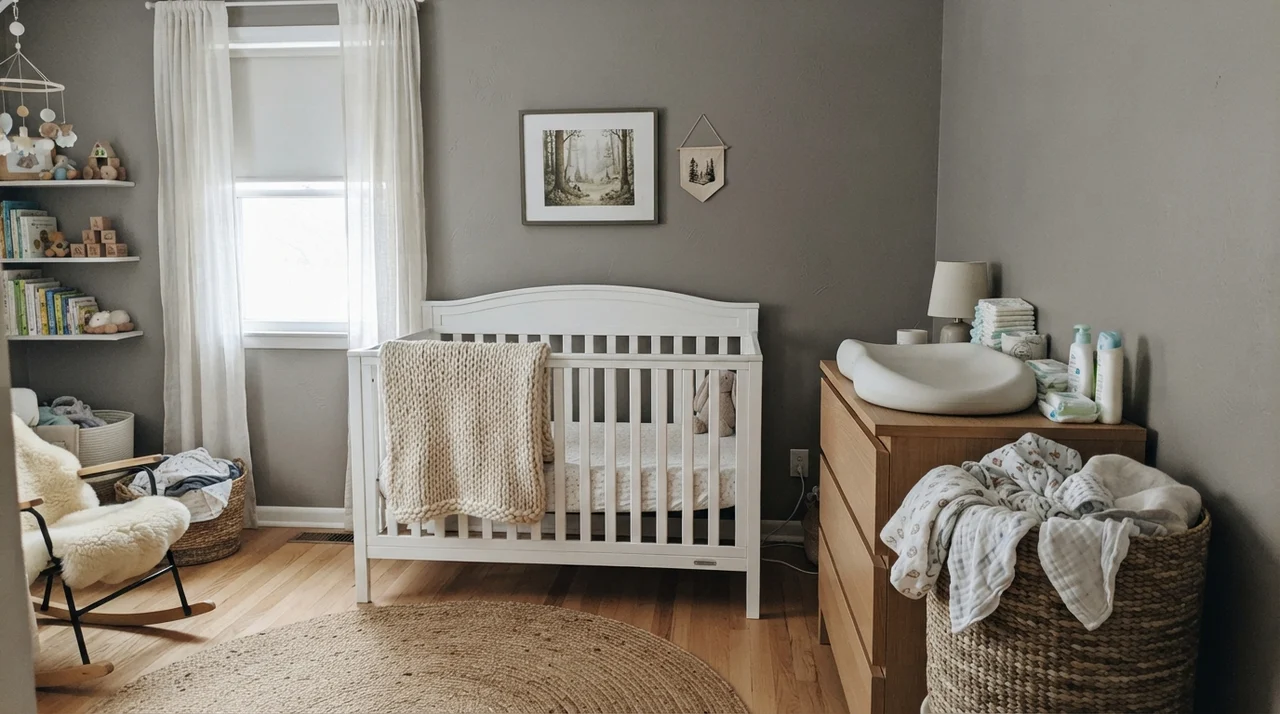
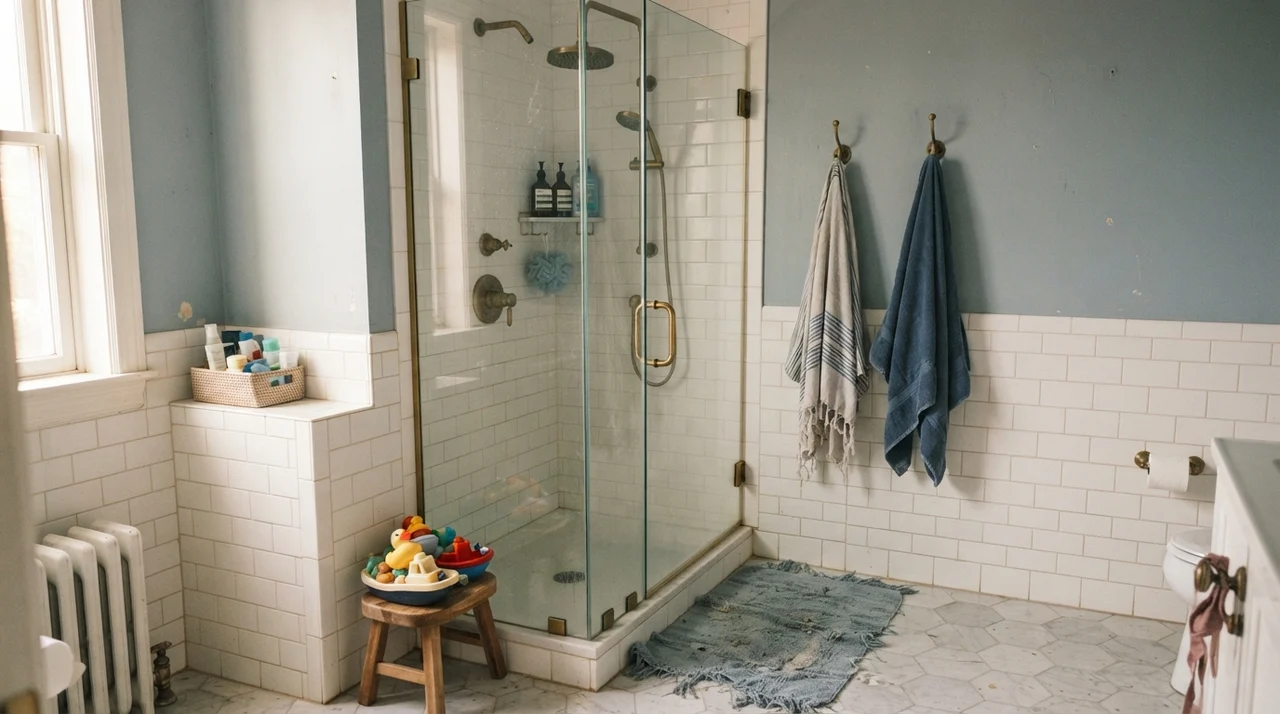
People often ask me if a deep warm gray is appropriate for children's bedrooms or a nursery. My answer is always: it depends on what you put on the floor and in the crib. In a nursery with ample daylight, soft muslin fabrics, and a pale wood changing table, Dovetail provides a surprisingly calming backdrop that grows up with the child. It doesn't look dated within four years the way trendy pastels do. Similarly, in a teenager's room with bright window light, simple white metal furniture, and open bookshelves, it reads mature, grounded, and remarkably resistant to visible scuffs.
Doors, Built-Ins, and the Laundry Room
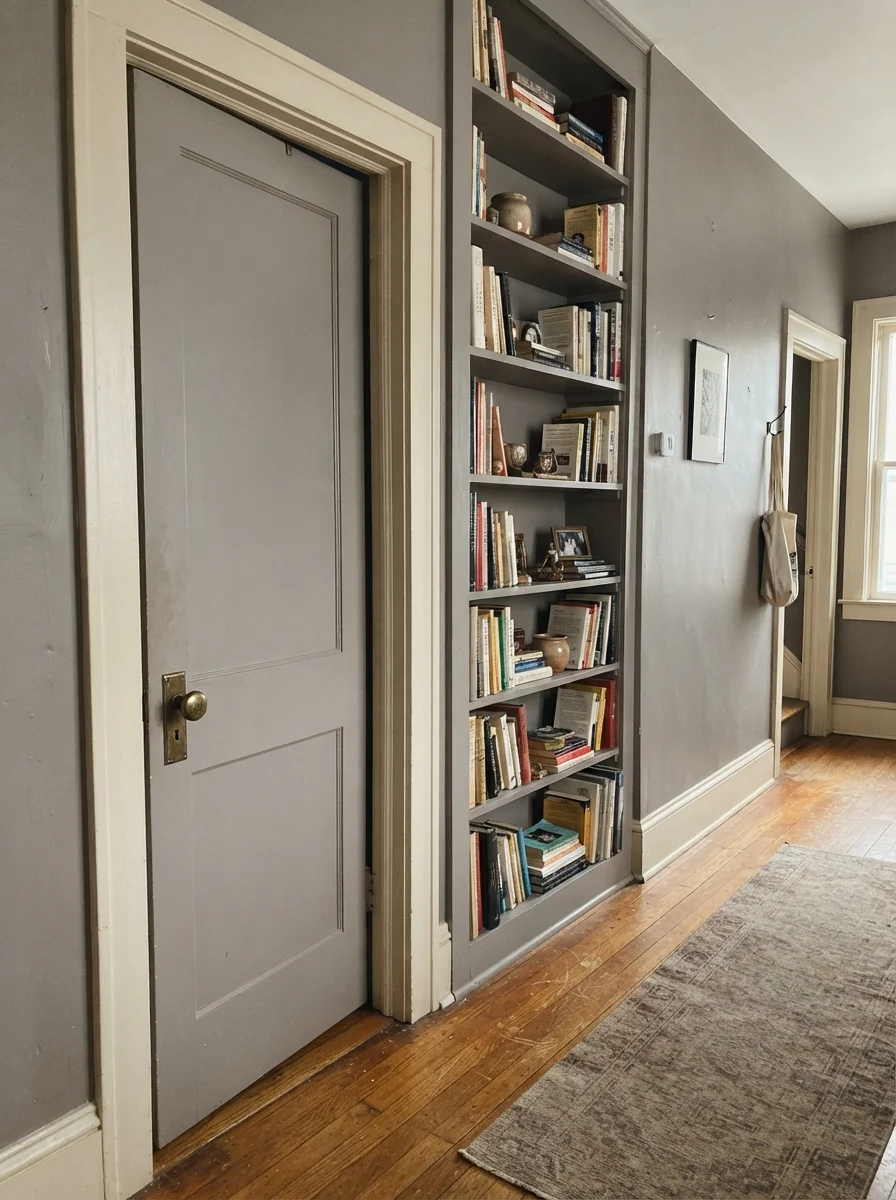
If you want the depth of Dovetail without committing to four full walls, the single smartest move you can make is what I call the 'single-can accent.' Buy one quart of satin or semi-gloss paint and roll an interior passage door or a set of hallway built-ins. In older homes like our colonial, painting an interior two-panel door in Dovetail against soft cream walls added instant architectural weight. It frames a vintage brass knob like nothing else, and unlike white doors, it hides the inevitable smudges from fingerprints around the latch.
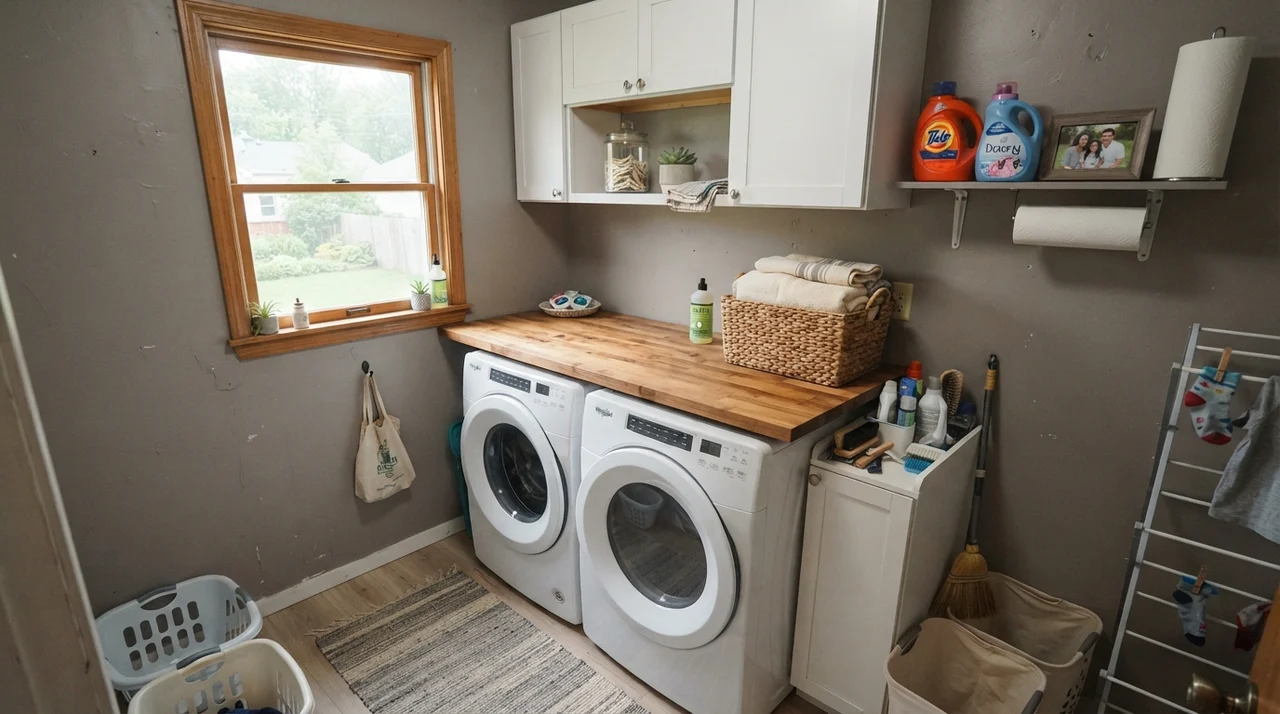
The laundry room is another prime candidate, provided you have at least one decent exterior window. A laundry room is fundamentally a workspace. Pairing Dovetail on the walls with crisp white utility cabinets, a butcher-block folding counter, and a white washer and dryer turns a utilitarian chore room into a space that feels intentional and composed.
The Exterior Workhorse
Outside the house is where Dovetail sheds almost all of its indoor risks. Under full, unfiltered natural sunlight, any paint color looks about one to two shades lighter than it does inside. Exterior siding painted in Dovetail doesn't read as a dark charcoal; it reads as an exceptionally dignified, balanced warm gray that feels rooted in the landscape.
When we sold our split-level, we gave the front exterior a fresh refresh with Dovetail on the horizontal siding and a clean, warm white on the trim and fascia boards. It transformed the house from a tired 1970s relic into a property that looked crisp, solid, and welcoming from the curb. The buyer's agent specifically mentioned the exterior color in their initial offer. Just remember one rule for exteriors: check your sample board on both the south-facing sunny elevation and the shaded north elevation. The sunny side will look like warm river stone; the north side will read noticeably darker and cooler. You want to make sure you like both faces of the house before ordering ten gallons of exterior satin.
Trim Pairings: What Works and What Collapses
Because Dovetail carries an orange-deck warm undertone, you cannot treat it like an all-purpose gray when selecting your trim and ceiling white. If you pick a trim paint with a cool, blue-white undertone, the trim will make your Dovetail walls look dusty and dirty, while the Dovetail will make your trim look like cheap primer. You need a white that has enough softness and body to sit comfortably next to an LRV 26 earthy neutral.
Materials and Architecture That Flatter It
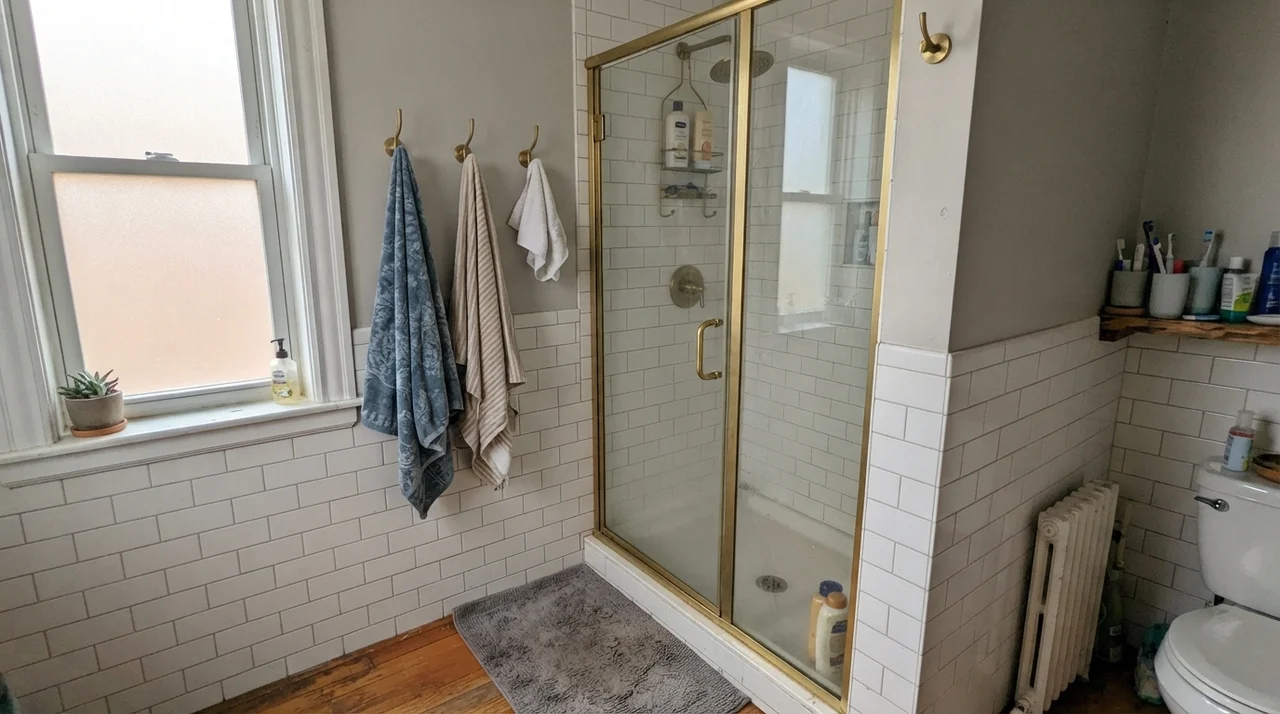
A paint this grounded doesn't float in a vacuum. It demands materials that speak the same physical language. If your home is full of cold glass, polished chrome, and slick modern porcelain, Dovetail will feel out of place—too rustic, too heavy, too brown. But bring it into a space with organic texture, aged metals, and natural grain, and it suddenly looks like it has been there for fifty years.
Long-Term Wear, Cleaning, and Scrubbability
Here is something they never tell you at the paint desk: dark paints show their age differently than white paints. When you paint a wall white, your biggest enemy is grime, fingerprints, and smudges. When you paint a wall an LRV 26 shade like Dovetail, your biggest enemy is burnishing.
If you paint Dovetail in a dead-flat finish in a busy hallway, every time someone brushes against the wall with a laundry basket or a shoulder, the friction smooths down the microscopic texture of the paint. On a dark wall, that leaves a shiny, permanent burnish mark that looks like an oil streak. You cannot wash a burnish mark out; the only fix is rolling another coat over it.
For that reason, I strongly recommend sticking to an eggshell finish on drywall in living spaces, and moving up to a satin finish on kitchen cabinets, trim, and doors. In satin, Sherwin-Williams Dovetail is a tank. In our house, the kids' muddy shoes kicked against the kitchen island base constantly, and cooking grease settled by the range. With a durable satin enamel, that surface scrubbed clean with a warm microfiber cloth and mild soap year after year without losing its color depth or peeling at the edges. Spending the extra ten or fifteen dollars per can on a top-tier enamel formula was worth the money tenfold—cheap paint on a kitchen island is an expensive mistake you will pay for every Saturday morning.
The Real Decision Process: Sample Large or Regret It
If you take nothing else away from this diary, please heed this advice: never choose Dovetail from a tiny sample chip. A two-inch swatch held up against an existing off-white wall creates an optical illusion that makes Dovetail seem light, airy, and gentle. It is none of those things.
Buy a sample pot. Paint a full two-foot by three-foot piece of white foam board, leaving a two-inch white border around the edge so your current wall color doesn't distort your eye. Tape that board to the wall in the morning, move it at midday, and look at it at nine o'clock at night under your regular household lamps. If you see the rich, grounding stone gray you fell in love with, buy your paint with complete confidence. But if that sample board looks muddy, heavy, or green-tinged, take it down immediately. The paint isn't broken—your room's lighting simply isn't offering what Dovetail requires.
Is Sherwin-Williams Dovetail a warm or cool gray?
Dovetail is definitively a warm gray. Formulated in Sherwin-Williams' orange deck family, it carries substantial brown and earthy undertones that keep it from feeling cold or commercial, though it requires warm lighting to show those tones properly.
What is the LRV of Dovetail SW 7018?
Dovetail has a Light Reflectance Value of 26. This puts it squarely in the mid-deep register, reflecting only about a quarter of ambient light and absorbing the rest.
What trim white pairs best with Dovetail?
Sherwin-Williams Pure White (SW 7005) is the most dependable pairing because its subtle warmth prevents a jarring, clinical clash. For a softer, more historic feel, Alabaster (SW 7008) also performs wonderfully.
Can I paint my whole living room in Dovetail?
Only if your living room has generous south or west exposure and substantial square footage. In a small, dimly lit, or north-facing room, an LRV 26 paint on all four walls will feel heavy and cave-like.
Why does my Dovetail wall look green or muddy?
This happens when the paint is exposed to flat, cool daylight (such as from north-facing windows or overcast skies) or cool 5000K LED bulbs. Cool light neutralizes the paint's warm brown base, leaving behind a dull putty tone.
Susan's Verdict · The Right Tool for the Right Light
Dovetail has survived thirty years of home design cycles because it does architectural jobs that pale neutrals cannot touch. On a kitchen island, an interior door, or an exterior siding board, it is one of the most dependable, tailored warm grays in existence. But do not force it into a dim, windowless hallway or a north-facing bedroom and expect miracles. Give it the warm sunlight it asks for, keep the trim white soft, and it will reward you five years in with quiet, timeless confidence.