Color Diary · No. 107
Sherwin-Williams Light French Gray: The Hard Lessons of an Unforgiving Wall
The gray people buy to avoid beige, reviewed honestly: why it flashes baby blue on so many walls, and the rooms where it is close to perfect.

Susan HartleyNovember 3, 2026 · 16 min read
Light French Gray · Sherwin-Williams SW 55
Hex#C2C0BBLRV53Undertonesslate gray → sky blue → cool lavender
In our last house, a 1990s colonial with enough honey oak trim to build an ark, I spent an entire summer trying to rid the main floor of builder's beige. Every greige swatch I taped to the wall ended up looking like wet oatmeal by noon. My neighbor, who had just finished an open-concept remodel down the street, walked through my front door holding a fan deck open to Sherwin-Williams Light French Gray (SW 55). She swore it was the only neutral that refused to pull muddy brown or sickly green under overcast skies.
I bought five gallons on the spot. By the following Tuesday, our north-facing family room looked like an ice rink. The walls had pulled an undeniable, unapologetic baby blue that made my oak trim scream fluorescent orange. It took two coats of an entirely different formula to fix my mistake before the furniture even went back in place. That was my first introduction to how Light French Gray actually behaves once you roll it across four corners.
That is the reality nobody tells you in the paint store: you do not pick a neutral for the Saturday you roll it out. You pick it for year four, when the afternoon light shifts across the trim and you have lived with it through three seasons of sleet and glaring sun. Some colors carry their own warmth and forgive whatever floor you put beneath them. Light French Gray does not forgive a single thing. It has almost no tint of its own to soften blows, which is precisely why homeowners buy it—and precisely why half of them end up repainting before the year is out.
The Fast Verdict: The Pigment Dilemma
Light French Gray sits at an LRV of 53, placing it squarely in the middle of the value spectrum. It is not an airy off-white, and despite the gentle word "Light" in its name, it carries enough depth to noticeably drop the ceiling height in a low-lit hallway. What separates it from popular crowd-pleasers is its purity. Most neutral grays on the market lean on yellow or green pigments to keep them soft and approachable. Light French Gray strips nearly all of that away.
Because it lacks warm undertones to anchor it, the wall behaves like a mirror to its surroundings. If your room receives warm southern sunlight, the paint settles into a quiet, tailored mid-gray that feels clean and permanent. If that room faces north, receives cool tree-filtered daylight, or relies on cool fluorescent bulbs, the paint reads like pale periwinkle or chilly cement. In our 1960s ranch today, I know better than to put it anywhere that lacks direct exposure. It is a paint color that demands honest assessment before you break the seal on a can.
Morning Frost to Evening Glow: How Light Dictates the Wall
If you have lived with color long enough, you know that judging a formula by morning light alone is the fastest route to buyer's remorse. Light French Gray is an extreme study in light-shifting. In early dawn, without artificial lighting to intervene, the paint looks spare, pale, and stripped back. It gives walls a cool, quiet stillness that can easily read as barren if you do not bring in wood furniture or woven textiles to carry the weight.
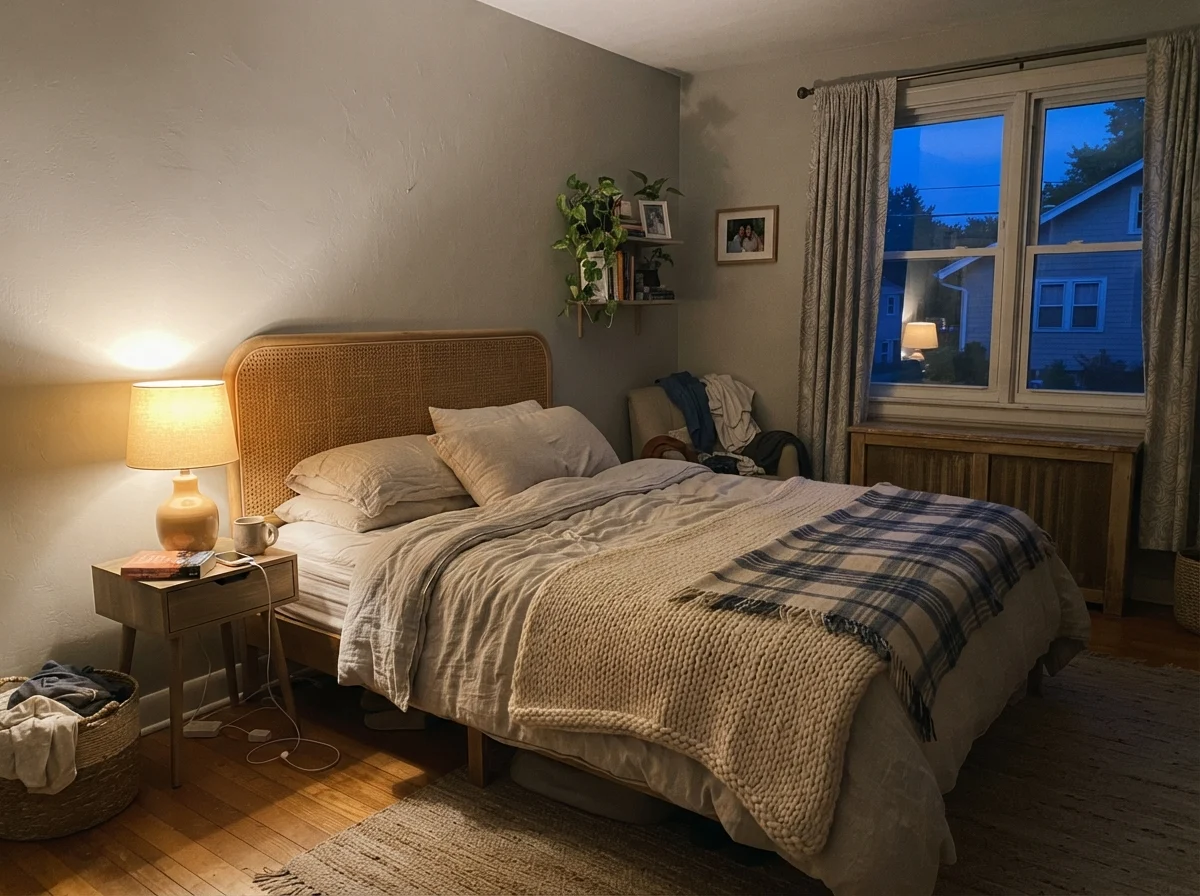
By the time dusk rolls in and table lamps click on, the entire surface transforms. Under 2700K incandescent or warm LED bulbs, the cool lavender cast recedes, leaving behind a cozy, tailored room that feels intentional and anchored. Screw in a 4000K or 5000K bulb, however, and the walls immediately flash icy steel. I have seen homeowners blame the paint formula when the real culprit was simply the lighting hardware they bought off the endcap at the home center.
Living Rooms and Open Sunrooms: Letting Sun Take the Reins
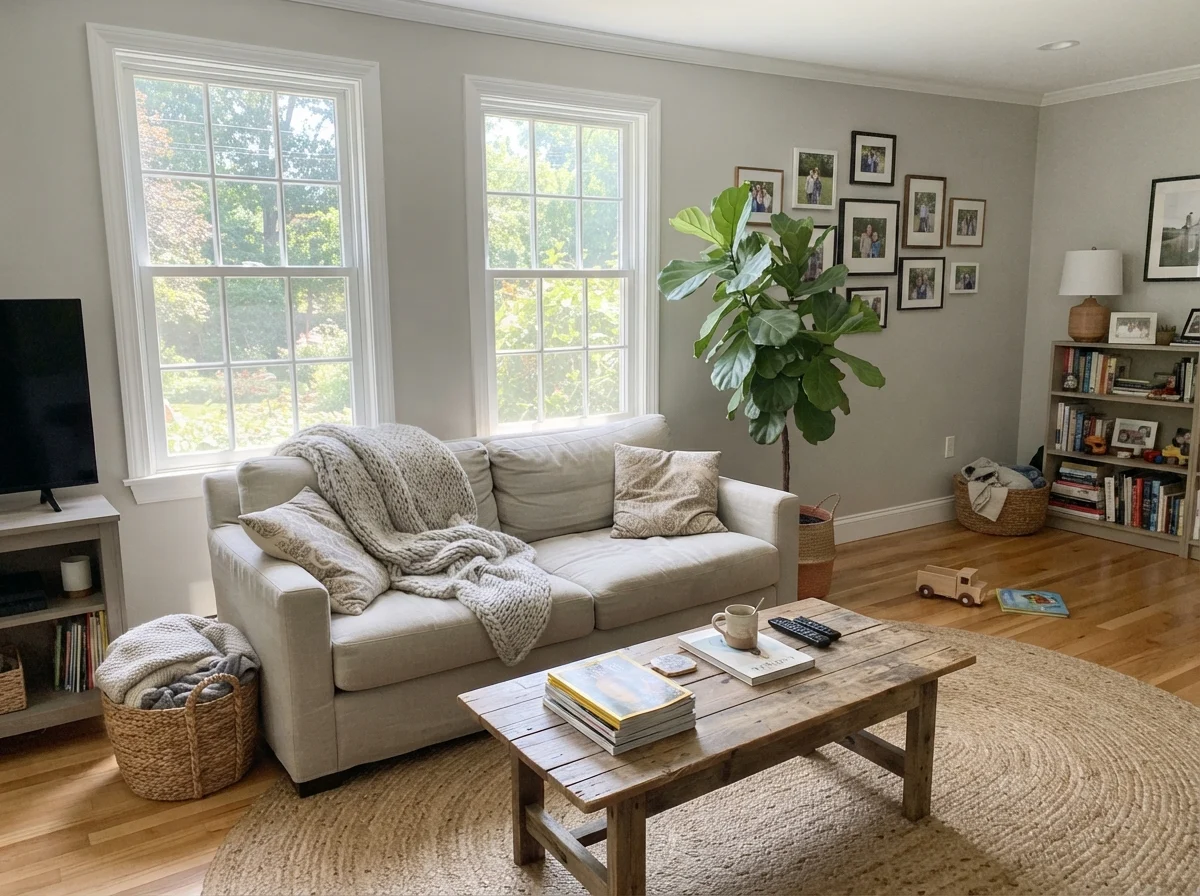
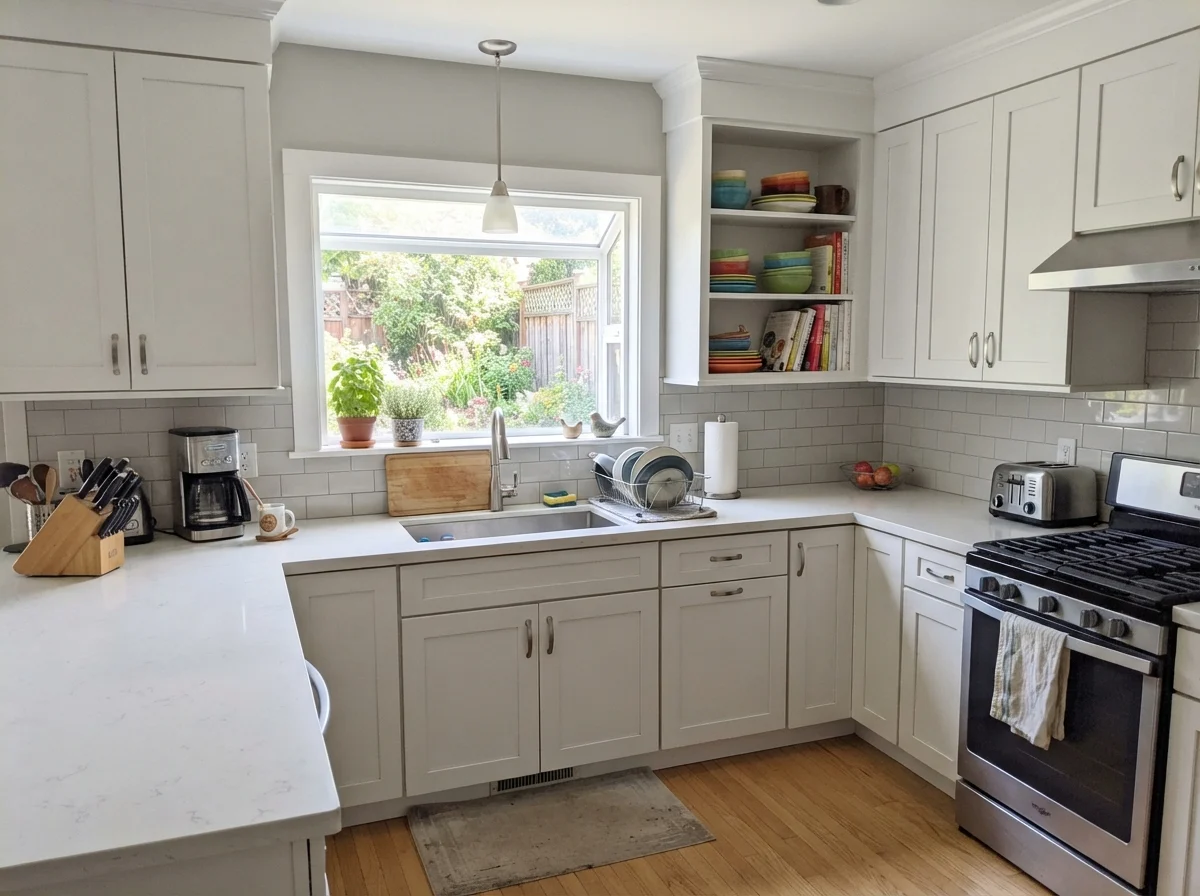
Where this color earns its keep is in spaces flooded with natural sunlight. In a living room with expansive southern or western exposure, the warmth of the sun cancels out the underlying blue. The result is a crisp, true mid-tone neutral that refuses to tilt muddy or brown the way standard greiges do by midafternoon. When we sold our colonial, the staging agent remarked that finding an honest gray that didn't fight modern art or clean white woodwork was half the battle of getting buyers through the foyer.
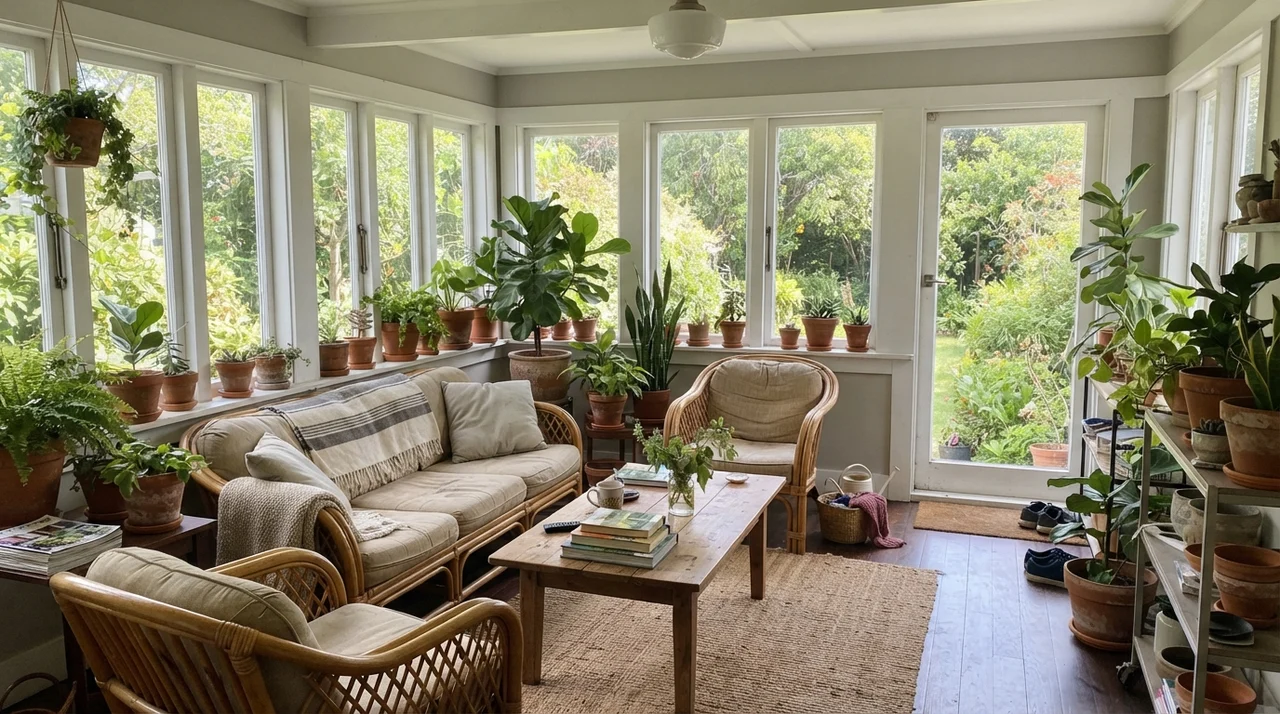
In a sunroom lined with glass, the color works wonders against garden greenery and terracotta pots. Where a yellow-based neutral would compete with outdoor foliage, this clean slate provides a quiet architectural frame. Walls painted in eggshell finish catch the shifting sun without reflecting harsh glare, letting textured fabrics and natural flooring bring warmth to the space.
When you have natural light pouring in from multiple angles, Light French Gray stays disciplined. It steps back and lets rattan furniture, indoor plants, and natural wood hold the floor. This is where spending the effort on proper prep work proves worth the money: on large, unbroken walls where light rakes across the drywall, any patch job will show, but the color itself remains perfectly poised.
Bathrooms and the North-Facing Dilemma
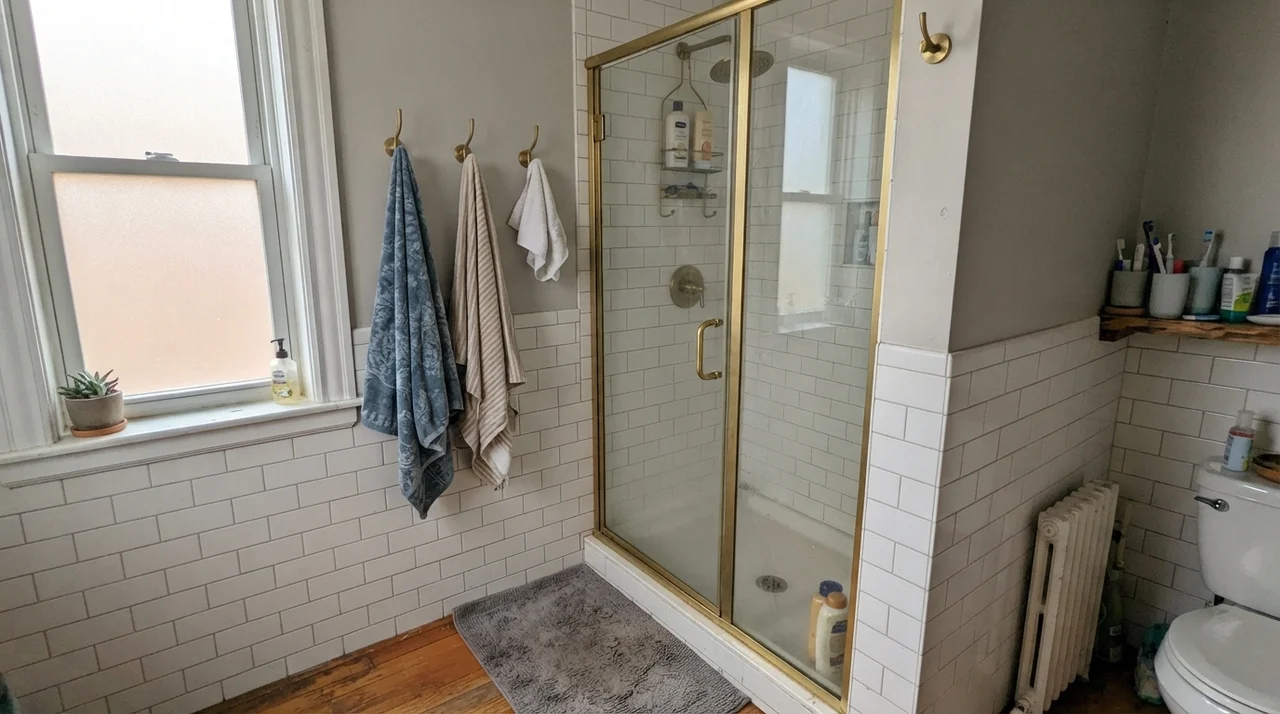
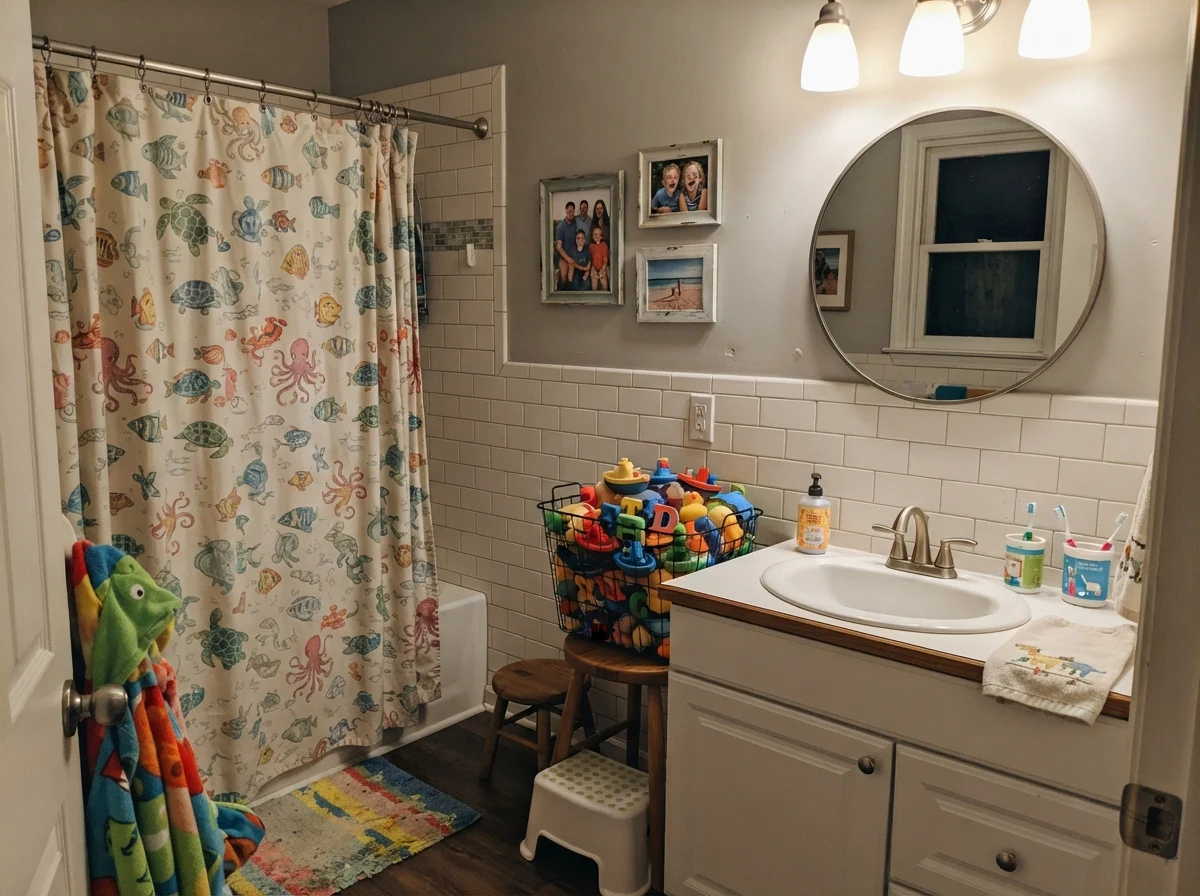
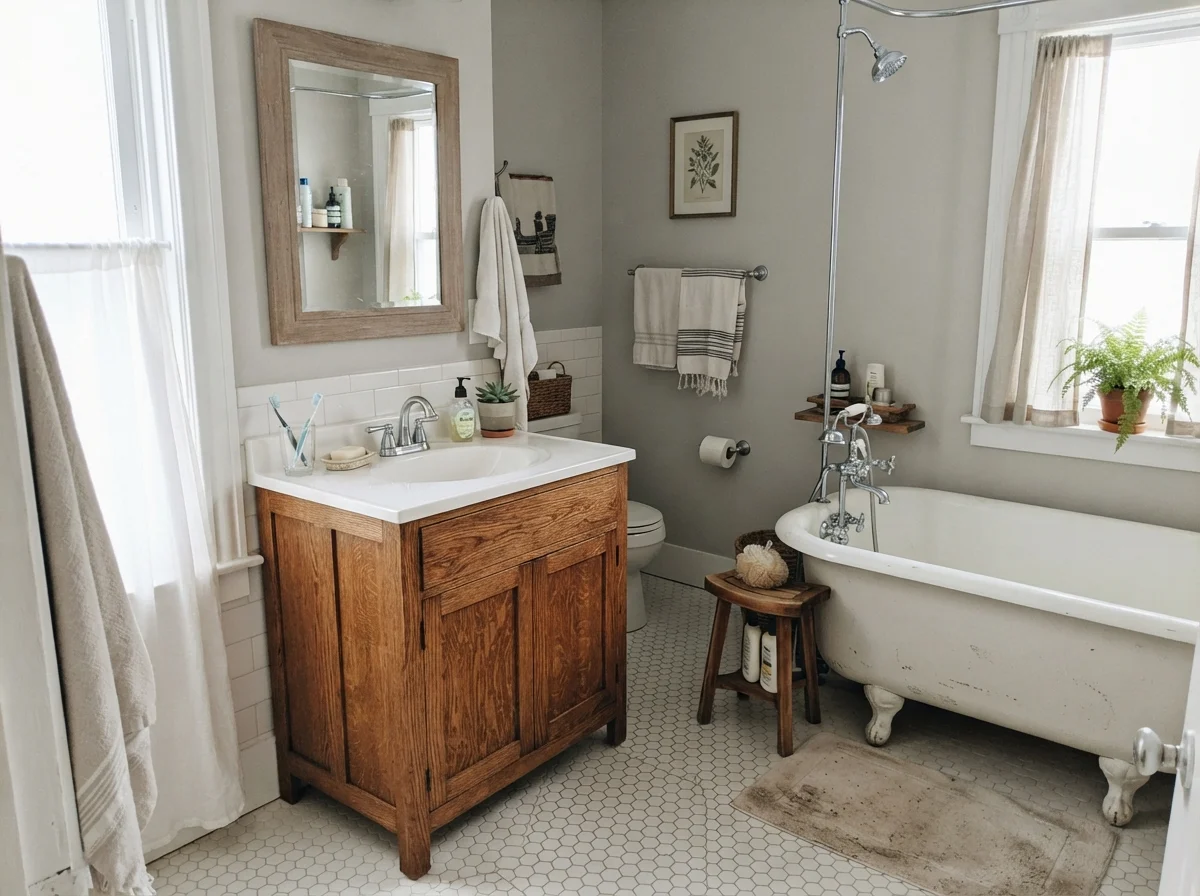
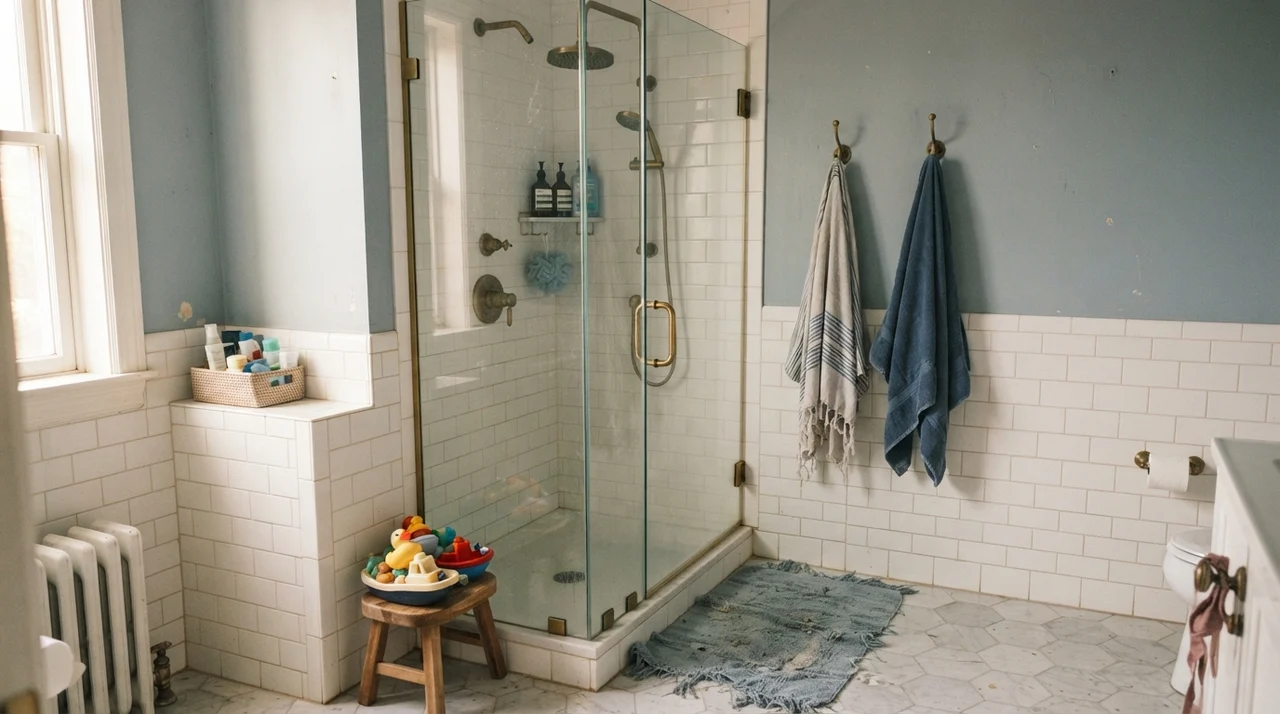
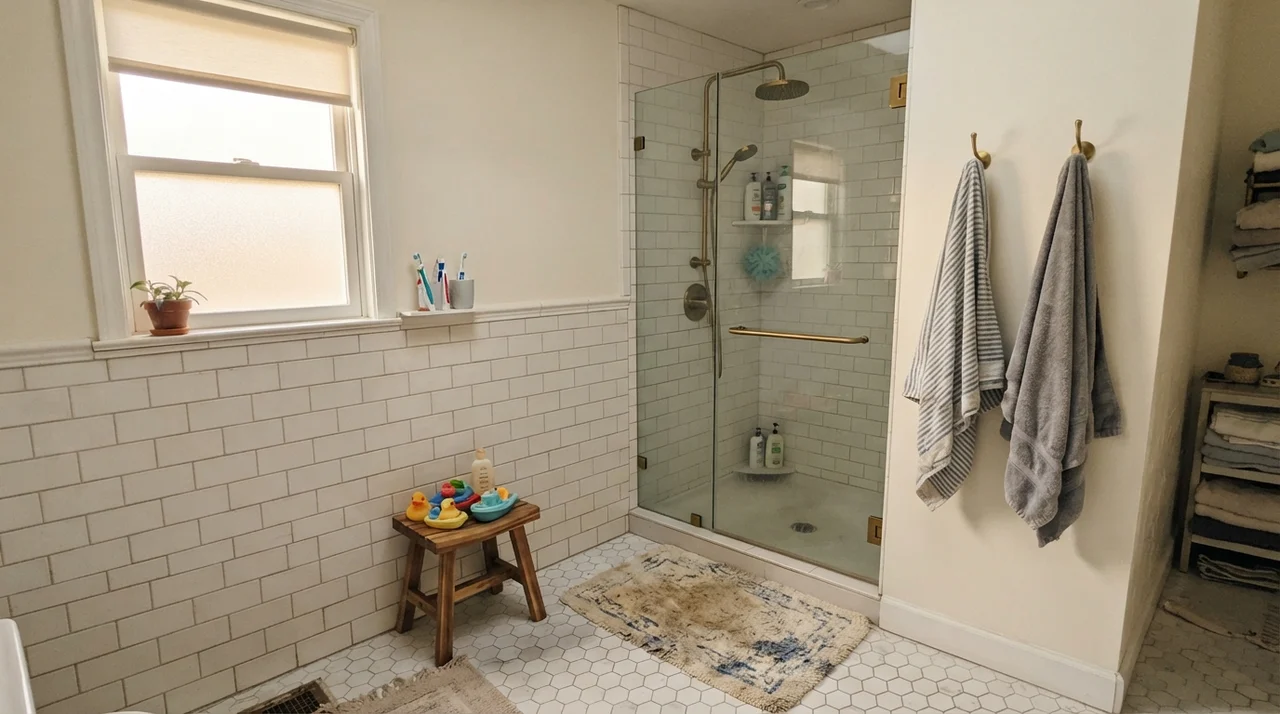
Bathrooms are tricky territory for any color at LRV 53. If your family bath features crisp white subway tile, modern brass fittings, and a decent window, Light French Gray reads clean, fresh, and grounded. Because it carries no yellow, it will not clash with cool gray veining in marble or quartz vanity tops. Paired with white porcelain fixtures, it gives a bathroom the timelessness of an old European hotel.
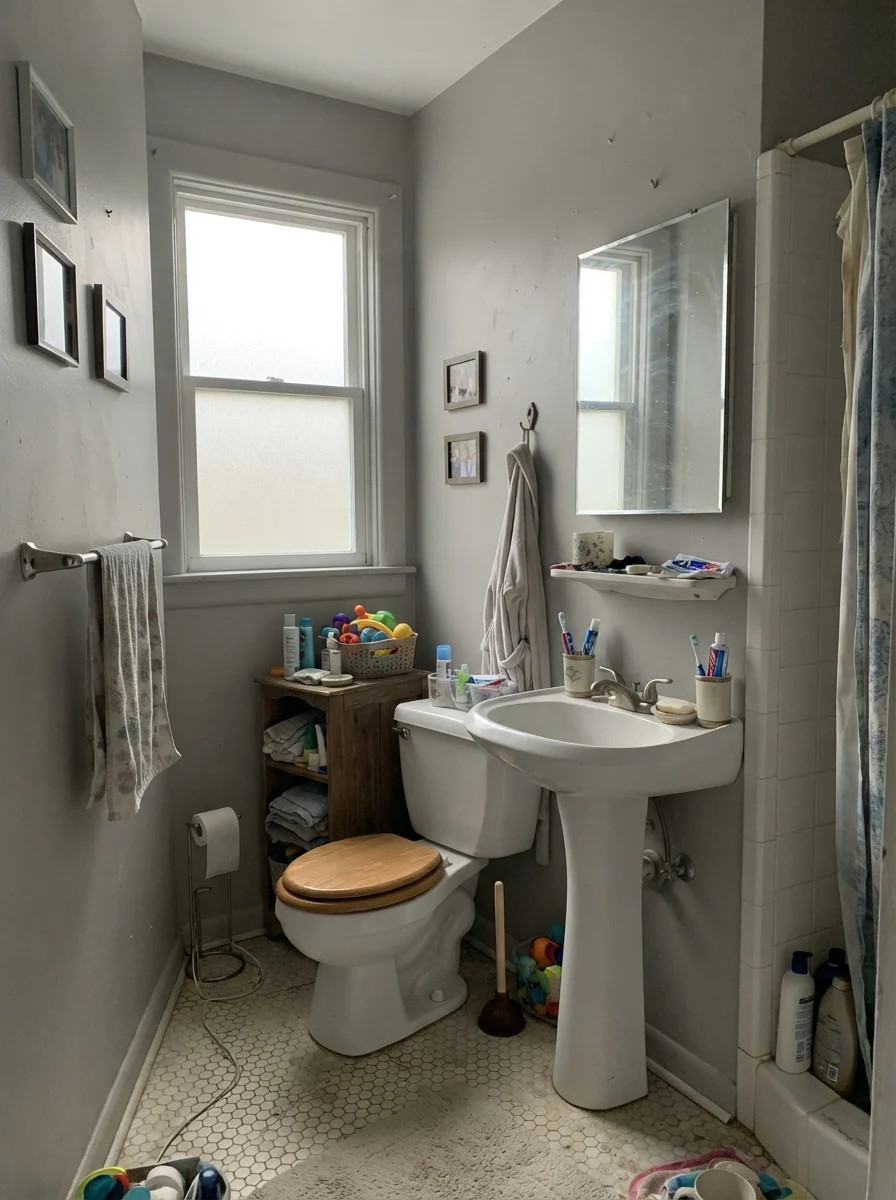
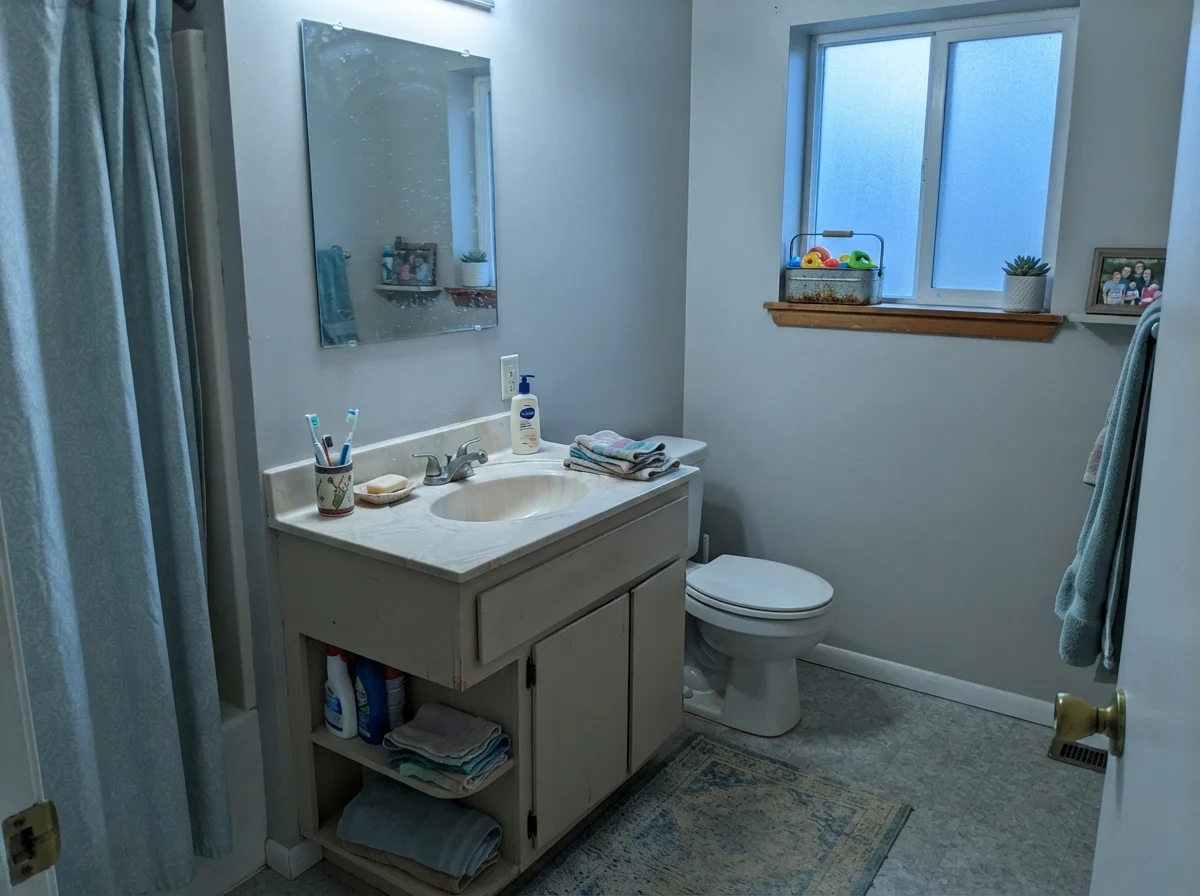
However, the moment you drop this color into a small bathroom with flat northern light or an overcast window, caution is warranted. Without sunlight, the slate undertone asserts itself immediately. Over an older beige vanity or beside yellowed tile, it turns cold and medicinal. A dated vanity will look more yellow, the wall will look like cold putty, and no amount of scrubbing will make the space feel inviting.
Consider the image below carefully. In a modest bathroom with cool northern exposure and older beige fixtures, the paint shows its stubborn side. Notice how the wall picks up an icy cast that makes the almond-toned sink look noticeably more dated. This is the mistake homeowners make when they grab a popular chip without testing the room's orientation first.
Kitchens, Cabinets, and Millwork
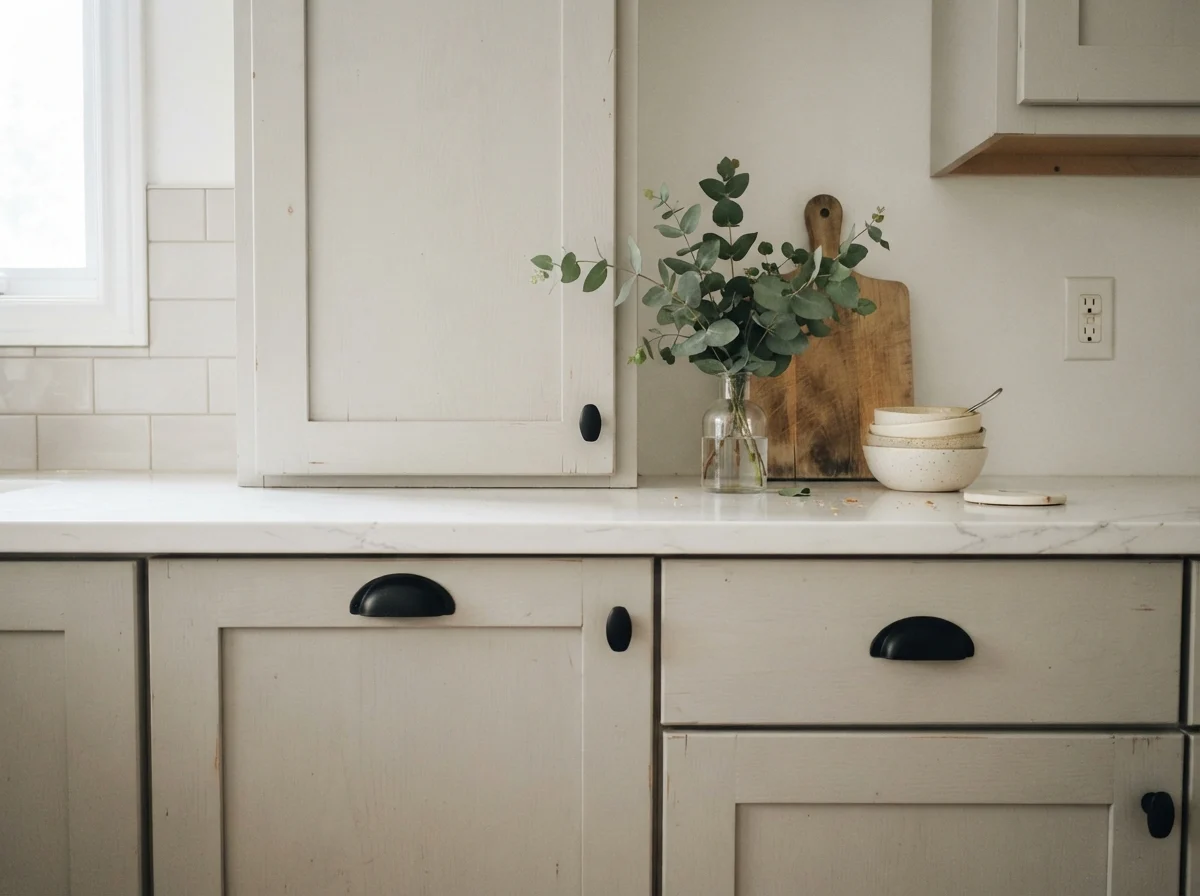
If you are tired of plain white cabinetry but fear trendy dark tones that will look dated within a presidential term, Light French Gray on shaker cabinets is an exceptionally steady choice. On lower cabinets or a central island, painted in a durable satin enamel, it creates an elegant, bespoke look that holds up beautifully to everyday scuffs and fingerprints.
In our 1970s split-level, we had painted the lower kitchen run in a muddy greige that showed greasy handprints around every pull and felt perpetually dingy. A crisp, neutral mid-gray like this sits cleanly against white quartz counters, stainless appliances, and matte black hardware. Just keep an eye on your under-cabinet illumination: 4000K LED tape strips will turn your cabinet doors bright periwinkle while you chop onions, whereas warm 2700K strips keep the millwork anchored in stone gray.
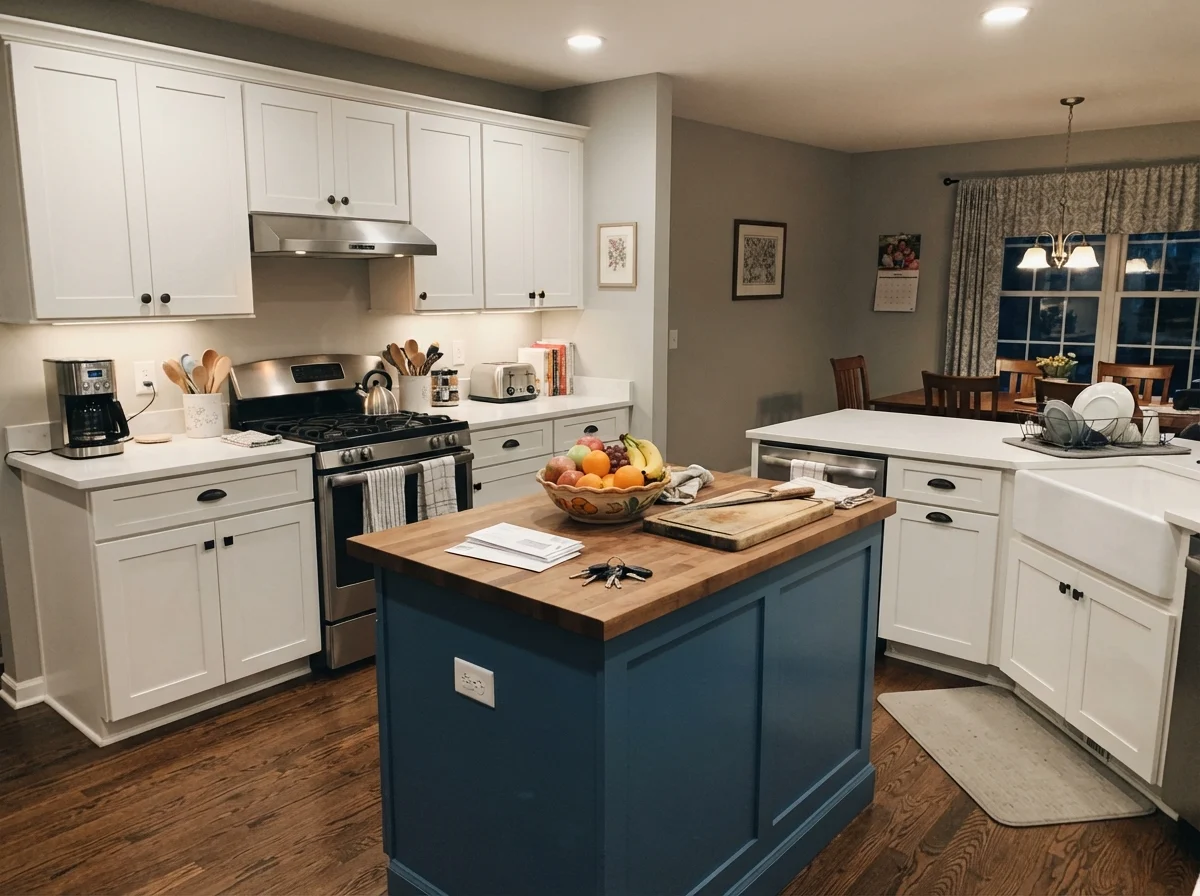
Using it solely on an island is another smart move if you want contrast without committing all four walls. In a busy family kitchen, an island finished in Light French Gray grounds the perimeter white cabinets while forgiving the inevitable bumps from counter stools and grocery bags. It gives the room an intentional, anchored weight without darkening the prep area.
Bedrooms and Quiet Corners
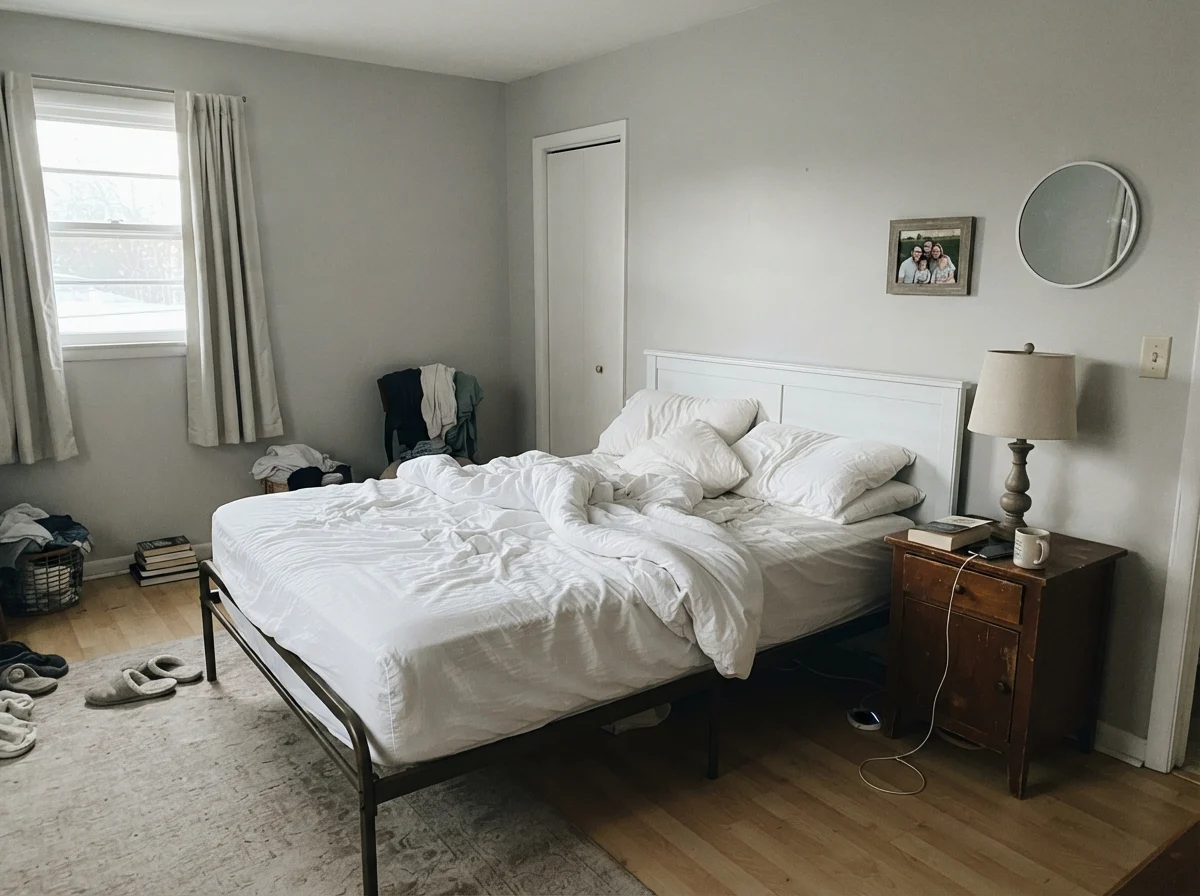
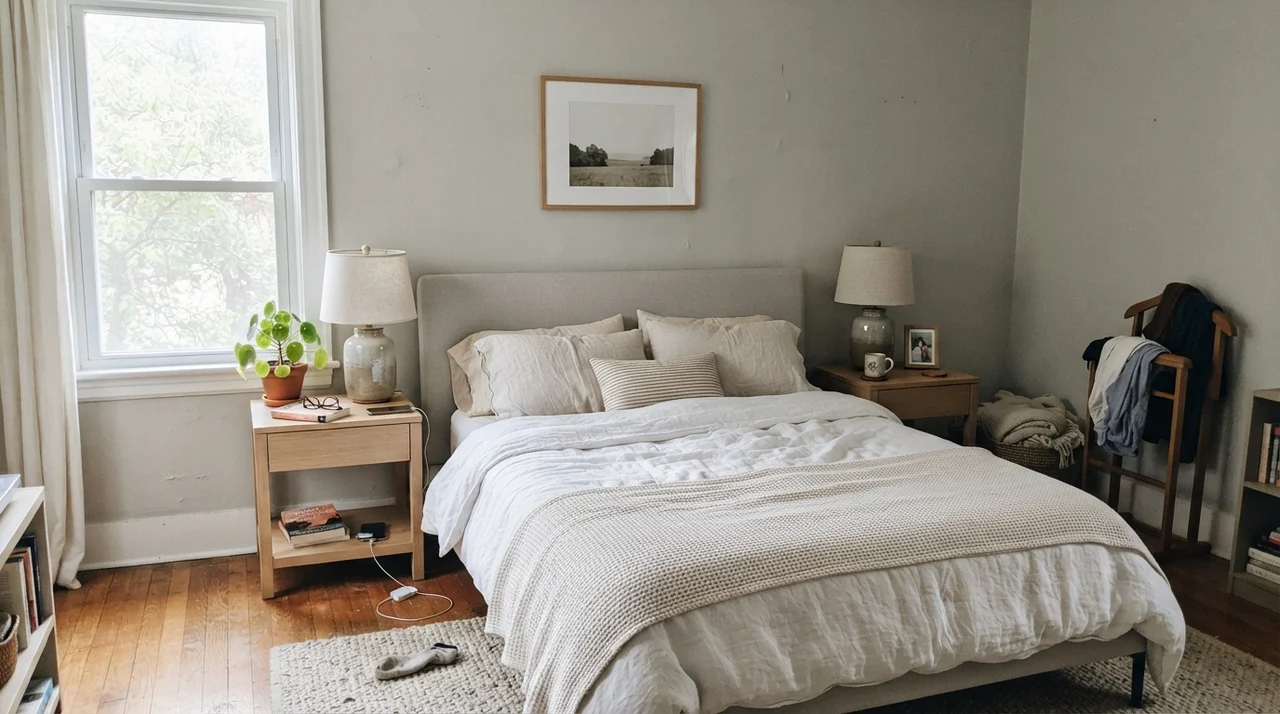
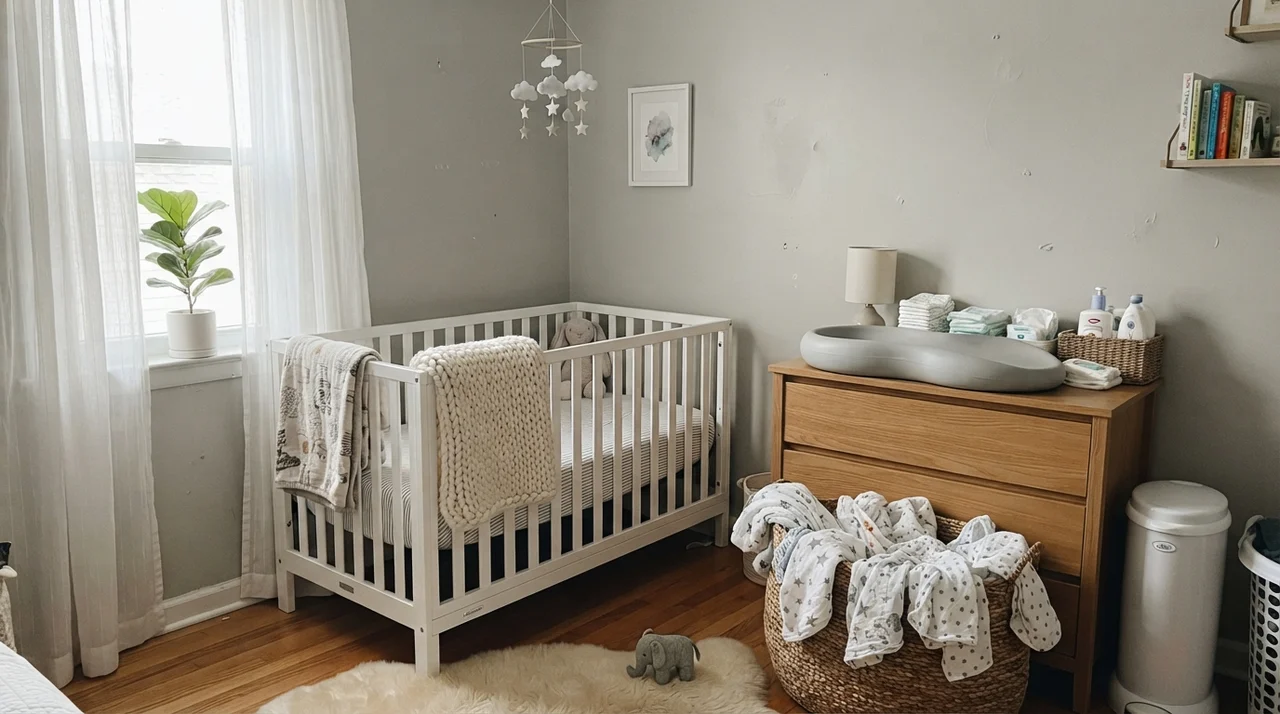
In a bedroom, LRV 53 feels peaceful and cocooning, provided the room gets decent side-window light. Paired with white linen bedding, pale oak dressers, and ceramic lamps, the walls create a serene, uncluttered atmosphere where your eye can rest. It works particularly well in nurseries and guest rooms where you want a clean backdrop that won't dictate bedding colors or feel overly thematic.
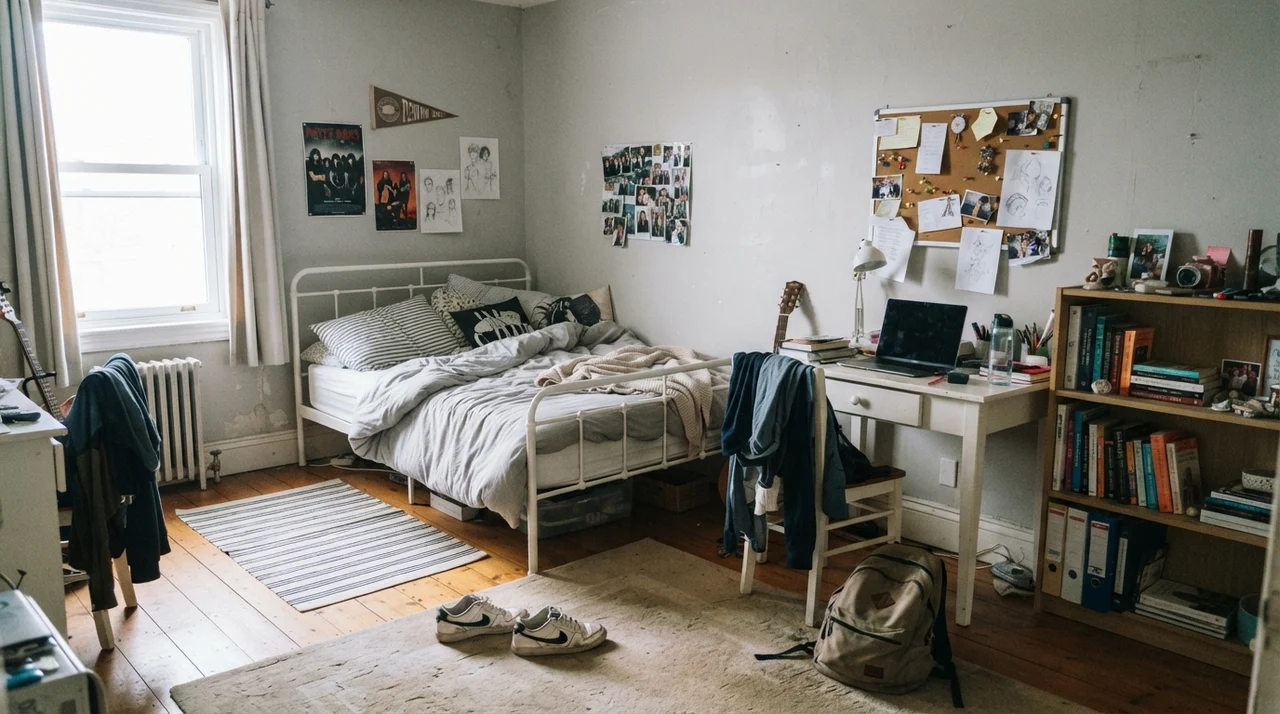
For teenagers' rooms and children's spaces, eggshell finish on the walls provides just enough wipeability without creating distracting surface shine. Paired with light-toned woods, white desks, and woven accents, it feels mature enough to carry a room through high school without requiring another weekend with the roller when their tastes change.
Here it is again in a teenager's bedroom with simple white furniture and corkboards. Because the gray has no muddy brown undertones, bright sneaker colors, posters, and books do not fight the wall. It stays strictly in the background where a reliable neutral belongs.
Utility Spaces, Exterior Siding, and Interior Doors
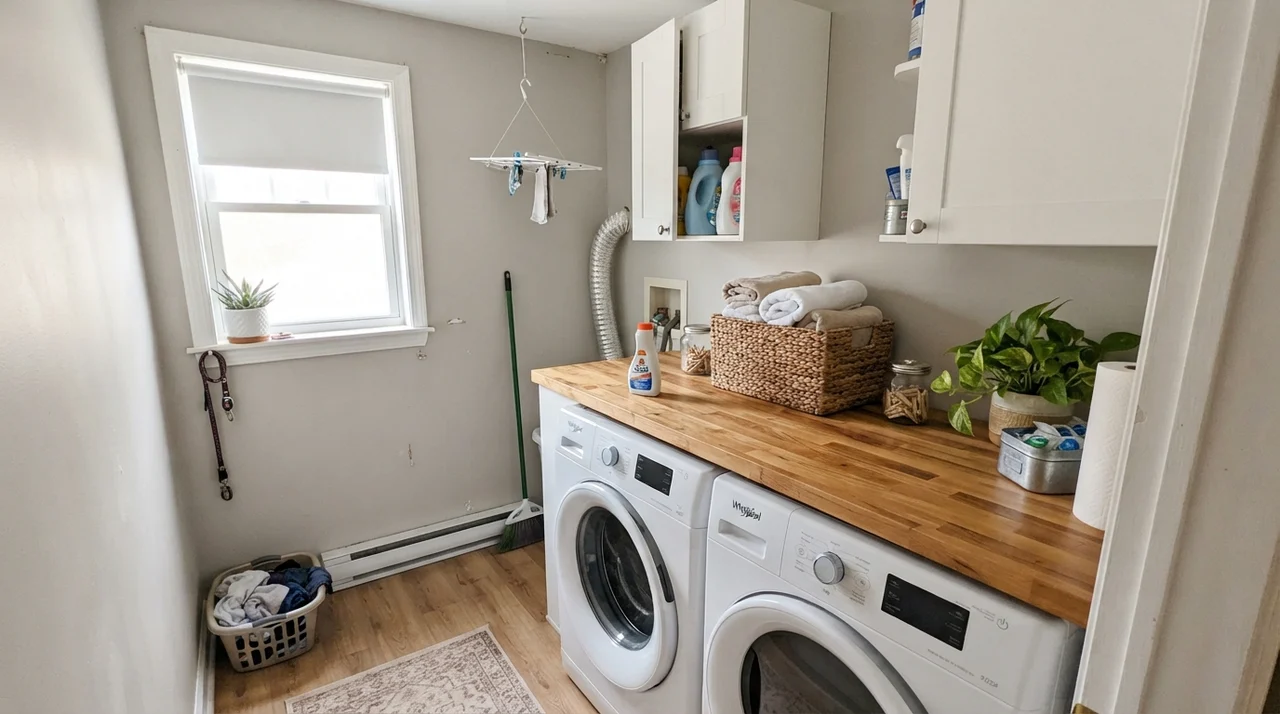
In laundry rooms and basements, Light French Gray often becomes a go-to because it resists turning dingy beige under utility lighting. In a laundry room with a good exterior window, it feels crisp and clean over white washers, dryers, and butcher-block counters. It gives hard-working utility zones a tailored polish that makes folding laundry slightly less of a chore.
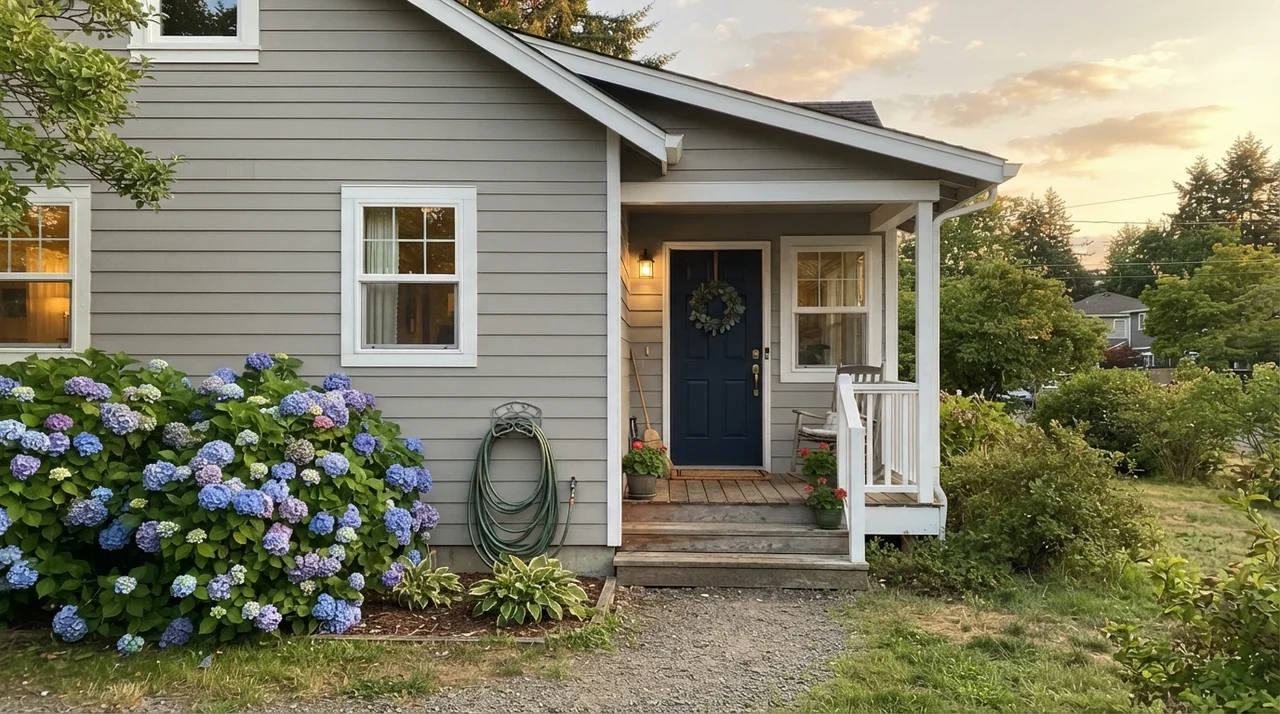
Its most dependable application of all, however, is on exterior siding. Outside under direct sunlight, the color lifts nearly a full step lighter, and the stubborn lavender problem evaporates completely. It registers as an honest, classic architectural gray that never washes out to glaring chalk white. Paired with crisp white trim and a deep dark door, it looks dignified and timeless across all four seasons.
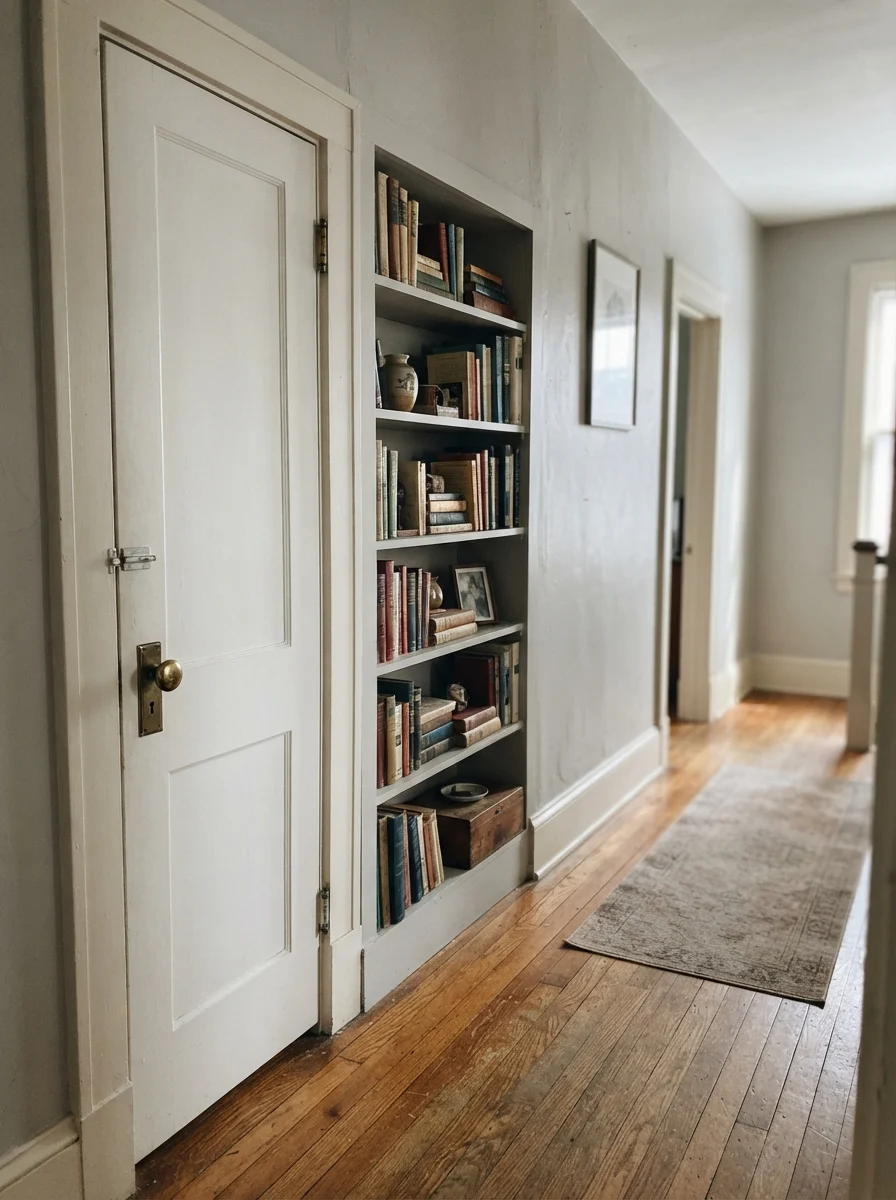
Inside older homes, painting interior passage doors or built-in bookshelves in satin-finish Light French Gray against cream or pale walls creates instant depth. A two-panel door finished this way with an unlacquered brass doorknob adds architectural presence to a simple hallway without darkening the entire corridor.
The Honest Failure: Where This Color Falls Apart
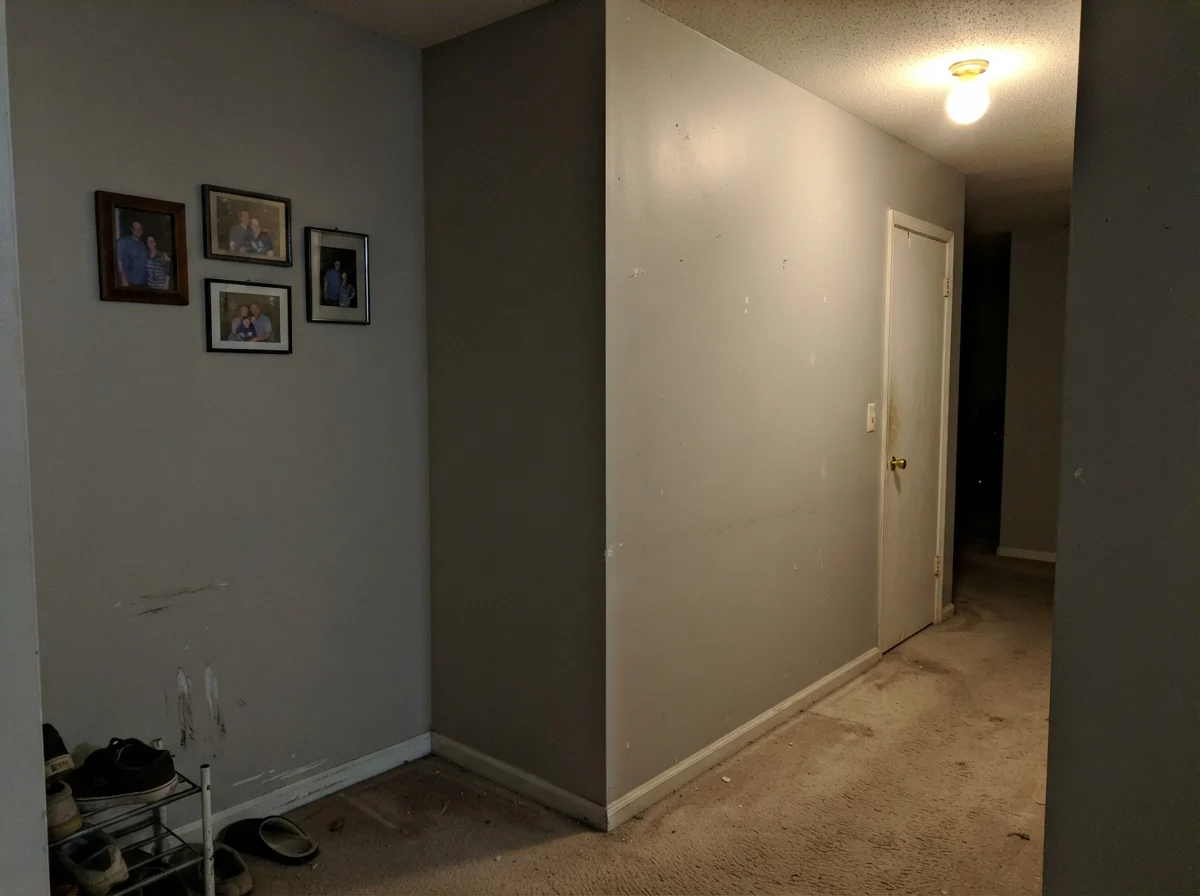
Nearly every repaint disaster I hear about with Light French Gray follows the exact same script: a homeowner tests a small card in a windowless hallway or dim basement, likes the clean gray swatch, and rolls the entire space. Three days later, they are staring at cold, drab concrete that feels like a subterranean parking garage.
Take a hard look at the hallway corner below. With no direct daylight, beige carpet underneath, and a single overhead fixture casting flat yellow light, the paint collapses. It turns into a muddy, dull putty that drains every drop of life from the pictures on the wall. If your hallway lacks windows, do not buy this color. You will be repainting before the month is out.
Durability, Scrubbing, and the Five-Year Test
In our houses over the past thirty years, I have scrubbed every brand of paint imaginable. When you live with a neutral mid-tone like Light French Gray in an active household with dogs, kids, and winter boots, sheen selection is half the battle. For main living areas and bedrooms, stick strictly to eggshell. It gives you enough washability that muddy paw marks and door scuffs can be scrubbed clean with a damp microfiber cloth and mild soap without burning a shiny bald patch into the finish.
For baseboards, door frames, and built-ins, semi-gloss is essential. This paint does not contain the heavy yellow binder resins that hide scuffs easily; when the wall marks, you will see it. Five years in, our woodwork finished in a quality enamel held up without chipping at the corners or discoloring around latch strikes. When we sold, the touch-ups on the hallway baseboards blended cleanly because the formula had not oxidized into a completely different shade. In utility basements or damp rooms, keeping walls in a moisture-rated matte or satin prevents surfactant leaching, ensuring the surface looks as composed on year five as it did on day five.
Why does Light French Gray look blue or purple on my walls?
Because it has almost zero warm pigment in its formula, Light French Gray picks up cool reflections effortlessly. In north-facing rooms, under overcast skies, or under 4000K+ daylight LED bulbs, the lack of red or yellow pigments allows the natural slate base to pull icy baby blue or light lavender.
What light bulbs should I use with Light French Gray?
Stick strictly to 2700K or 3000K warm-white bulbs. Bulbs rated at 4000K or 5000K daylight will strip away every ounce of warmth from the room, making your walls resemble commercial drywall or bare primer.
Can I use Light French Gray with honey oak cabinets or floors?
No, unless you want the walls to look bright baby blue and the cabinets to look neon orange. Orange and blue sit opposite each other on the color wheel, and this pairing will aggressively emphasize both undertones.
What sheen is best for walls, trim, and kitchen cabinets?
Use eggshell on standard drywall, semi-gloss on trim and baseboards, satin cabinet enamel on millwork or vanities, and a bathroom-rated matte or satin in moisture-heavy zones.
Susan's Verdict · A Strict, Disciplined Neutral
Light French Gray is what you buy when you are sick of every neutral turning into oatmeal or army green. It is an honest, handsome mid-gray, but it offers zero built-in warmth and will not bail out bad lighting or orange floors. Put it outside in full sunlight, or inside on kitchen cabinets and southern living rooms paired with crisp white trim. Keep it far away from dim northern rooms, windowless halls, and honey oak.