Color Diary · No. 124
Giving Sherwin-Williams Bungalow Beige Room to Breathe Around Honey Trim
The warm beige people pick when gray feels cold, reviewed honestly: where it settles, the exact light that turns it pink, and what to use instead.

Susan HartleyNovember 15, 2026 · 17 min read
Bungalow Beige · Sherwin-Williams SW 7511
Hex#CDBFB0LRV53Undertonestaupe beige → muted warm gray → rosy flush
In our last house—a 1990s colonial with enough honey-oak casing to build a small fleet of ships—I spent the better part of two years fighting the wood. Every decorator magazine on the grocery rack was screaming that gray was the only civilized choice for a modern home. So, naturally, I brought home three sample pots of pale, cool slate. I rolled the first patch right next to the front hall baseboard, stepped back, and watched in horror as my floors turned the color of an angry pumpkin while the gray wall looked like cold dishwater. The wood looked worse, the paint looked miserable, and I had wasted thirty dollars before breakfast.
That was the week I learned that you cannot bully existing woodwork with paint. If your house has honey trim, warm red brick, or golden oak floors, you have to meet the building halfway. That is how Sherwin-Williams Bungalow Beige SW 7511 ended up on our main level. It is a paint color designed for houses that already have life and warmth baked into their bones, but it comes with a temperament that every homeowner needs to understand before pouring out the first tray.
At a Light Reflectance Value of 53, Bungalow Beige sits right in that middle ground where it behaves like real color on the drywall rather than an off-white that couldn't make up its mind. In a market flooded with whisper-soft tints that wash out into chalk the second bright daylight hits them, an LRV of 53 has backbone. It provides enough visual weight to frame white casing and ground a room, but without the cave-like gloom that darker beiges carry into north-facing hallways.
We lived with it across our entire ground floor for six years. During that stretch, through muddy spring boot seasons and countless family dinners, I watched how it handled real life. It is not an aloof, gallery-wall greige. It is grounded, comfortable, and forgiving. But it carries a quiet red undertone that will make itself known the moment your lighting goes sideways.
The Undertone Shift Under Different Skies
Every beige has a secret driver behind its formula. In Bungalow Beige, that driver is red. In steady daylight and cool exposures, that warmth registers as a dignified, grounded taupe. But place it under direct late-day sun or warm interior lamps, and that red lean steps forward.
warm sun
overcast, north light
dusk, rain, cool bulbs
taupe beige → muted warm gray → rosy flush
Creamy MushroomBehr · see diary
Soft PelicanValspar · see diary
Bungalow BeigeSW 7511
GravelstoneBehr · see diary
BirchwoodDunn-Edwards · see diary
Morning Chill Versus Evening Glow
People often ask me why their neighbor's beige looks like a cozy linen blanket while their own version looks like calamine lotion. The answer almost always comes down to the clock and the direction of the glass. Color is never static; it is merely a mirror reflecting whatever wave of daylight hits the room.
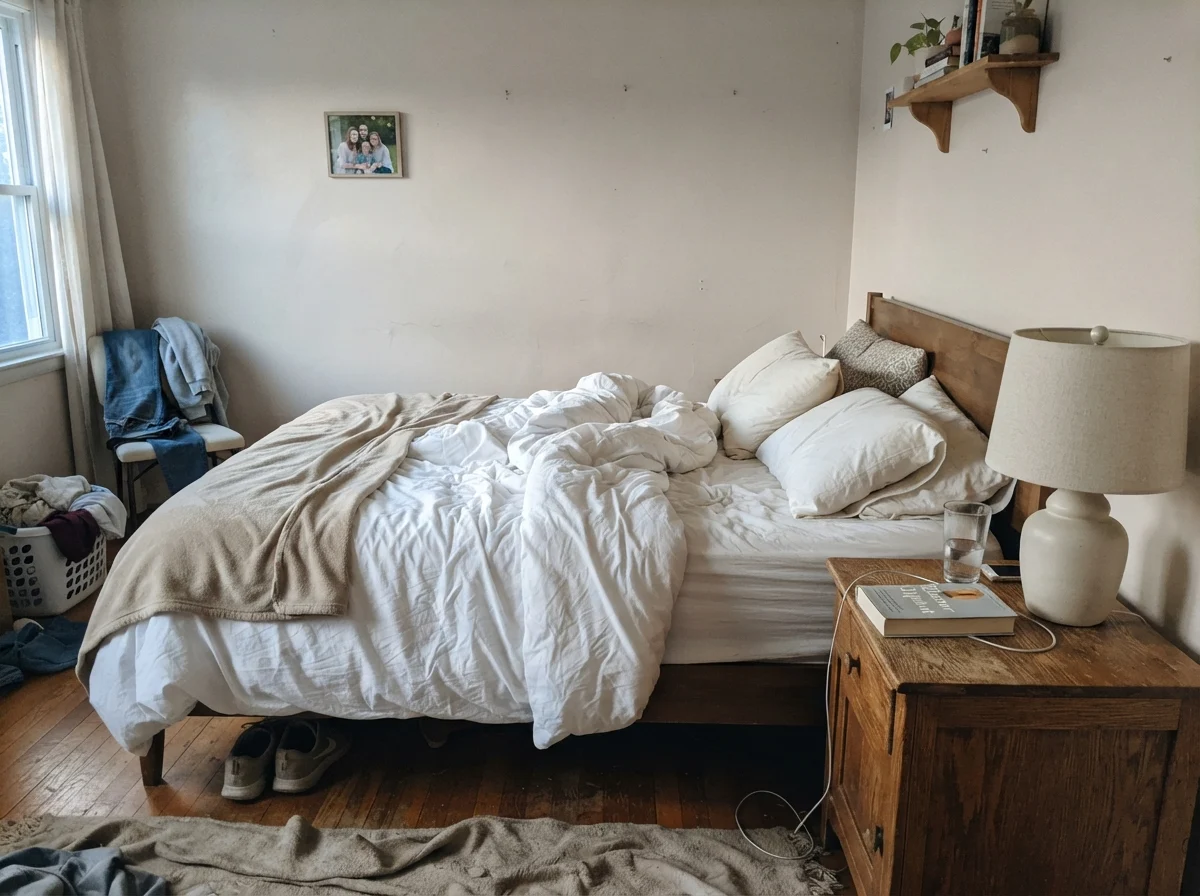
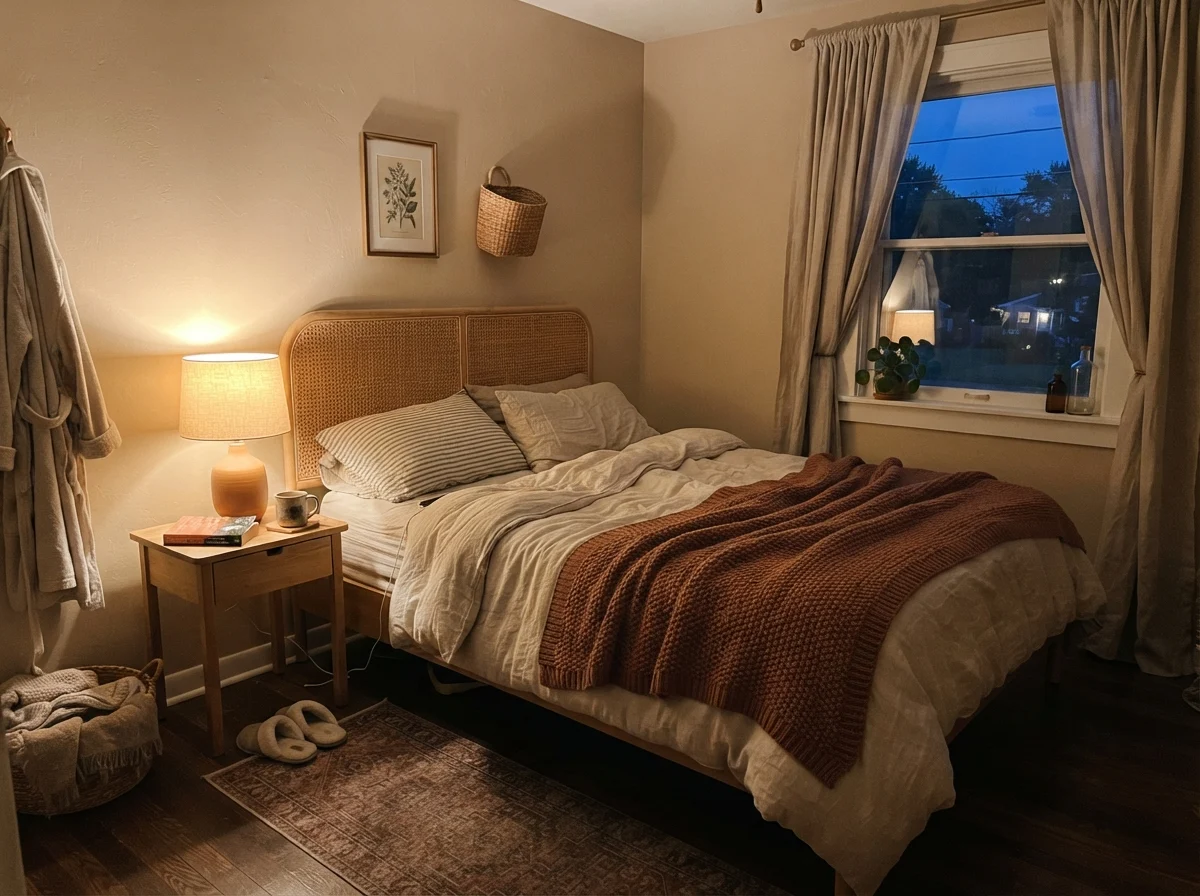
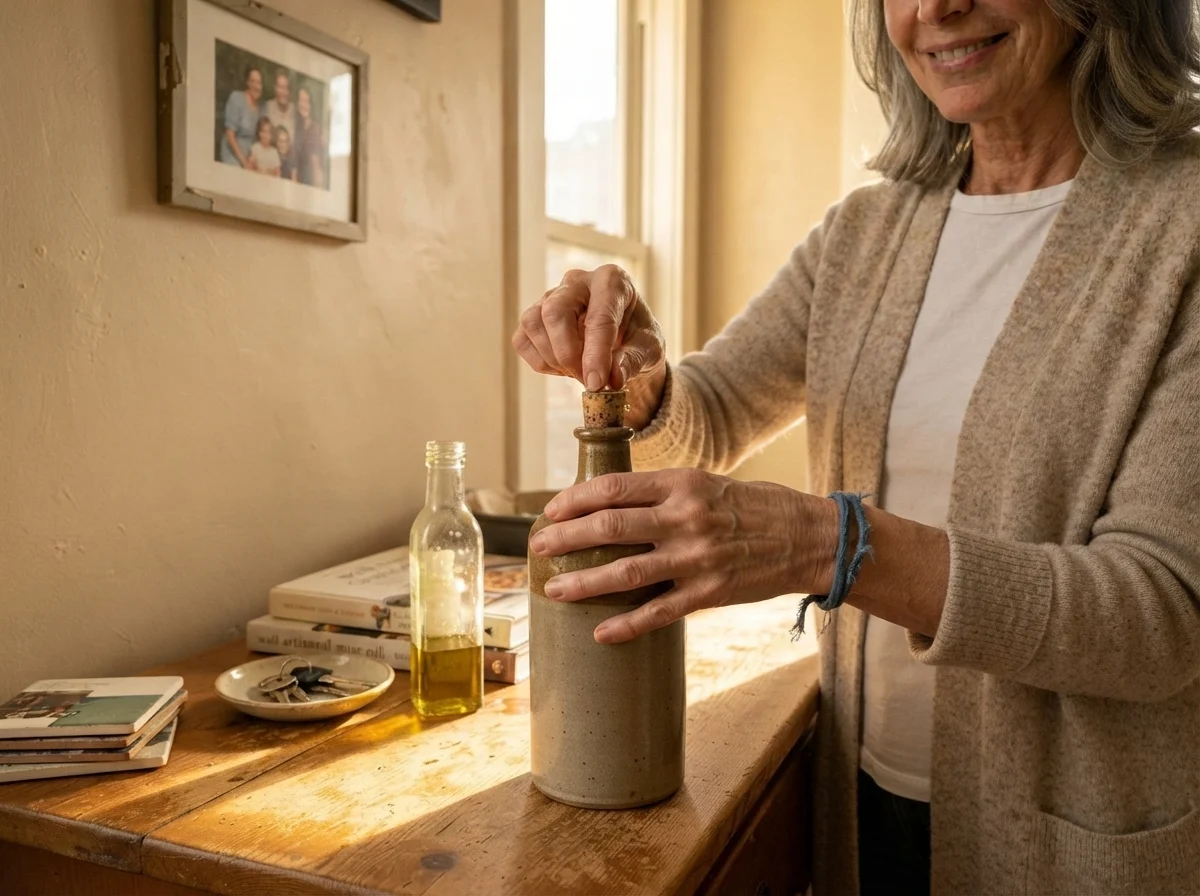
In cool early-morning light, Bungalow Beige pulls back its red tendencies and reads exceptionally calm. You see the gray-brown taupe side of the pigment, which keeps it tailored and serene. But when evening arrives and you flip on lower-temperature household lamps, the warmth swells. If you are not expecting that shift, it can catch you off guard.
Seeing those two sides of the same formula side-by-side illustrates why I tell people to test paint across twenty-four hours, not twenty-four minutes. The morning bedroom feels quiet, subdued, almost like a vintage limestone. By dusk, that same wall under a warm reading bulb feels enveloped in a gentle, toasted blush. Neither version is wrong, but you need to know which one you are signing up to live with every night before you open the can.
Living Spaces and Sun-Drenched Rooms
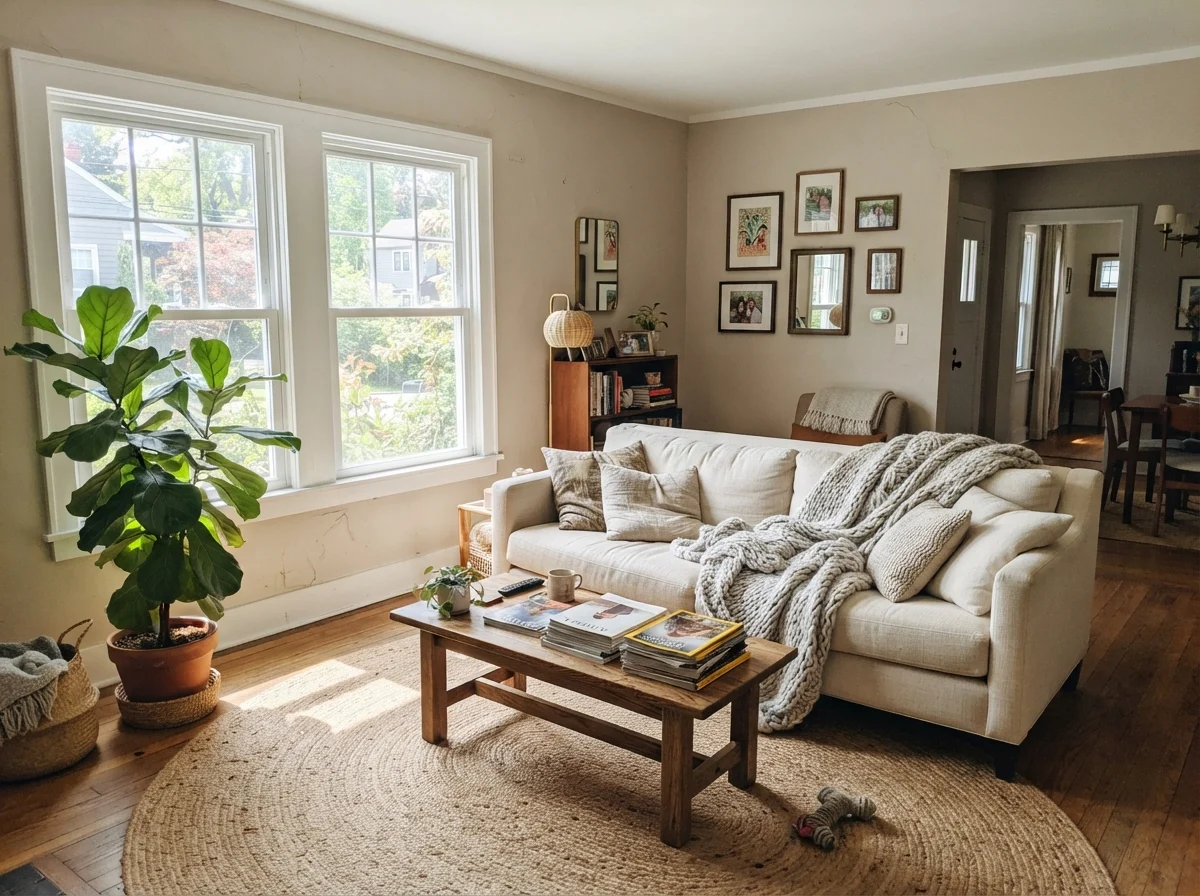
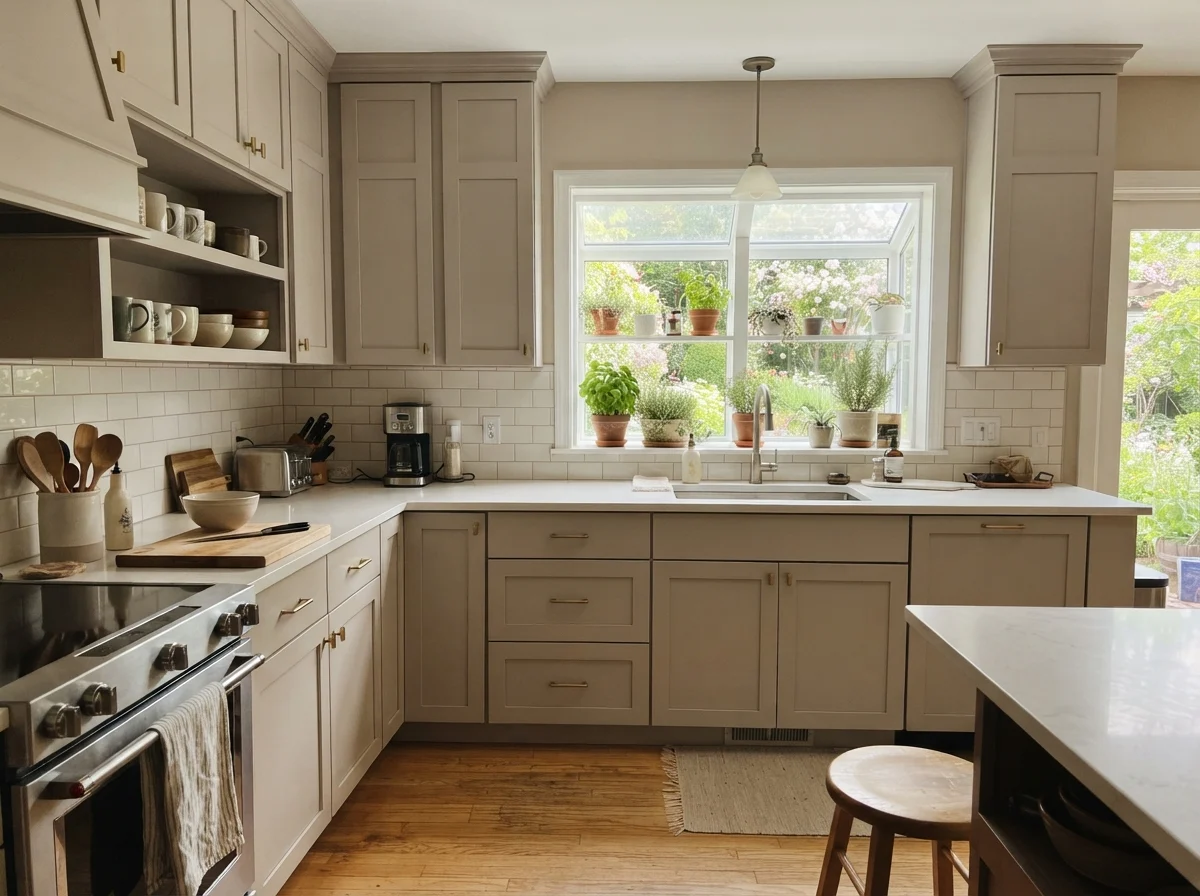
Where Bungalow Beige really earns its keep is in a busy living room with honest daylight and traditional finishes. If you have an unpainted brick fireplace, an old leather armchair, or medium oak flooring that was installed three decades ago, this color wraps around them seamlessly. It softens the orange cast in older floorboards and makes brick feel anchored rather than loud.
In our current 1960s ranch, the main room gets south-facing exposure through broad front windows. Southern light is naturally golden, and on an LRV 53 greige, it brings out an earthy richness that makes white painted trims look crisp and tailored. It avoids the sterile doctor’s-office vibe that cool grays bring into older architecture.
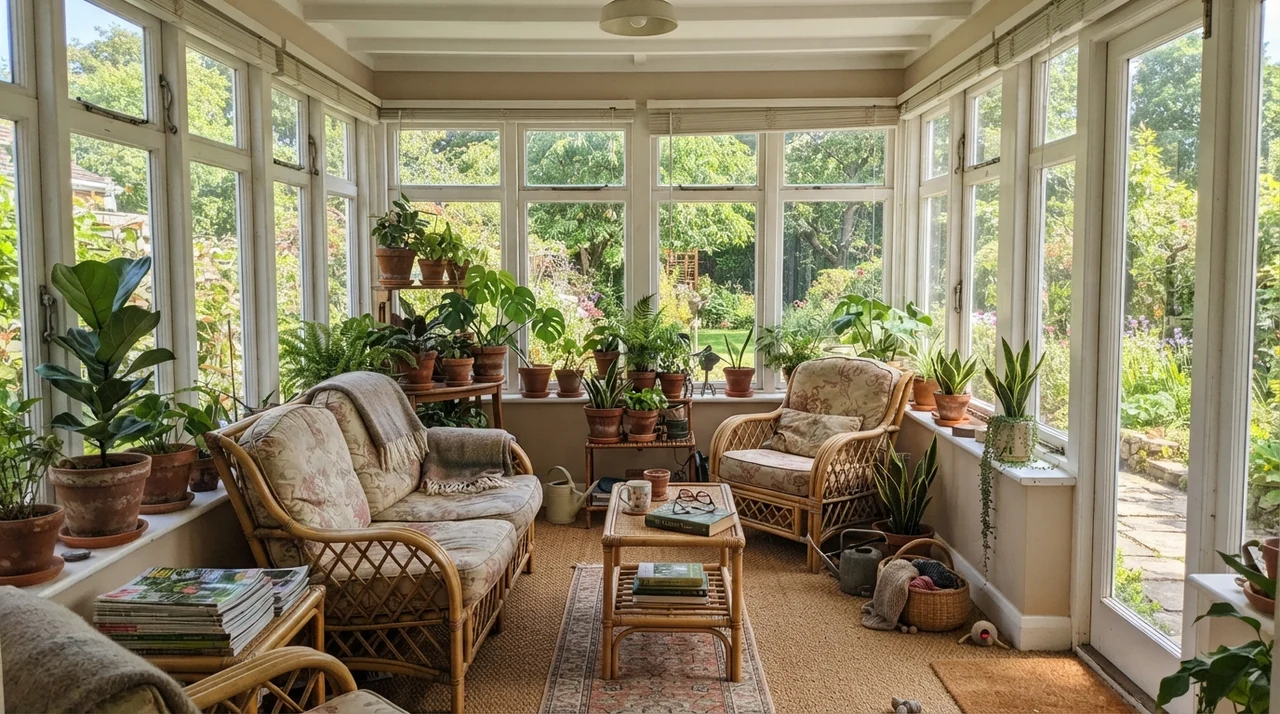
Even in a bright sunroom with glass on three sides, it maintains enough body to frame outdoor greens without glaring back at you. Many lighter off-whites wash out entirely in full daylight, reflecting a harsh glare that makes you squint on a sunny Saturday. Bungalow Beige holds its density, sitting quiet behind the foliage and wicker furniture.
Quiet Quarters: Bedrooms and Nurseries
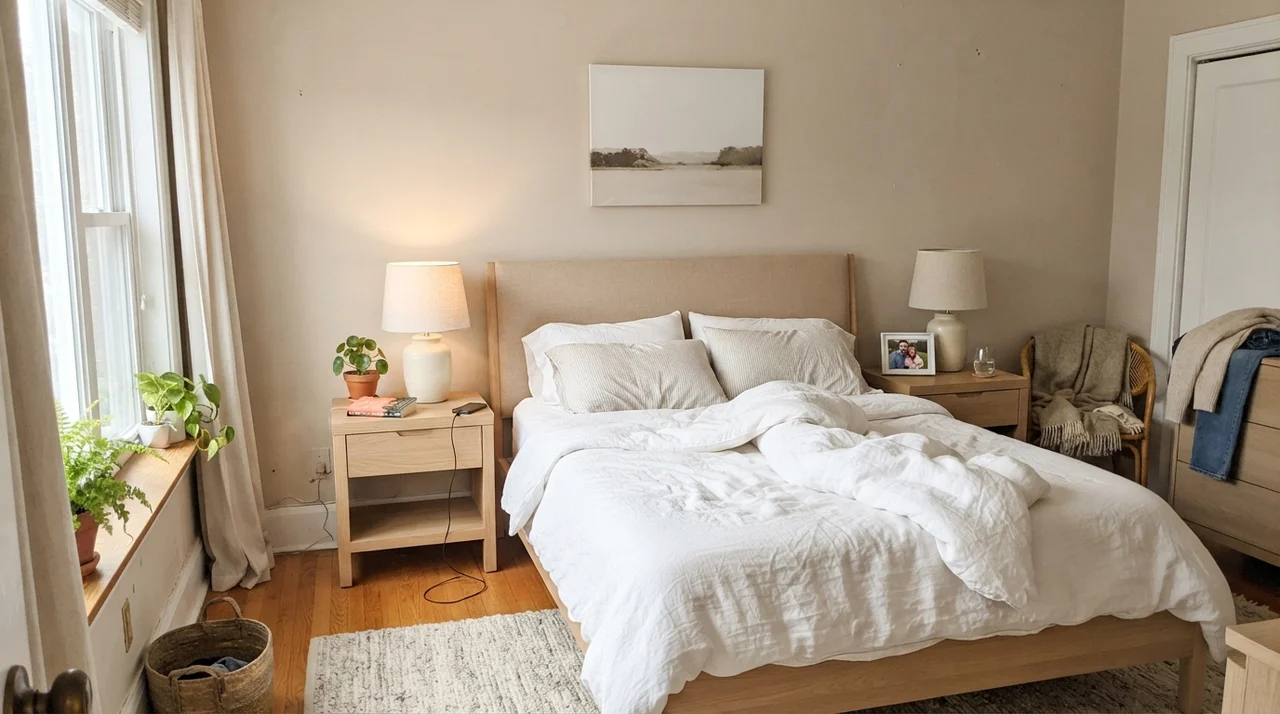
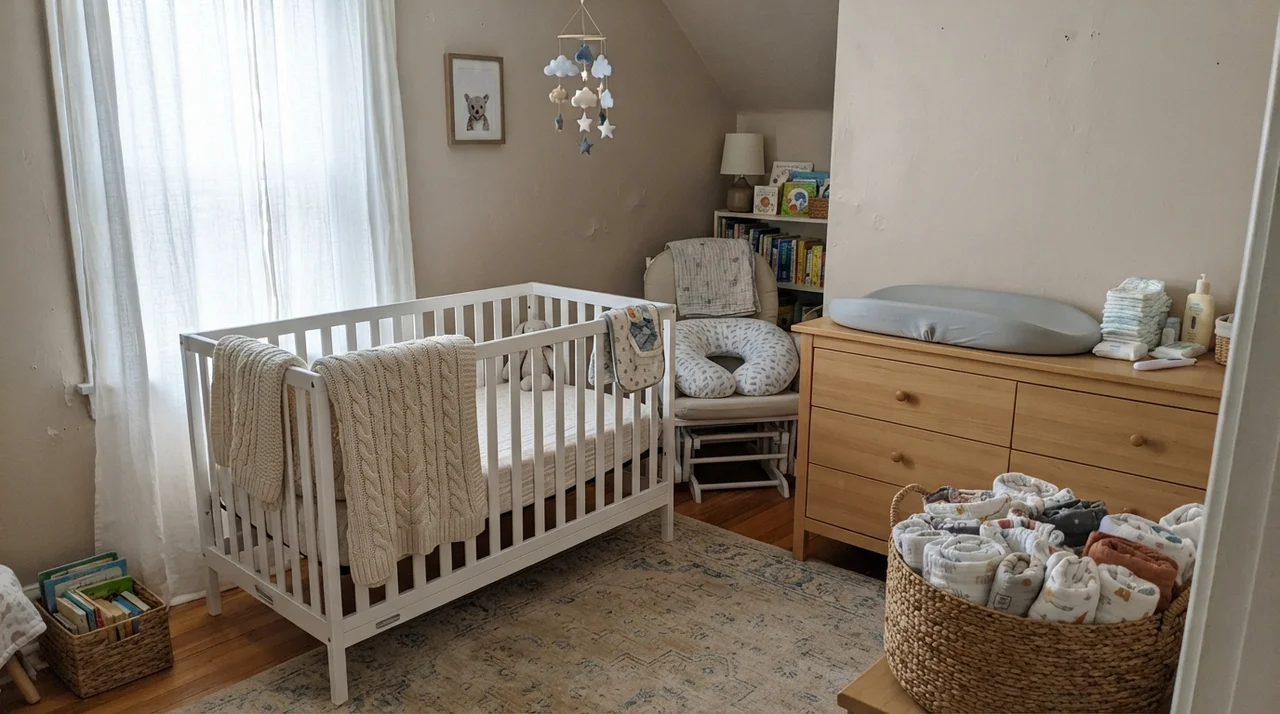
In bedrooms, paint needs to do double duty. It must feel clean and open while you are making the bed at seven in the morning, and restful when you are turning down the covers at ten at night. Because Bungalow Beige does not rely on sterile gray pigments, it makes sleeping spaces feel naturally insulated and peaceful.
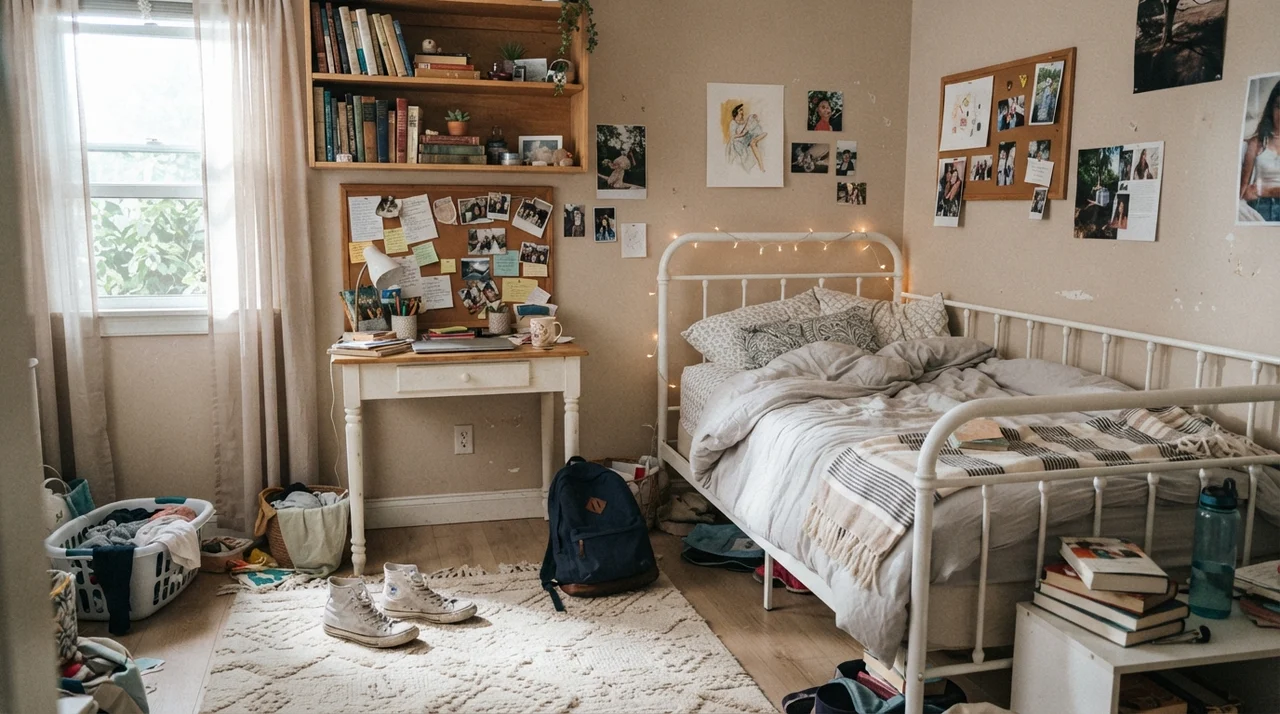
Notice how well it plays against simple white cottons, knit blankets, and pale natural woods. In the nursery and the teenager's room above, the color recedes into the background. It doesn't fight the clutter of school books or laundry, and it doesn't demand you buy a specific shade of rug just to keep the peace. That is the kind of everyday utility I value after thirty years of keeping house.
Bathrooms and the Tile Question
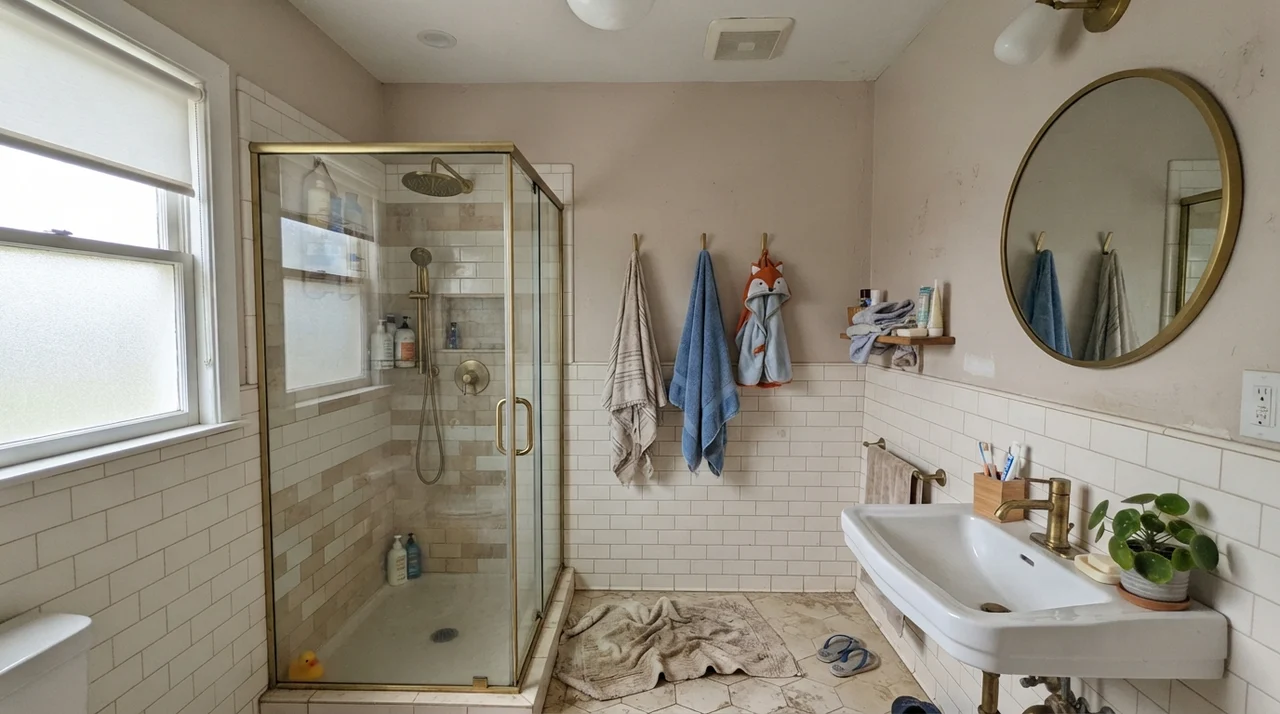
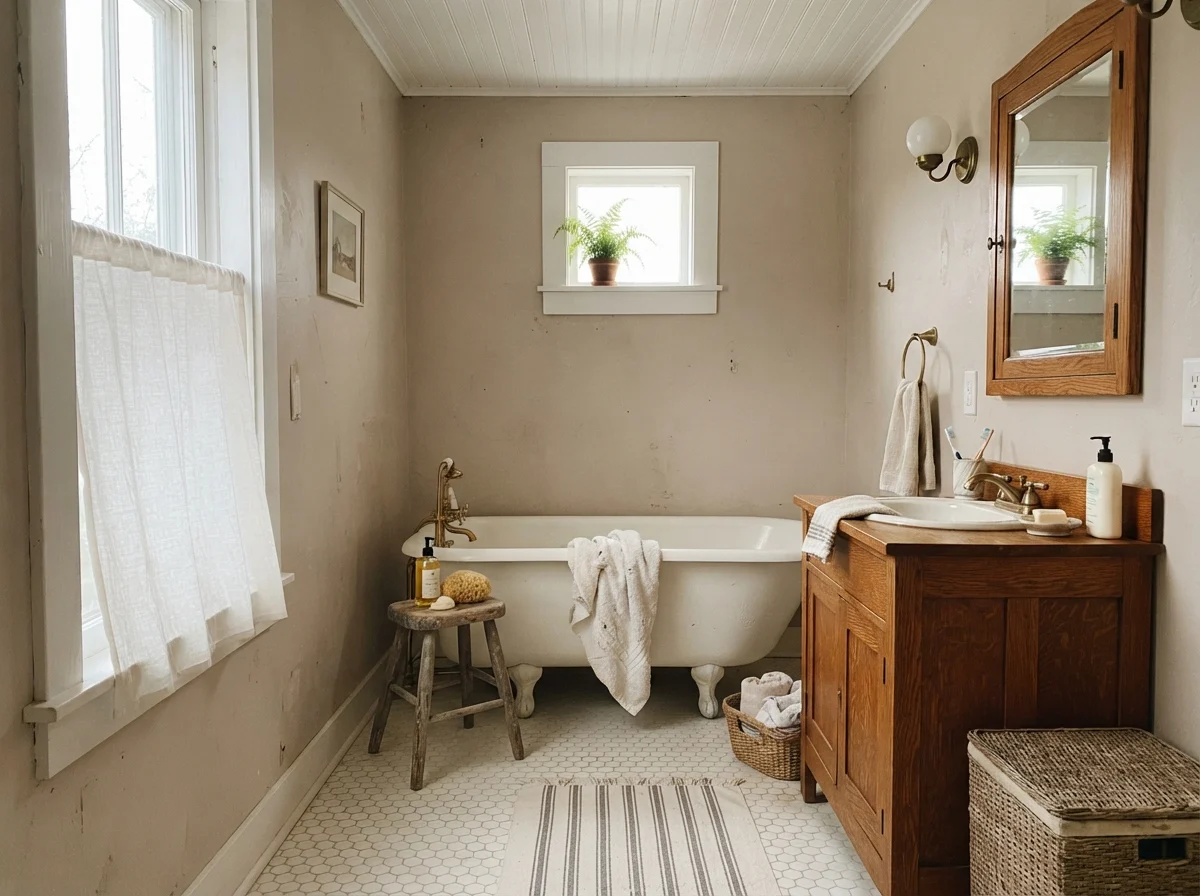
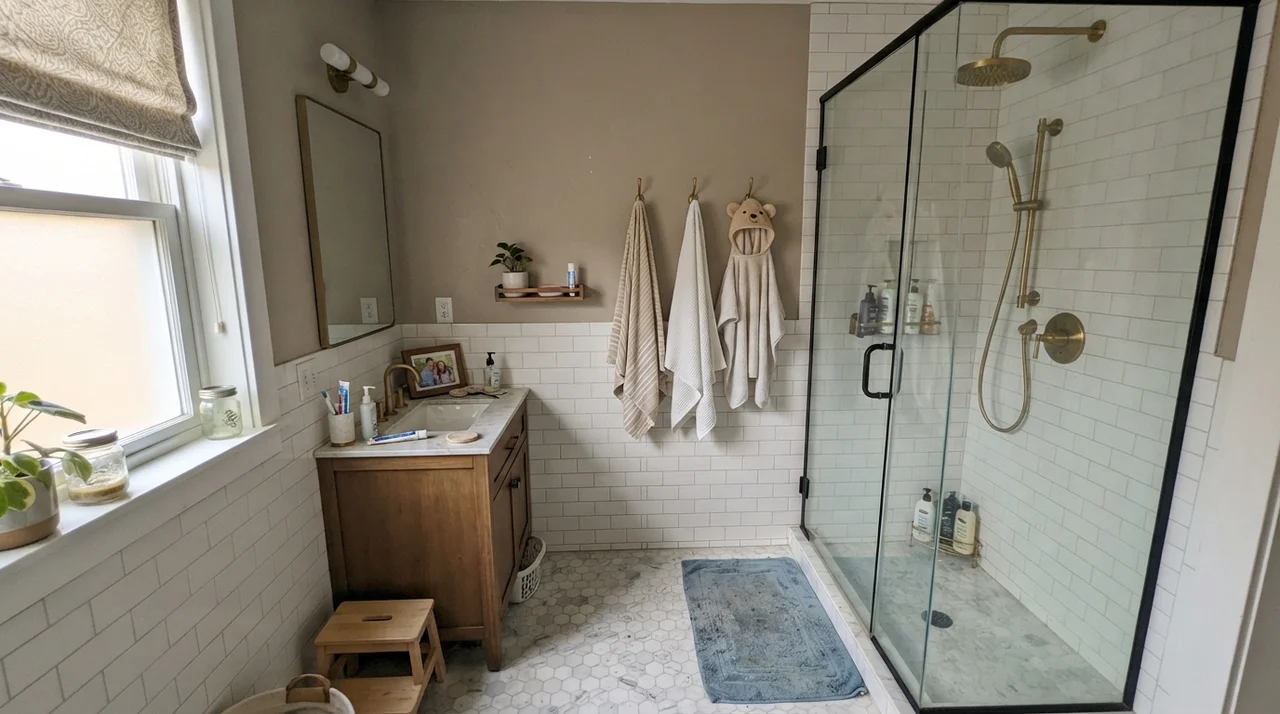
Bathrooms are where paint choices can turn sideways the fastest. Why? Because you are working with hard, unyielding surfaces—enameled tubs, ceramic tile, polished stone, and artificial vanity bulbs. In a cottage-style bath with classic white hex tile and a warm oak vanity, Bungalow Beige looks like it was meant to be there from the day the house was framed.
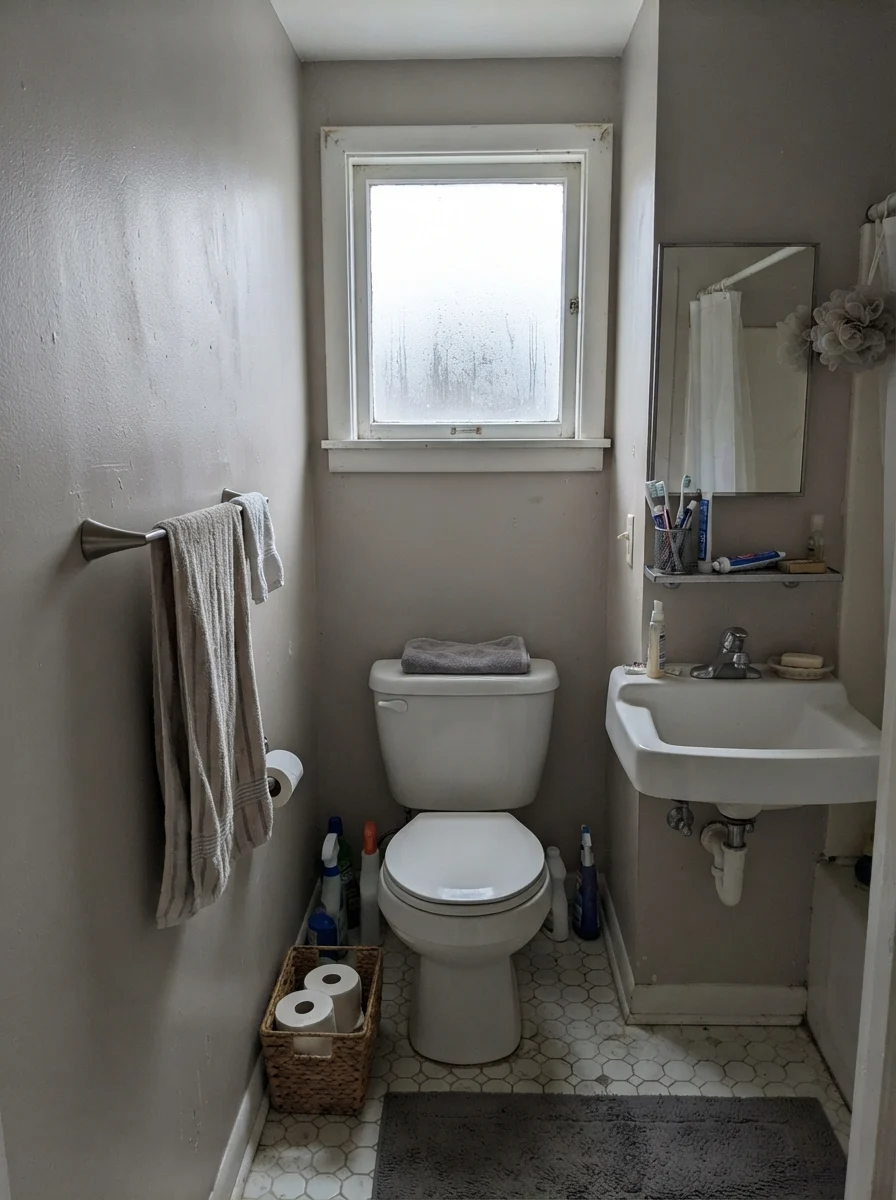
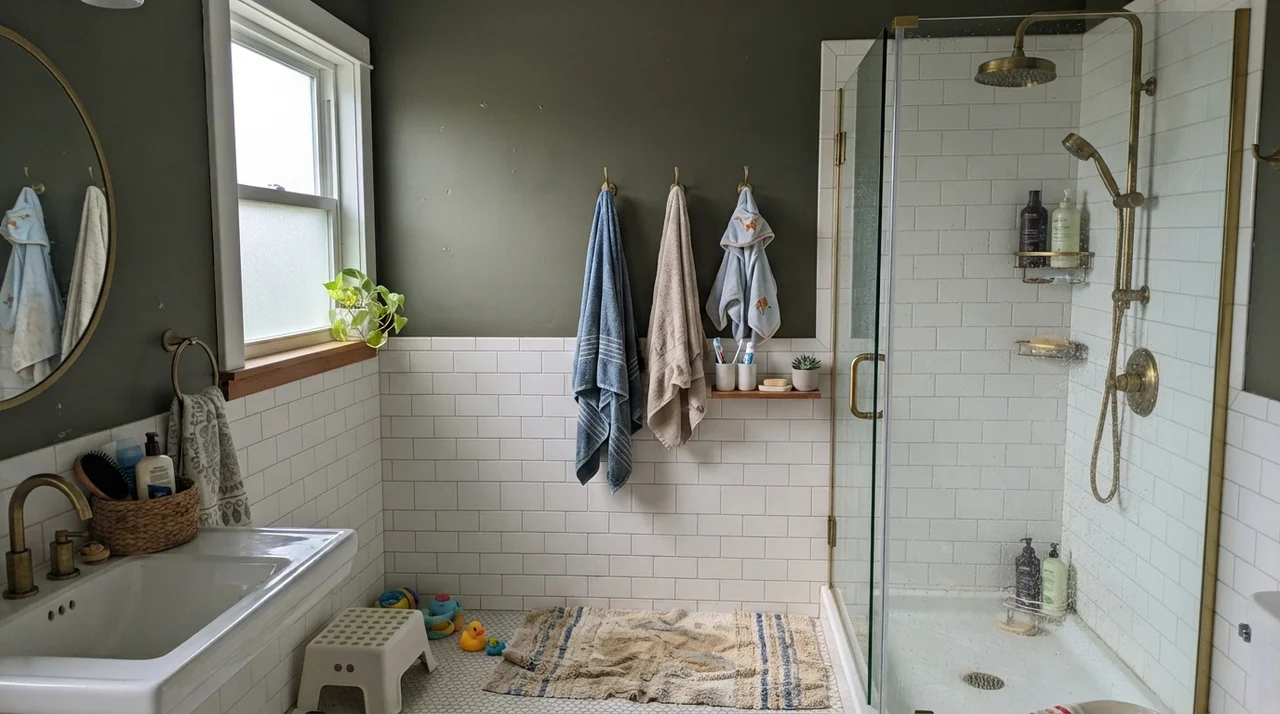
However, the lighting must be carefully considered. If your bathroom only receives overcast light through frosted glass or cool north exposure, the wall pigment will respond accordingly. It will lose some of its sunny warmth and shift toward a deeper, stone-like taupe.
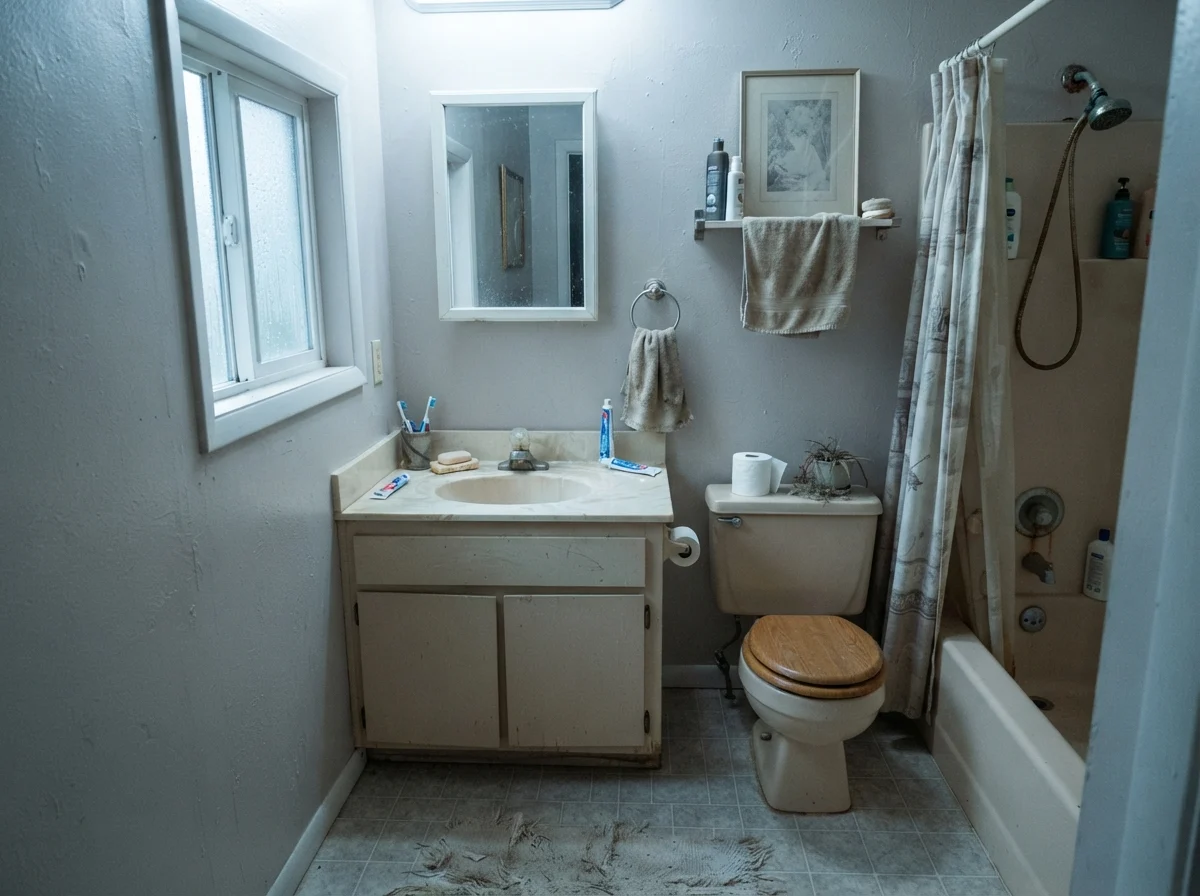
When paired with an older beige vanity or plain white fixtures under flat skies, it will never look bright white. It reads as an intentional, medium-depth tone. If you are trying to make a cramped, dark powder room look like an airy modern spa, rolling this on the walls will not accomplish that goal. But if you want the walls to feel solid, grounded, and forgiving of everyday moisture and steam, an eggshell or satin finish here does the job cleanly.
Cabinetry, Millwork, and Built-ins
While most homeowners defaults to painting their drywall, Bungalow Beige is actually one of my favorite secret weapons for cabinetry and woodwork. When applied in a durable satin cabinet enamel, it creates a grounded, tailored presence that hides fingerprints infinitely better than pure white ever could.
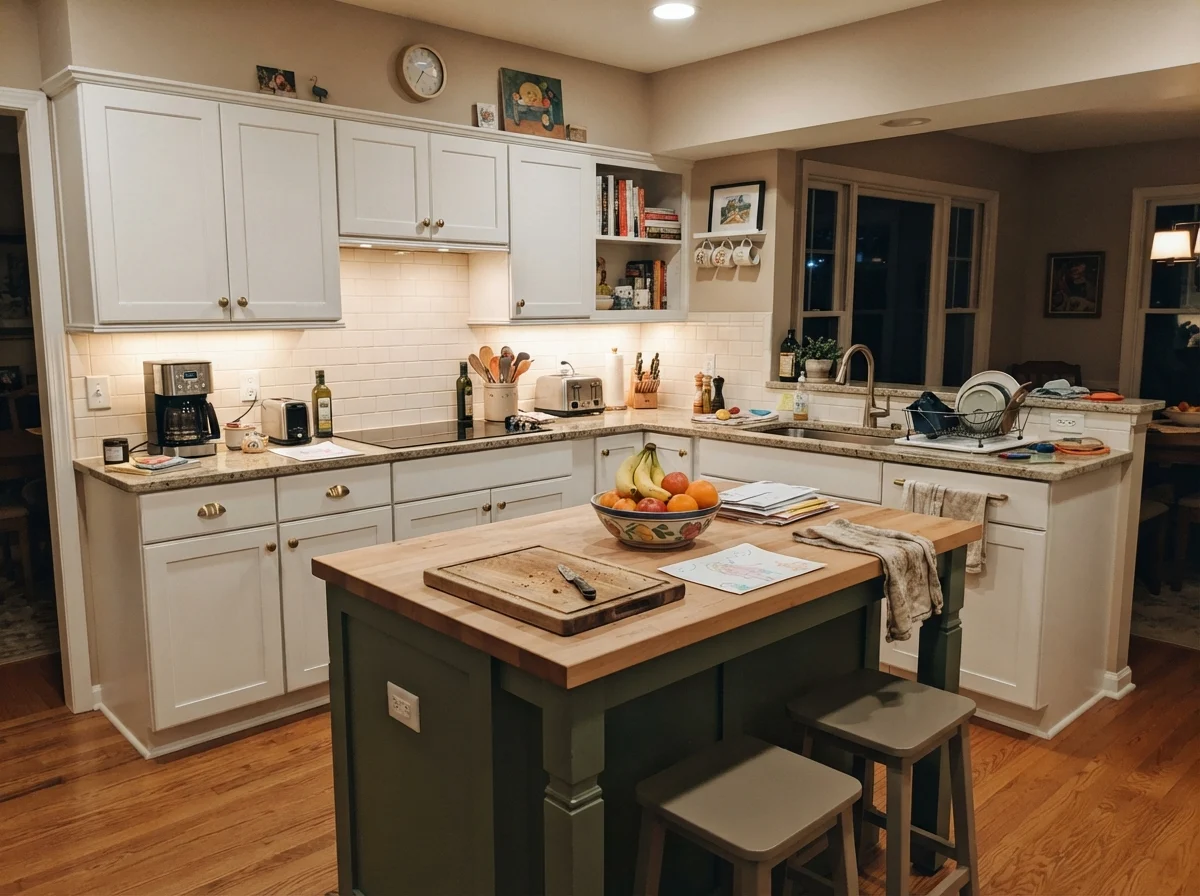
In our last house, our kitchen took a beating from teenagers and dogs. Having a deeper, warm neutral on the center island meant I wasn't running behind everyone with a magic eraser every Tuesday afternoon. It absorbs daily wear with good grace.
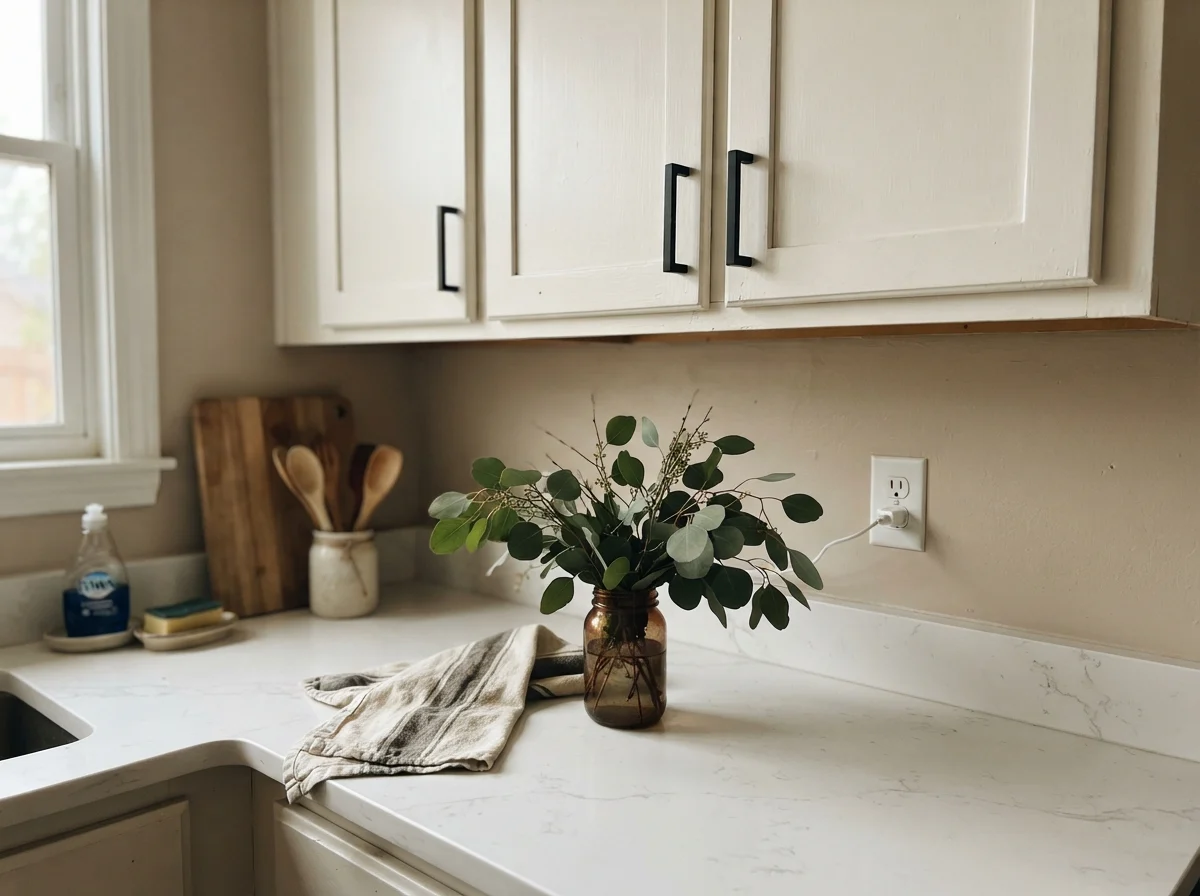
On shaker doors, as shown above, matte black hardware provides just enough modern edge to keep the color from feeling like a throwback to 1994. Notice how happy it is sitting on top of light oak floorboards and right next to white quartz. The warmth of the wood ties directly into the base pigments of the paint, creating a kitchen that feels collected and established rather than assembled out of a flat-pack box.
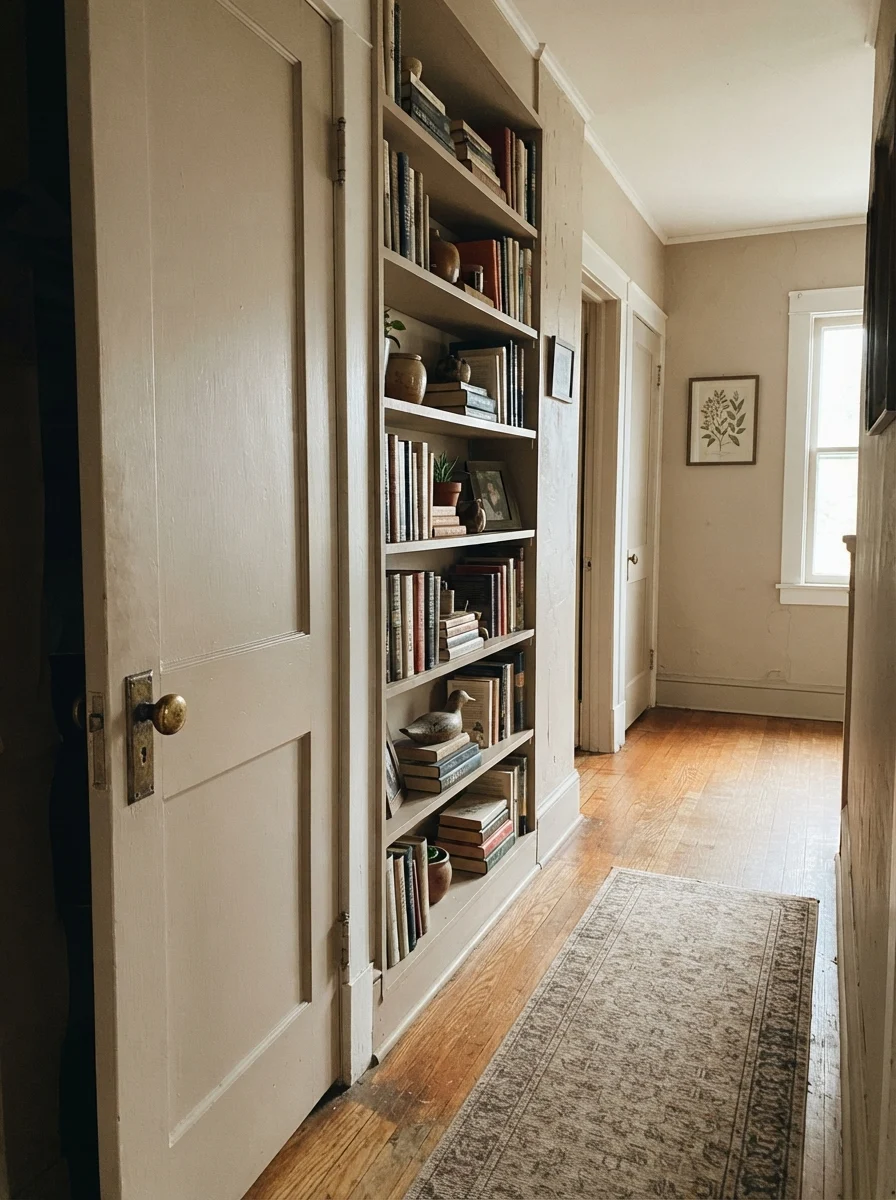
The same logic applies to interior millwork and transition spaces. When used on an interior door or a recessed shelf, it adds architectural dignity to otherwise builder-basic sheetrock.
Where Bungalow Beige Can Let You Down
Now, let's have an honest conversation about where this paint misbehaves. I have made enough decorating blunders in thirty years to know that every paint has an Achilles' heel. With Bungalow Beige, the trouble is almost always caused by one of two things: competing undertones or starved light.
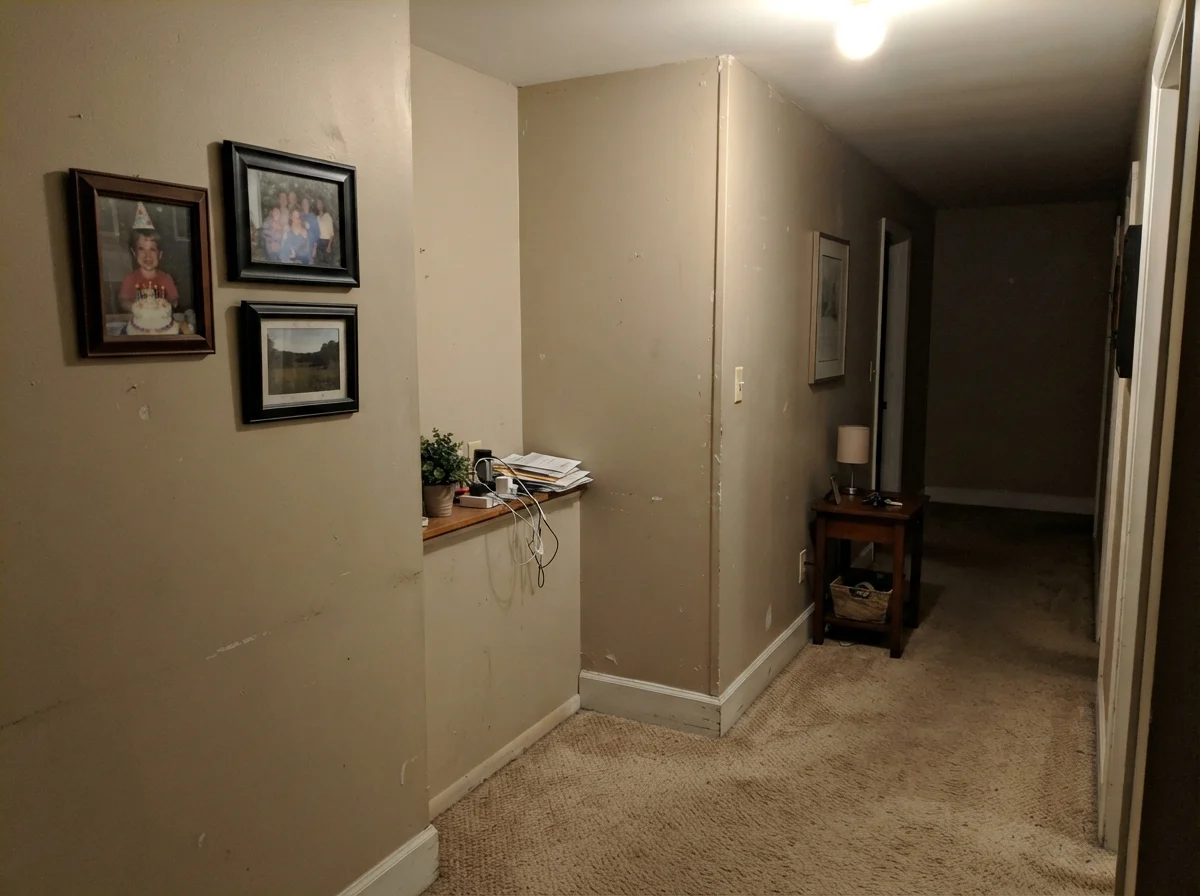
If you put this color into a completely windowless hallway lit by a single, cheap ceiling fixture, do not expect a warm hug. It will drop into a flat, drab putty that looks like wet cardboard. It needs some measure of natural illumination to breathe.
The second trap is hard western afternoon sun. When that fiery 5:00 PM summer sun hits a west-facing drywall surface, Bungalow Beige’s red undertone will light up like a blush. If the room across the hall is painted in a cool, stark blue-white, the contrast will make the beige wall look distinctly pinkish. That split personality is why people occasionally complain that this color 'turned on them' after they moved their furniture in.
You don't choose a paint for the hour you put the brushes away. You choose it for year four, when the light has shifted and life has scrubbed against it a thousand times.
Siding and the Great Outdoors
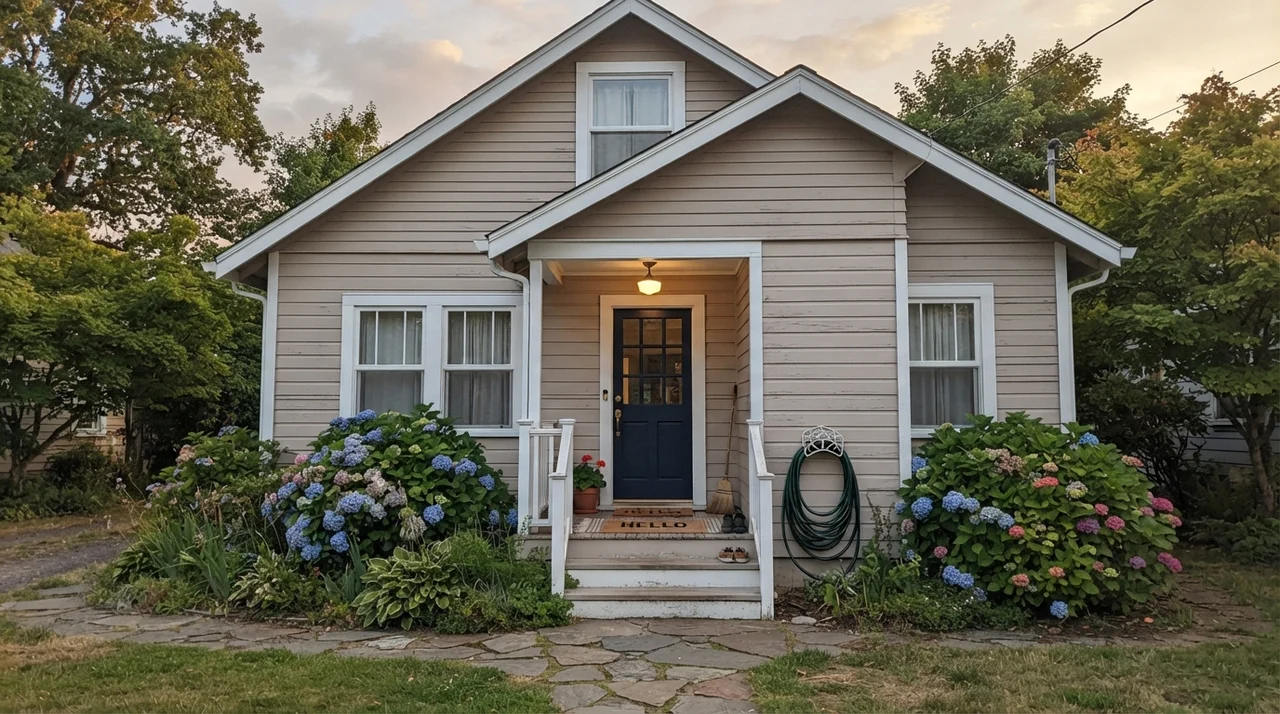
While people often debate its indoor manners, Bungalow Beige is remarkably bulletproof when taken outside. Exterior sunlight has a way of bleaching paint colors by roughly two full shades. A delicate off-white that looks charming on an interior living room swatch often turns blindingly white when slapped onto outdoor lap siding.
Because Bungalow Beige starts at LRV 53, it has enough pigment density to hold its ground against the open sky. The sunlight dissolves the risk of it looking too dark, leaving behind a handsome, grounded neutral that feels timeless on traditional American architecture.
The Right Trim Makes the Whole Room
If there is one mistake I see homeowners make more than any other, it is leaving builder-grade, icy-blue trim paint next to a warm beige wall. Paint colors do not exist in a vacuum. If your baseboards are painted in a stark, cold white like Sherwin-Williams Extra White SW 7006, the blue base in the trim will forcibly shove the red in Bungalow Beige forward. Your walls will look pink and dirty, while your trim will look like fluorescent lighting. It is an argument you will never win.
To make this color sing, your trim needs its own touch of warmth. You want a white that bridges the gap, softening the contrast so the eye glides across the moldings without stumbling.
Furnishings, Finishes, and Architectural Fit
Over thirty years of repainting rooms, I have learned that wall paint is simply the supporting cast. The real stars are your floors, your cabinets, and your upholstery. If those elements lean warm and traditional, Bungalow Beige will wrap them together like an old friend. If your home is built around cool gray polished concrete, marble veining, and shiny chrome, this paint will fight your furnishings at every turn.
Durability and the Long-Term Test
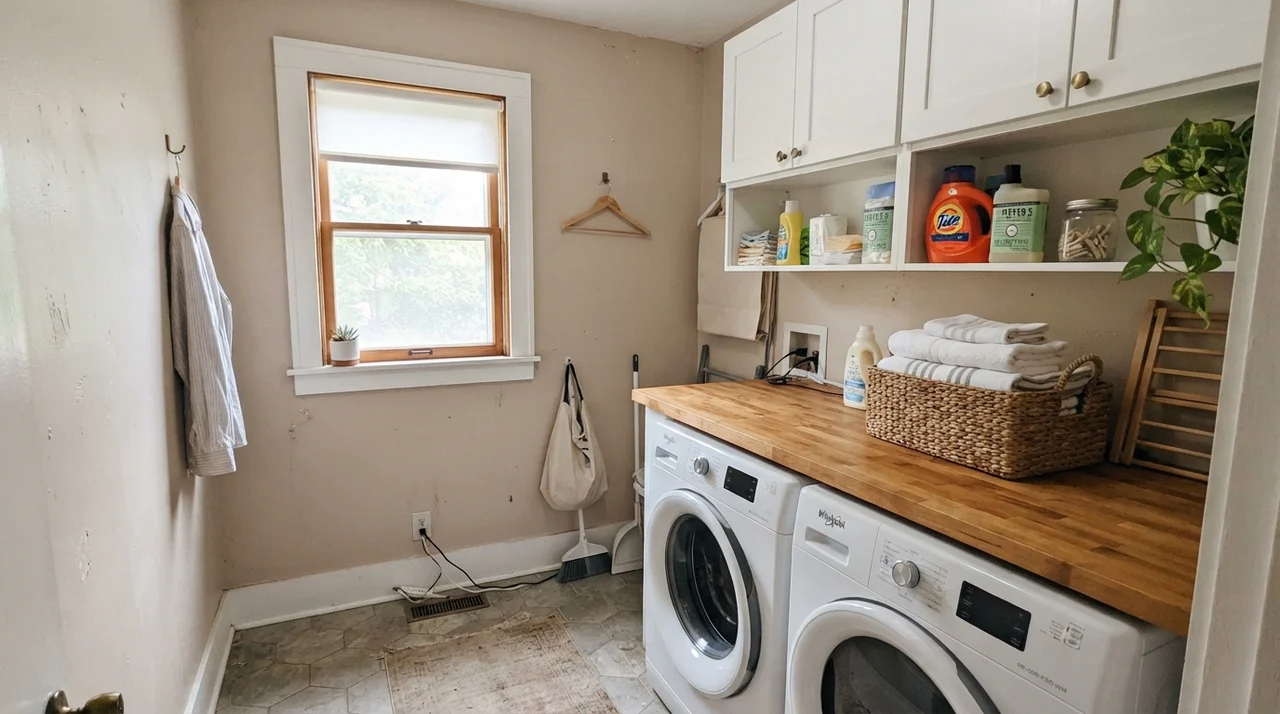
Here is something you will never hear from a weekend decorator: darker paints and mid-tone neutrals are far more practical to live with than delicate pale whites. In our last house, our hallway walls saw two golden retrievers, three teenagers, and endless bags of groceries bumping down the passage. Five years in, the walls still looked respectable.
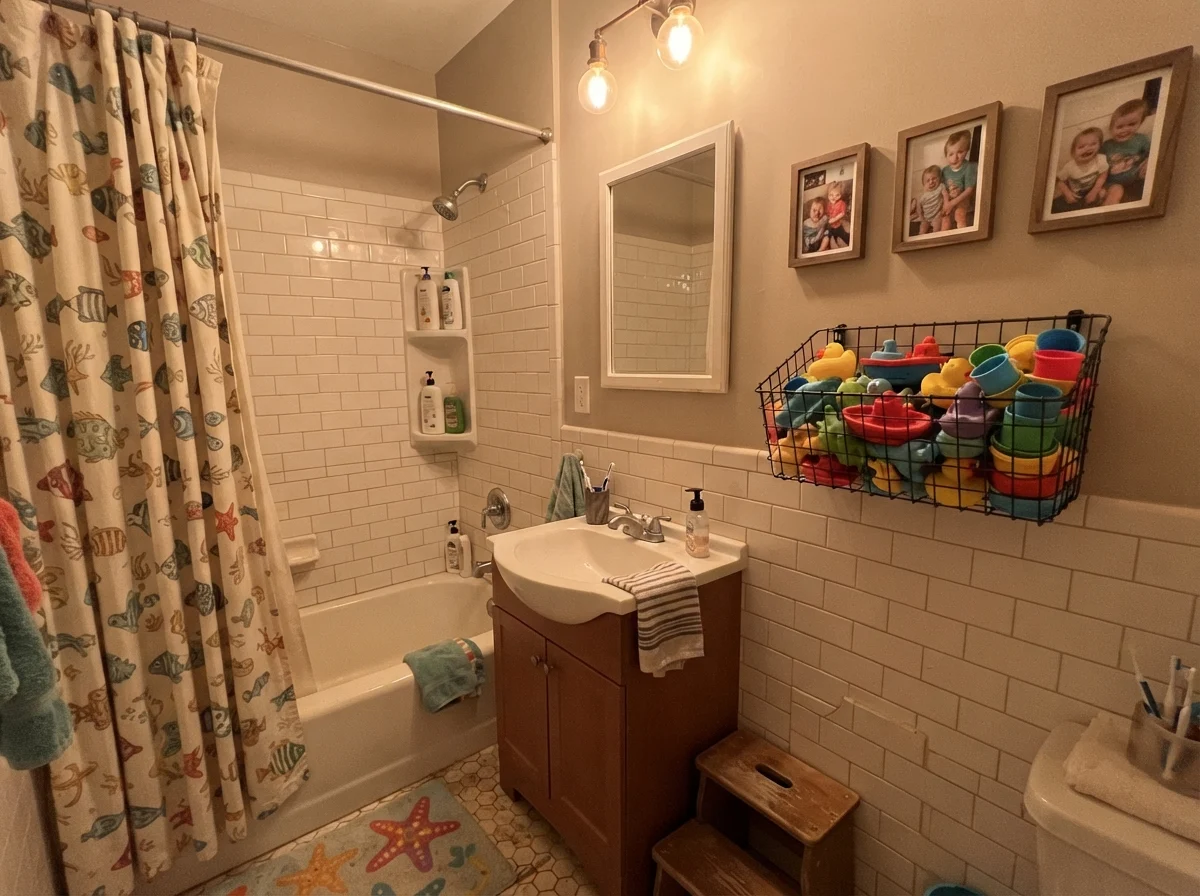
Because Bungalow Beige sits at LRV 53, it doesn't showcase every stray fingerprint or vacuum scuff the way an LRV 75 off-white does. When the kids inevitably ran their dirty hands along the corridor outside the bathroom, the wall scrubbed clean with a warm microfiber cloth and mild soap without leaving an ugly polished burnish mark—provided you choose the right finish.
For walls in high-traffic zones, eggshell is worth the money every single time. Flat paint looks lovely on ceilings, but on a wall with this much pigment, scrubbing flat finish will leave you with chalky, worn patches within six months. On baseboards and doors, stick to semi-gloss so the paint forms a hard shell that shrugs off kicked shoes. And for kitchen cabinets, satin cabinet enamel gives you the wipe-down resilience you need without looking like wet plastic.
The Resale Perspective
When we sold our 1990s colonial, the real estate market was transitioning fast. Buyers were walking through open houses sniffing around for gray walls and white kitchens, and our house had oak trim everywhere. Repainting all that casing would have cost thousands of dollars and stripped away the character of the home.
Instead, we painted the entire main hallway, living room, and stairway in Bungalow Beige. It tied the honey trim to the white ceilings and made the whole house look deliberate, cared for, and grounded. The buyer’s agent told us after the closing that the house felt 'warm and solid' compared to the flip houses down the block that had been hastily sprayed in cold builder white. That is the real value of an honest, hard-working neutral: it doesn't fight the house, it helps it tell the truth.
What is the LRV of Sherwin-Williams Bungalow Beige?
Bungalow Beige has a Light Reflectance Value (LRV) of 53. This places it squarely in the medium-light range. It reflects just over half the light that hits it, meaning it will read as a true, definite color on your walls rather than a washed-out off-white.
Does Bungalow Beige look pink or fleshy?
It can if the lighting and surroundings are wrong. Because it carries a subtle red undertone, harsh late-afternoon western sunlight or warm 2700K incandescent bulbs can coax out a faint rosy cast. Pairing it with cool blue-white trim will also make that pinkish lean much more noticeable.
What trim color goes best with Bungalow Beige?
Warm, creamy whites are the safest choice. Sherwin-Williams Alabaster SW 7008 and Greek Villa SW 7551 are outstanding partners. If you prefer a cleaner, less creamy look, Pure White SW 7005 works well. Avoid cold, blue-based whites like Extra White.
Can I use Bungalow Beige on my kitchen cabinets?
Yes, especially on a kitchen island or lower cabinets paired with warm brass or matte black hardware. Be sure to order it in a dedicated satin cabinet enamel so it cures to a hard, wipeable finish that resists cooking grease and scuffs.
Is Bungalow Beige too dark for a small hallway?
In a narrow, windowless hallway with only a single overhead light, an LRV of 53 will look somewhat dark and flat. If you lack natural daylight, look for a lighter option or ensure your light fixtures use balanced 3000K to 3500K bulbs.
Susan's Verdict · Grounded Warmth Done Right
Bungalow Beige is not the paint for a stark, minimalist loft or a home wrapped in cool gray vinyl floors. But if you have lived in your house long enough to respect its warm woodwork, honest brick, and changing light, this color is worth the money. Roll it on the wall in eggshell, pair it with a creamy off-white trim like Alabaster, and give it the natural light it deserves. It holds up over years of family living and makes a house feel settled from day one.