Color Diary · No. 120
Sherwin-Williams First Star Is Barely Gray and That Is the Whole Point
Sherwin-Williams' quietest almost-gray, reviewed honestly: the lavender flash people report, the rooms where it washes out to nothing, and what to paint instead.

Susan HartleyNovember 12, 2026 · 17 min read
First Star · Sherwin-Williams SW 7646
Hex#DAD9D4LRV69Undertonescool gray → soft off-white → hint of violet under cool LEDs
When we moved into our 1990s colonial back in the summer of 2004, the previous owners had painted every square foot of the main level in a stark builder white that felt less like a home and more like an operating room. The glare off the foyer walls on a bright July afternoon gave me an instant headache. My immediate impulse was to paint everything a deep, saturated neutral to quiet the place down. But experience has a way of teaching you that swinging from one extreme to the other just buys you a different kind of regret. In our last house—the 1970s split-level where I tested every paint fad of the late nineties—I learned the hard way that when you want to soften a glaring house without losing your natural light, you don't need heavy color. You need a whisper of pigment that takes the edge off.
That is where Sherwin-Williams First Star SW 7646 lives. It sits at an LRV of 69 with barely seven percent color saturation. In plain English, that means it is barely a gray at all. When you hold the swatch in the aisle under fluorescent store fixtures, you might wonder why anyone would pay fifty or sixty dollars a gallon for something that looks like tinted primer. But you don't paint a wall for the hardware store aisle; you paint it for year four, when the afternoon sun hits the plaster and you want the room to feel peaceful instead of sterile.
First Star is what you reach for when bright white feels too aggressive, but traditional gray feels like an unwelcome storm cloud hanging over your breakfast table. It borrows almost everything from its surroundings—your flooring, your tree canopy, and whatever bulbs you screw into your lamps. Five years in, I can tell you that this chameleon quality is both its greatest strength and the exact reason some homeowners end up cursing it after two coats.
The Undertone Swing: Why It Never Looks the Same Twice
At an LRV of 69 and barely seven percent saturation, First Star does not have enough pigment to defend its own identity. It will mirror whatever light hits it, sliding from a crisp pale gray in north light to a bleached mist in south sun, and occasionally surprising you with a violet flash under cool artificial fixtures.
warm sun
overcast, north light
dusk, rain, cool bulbs
First Star sits squarely in the pale greige family, but because it carries minimal saturation, cool LED bulbs and beige carpets will push it toward violet-gray, while steady daylight keeps it quiet and neutral.
AmmoniteFarrow & Ball · see diary
Drift of MistSherwin-Williams · see diary
First StarSW 7646
Wickham GrayBenjamin Moore · see diary
DoveBehr · see diary
Watching the Daylight Move: Morning to Night
Before you commit five gallons to a bedroom or hallway, you need to watch how this shade behaves as the sun crosses your roofline. Because it contains so little tint, First Star changes character dramatically between eight in the morning and eight at night. If you paint a test patch and check it once at noon, you haven't actually seen the color you're going to wake up to.
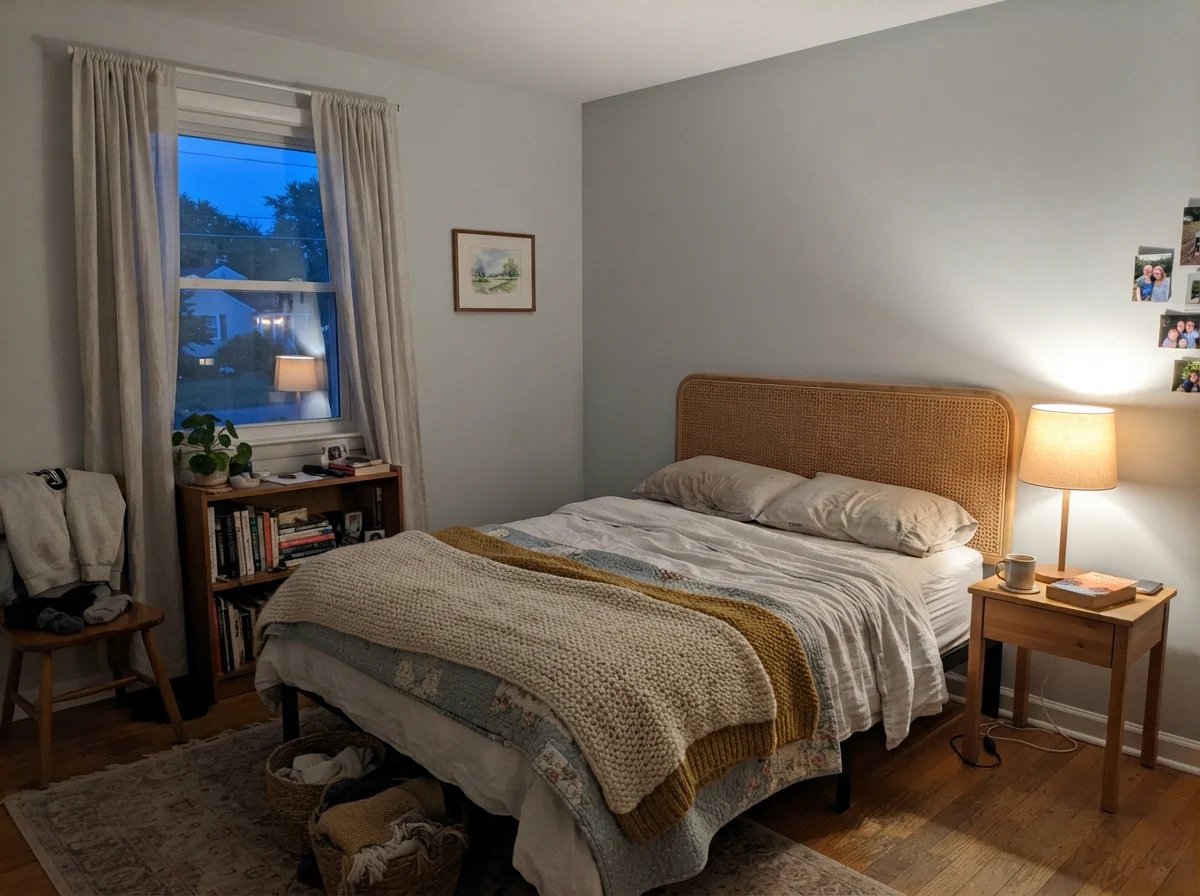
In cool early morning light, especially in an east-facing room before the direct rays clear the trees, First Star looks exceptionally pale. The walls can appear almost washed out, giving you that split-second panic where you wonder if the painter accidentally rolled un-tinted base coat. But wait until dusk arrives. When the warm lamps flick on and the blue twilight gathers outside the window, First Star settles into a cozy, quiet envelope that holds artificial warmth beautifully—provided you didn't make the mistake of buying harsh, blue-tinted lightbulbs.
Bathrooms: The Natural Stronghold for First Star
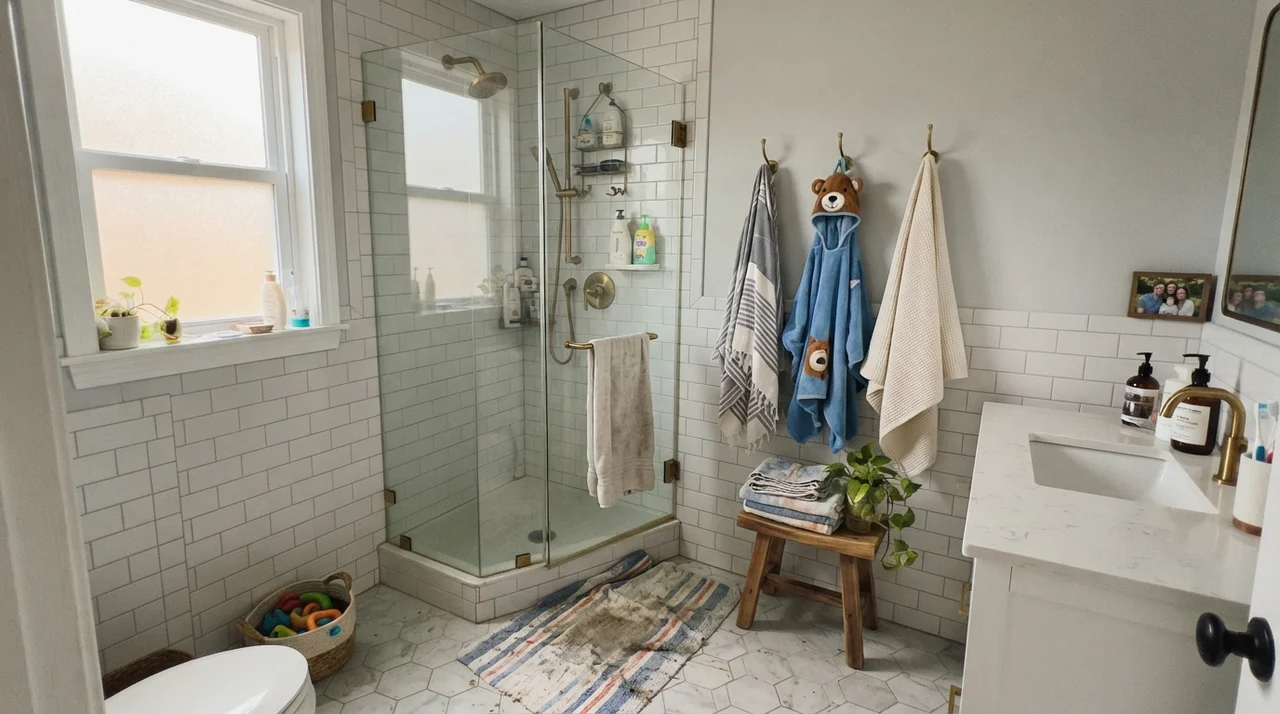
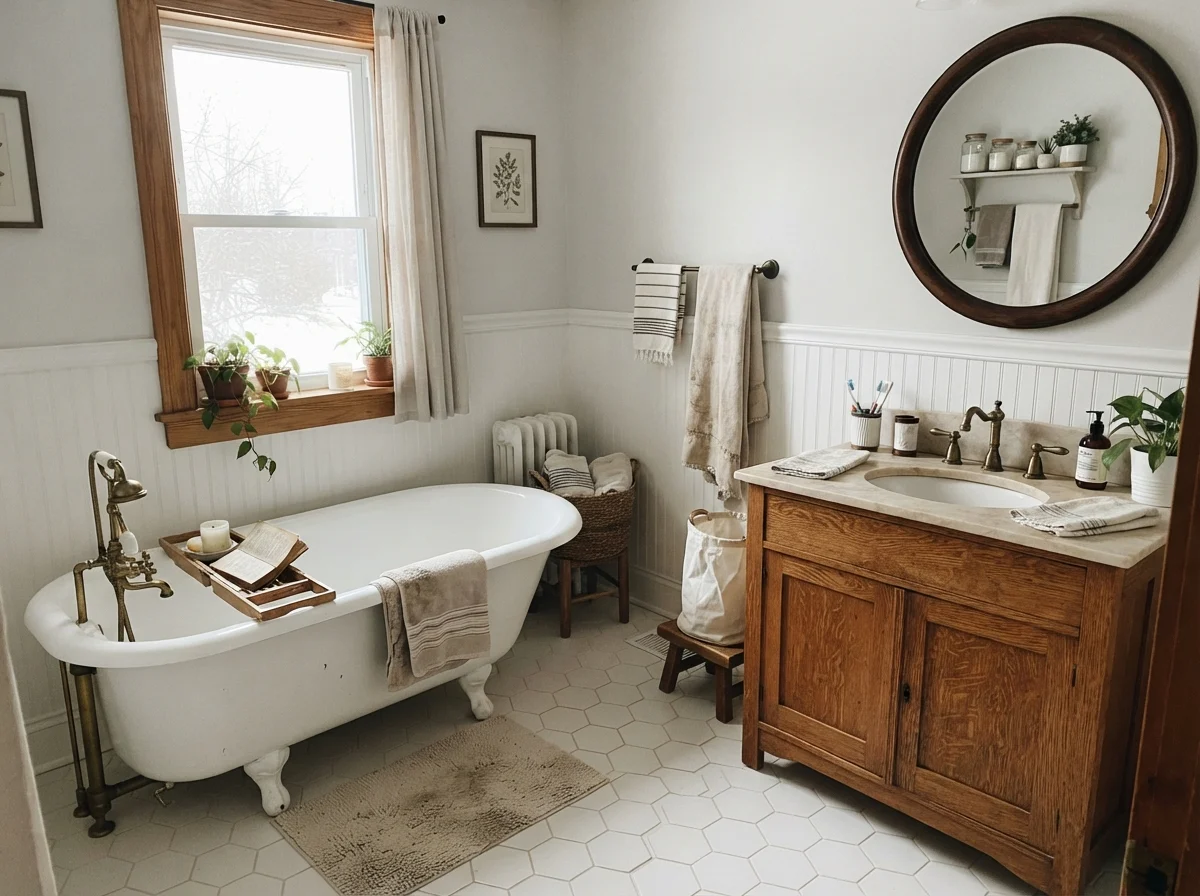
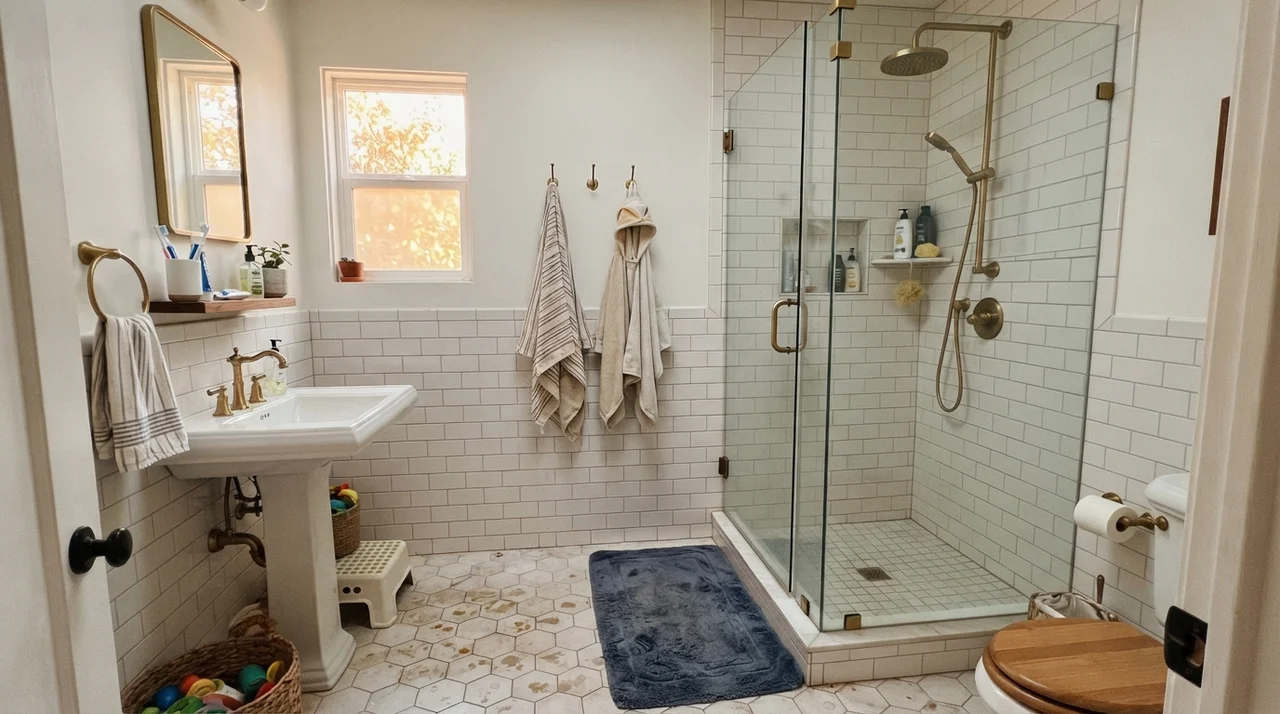
If there is one room where First Star is worth every single dollar, it is the family bathroom. Bathrooms are notoriously difficult to paint. True whites often bounce glare off porcelain and mirror glass, making morning routines feel clinical and harsh. Heavier grays, on the other hand, turn small windowless water closets into dark concrete bunkers. In our 1960s ranch, the family bath has modest dimensions, and First Star gave us the exact middle ground we needed.
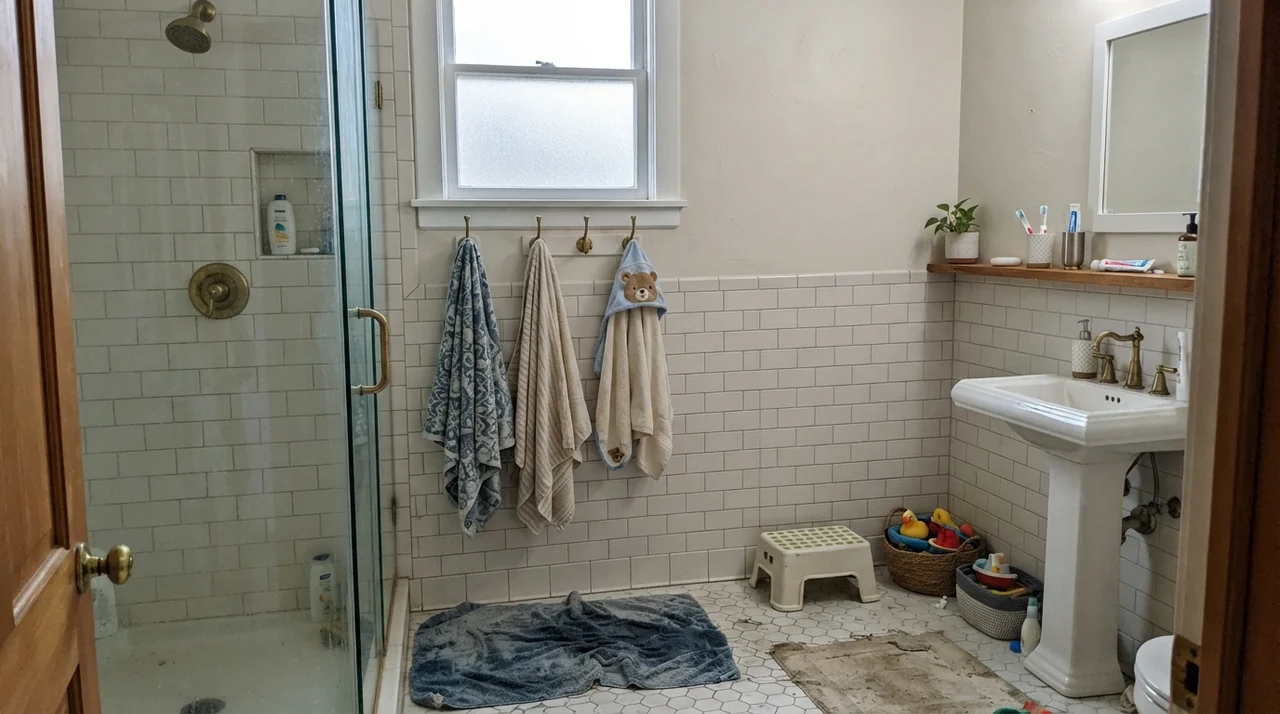
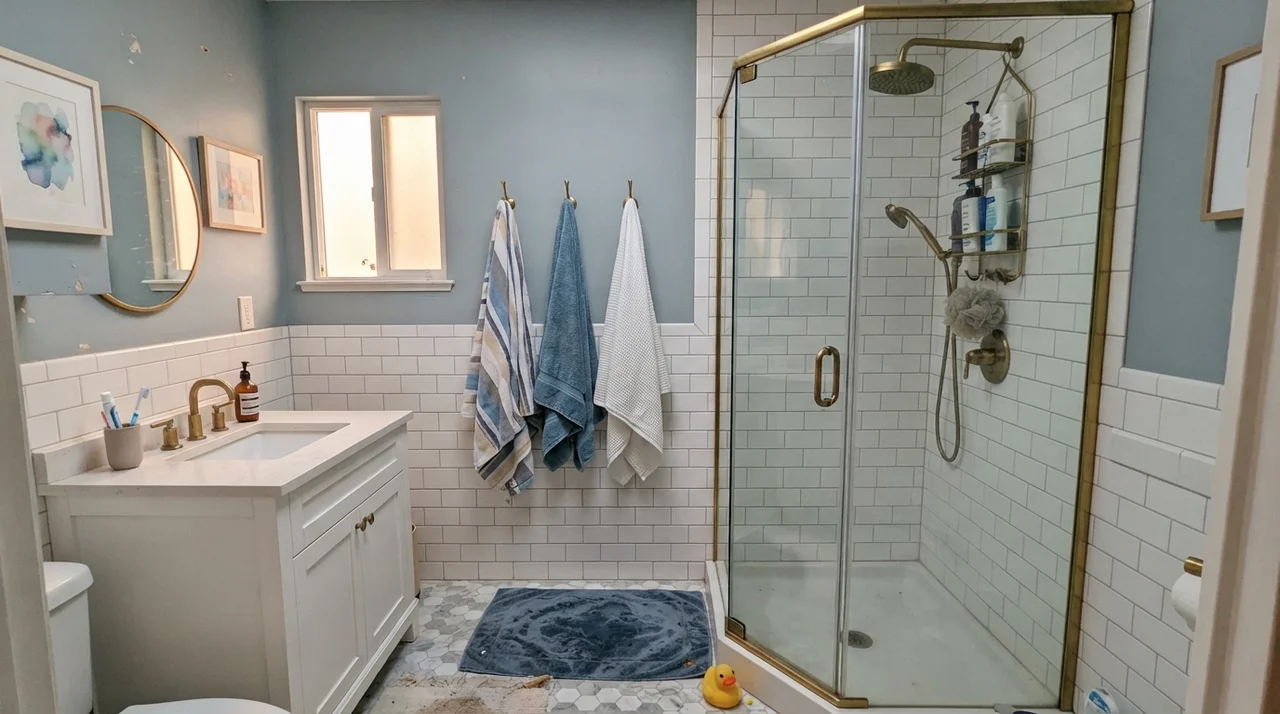
We used satin on the walls above a white subway tile wainscot. Satin is scrubbable—a non-negotiable requirement when you have kids splashing water and toothpaste splatters hitting the wall every Tuesday night. First Star gives just enough contrast against white tile and white porcelain that the woodwork and ceramic fixtures look gleaming clean rather than yellowed. It creates a crisp, tailored backdrop that flatters warm oak vanities, brass fixtures, or plain chrome towel bars without competing with any of them.
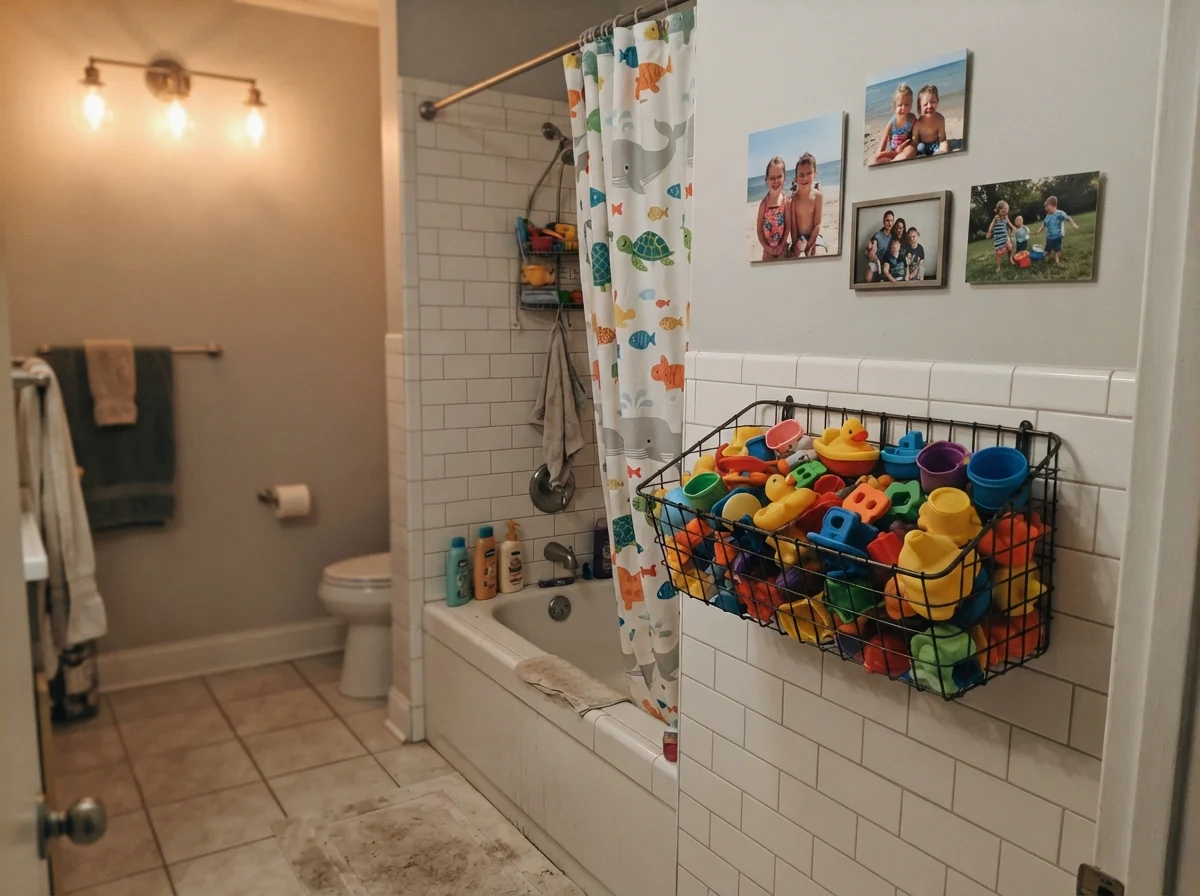
What surprises people about First Star in a bathroom is how well it handles shifting weather. On an overcast afternoon when flat gray skies fill the frosted window, the paint reads a touch more slate-like, yet it never turns dingy. In bright morning sun, it reflects light across white hex floors and bounces warmth into every corner. It keeps the space looking orderly and fresh, even when the wire basket is overflowing with bath toys and life is happening at full volume.
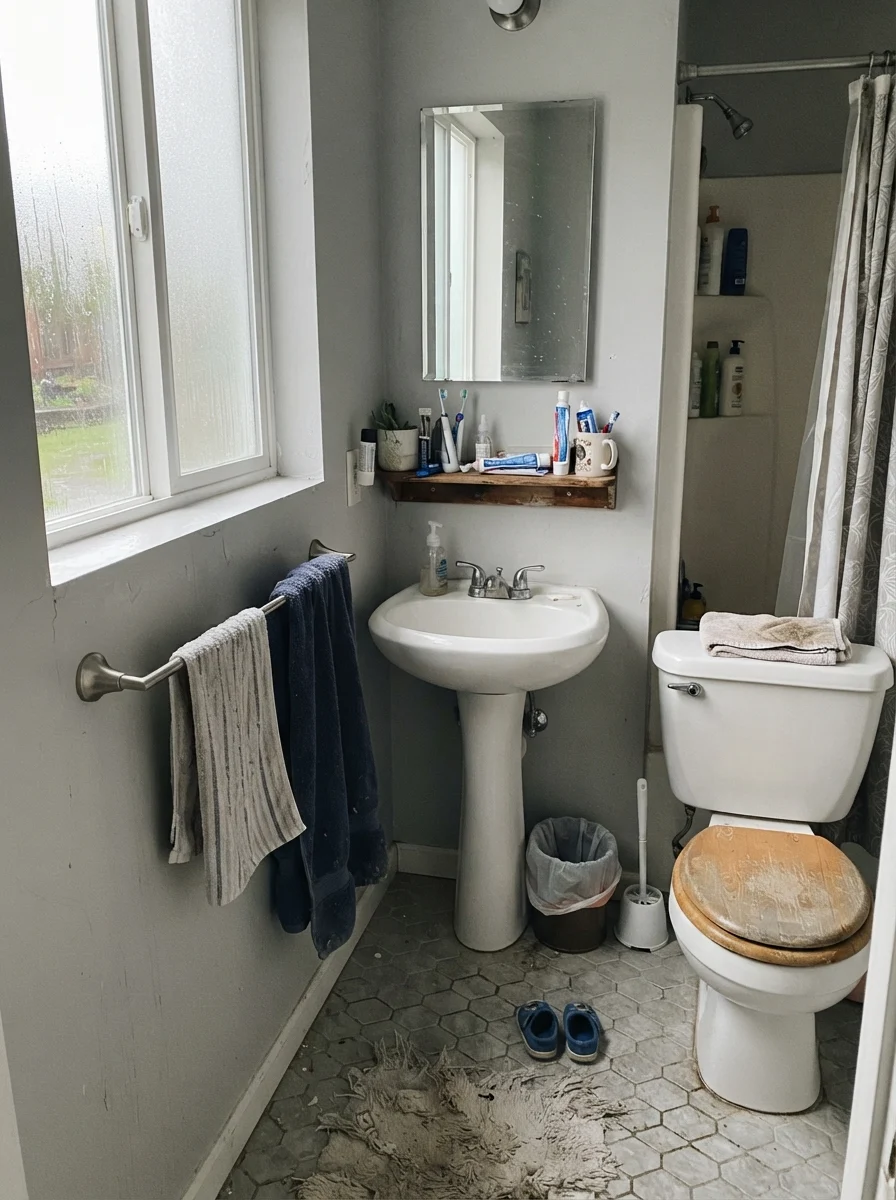
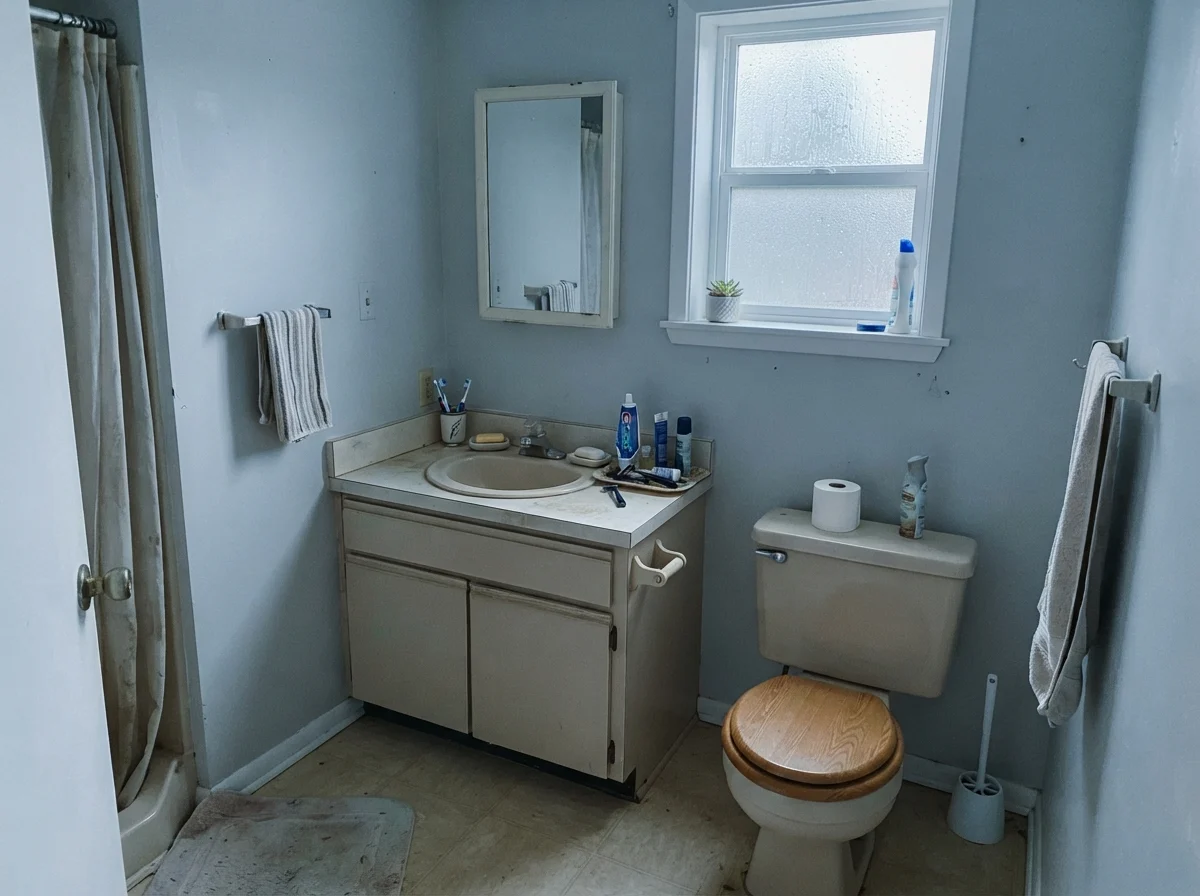
There is, however, an important caution to keep in mind if your bathroom faces due north or has older fixtures. In a dated space with an older beige vanity and cool north daylight on a rainy day, First Star will pick up a chilly, shadowy cast. It won't turn beige vanity tops pretty; if anything, the cool undertone will highlight the yellow in aged laminate or cultured marble. That is not a flaw in the paint—it is simply what happens when a color with seven percent saturation reflects an uncorrected cool environment.
Bedrooms and Nurseries: Quiet, Restful, and Forgiving
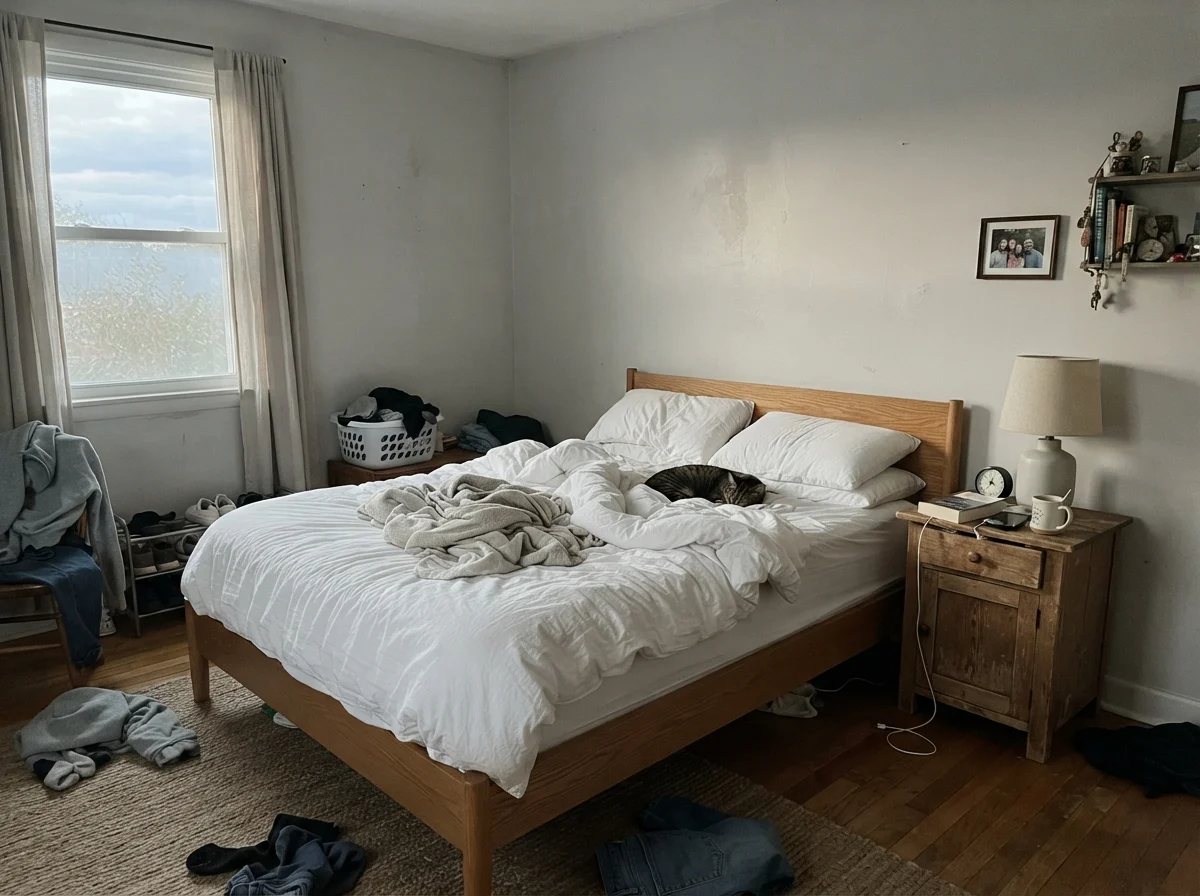
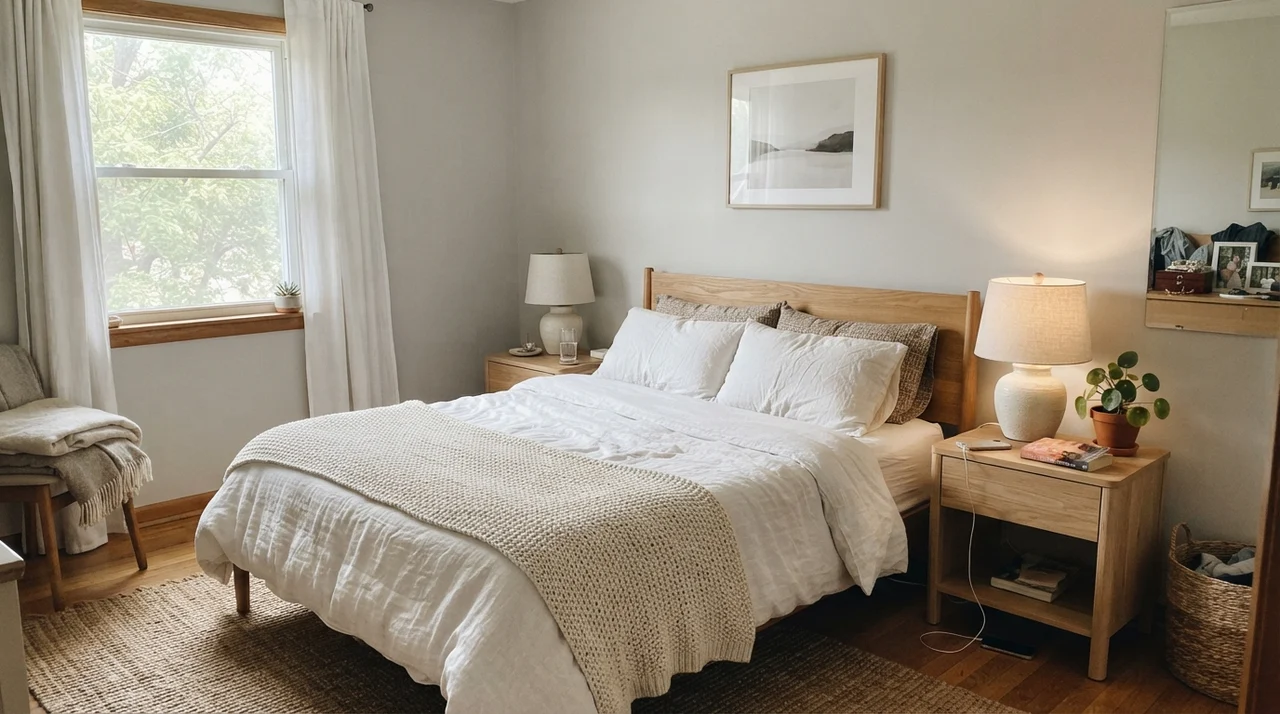
In our last house, our main bedroom faced east, which meant we caught brilliant morning sun followed by softer, shadowy light for the rest of the day. A dark wall color felt oppressive by mid-afternoon, but pure white felt stark at night. First Star in eggshell finish solved that puzzle easily. It provides a peaceful, quiet envelope that lets pale oak nightstands, white linen bedding, and simple ceramic lamps stand out cleanly.
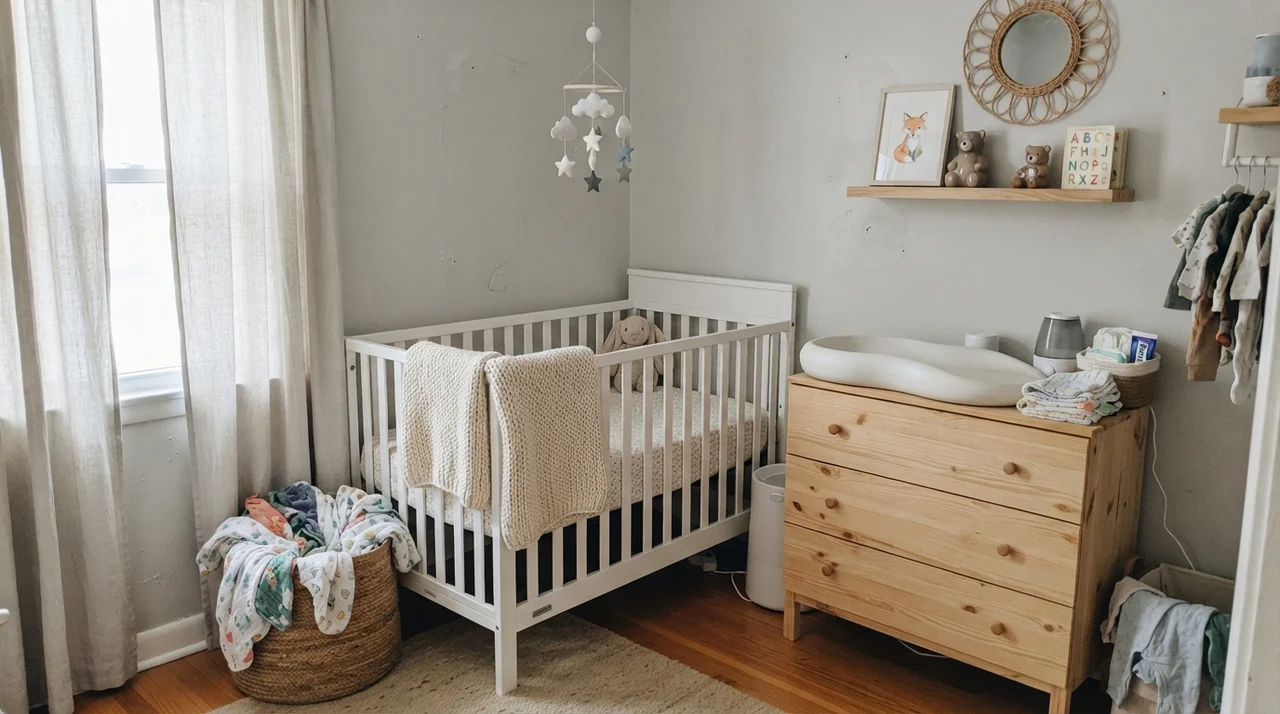
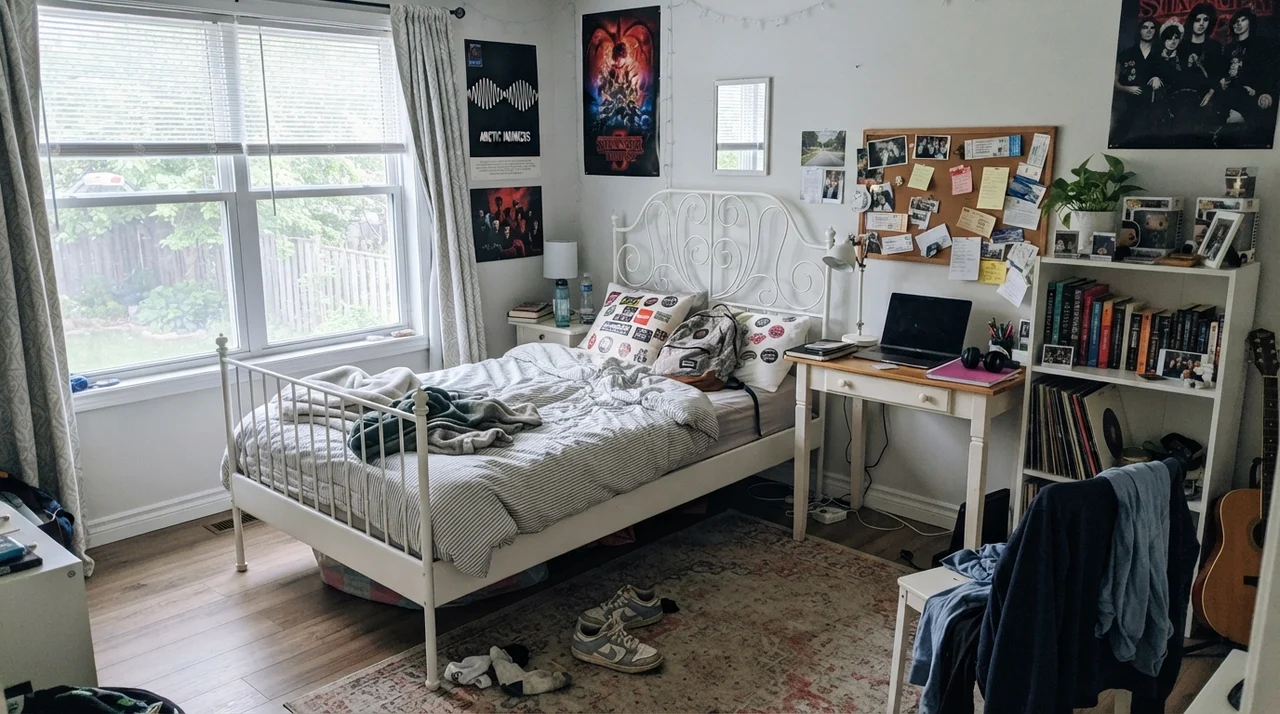
It is equally well suited to nurseries and teen bedrooms because it does not lock you into a specific color palette. When our children were growing up, their tastes changed every eighteen months. A neutral wall that doesn't fight with brightly colored quilts, woven storage baskets, corkboards, or sneakers tossed on the rug saves you from having to pull out the paint rollers every time a child enters a new phase. It holds its own without demanding attention.
Kitchens, Cabinets, and Laundry Rooms: Where to Use It and Where to Stop
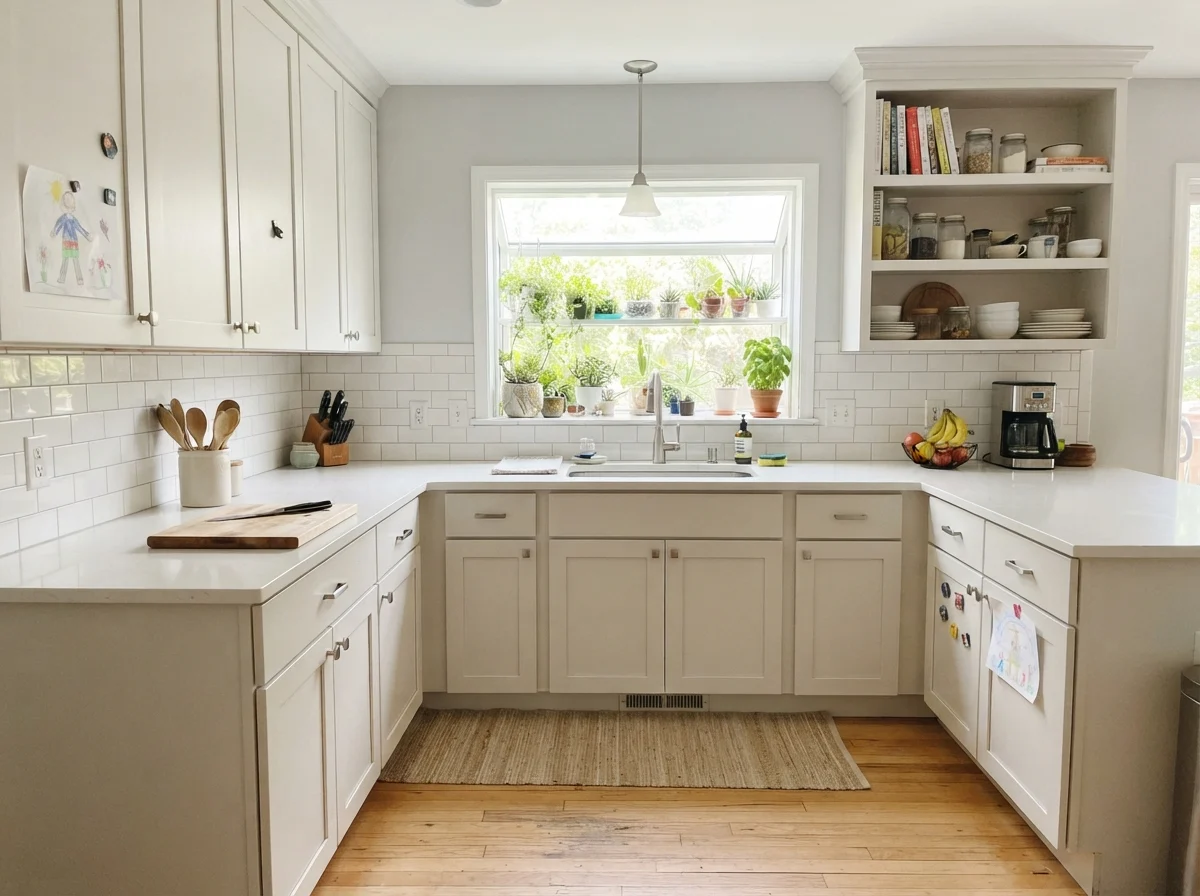
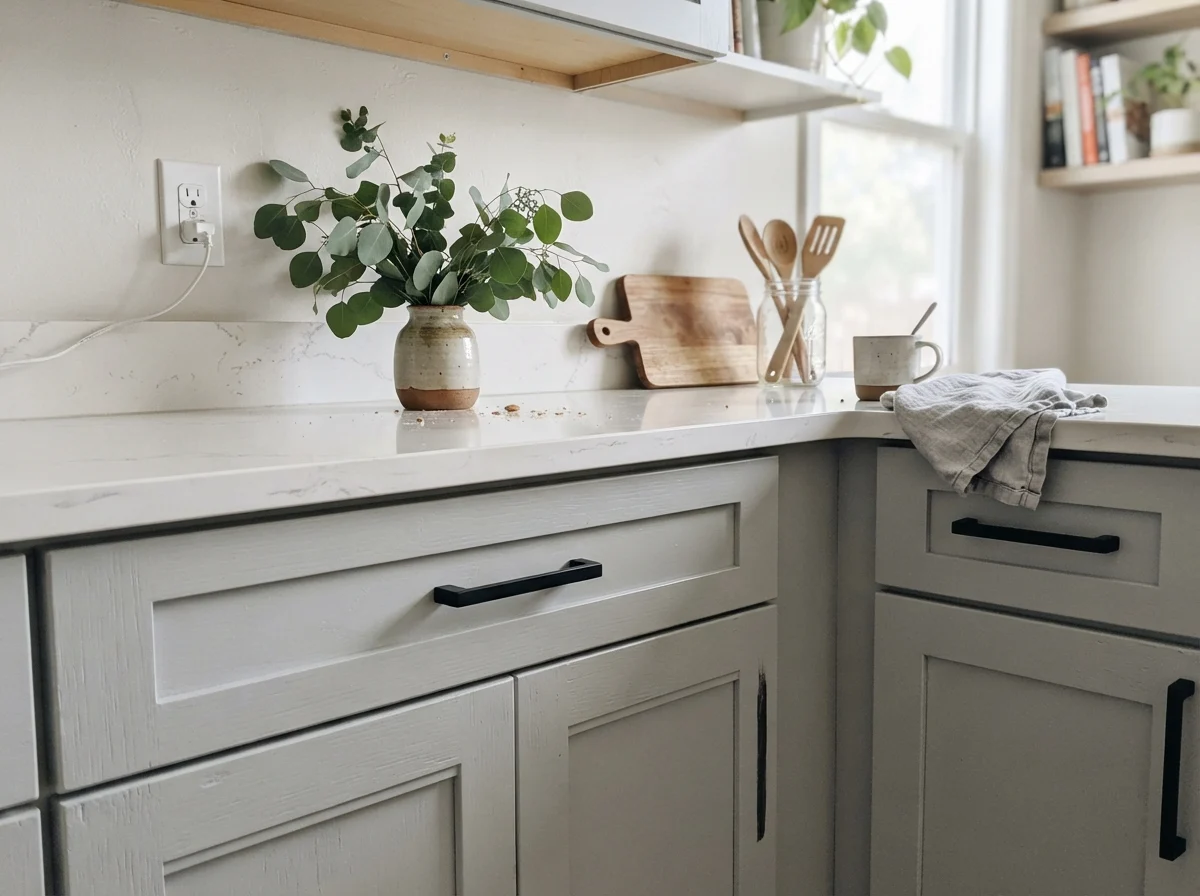
In the kitchen, First Star performs brilliantly on drywall, but you must be careful if you are thinking about spraying it on cabinetry. As a wall color surrounding bright white cabinets, it is wonderful. It creates just enough separation that your cabinets look crisp and clean rather than dusty. But if you spray First Star directly onto shaker cabinets, you need to be prepared: in bright natural light, it can look washed out, and next to a flat white ceiling, it can read a little tired and indecisive.
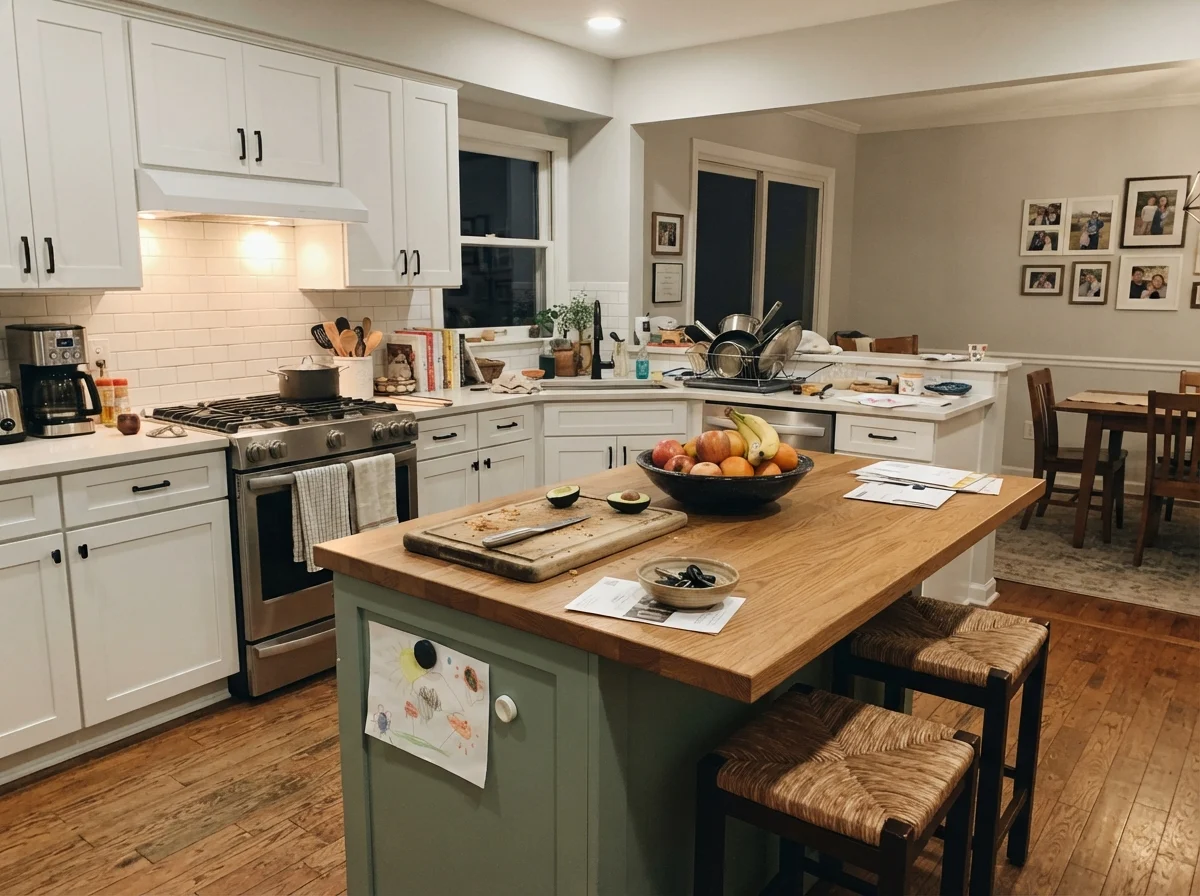
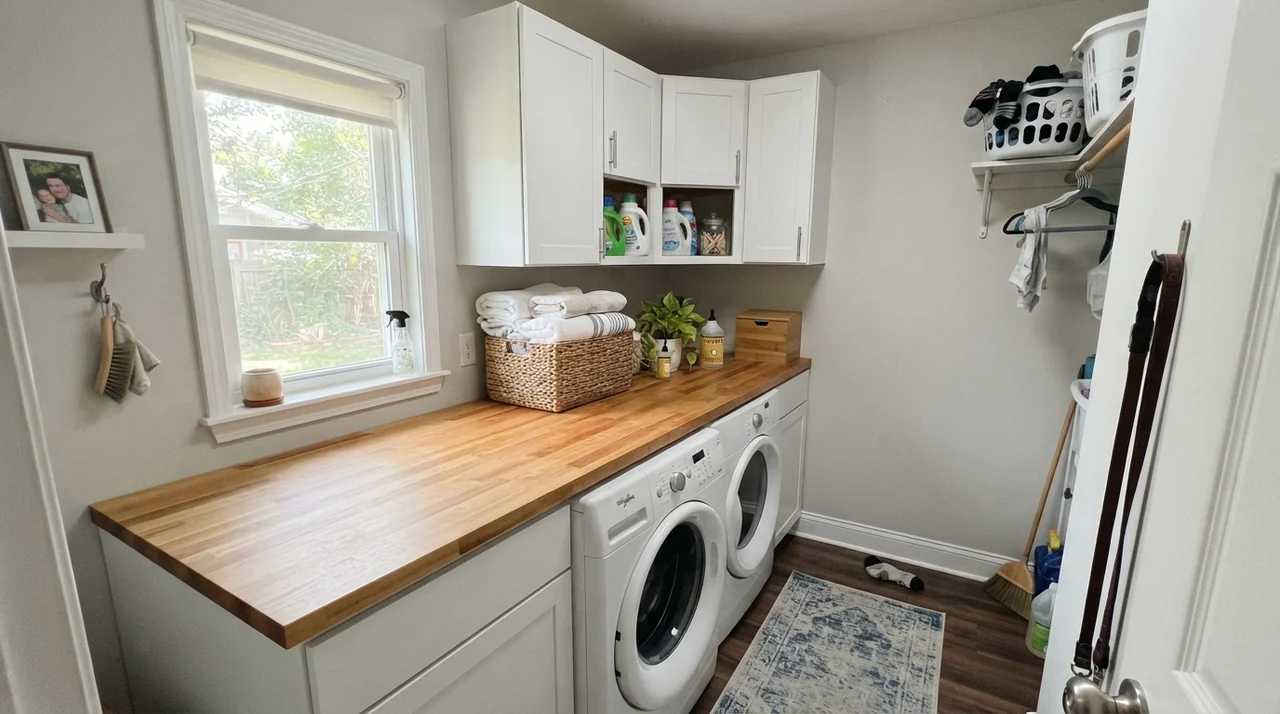
We have seen it used on kitchen islands where the perimeter cabinets remain crisp white. Against cream walls or white quartz counters, an island finished in First Star gives you a gentle, grounded focal point that doesn't overwhelm an open floor plan. And in the laundry room—often a tight, utilitarian space with only one good window—First Star on eggshell walls paired with white cabinets and a butcher-block counter feels clean and bright without the harsh reflection of an un-tinted white.
Living Rooms and Sunrooms: The Sun-Bleach Problem
When you take First Star into large living spaces or sunrooms with expansive glass, you run headfirst into its biggest practical limitation: direct sun bleaches it out completely. In our 1990s colonial, the living room had two massive south-facing picture windows. We tested a pale gray swatch right between those windows, and by noon on a cloudless day, the wall looked like raw drywall primer. There simply isn't enough pigment in an LRV 69 paint with 7% saturation to withstand that volume of foot-candles.
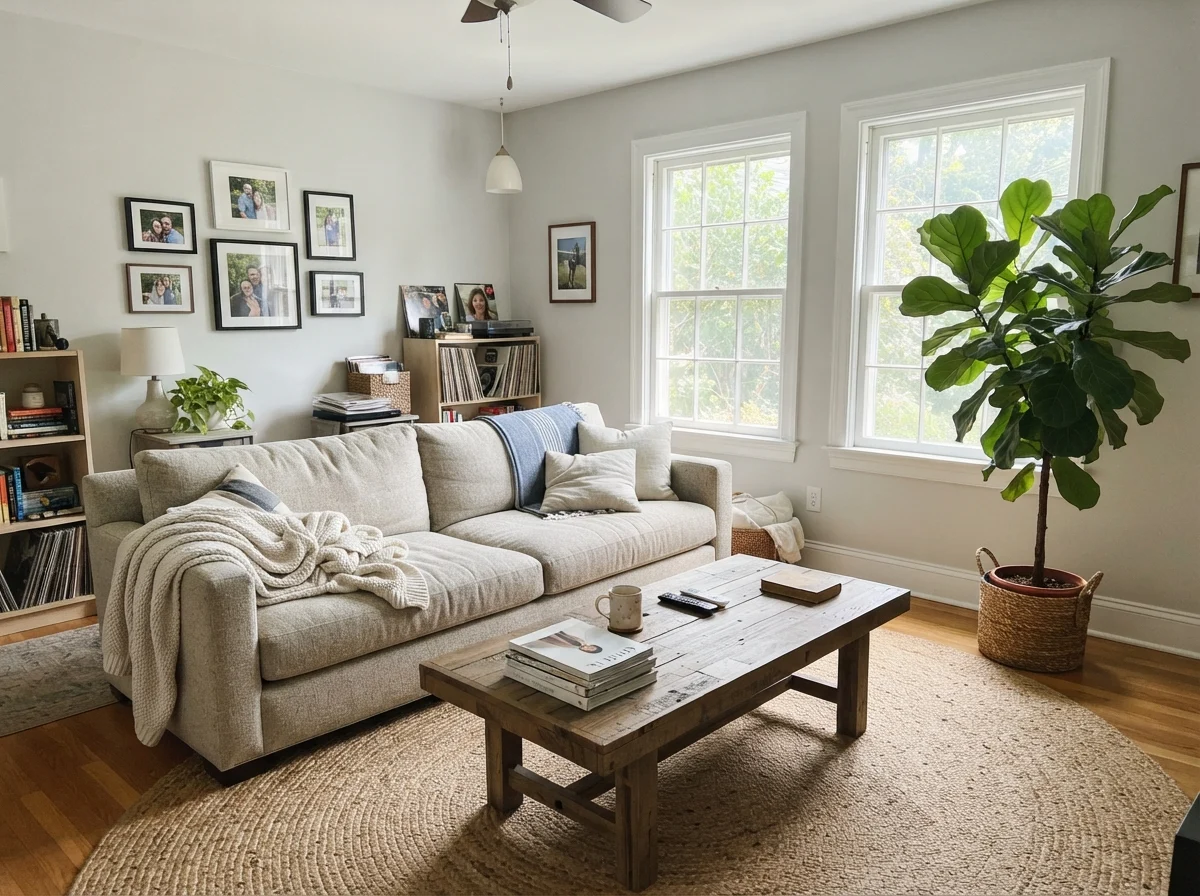
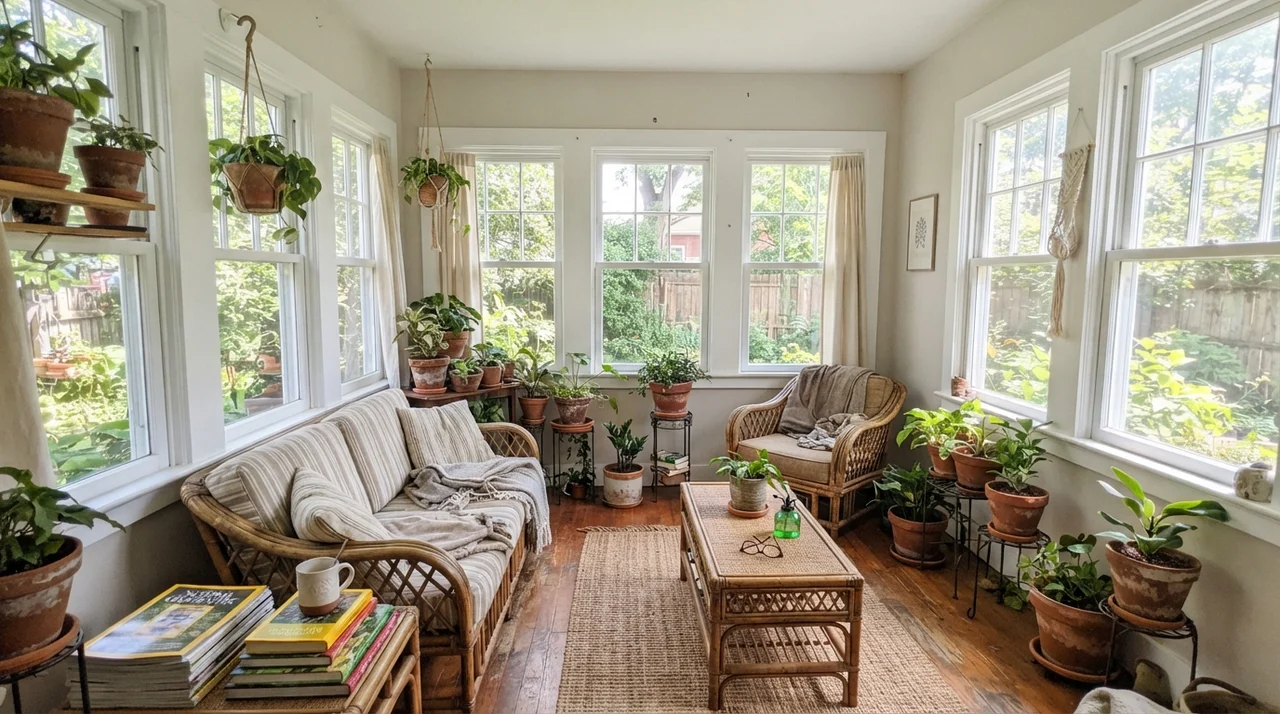
If your living room has generous light softened by sheer drapery, or if the room faces east or north, First Star works nicely. It pairs beautifully with natural jute rugs, linen sofas, and potted greenery. In a sunroom wrapped in white-framed windows and filled with terracotta pots and rattan furniture, it provides a quiet transition between the glass panes. But if you have unshaded south-facing glass pouring light onto your walls all day long, First Star will lose its body entirely, and you will be left wondering where your paint went.
Doors, Built-Ins, and the Real-World Failures
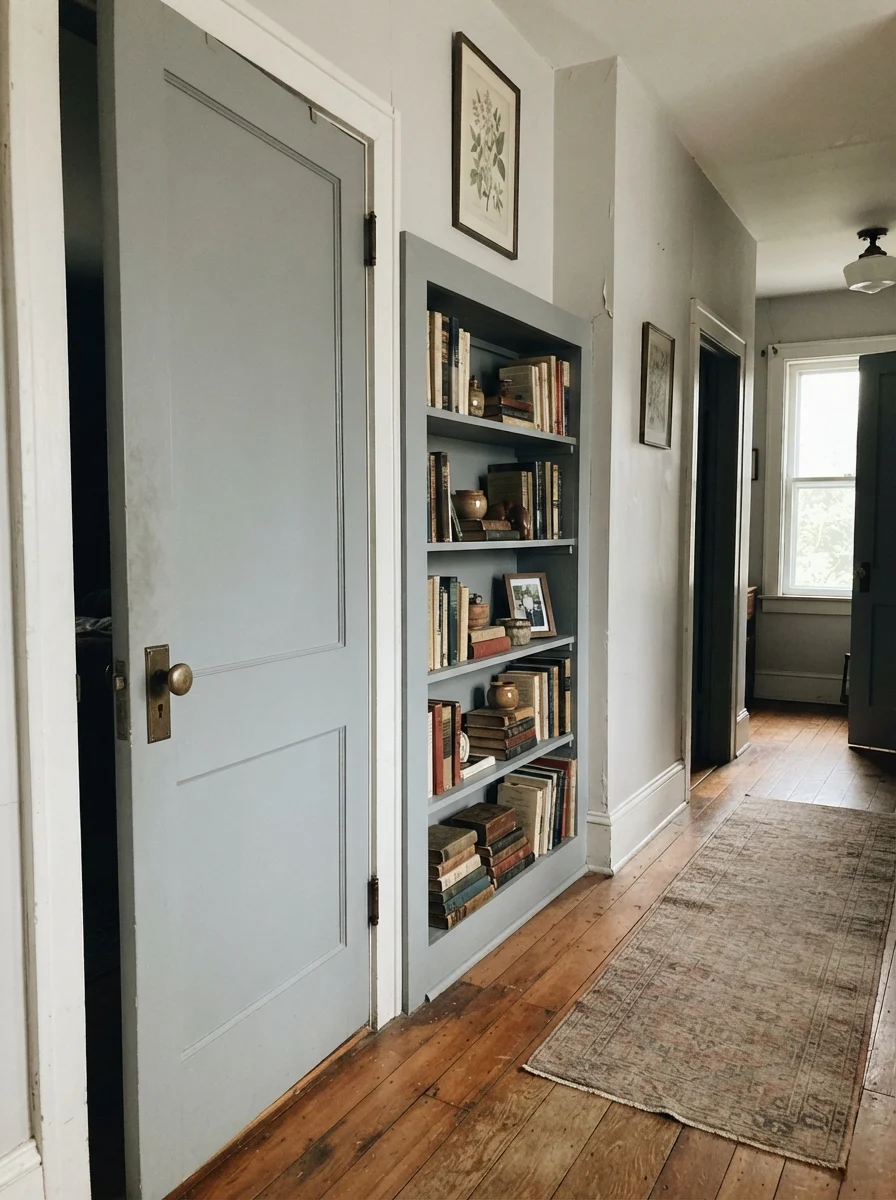
One place where First Star genuinely surprises people is when it's used on interior doors or built-in bookshelves set against creamier walls. In an older home with character moldings, painting a two-panel door and built-in shelving in First Star while leaving the surrounding walls in a warm cream creates a refined, understated contrast. Brass hardware and stacks of old clothbound books pop against it with an easy elegance that doesn't feel manufactured.
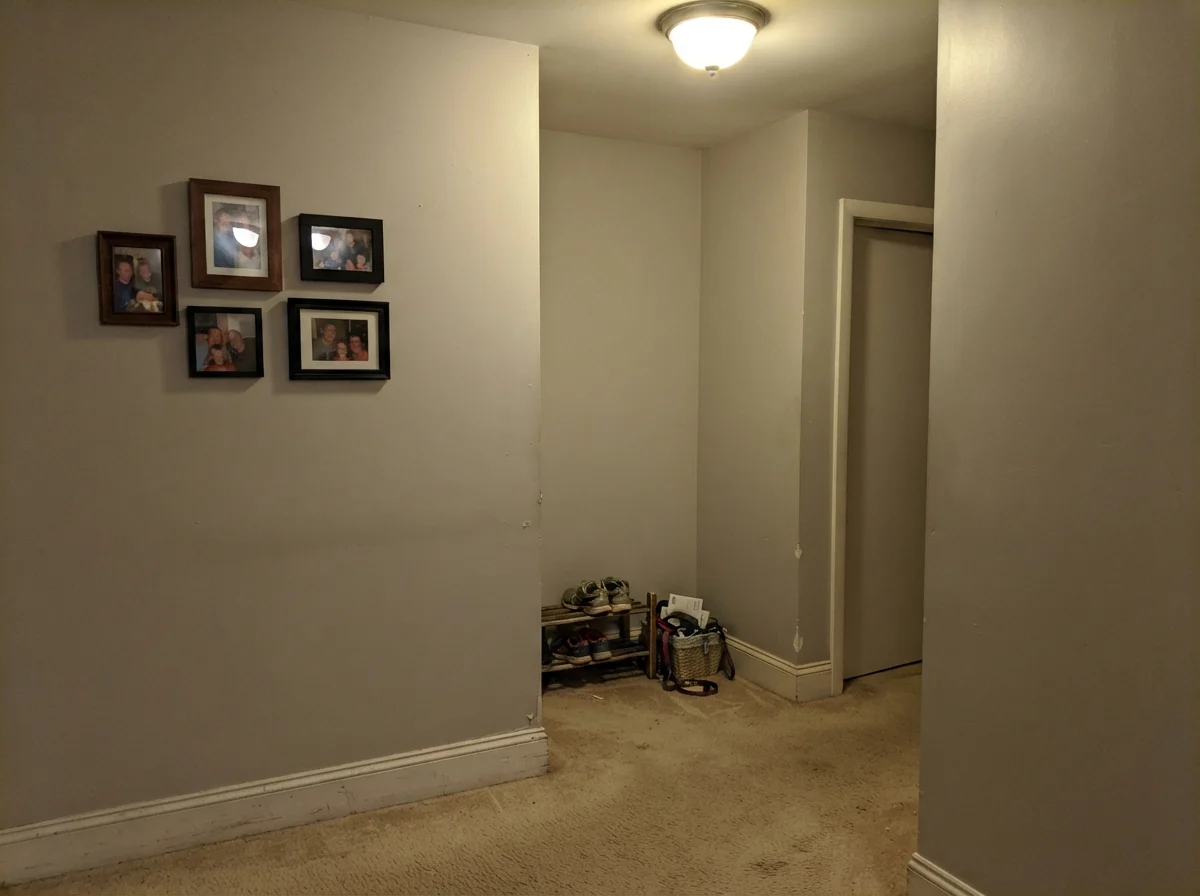
However, I promised you an honest accounting of where this paint fails, and the failure modes are real. The most common complaint homeowners have is what I call the windowless hall trap. If you roll First Star in an interior hallway or dark stairwell with no natural light and an old ceiling fixture, the color turns flat, muddy, and heavy. Instead of feeling airy, it reads like damp putty. Add beige carpet to that dark hallway, and you'll get the second surprise: the lavender flash. Cool artificial bulbs strip away whatever warm yellow exists in the paint, leaving a violet cast that can drive you crazy if you weren't expecting it.
Exterior Siding: Only with Strong Trim Contrast
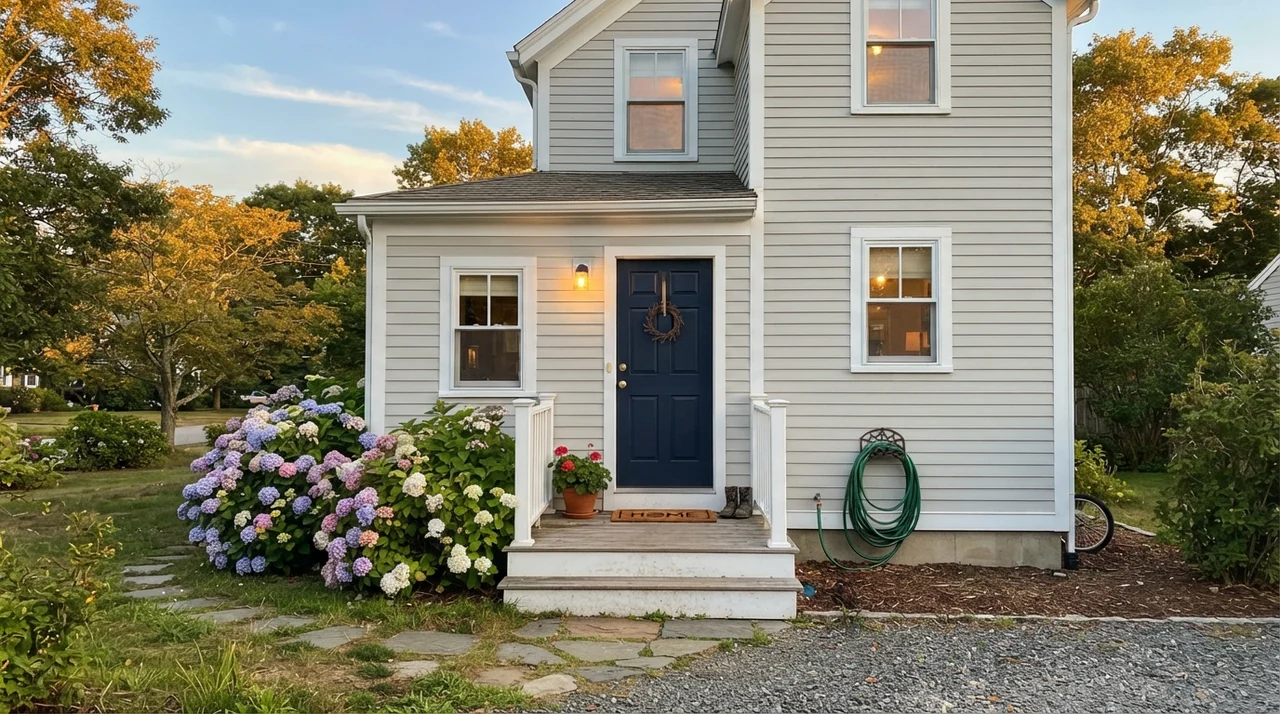
Can you use First Star on an exterior? Yes, but only under very specific conditions. Outside, direct sunlight is at least three times stronger than anything inside your living room. An LRV 69 paint will look virtually off-white at high noon. If you have an exterior with horizontal siding painted in First Star, you absolutely must anchor it with crisp white casing and a dark front door, such as a deep navy, to keep the house from looking bleached out like an unpainted primer coat. Surrounded by hydrangea bushes and green lawn, it can look lovely in soft early-evening light, but don't expect it to show substantial gray during the middle of a July afternoon.
The Five-Year Test: Cleaning, Scrubbing, and Living Long-Term
Here is what nobody tells you in the paint store: low-saturation colors show every greasy fingerprint and scuff mark far more than darker tones, but touch-ups are significantly more forgiving. In our colonial, we lived with First Star in the back hallway and laundry area for nearly six years. That space took boots, wet umbrellas, grocery bags brushing the wall, and dog leashes swinging against the casing daily.
In eggshell finish, quality latex paint in First Star scrubbed clean remarkably well. We kept a microfiber cloth and warm soapy water handy, and light grease spots wiped off without lifting the paint layer or leaving a shiny buffed ring. However, if you have heavily trafficked stairwells or narrow utility entryways where coats rub the plaster every morning, you will need to touch up spots every two years. The good news is that because First Star has so little pigment, feathered touch-ups with a mini roller blend back into the wall invisibly. With a dark navy or a deep hunter green, a touch-up five years in will stick out like a sore thumb; with First Star, it disappears.
When we sold our colonial in 2018, the real estate agent walked through the main floor and said, "Don't touch a thing." That is the ultimate test of resale value. First Star doesn't scream a specific year. It doesn't tell buyers you painted during the gray craze of 2015 or the beige revival of 2022. It simply reads as clean, quiet architecture that allows potential buyers to imagine their own furniture against the walls.
What sheens work best for Sherwin-Williams First Star?
For walls, eggshell gives you the best balance between wipeability and softness without surface glare. Use flat on ceilings to hide drywall tape seams. In bathrooms and laundry rooms where moisture and splashing happen, step up to satin. Reserve semi-gloss strictly for trim, casing, and baseboards to keep that perimeter crisp.
Why does First Star look purple or lavender in my bedroom?
First Star has barely seven percent saturation, so cool artificial light strips away its subtle warmth. If you have 4000K or 5000K LED bulbs—especially above beige carpeting—the paint will tip violet. Swapping your light bulbs to warm 2700K fixtures almost always cures the lavender cast immediately.
Will First Star make my white kitchen cabinets look yellow?
No, and that is one of its biggest assets. Because First Star is slightly cooler and grayer than pure white, white cabinets and subway tile appear brighter and cleaner next to it. It avoids the dirty cast that warmer beige and yellow-toned greiges often cast across white cabinetry.
Can I use First Star as a whole-house paint color?
Yes, provided your home has reasonable natural light throughout. At LRV 69, it flows seamlessly from foyers to living areas to bedrooms without closing spaces in. Just be cautious in dark interior stairwells and windowless hallways, where it will read noticeably grayer and heavier than on the paint chip.
Susan's Verdict · The Practical Homeowner's Call
First Star is the paint you choose when bright white gives you a headache, but you're terrified of painting a room gray. In spaces with decent daylight and crisp semi-gloss white trim, it is clean, calm, and effortlessly livable year after year. Don't put it in a windowless north hallway with beige carpet, don't light it with 4000K bulbs, and don't expect it to hold its color against blazing south sun. Treat it with warm bulbs and good lighting, and it will give you one of the easiest, most enduring backdrops you can put on your walls.