Color Diary · No. 7
Greek Villa in the Real World: The Bright Warm White That Caught Me Off Guard
Sherwin-Williams' brightest warm white, reviewed honestly: the rooms where it glows, the one pairing that makes it look yellow, and what to buy instead.

Susan HartleyAugust 31, 2026 · 15 min read
Greek Villa · Sherwin-Williams SW 7551
Hex#F0ECE2LRV84Undertonessoft cream → buttery warmth → muted putty
When we moved into our 1990s colonial back in 2004, the previous owners had washed every single hallway, baseboard, and stair landing in a stark, blinding contractor white. It had no soul, no depth, and under our gloomy northern winters, the whole center of the house felt like a refrigerated warehouse. I spent three weeks taping swatches to the drywall before I finally committed to Sherwin-Williams Greek Villa (SW 7551). I wanted light, but I also wanted warmth—and at an LRV of 84, Greek Villa promised the impossible: real bounce and brightness without the clinical chill.
We lived with it in that colonial for nearly nine years, and I learned every single mood this paint possesses. Greek Villa is not just an off-white; it is a chameleon that hinges entirely on the company it keeps and the direction your windows face. When you treat it right, it wraps a house in a gentle, welcoming glow that makes oak floors sing and unifies awkward architecture. But when you make the classic mistake of putting it up against standard factory-white trim, it will turn right around and punish you by looking distinctly, unmistakably yellow.
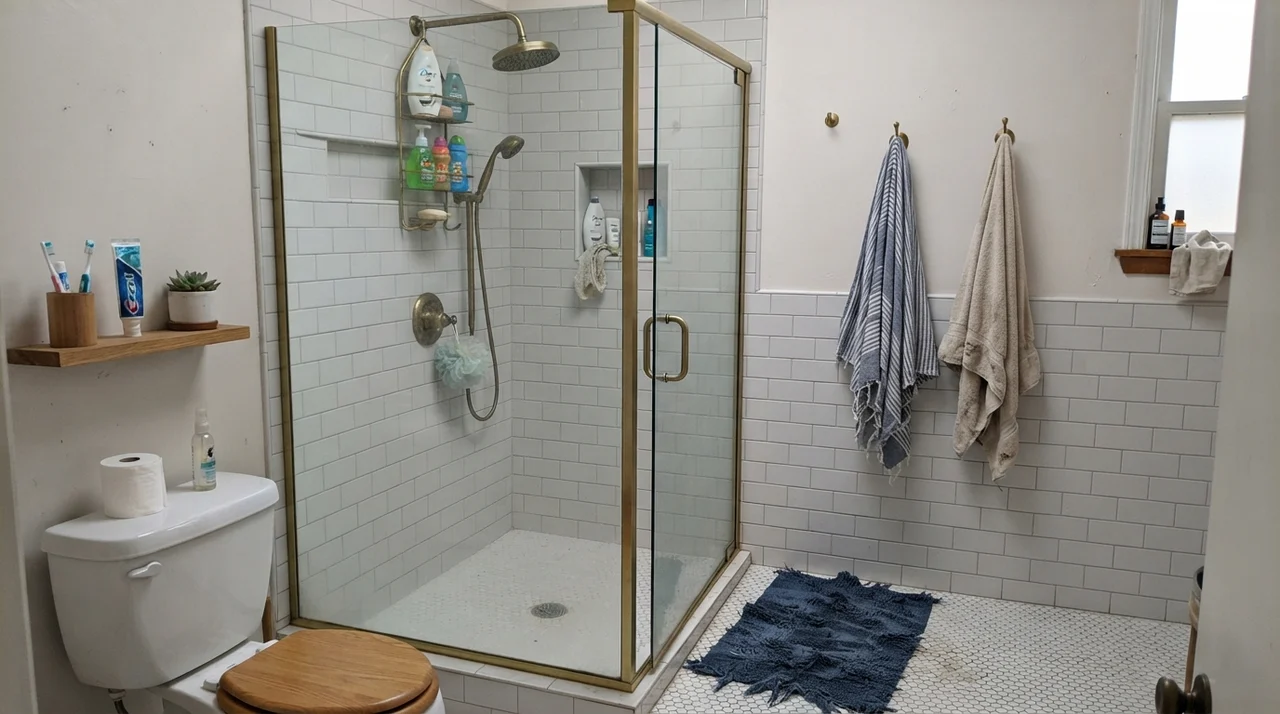
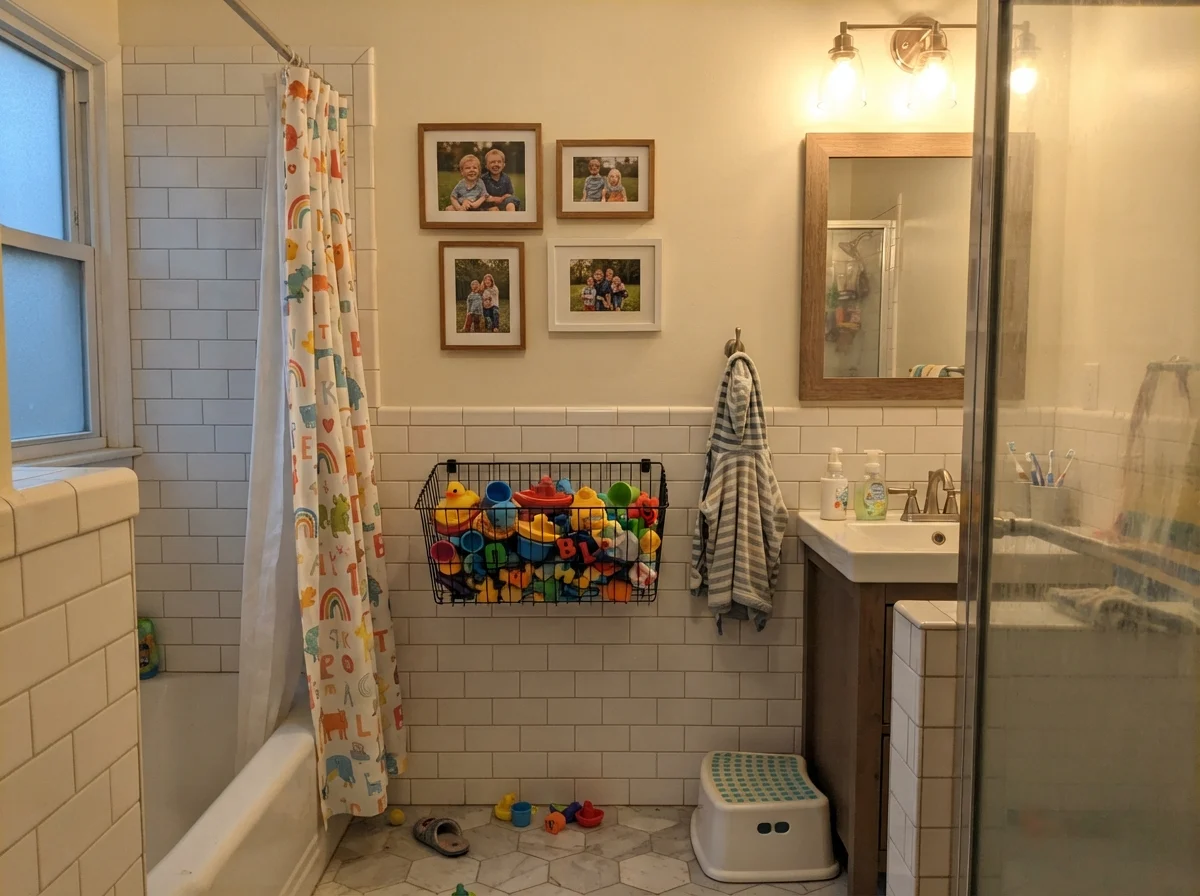
That bathroom was one of the first rooms where I realized how Greek Villa behaves when daylight hits it. In our last house, our main bath had a good side window that let in soft daylight, and Greek Villa gave the space an easy, relaxed warmth that sterile whites never manage. But you have to know what you are getting into before you open that first gallon. Greek Villa sits at LRV 84, meaning it reflects a generous 84 percent of the light entering a room. That is remarkably high for a paint with this much creamy pigment. Most warm whites with this kind of cozy undertone hover around LRV 80 to 82, where they run the risk of turning muddy in dim rooms. Greek Villa gives you the cream without the heaviness.
Yet that same brightness is why people get into trouble with it. Because it is so light, your eyes expect it to behave like a true white. Then dusk settles, or someone turns on a cool ceiling fixture, and the underlying yellow-cream undertone steps forward to announce itself. Let's look at how that shift happens across different exposures.
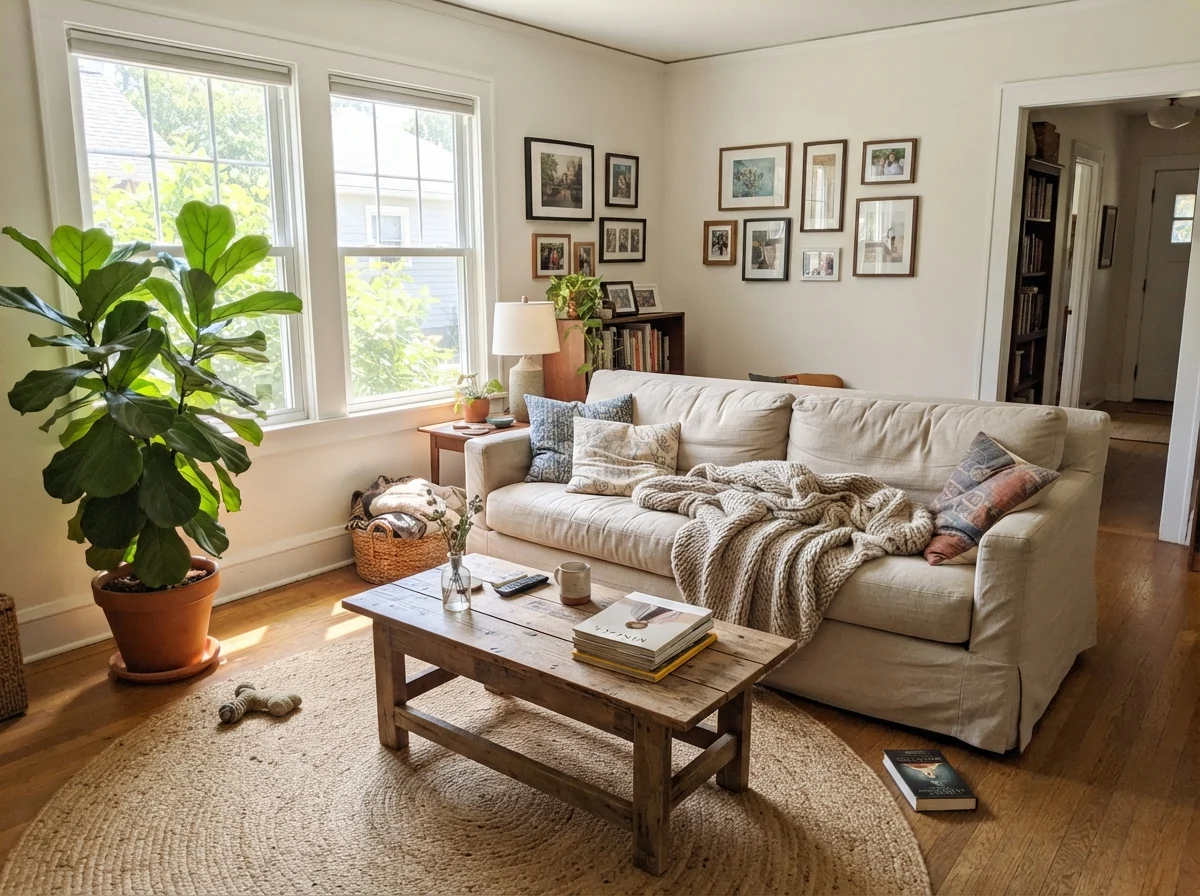
When you see Greek Villa across these three conditions, the story becomes obvious. In a sun-drenched living room with south-facing windows, the color is in its absolute element. The yellow base softens the blinding glare of noon, turning the walls into a gentle, creamy backdrop that flatters warm wood furniture, jute rugs, and textured linen. It looks rich, expensive, and quietly peaceful.
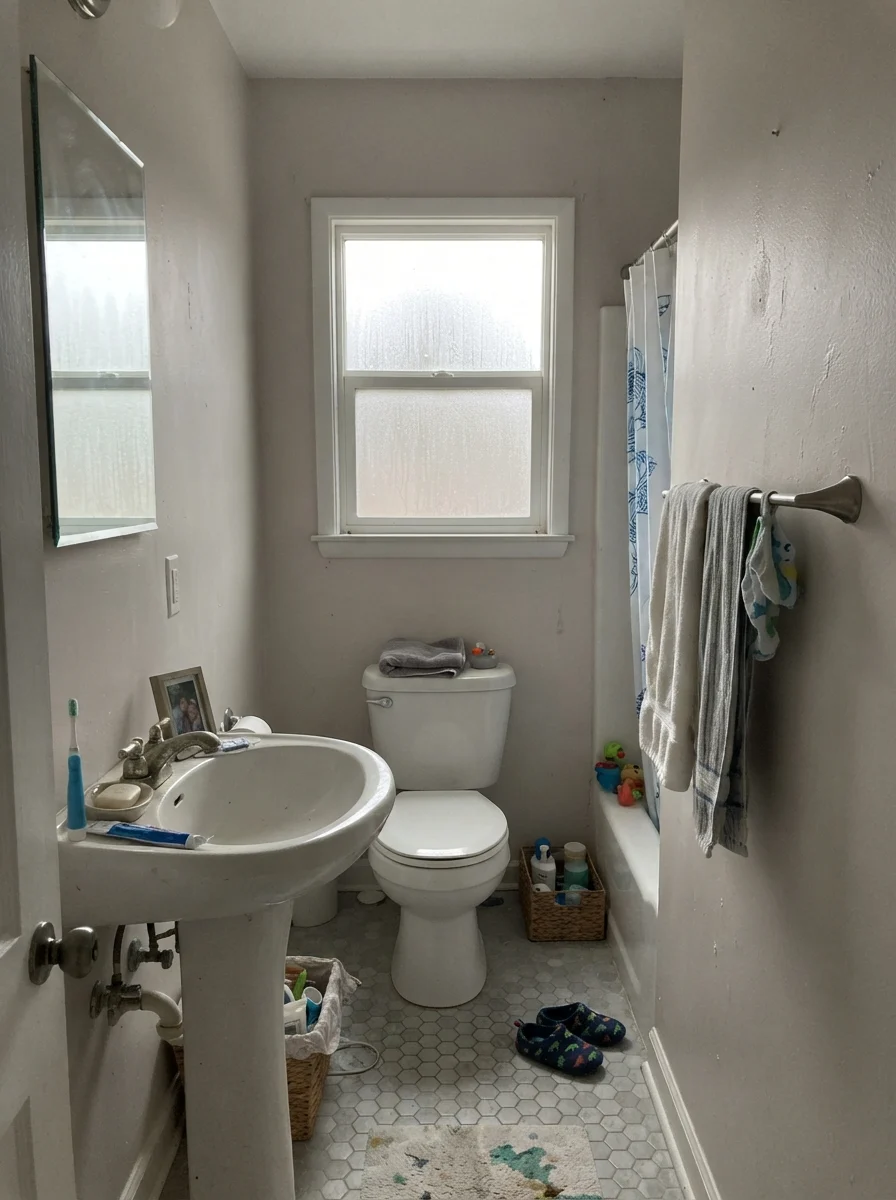
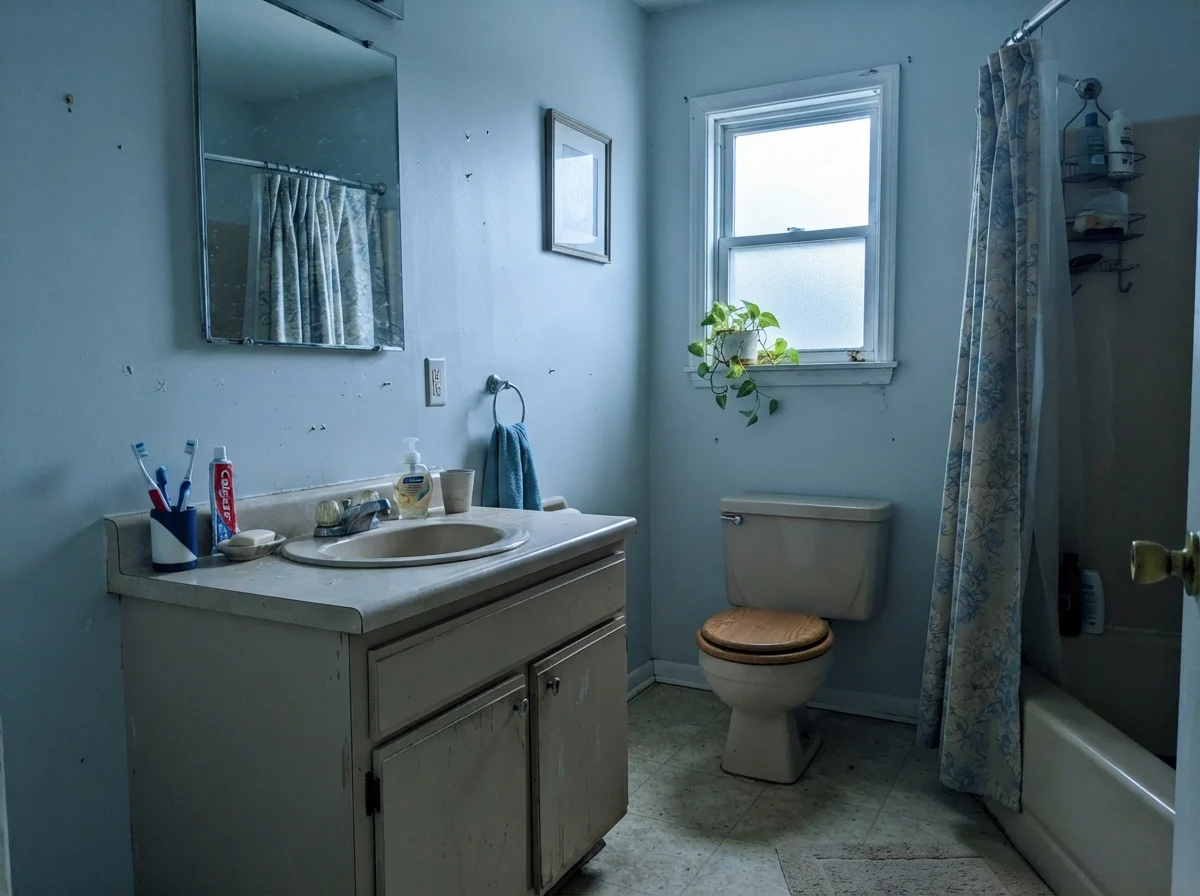
Put that exact same can of paint into a north-facing bathroom on a gray November afternoon, however, and the lack of warm light steals its glow. The paint flattens out, slipping into a muted, slightly stony putty that loses its creamy charm. And if you have a modest room with older fixtures and cool indirect light, it can pick up an odd, cool cast that feels completely disconnected from the swatch card you brought home from the paint store.
How Light Dictates the Mood
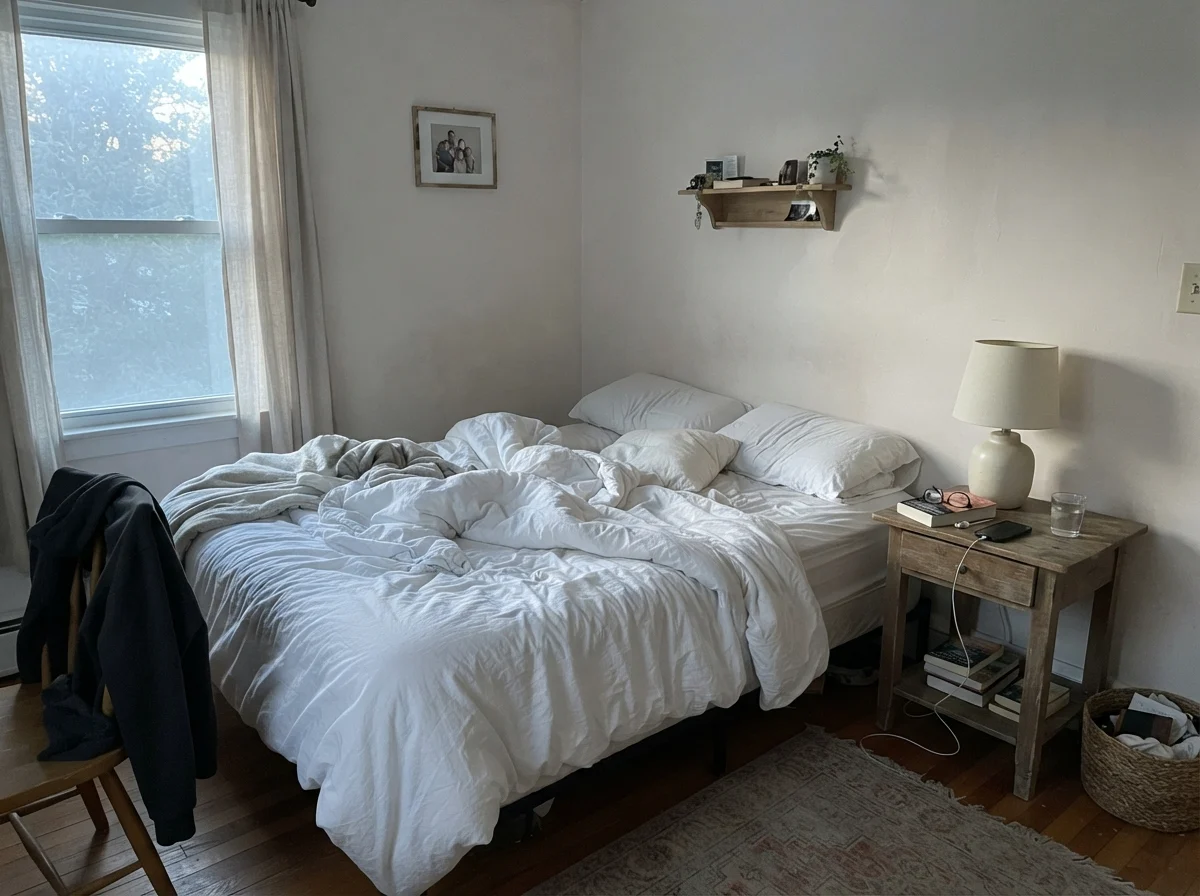
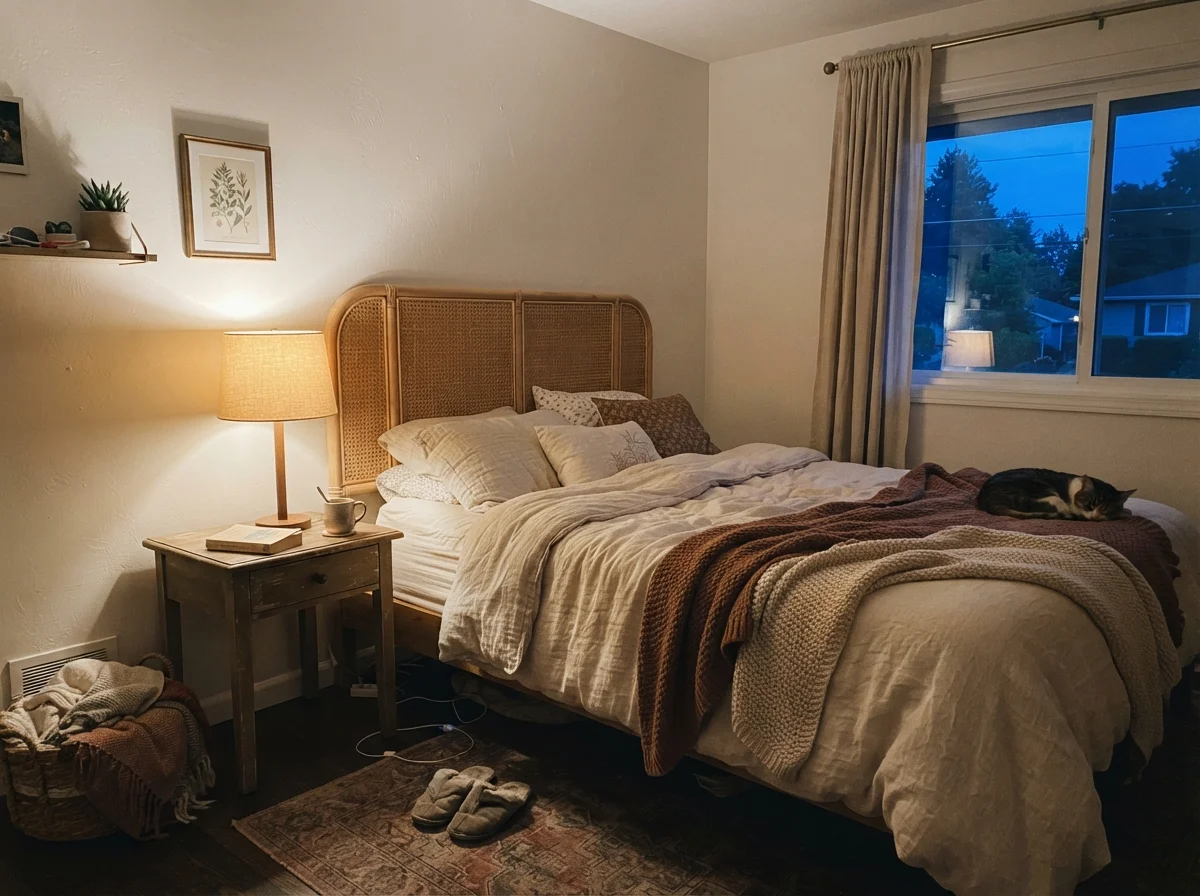
The transition between morning and night in a bedroom tells you everything you need to know about Greek Villa's responsiveness. In the pale chill of early morning before any lamps are switched on, the wall reads almost like a stark off-white—pale, lean, and slightly washed out. But the moment you flip on a bedside lamp with a 2700K warm incandescent or LED bulb, the paint blossoms. The creaminess rushes forward, cocooning the room in warmth.
This is why lighting hardware matters just as much as the paintbrush you choose. If your home is fitted with modern 4000K or 5000K daylight LED recessed fixtures, Greek Villa will look drained, clinical, and confused. It needs warm bulbs—2700K for cozy living spaces and bedrooms, or 3000K for functional spaces like kitchens—to activate the yellow undertones naturally. If your room looks dreary after painting, change the light bulbs before you blame the paint.
Greek Villa in Bedrooms and Family Spaces
In bedrooms, Greek Villa has been one of my most dependable recommendations for decades, provided the room gets decent natural light. It softens clean white bedding without creating jarring contrast, and it pairs effortlessly with pale oak nightstands, woven cane, and simple ceramic table lamps. In our current 1960s ranch, I used a warm off-white palette in our guest rooms specifically because it adapts so gracefully to whatever bedding or curtains we cycle through over the years.
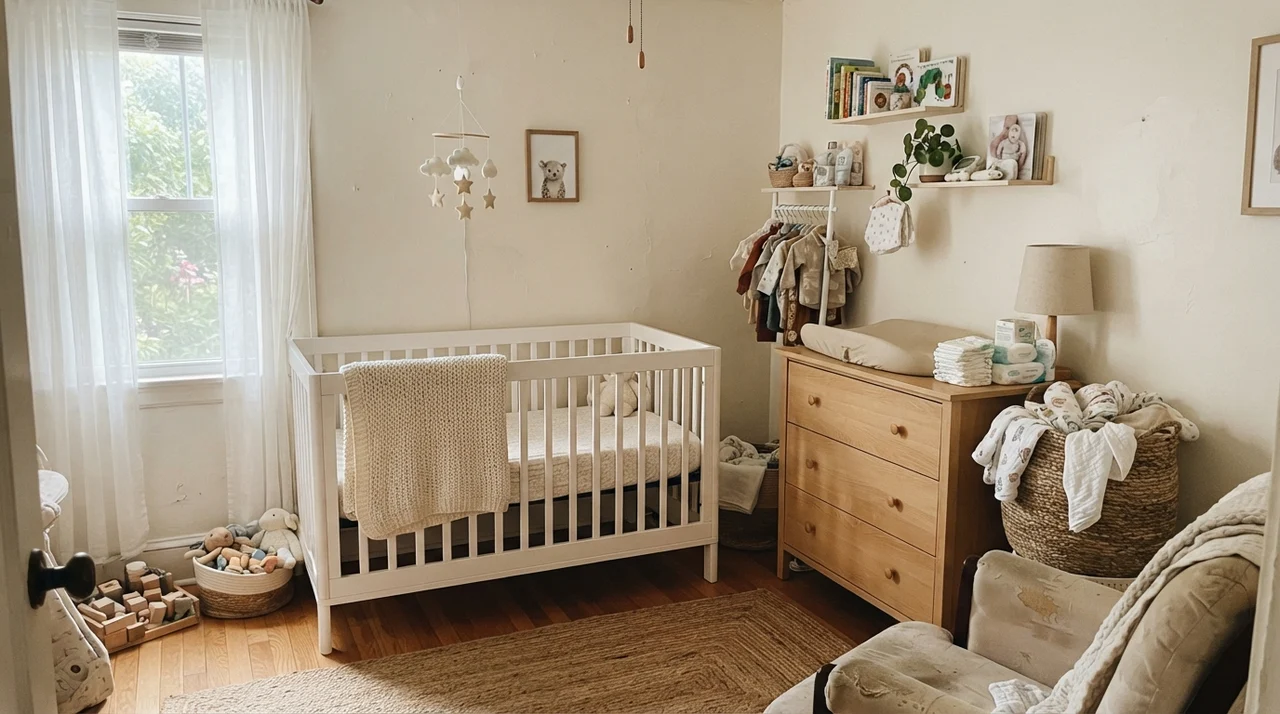
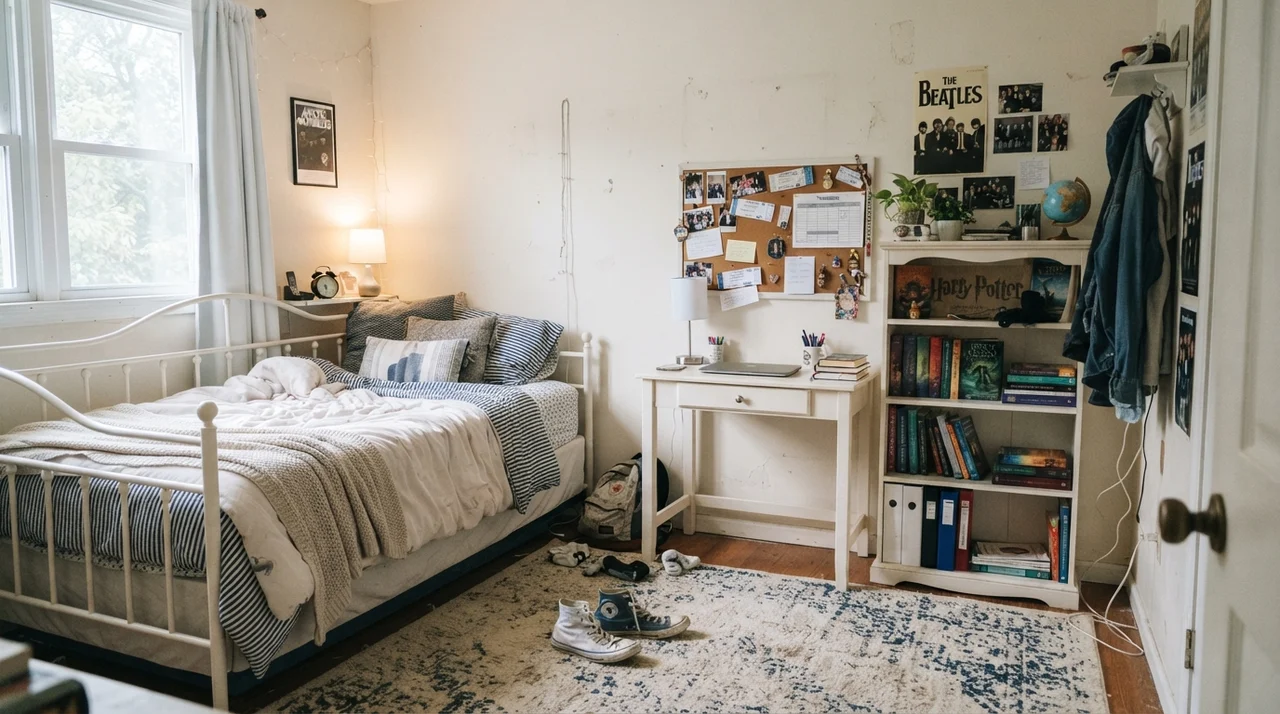
For a nursery or a teenager's bedroom, Greek Villa provides a quiet, steady backdrop that lets furniture and accessories do the talking. In a nursery bathed in diffuse daylight through sheer curtains, it feels comforting rather than clinical. In a teenager's room filled with corkboards, sneakers, metal frames, and open book shelving, it holds up against the visual clutter without feeling heavy or closed-in. If a bedroom ever feels a little too plain under flat daylight, pairing Greek Villa with an accent color like Sherwin-Williams Evergreen Fog (SW 9130) on built-in shelves or an accent wall grounds the room beautifully.
The Bathroom Reality: Tile and Porcelain
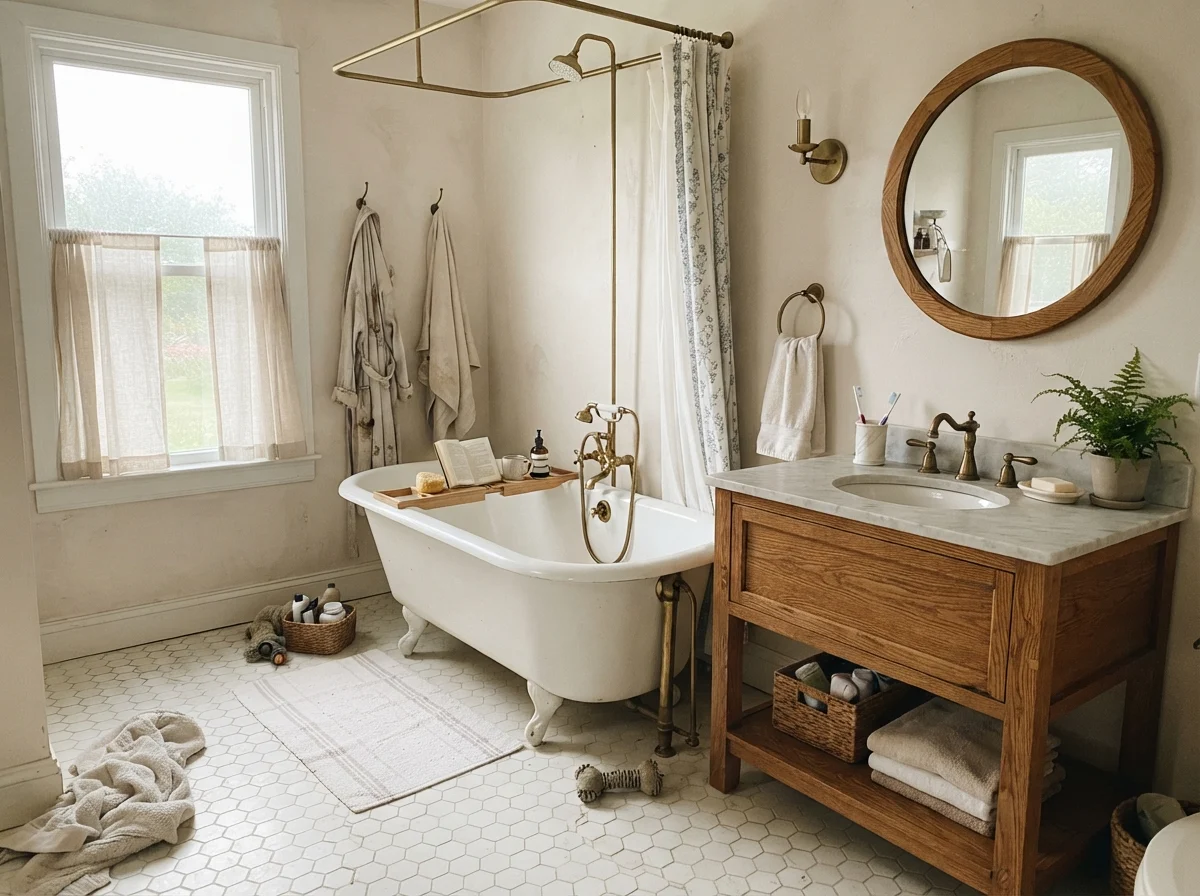
Bathrooms are where Greek Villa requires your closest attention. Let me be blunt: against stark, pure white porcelain tubs and cool-toned ceramic sinks, Greek Villa will read noticeably creamy. In a cottage bathroom with an authentic white clawfoot tub, classic white hex tile, and a warm oak vanity, that creamy contrast feels intentional, vintage, and charming. The wood vanity and brass plumbing bridge the gap between the crisp porcelain and the warm walls.
However, if your bathroom is finished with cool gray-veined Carrara marble, polished chrome hardware, and bright white subway tile under cool LED vanity lights, Greek Villa is going to look like a mistake. The walls will read yellowed and dingy against the cold gray stone. In our second house, I watched a friend make this exact error in her guest bath. She spent thousands on cool gray marble floors and then painted the drywall Greek Villa because a design magazine called it 'the perfect white.' It took her six months to admit the walls looked perpetually dirty, and she eventually repainted in a cooler, crisper white. Save yourself the headache: check your hard surfaces first.
Kitchen Cabinets and Trim Details
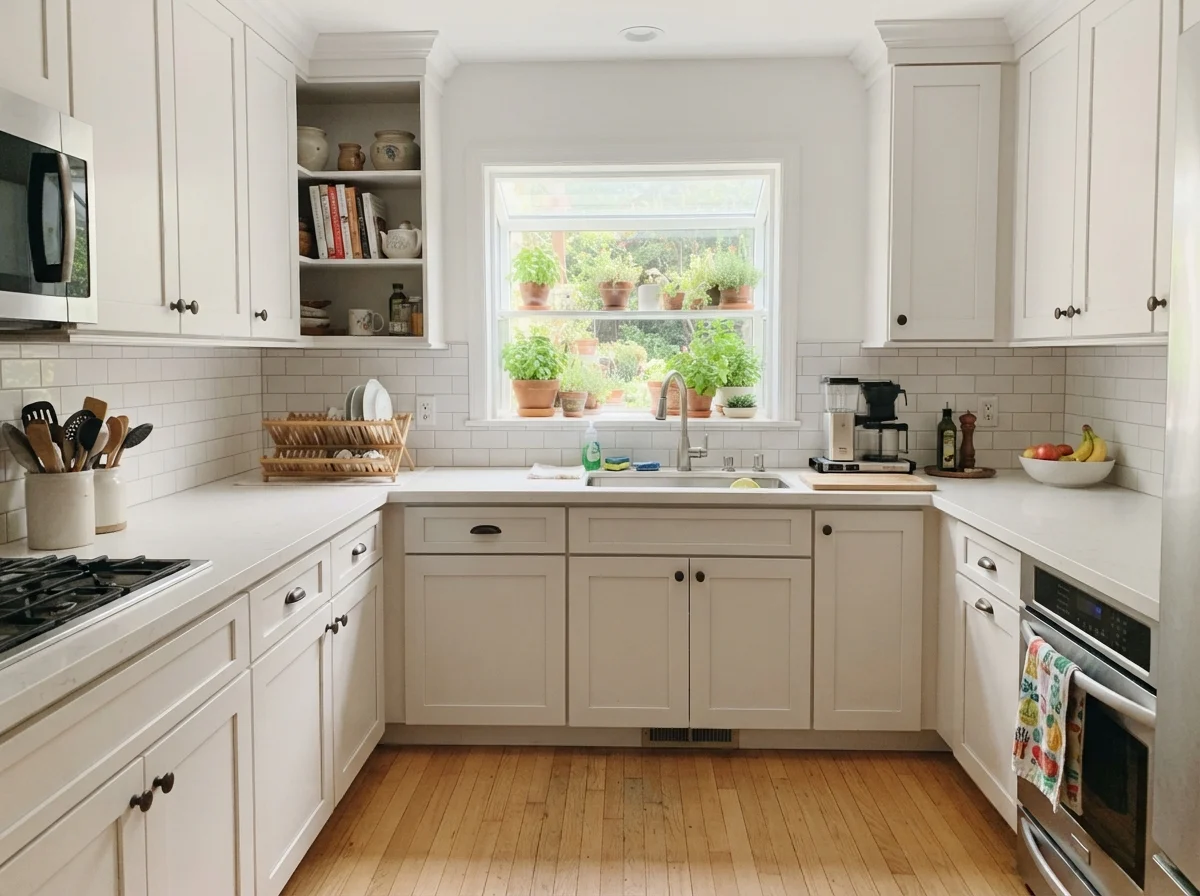
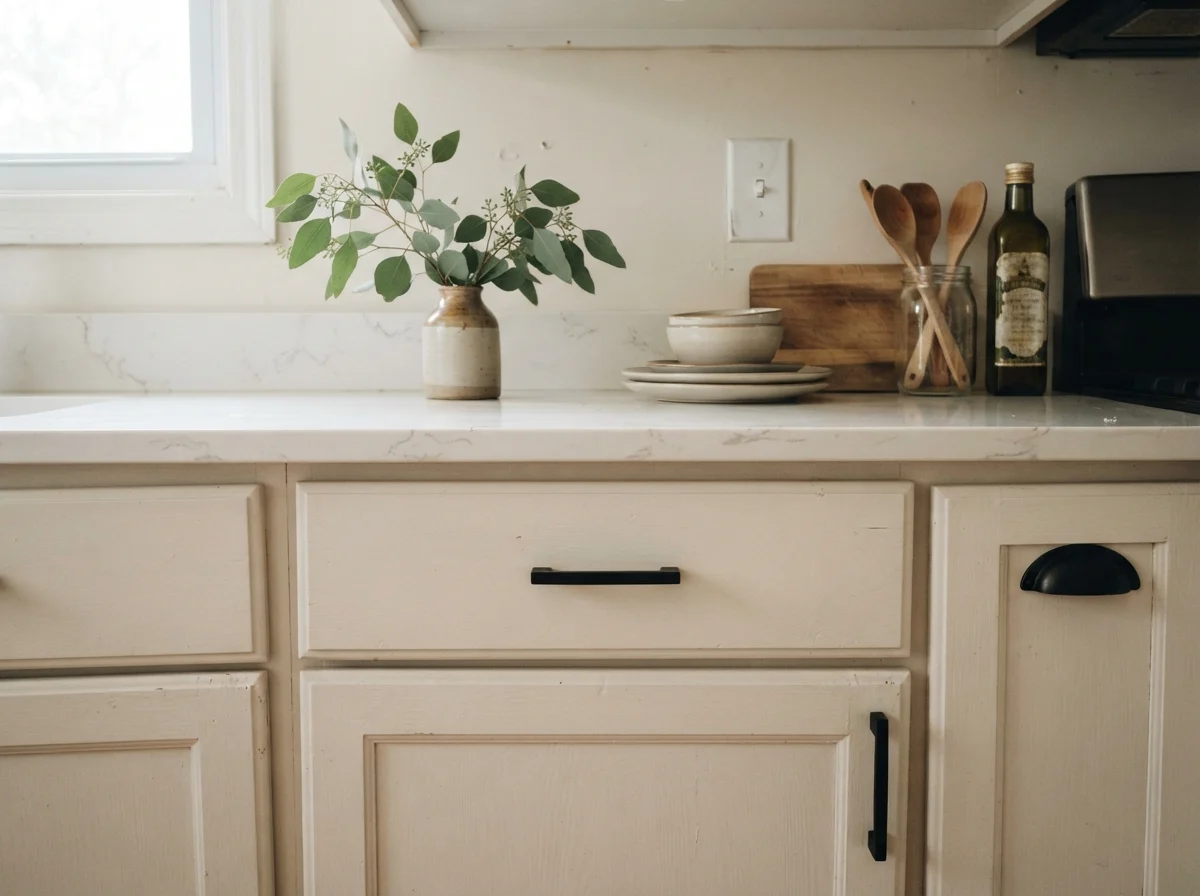
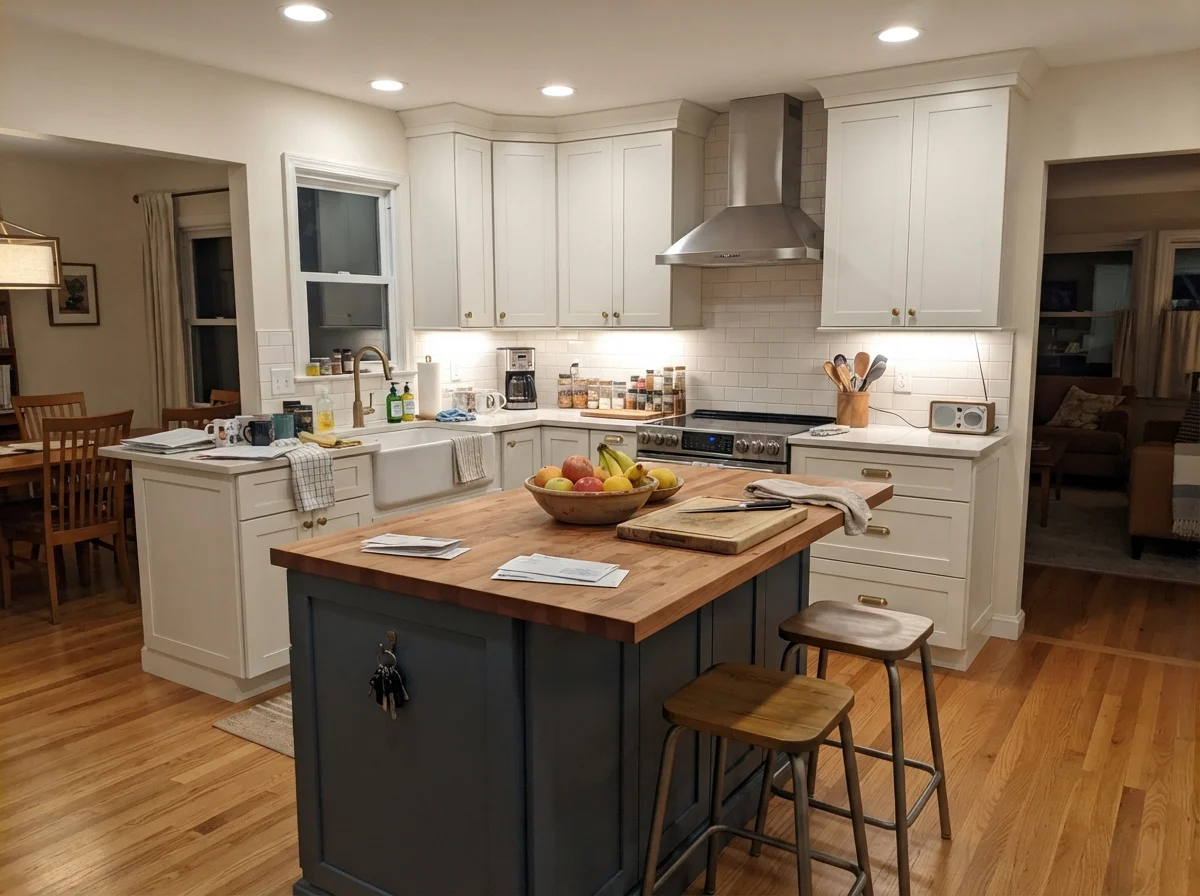
If there is one place where Greek Villa truly earns its reputation, it is on kitchen cabinets. Five years into a kitchen repaint, you learn whether a white cabinet paint feels sterile or comfortable. Greek Villa in a satin finish over honey oak, white oak, or walnut flooring is pure harmony. It softens the starkness of white quartz countertops without looking yellowed, especially when grounded with matte black or aged brass hardware.
When we sold our 1990s colonial, the kitchen had been refreshed with warm creamy cabinetry, and every prospective buyer commented on how bright yet inviting the space felt. A brighter, starker white would have made our older oak floor look orange by comparison. Greek Villa's gentle yellow undertone met the honey tones of the wood halfway, creating a cohesive, collected look that didn't scream 'quick flip.'
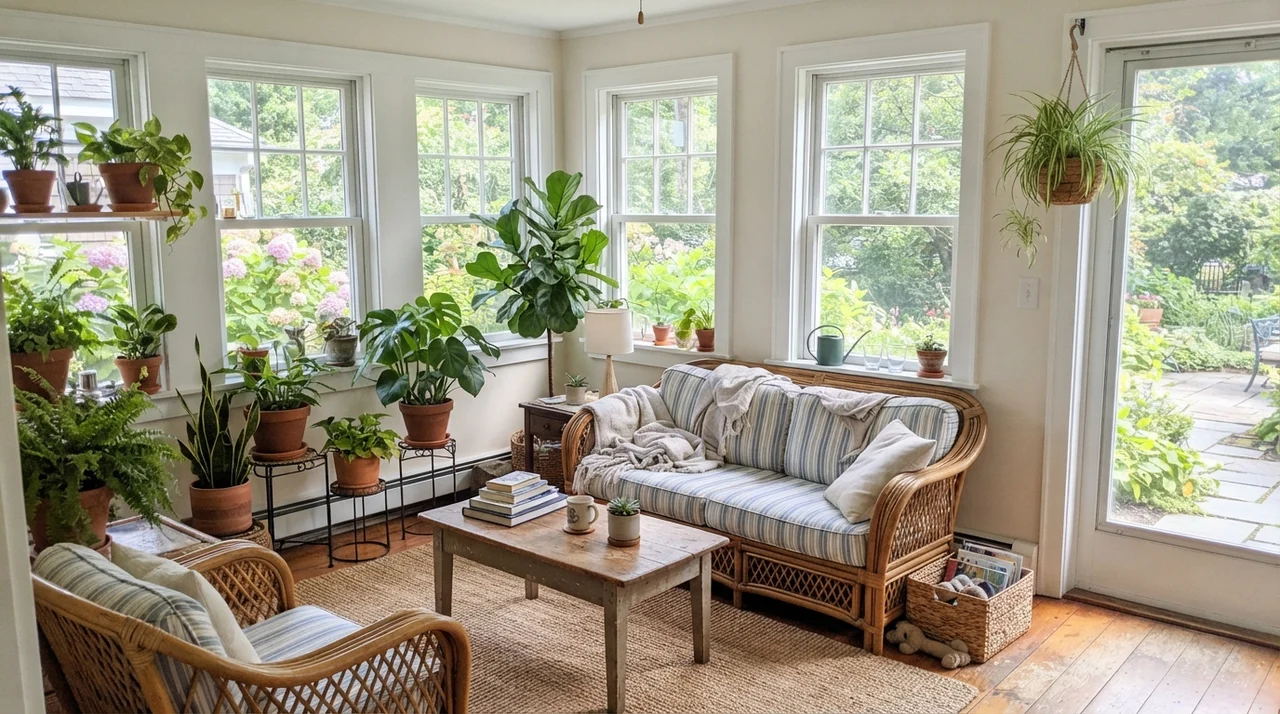
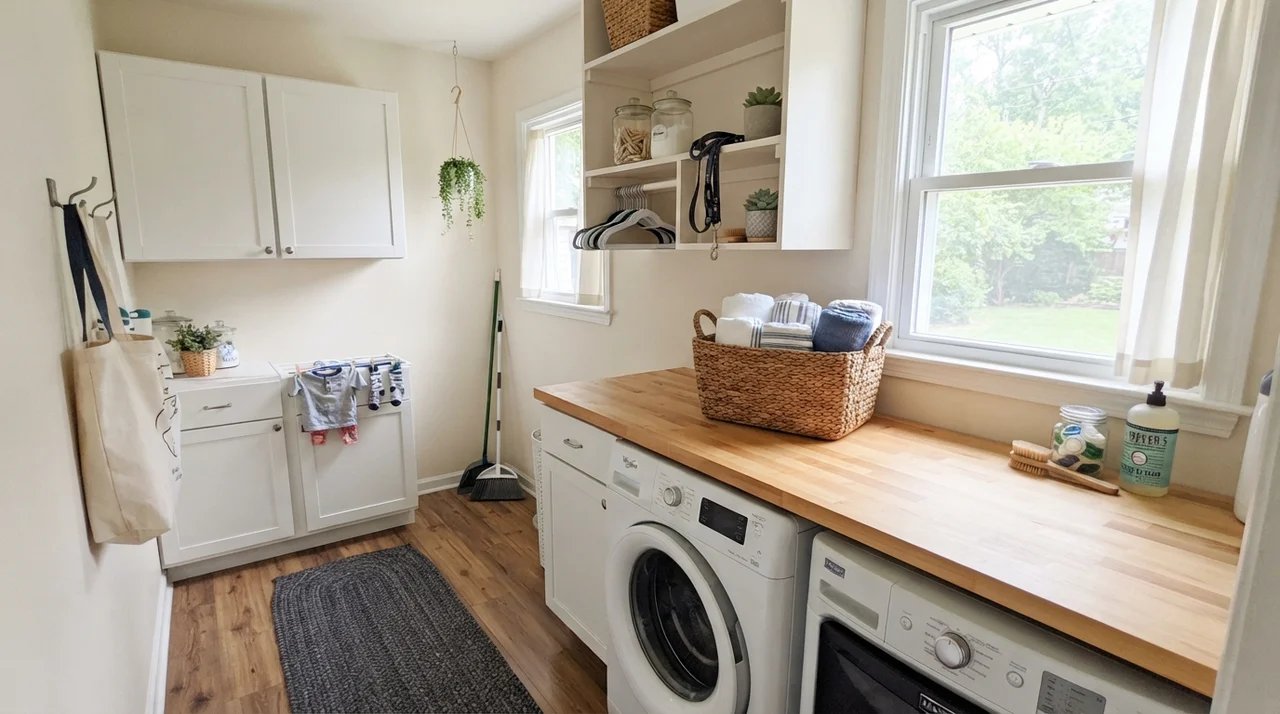
In secondary spaces like sunrooms and laundry rooms, Greek Villa does heavy lifting. In a sunroom wrapped in white-framed windows, rattan armchairs, and terracotta planters, the high LRV keeps the space feeling radiant even on partly cloudy days. In a tight laundry room with butcher-block counters over a white washer and dryer, it provides just enough warmth to prevent the utilitarian space from feeling like a hospital basement.
The secret to using Greek Villa across multiple functional rooms is treating your wood elements as anchors. Whether it's the natural butcher block in a utility room or the rattan frames in a garden room, natural materials give Greek Villa something warm to converse with. When it has wood, stone, or brass nearby, the yellow undertone reads as natural warmth rather than an accidental tint.
The Honest Failure: Where Not to Use It
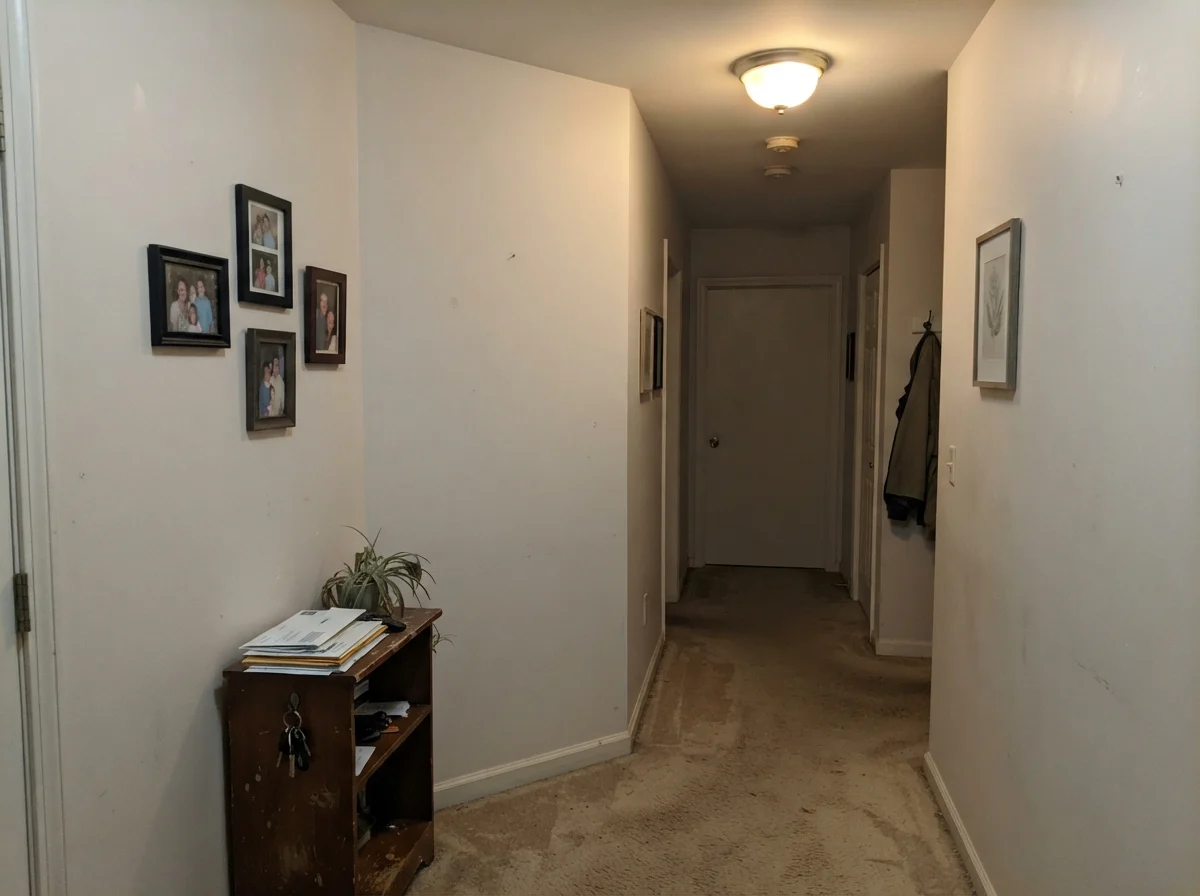
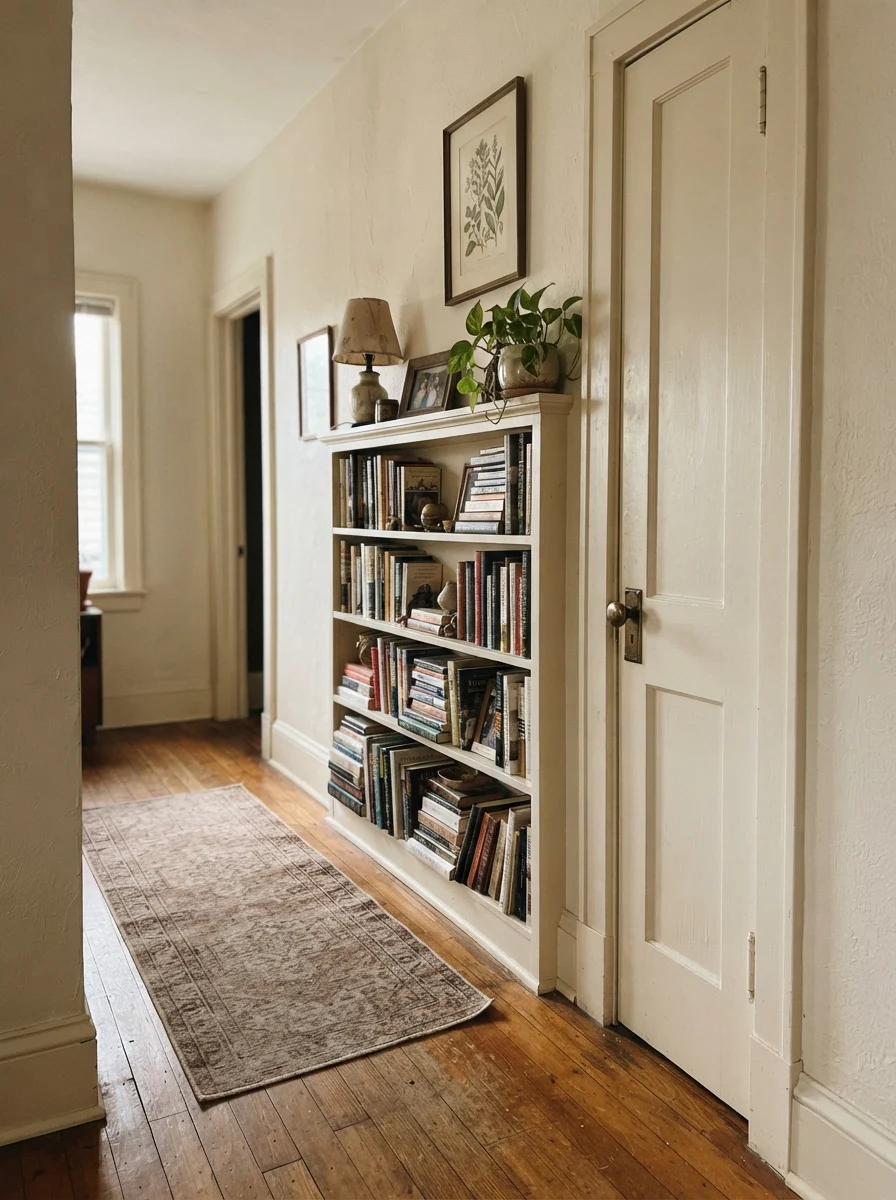
I promised to save you from the mistakes I've already made, so look closely at that hallway corner above. The bad Greek Villa stories are remarkably consistent, and almost none of them are about the paint being defective. They are almost always pairing mistakes or lighting traps. If your room matches any of these three conditions, choose a different paint:
1. Next to bright builder-white trim. This is the number-one complaint by an overwhelming margin. Homeowners paint their walls Greek Villa but leave their baseboards, interior doors, and ceilings in standard factory-sprayed bright white. The stark trim creates an immediate side-by-side contrast that strips the creaminess away from the wall and leaves it looking plainly yellow. If you cannot repaint your trim, do not put Greek Villa on your walls.
2. In a windowless hallway or dim north-facing basement. Look at the photo above: without natural sunlight to activate the pigment, Greek Villa loses its bounce and settles into a flat, dreary putty. Cool 4000K LED ceiling bulbs make this worse. If you have a dim hallway with no direct daylight, Sherwin-Williams Alabaster (SW 7008) holds its softness much better without turning muddy.
3. In a west-facing room with hard afternoon sun. Low, blazing afternoon sun through large west-facing windows will push Greek Villa past cream and straight into melted butter for two to three hours every evening. If you have big west windows, Sherwin-Williams Pure White (SW 7005) is the safer buy—it shares the same LRV 84 but eliminates the warm base that sun supercharges.
The secret with Greek Villa is committing to the whole room: walls, trim, doors, and ceilings in one color, differentiated only by sheen.
The Whole-House Trim Strategy
Whenever someone asks me how to make a dated 1970s split-level or a chopped-up colonial feel cohesive on a budget, this is my favorite trick: paint the entire envelope in Greek Villa. Put eggshell on the drywall, flat on the ceiling, and semi-gloss on the baseboards, doors, and window casings. By eliminating the high-contrast trim line, you eliminate the visual clutter that makes small rooms feel boxed in.
When you paint the trim to match the walls, Greek Villa stops looking like 'off-white walls next to white trim' and starts looking like an intentional architectural backdrop. It makes vintage wood doors, brass knobs, and built-in shelving look completely integrated. Plus, buying one color across thirty gallons saves money and eliminates half-empty specialty cans sitting forgotten in your garage.
Durability, Scrubbing, and Exterior Performance
Let's talk about how Greek Villa holds up after five years of real family living. In our high-traffic mudroom and entryways, walls get kicked, bumped by grocery bags, and rubbed by wet dog coats. In an eggshell sheen, high-quality Sherwin-Williams paint in Greek Villa scrubbed clean easily with warm water and a drop of mild dish soap. Because it has enough warm pigment in the formula, minor scuffs don't jump out the way they do on stark titanium-white walls.
Touch-ups are another major consideration. With deeply saturated colors or muddy beiges, touching up a five-year-old wall often leaves a visible halo where the new paint meets the faded area. Because Greek Villa is mostly light pigment, feathering a small roller patch over a patched nail hole blends remarkably well, provided you kept the original can sealed tightly in a climate-controlled closet.
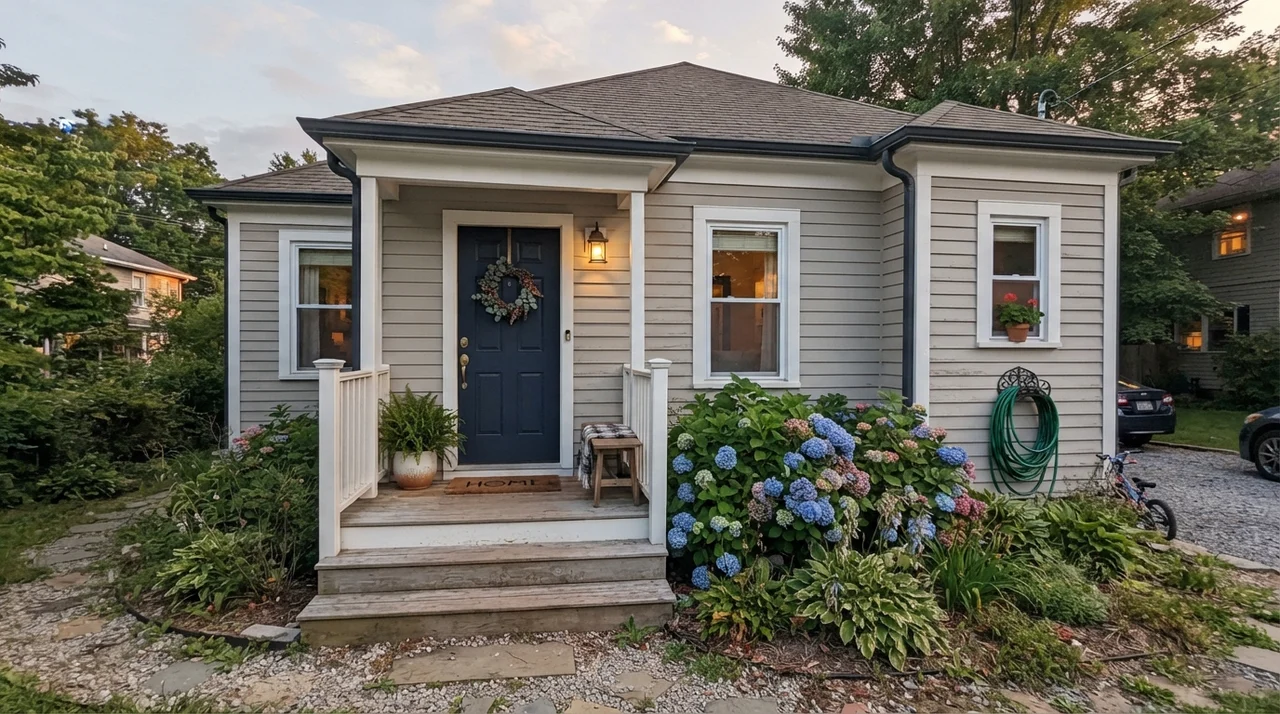
On home exteriors, Greek Villa is one of the safest warm whites on the market. Stark whites look blinding and chalky in direct outdoor sunlight, often washing out architectural details. Greek Villa on horizontal siding or painted brick retains its gentle body in full sun. Paired with a dark navy or charcoal front door and classic landscaping, it gives a house timeless curb appeal that won't look dated within five years.
What sheen should I choose for Greek Villa throughout the house?
Use flat on ceilings to hide imperfections, eggshell on living room and bedroom walls for easy cleaning, semi-gloss on baseboards and interior doors for durability, and satin on kitchen cabinets.
Does Greek Villa look yellow on walls?
It reads creamy-warm in balanced daylight. It only looks noticeably yellow if it is placed directly beside stark bright-white trim, under cool 4000K LED lights, or in direct, late-afternoon western sunlight.
Can I use Greek Villa on both my walls and trim?
Yes, and this is actually the best way to use it. Painting walls in eggshell and trim in semi-gloss creates a seamless, elegant look that prevents trim contrast issues.
Is Greek Villa a good exterior white paint?
It is an exceptional exterior color. Its creamy undertone keeps it from looking chalky or glaring under direct outdoor sun, making it ideal for siding and painted brick.
Susan's Verdict · Greek Villa (SW 7551)
If you are ready to paint your walls and trim together in one cohesive color, Greek Villa is worth every penny. It delivers warmth, flatters wood floors, and lifts dark rooms with its bright LRV 84. Just don't ask it to sit beside builder-white baseboards or cool gray marble.