Color Diary · No. 14
Tricorn Black in Daily Life: Where True Black Works and Where It Punishes
The black designers reach for when they want no undertone at all, reviewed honestly: where it earns the hype, the three rooms it ruins, and what to use instead.

Susan HartleySeptember 3, 2026 · 15 min read
Tricorn Black · Sherwin-Williams SW 6258
Hex#2F2F30LRV3Undertoneszero undertone · pure neutral black · inky deep charcoal in direct sun
In our last house, a 1990s colonial with eight-foot ceilings and builder-basic hollow-core doors, I spent a long November convincing myself that dark paint could fix builder shortcuts. Everyone in the home magazines was talking about high contrast, and I wanted something crisp. I bought two gallons of Sherwin-Williams Tricorn Black (SW 6258) and tackled every interior door on the main floor. The first coat over standard factory white felt like an act of vandalism, but once the semi-gloss cured and the brass latches went back on, the entire center hall looked like we had spent ten thousand dollars on architectural upgrades. When we sold that house seven years later, the listing agent specifically noted those black doors as one of the features buyers commented on most during open houses.
That was my first real lesson with Tricorn Black. It is not a subtle color. It is not trying to be a soft charcoal, a moody navy, or an antique iron. At a Light Reflectance Value (LRV) of 3, it is an unapologetic, dead-neutral black that sits at global rank 21 on the color charts. It has no hidden green base, no purple lean in the evening, and no warm brown sneaking up at noon. That purity is precisely why it is beloved, but it is also why it can be utterly unforgiving if you use it in the wrong spot or in the wrong sheen.
Over thirty years and three houses—from our first 1970s split-level to that colonial and now our 1960s ranch—I have lived with dark paints in almost every conceivable configuration. I have painted doors, window sashes, fireplace brick, full dining room walls, and kitchen islands. Some dark paints soften with age and take family wear gracefully. Tricorn Black behaves differently: it holds its ground completely, but it demands that you know what you are doing before you dip your brush.
The Face of True Black Across Daylight
Most dark paints are really just heavy versions of another color—deep green-gray, ink navy, or blackened brown. Tricorn Black is one of the rare formulas with virtually zero chromatic undertone. How it looks comes down almost entirely to the quality of light hitting the surface and the sheen you choose.
warm sun
overcast, north light
dusk, rain, cool bulbs
Because Tricorn Black has no color agenda of its own, it reflects the lighting environment directly. South-facing sun reveals its true depth and roller texture, while cool overcast skies turn it into an inky silhouette.
CaviarSherwin-Williams · see diary
BlackBenjamin Moore · see diary
Tricorn BlackSW 6258
Black MagicSherwin-Williams · see diary
OnyxBenjamin Moore · see diary
Light Shifts: From Cool Mornings to Cozy Lamps
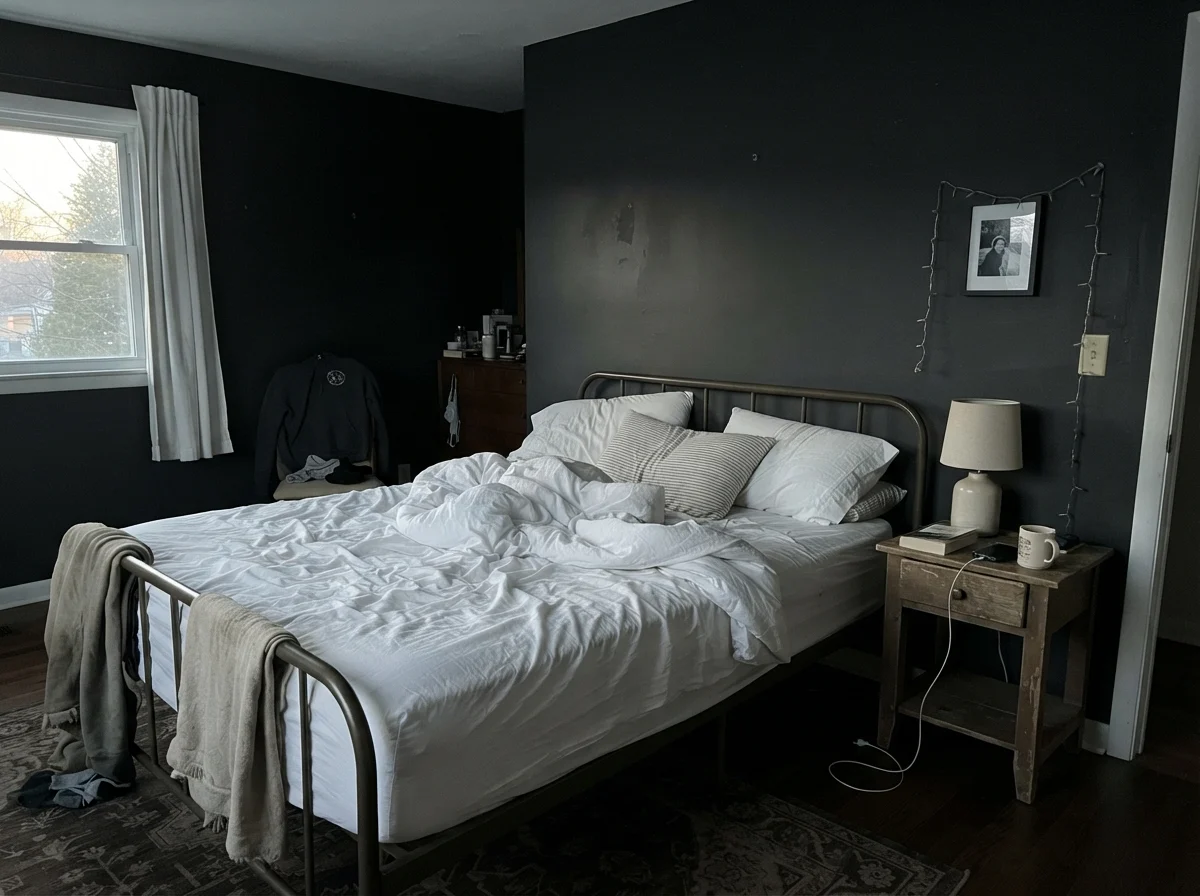
When you put a paint with an LRV of 3 on a wall, you are removing light reflection almost entirely. That means natural light does not bounce around the room; instead, the surface simply absorbs whatever daylight enters. In cool early morning light, especially in north-facing bedrooms, Tricorn Black looks deep, velvety, and almost two-dimensional. Without warm lamps to graze the surface, it flattens out into an architectural outline.
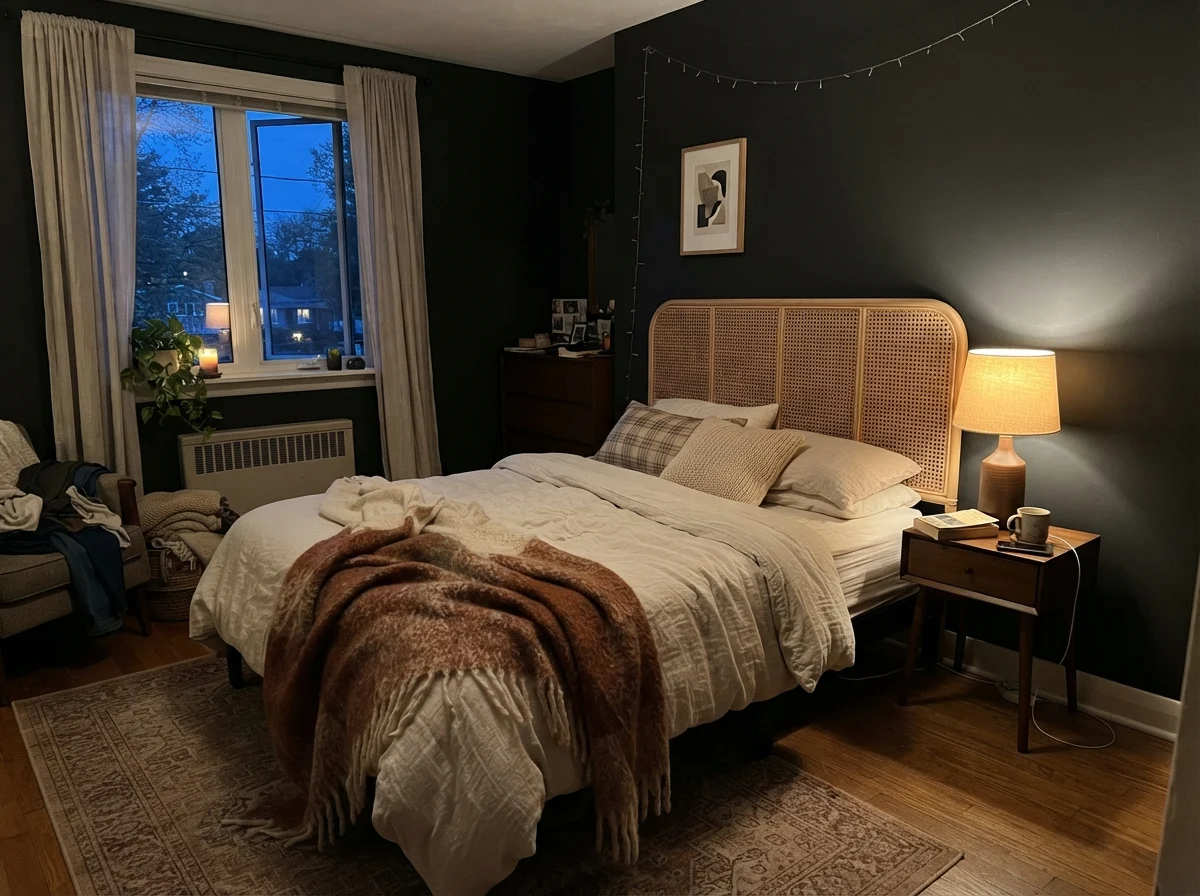
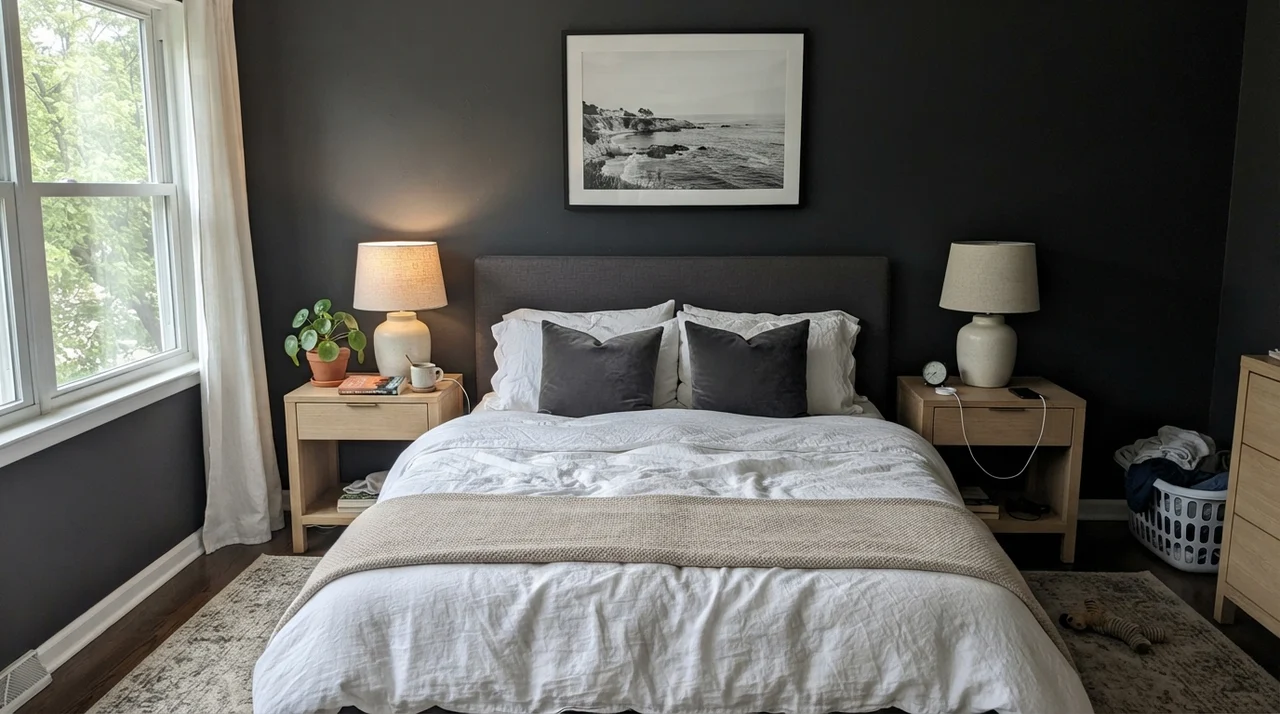
Come evening, when you switch on 2700K table lamps, the color softens. It doesn't magically turn brown, but the warm bulbs create pools of light that give the room dimension. If you choose to paint a bedroom or a cozy sitting room in this color, you cannot rely on a single overhead ceiling fixture. You need multiple light sources at eye level to keep the corners from disappearing into void space. I lived with a dark accent wall in our master bedroom for years, and having the right bedside lamps made the difference between feeling cocooned and feeling like the room was swallowing our square footage.
Tricorn Black is the paint you choose when you don't want the wall to have an opinion. It doesn't pretend to be charcoal, navy, or espresso—it is just uncompromising, pure black.
Bathrooms and High-Contrast Enclosures
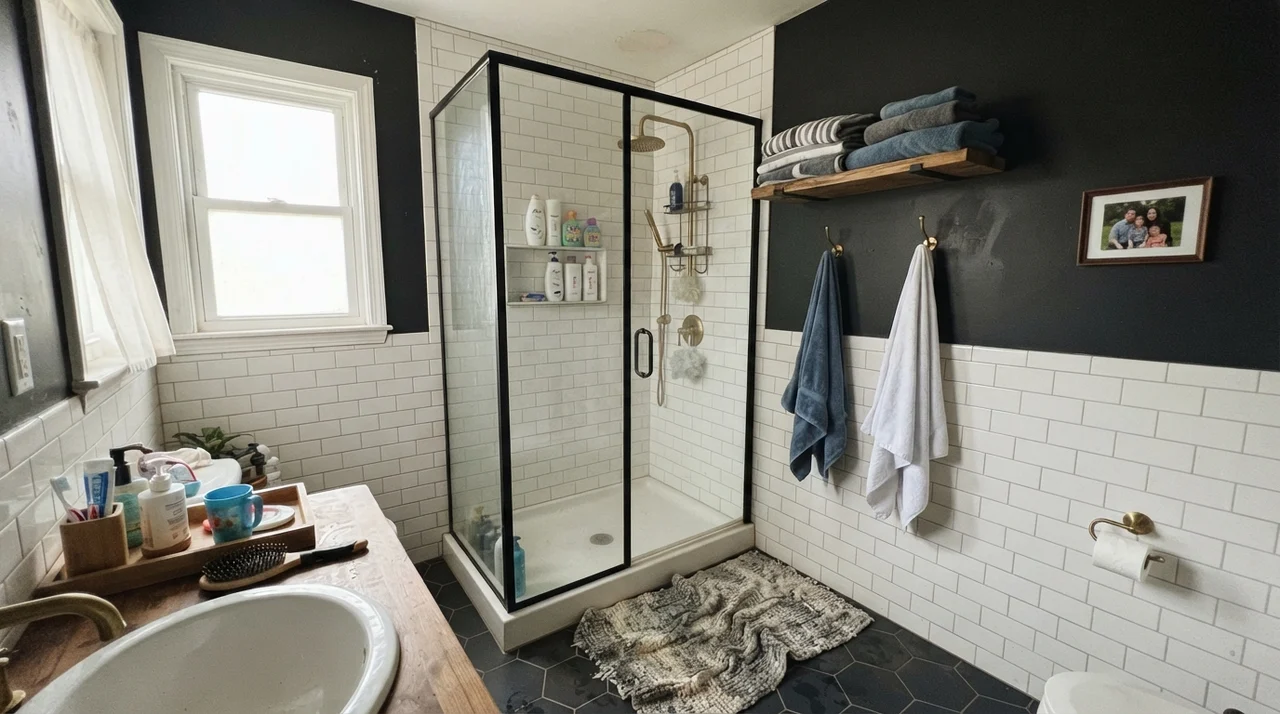
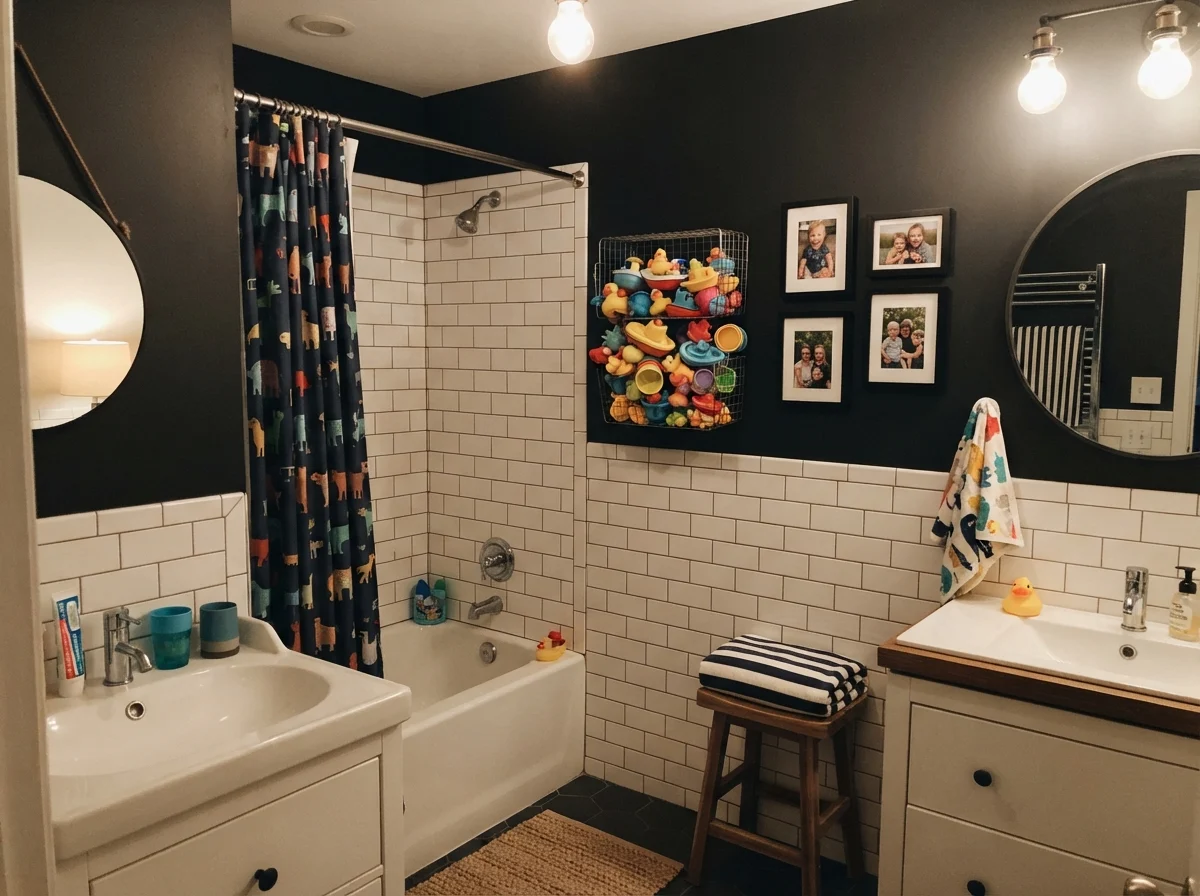
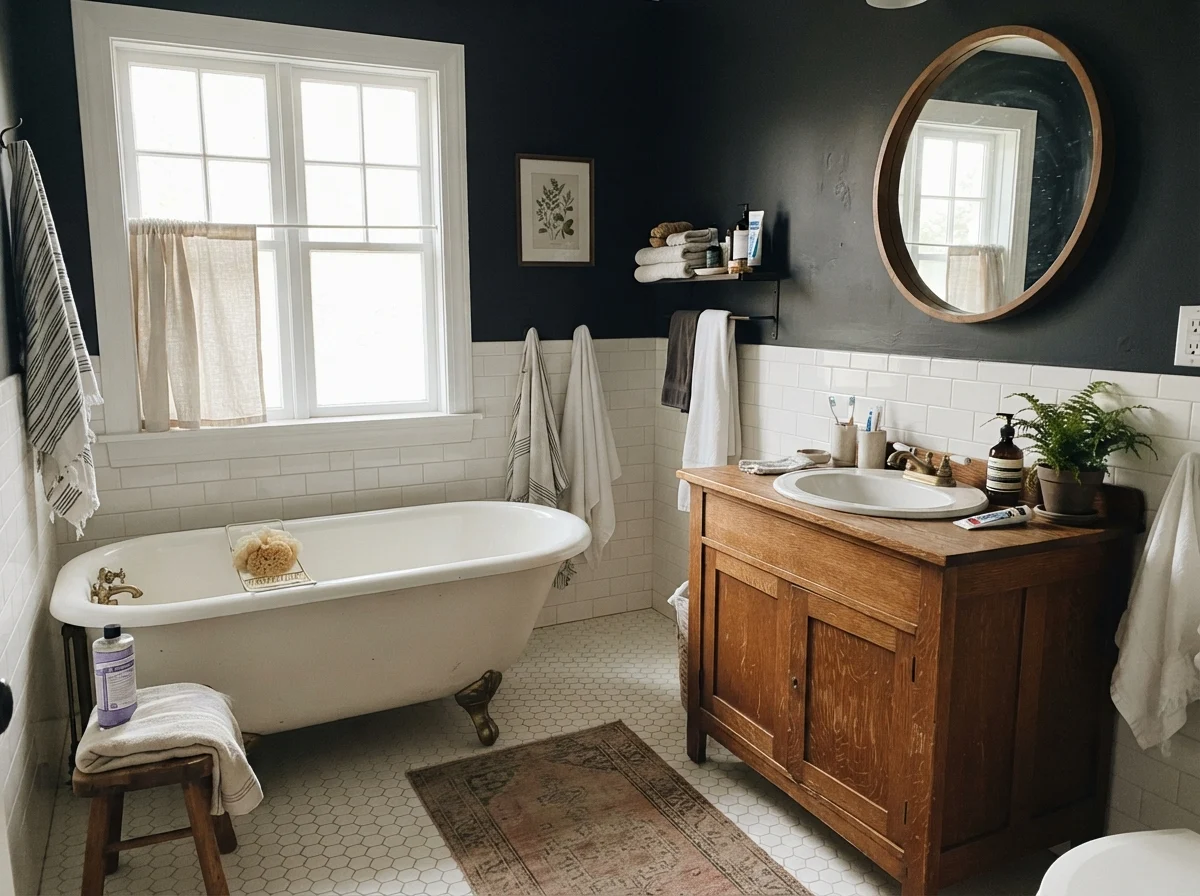
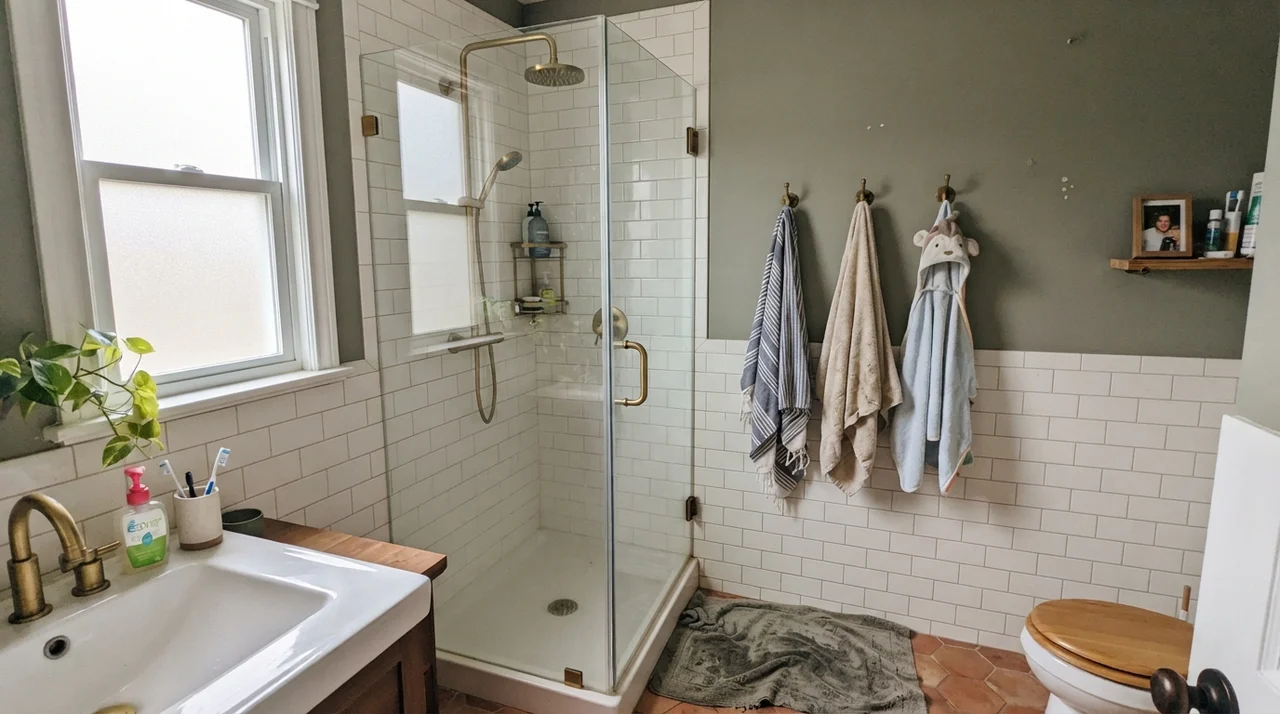
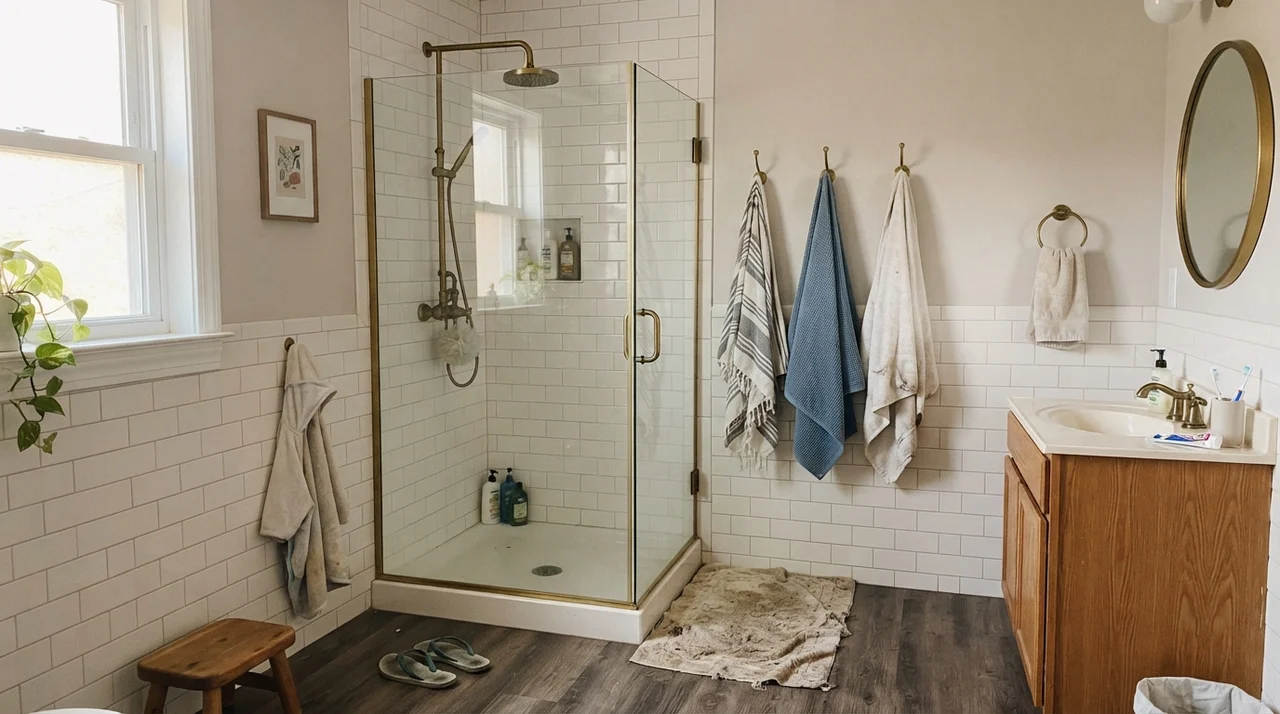
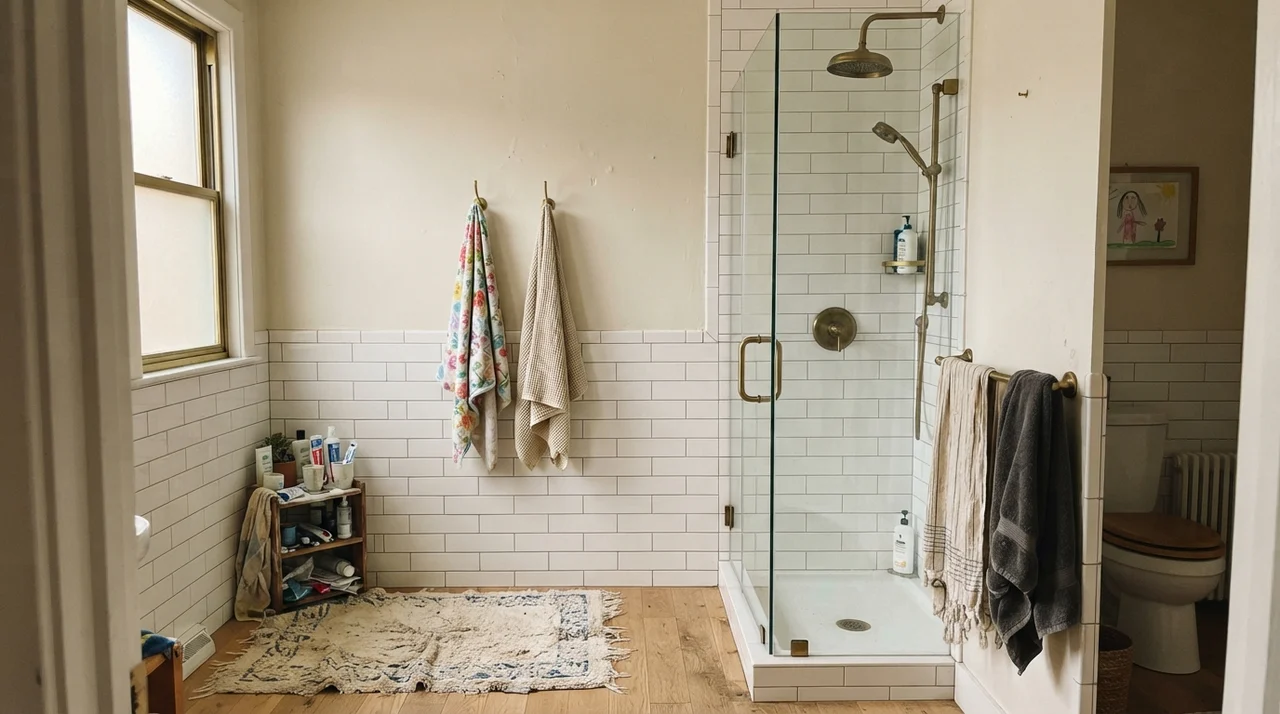
Powder rooms and bathrooms are often the first places homeowners test out true black, and for good reason. When paired with crisp white subway tile, light hex flooring, or warm wood vanities, Tricorn Black acts like black eyeliner—it defines every edge and makes standard fixtures look intentional and tailored. In our second home, I painted the upper half of our guest bath in black above beadboard wainscoting. It looked stunning for the entire six years we lived there, largely because the white tile bounced enough light to keep the room cheerful.
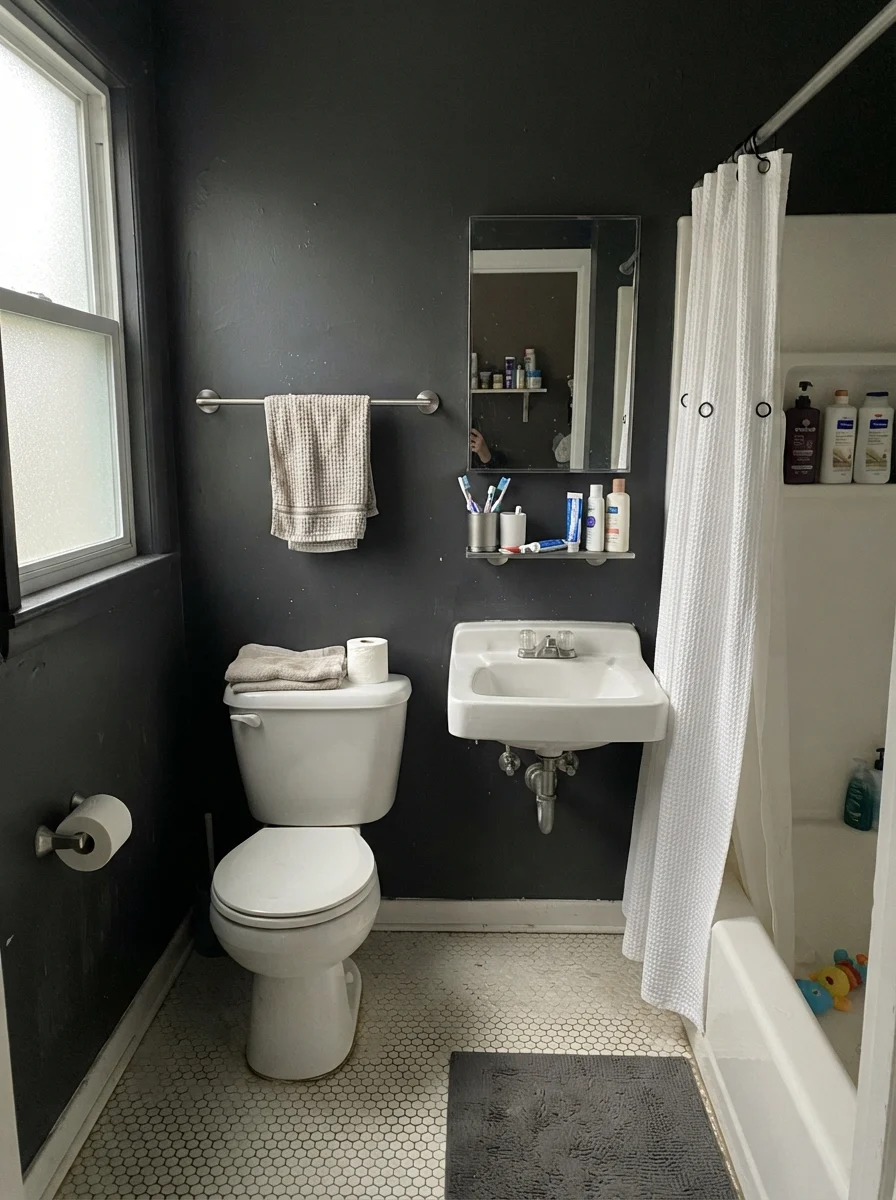
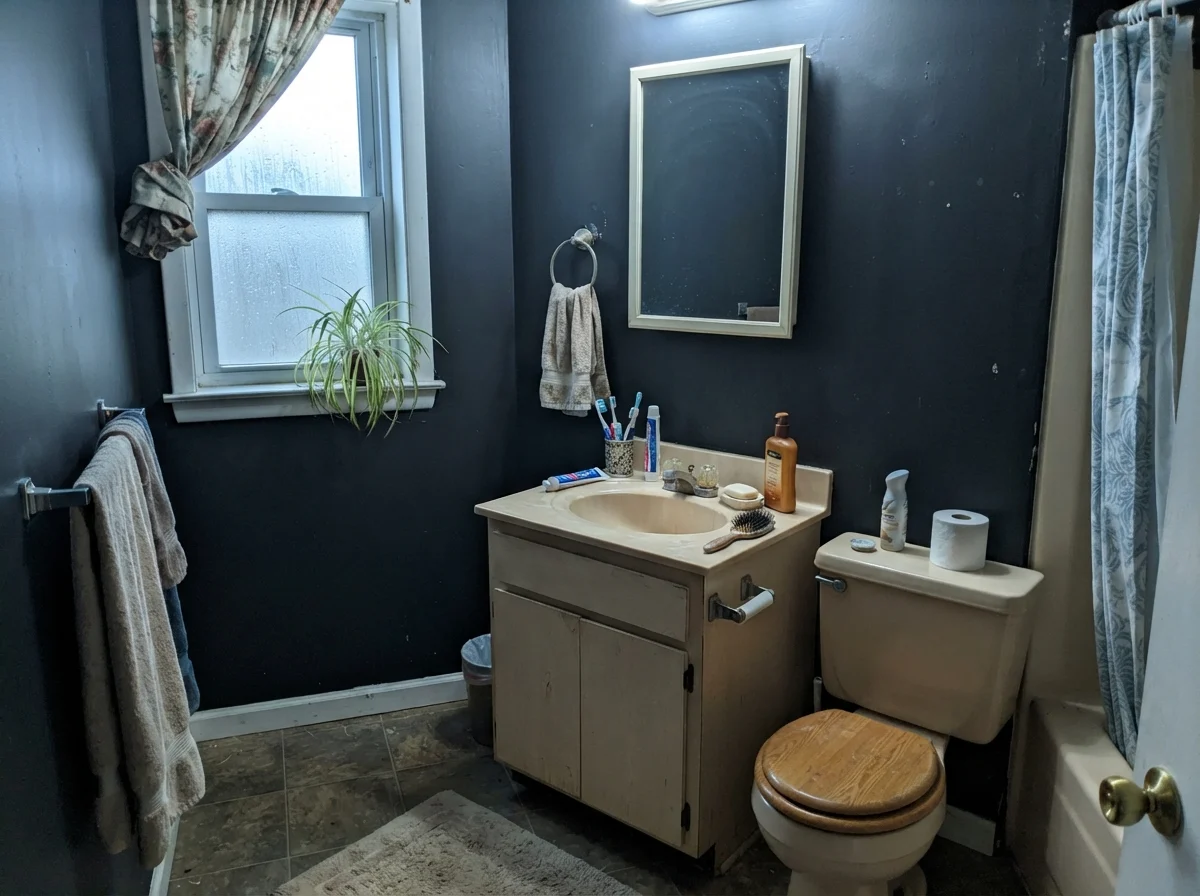
However, you have to be mindful of the light quality in smaller spaces. In a bathroom with bright diffuse morning light or soft side-window daylight, the black looks rich and crisp against porcelain and brass. But in a small, windowless bath with flat overhead lighting or cool north light, it can feel stark and unforgiving. If you have older drywall with rough tape joints or uneven patches, black will show every single imperfection the moment light hits it sideways.
Bedrooms, Nurseries, and Living Spaces
Painting full bedroom walls in Tricorn Black is a dramatic commitment that requires plenty of daylight, pale flooring, or light bedding to balance the visual weight. In a serene main bedroom with generous side-window daylight, pairing black walls with crisp white linen bedding, pale oak nightstands, and ceramic lamps creates an atmosphere that feels grounded and calm. It provides a striking backdrop that lets natural wood grains and neutral textiles sing.
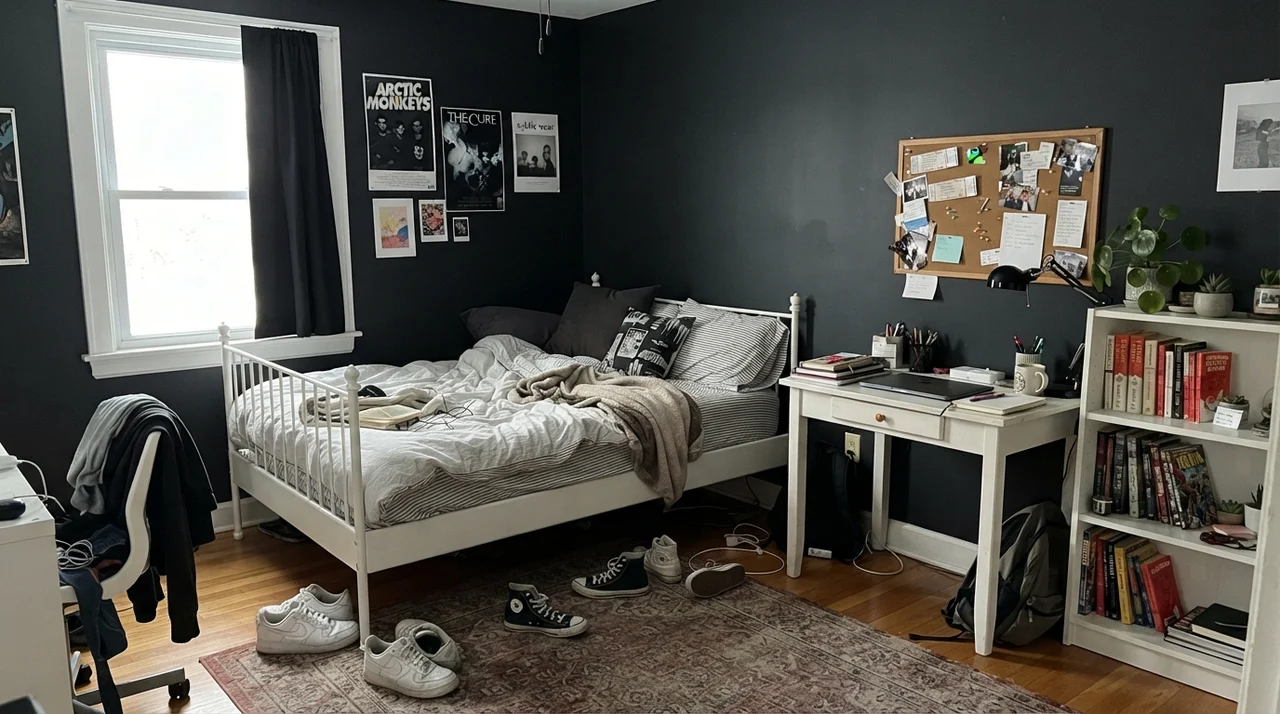
In a nursery or a teenager's room, it offers a clean, graphic foundation. A white crib, knit blankets, and light-wood dressers stand out clearly against the deep wall, giving the space an organized feel. Similarly, in a teen's room with open bookshelves, corkboards, and white metal bed frames, black creates a structured look that doesn't feel childish. But remember: five years in, bedrooms see a lot of bumped furniture, stray backpacks, and scuffs. On black walls, particularly in flat or matte finishes, minor scuffs leave a slight burnish that cannot easily be wiped away.
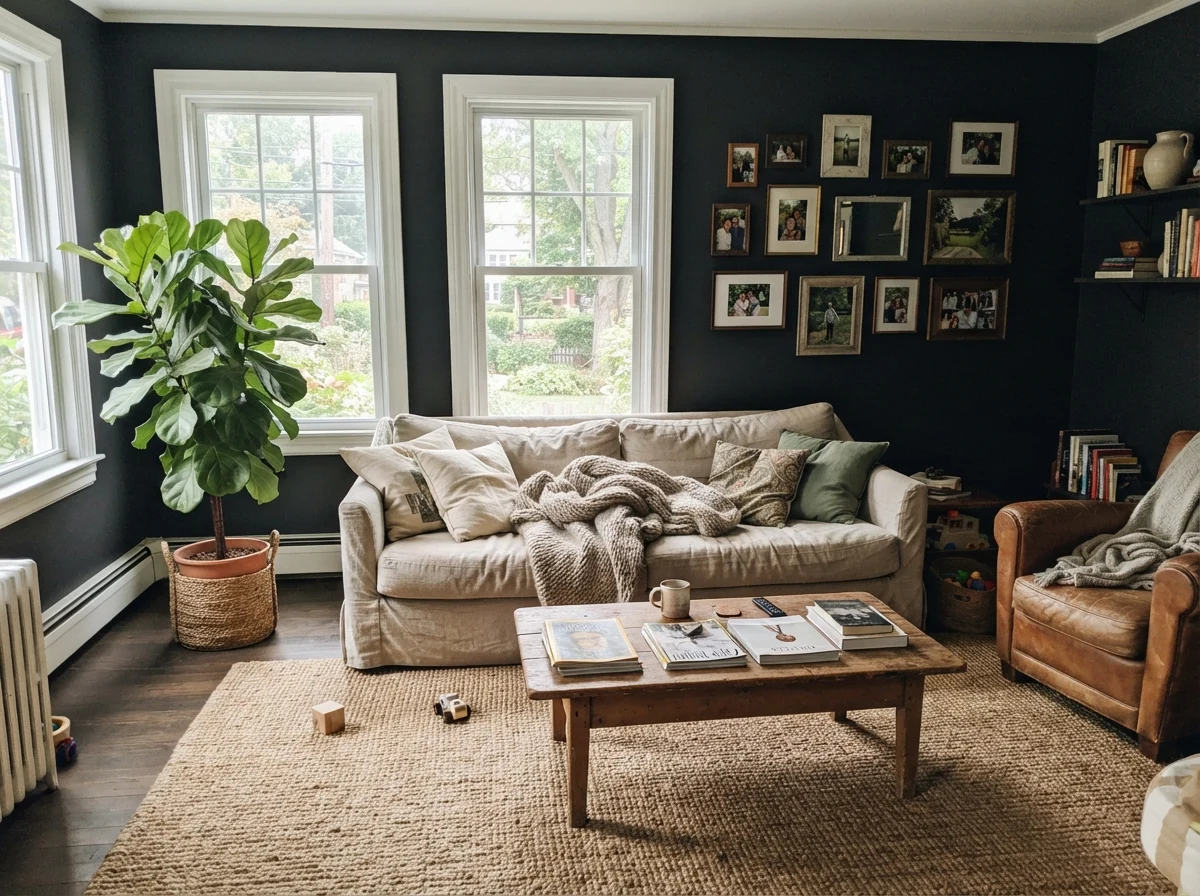
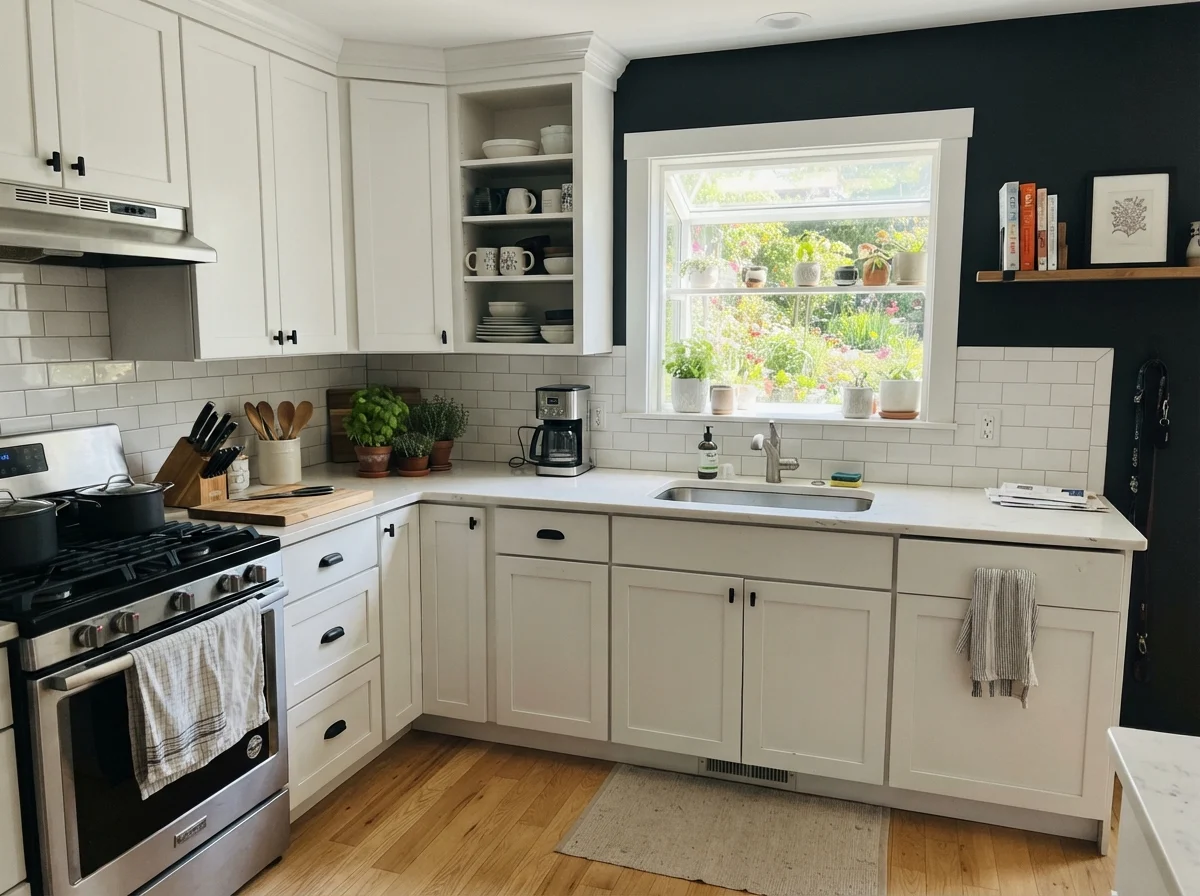
When you bring Tricorn Black into central living areas and sunrooms, natural sunlight becomes your best friend. In a living room flooded with generous midday sun from large windows, the walls don't feel cave-like; instead, they frame the outdoor greenery like a matte around a painting. Linen sofas, jute rugs, and warm wood coffee tables provide tactile contrast that keeps the room feeling inviting rather than severe.
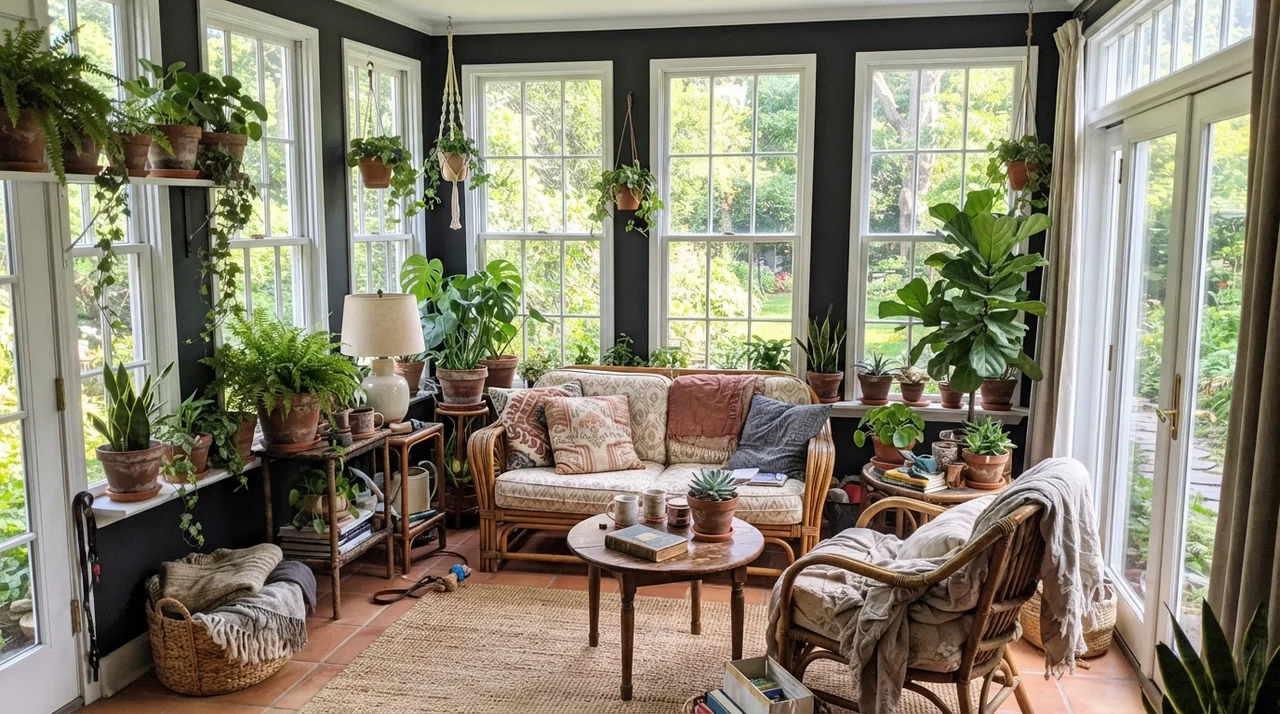
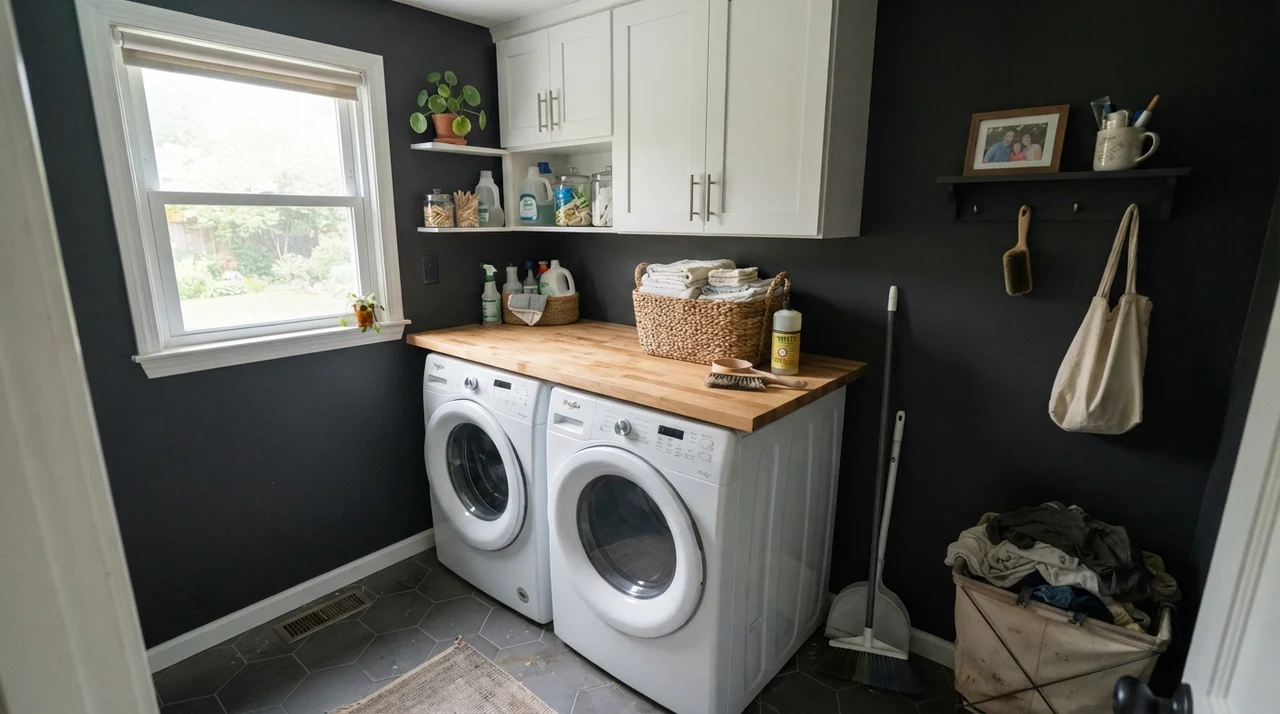
In a sunroom lined with white-framed windows, using black on the wall piers creates a dramatic rhythm against rattan furniture and terracotta plant pots. Even in a dedicated utility space, like a small laundry room with butcher-block counters and white cabinetry, black walls can elevate a chore zone into a tailored workspace—provided you have good daylight coming through a window.
Kitchen Cabinets, Islands, and Built-Ins
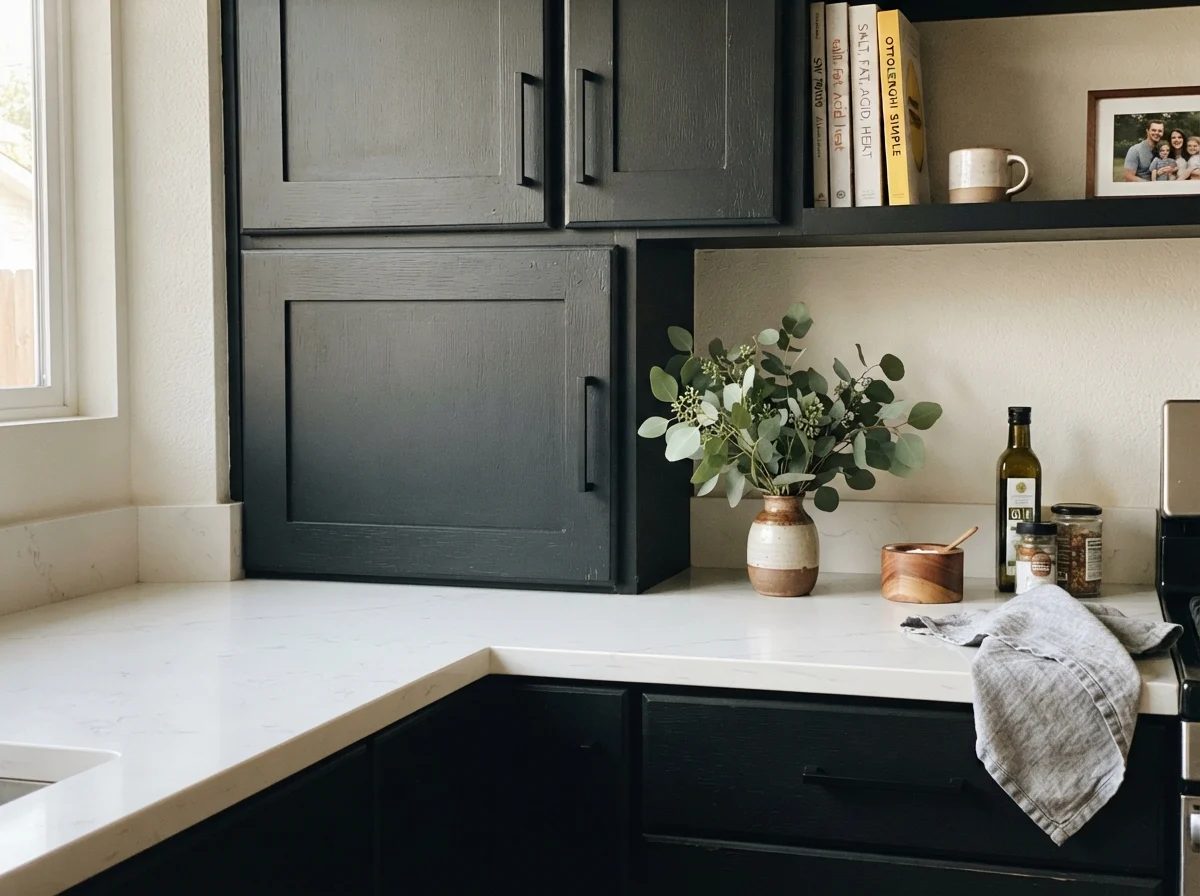
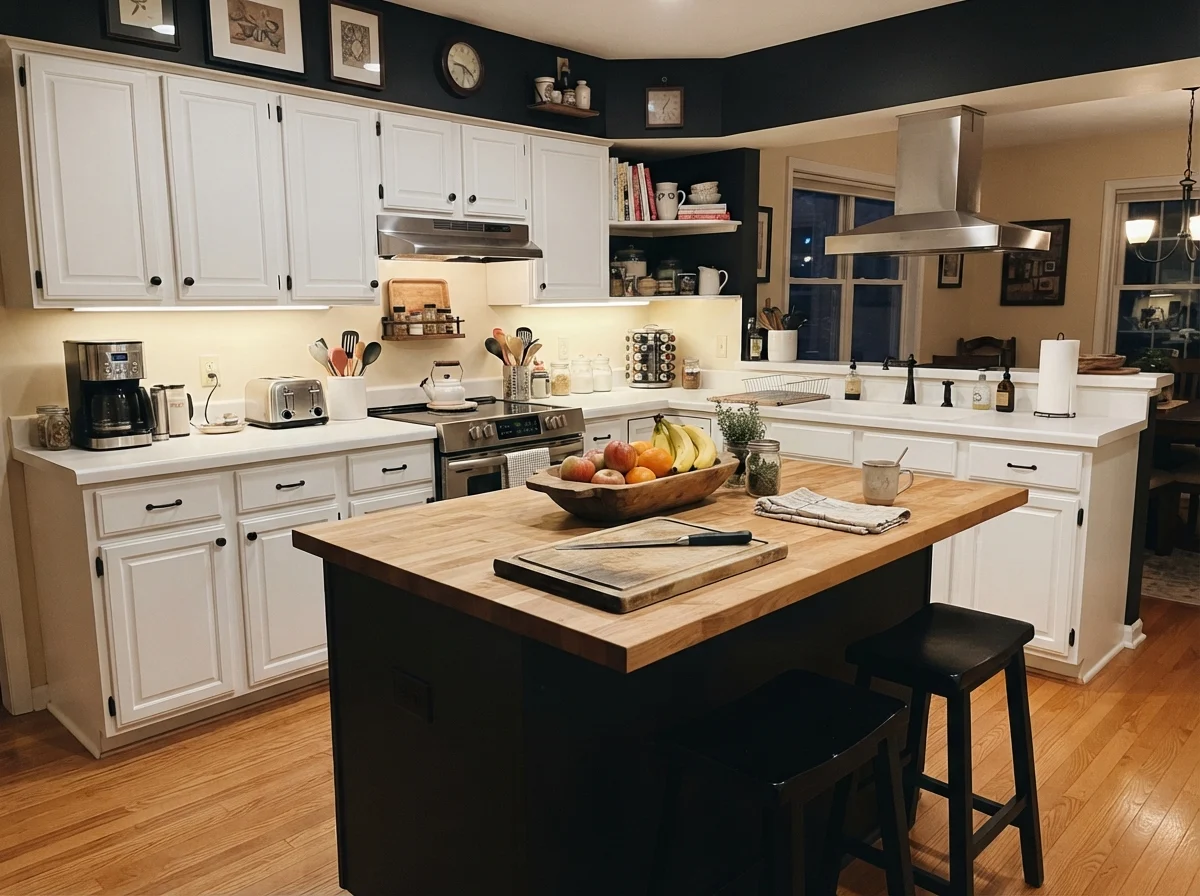
If there is one place where Tricorn Black has earned every bit of its reputation, it is on kitchen cabinetry and architectural woodwork. In our 1960s ranch remodel, we considered several dark charcoals before choosing a true black for our kitchen island base. Surrounded by perimeter cabinets in Sherwin-Williams Alabaster (SW 7008) and pale quartz countertops, that island anchored the entire open-plan kitchen. It held up wonderfully against kicked barstools and daily family traffic, largely because we used a durable satin urethane cabinet enamel.
When spraying shaker cabinets in Tricorn Black, the result is crisp, modern, and enduring. However, this is where practical homeowner reality kicks in: black cabinetry shows flour dust, dried water droplets, and greasy fingerprints far more readily than mid-tone wood or white paint. You will find yourself wiping down the cabinet faces around the garbage pull-out and drawer pulls more frequently. In my book, the sharp look was completely worth the money and effort, but it is something you should be prepared to maintain.
Doors, Bookshelves, and Exterior Appeal
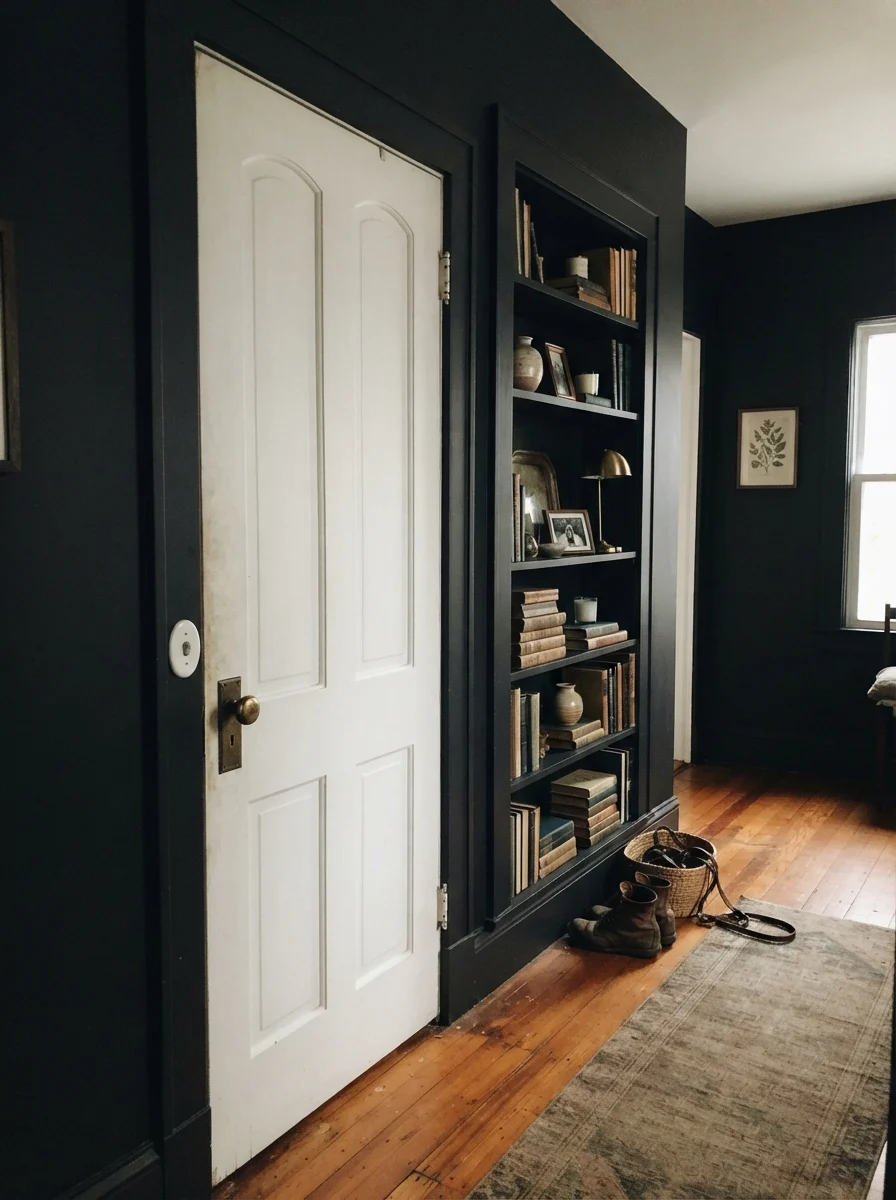
One of the smartest budget decisions you can make in a dated home is painting your interior doors. In older houses where replacing hollow-core slabs or vintage two-panel doors isn't in the budget, two coats of Tricorn Black in semi-gloss turns dated trim into a deliberate feature. Pair it with a classic brass doorknob and built-in bookshelves painted to match, and the entire hallway instantly gains weight and character.
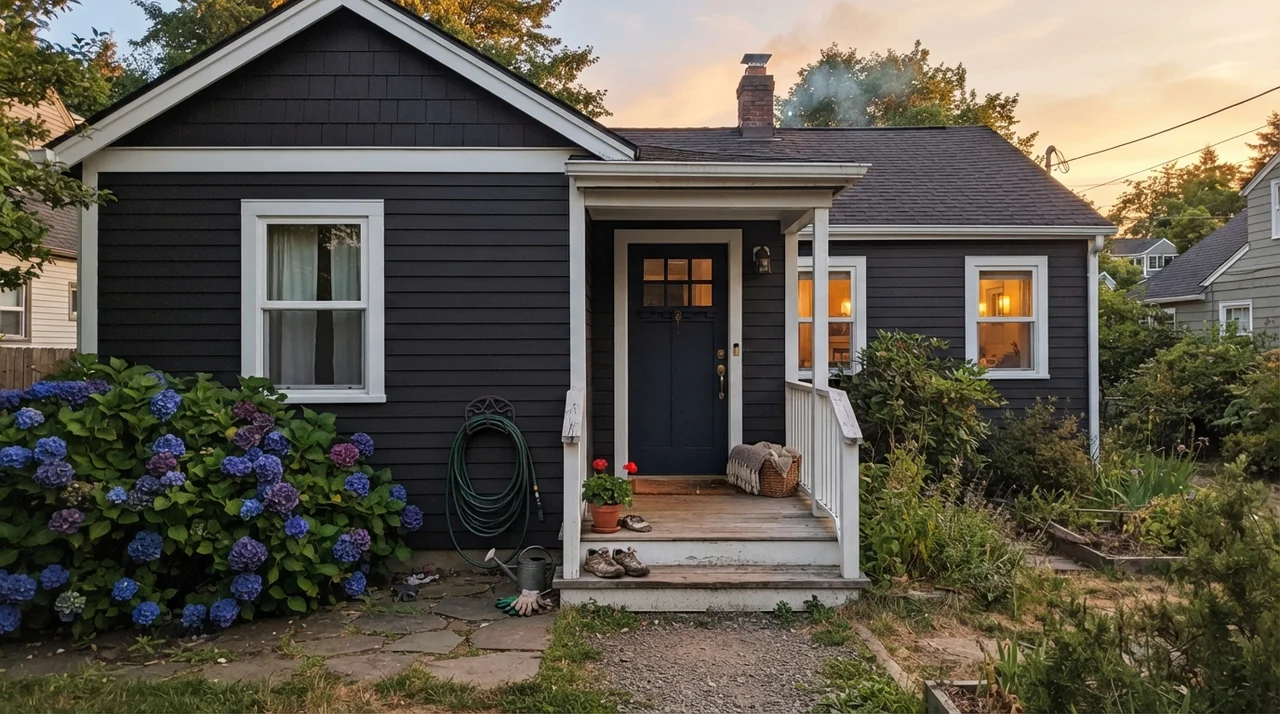
On the exterior, Tricorn Black is the undisputed standard for front doors, window sashes, and shutters. Unlike softer blacks that can flash navy or charcoal purple under harsh outdoor sun, Tricorn stays strictly neutral. It looks immaculate against white lap siding, red brick, stone, or natural cedar. But you must pay attention to solar exposure: black surfaces absorb intense heat. On an unshaded south- or west-facing entry, dark paint on a solid wood door can cause the wood to expand and contract, risking warping or paint blistering over time. On a shaded porch or on steel and fiberglass doors, it performs flawlessly.
Where Tricorn Black Fails: The Windowless Box
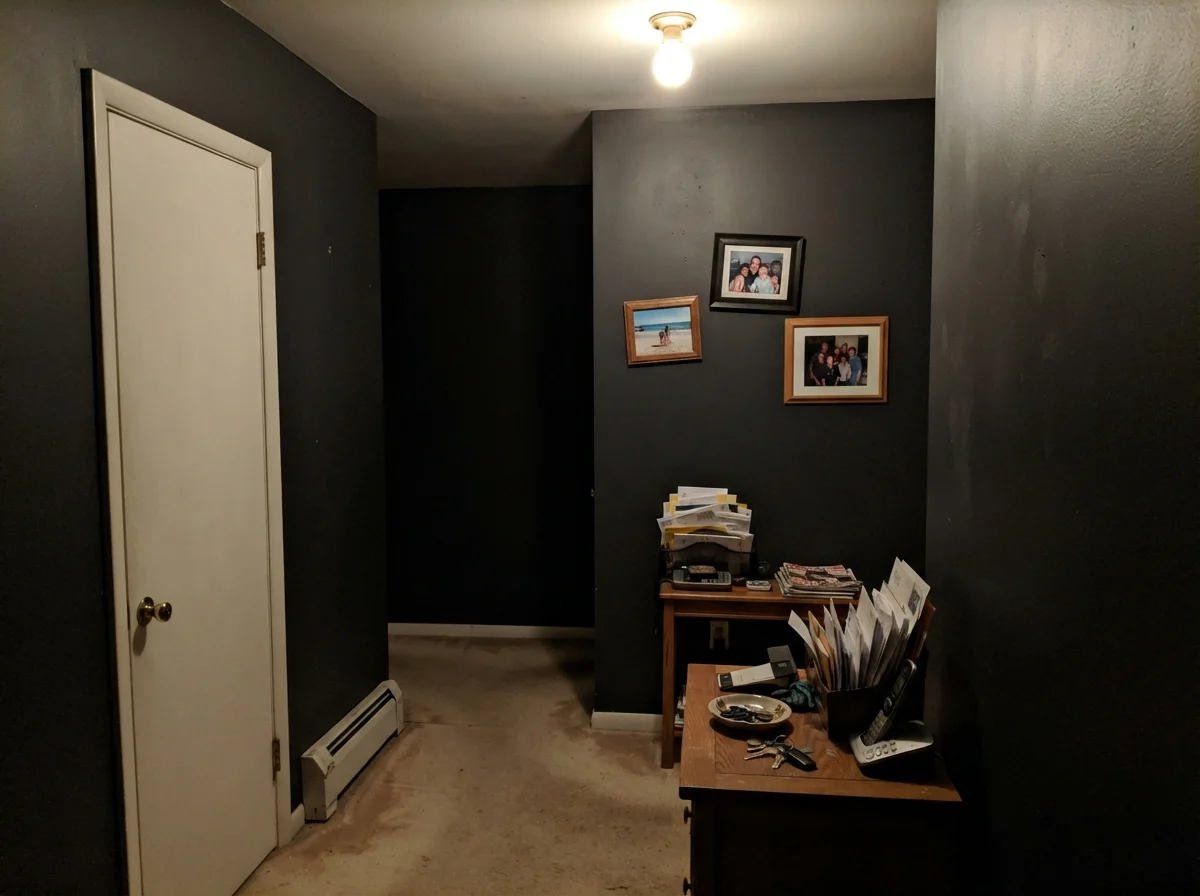
Every paint has its breaking point, and with Tricorn Black, that point is scale and light starvation. At LRV 3, this paint does not reflect light; it absorbs virtually all available illumination. If you paint a small, windowless hallway or a tight, poorly lit bathroom entirely in Tricorn Black, the walls will not read as chic or moody. They will read flat, muddy, and unfinished.
I have seen this mistake happen when folks try to recreate a dramatic powder room without accounting for their lighting. In a windowless hallway with a single dim overhead bulb, the corners collapse, shadows turn murky, and the space feels cramped and gloomy. Furthermore, any bad drywall seam, rough patch, or nail pop will be thrown into sharp relief the moment light grazes past it. If your room lacks strong natural light or layered warm lamps, step up to a softer charcoal like Iron Ore (SW 7069) or Peppercorn (SW 7674) instead.
Durability, Touch-Ups, and the Five-Year Test
Here is what thirty years of home maintenance teaches you about true black paint: it shows the life lived against it. On walls, especially in flat or matte sheens, Tricorn Black shows dust, skin oils, and every stray scrape from a laundry basket. When my grandkids visit, their sticky fingerprints along door casings are immediately visible on black surfaces. The good news is that with high-quality paint in the right sheen—semi-gloss on trim and doors, satin on cabinets—it can be scrubbed clean with a damp microfiber cloth and mild soap without losing its finish.
However, touch-ups are the major catch. Because Tricorn Black is so deeply pigmented, spot touch-ups almost always flash a slightly different sheen when dry. If a door gets gouged or a baseboard chipped, you will likely find yourself recoating the entire panel rather than dabbing a brush on the scratch. Additionally, when painting over light surfaces, you cannot skip the gray-tinted primer. If you paint pure black directly over white drywall or factory-primed trim, you will need three or four coats before the white stops grinning through the edges. Spending the extra twenty dollars on a gallon of dark gray primer is always worth the money.
What sheen should I use for Tricorn Black on interior doors and trim?
Semi-gloss is the gold standard for doors and trim. It provides enough surface hardness to resist scuffs and allows fingerprints to be scrubbed clean easily, while giving the black a rich, finished luster.
Can I paint my kitchen cabinets in Tricorn Black?
Yes, but always use a satin urethane enamel specifically formulated for cabinets. Matte finishes on cabinets will absorb grease and show every touch, while high gloss can look overly reflective. Satin strikes the perfect balance.
Why does my black paint look streaky after two coats?
Deep colors like Tricorn Black require a gray-tinted primer underneath. If applied over white without dark primer, the base will show through thinly. Use a dedicated dark gray primer and two full, even coats.
Is Tricorn Black safe for an exterior wood front door in full sun?
Proceed with caution. In full south or west sun, black absorbs massive amounts of heat, which can warp solid wood doors and cause paint blistering. For full sun, use fiberglass or steel slabs, or choose a lighter accent like Iron Ore.
Susan's Verdict · Thirty Years in the Making
Tricorn Black is at its absolute best when it is the smallest amount of paint in the room. Use it on your front door, your kitchen island, your window sashes, and your interior doors to add instant architectural structure to any home. Keep it off all four walls in small, windowless rooms, always prime with gray, and choose satin or semi-gloss so you can wipe it clean when everyday life happens.